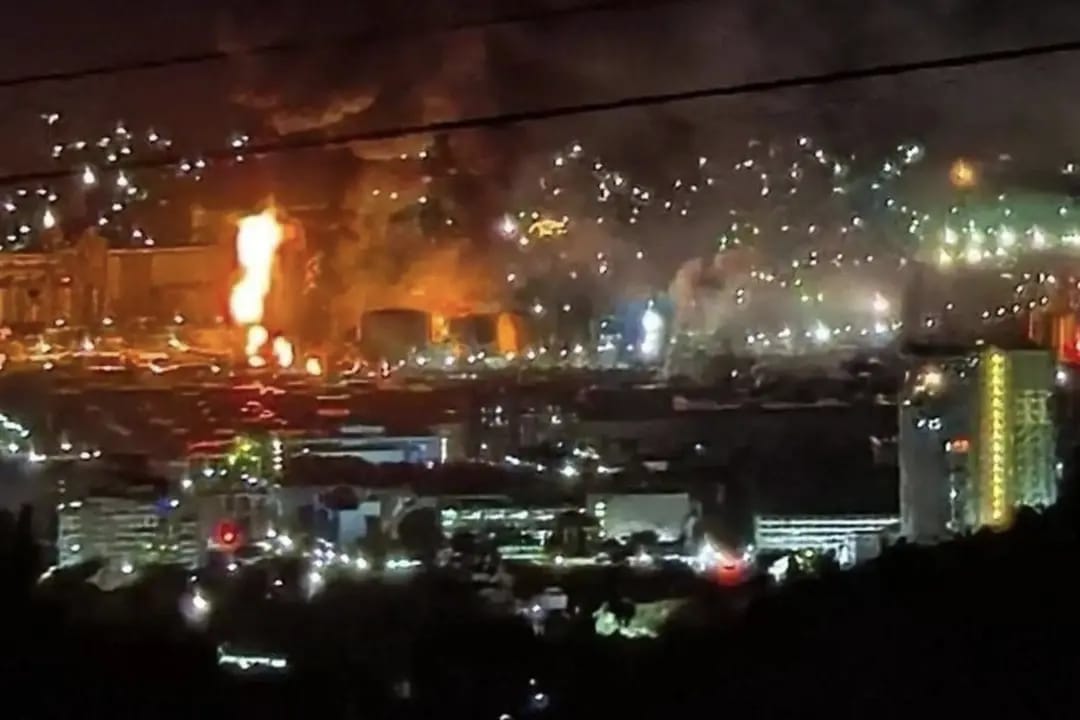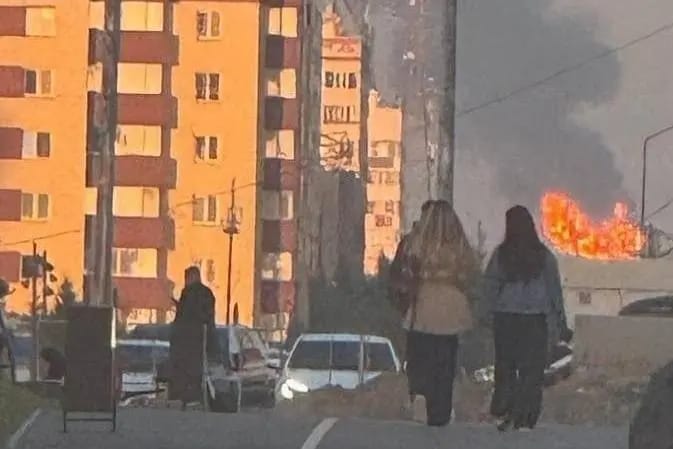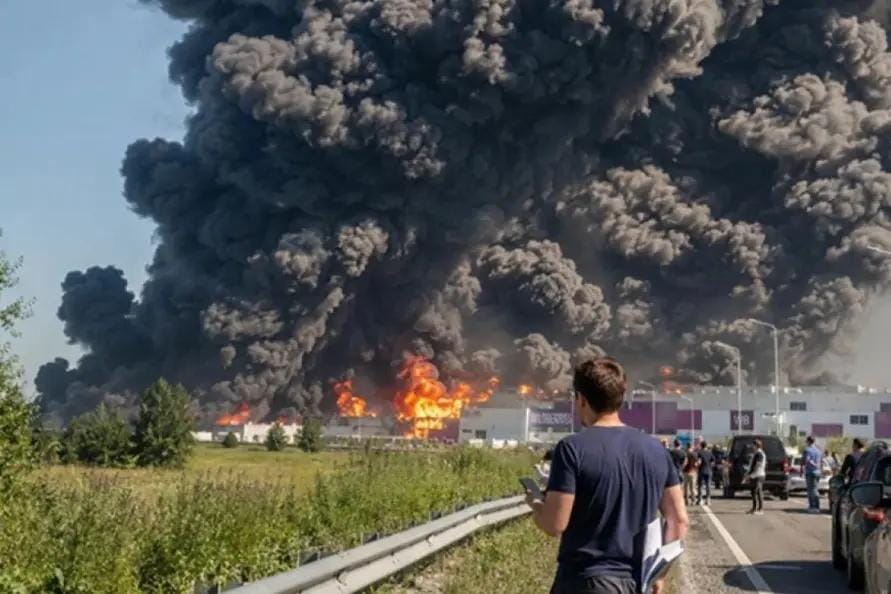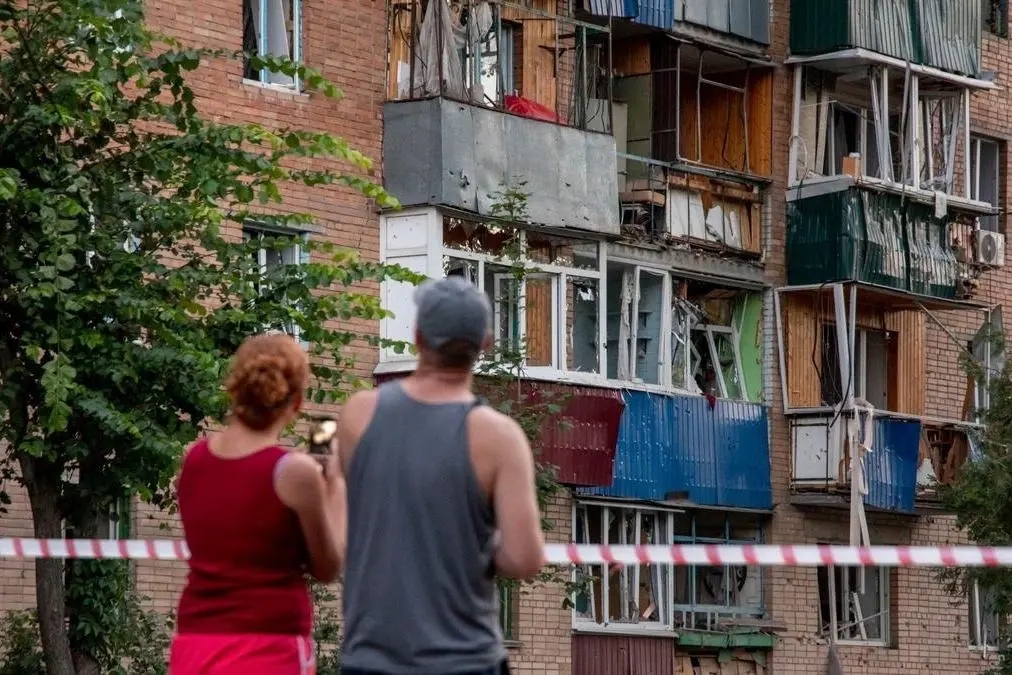
Authorities in Russia’s Amur Region have banned the publication of information about Ukrainian drone attacks. Similar bans are now in force in at least 82 of the 89 federal subjects Russia considers part of its territory, The Insider found.
Amur Region governor Vasily Orlov added the restrictions to an order implementing Presidential Decree No. 757, which established a “basic readiness” security level across the region. Media outlets and internet users are now barred from distributing information — including photos and videos — about Ukrainian drone incursions and their aftermath.
The ban covers information that could identify the type of drone, its launch site, location, crash site, flight path, target, and the nature of any damage it may have caused. It also prohibits publishing information about the use and effects of anti-drone measures, including air defenses and electronic warfare systems. The ban also covers information about the locations of Russian military and law enforcement units and related infrastructure.
The restrictions do not apply to publications by government agencies, law enforcement bodies, or local authorities. Other users may redistribute such information if they cite an official source.
Bans now cover almost all of Russia
The Insider reviewed regional restrictions currently in force against disseminating information about drones. The count included only cases in which regional authorities specifically banned or restricted the publication or distribution of information, photographs, or videos about military drone use and the consequences of Ukrainian attacks. Bans on launching or operating civilian drones were not included.
As of Sept. 28, 2026, such restrictions had been identified in at least 82 of the 89 federal subjects Russia claims as its territory. By comparison, at the end of August 2025, state news agency TASS counted such restrictions in only 33 regions, though by April 28, 2026, the number had risen to 64. At that point, restrictions were in force in every region of the Central, Volga, and Southern federal districts. TASS listed Moscow, the Moscow Region, the Murmansk and Kaliningrad regions, the Nenets Autonomous District, and the republics of Kabardino-Balkaria and Karachay-Cherkessia among the exceptions.
The bans, however, continued to spread. Moscow announced restrictions in May, the Krasnoyarsk Region in June, and the Omsk Region and Khakassia in July. Restrictions then appeared during the summer in the Murmansk Region and the Nenets and Yamalo-Nenets autonomous districts. The Tomsk region and Jewish Autonomous Oblast introduced bans in August, followed in September by Yakutia, Yugra (the Khanty-Mansi Autonomous District), and now the Amur Region.
In the Murmansk Region, for example, local authorities banned the distribution of information about the use and effects of drones and other weapons, including details that could identify where an object on the ground was hit and the nature of the damage. In Khakassia, the ban covers “any information” about the use and consequences of drone attacks.
In the Tomsk Region, the restrictions extend beyond attacks inside the region itself, as authorities also prohibit publishing information about drone use and its consequences in other Russian regions. Similar provisions exist elsewhere in Russia as well.
Reports of hits and damage are prohibited
The wording of regional bans is nearly identical in many cases. The most detailed regulations prohibit reporting information that could establish the type of drone, where it was launched, its flight path, its crash site, the location of an attack, the “fact that an object was hit,” and the “nature of the damage caused.”
The restrictions also cover information about air defenses and electronic warfare, the locations of military units and law enforcement forces, and critical infrastructure.
In some regions, the ban goes beyond photographs and videos, with restrictions also applying to text reports and other forms of information. That means not only a photograph of a damaged site but also a written post saying where a drone struck and what damage it caused could potentially be prohibited.
At the same time, regional regulations usually provide exemptions for official sources. In Tatarstan, for example, the ban does not apply to federal, regional, or municipal authorities, and the information they publish may be redistributed provided that the official source is cited. Similar provisions appear in a number of other regional regulations.
In August, the Anti-Terrorism Commission in the Jewish Autonomous Oblast banned the distribution of information about terrorist attacks, drone strikes, and the activities of sabotage groups unless it had previously been published by authorized agencies. The restriction also applies to photographs and videos of the aftermath.
People are fined for publishing information
The regional bans are being enforced. According to a tally by independent outlet Verstka, which reviewed court databases, at least 80 people were punished in 2025 and 2026 for publishing information about the aftermath of Ukrainian drone attacks. Of those, 75 received fines ranging from 1,000 to 30,000 rubles ($12 to $350), while courts issued warnings in five cases.
One of the most extensive enforcement efforts has taken place in the Kaluga Region. According to a report by local newspaper Argumenty i Fakty Kaluga, by late June 2026, more than 70 people and organizations had been fined a combined total of about 700,000 rubles ($8,300). Administrative charges were brought against administrators of websites, Telegram channels, and pages on the Russian social network VK, among others.
St. Petersburg issued its first fine for violating the regional ban in August 2026: a man who posted video of the aftermath of a July 24 drone attack was fined 4,000 rubles ($47). For individuals, a repeat violation in St. Petersburg carries a 5,000-ruble fine ($60); officials face fines of 30,000 to 40,000 rubles ($350 to $470), and legal entities face fines of 200,000 to 300,000 rubles ($2,350 to $3,550).
In the Orenburg Region, courts have imposed fines even when posts were later deleted. In September, a resident of Orsk was fined 5,000 rubles ($60) for posting a photograph online showing the aftermath of a drone attack. Another woman in the region was previously fined 3,000 rubles ($35) for video showing the aftermath of falling drone debris. She said she had mistaken the fire for the result of a gas boiler explosion and deleted the post once she realized what had happened.
In the Omsk Region, after a July 6 drone attack on an oil refinery, the FSB and police identified several residents who had posted videos of the strike on social media. They were charged with administrative offenses. Shortly beforehand, the regional Anti-Terrorism Commission had banned the distribution via media outlets, social networks, websites, and messaging apps of text, audio, photographic, and video material about drone use and the consequences of drone attacks.
No ban found in seven regions
The Insider found no regional ban on distributing information about drone attacks in seven federal subjects: Buryatia, Kabardino-Balkaria, Karachay-Cherkessia, the Kamchatka Region, and the Kaliningrad, Magadan, and Moscow regions. (Some of those regions do have bans on launching or operating civilian drones, but The Insider did not include such restrictions because they do not prohibit publishing information about attacks.)
However, the absence of a regional ban does not mean similar restrictions do not exist at a lower level. In the Moscow Region, for example, the city of Dubna has its own rule. On June 9, 2025, the city district’s Anti-Terrorism Commission prohibited photographing or filming drone use and its consequences, along with drone crash sites and damaged objects. It separately banned the publication or distribution of any information that could identify the type of drone, its launch or crash site, flight path, target, whether an object was hit, and the nature of the damage. Violators are subject to administrative penalties.
In Kamchatka, the Anti-Terrorism Commission in Petropavlovsk-Kamchatsky issued a notice in August 2025 titled “On the ban on publications about drone attacks.” It did not, however, impose a legally binding regional ban, as the commission recommended that residents “refrain from publishing” photographs and videos showing the aftermath of terrorist attacks, including drone strikes.
The situation in the Kaliningrad Region — the Russian exclave squeezed between Lithuania and Poland — is unusual. The Insider found no regional legal act banning publication of information about drone attacks. However, the regional branch of Russia’s Emergency Situations Ministry notified residents in October 2025 of a “ban on posting” photographs and videos online showing the aftermath of terrorist attacks, as well as certain military and critical infrastructure sites.
The Emergency Situations Ministry itself said the requirement was based on a recommendation from the National Anti-Terrorism Committee that had been sent “to all regions.” The ministry said violating the recommendation could result in administrative or criminal liability.
That points to the existence of federal recommendations instructing regions to prevent the dissemination of such material, even though there is no single federal ban on publishing information about drone use and the consequences of attacks.
No single federal ban, but common guidance exists
Regional authorities impose the restrictions in different ways — through governors’ decrees and resolutions, as well as in the form of decisions by operational and anti-terrorism commissions.
Many documents cite Presidential Decree No. 757 of Oct. 19, 2022 as their legal basis. That decree established different security response levels across Russian regions and authorized regional authorities to take additional security measures. However, the decree itself does not contain a direct nationwide ban on publishing information about drone attacks.
The similarity in the wording of regional regulations is striking even in documents adopted in different parts of the country and at widely separated times. They repeatedly list the same categories of information: the type of drone, launch or crash site, flight path, attack location, whether an object was hit, the nature of the damage, the operation of air defenses and electronic warfare systems, and the locations of military and critical infrastructure.