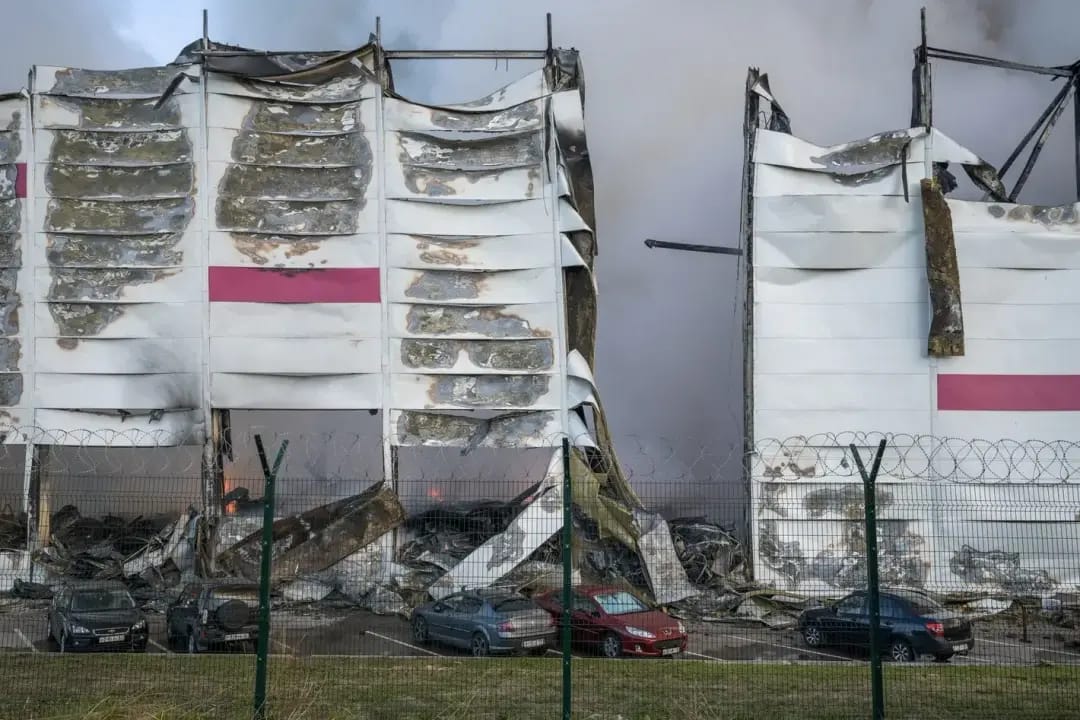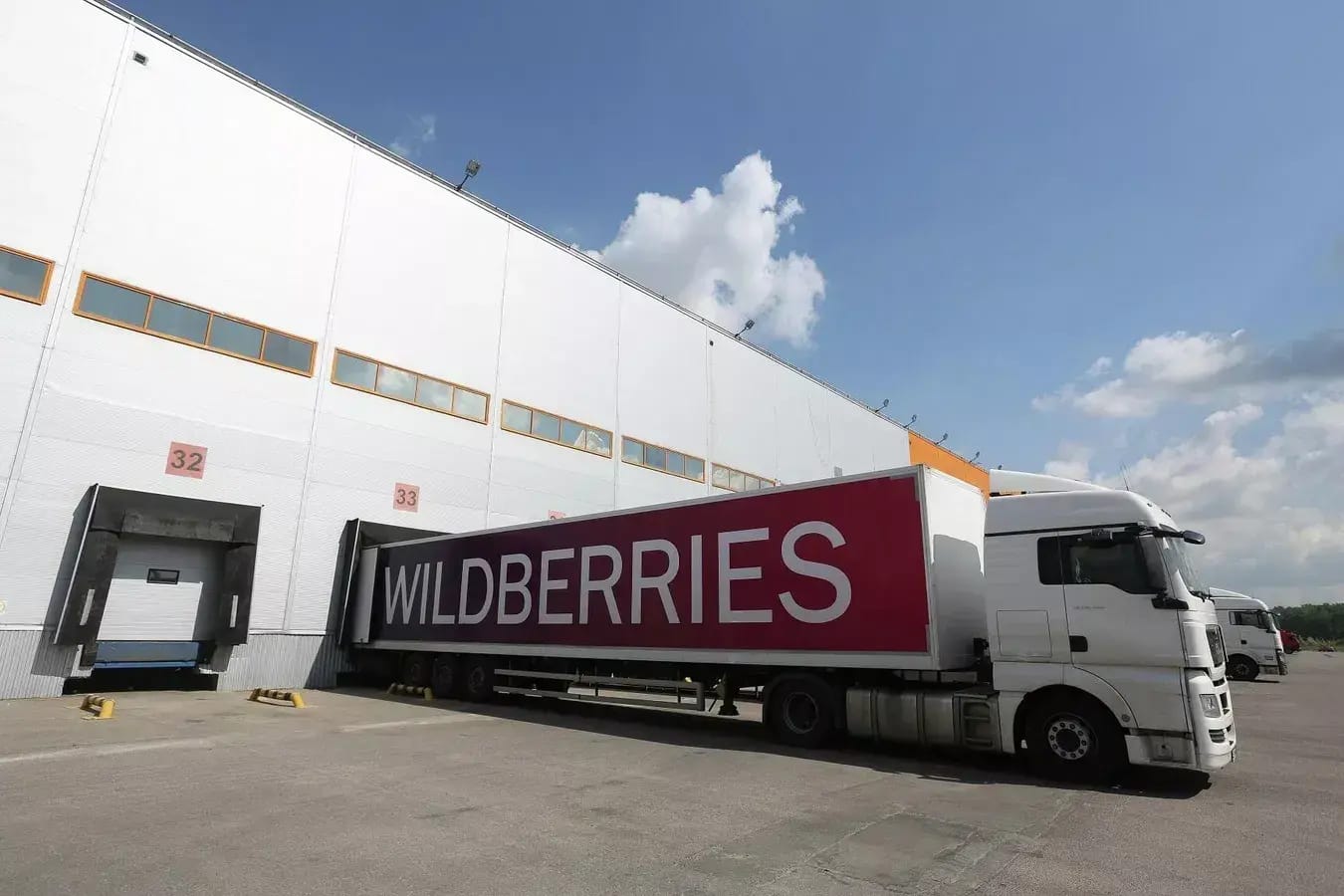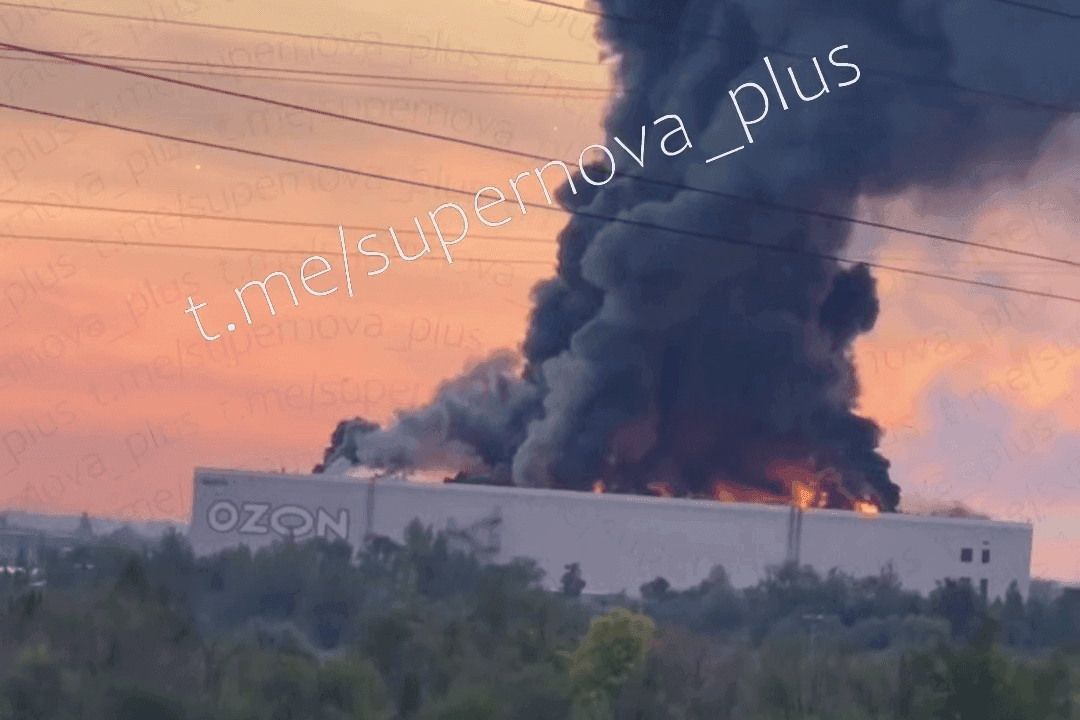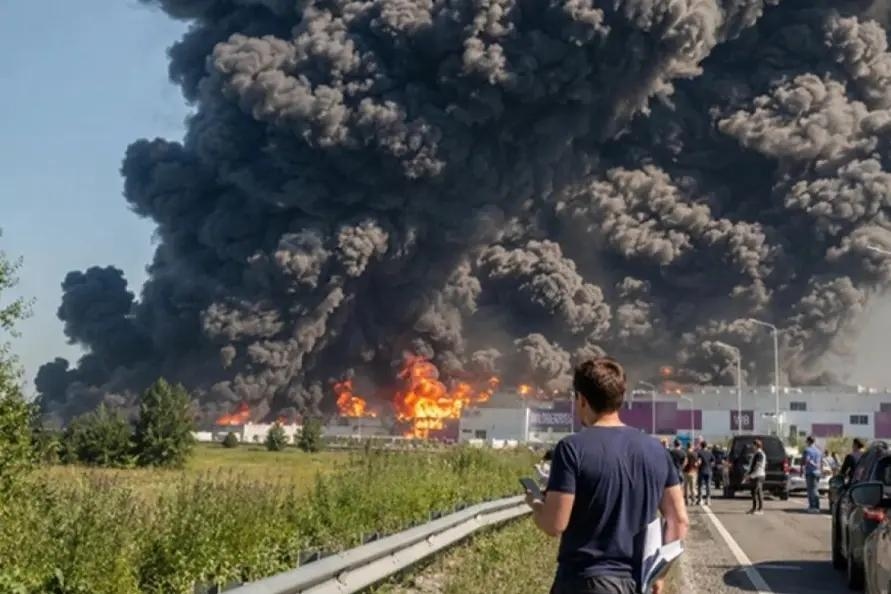
By the end of August, Ukrainian drone strikes had knocked out an estimated 20% of the warehouses operated by the Wildberries online retailer. For four years, Russian marketplaces like Wildberries and Ozon had allowed their customers to live almost as if there were no war. A logistics revolution drastically cut costs — keeping prices low and offsetting the damage to consumers caused by international sanctions and domestic tax hikes. Now this era is ending: customers are leaving, and sellers are changing their business models. The Russian central bank expects that disruptions at the largest marketplaces will shrink supply, make discounts rarer, and increase logistics costs. In other words, the online retail miracle is becoming a thing of the past.
The retail miracle
Over the past four years, Russian retail has outperformed the economy as a whole. After 2022, when retail turnover plunged 6.7% versus a 1.2% drop in GDP, the picture has changed completely. For the past few years, retail turnover has begun to outpace the growth of total output of goods and services.
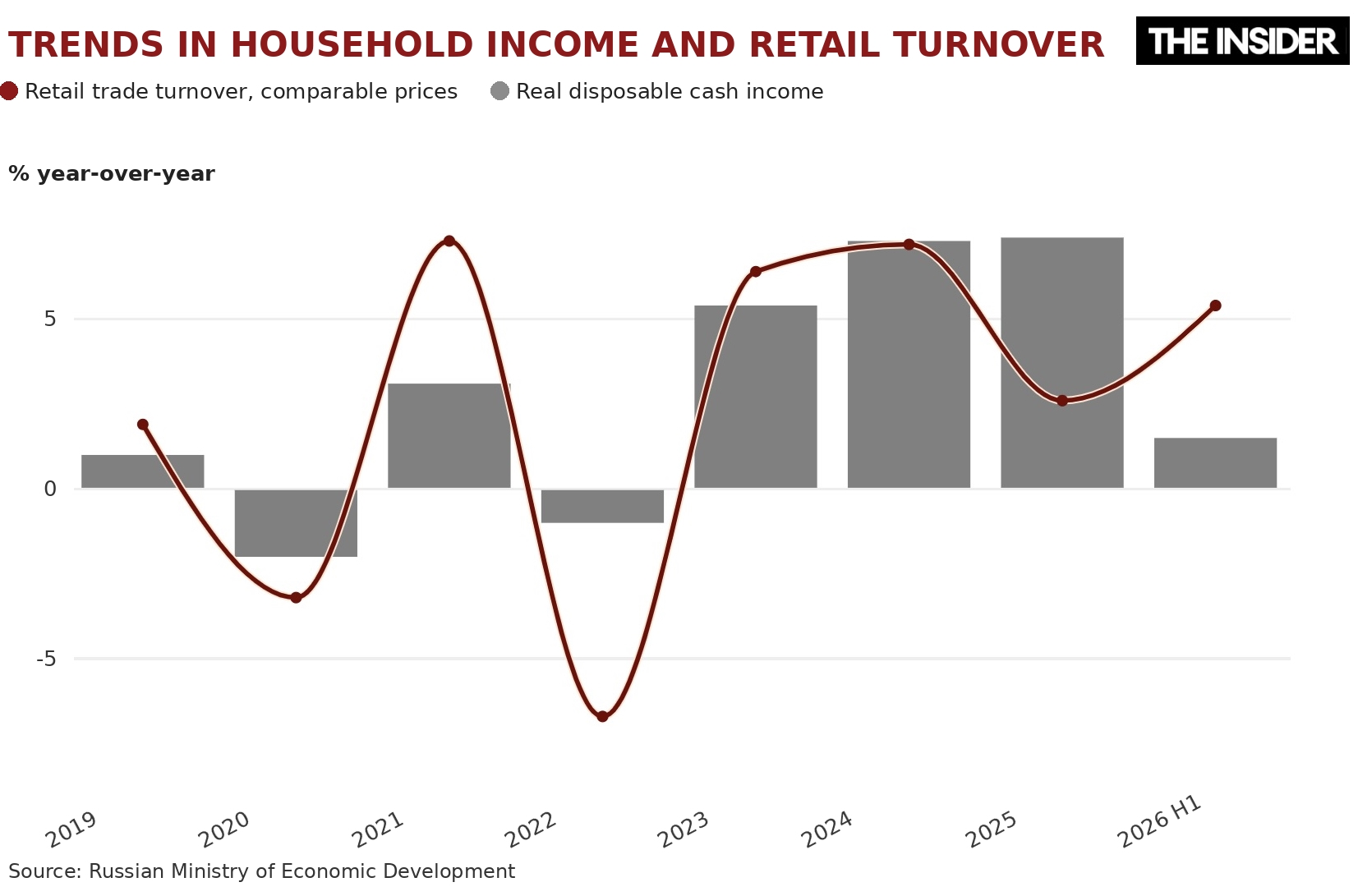
In 2023–2024, the country saw phenomenal retail turnover growth. The trend slowed in 2025 but was still 2.5 times as high as GDP growth. This year, as GDP stagnates, retail sales have accelerated again. In the first half of the year, they were up 5.4% in real terms year-on-year, even though GDP growth over the same period was estimated at just 0.3% and growth in real disposable income at 1.5%.
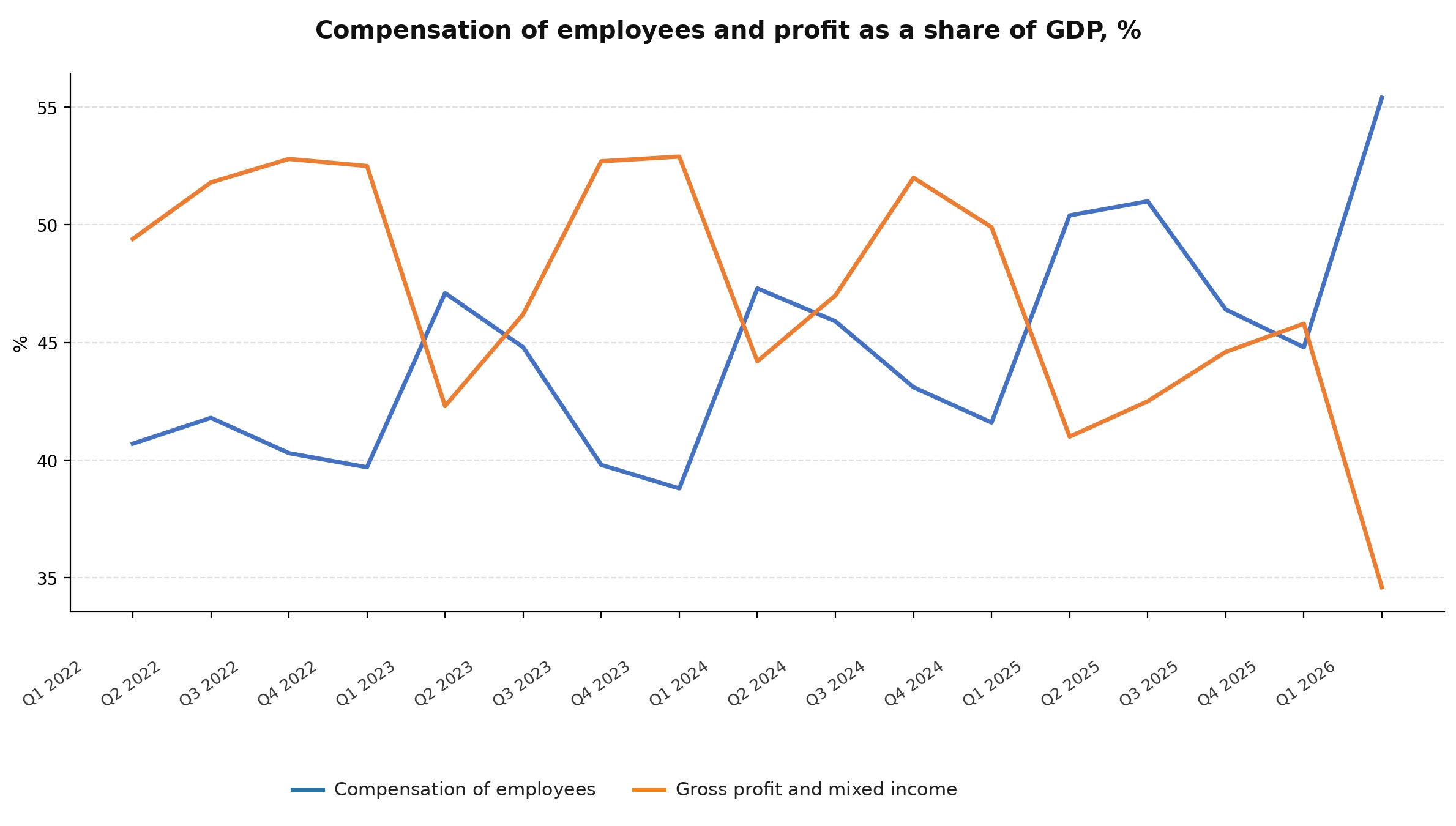
The consumption boom in a struggling wartime economy is the result of two factors. First, since 2022 resources in the Russian economy have been rapidly shifting away from entrepreneurs and capital investment toward wage earners, translating into growth in consumer spending. The state supports this process, sacrificing the future to ease the nation’s discontent right now.
The Kremlin is sacrificing the future to ease the nation’s discontent right now
Second, the war coincided with the rapid growth of marketplaces and the rollout of new retail technologies, especially for nonfood products. Online purchases have grown exponentially, and logistics has become cheaper and more centralized, encouraging sellers to step out of the shadow economy and pay more in taxes while remaining profitable. Labor’s share of GDP has risen over the course of four years from 40% to 55%, and the share of retail turnover coming from online sales has jumped from 5% to 17%.
Specifics of Russian retail
The internet has transformed retail around the world, especially since the arrival of smartphones. Some countries experienced a genuine revolution, while others have seen only a modest shift — a difference explained by the local specifics of online retail.
In medium- to low-income countries such as Russia and China, labor-intensive formats spread widely, with armies of couriers delivering purchases to the customers’ door or to pickup points set up by major marketplaces on almost every city block. Dense urban housing only reinforced this modality. China has significantly outpaced Russia in e-commerce penetration, with the share of online purchases standing at about 28% for three consecutive years. In Russia, the analogous share is approximately 16%.
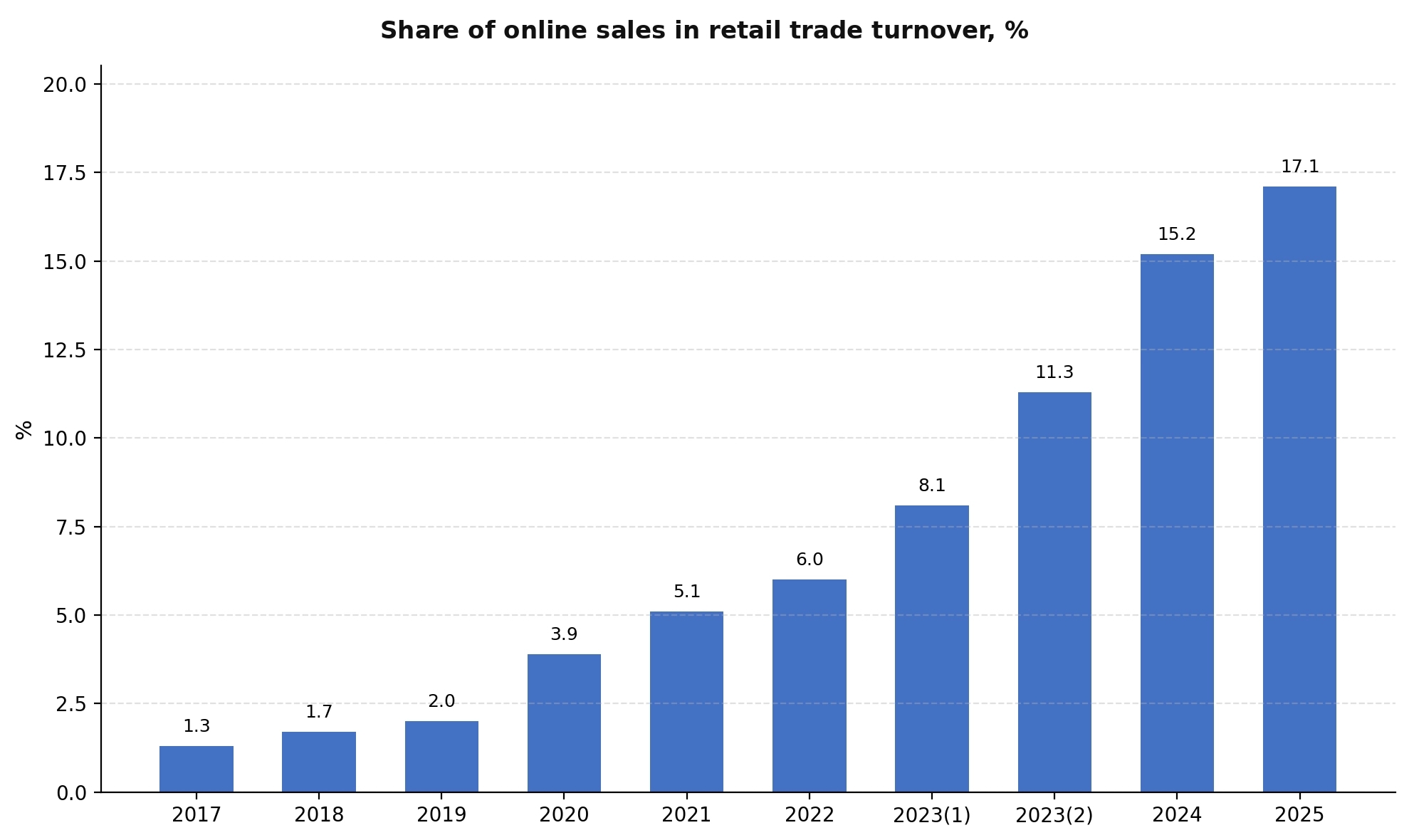
Meanwhile, the U.S. economy is characterized by high labor costs, and its consumers are spread across suburbs and accustomed to shopping at hypermarkets. As a result, online sales are less popular (despite still growing faster than the rise in retail overall). In some cases, orders placed online are simply carried out to the offline store’s parking lot. The share of e-commerce in total retail sales is 16–17%, which is very close to the Russian level.
Continental Europe and Japan are highly urbanized — like Russia — but also feature high labor costs, like the U.S. In addition to expensive labor, strict regulation and labor unions often hinder innovation. The UK has none of the EU’s restrictions, and its share of online retail reaches 28%, roughly on the same level as China and substantially higher than in other developed countries.
Retail is usually divided into offline and e-commerce, but conventional offline stores are also represented online. Within e-commerce, it makes sense to distinguish courier delivery, pickup-point self-collection, and in-store self-collection — a U.S.-style format in which the customer visits the physical store but is spared the hassle of checkout lines and counters.

In recent years, Russia saw a boom in couriers and pickup points. They were ubiquitous, but were only part of a system that also included huge sorting and warehouse complexes in suburbs and industrial zones. The main pillars of this system were Ozon and Wildberries, which together control 73% of Russia’s e-commerce sector. In the first half of 2026, they processed 3.8 billion orders — 84% of all parcels received in Russia.
How marketplaces hid the war
In 2025, online sales in Russia reached13 trillion rubles, according to the Association of Internet Trade Companies (AKIT). This figure includes not only physical goods but digital ones as well, though the latter account for only 3.7% (0.48 trillion rubles). Food accounted for 14.8% (1.96 trillion rubles). The bulk of turnover — 10.8 trillion rubles — comes from nonfood goods. The most important categories are clothing, footwear, furniture, and home goods. Sales in each exceeded 2 trillion rubles for the year, up 29% year-over-year for clothing and footwear and 35% for furniture and home goods. Another key category is digital and home appliances, with annual turnover of 1.76 trillion rubles, up 13%.
Russians were buying more than half of their clothing and footwear online as early as 2024. That share reached 62% in 2025, and it is expected to reach 68% in 2026. One in four rubles Russians spend on clothing or footwear goes through Wildberries, and another 11% goes through Ozon. Meanwhile, traditional brand-name stores are losing market share: 230 such outlets closed in 2025, and the largest offline retailer in this segment, Sportmaster, has seen its profit drop from 23 billion rubles in 2023 to just 5 billion in 2025.
Marketplaces have undergone a genuine revolution in distribution and logistics, achieving an inventory turnover rate that is three times as fast as that of traditional retail. Previously, a hoodie took roughly 100 days to get from the manufacturer to a buyer: four to six weeks in a distribution center and another 8-12 weeks in the store. At Wildberries the process takes 30–40 days: 20 to 30 days in the warehouse and a few more en route to the pickup point plus a few hours at the point itself. Wildberries’ digital storefronts simply let buyers find what they want much faster than physical storefronts allow.
Marketplace inventory turnover is roughly three times as fast as that of conventional retail
Moreover, a day of storage in a giant, densely packed marketplace warehouse costs a fraction of what a day on a shelf on a spacious sales floor does, and the savings offered via online retail also come from cutting sales staff and cashiers. Additionally, the ecosystem sharpens competition among suppliers, forcing them to reduce their margins.
The marketplace model has also opened market access to a great many small manufacturers who are willing to give substantial discounts in exchange for a broader audience. These suppliers often use the simplified tax system or a 5–7% VAT rate, which lets them save on taxes too.
As a result, a hypothetical hoodie costs approximately 2,200 rubles on Wildberries, versus 3,200 rubles in traditional retail. And in the market for home goods and consumer electronics and appliances, the effect is smaller but nevertheless substantial.
That difference was enough to offset the harm done by sanctions, higher tax rates, breakdowns in the rules of the game, and other war-related losses. In effect, the catastrophic consequences of Vladimir Putin’s “special military operation” were mitigated by the organizational and technological revolution in Russian retail.
In the absence of war, this revolution would have happened anyway — as part of a worldwide technological advance bringing major benefit to huge numbers of people. As it actually played out, the shift only masked profound problems, letting consumers ignore what the war had taken from them.
What the drones burned down
Marketplaces’ huge regional warehouses are the nerve centers of the whole system. They make centralized logistics possible, cutting out unnecessary links in the chain. Goods usually arrive at these mega-hubs straight from the manufacturer or customs and travel on to the pickup point near the customer’s home. That’s the essence of the most cost-efficient model, FBO (fulfillment by operator).
There is also an alternative model, FBS (fulfillment by seller), in which the supplier stores goods on their own premises and the marketplace provides a digital storefront and a network of pickup points — a setup that suits large merchants better. That is why systematic Ukrainian drone attacks on Wildberries warehouses dealt such a heavy blow — both to the company’s core business model and to its smaller partners.
The first strikes on the marketplace’s logistics centers occurred on July 18, right after Ukraine changed defense ministers. A total of 23 attacks that have happened since then killed 14 people while destroying warehouses in Novosemeykino, Samara Region, and in Kotovsk near Tambov. As a result, nine facilities have been forced to suspend operations and six to scale back, while another six facilities quickly returned to business as usual.
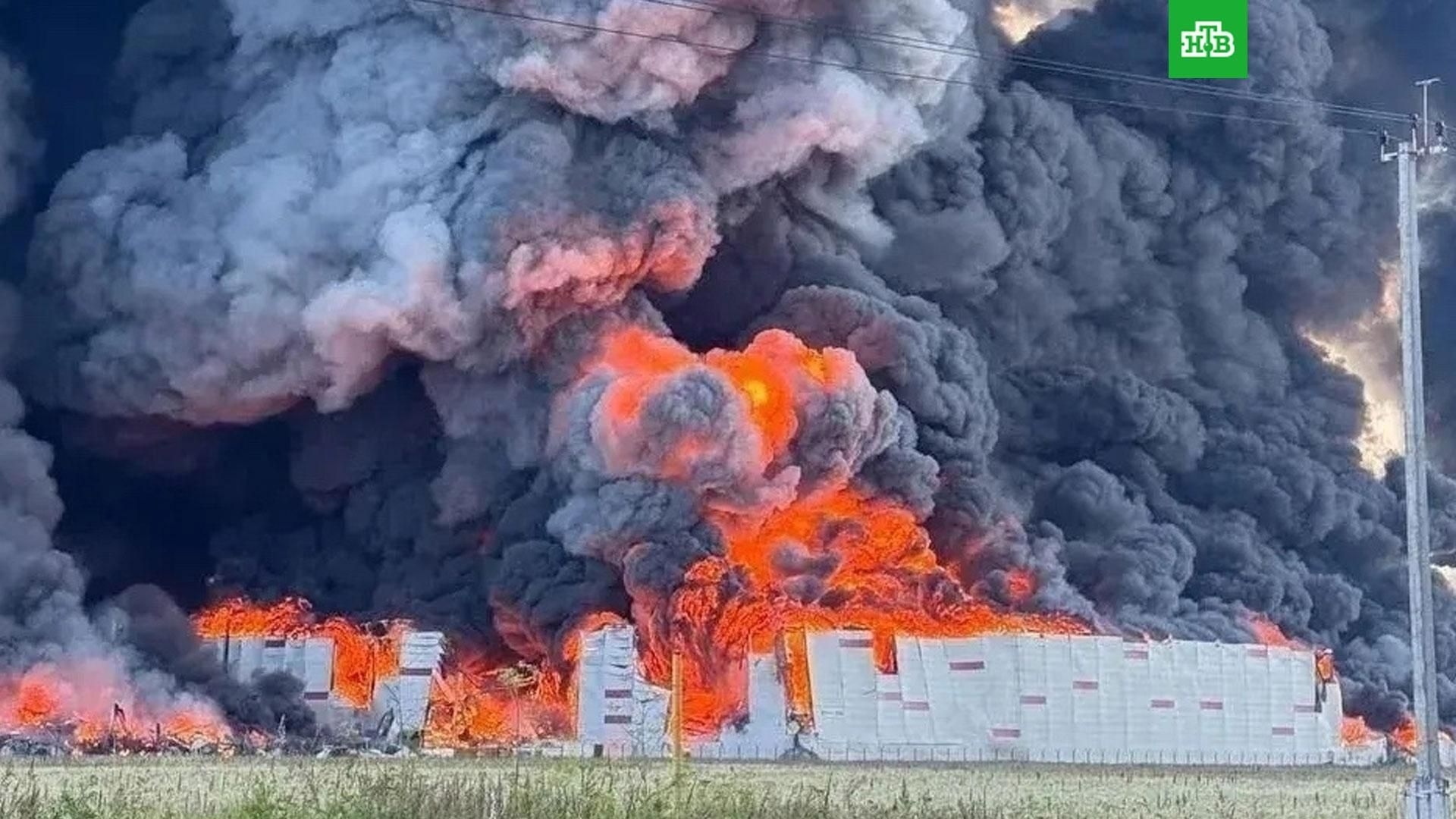
According to Russian business media estimates, by the start of August Wildberries had lost 17% of its warehouse space, and by Aug. 24 22% (1.8 million square meters). The independent outlet Verstka, meanwhile, put the figure as high as 43%. The marketplace’s financial losses were estimated at around 200 billion rubles,those of its partner sellers at about 450–500 billion rubles, of which 200–300 billion is the cost of the goods that burned while the rest corresponds to lost profit.
How badly are these strikes hurting the company? The impact goes beyond financial indicators to touch on the specifics of the Wildberries group’s corporate governance, which has changed dramatically over the past five years.
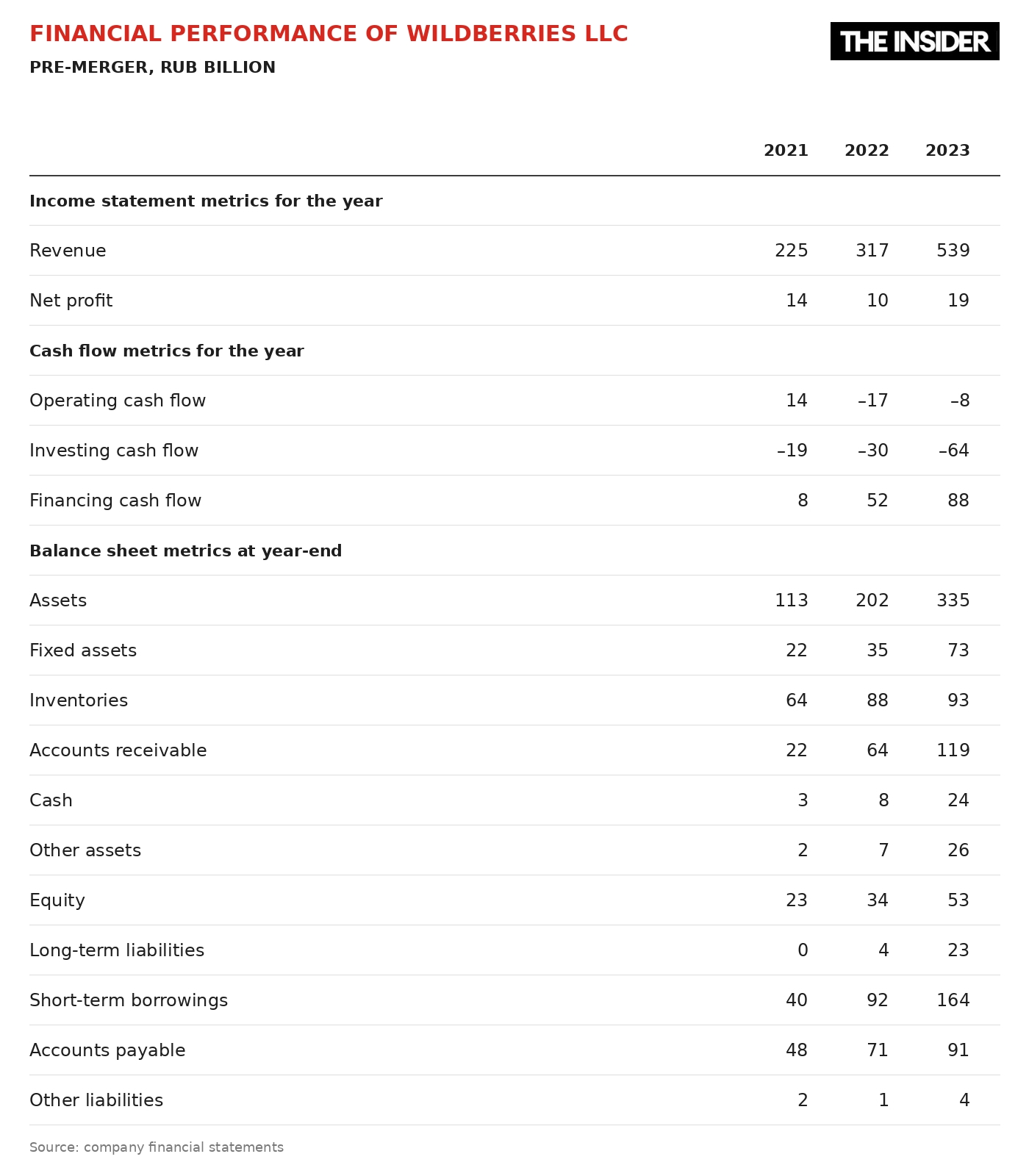
In 2021 — the most successful of its prewar years — the company’s net profit (14.1 billion rubles) nearly matched its net cash flow from operations (13.6 billion rubles). Wildberries had posted negative operating cash flow in 2016, 2019, and 2020, and in the first years of the full-scale war cash flow was already negative (–17 billion and –8 billion rubles, respectively), with the company growing exclusively through borrowed money. Short-term debt quadrupled over two years, from 40 billion to 164 billion rubles, while total debt tripled to reach 282 billion rubles.
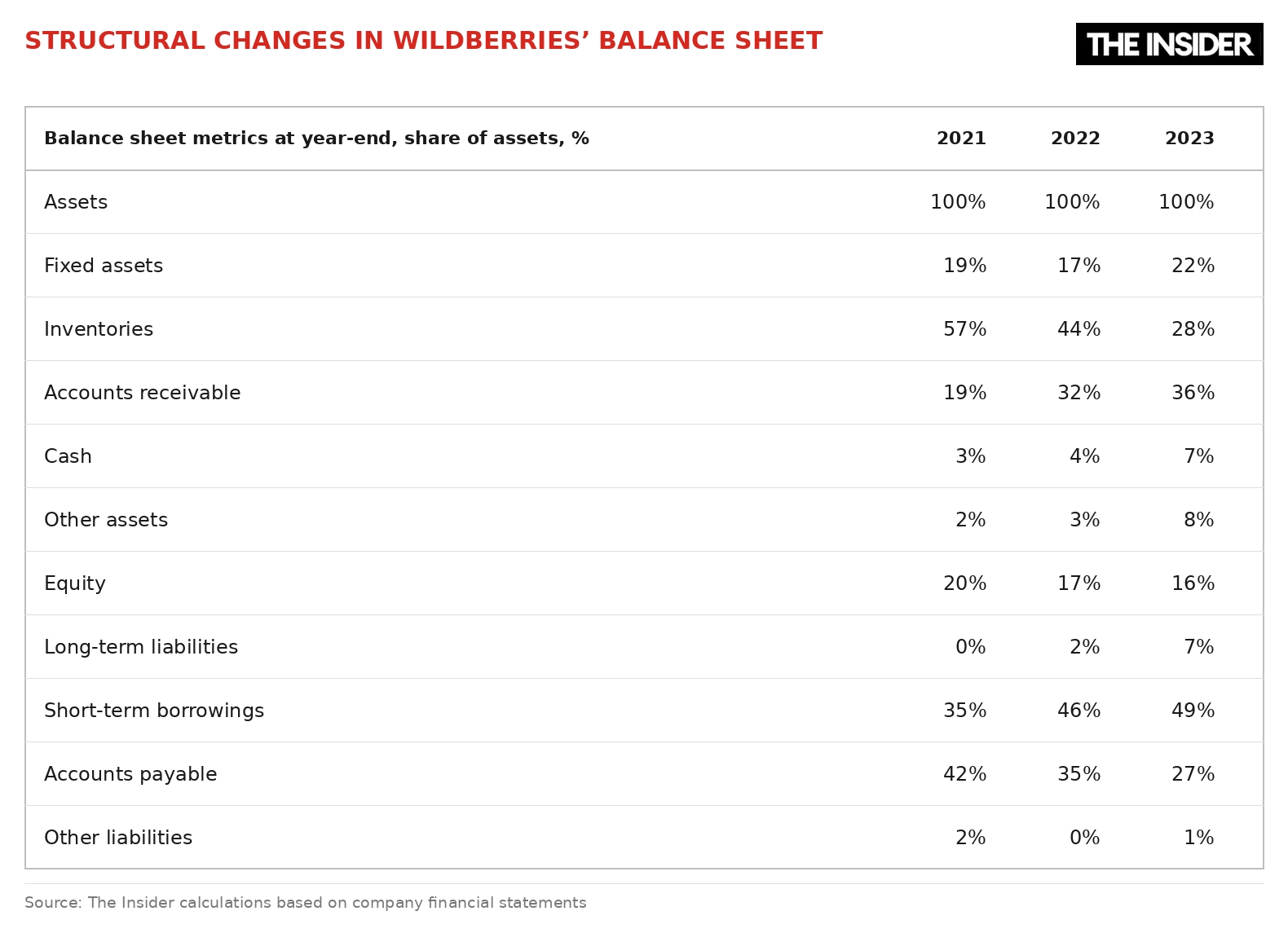
The balance-sheet structure of Wildberries LLC — the group’s main company prior to the reorganization, fully controlled by Tatyana Kim (Bakalchuk) — experienced a few telling shifts. Over two years, the share of inventory in assets fell from 57% to 28%, while the share of accounts receivable rose from 19% to 36%; the share of other assets (mostly financial investments) also quadrupled. On the liabilities side, the share of equity fell from 20% to 16%, and accounts payable likewise fell from 42% to 27%. Meanwhile, combined short- and long-term bank debt rose from 35% to 56% of the balance-sheet total.
In 2022–2023, Wildberries LLC still reported net profit, but only because it increasingly counted unpaid orders — which boosted accounts receivable rather than cash — as part of revenue.
In simple terms, once the war began, the company stopped generating cash and lost 25 billion rubles over two years, having borrowed 140 billion rubles and plowed 93 billion into aggressive expansion. Wildberries had a strong brand and ample access to other people’s money, but given its heavy debt burden, the company’s overall profile made it an ideal target for a hostile takeover.
Billion-dollar debt, asset stripping, and near-bankruptcy
Whether that term applies to what happened to Wildberries in 2024 is debatable. Almost immediately after the news broke of Wildberries’ merger with the outdoor-advertising operator Russ Outdoor LLC, it emerged that the marketplace’s owner couple was divorcing amid accusations of a hostile corporate raid. The merger went through — punctuated by a literal shootout outside the head office that left two people dead. No one was charged over their deaths, though declarations of a blood feud were exchanged between the head of Chechnya and a senator from Dagestan.
In the combined entity RVB LLC, Wildberries received 65%, and Stinn LLC (the ownership structure behind Russ) received 35%. In the year before the merger, Wildberries posted revenue 20 times that of Russ. Its net profit was four times as high, and equity was seven times larger. However, Wildberries’ debts were also around seven times higher.
In the year before the merger, Wildberries posted revenue 20 times that of Russ
These numbers suggest the deal was likely unfavorable for Wildberries’ owner Tatyana Kim, who nevertheless maintained that she was acting voluntarily and had no grievances against her new partners. Most importantly, Russ generated not just paper profit but positive operating cash flow as well: 2 billion rubles in 2022 and 5 billion in 2023.
In the two years between the merger and the start of drone strikes on its warehouses, Wildberries did not improve its financial position. Whereas the marketplace’s operating cash flow was –8 billion rubles in the last year before the merger, the combined company RVB posted –30 billion rubles for 2024 and –377 billion for 2025. Even before the Ukrainian attacks began, the company had become little more than an empty shell through which trillions in other people’s money passed. This is evidenced by RVB’s financial statements and explanatory notes under Russian accounting standards.
In 2024, RVB’s equity tripled compared to the combined equity of Wildberries and Russ, reaching 179 billion rubles, but it evaporated in 2025, leaving only 2.4 billion rubles. Debt, meanwhile, reached 1.3 trillion rubles — 534 times its equity. Of that debt, 1.25 trillion rubles is short-term. About 70% of the debt was taken on in 2025, and it was only thanks to this borrowing that RVB remained solvent at all.
Not only did creditors’ money cover the shortfall in operating cash flow, it also produced a surplus of several hundred billion rubles, which was immediately siphoned out.
The statements reveal how this was done: unimaginable volumes of money moving through opaque transactions with RVB’s founding companies, subsidiary business entities, and other affiliated parties. RVB borrowed 492 billion rubles from these entities and repaid them 567 billion. It lent them 151 billion rubles and got back 80 billion. Purchases from these organizations totaled 506 billion rubles, while counter-purchases came to 271 billion rubles. Accounts receivable from related entities grew from 170 to 422 billion rubles, while RVB’s accounts payable to them fell from 111 billion to 80 billion rubles. Another 51 billion rubles went to dividends, all of which was received by the entity belonging to Russ’s original owners despite their mere 35% stake in RVB.
In total, 715 billion rubles were siphoned out over the course of the year. A smaller part of that outflow — approximately 175 billion rubles — repaid the founders’ contributions, who withdrew from the company’s equity everything they had put in before 2025. The larger part — 540 billion rubles — came from banks, which will never get that money back in real terms. After all, the RVB shareholder companies that took the money are shell companies.
Tatyana Kim’s holding entity, which owns 65% of the combined company, has charter capital of 10 million rubles and equity of 67 billion, of which just over half is illiquid fixed assets and the rest is unreliable obligations from other shell companies.
Stinn LLC, which owns the remaining 35% and belongs to Russ’s shareholders, is in even worse shape: charter capital of 29,000 rubles, negative equity, 28 billion rubles in debt, no cash, and assets limited to obligations owed by parties unknown — while the 51 billion rubles in dividends siphoned out of RVB went straight to Stinn’s founders.
Wildberries’ key performance indicators under International Financial Reporting Standards (IFRS) do not improve the picture either. The consolidated figures for 2025 were never published in full, nor were they audited — even revenue was not disclosed. The company limited itself to mailing a few selected figures as its “IFRS results” to news agencies, which published their own summaries on April 1, 2026. It is hard to understand why a successful, growing company — even a private one — would disclose its IFRS statements in such a fragmented and unconvincing manner.
According to these figures, goods worth 6.1 trillion rubles were sold through the platform, up 49% from 2024. Net profit is reported at 175 billion rubles (+68%), investment at 300 billion rubles, and the net debt-to-EBITDA ratio at no more than two. If these figures are taken at face value, it would mean that in just over a month, Ukrainian strikes cost RVB an amount comparable to a full year’s profit of the marketplace and the advertising agency combined — not counting its partners’ losses.
Taken together, the RAS statements and the KPIs under IFRS show that Wildberries had been struggling even before the drones began hitting its warehouses. The marketplace had operated at a loss for years and had been growing only through borrowing. In the past year, negative cash flow came to 377 billion rubles, while net borrowing totaled 700 billion rubles. Nearly the entire difference between these two figures was siphoned out of the company — and also out of the reach of RVB’s creditors.
An explanatory note to RVB’s financial statements reads:
“Some loan agreements contain restrictive conditions (covenants) related to financial and non-financial indicators. The Company’s failure to comply with a number of them may give the lender the right to demand early repayment of the outstanding debt. As of Dec. 31, 2025, the Company was in breach of a number of financial covenants set out in its loan agreements. The breach of covenants did not result in the closure of credit lines or in banks demanding early repayment of obligations, and did not affect the deterioration of the Company’s liquidity position.”
Had the creditor banks exercised their right to demand early repayment, RVB would have been insolvent, and that scandalous outcome would have raised the question: how could such large sums have been extended to such an unreliable borrower in the first place? Who personally made those decisions?
VTB, the white knight
The name of the bank that extended RVB upwards of 700 billion rubles in unsecured loans is not disclosed in open sources. It was likely a consortium, since such a sum is too large even for the biggest banks. Circumstantial evidence, however, suggests VTB played a key role.
First, on May 26, VTB announced a strategic partnership with Wildberries, including the purchase of a minority stake in the marketplace’s digital assets and the prospect of “large-scale investment.” VTB’s supervisory board even announced an additional share issue, with the number of shares set to grow by 50%. Mere months earlier, Tatyana Kim had categorically denied the possibility of such a deal, and yet, its details soon emerged: VTB planned to buy a 5% stake in WB Bank and several other fintech assets of the Wildberries group.
Second, VTB deputy chairman Dmitry Pyanov takes particular pride in how skillfully the bank uses additional lending conditions (covenants). Answering a question about the risks of VTB’s corporate loans, he said: “Additional protection comes from the unique expertise of our corporate division’s team in structuring deals, using covenants, and modeling stress scenarios.”
VTB plans to issue new shares worth 314 billion rubles at par value, or 547 billion if sold at 87 rubles apiece, as the bank’s management intends. That is far too much to buy a 5% stake in WB Bank, whose assets total only 186 billion rubles — even if all of RVB’s fintech assets were transferred to WB Bank and the stake being acquired were increased to 50% (in an interview on June 5, Pyanov used the phrases “everything will go in” and “up to a noncontrolling stake”).
The picture that emerges is as follows: Wildberries was operating at a loss and suffered from poor corporate governance, inflating its balance sheet with debt owed by shell companies. VTB rescued it by lending hundreds of billions of rubles, with almost all of these loans unsecured, even though RVB could have pledged some of its own assets against them.
The bank, however, is not prepared to write these loans off as a loss. The anticipated deal would let it acquire not just fintech but essentially all of Wildberries’ real assets. Investment is unlikely to pay off within any reasonable timeframe, since the marketplace’s operating cash flow was already negative even before the airstrikes. Still, Wildberries is a strong brand, and control over a six-trillion-ruble payment flow on the marketplace has value.
The deal VTB is planning would let it acquire not just fintech but essentially all of Wildberries’ real assets
In the end, the takeover would be fairly reasonable, though still too expensive for VTB. The bank would recoup a significant share of the money spent through an additional share issue worth 300–400 billion rubles and might even quietly negotiate the return of some of the funds siphoned out of RVB to entities belonging to Tatyana Kim and the Russ shareholders.
The losses from the desperate dumping the marketplace had engaged in for years based on borrowed money would then fall on the buyers of VTB’s new shares. And this would not be the first time Russia’s second-largest state bank solved its problems this way. In 2007, VTB’s “People’s IPO” took place with the personal involvement of Vladimir Putin. Soon after the offering, the shares crashed, and investor losses exceeded 100 billion rubles. This time, there are no plans to bring in retail buyers for the deal. Whose participation is envisioned in their place, however, remains a mystery.
The stock market views VTB management’s actions extremely negatively: the bank’s shares collapsed from 96 rubles in April to 50 rubles in September 2026. Other Russian banks’ shares did not fall nearly as sharply. Additionally, Sber has also stopped treating the loans it extended to Wildberries as reliable and has increased its corresponding provisions.
What’s next for Wildberries?
Russian consumer spending on marketplaces in recent weeks “has been 15% lower than a month or two ago,” according to Sber. Volumes are higher than a year ago, but growth has halved, “and these are still just the first signs.”
Online trading platforms have responded to their rising costs and risks by raising their already-high commission fees: from 19% to 48% at Ozon, from 32% to 43% at Wildberries, and from 25% to 40% at Yandex Market. More expensive logistics and insurance are forcing sellers to raise their prices on marketplaces as well — by as much as 15%, according to some estimates. The popularity of the FBS model, in which the supplier uses its own warehouse instead of logistics centers, has grown by a factor of ten.
Even the Bank of Russia, in its latest “Talking Trends” bulletin, noted that the problems at Wildberries and Ozon are driving prices up:
“The disruptions at the largest marketplaces create risks of localized price increases for certain nonfood goods due to reduced supply, the elimination of discounts, and more expensive logistics.”
The central bank warns that, “due to the temporary loss of production and logistics capacity,” Russian economic growth could slow again (after an already very modest figure of 0.6% in the first half of the year). Rosstat’s numbers for August showed that in that month alone, smartphones rose in price by 3.55%, diapers for newborns by 1.5%, and children’s tracksuits and men’s T-shirts by more than 1%.
In response to the drone strikes on logistics centers, the authorities have announced multiple, if poorly coordinated, relief measures. At the Finance Ministry’s request, the government granted a 12-month deferral on payment of major taxes for businesses that lost more than 5% of their annual income.
The Bank of Russia, for its part, recommends that lenders restructure the debts of small and medium businesses affected “by terrorist acts on the premises of logistics centers, warehouses, production facilities, retail spaces, offices, and other properties,” not charge such businesses penalties for late debt payments, not demand early loan repayment, and not raise interest rates on them. They also recommend that credit bureaus not lower the ratings of borrowers who have undergone such restructuring. Meanwhile, the government does not take the size of the affected companies into account, and the central bank is indifferent to the scale of the damage.
Putin, for his part, signed a decree letting the government place objects of “critical infrastructure” under the Kremlin’s “temporary management” in the event that the owners fail to take sufficient measures to protect them (the government, of course, decides which owners have failed to live up to their obligations).
The resulting uncertainty and opportunities for abuse of power have added to the general pessimism of big business, an RBC survey showed. As if in compensation, the Russian leader promised that starting from Oct. 1, public educational institutions would be able to “procure goods directly from domestic marketplaces — so to speak, straight off the shelf.”
Local relief measures are unlikely to outweigh the systemic distress. Russia’s retail miracle was an anomaly, and now the fairy tale is coming to an end.