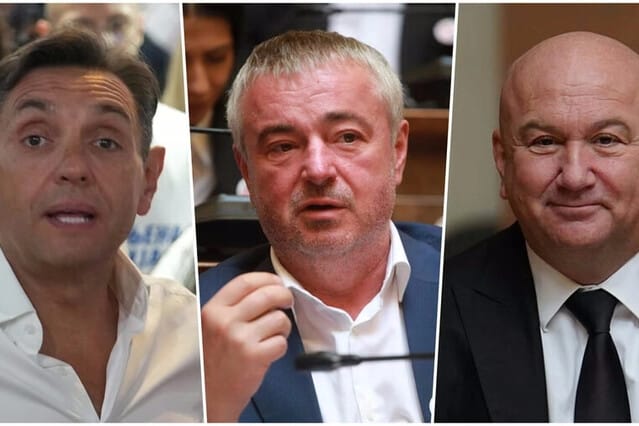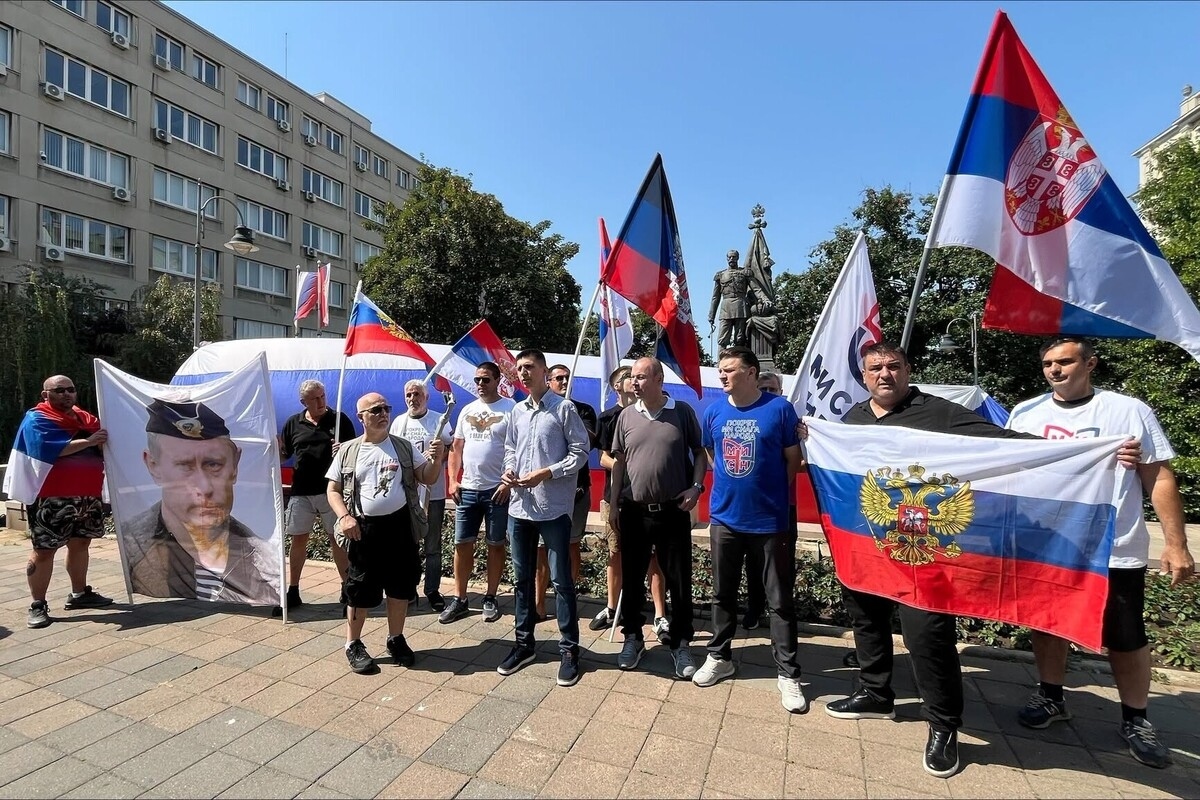
Moscow is stepping up pressure on Belgrade after the recent election victory of the opposition Student List. With an important gas-supply contract expiring and the sale of sanctioned oil and gas company NIS still unresolved, energy cooperation has moved to the fore. The Kremlin’s pressure is focused not only on Serbia, but also on Republika Srpska in Bosnia and Herzegovina and on Montenegro, where Russian activity has been accompanied by controversies involving the expulsion of Russian nationals. The Kremlin, however, has no new cards to play and is relying on the same old tools: unpopular pro-Russian politicians such as Aleksandar Vulin, chairman of the supervisory board of state-owned Srbijagas; propaganda networks such as Rybar; bikers; and assorted politically dependent activists. That lineup may not be strong enough for Moscow to hold on to its position in the region.
Informal ties and loyalty are losing their force
For the past twelve years, Moscow's Balkan strategy has involved a combination of support for authoritarian tendencies and efforts to slow the region’s Euro-Atlantic integration. Now that the Moscow-friendly Aleksandar Vučić and his Serbian Progressive Party (SNS) have been defeated in the country's recent parliamentary election, the Kremlin will have to reform its approach.
Serbia will remain Russia’s key partner and its main platform for promoting its narratives even after Vučić’s defeat. But with the arrival of a new majority, formed amid anti-corruption protests and with no evident ties to the Kremlin, the old informal arrangements and political loyalties are losing their force. Moscow was clearly worried about this outcome. In the run-up to the Serbian vote, a vigorous campaign to discredit the opposition relied on the efforts of senior Russian government officials, the diplomatic corps, and the Foreign Intelligence Service (SVR).
Thanks to Vučić’s deft balancing act, the Kremlin was able to promote its anti-Western agenda and build sympathy for Vladimir Putin in Serbia for more than a decade. Over that period, the Kremlin used media under its control, conservative political circles, and the Church to portray Serbia as a “brotherly” country and a historical ally.
Moscow benefited from the slow pace of European integration in the Balkans, as well as from the Trump administration’s disputes with the European Union and NATO. Still, Vučić’s displays of friendship to Moscow did not translate into recognition of Crimea, and they did not halt Serbia's European integration. Still, his decision not to impose sanctions over the Russian invasion of Ukraine made it harder for the West to form a united anti-Russian front in Europe. The Serbia card was largely symbolic, but symbols have real propagandistic value.
Serbia's position on sanctions is unlikely to change after the new government is formed. The winners’ stated plans to dismantle the Vučić system and move toward democratization will, however, create greater distance between Belgrade and Moscow, even if the country still opts to refrain from formally signing on to the European sanctions regime.
The new authorities’ program focuses on the rule of law, rejecting authoritarian practices, and reforming the media, leaving less room for pro-Russian information and political networks to opearate. They can only hope that the Student List winners, who have no political experience so far, will prove unable to overcome the influence of groups tied to the Vučić system.
Diplomacy in the age of color revolutions
A year before the election, Moscow claimed that the West’s planned "color revolution" in Serbia was faltering. But despite all the administrative resources and media control at their disposal, Vučić and his party suffered such a crushing defeat that Moscow had to adjust its rhetoric in a hurry.
The new line is that European intelligence agencies have begun identifying the student movement’s most resolute and independent leaders so they can isolate them and sow divisions. Kremlin-controlled Telegram channels spell out the argument: the winners’ main weakness, they say, is that the movement is made up of disparate groups and has no rigid hierarchy, leaving it vulnerable to dissension. Brussels, meanwhile, supposedly has enough leverage (from open bribery to sophisticated disinformation schemes, in Moscow's telling), to turn yesterday’s applause into intense pressure in no time.
Just before Serbia’s new parliament was to be formed, Moscow decided to make official contact with the winning coalition. Before that, however, the Kremlin had already backed the best-known pro-Russian figure, Aleksandar Vulin, chairman of the supervisory board of state-owned Srbijagas, who has been under U.S. sanctions since 2023.
The Americans accuse him of ties to organized crime and drug trafficking, as well as corruption and destabilizing activity in the region. In Russia, by contrast, he is Serbia’s most frequent visitor and a recipient of numerous honors. He has the Order of Friendship for his major contribution to cooperation between Russian and Serbian security services, along with medals from law-enforcement agencies.
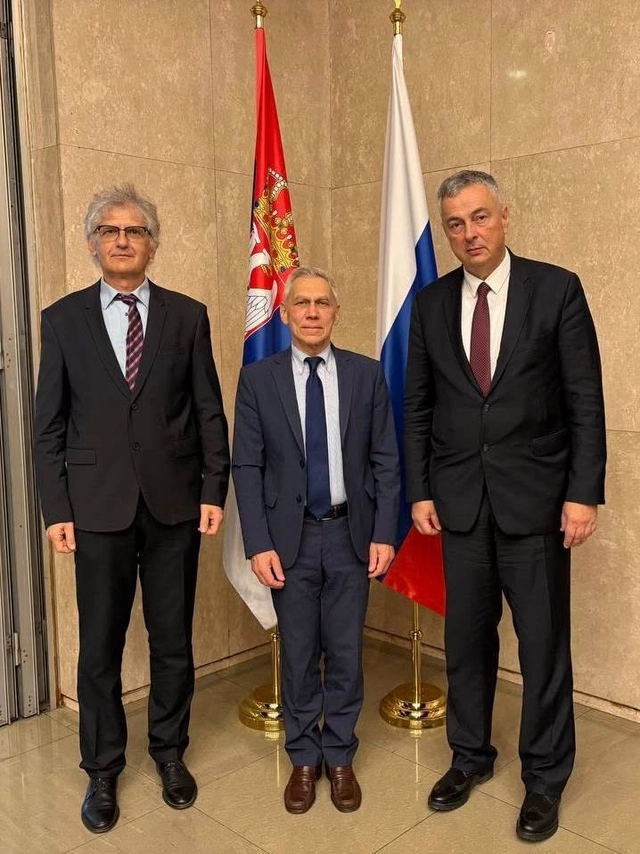
On Nov. 12, Ambassador Alexander Botsan-Kharchenko met two representatives of the winning list, Dejan Šoškić and Miodrag Krmar. The previous day in Moscow, Foreign Minister Sergey Lavrov received Vulin. The emphasis was on strengthening ties between the two countries, supporting Serbia’s territorial integrity (in the context of the Kosovo settlement), and cooperation in the field of energy. The last issue is especially important to Belgrade: its current three-month agreement with Gazprom expires in December, by which time it still has to form a government and hold a presidential election.
Moscow signaled that it might sign a long-term discounted contract with a government that publicly commits to its position. The document would therefore also serve as insurance against Serbia joining the Western anti- sanctions coalition focused on keeping Russia isolated economically.
“Gas at a friendly price in exchange for formal commitments, not smiles. Time is on the seller’s side, and the price at stake is not just euros per cubic meter, but also the part of the European course that will have to be left out of the contract,” explains the pro-Kremlin Telegram channel Balkanar.
Influence through the uninfluential
Vulin’s latest trip to Moscow took a somewhat circuitous and scandalous route. The plane carrying him, along with two other pro-Russian figures (Srbijagas CEO Dušan Bajatović and minister without portfolio Nenad Popović) was turned around over Lithuania and sent back to the Serbian capital “for security reasons.” It later emerged that Vulin had boarded without going through pre-flight screening, a matter now under investigation by Serbian authorities.
Vulin currently holds two posts: chairman of Srbijagas’s supervisory board and head of the Serbian branch council of the Russian Historical Society (whose chairman is SVR Director Sergey Naryshkin). Neither position gives Vulin political influence in Belgrade, but Moscow nevertheless consistently tries to portray him as a heavyweight.
Some observers believe Lavrov received him to show that Moscow is not abandoning its old friends — and that those friends can negotiate gas supplies for Belgrade. The meeting also sent a message to the Student List: we expect you to pick up where your predecessors left off.
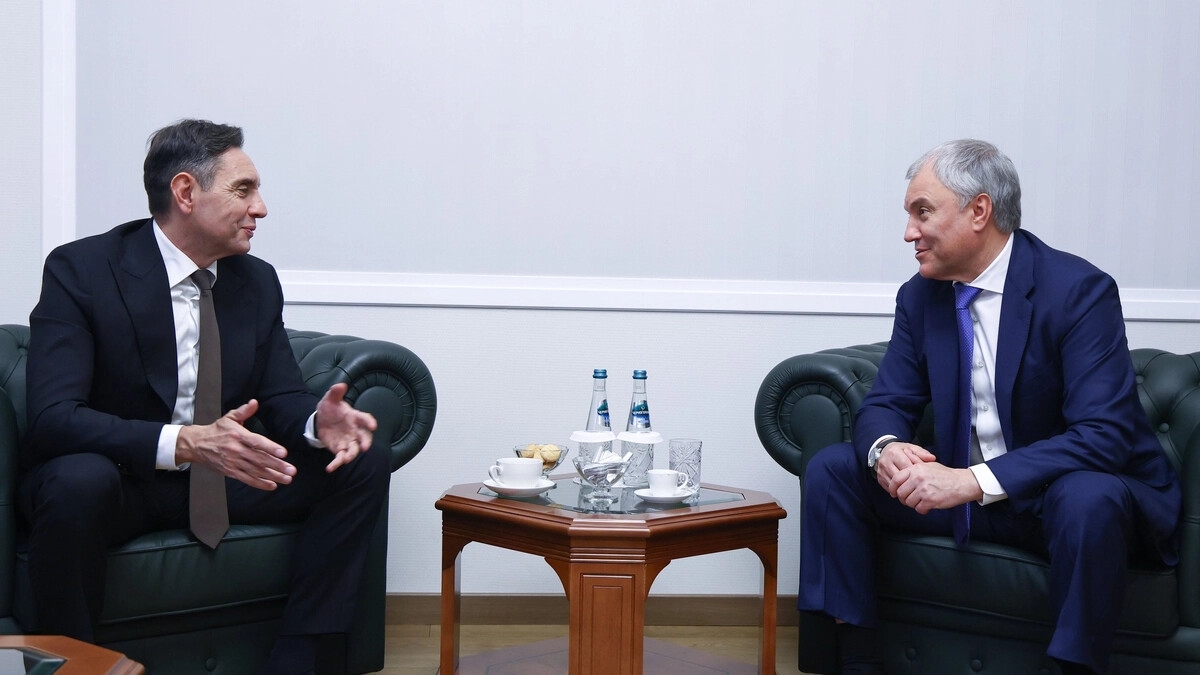
The question, however, is whether the winners want to cooperate with Vulin, given his controversial reputation. It is known, for example, that in May 2021, while serving as interior minister, Vulin gave Moscow recordings of Serbian surveillance of Russian opposition figures in Belgrade. That was when Russia and Serbia began cooperating to prevent "color revolutions."
Studies from Vulin’s time in government described him as a central figure in the state apparatus, responsible for strengthening political ties and security contacts. He was also the main channel for Russian influence in Serbia, including the appointment of pro-Russian figures to key government institutions. Experts now question whether Vulin has the authority to conduct any negotiations abroad.
NIS is the key issue
Igor Novaković, research director at the Belgrade Centre for International Politics and Security, believes the meeting at the Foreign Ministry was intended to raise Vulin’s standing in the eyes of Serbia’s new political elite. As he told The Insider:
“It is a kind of signal that the Russian side expects to keep people close to it in certain positions. But given that a scandal has already erupted involving members of his Socialist Movement, some of whom have been arrested on suspicion of abuse of office, keeping Vulin in energy-related jobs or any other important posts would be a serious burden for the new authorities."
The Russian side expects to keep people close to it in certain positions
The key issue for preserving Russian influence is energy company NIS, whose majority owner is Gazprom Neft. “But given everything that is happening and the U.S. sanctions imposed on NIS, I am not sure it can remain in Russian hands over the long term," Novaković says. "This is critically important energy infrastructure, and the Serbian authorities cannot afford to leave the company as it is.”
The U.S. previously demanded that Russian capital fully exit NIS’s ownership structure. Talks are now under way to sell the Russian stake in the Serbian company to the Hungarian group MOL.
Research focused on sowing discord
In recent years, dozens of studies on foreign influence have been published in the European Union, the United States and the Balkans. Many of them describe Russian influence as toxic or even as a threat. Russia is often called the main destabilizing force and is accused of political interference, spreading disinformation, inflaming ethnic tensions, and supporting far-right groups. The Kremlin’s actions are described as a “strategy of chaos” — provoking and then exploiting instability as a tool of geopolitical maneuvering.
Russia is often called the main destabilizing force in the Balkans
The aim of this approach is to destabilize the region, distract the West, and preserve Moscow's influence in Serbia, Montenegro, and Republika Srpska. More broadly, its geopolitical reach lies in its ability to generate uncertainty and instability both within the region and in its relations with the West.
NATO enlargement is a key rhetorical issue in the Kremlin’s confrontation with the West. Some researchers see it as a tit-for-tat situation — because the alliance is expanding into former Soviet republics that Moscow considers to be within its sphere of influence, the Russian authorities believe they are entitled to respond in kind right in NATO’s “backyard.”
Unlike the situation in the post-Soviet states, Russia has no means of maintaining a physical presence in the Balkans, so it relies mainly on local actors, from nationalist politicians to biker groups, shady businesspeople, and pro-Russian media. Numerous religious, business, and political ties have formed between Russia and Balkan countries, sometimes involving criminal circles. For many years, Bosnian Serb leader Milorad Dodik has played a particularly prominent role in this policy of influence and discord.
Is Dodik no longer what he was?
Dodik has an image as Russia’s main ally in the Balkans, primarily because he unconditionally supports every Kremlin idea and decision. Although he has no foreign-policy powers — and now holds no formal government position — he is often received by the Kremlin and the Foreign Ministry.
Observers disagree on how Vučić’s defeat will affect Dodik’s political weight in the region. It was his close ties to Serbia’s former president and their joint promotion of Serbian unity (and the threat to the Serbian people) that turned him from a local figure into a player of interest to the Kremlin.
Dodik is now trying to open a dialogue with Serbia’s Student List — even though, before the election, he called its members “foreign mercenaries,” “traitors,” and “scoundrels.” Experts doubt that Serbia’s winners will build the kind of special personal relationship with him that Vučić did. A more likely scenario after Serbia’s new government is formed is support for Republika Srpska in Bosnia and Herzegovina without backing Dodik personally. In other words, Belgrade would be open to working with other political forces.
It cannot be ruled out that the business ties between Vučić and Dodik will attract close attention from Serbian investigators. None of this, of course, will stop Moscow from continuing to work with its political ally, though Moscow too understands that Dodik is no longer what he was.
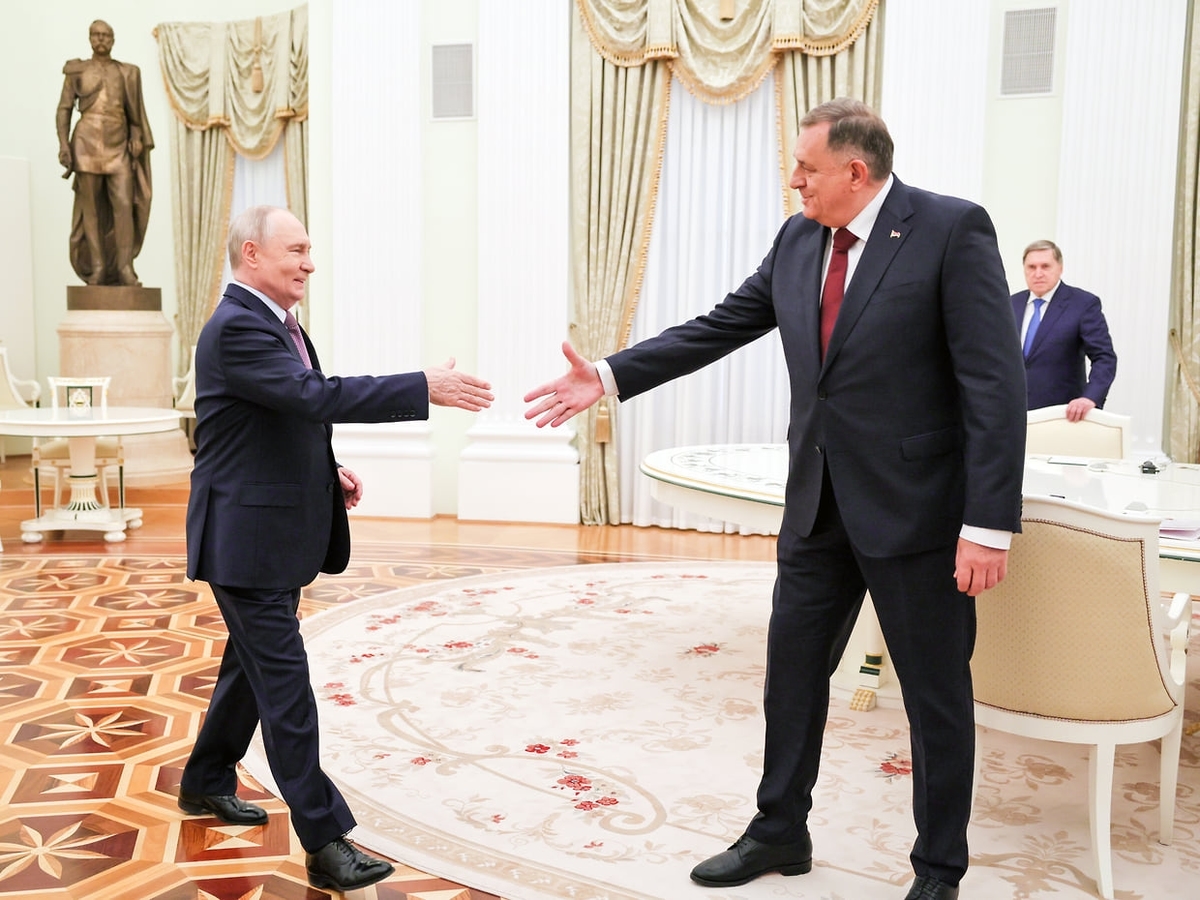
“Milorad Dodik is the only politician in Europe who openly says he has met Vladimir Putin more than twenty times and will keep doing so,” political commentator Đorđe Vujatović told The Insider.
In his view, Russia’s influence should not be expected to weaken after the Vučić regime’s defeat. Some groups in Russia even opposed Vučić, the source notes, as reflected in their frequent criticism of him for selling weapons and ammunition to Ukraine. “Relations between Serbia and Russia will remain very close, partly because of gas and oil. The situation is similar in Republika Srpska, where official policy openly takes a pro-Russian position,” Vujatović says.
Montenegro is less predictable, especially as its EU accession talks expected to conclude in the coming years. “Despite the strong influence of Serbs and the Serbian Orthodox Church, there are far more people there who are clearly committed to the EU,” Vujatović explained.
Deportations and cross-border opportunities
Serbia, Montenegro, and Bosnia and Herzegovina are all subject to strong foreign influence, but since 2022, Russian influence efforts has become much more assertive. This is visible, in particular, in the work of media outlets and diplomats in the region.
“Russian ambassadors in these countries lead an intensely political life, interfering in domestic affairs. A few years ago, for example, the Russian Embassy in Montenegro said that closer ties with the European Union would be an act of open hostility toward Russia,” Vujatović says.
Given the polarization between West and East, many Serbs and Montenegrins — because of NATO countries’ hostility and the conflicts of the 1990s in the former Yugoslavia — believe that only Russia can protect them. “That is why pro-Russian sentiment and support for Russia’s war against Ukraine are a logical consequence. The approach taken by the European Union and the United States toward the Balkans in the postwar years also played a major role,” Vujatović believes.
The most high-profile recent scandal involving Russian influence in the Balkans came in October, when Rybar pro-war Telegram channel creator Mikhail Zvinchuk was arrested and deportated. Montenegro was the last stop on the Russian propagandist’s Balkan tour after his visits to Serbia and Bosnia.
The speed of Zvinchuk’s deportation and the circumstances of his stay in Montenegro once again showed that the country can demonstrate loyalty to the European Union while remaining unwilling — or afraid — to confront the Russian influence networks operating in the region.
The Rybar network consists of about 200 channels operating in 28 languages. Zvinchuk is under sanctions imposed by Brussels, London, and Washington. In 2024, the U.S. State Department announced a reward of up to $10 million for information about the team behind the project, which is suspected of interfering in the U.S. presidential election.
With a record like that, Zvinchuk would seem to have taken a serious risk by traveling to a NATO country. In the end, however, his expulsion brought him additional publicity and allowed him to exploit divisions in Montenegro’s political landscape.
Zvinchuk’s detention could have dealt a blow to Russia’s propaganda infrastructure in the Balkans. Instead, the episode confirmed that public opinion is being manipulated almost unhindered through pro-Kremlin media, social networks, and local politicians. Still, these tools are clearly not enough to allow Moscow to secure decisive influence, as Serbia’s election showed.