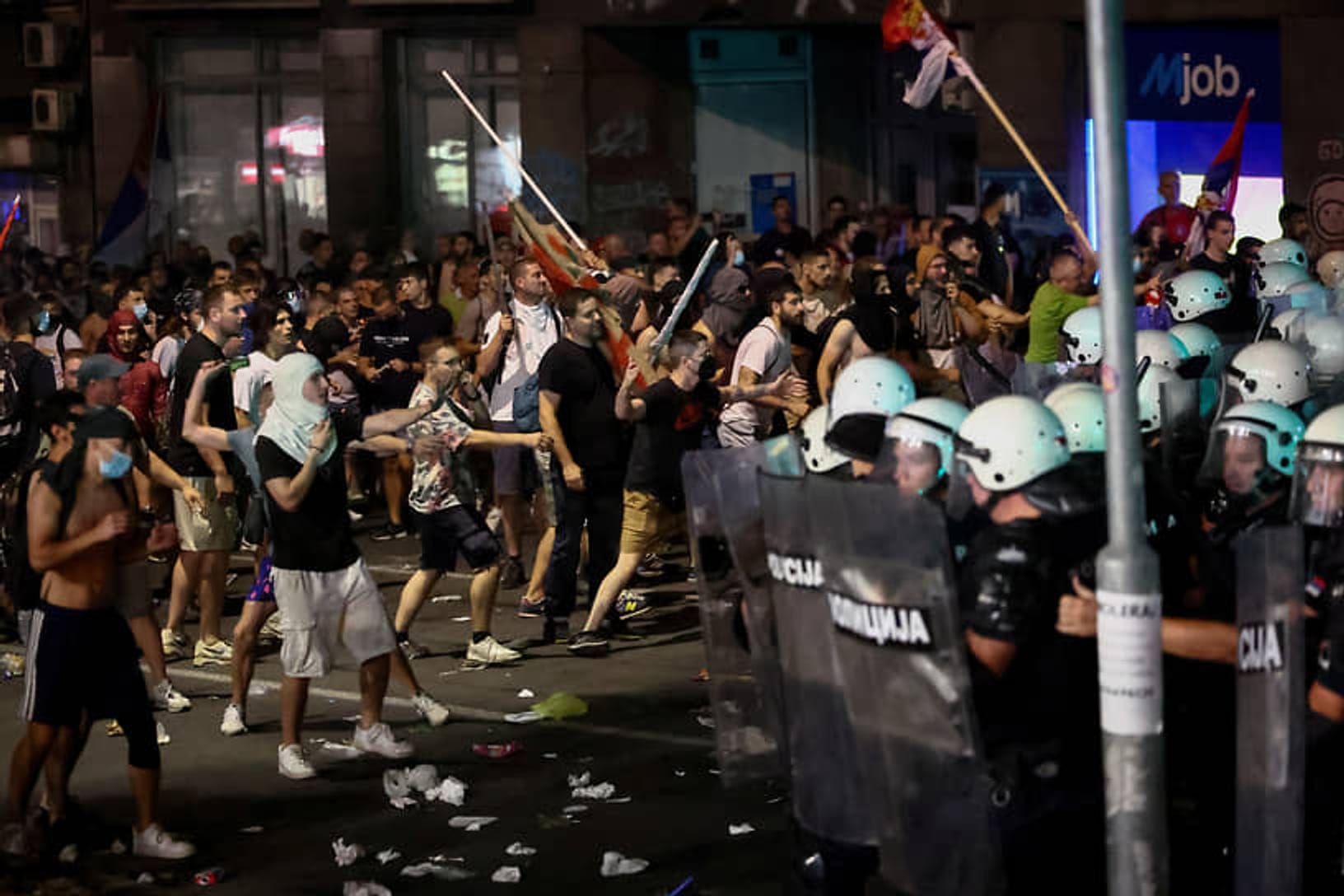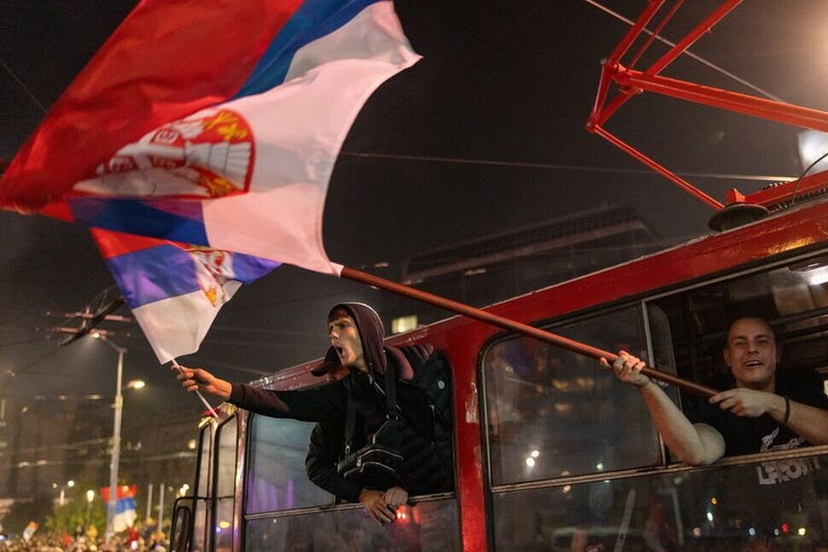

The victory of Serbia’s protest-driven student movement in the Oct. 25 snap parliamentary election triggered widespread euphoria. Many observers saw the result as a turning point that could open the way for sweeping anti-corruption reforms and a revival of the country’s European integration after 14 years of dominance by Aleksandar Vučić. But the winners’ first major test will be forming a new government, which will determine whether those promised changes can move forward. Tensions remain extremely high: new institutions cannot be created overnight, and Vučić, despite conceding defeat, has continued his campaign to discredit the student movement. He is trying to pit his opponents against both the Kremlin and Donald Trump while openly hinting that he is prepared to shift the confrontation into the streets.
For years, Vučić remained Serbia’s dominant political figure regardless of the office he formally held. But after the Oct. 25 election, he lost his status as the country’s unquestioned leader: His gamble of leaving the presidency early in an attempt to return as prime minister failed. For the first time since 2012, he holds no official state position. The victory of the protest movement’s Student List, which won a majority in Serbia’s 250-seat National Assembly — the Skupština — deprived him of the ability to form a government. And under Serbian law, he cannot run again for president after voluntarily leaving that office.
“Sirens, songs, and tears of joy. What happened on Serbia’s streets showed just how much of a burden Aleksandar Vučić had become for the citizens of his own country. People’s faces showed relief, as though they had thrown off shackles and could walk freely again. No one organized this joy. There were no buses, handouts, or lists needed. It came after the man who captured the state and turned the daily humiliation of citizens into a method of government admitted defeat. We are tired of a state where one person decides who is a patriot, who is a traitor, who is allowed to speak, and whose life should be destroyed. Now there must be accountability for violence, abuses, persecution, and public money spent to preserve one man’s personal power...” Hundreds of similar reports from Serbia have circulated around the world in recent days.
Vučić’s defeat, despite his extensive use of state resources that included near-total control over much of the media, election bodies, and the judicial system reminded many of events in the fall of 2000, when mass protests brought down the regime of Slobodan Milošević.
Media outlets and experts have also drawn comparisons with Hungary’s former prime minister Viktor Orbán, who until recently had seemed politically untouchable. Those striking parallels, however, do not answer the central question: after power has been taken from Vučić, can it be retained? The atmosphere is tense, and people want swift justice. But institutions cannot be created and reformed quickly, analysts caution.
Musical chairs gone wrong
For Vučić, the risky “seat-switching maneuver” was essentially the only option left after nearly two years of mass protests, which erupted following the deaths of 16 people at the Novi Sad railway station. Growing public anger could not be suppressed either by accusations that students were terrorists or by the alleged use of a “sound weapon” against protesters.
In the past, Vučić had repeatedly turned to snap elections to reaffirm his dominance and overwhelm familiar opponents from Serbia’s traditional liberal opposition. But the decentralized student movement, with little political experience and no well-known leaders, proved much harder to defeat.
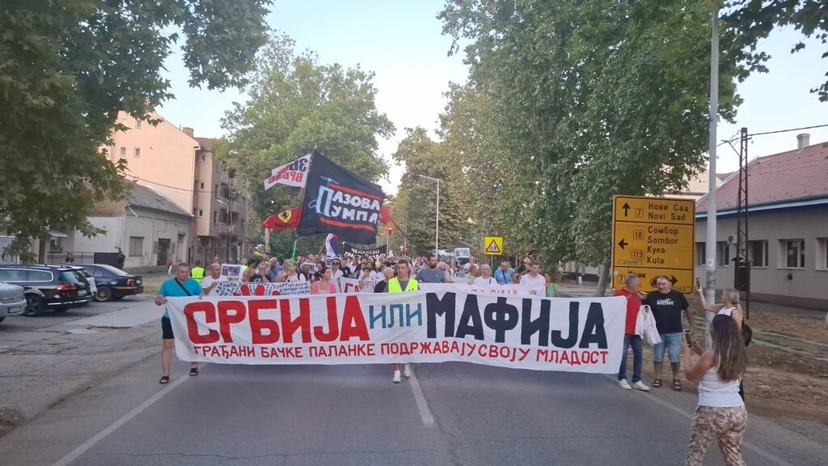
Running under the slogan “Serbia or the Mafia,” the students absorbed much of the electorate. At the same time, they refused to cooperate with opposition parties, arguing that those parties were themselves part of Serbia’s entrenched political system.
A presidential election is also due in the coming months, and Vučić’s Serbian Progressive Party, or SNS, will try to advance its own candidate. The task will be difficult: The former president’s personal ability to control domestic political processes and the state apparatus has been sharply diminished, while the protest movement has reached the Republic Electoral Commission itself. Several commission members accused the body of pressure and dishonesty and demanded an apology over the failure to open enough polling stations abroad, forcing many voters to travel hundreds of kilometers to cast ballots.
Will Vučić delay the transfer of power?
In the Oct. 25 election, the Student List — Students Win movement received 52.54% of the vote, giving it about 140 seats in the 250-seat parliament. Vučić’s United Serbia coalition received 39.29%, goog for 103 seats. The remaining seven seats went to parties representing national minorities.
All other political forces, including the Socialist Party, Vučić’s longtime coalition partner, failed to cross the 3% parliamentary threshold. It was the first time in 30 years that the Socialists — led until 2000 by Slobodan Milošević and later by his former spokesman Ivica Dačić — failed to win parliamentary representation.
The protest movement’s victory has opened a window of opportunity, but it is not exactly a wide one. The winners have no experience governing the country, while state institutions remain under the influence of Vučić’s Serbian Progressive Party. Candidates for prime minister and other cabinet posts have not yet been presented, and forming a government could take months.
Candidates for prime minister and Cabinet posts have not yet been presented, and forming Serbia’s new government could take months
Vučić’s team could also delay the transfer of power, creating the risk of a deeper crisis. Vučić, for his part, has accepted no personal responsibility for the state of the country. He blamed his defeat on independent media, unnamed European countries, and the “American deep state.”
After Oct. 25, Vučić’s political influence shifted from near-absolute dominance to opposition leadership. He still heads a large parliamentary bloc and can count on the loyalty of a substantial share of voters. His rapid concession surprised many and may have been a tactical move intended to reduce his immediate risks and preserve a political future for himself and his allies.
Vučić’s associates have already promoted claims of supposed “revolutionary terror” and a “witch hunt” aimed at eliminating him. In reality, no member of Vučić’s team has been physically attacked, arrested, or placed on a wanted list. Demands for the dismissal of senior officials who served the old system hardly match such sweeping claims. Even after the election, acting president Ana Brnabić, a Vučić ally, appeared confident enough to trade insults with passersby on the streets — and even to challenge them to arrest her.
There are, however, more prominent potential targets for investigation. The allegations against Vučić himself and Finance Minister Siniša Mali include abuse of office, corruption, financial wrongdoing, and unlawful pardons, among other matters. One of the most politically explosive cases reaching the highest levels is the investigation into the reconstruction of the Novi Sad railway station — where the fatal collapse that sparked the protest movement occurred.
Another major corruption controversy centers on the removal of cultural heritage protections from the former Yugoslav General Staff complex in Belgrade, which was bombed by NATO in 1999. The move was made to clear the way for a hotel project backed by Jared Kushner; however, Trump’s son-in-law withdrew from the $500 million project amid the controversy, and an investigation into alleged document falsification involving Culture Minister Nikola Selaković remains open.
From protest politics to governing
“Vučić and his team cannot be trusted for a second until a new government is formed. This is a mafia structure, not simply a group of citizens who lost an election,” critics of the old government warn.
The first priority, experts say, should be establishing control over the police and military and removing Vučić loyalists from leadership positions, even as those officials try to negotiate and issue threats. The next step would be appointing professionals to senior posts.
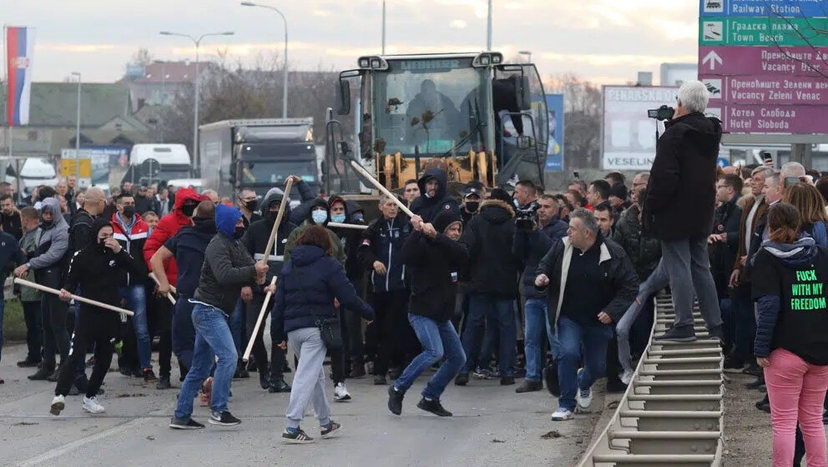
Despite its historic victory, the Student List faces numerous challenges. Vučić has already threatened that members of his party would “self-organize” if state authorities failed to respond to an Oct. 26 incursion by a group of people into the studio of the pro-Vučić television channel Informer, and critics interpreted the statement as a dangerous threat — even an announcement that vigilante groups could be formed to deal with protesters. Vučić’s remarks were particularly striking given that he still retains considerable influence over the security services.
In addition, internal disagreements among the winners could emerge quickly as well because of their ideological diversity, which ranges from pro-Western liberals to nationalists.
One possible candidate for prime minister is Ilija Srđanović, a cardiologist from Novi Sad who headed the Student List. However, it remains entirely unclear who might take over key departments such as the Interior Ministry, Finance Ministry and Justice Ministry. Those appointments could become the subject of bitter disputes.
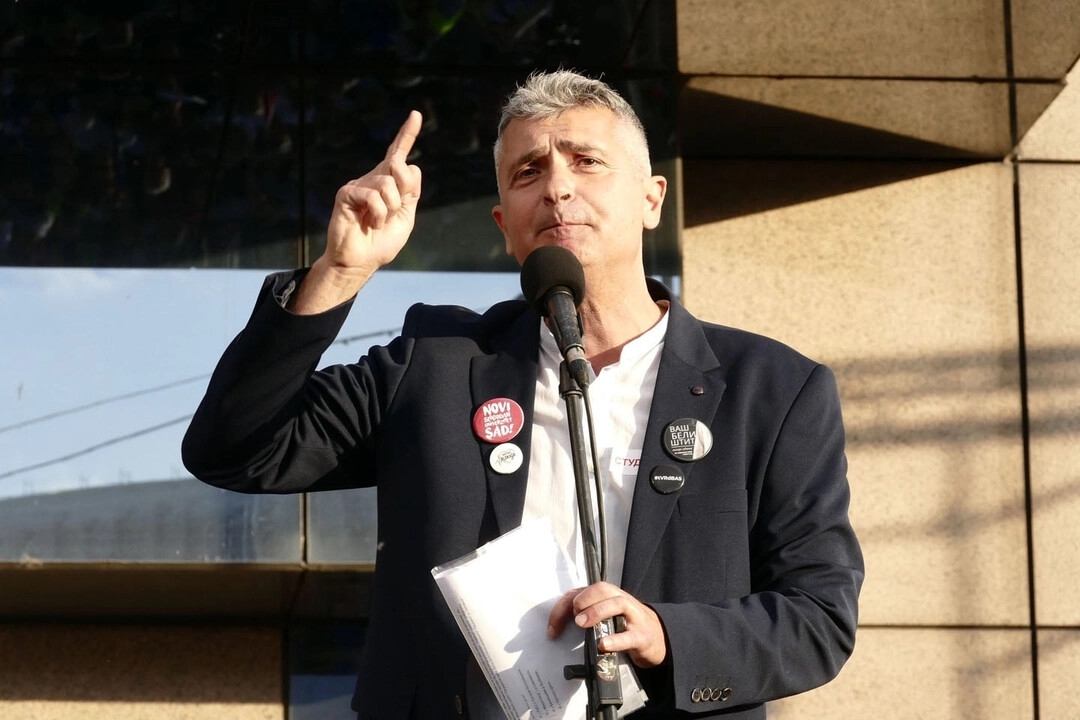
The formation of the executive branch will take place in the middle of another election campaign, meaning the new government’s real program is unlikely to take shape fully until after the presidential election.
The new authorities may also face pressure from the European Union, Serbia’s largest investor and source of financial assistance, and also from Russia, which supplies the country with gas. Serbia has no long-term contract with Gazprom and discounted supplies are currently renewed every three months.
A flicker of friendship
Moscow’s response to Vučić’s defeat has combined official restraint from the Kremlin with approving commentary in some pro-government Russian circles. Kremlin spokesman Dmitry Peskov said that Moscow highly valued Vučić’s contribution to Russian-Serbian relations, and the Kremlin expressed its hope that he would continue supporting bilateral ties from the opposition benches. Moscow also said it hoped Serbia’s new political forces would understand that constructive cooperation with Russia was in Serbia’s interests.
Some Russian commentators welcomed Vučić’s defeat. For example, the nationalist outlet Tsargrad described the change of power as liberation from a “false patriot” who had maneuvered between Russia and the West.
Although some observers (like Vučić himself) have suggested that the new government could begin reassessing relations with Moscow, this remains speculation. For now, there is little basis for expecting a major shift in Belgrade’s long-standing foreign policy of maintaining relations with all major powers — the EU, the United States, Russia, and China.
It is far from certain that Serbia’s new government will seek to reassess relations with Moscow
Vučić is clearly trying to push his opponents into confrontation with both Russia and the United States. Until recently, he controlled much of Serbia’s pro-Russian electorate and counted closer relations with the United States under Trump among his achievements.
This summer, the United States and Serbia announced the launch of a strategic dialogue. The initiative was intended to open the way for closer cooperation in foreign policy and defense, as well as a larger U.S. presence in Serbia’s energy sector. That, in turn, could help the country reduce its dependence on Russian oil and gas.
Washington is unlikely to care greatly who ultimately takes Vučić’s place. Moscow, however, may be tempted to intervene as its influence in the Balkans continues to shrink. After the collapse of Vučić’s team, the Kremlin effectively has no obvious political partner of comparable stature in Serbia.
Not such a valuable ally
Vučić successfully cultivated an image, where useful, of being a “Kremlin ally,” but his policies were never truly pro-Russian. Public displays of closeness to Moscow and admiration for Putin’s power never translated into recognition of Russia’s annexation of Crimea or abandonment of Serbia’s EU ambitions.
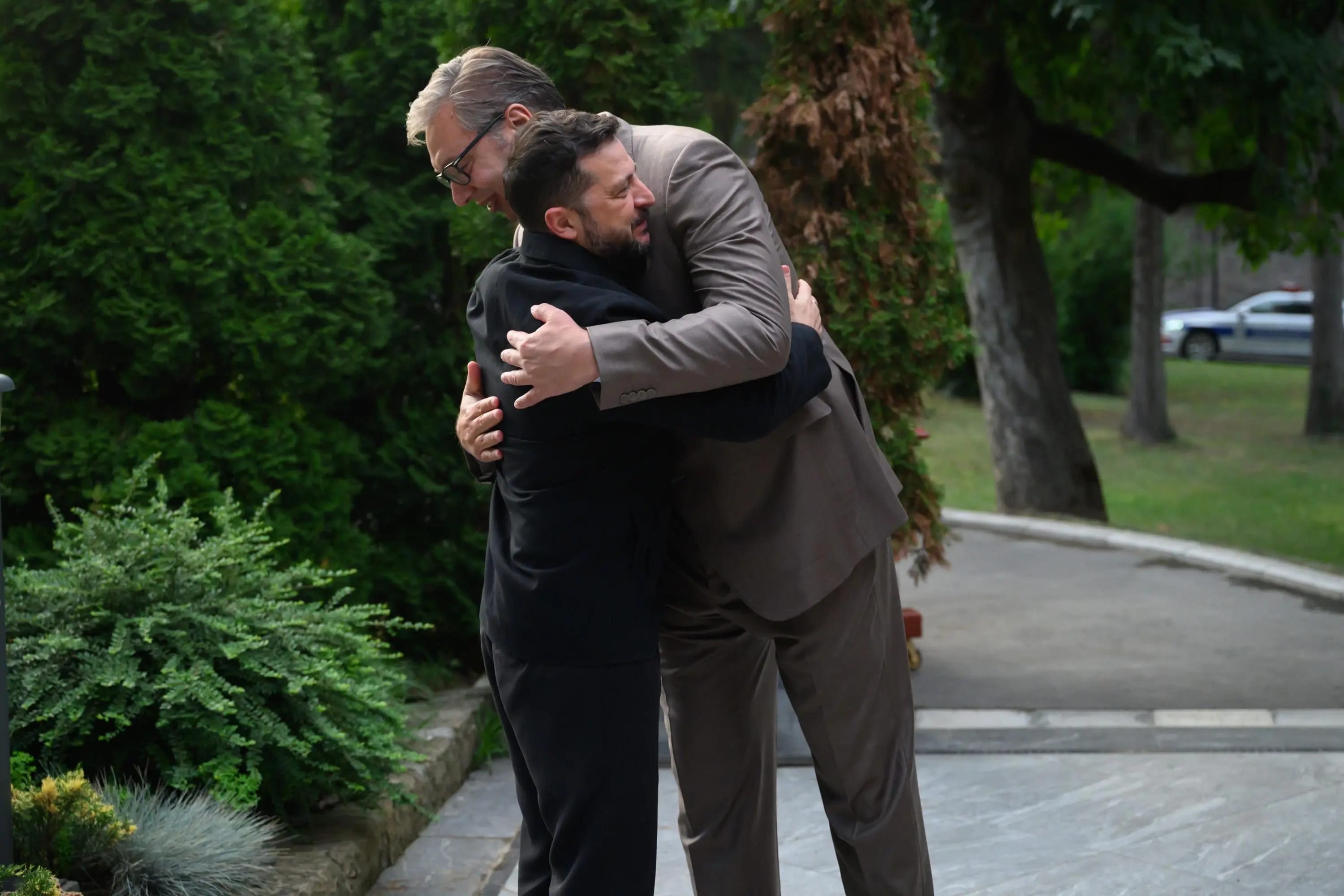
Vučić had no intention of trading the European Union, which accounts for roughly two-thirds of Serbia’s foreign trade, in favor of a Eurasian alternative that simply could not offer comparable economic opportunities, goods, or technology. His favored eastern partner has long been China, and the warm reception given to Ukrainian President Volodymyr Zelenskyy in Belgrade this summer could even be described, using the language of Russian diplomacy, as a “stab in the back” to Moscow.
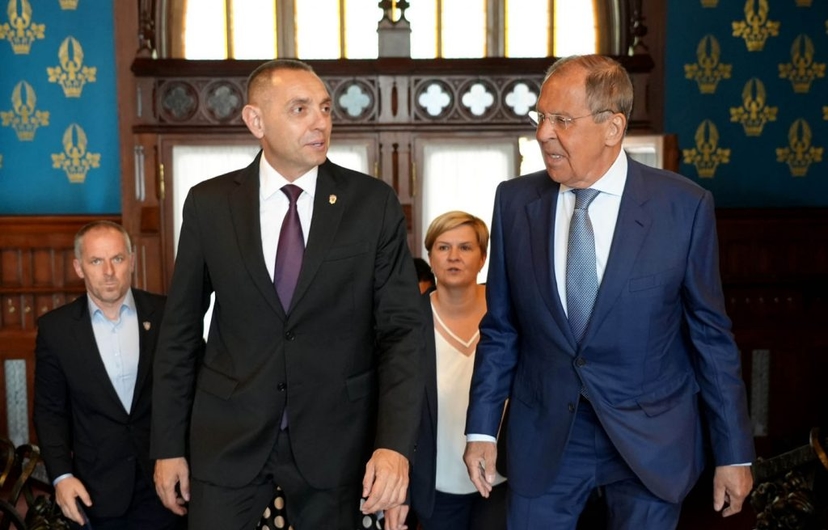
Serbia’s principal contacts with the Kremlin in recent years have taken place at a lower level, through Minister for International Economic Cooperation Nenad Popović and Aleksandar Vulin, chairman of the supervisory board of state-owned Srbijagas. Both have been under U.S. sanctions since 2023.
The United States accuses Vulin of links to organized crime and drug trafficking, as well as corrupt dealings that “facilitated Russia’s malign activities.” Popović, who owns numerous companies in Serbia and Russia, was accused by U.S. authorities of “embezzlement and tax schemes.”
The fact that Serbia did not impose sanctions on Russia was a source of satisfaction for the Kremlin in recent years, as it prevented the West from presenting a completely united anti-Russian front in Europe. But it produced little tangible benefit: since 2022, trade between Russia and Serbia has fallen by nearly half, to $2.3 billion.
In practical terms, relations between the two countries have reached one of their lowest points. That is especially true after the future of Serbian oil company NIS — which is 44.85% owned by Gazprom Neft — was thrown into doubt. The United States imposed sanctions and demanded the complete removal of Russian capital from the company’s ownership. Negotiations have continued over a possible purchase of the Russian stake by Hungary’s MOL oil and gas group.
Direct intervention in Serbia or an attempt to help Vučić return to power would be disadvantageous for the Kremlin. The Student List does not hold an explicitly anti-Russian position, and Vučić himself has recognized the legitimacy of the election results. Russia’s ability to influence Serbia’s political scene is also extremely limited, partly because Serbia is geographically separated from Russia and surrounded by NATO and EU states.
Moscow could nevertheless use Vučić as a strong pro-Russian counterweight to the new government. The Kremlin still has its traditional tools of influence, from the propaganda outlets Sputnik and RT to the energy lever, which allows Moscow to offer discounts or raise prices as it sees fit.