The announcement in June that NATO would reduce its military presence in Kosovo, together with disputes between the United States and its European allies over Bosnia and Herzegovina, is having a negative impact on the Balkans as a whole. The Trump administration's new strategy, aimed at reducing American influence in the region, is both contradictory and risky. The president’s pursuit of quick dealmaking wins has already led to a serious setback in Bosnia. Following Washington's decision to lift sanctions on Bosnian Serb leader and Kremlin ally Milorad Dodik, separatist forces have strengthened their position on the ground. Some experts believe that, by acting against the interests of the European Union, Trump is effectively dismantling the security architecture that the United States not only created, but also spent decades reinforcing in the Balkans.
- 1.A new policy: “Without excessive dependence”
- 2.And without consensus
- 3.Kosovo: What about NATO troops?
- 4.Commercial interests and competition with Russia and China
- 5.Against the interests of its allies
- 6.Neither a major war nor a lasting peace
- 7.A quiet transformation
- 8.Will Russia block the EUFOR mandate?
As a result of Donald Trump's return to the White House, the situation in the Balkans has become even more uncertain. Since the 1990s, the region has been home to two frozen conflicts: in Bosnia and Herzegovina and in Kosovo. International efforts to resolve both conflicts were led by the United States, particularly on matters of security and constitutional governance. Recently, however, Washington’s approach has begun to change.
A new policy: “Without excessive dependence”
The new, officially more pragmatic U.S. strategy toward the region is based in part on last year's Western Balkans Democracy and Prosperity Act, which emphasizes advancing commercial and geopolitical interests rather than getting directly involved in political disputes. Balkan leaders are being urged to stop relying on outside support and take responsibility for resolving their own problems. Washington is making it clear that its engagement in the region is now driven less by state-building or a values-based agenda than by interests related to security, energy, and infrastructure.
At the same time, infrastructure projects, energy corridors, and security cooperation are becoming part of a broader geopolitical strategy. The United States seeks to reduce the region's dependence on Russian energy supplies and limit China's influence, arguing that Moscow and Beijing exploit instability, corruption, and weak governance across the region for their own benefit.
Washington argues that Moscow and Beijing exploit instability, corruption, and weak governance in the region for their own benefit
These shifts in U.S. policy come amid the announced reduction of the American military presence in Europe, accompanied by demands that allies increase defense spending and assume greater responsibility for the continent's security.
“The era of U.S.-led nation-building is over. U.S. policy toward the Western Balkans is not about rescue or reconstruction, but about stability and mutually beneficial partnerships,” the Trump administration stated in a report submitted to Congress in May. Washington is now “focused on empowering local actors to solve their own problems, rather than perpetuating excessive dependence on international intervention or oversight.”
And without consensus
At first glance, this approach may seem entirely reasonable. Over the past several decades, local politicians have often shifted responsibility for the region's problems onto Brussels, Washington, or the United Nations, avoiding difficult decisions on a range of reforms. The problem, however, is that the very model for resolving conflicts in the Balkans was built on the assumption of long-term political, financial, and military engagement by external actors. Within that framework, the U.S. presence served as the principal deterrent to any party on the ground looking to take up arms again.
This raises an important question: how firmly were these conflicts actually resolved? A clearer answer will emerge as the U.S. role in the region evolves from here. Serbia, it should be remembered, like roughly half the world's countries, has not recognized Kosovo's independence, and no agreement on the normalization of relations has yet been reached. Meanwhile, for the past thirty years Bosnia has been under an international administration tasked with overseeing the implementation of the Dayton Peace Agreement.
The United States says it “stands ready to provide support where U.S. engagement is necessary” as unresolved disputes “undermine regional stability.” This applies above all to Bosnia, where the White House claims to have resolved an “acute crisis” last year between Bosnian Serb leader Milorad Dodik and High Representative Christian Schmidt — the now-former head of the aforementioned monitoring mission, whose appointment and authority Dodik had rejected from the outset. Dodik was removed from his post as president of Republika Srpska in Bosnia and Herzegovina and was subsequently barred by a court from holding public office for six years. Schmidt, meanwhile, announced his resignation in May, but the United States and the European Union have so far been unable to agree on his successor.
Kosovo: What about NATO troops?
As for the other flashpoint, the White House expects Serbia and Kosovo to “reach a lasting agreement acceptable to both sides.” The United States remains part of the KFOR peacekeeping force, which it describes as “a key component of maintaining security.”
At the same time, KFOR is set to be reduced next year from its current strength of 4,700 personnel to between 3,000 and 3,500. Although NATO has declined to specify which national contingents will be affected, diplomatic sources say the initiative to scale back the alliance's commitment originated with the United States.
Last year, media outlets reported on the possible withdrawal of U.S. troops from Kosovo, a move that experts described as “the wrong move at the wrong time.” Opponents of reducing the U.S. role argued that such a decision would alter the regional balance of power and leave Europeans to deal with security challenges on their own. This comes against the backdrop of flaring tensions between Serbia and its breakaway province, which has been mired in a constitutional crisis for the second year running.
The United States currently has 590 troops stationed in Kosovo — the second-largest national contingent after Italy's 984. The U.S. role, however, is regarded as strategically important because of its leadership within NATO's command structure and its operational capabilities. Camp Bondsteel in Kosovo is one of the largest U.S. military bases in Europe and is considered a vital NATO logistics hub in the region.
The United States has 590 troops in Kosovo, making it the second-largest contingent after Italy's contingent of 984
KFOR and NATO officials have said that no major changes to the mission are planned and that troop levels will continue to be determined by the evolving security situation. It is worth recalling that in 2023 KFOR was reinforced by 1,000 troops — the largest deployment increase in a decade — following clashes in northern Kosovo, where the population is predominantly Serb. The unrest was triggered by a boycott of local elections and protests against ethnic Albanian mayors. Serbia's armed forces were subsequently placed on the highest level of combat readiness.
Commercial interests and competition with Russia and China
After security, the second pillar of the Trump administration's Balkan policy is the promotion of U.S. commercial interests, with a particular focus on reducing Russian influence in the energy sector. The United States is promoting its own liquefied natural gas, nuclear technologies (including small modular reactors), and renewable energy sources.
Among the White House's priority projects is the Southern Interconnection gas pipeline, which will link Bosnia and Herzegovina's gas transmission network with Croatia and the LNG terminal on the Adriatic island of Krk. The project is expected to eliminate Bosnia's dependence on Russian gas supplies.
Other initiatives backed by the United States include a gas pipeline linking Serbia and North Macedonia, the modernization of coal-fired power plants in Kosovo, and the development of hydropower in Albania, Bosnia and Herzegovina, North Macedonia, and Serbia.Washington also aims to compete for strategic projects in transportation, information and communications technology, and the defense sector.
The Trump administration presents regional stability and expanded trade cooperation as powerful tools for countering the “malign influence” of Russia and China. “Moscow fuels ethnic conflicts, finances destabilizing actors, and uses hydrocarbon supplies to pressure politicians and undermine confidence in Western institutions,” the report to Congress states. China, meanwhile, which is steadily displacing the Balkan countries' traditional economic partners, “uses trade, loans, bribery, propaganda, and ties with elites to expand its influence.”
Against the interests of its allies
Overall, the Trump administration says it intends to develop “positive” relations with all six Western Balkan countries: Albania, Bosnia and Herzegovina, Kosovo, Montenegro, North Macedonia, and Serbia. Experts, however, see downsides to this approach.
In an interview with The Insider, political scientist Igor Novaković, research director at the Center for International and Security Affairs, points to the transactional nature of the current White House. “The report to Congress and other Trump administration documents clearly show that it no longer regards the Western Balkans as a priority — it has no 'emotional' attachment to the region. It does not even view many of the achievements of the past thirty years as part of its legacy. Its priorities are preserving stability and pursuing projects that can benefit American companies and specific private interests,” Novaković says.
The Trump administration no longer has an “emotional”attachment to the region
One of the risks, Novaković argues, is that Washington is demonstrating its willingness to act against the interests of its European allies, particularly when it comes to “the situation in Bosnia, where we are now seeing a dispute over the appointment and powers of the High Representative. The Americans refused to support the Europeans' candidate,” Novaković explains. He also points to the controversy surrounding the Southern Interconnection project: “It was originally proposed by the European Union, but the United States took charge of it.”
In Brussels, there is a growing recognition that the EU needs to compete with the United States geopolitically, Novaković says. There have been signs that the bloc may step up accession negotiations, particularly with Serbia, but it remains unclear whether all member states will be willing to overlook the fact that some candidate countries do not meet the membership criteria. “What's emerging is a clash between the bureaucratic logic that has so far dominated European integration and the logic of geopolitical necessity,” Novaković concludes.
Neither a major war nor a lasting peace
“Trump's Balkan policy is a strange mix of continuity and rupture, which is entirely consistent with the broader unpredictability of this administration's foreign policy,” security expert Vuk Vuksanović, a lecturer in the Department of War Studies at King's College London, told The Insider.
Washington continues to support Kosovo's independence and Bosnia and Herzegovina's territorial integrity, while Russia and China are still viewed as strategic rivals whose influence should be contained. Notably, Russia’s most important commercial asset in the Balkans — the Serbian oil company NIS, in which Gazprom Neft owns a 42.73% stake, came under U.S. sanctions this past October.
Trump's Balkan policy is a strange blend of continuity and rupture
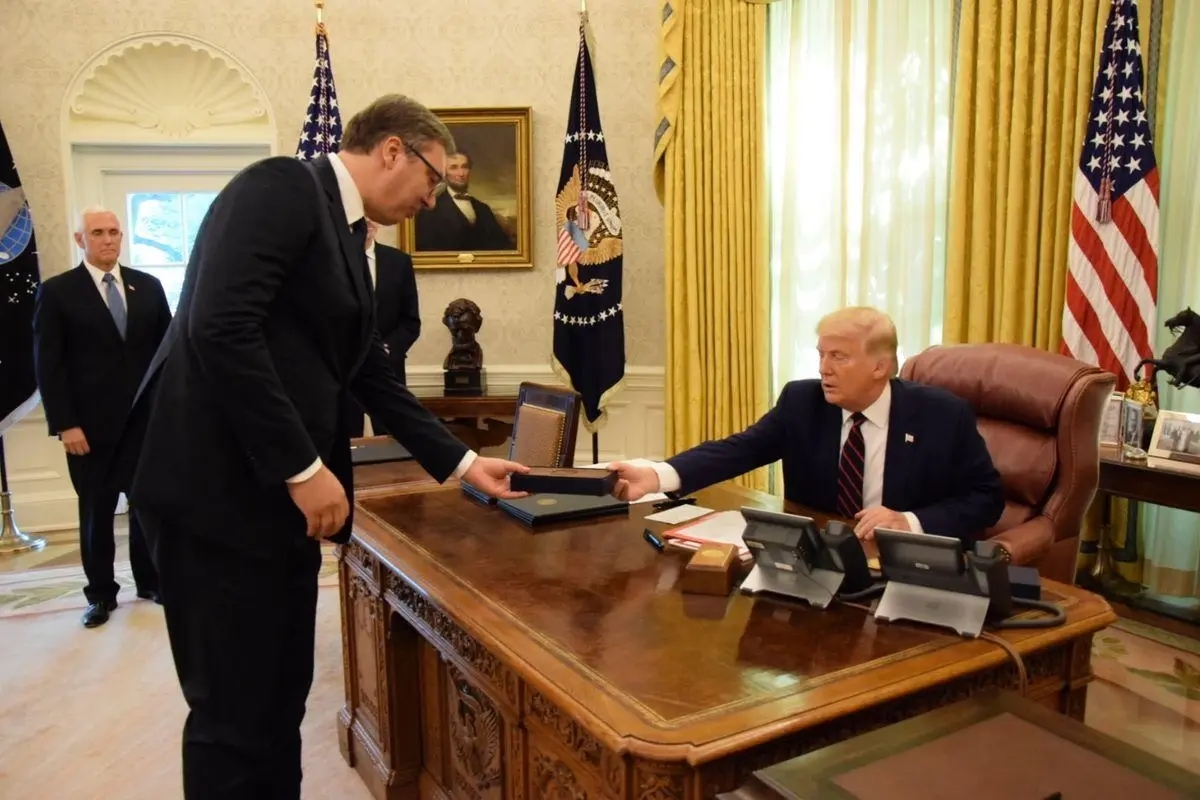
“Washington is focusing on transactional relationships in the region, trying not only in the Balkans but across Eastern Europe as a whole to identify business opportunities or ways to promote Trump as a strong leader,” Vuksanović says, with Trump's son-in-law Jared Kushner seeking to pursue commercial projects in Serbia and Albania and the president himself making unrealistic claims that he prevented a war between Serbia and Kosovo.
Still, the regional expert sees no sign that a return to conflict is imminent. “The United States wants to reduce its presence in Europe, which will significantly weaken NATO, but that still does not mean a return to the kind of hostilities the Balkans experienced in the past, because the countries of the region have limited capacity to sustain prolonged wars,” Vuksanović says. Under these new circumstances, he believes, some countries will increasingly look to European governments, others to the United States, while Serbia will most likely continue to pursue its by-now-familiar balancing act.
A quiet transformation
“The Western Balkans may be witnessing a quiet but historic transformation in U.S. foreign policy,” argue a collection of analysts at the Atlantic Council. For nearly three decades, Western policy toward the Balkans was based on the assumption that the region required continuous external management — political, institutional, and even psychological. The clearest embodiment of this doctrine has been Bosnia and Herzegovina: a state under international supervision, sustained by a complex system of foreign oversight, externally imposed reforms, and diplomatic intervention. The United States no longer considers such a model to be sustainable, effective, or even strategically significant, the article argues.
So far, however, the Trump administration's rhetoric and policies have done little to enhance either stability or effectiveness, and the White House is likely to find that the era of nation-building has not in fact ended. Despite years of international efforts, it has proved impossible to build a functional political system in Bosnia, as Bosniaks, Serbs, and Croats in the country often pursue conflicting priorities rooted in ethnic politics rather than shared objectives. Nationalist rhetoric dominates public discourse, and proposals to redraw borders are openly debated, even though the Dayton Peace Agreement provides no basis for such a scenario.
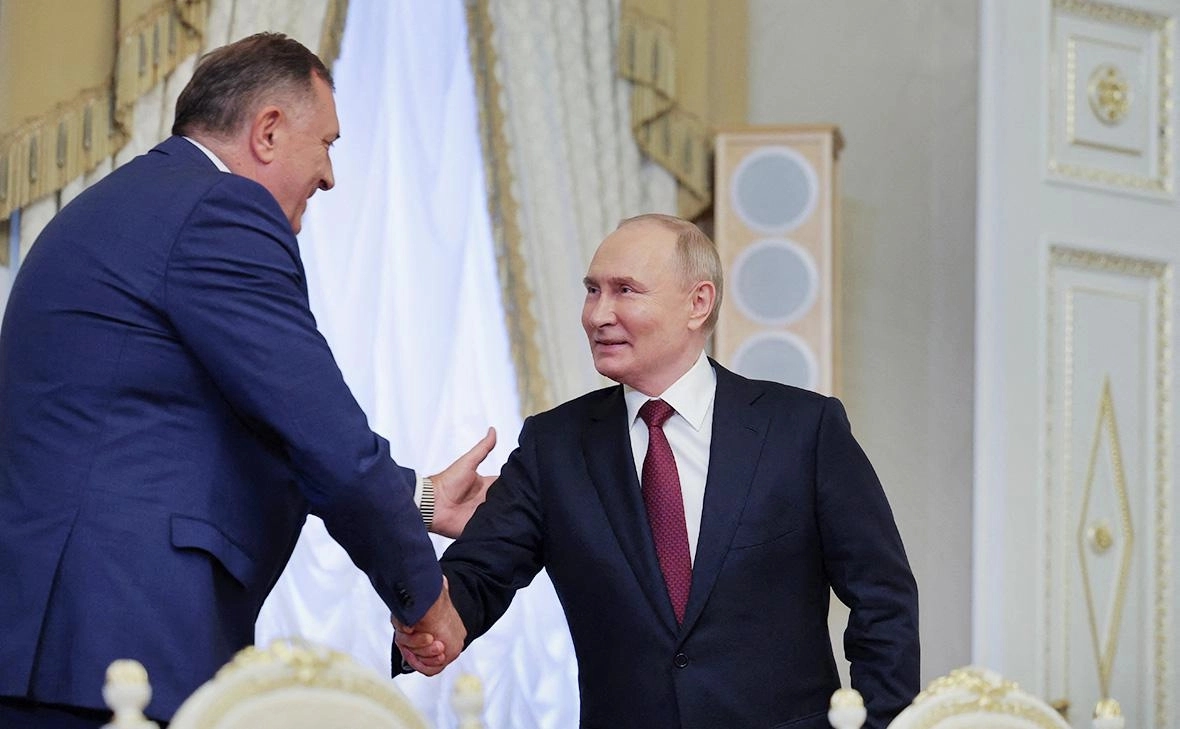
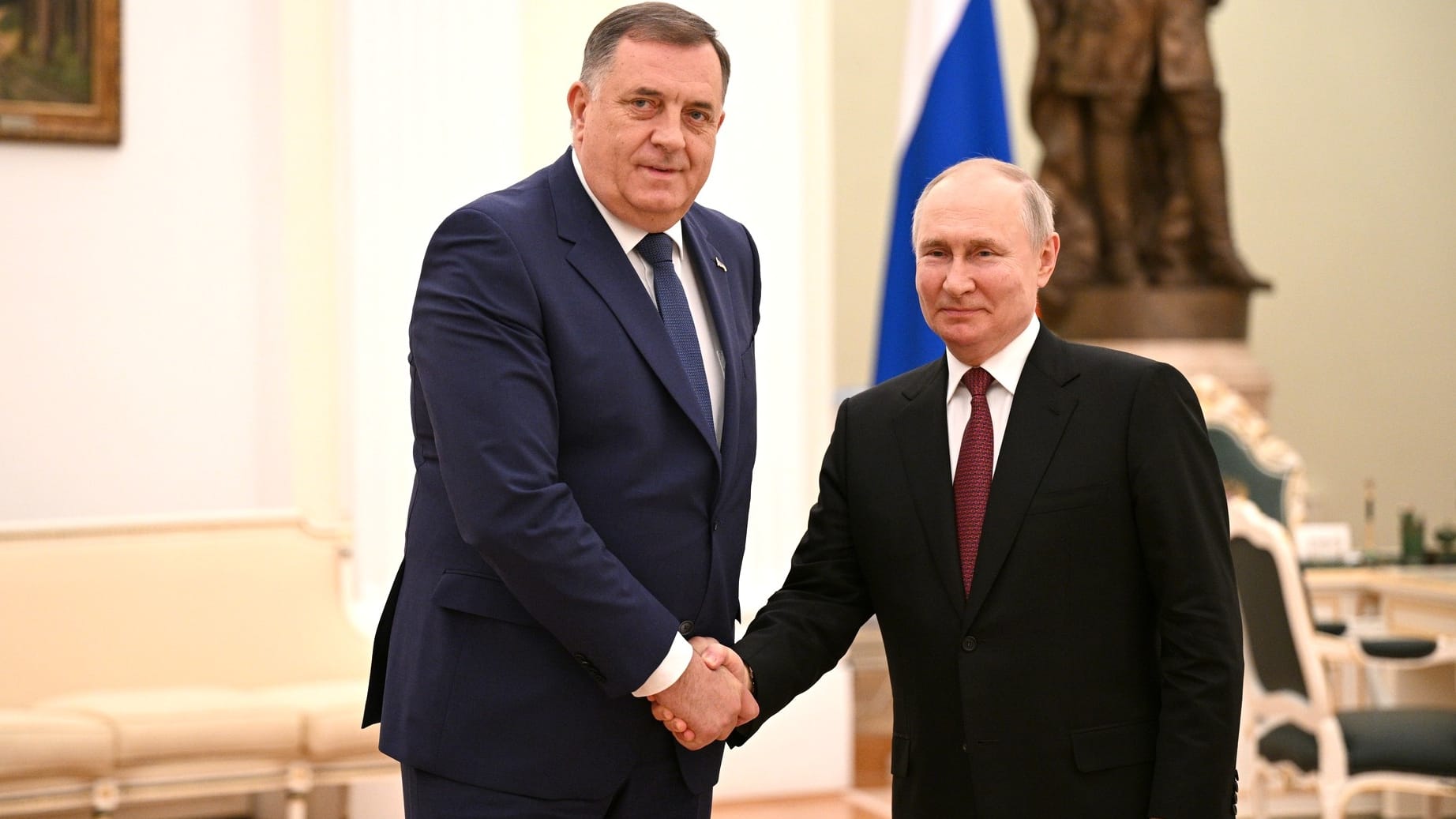
One of the country's most influential politicians, Milorad Dodik, has repeatedly threatened to withdraw RepublikaSrpska from Bosnia and Herzegovina, describing the country as having no future. Although he has no authority over foreign policy, he regularly travels to Moscow, where he is received as though he were the leader of a major sovereign state. Since securing the cancellation of U.S. sanctions last year, Dodik has also fostered contacts with members of Trump's inner circle. Donald Trump Jr. has since visited the Dodik family, while reports have emerged that “the United States will reconsider its presence in Bosnia.”
Will Russia block the EUFOR mandate?
Despite Washington's growing fatigue with Balkan disputes, it is unlikely to avoid involvement in reforming the complex, ethnically based system of governance established by the Dayton Agreement. That system brings together two semi-autonomous entities — the Federation of Bosnia and Herzegovina and Republika Srpska — under the oversight of weak central institutions that allow for either side to block key measures as it sees fit.
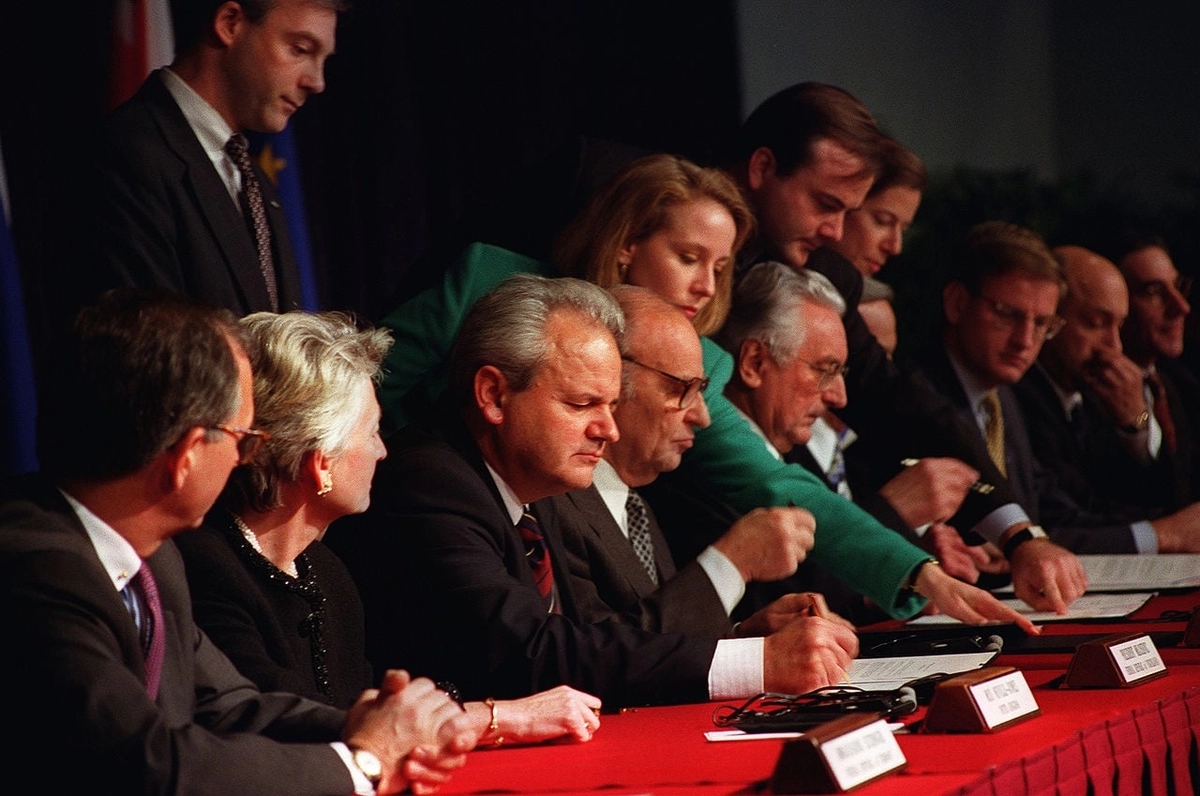
The United States was the principal mediator during the Dayton negotiations and served as the physical guarantor of peace on the ground. Bosnia and Herzegovina remains effectively unable to function without international oversight, as genuine reconciliation and social cohesion have never been achieved.
In short, Dayton did not eliminate the divisions that led to the conflict in the first place. At the end of the war, the expectation was that Bosnian society would gradually become more integrated, interethnic tensions would subside, and the country's system of governance would evolve into a more effective and self-sufficient one. The final stage of that process was meant to be accession into the European Union and NATO, providing the ultimate guarantee against a renewed war. Instead, Bosnia's Euro-Atlantic integration has stalled.
In the case of Bosnia in particular, close coordination between the United States and Europe is a must, particularly if the Trump administration is genuinely concerned about the expansion of Russian and Chinese influence. Instead, it appears that America is surrendering its leverage, meaning the allies need to accelerate contingency planning for the EUFOR mission in Bosnia, given the growing risk that Russia will block the renewal of its mandate in the UN Security Council this autumn.