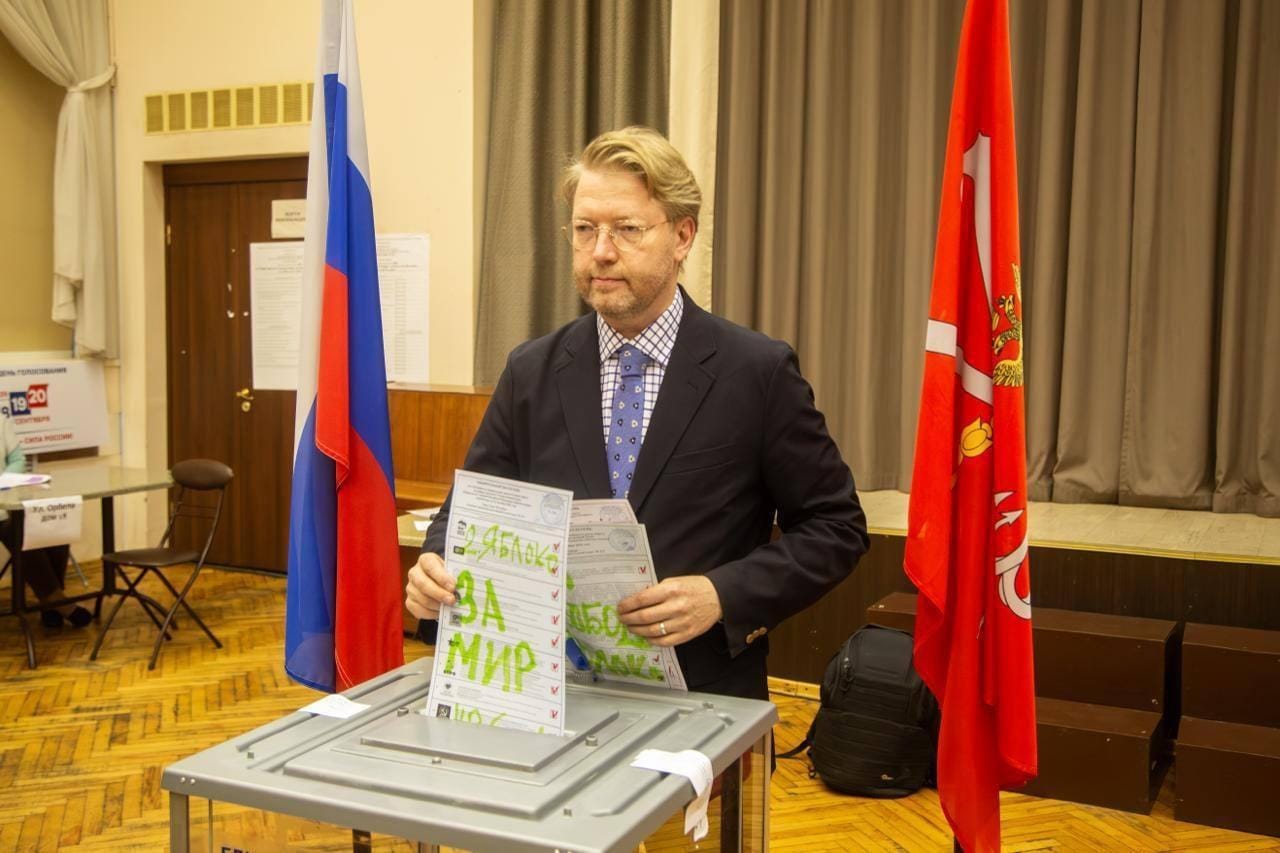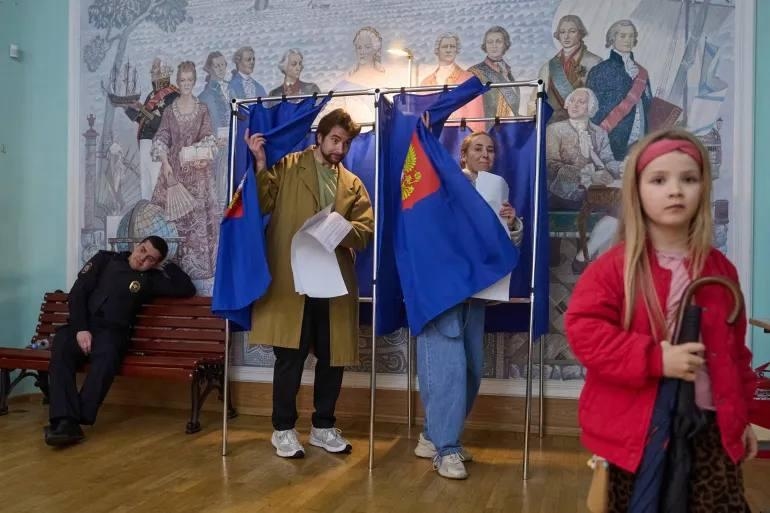
From Sept. 18 to 20, Russia held its first State Duma elections since the start of the full-scale invasion of Ukraine. The official results — nearly 58% in favor of the Kremlin’s ruling United Russia party — appear to have been inflated by upwards of 23%. Over Vladimir Putin’s 26 years in power, the country’s electoral system has evolved from one that was at least somewhat competitive into one that is tightly controlled. At first glance, it might seem like a government this authoritarian would be able to dispense with elections entirely, simply appointing officials directly rather than putting them through an electoral process that is almost entirely manipulated. Yet Putin’s Russia, like most autocracies, prefers to preserve elections as an instrument of political legitimization. Elections allow governments — even authoritarian ones — to safely co-opt opponents and refresh its cadre of elites, reducing the likelihood of internal conflict while gathering information about officials’ performance and the strength of potential rivals. Russia’s electoral system, however, has now reached such a high level of restriction that these stabilizing functions are becoming less effective. Voting is ceasing to serve as a feedback channel and instead risks becoming a problem for the system itself.
Allowed to run, then banned when the authorities got nervous
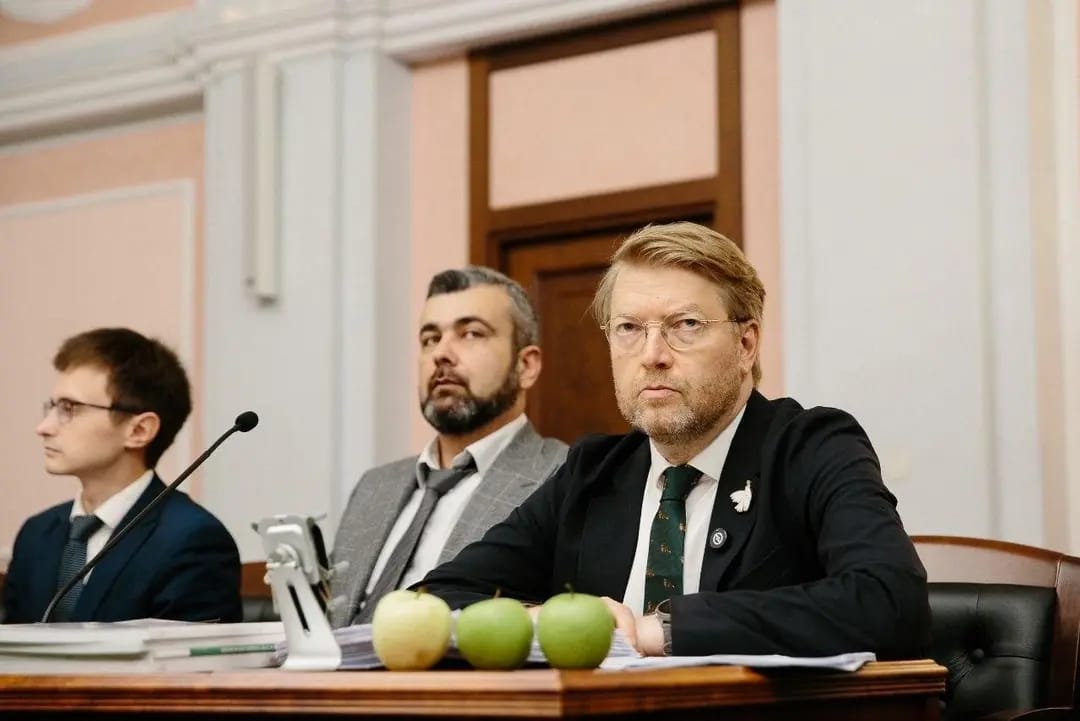
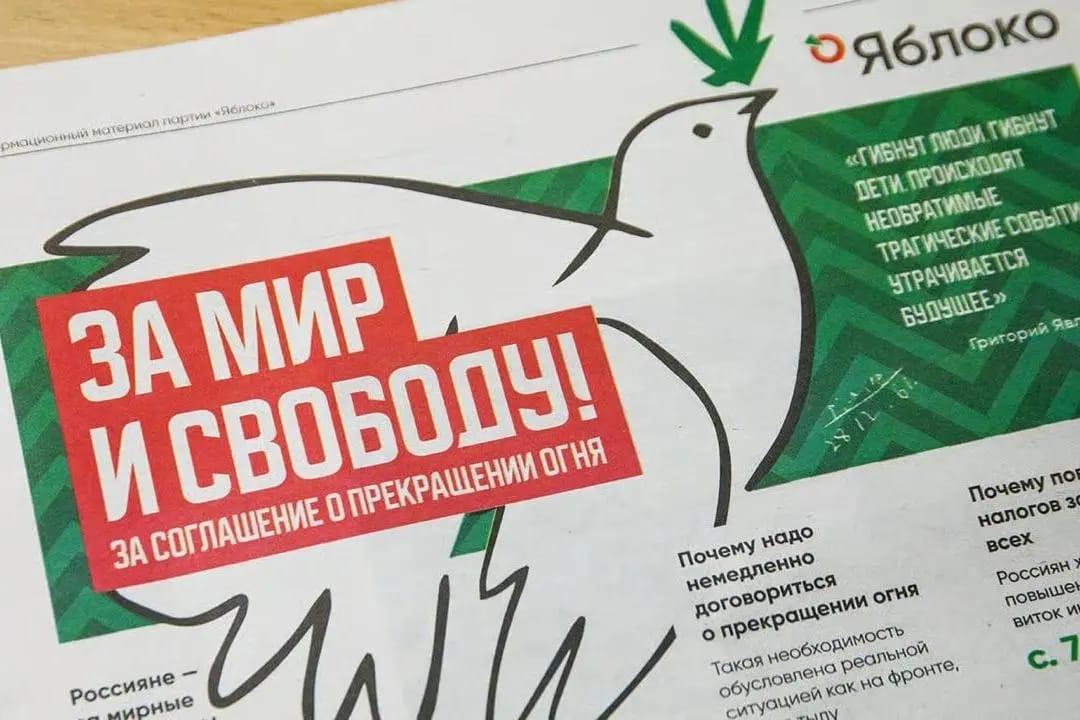
On Aug. 10, Russia’s Supreme Court barred the anti-war Yabloko party from running in the September parliamentary election. The traditional “liberal” party entered the campaign in an extremely weakened state: it no longer had the necessary financial resources to run a major campaign, nor did it boast a line-up of candidates with sufficient charisma and name-recognition to attract voters on their own. Some of its most prominent figures, including Lev Shlosberg in Pskov and Maxim Kruglov in Moscow, were being held in pretrial detention. Others were barred from running because of new legal restrictions.
Most Russians had not heard much about Yabloko in recent years, and its support had hovered around 1% for over a decade, receiving an official 1.34% of the vote in the 2021 Duma election as opposition-minded Russians cast their ballots en masse for the Communist Party as part of the late Alexei Navalny’s “smart voting” campaign. In other words, Yabloko’s participation in the fall election initially appeared to pose little threat to Russia’s political system.
Then Yabloko’s anti-war platform unexpectedly began attracting widespread attention, including among young people on TikTok. Videos supporting the party went viral, mentions of Yabloko on social media began approaching those of the Communist Party, and even previously apolitical bloggers joined the trend.
After being added to the ballot, Yabloko’s polling numbers rose sharply with even Kremlin-friendly pollsters recording the change. According to the Public Opinion Foundation (FOM), support for the party rose from 1% in July to 4% in early August.
Within days of appearing on the ballot, Yabloko’s poll numbers surged
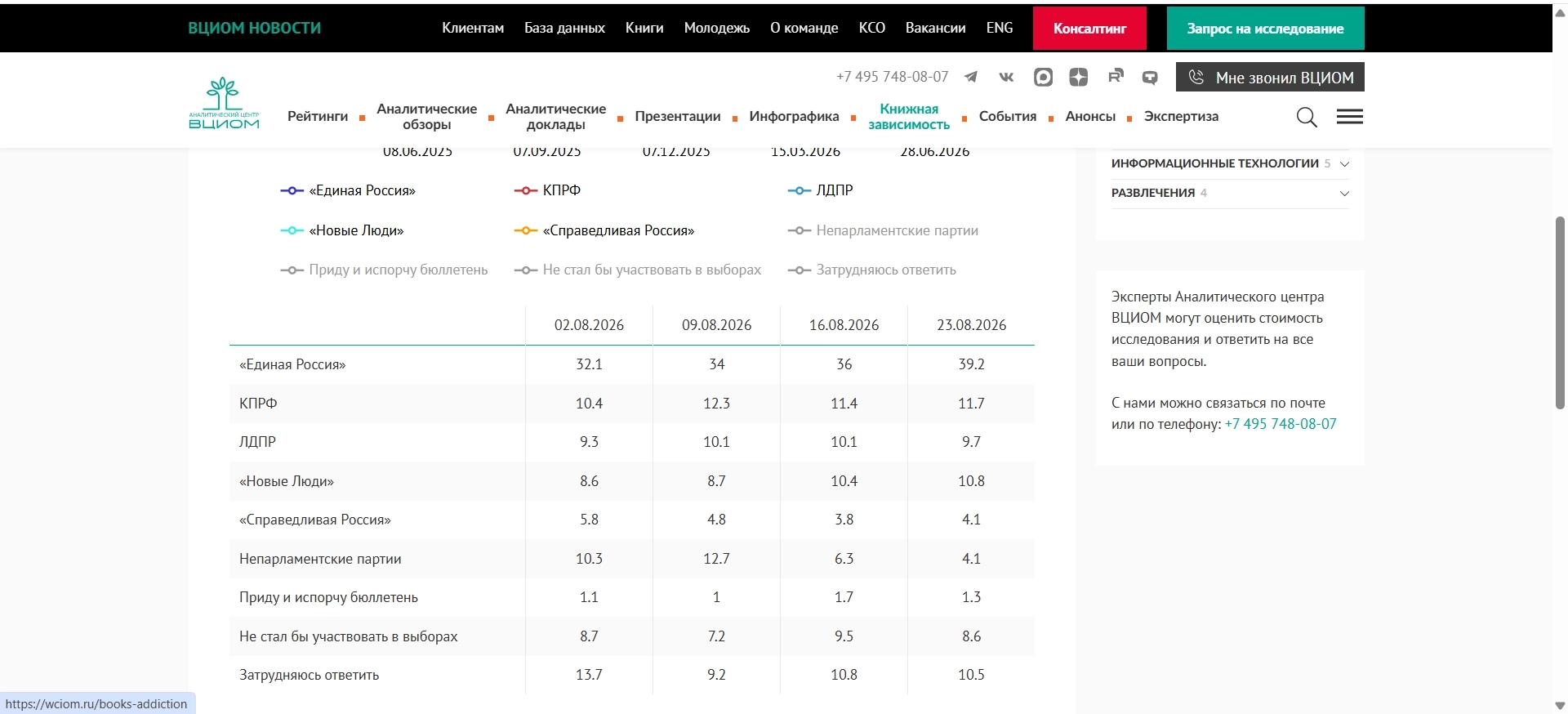
Data published by the state-run Russian Public Opinion Research Center (VTsIOM) is even more revealing. VTsIOM does not publish separate results for parties that did not clear the 5% threshold in the 2021 election, instead combining them into a single category. In mid-July, that group was polling at around 4%. However, by Aug. 2, it had reached 10.3%, and by Aug. 9, it stood at 12.7%. After Yabloko was removed from the slate of available options, the figure fell back to 4.1%.
The difference — 8.6 percentage points — was almost certainly attributable to Yabloko, and the figure roughly matched leaked data from unpublished polling. At that level of support, the party would have comfortably cleared the 5% barrier necessary for representation in the State Duma. Even more importantly, that support appeared to still be in the early stages of growth.
presidential administration sets the basic parameters in advance — deciding which parties and candidates will compete, where they will run, and roughly how many votes they will receive. Vladimir Putin’s ruling United Russia party had already reached agreements with its nominal opponents over the division of single-member districts in order to avoid competition even at that level. The expectation was that the so-called “systemic opposition” — officially registered parties that operate within the Kremlin-controlled political system — would be allowed to win in the 16 districts where no United Russia nominees appeared on the ballot. Unsurprisingly, candidates from United Russia won elections in 208 out of the country’s 224 single-mandate districts, leaving precisely 16 such seats to politicians from the Kremlin-approved “opposition,”
Meanwhile, activist networks and genuinely anti-Kremlin politicians were, as usual, neutralized through repression long before voting began. Parties with representation in the Duma frequently decline to nominate strong candidates so as not to lose the Kremlin’s approval for participation, and unwanted independent contenders are prevented from collecting signatures or are denied registration even after seeming to have met all of the bureaucratic obstacles to inclusion. And of course, election results themselves can be falsified or adjusted through opaque electronic voting systems.
By 2026, opportunities for independent election monitoring had been reduced to almost zero. Organizations that previously took on that task, including the independent group Golos, have been subjected to repression, with the movement’s co-chair Grigory Melkonyants handed five years in prison in May 2025. Candidates have also lost the right to appoint commission members with advisory voting rights, a mechanism that had remained an important tool for monitoring during the previous election campaign.
That raises an obvious question: if Russia’s presidential administration already controls the election process almost entirely, why hold elections at all? Why not simply appoint officials instead of putting them through a nominal electoral process that runs the risk of producing evidence of falsification potentially serious enough to threaten a loss of control?
What elections do for autocracies
According to calculations by Danish researcher Merete Bech Seeberg, before the end of the Cold War 65% of authoritarian regimes worldwide qualified as “electoral autocracies” — systems that held elections in some form — but in only 15% of these cases were alternative options permitted to appear on the ballot.
A major shift came during the so-called “third wave” of democratization from 1974 to 1991, which culminated in the collapse of the Soviet bloc. As the overall number of authoritarian regimes fell, the way those regimes were structured also changed.
During the Cold War, only about 15% of the autocracies mentioned above held actual multiparty elections. Afterward, however, that share rose to 55%. This did not simply reflect the disappearance of other regime types. Hegemonic authoritarian regimes — systems built around a dominant ruling party such as United Russia — increased their share of all political regimes worldwide from 10% to 27%.
During the Cold War, only about 15% of autocracies held multiparty elections. Afterward, the figure rose to 55%
Today, even highly authoritarian countries such as China and Iran hold elections in which voters are formally offered more than one party or candidate. Iran has no single dominant party, and elections can be relatively competitive among approved candidates. The main filtering takes place before voting, when the Guardian Council excludes office-seekers deemed insufficiently loyal.
In China, the Communist Party holds more than 80% of seats in the National People’s Congress, and its leading role is enshrined in the constitution. However, eight other parties are represented, along with independent candidates. Notably though, none describe themselves as being opposed to the Communist Party.
Since 2023, even North Korea has formally allowed voters to cast ballots against candidates proposed by the authorities, although only about one-tenth of 1% of voters reportedly dared to do so.
Research shows that while elections can pose short-term risks to authoritarian governments, allowing opposition forces to mobilize supporters and coordinate protests, over the longer term, elections tend to strengthen such regimes. In both democracies and autocracies, elections perform several important functions beyond simply deciding who takes office.
Co-opting elites
Elections determine who gets access to political office. In an autocracy, the regime controls the limits of acceptable choice and can use elections to bring people with their own independent resources into the system. A businessperson, regional politician or other influential figure receives an office and the benefits that come with it, but at the same time becomes integrated into institutions controlled by the state.
Elections can similarly co-opt part of the opposition. A potential rival is offered limited political influence within the system in exchange for giving up efforts to overthrow it.
In Russia, for example, businesspeople are more likely to enter politics in poorer regions and in places where parties spend less money building their own networks. That allows businesses to protect their lobbying investments and increase profits, while parties gain access to private resources in parts of the country where their own organizations are weak.
Researchers note that business-linked candidates are less likely to run in wealthy regions, less likely to compete simultaneously in both single-member districts and party lists — which would insure them against defeat — and less likely to receive paid political positions. Most importantly, they are less likely to run again after serving one term, even though incumbents usually have an advantage when it comes to reelection.
Gathering information
Election campaigns reveal which candidates can independently mobilize voters, which groups possess their own political resources and which issues attract public attention. For an autocrat, information about potential rivals is particularly valuable. An unexpectedly strong result by a candidate or party can reveal that they have a larger political network than authorities had assumed.
Past campaigns have helped Russian authorities identify where opposition groups are strongest and then target activists and prominent lawmakers in those areas. For example, the government may bar popular Communist Party lawmakers such as Nikolai Bondarenko from running or refuse to register lists of Yabloko’s candidates precisely in those places where the party has a realistic chance of winning seats.
Managing conflicts inside the political system and rotating elites
Political coalitions are constantly changing. Some groups become stronger, others lose influence. Governors are replaced along with the patronage networks surrounding them, and new categories of potentially loyal personnel emerge.
Election cycles allow these shifts to be translated into formal changes in representation without abandoning the rules through which offices are distributed. Russian political scientist Grigory Golosov, studying three electoral cycles between 2003 and 2014, showed that changes in regional governors were usually accompanied by unusually high turnover among regional lawmakers.
The same pattern was visible in the current campaign. Many lawmakers who did not seek reelection were either associated with governors who had left office, had fallen into conflict with sitting governors, or were tied to politicians and organizations that had lost influence (such as followers of the late nationalist politician Vladimir Zhirinovsky or some of the remaining figures associated with the All-Russia People’s Front, a Kremlin-created political coalition).
Legitimacy
Authoritarian regimes use the fact that voting takes place — and the officially declared support of a majority — to portray themselves as expressions of the popular will. The electoral process preserves the appearance of a public mandate, while high turnout and electoral victories allow regimes to demonstrate to loyal elites, society, and outside observers that they still command support.
Eliminating elections entirely can be risky for authoritarian governments. Studies show that democracies are considerably more stable and less likely to descend into civil war than multiparty autocracies. Multiparty autocracies, in turn, are somewhat more stable than one-party regimes that hold elections without genuine competition. The difference between those two authoritarian models is relatively small: when dominant-party autocracies become one-party states, intraparty competition often survives and replaces competition between parties meaning that even if United Russia were to ban every other party, internal primaries would still ensure some minimal form of political competition. Still, the bigger picture shows that such a regime would be less stable than Russia’s current multiparty authoritarian system.
A striking Russian example is the abolition of direct mayoral elections. Researchers analyzed more than 400,000 responses to Russian public-opinion surveys over the past 25 years and found that abolishing mayoral elections had reduced support for Vladimir Putin. The effect was strongest in places where elections had previously been more competitive. Citizens who had experienced a genuine choice reacted more strongly when that choice was taken away.
From one-party systems to dominant parties
After the collapse of the Eastern bloc in 1989 and the fall of the Soviet Union in 1991, the states that became independent of Moscow’s influence faced a situation in which the ruling party that had previously bound the system together lost control. The European Union exerted significant influence on these countries, demanding political reforms in exchange for the provision of aid and the establishment of closer economic ties.
Even so, dominant-party regimes still emerged in a number of countries (including Ukraine, Georgia, and Croatia) before the democratisation truly began. Transnational networks of nongovernmental organizations and democracy-supporting institutions contributed to those transitions.
Central Asia, by contrast, lacked such an institutional anchor. The Soviet Union was often viewed there as a broadly progressive project, and local elites had little incentive to break sharply with the past, particularly because they hoped to preserve their privileges. As a result, many of the same power structures that had existed before the Soviet collapse survived.
In most Central Asian states, the Communist Party of the Soviet Union effectively changed its name and was replaced by local dominant parties led by former first secretaries of Communist Party organizations — a common model for one-party regimes. Between 1950 and 2006, only 19.3% of transitions from one-party regimes ended in democracy, while about one-third transformed into dominant-party systems. Another 38.6% became military regimes. Dominant-party regimes, by comparison, had roughly equal chances of becoming either one-party systems (28.6%) or democracies (30.2%).
Between 1950 and 2006, only 19.3% of transitions from one-party regimes ended in democracy
Russia stood at a crossroads. Boris Yeltsin was in a confrontation with the Communist Party and its central apparatus. He therefore could not simply transform the old Soviet nomenklatura into a new ruling party capable of controlling the state apparatus and regulating the distribution of offices and resources.
Ora John Reuter, in his book on the rise of United Russia, also argues that Yeltsin was unable to create a dominant party due to the fact the federal government was too weak to offer governors sufficient incentives to join a nationwide party project. Governors possessed their own political machines and resources and were unwilling to invest them in such a party. As a result, the Kremlin itself had little reason to commit substantial resources to building one.
That changed in the early 2000s. As Reuter notes, rising oil revenues after Putin came to power gave governors an incentive to trade loyalty and their ability to deliver votes in the regions for resources from the federal center. The Kremlin, meanwhile, needed their support in order to carry out reforms and govern the country. Both sides therefore gained from investing in a party that could regulate that exchange. The governors who resisted joining United Russia for the longest tended to oversee wealthier regions with more developed economies and to enjoy high personal popularity, or to lead ethnic republics where politics relied heavily on personal networks.
How a dominant-party regime can change
As long as the state has sufficient resources at its command, a dominant party can maintain its advantage. Comparative research on dominant-party regimes shows that their edge comes less from popularity than from their ability to provide supporters with jobs and state benefits and maintain a larger organizational network than the opposition.
As long as that resource base remains intact, even elections free of direct ballot-rigging do not necessarily create equal competition. However, when the state begins losing control over economic resources, such as through privatization or a shrinking public sector, the ruling party’s advantages weaken, giving the opposition a chance to build an organization of comparable strength.
Since Russia launched its full-scale invasion of Ukraine in February of 2022, the space for political competition has narrowed dramatically. In recent years, laws and enforcement practices have tightened to the point that the authorities can remove a candidate from an election — or even strip an already elected lawmaker of office — at virtually any time. Holding office no longer provides protection or meaningful lobbying opportunities. Instead, it can attract unwanted attention from Russia’s security services or expose the officeholder to international sanctions. As a result, the number of people willing to run for office has dropped significantly, especially among businesspeople.
Holding office no longer provides protection or meaningful lobbying opportunities. Instead, it can attract unwanted attention from Russia’s security agencies or expose the officeholder to international sanctions
These changes mean elections are becoming less effective at stabilizing the political system. The regime’s ability to co-opt strong opponents is declining, forcing it to refresh elites increasingly from within the state bureaucracy. At the same time, the amount of money available for election campaigns is shrinking, as is candidates’ ability to reflect voters’ actual concerns and preferences and, as a result, mobilize supporters of the regime.
As often happens in authoritarian systems, the mechanisms used to gather information about citizens and public sentiment also become distorted. Over time, that leads to accumulated errors and growing public dissatisfaction. Paradoxically, the more tightly the government controls the electoral process, the greater the chance that, over the long term, that control will gradually weaken and the political system will become increasingly difficult to manage.
That reality did not lead to anything resembling a seismic event after the Russian Central Election Commission declared United Russia the winner of a flagrantly inflated 58% of the vote earlier this week. It remains to be seen what effect it may have on the country’s next presidential election in 2030.