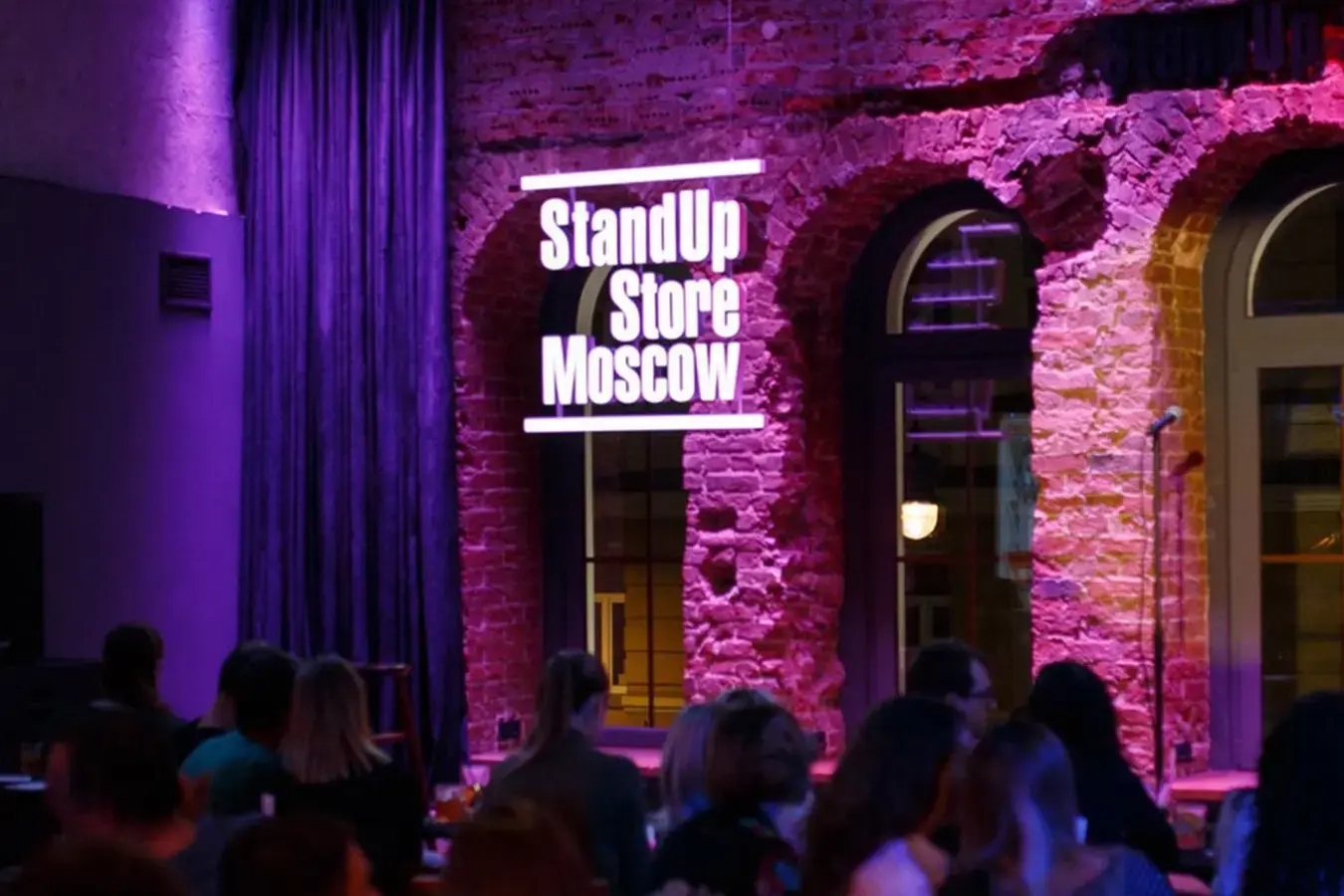
Russian stand-up comedy has changed dramatically over the past four and a half years of full-scale war. In early 2026, a Russian court sentenced comedian Artemy Ostanin to five years and nine months in prison for a joke about a legless Jesus. Within the stand-up community, the case was seen as a warning: anything said onstage can lead to very real trouble. Venues now ask performers in advance to keep their shows “apolitical,” while comedians themselves remove potentially risky material from acts or hide it behind hints and innuendo. Some comedians left Russia during the mobilization but later returned after finding that they could not afford to remain in exile. The Insider spoke to stand-up comedians who live and perform in Russia. They described what can be joked about today, how fear and self-censorship have changed the scene, and why even audiences are no longer always interested in political humor.
- 1.“Relax. I’ll go to prison, and you’ll be fine.” Stand-up comedian Viktor P.
- 2.“The audience has no idea how many jokes never make it to them.” Stand-up comedian Mikhail Z.
- 3.“Professional comedians are already consulting lawyers.” Stand-up comedian Alexei B.
- 4.“It’s making everyone a little paranoid.” Stand-up comedian Pavel V.
“Relax. I’ll go to prison, and you’ll be fine.” Stand-up comedian Viktor P.
Recently, I hosted a show at a popular bar in central Moscow. The organizers immediately asked us not to do anything political. There used to be times when someone would shout “Russia!” or start singing the national anthem or “Mother Earth” — none of that is allowed now, either.
And this is a bar in central Moscow, where young, modern people go — as modern as people can be these days. There is undoubtedly a demand for something political. You can give a little wink here and there. The kind of wink Ivan Urgant used to give — that’s about as far as you can go now.
For example, at one point my partner says, “I can’t talk about this.” And I say, “The only things we can talk about here are this or apples. Nothing else.” The audience understands that we’re talking about the party, and there’s an immediate, strong reaction. So you flash something for half a second — and that’s it.
There is an internal censorship among bar owners, comedians themselves, and stand-up club owners. The case of Artemy [Ostanin] shows how quickly things can escalate. Even if you didn’t mean anything by it, even if you hardly said anything at all, it’s still better to keep that in mind.
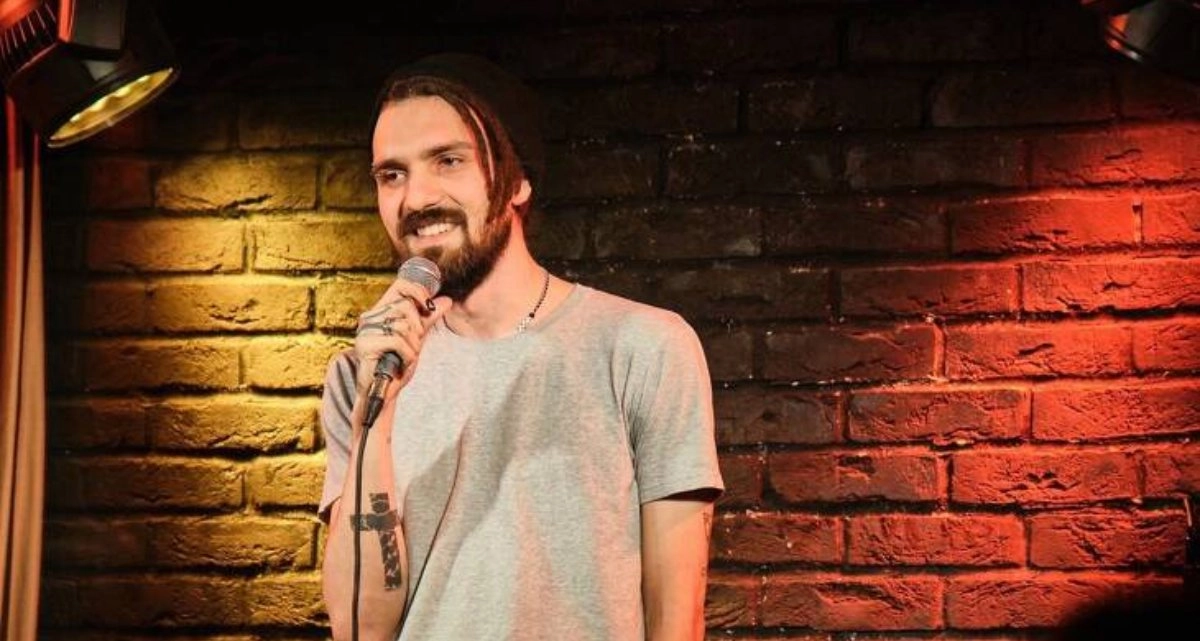
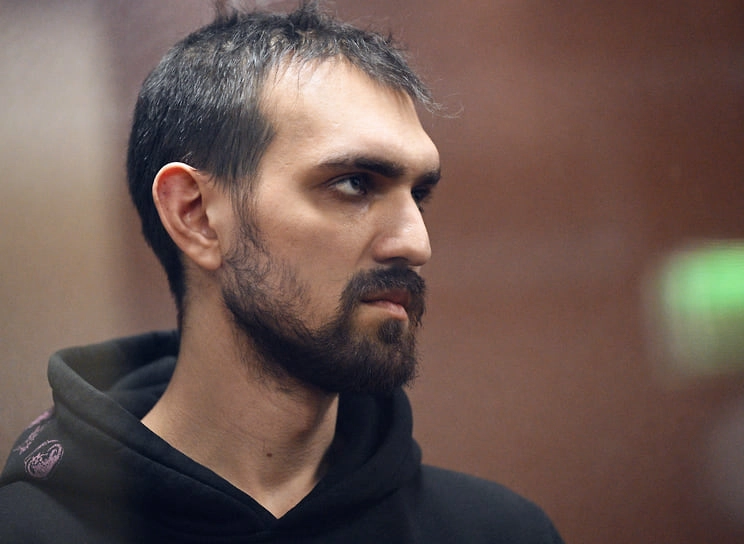
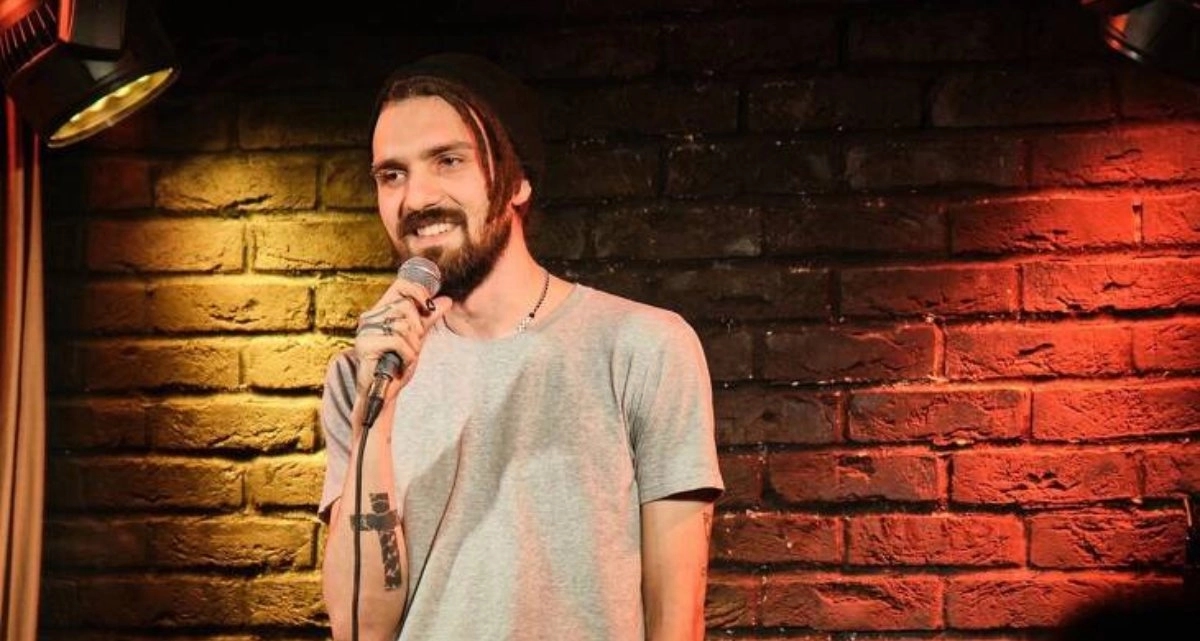
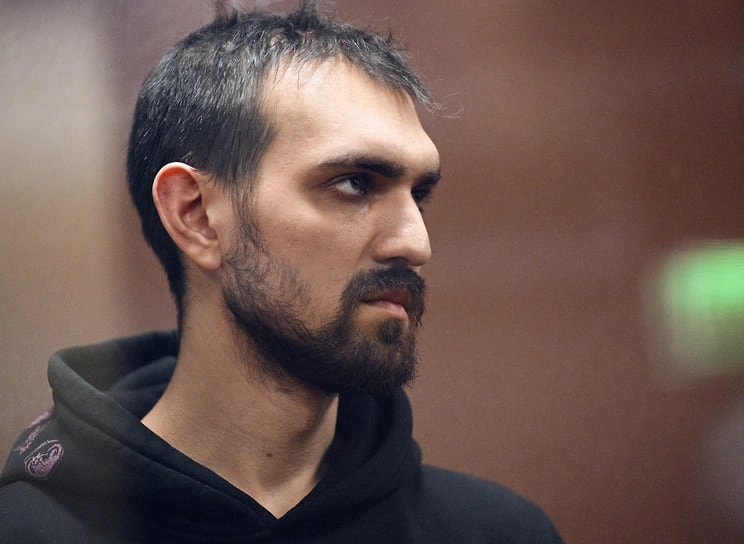
My audience is pretty modern and understands everything. But you still think: someone might record it, send it to someone, and then some activist could pick it up and make a big deal out of it.
I don’t think I’m important enough for anyone to want to put me in prison. But the news scares me — stories about completely unknown people being jailed for something, sometimes just for a repost. And you don’t always even understand what exactly the person did. It’s the same with performing onstage: you think not only about what you said, but also about how it might spread. Like with Nurlan Saburov: someone records something, and then it starts taking on a life of its own, separate from you. So you just become more careful.
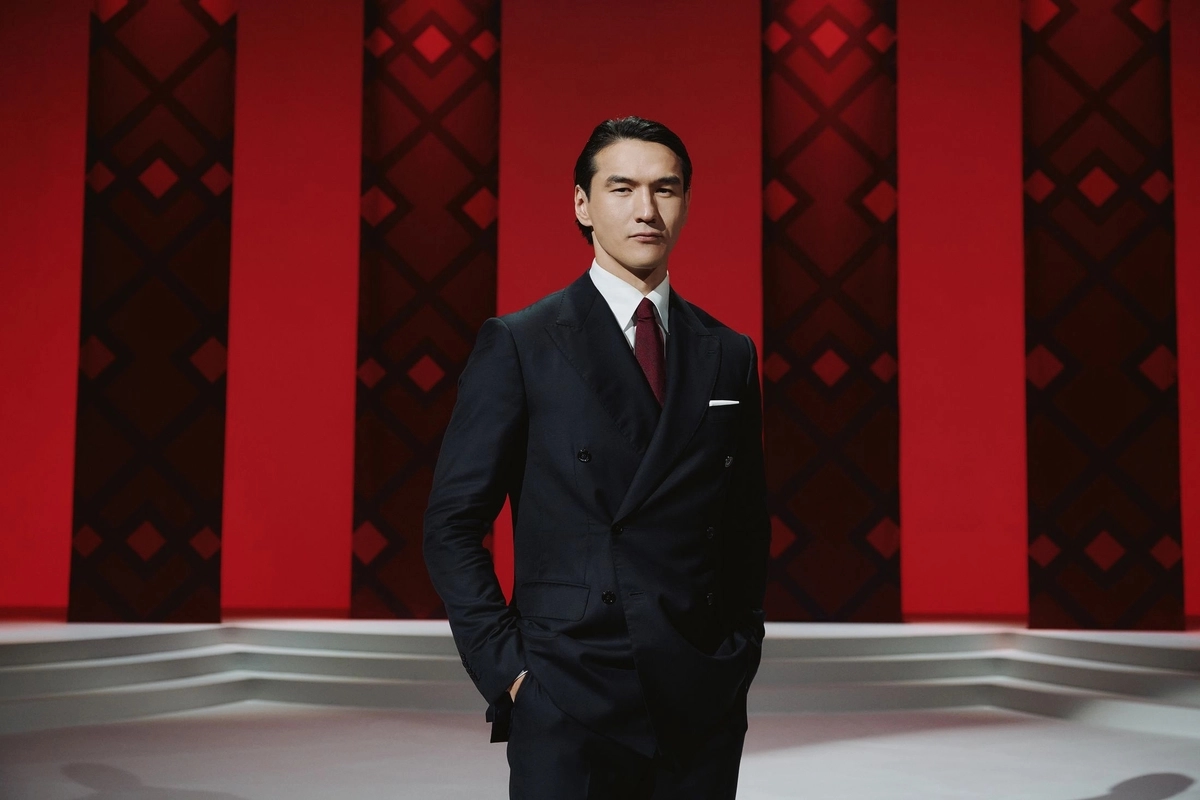
The story of Artemy Ostanin, of course, shocked and deeply affected many of my friends and the stand-up community as a whole. When the whole avalanche was just beginning, many people told him to leave. But he treated what was happening as some kind of joke. Then he and his girlfriend tried to leave through Belarus, and they were eventually detained.
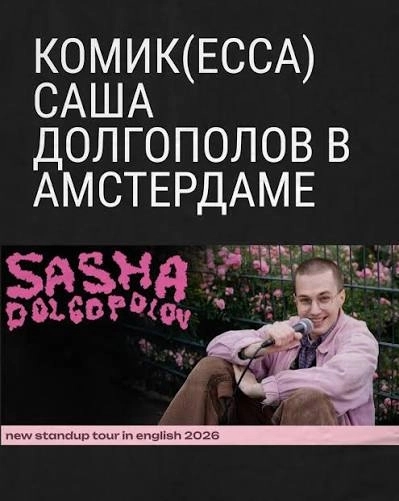
In the past, when something happened to comedians, the community reacted differently. Take Idrak Mirzalizade or Sasha Dolgopolov, for example. I clearly remember that when Idrak was having problems, we could end a show by saying, “Idrak is innocent,” or “Idrak should be free.” And we weren’t the only ones doing it. But when it happened to Artemy, nobody spoke out because they were scared. After that, venues became especially insistent: nothing about the “special military operation,” nothing about the war.
But, again, there is still a demand for it. And whenever I feel I can, I try to give a little wink. Sometimes, on the contrary, I take the position that everything is fine. For example, I see that people in the audience have understood, and I say, “America is complete garbage.” Everyone knows it’s post-irony. But technically, those are the words I said. As far as I know, the Criminal Code has no concept of a “sense of humor.”
Sometimes, though, the audience gets tense when political subjects come up. They’ve come to relax, to hear awkward stories about sex or the subway. I even say from time to time, “Relax. I’ll go to prison. You’ll be fine.” I’m not a political comedian. What matters to me is that people have fun.
Once, after a show, a couple of guys came up to me. They said, “That was great, we really loved it. Can we take a photo with you now and send it to a friend? He’s serving at the front right now.” What am I supposed to say to them? Of course, sure. I don’t want to get into a confrontation with them. I don’t want to try to change anyone’s mind or get into a political argument at a stand-up show. I don’t see myself as someone who can do that, and I don’t think it’s my job anyway. At the same time, I’ve been to protests. I was detained. I later emigrated, but I came back. You need money to live in exile, and I’m not a wealthy person.
There are, of course, comedians who describe their stand-up as political. Some joke about sanctions and liberals, perform in Donetsk, and so on. There’s one comedian, for example, who likes to call Vladimir Vladimirovich [Putin] “Uncle Vova” onstage and say, “I’ve got some political material.”
I keep an eye on comedians who have left, but at this point it’s really a matter of taste. I like what Idrak Mirzalizade does, and I like the club they run in Poland. I hardly watch Denis Chuzhoy, for example. Sometimes I feel that some comedians abroad lean too heavily into this “holier-than-thou” attitude. I accept that the problem may be with me. Maybe I just don’t want to admit that I’m also part of what’s happening because I’m still here. They chose to leave, and I didn’t. Well, I did, but then I came back. And when people tell me all this from abroad, sometimes I just don’t find it funny.
Sometimes I feel that some comedians abroad lean too heavily into this “holier-than-thou” attitude
I don’t watch comedians who joke about people who left or about emigration. I don’t even want to make myself angry over this propaganda. I have enough anxiety of my own. I don’t have the energy to sit around hating someone. I have to think about how I’m going to pay the rent.
These days I keep thinking about Ivan Urgant. His first appearance after Evening Urgant was canceled was a broadcast with Ayaz Shabutdinov. Ivan was talking to him about his business and creative work, and they were doing a presentation. The presentation had some blue-and-yellow charts. Ivan said, “Interesting choice of colors by whoever made this presentation.” Or there would be a shot of Dmitry Nazarov — and we know where he stands. Just very subtle things like that. But who finds that funny? I don’t know. It’s not really something for a mass audience anymore.
Do I feel hopeless? No. Probably because I simply don’t want to. I try to stay positive. I didn’t choose the time I was born into. And I still want to be happy. But I guess I’ve stopped expecting hot water to be a given. I’m just trying not to lose heart.
Of course, everything that’s happening gets me down. Sometimes I feel completely drained because I don’t know what else I can do or say. Maybe the only thing I can do is help the audience let off a little steam when I go onstage.
Yes, I don’t have the money to emigrate. But I actually like living in Russia. I’d like to be able to live here and travel at the same time. But I don’t feel like, “That’s it, I can’t make a joke about this subject onstage anymore — what a nightmare, my life is over.” I have no idea what will happen next. Maybe a year from now I’ll look back and think, “Wow, remember when we talked with that journalist? Those were the good old days. Things are nothing like that now!” Or maybe it’ll be the other way around.
“The audience has no idea how many jokes never make it to them.” Stand-up comedian Mikhail Z.
I perform at various venues around the city, and everything there is very chaste. Before a show, the organizer reads through my material and cuts anything that isn’t allowed. I had a pretty innocent joke about women who provide paid call-out services — caregivers. They told me, “Rephrase it so there’s no hint of prostitution.” But how am I supposed to rephrase it? In the end, I said, “A woman with an elevated level of social responsibility.”
Before a show, the organizer reads through my material and cuts anything that isn’t allowed
You can’t joke about VPNs. Crude jokes are off-limits, too — although it’s not clear what counts as crude. I had a joke: “My eyesight is so bad, I vomit farther than I can see.” They even banned the word “vomit.” So someone sits there reading through the material, marking things in red: cut this, absolutely not.
The organizer is about 25, but I understand why he does it: he’s simply afraid. Everything could be checked, someone could come along and jot something down in a notebook, and then there could be trouble. After all the cases of people being detained or punished for things they’ve said at concerts or on air, everyone is now playing it safe.
In fact, it’s even worse than ordinary censorship. Nobody directly orders the organizers to cut a joke about a caregiver or the word “vomit.” Instead, people try to anticipate what they could theoretically be punished for and ban even more — just to be on the safe side.
I don’t perform in clubs, although things are a little easier there. My audience is pretty academic, though: they sit politely, nobody drinks. So I’m grateful for everything. Of course, it’s frustrating when half your material gets cut. But as long as I can still perform, that’s something. Especially since the audience laughs — even if they have no idea how many jokes never made it to them.
“Professional comedians are already consulting lawyers.” Stand-up comedian Alexei B.
I suppose I should start by saying that in March of this year, stand-up comedian Artemy Ostanin was sentenced to prison. And that, of course, sent shockwaves through the stand-up community because it was the first high-profile case of its kind.
Before that, in September of last year, Dima Gavrilov was sentenced to 13 days in jail. At the time [of his alleged offense], he was living either in Armenia or Georgia, and during a performance he said something about the phrase “Russian pigs go home” — he said he liked that they were written there because they made him feel at home. He had a whole monologue about Russophobia, and that ultimately led to him being prosecuted.
But he asked us not to get involved in the case in any way or draw attention to it. He said he would deal with it himself with his lawyer and didn’t want to attract even more public attention. And, in fact, things turned out more or less fine and he was released.
Before Artemy was detained, I even messaged him to ask how things were going and whether he needed any help. He replied that everything was fine and that he would get out of it without a scratch. He didn’t.
A lot of comedians simply don’t know that laws like these exist. After what happened to Ostanin, though, they started getting nervous. Some have sent me their scripts and jokes and asked, “Do you think this could get me prosecuted under this law?” It’s pretty sad, because there’s no real legal awareness among the public.
Sometimes I listen to a monologue and think, Guys, you really can’t do that. And the person simply doesn’t understand that if he jokingly draws a Hitler mustache, sketches a swastika, or makes an ambiguous gesture, that could already be enough to trigger a prosecution. You explain it to him, and he looks at you as if to say, “Are you joking or are you serious?”
It seems to me that changes to the law like these simply don’t generate much public attention. They’re in the news, of course. People have been detained under these laws for years. But many simply don’t pay attention. There’s also this feeling that, “It definitely won’t happen to me. I’m not doing anything like that.” And then one day they could come knocking with a search warrant.
There are several factors at play. First, people are unaware of the law. Second, there’s a sense that things aren’t really that bad, that liberal media outlets are exaggerating it all and stoking panic. It’s like living under a dome: this hasn’t affected me so far, so it won’t affect me in the future, either.
We have a big chat for comedians with almost 3,000 people. Basically anyone who wants to perform can join, not just professional comedians. And after what happened to Artemy, there was a huge discussion there. But time passes, and everything quiets down again. I’ve been going to open mics lately, and I’m hearing jokes about Jesus, Hitler, terrorism, and 9/11 all over again. Almost nobody touches the “special military operation.” But the other subjects are coming back.
I’ve been going to open mics lately, and I’m hearing jokes about Jesus, Hitler, terrorism and 9/11 all over again
A novice comedian comes onstage and says, “I’m going to tell this joke now!” Sometimes it’s pure luck that nobody who matters happens to hear him. People regularly say some pretty controversial things from the stage. Sometimes the whole room even falls a little quiet and gets wary — okay, what’s he going to say next?
I joke a lot about the place where I was born and raised, the post-Soviet space, unrecognized territories, and all that. And I’ve noticed that people always get a little tense when those subjects come up. They’re waiting to see what I’ll say and what position I’ll take — whether I’m for or against. In other words, people want to establish my position first and only then follow me further into the subject.
And if I sense the audience isn’t ready, I usually steer things elsewhere. Because there’s also a sense that it isn’t safe. For example, people have started showing up at our shows whom we privately take to be employees of the “E Center.” They’re hilariously bad at disguising themselves. It’s like a cartoon where a bumbling supervillain’s sidekick is practically announcing, “Boss, I’ve hidden the bomb perfectly.” Someone shows up in plain clothes, but the jeans and the fanny pack… They just don’t fit the atmosphere. That obviously affects how you behave onstage.
I’ve had situations where I was finishing a joke and realized halfway through that it might not be safe.
When you’re writing material, you’re not sitting there with the Criminal Code in front of you. Then you go onstage, deliver the joke, and suddenly think: Okay, could that fall under some law? I’ve even said directly to the audience, “Come on, laugh a little louder, so that if anything happens, I won’t be the only one being taken to a pretrial detention center.”
If I’m performing with other comedians, I try to arrive at the very beginning of the show and listen to the host interact with the audience so I can get a sense of who’s in the room that night. For example, the host asks a man where he works, and he says he’d rather not say. We immediately suspect he works in the security services. And you subconsciously start going through your material in your head.
I know which of my jokes come close to the line. Some I cut; others I simply don’t dare tell. Sometimes I deliberately restructure my set. If I feel I’ve ventured into sensitive social territory and the audience reacts worse than usual, I quickly switch to safer subjects. I feel this constant juggling of topics because I’m a fairly anxious person and I keep a close eye on the news.
Professional comedians I know are already consulting lawyers: they send them their material and revise their jokes with the legal risks in mind. But a beginner who has simply come along to try stand-up may have no idea that he’s running afoul of some law. Especially since some of the wording is extremely vague — “insulting the feelings of believers,” and so on. At this point, you don’t even know what might be considered offensive, or to whom.
There’s a comedian who is writing material about marriage. Even he consults lawyers. There’s now this whole discourse around traditional values, family, and “traditional foundations.” He’s simply joking about not understanding the institution of marriage. We talk about love, about the higher feelings between two people, and then those two people go on Gosuslugi and click a button. It’s a completely everyday joke. But even here, he thinks: "Is this really safe?" Because you just don’t know anymore what might become a problem, or when.
Women tend to talk more about the battle of the sexes, sexism, and relationships. And sometimes that gives them a relatively safe way to talk about the war in general. For example, a woman comes onstage and says, “There seem to be fewer men around. I’m on dating apps, and it’s getting harder to meet anyone.”
Technically, she hasn’t said anything political at all. But everyone understands why there might be fewer men. It’s a form of Aesopian language. The comedian may not have intended any political message, but the audience reads one into it.
Feminist themes are complicated, too. At the same time, there’s now a major women’s stand-up scene, or fem-stand-up. There are women-only open mics. At one point, it even felt as though women’s stand-up had become stronger than men’s. It was as if the girls had really embraced that girl power.
Even if someone in the audience shouts something at a woman, she’s still in a stronger position. She’s onstage. She has the spotlights on her. She’s holding the device that amplifies her voice — a microphone. If some heckler shouts something, she can easily outplay him.
As for comedians who have left, I don’t think there’s any widespread resentment toward them within the Russian stand-up scene. Almost everyone has a friend who lives abroad. Everyone understands how hard it is to live in a foreign country — without your native language, your friends, your home, the culture you’re used to, and even the basic things of everyday life.
You can go to a place where there is freedom of speech and self-expression, but when that means abandoning everything you’ve built here — your work, your connections, your audience, your home — many people choose to stay.
When one side of the scales holds freedom of speech and the other means abandoning everything you’ve built, many people choose to stay
I currently live and work in Moscow. And for me, choosing between leaving behind everything I’ve built here and having the freedom to say everything that’s been weighing on me isn’t so simple. Just two years ago, I swore I would never set foot in another country. Now I realize that if things become too uncomfortable for me, I’ll leave. Of course, it’s frightening to think that I’d have to start my career almost from scratch. I’ve built relationships with organizers here, earned their trust, and developed my own audience.
I started thinking about emigration this year primarily because of something very personal: I started thinking about having a family and children. And at some point, I asked myself: "do I want my children to grow up in this country?" The answer was no longer clear-cut.
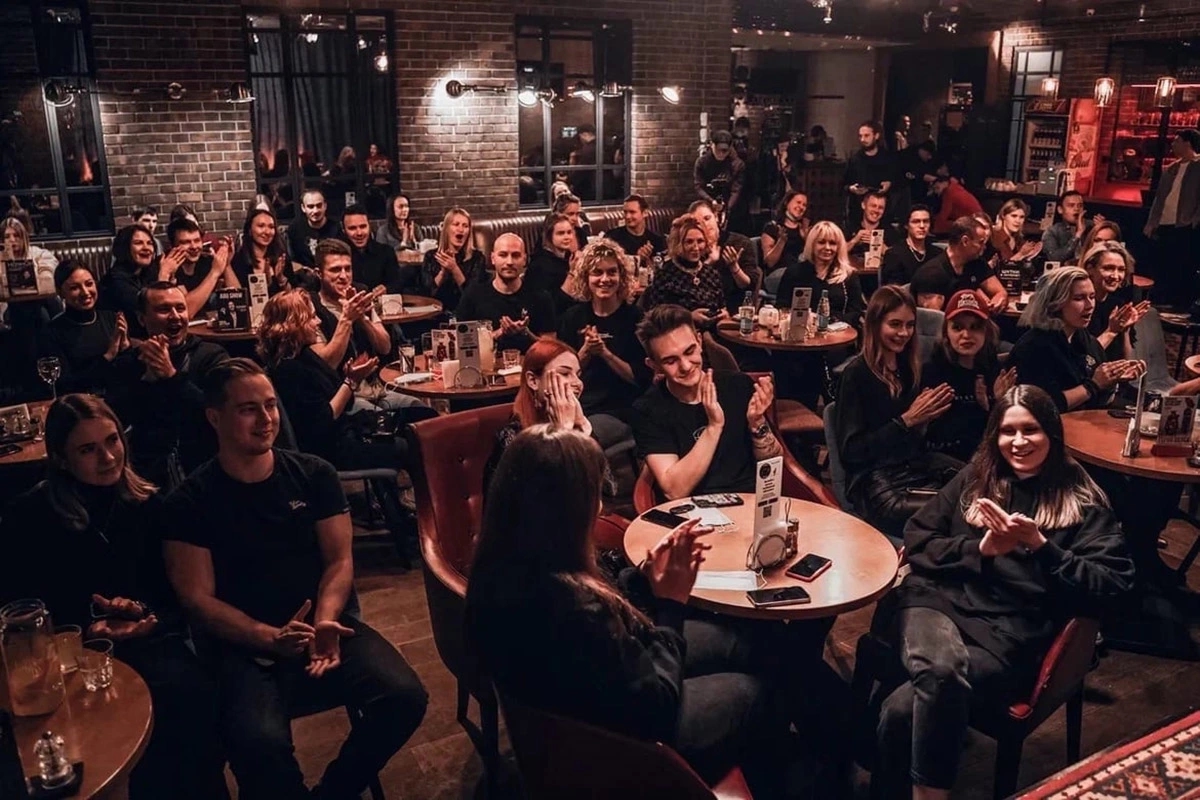
I’d say I still choose Russia about 90% of the time. But that 10% of doubt is there. It has to do, among other things, with my political views and with how I feel about what’s happening around me. The war has also started to feel physically closer. There are more reports of drone attacks and of things happening in Moscow and other regions. Every day you read the news: something is happening in Kursk, Belgorod, the Urals, the North.
You come across economic forecasts and new laws, and you inevitably start wondering how much longer this can go on. You ask yourself: "am I ready to get used to this new normal?" And, more importantly, "am I ready for my children to grow up accustomed to it?"
When my friends and I talk about politics, we generally understand each other. We’re mostly centrists; we don’t like radicalism, and we’re against the war. At the same time, we understand that there’s a vast political system in which different people make money and make decisions.
I watch Varlamov, Katz, various news sources, Sobchak, and others, and somehow piece together a reality I can live in. Then I visit my parents in another country and see that they watch all kinds of different channels: Russian, Ukrainian, and local.
I start watching all of it with them. You turn on Russian television, and some of the things I see there are physically hard for me to watch. Then you switch to Ukrainian news, sometimes in Ukrainian, and see what they’re saying there. Then you watch international news.
After trips like that, I usually return to Russia feeling more liberal, because I’ve had a chance to look at it from the outside, even if only a little. My parents lived through an armed conflict themselves in the 1990s. My father took part in it. They understand very well that war is horrible. But they also understand something else: these kinds of decisions aren’t made by ordinary people. Not by the public. They’re made by people at the top who have the power to make them. And everyone else is then left to find a way to live with the consequences.
“It’s making everyone a little paranoid.” Stand-up comedian Pavel V.
There’s a children’s show on STS Kids, one of the few TV programs featuring stand-up. The kids perform themselves, and everything is geared toward a young audience. Some of the participants are already 14 or 15, and those limits are starting to feel restrictive. They want to joke about teenage subjects, about things that are actually bothering them. But they perform alongside nine-year-olds for whom those topics are still taboo. And because it all airs on a children’s channel, there are pretty strict limits on what they can talk about.
At the same time, teenagers are quite happy to make political jokes among themselves. While they’re still young, they can get away with a lot because nobody takes them seriously. But once they turn 18 and start saying the same things into a microphone, the consequences can be very different.
Some of them understand this, while others aren’t thinking about it at all yet. They’re kids; they don’t think that far ahead: "Will I still be doing this in the future? Where will I be five years from now?" I started performing at around their age, when I was about 14. And if you compare what it was like then with what’s happening now, a huge amount has changed.
Even in early 2022, you could still say certain things onstage. People just made sure nothing was recorded and that no video got out. Now that thought barely even occurs to anyone. Self-censorship has changed dramatically. And it’s not just the comedians — the audience has changed too. If you suddenly start saying something like that out loud, it makes everyone a little paranoid. It’s as if one thought immediately hangs in the air: “This isn’t being recorded, is it?”
I remember that feeling well, when someone would still try to slip in a little joke or hint. People in the audience would literally sit up straight. Not necessarily because they disagreed, but because they were struck by the fact that someone had just said it out loud from the stage at a public event. It was as if everyone immediately thought: “If anything happens, I wasn’t laughing.” It’s not outright terror, more a constant sense of tension. There’s already too much of that around us as it is.
A lot of comedians have also reconsidered why they go onstage in the first place. Sometimes a beginner wants to make a statement, to say something important. But an experienced comedian understands that your primary job is to entertain people, make them laugh, and give them a good time. And some subjects are now such that people are more likely to tense up than to laugh.
Some topics have become off-limits not because anyone has officially handed you a list, but because people are intimidated. The atmosphere has changed. And I don’t sense much of a demand for political humor anymore. It seems to me that a large share of those who had a strong appetite for it have left. What remains are mostly people to whom it wasn’t that important to begin with. And, frankly, people are simply scared now. Sometimes you want to add a comparison to an everyday joke, then realize that it vaguely touches on politics — and that’s it. Better not.
Some topics have simply become off-limits, not because anyone has officially handed you a list, but because people are intimidated
Overall, there’s been more everyday comedy: observations about relationships, family, and things everyone can relate to. It’s safe. But you still don’t feel free. Probably because there are simply too many things you can’t talk about.
Of course I’ve thought about emigrating. In fact, I did leave. When the mobilization was announced, I was one of those Russians who left. And I got a taste of what it was like to have freedom in my material. At some point, the mere possibility of discussing something openly with people really hits you. You think, “Wow, so you can actually just say this out loud.” My situation is also somewhat complicated because, in a way, I’m avoiding military service. So even unnecessary interactions at the border are frightening.
Here, by contrast, there are things you simply don’t discuss publicly. In that sense, I really like what’s happening in Poland, for example. And it makes me sad that even just traveling there is quite difficult for me now. In general, it’s become harder for Russians to travel anywhere. But I find the Polish comedy scene fascinating because several languages are mixed together at once.
I lived in Armenia and spent time in Georgia and Uzbekistan. The industry is smaller in Uzbekistan. In Armenia, a stand-up club can operate in two languages, and both Armenians and Russians attend shows in either language. Everyone makes an effort to understand one another. Poland is even more interesting: there are Poles, Ukrainians, Belarusians, and Russians. A single stand-up club can host shows in three languages. That’s really cool.
In Russia, there are some pretty strange things happening around the English language these days. I performed at an English-language open mic in Moscow. The organizers are foreigners — British and American. And they were trying to figure out how to label an English-language open mic in Russian so that people searching for an event in English would still understand what they were going to. A foreigner living in Moscow who wants to attend an English-language event first has to see the event listing in Russian. It’s pretty strange.
In general, there’s this sense of a kind of legalized lawlessness in the air. There are brief moments when you think, “Oh, maybe things are going to get a little freer?” During the whole Yabloko episode, for example, there were literally a couple of weeks when it felt like, “Wait, what? Are we a liberal society again?”
One comedian had a joke about presidential experience. The idea was that if you’re an ordinary professional and you’ve gained a lot of experience at one job, you can take that experience to another job. It’s considered an advantage. But if you’ve been president of Russia for many years, you can’t take that presidential experience and get a job as president somewhere else. There’s no criticism in the joke. Nothing at all. It’s simply a name used for comparison. But the comedian says “Putin,” and the audience immediately goes, “Mmm.” Like Voldemort: a name that’s better left unspoken.
“Putin” is like Voldemort: a name that’s better left unspoken
The story of Artemy Ostanin has had a profound impact on everyone, of course. It’s horrifying, but also revealing. And what I find important is that people are waiting for Ostanin. That’s probably the best thing about the whole situation. He wasn’t some superstar comedian with a huge audience. By the standards of the broader comedy world, he was practically a nobody. And yet people haven’t forgotten him. So much has happened since then that any other news story could easily have been pushed out of people’s minds by the next one. But this story is still there.
Of course, there are stupid comedians, idiotic comedians, and fucking assholes who think it’s his own fault: “He shouldn’t have touched those subjects in the first place.” No. It’s not his fault. What the fuck? They simply took what he said, interpreted it in a certain way, and that was it. It doesn’t even matter that much whether the joke itself was good. You can listen to it a hundred times and say, “Well, it’s not the funniest joke in the world.” But destroying people over their words is horrifying.
And this case also made something else very clear: if you still want to talk about things like that, you now have to do it much more subtly. In terms of censorship, we’ve come very close to the Soviet satirists. If you want to say something, you have to speak in Aesopian language. You can’t simply state the point outright.
If you have a joke like that, people have to get it from the hint. You can only hint at it. If you want to talk about something, you have to really contort yourself. You can’t just say something about Putin or the authorities directly anymore. It has to be all half-hints.
As for pro-government, or what you might call "Z-humor," it certainly exists. There are venues where this kind of comedy is performed. Some projects even feature military personnel doing stand-up. There are comedians who joke about people who have left, about other countries, and so on. But I don’t think it’s becoming a genuinely popular genre. I simply try not to perform at those kinds of venues, so I don’t encounter much of it in my circle. And I don’t think audiences are particularly interested in it, either.
People are already tired of all this. Politics is more likely to trigger people than make them laugh. They go to stand-up to switch off. I can easily imagine someone living on the outskirts of Moscow. At night, he hears several drones being shot down. In the morning, he goes to work. He works all day. In the evening, he decides to go to a stand-up show in the city center, just to take his mind off things for a while. And then you start talking to him from the stage about drones. He still has to go home afterward — back to the place where those drones are. Why the hell would he want that?
It also seems to me that demand for stand-up itself has declined somewhat. Maybe people simply have less money. A ticket costing 1,000 or 2,000 rubles is already a significant expense for some. It’s entertainment, after all, and the price of everything has gone up. Even television stand-up projects, from what I can see, have started buying less material. Maybe that’s because viewership has fallen. And if demand is down, why buy something people aren’t watching?
Still, I want to believe this isn’t forever. I just want to be fucking blown away one day when I suddenly discover: “Wait, we can do this now?” Because I know exactly what that feeling will be like. I already experienced that high when I was living in Yerevan. You suddenly realize you can actually just talk about this subject — not in a whisper, not in hints, not checking whether someone is filming you on their phone. You can just say it. And I really want to feel that way here one day.