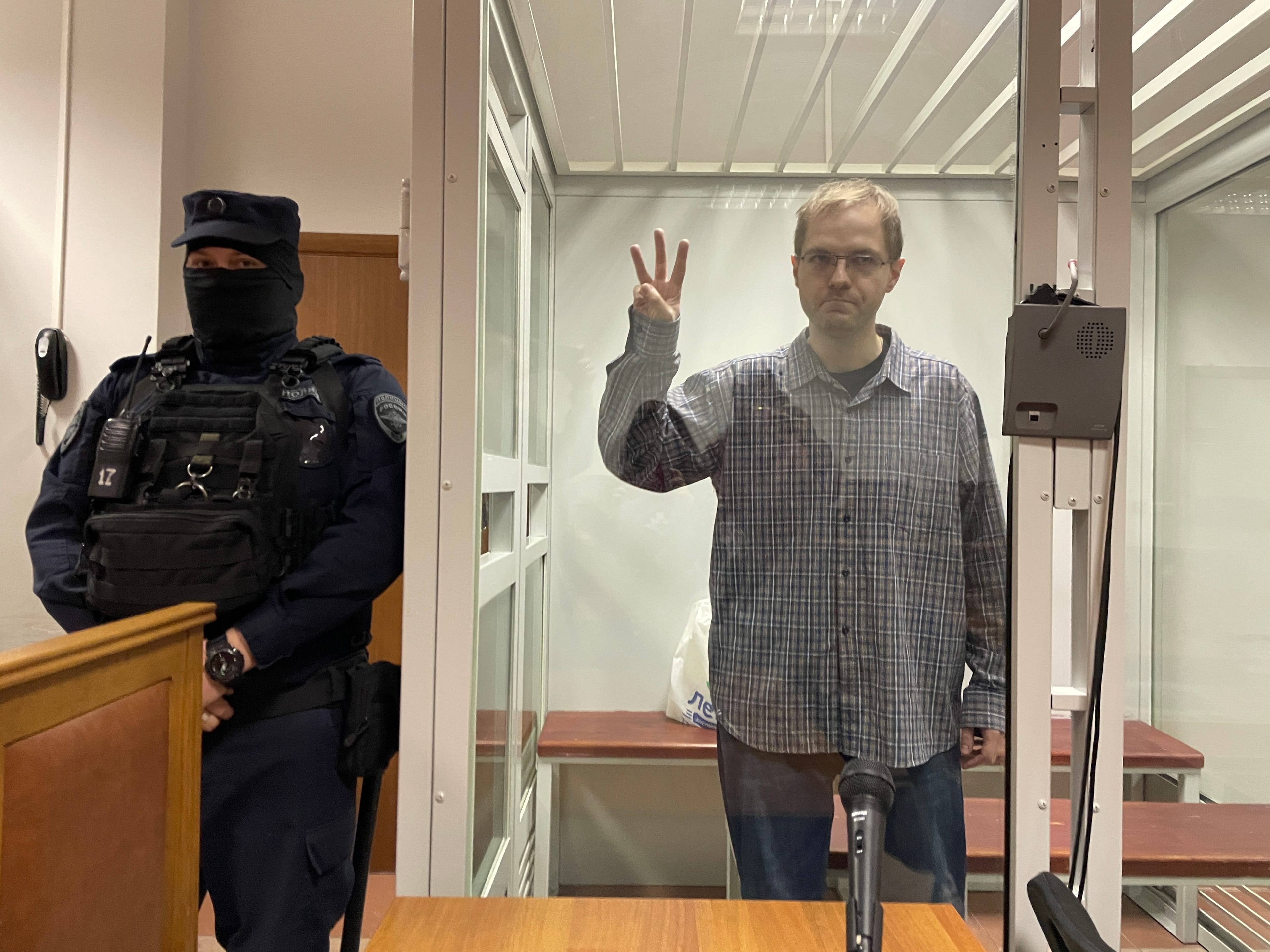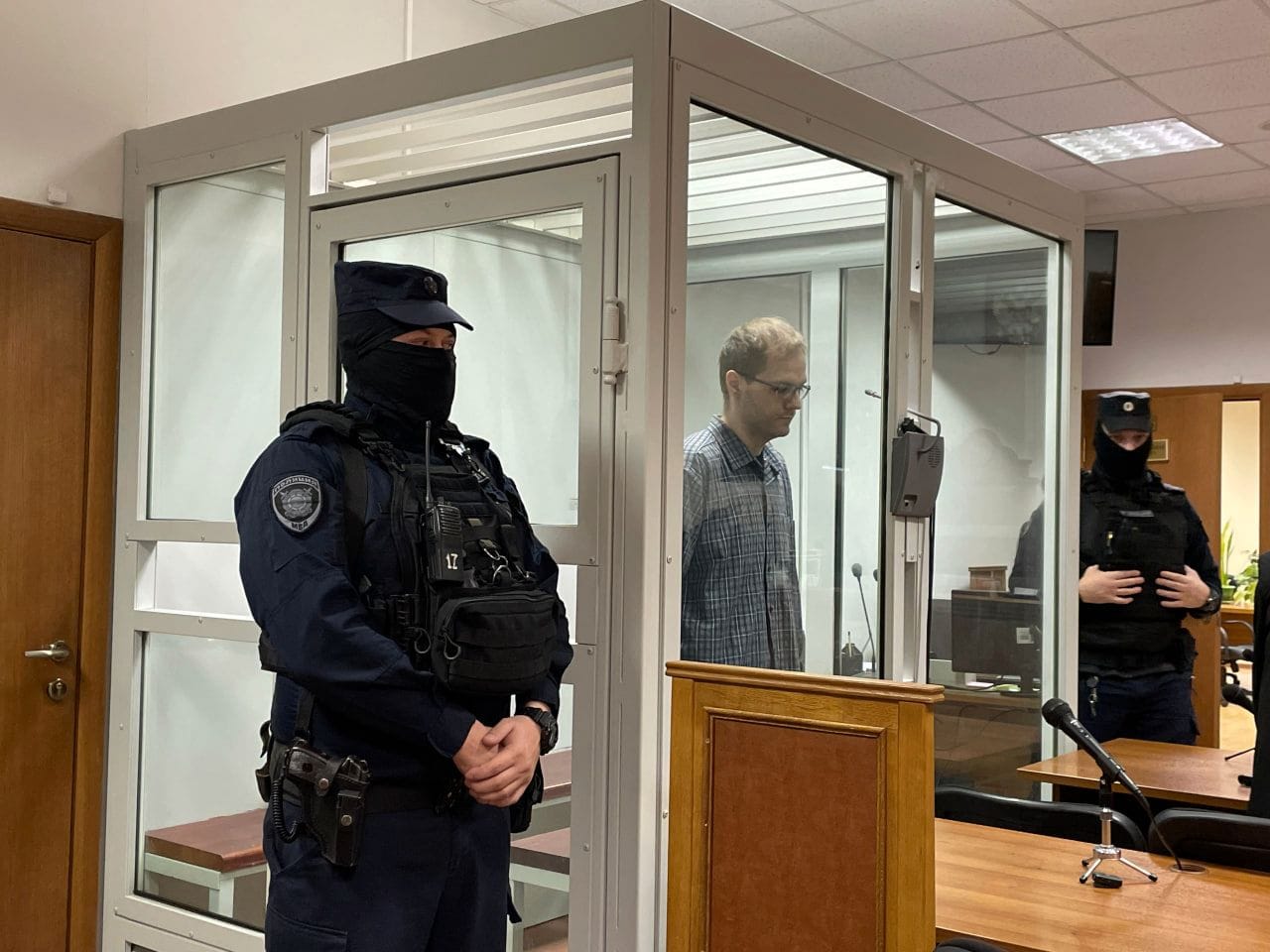
On Feb. 4, Moscow’s Meshchansky District Court sentenced stand-up comedian Artemy Ostanin to five years and nine months in prison over two jokes he made during a stand-up performance. Ostanin was found guilty on two charges: “inciting hatred” and “offending the feelings of believers,” The Insiderreported from the courtroom.
Asked by the judge whether he understood the verdict, Ostanin replied:
“Shame on your judicial practice! No, I do not understand the verdict. I am innocent!”
The judge responded:
“Then you do understand the verdict.”
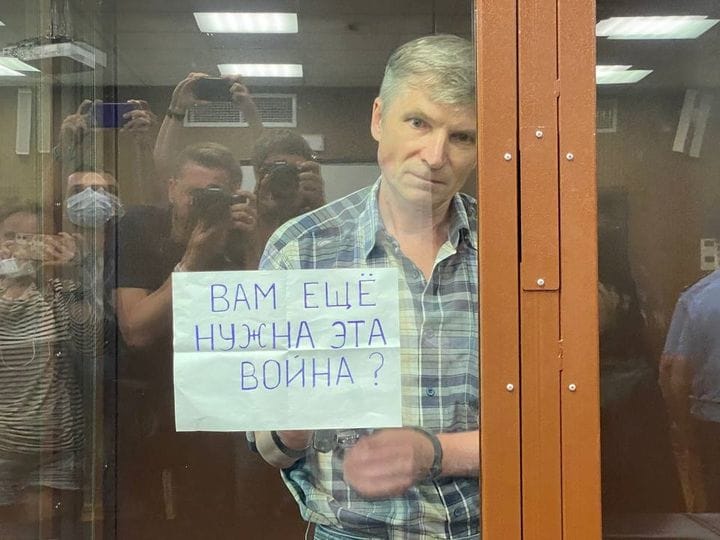
The ruling was handed down by Judge Olesya Mendeleeva, who in 2024 was added to the U.S. Treasury’s sanctions list “for her role in the arbitrary detention of Moscow city councilor and human rights defender, Alexei Gorinov,” who was sentenced to a seven-year prison term after being found guilty of “spreading false information about the [Russian] army.”
Ostanin was detained after crossing the Belarusian border while attempting to leave Russia in March last year. The case against him was launched over a joke about a legless man in the subway, whom the comedian called “a skater without legs.” Activists from the group “Zov Naroda” (lit. “Call of the People”), along with serial informant Vitaly Borodin, reported Ostanin to the police, claiming that the comedian was demeaning a soldier who had lost both his legs during Russia’s full-scale invasion of Ukraine (the joke in question did not specify that the legless man was a former soldier, only that he had lost his lower limbs after stepping on a landmine).
After his detention in Belarus, security forces tortured Ostanin, fracturing his spine and damaging his lungs. Photos of Ostanin’s resulting bruises were even published by Eva Merkacheva, a member of Russia’s Presidential Human Rights Council.
Nevertheless, the charges against the comedian were later expanded to include accusations that a separate joke had “offended the feelings of believers.” In it, Ostanin reflected on the meaning of a well-known Biblical episode in which Jesus Christ, on the night before his crucifixion, prays in the Garden of Gethsemane, saying “O my Father, if it be possible, let this cup pass from me.”
In Ostanin’s take on the story, the comedian recounts how:
“I turned to Jesus and he answered me. Imagine, we sat down and had a drink.
He says:
— Artem, you live in the world of people. What information? You made it up too, [expletive], of course. I brought people information, and you know what they did?
— Well, they crucified you.
— Yes, they crucified me. And do you know what happened before my crucifixion?
— The prayer about the cup?
He goes:
— Yeah, [expletive], the prayer about the cup. Because you get really thirsty after a party.”
In his final statement, Ostanin said:
“The second cruel punishment was the loss of faith in people. I was promised documents confirming my spinal fracture, but the court did not take this into account and sent me to prison. The third punishment was the death of my grandmother. First, some thugs broke into her home, then she saw the news about what had been done to me. I was not even allowed to put flowers on her grave… This is how I was punished many times over for a crime I did not commit. I am not a criminal, I am a stand-up comedian. I wish that no one ever finds themselves in the situation I ended up in. All the best to everyone.”