Several Russian politicians and parties with anti-war and democratic platforms have begun preparing for the elections to the State Duma, which are scheduled for the fall of 2026. Those already declaring their intention to take part include the longstanding liberal party Yabloko, Yekaterina Duntsova’s unregistered party Rassvet (lit. “Dawn”), former presidential candidate Boris Nadezhdin, and the “Candidates’ Headquarters” project, which plans to support the strongest challengers to the authorities in individual districts.
Boris Nadezhdin
Former presidential candidate Boris Nadezhdin was among the first to announce his preparations for the parliamentary campaign. In October 2025, he wrote on his Telegram channel that he was launching a campaign for both the State Duma and the Moscow regional legislature, stating that he would collect signatures in single-mandate districts, as “it is unlikely that any party will risk nominating a candidate” with his platform. He plans to run in the Mytishchi District, No. 123, which includes the Moscow suburbs of Dolgoprudny, Korolyov, and Mytishchi.
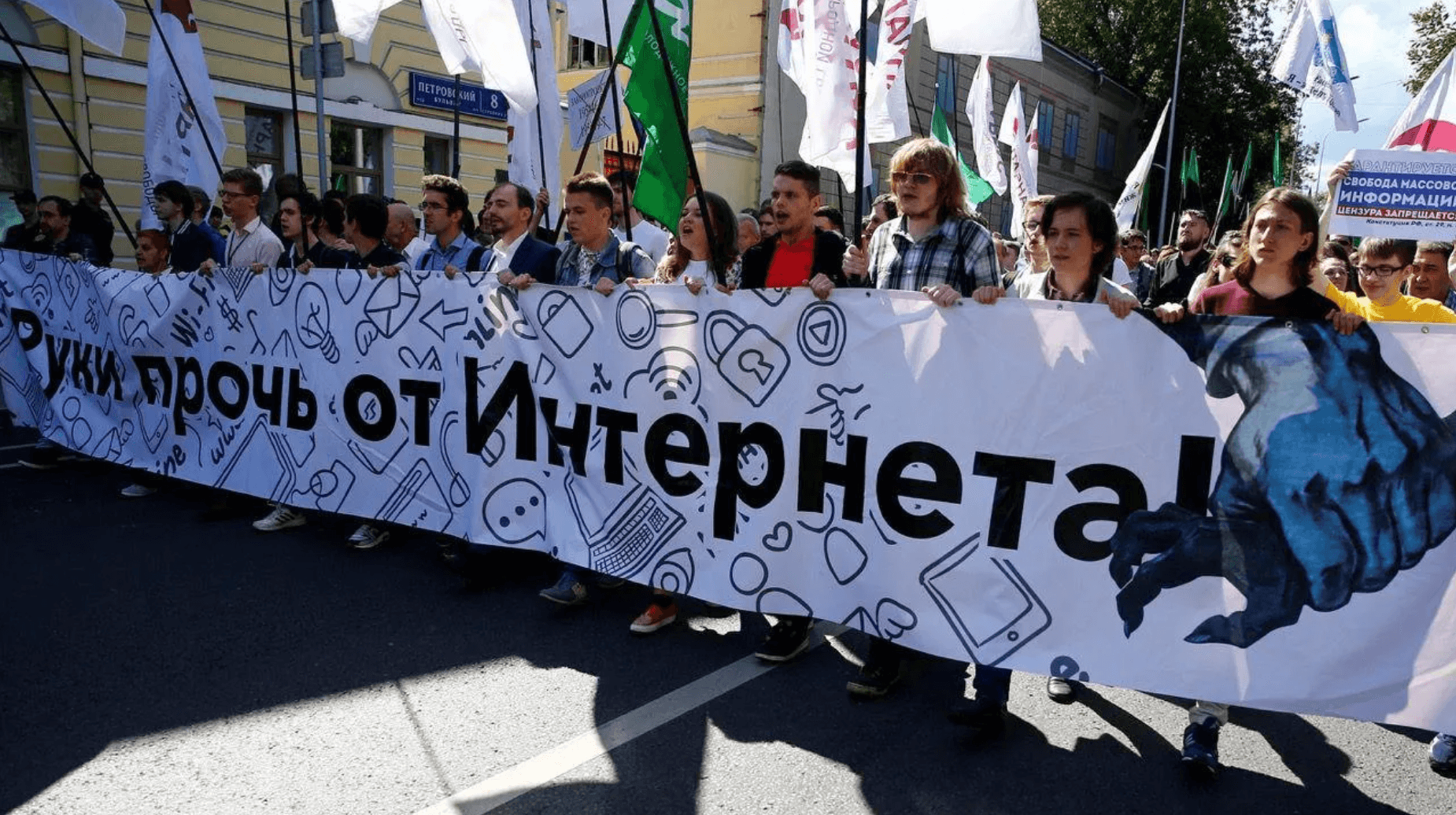
On April 6, Nadezhdin said his campaign had effectively begun in February: a campaign headquarters had started work, offices opened in several cities, a supporter base was being built, and events and focus groups were being held to gauge public opinion on issues such as inflation, internet shutdowns, the forced rollout of the state-backed Max messaging app, and the ongoing four-year-long “special military operation” against Ukraine.
Yekaterina Duntsova’s Rassvet party
The Rassvet party of former presidential candidate Yekaterina Duntsova intends to support candidates with similar views, a party source told The Insider. “There is an intention, but we will be able to say more precisely by the end of April. We need to determine which candidates have reached agreements with parties that can run without collecting signatures,” the source said.
The problem is that Rassvet is not registered with Russia’s Ministry of Justice — in fact,it was denied registration in 2024. Rassvet reapplied in March 2026, but the chances of registering an opposition political structure in Russia are effectively zero.
Rassvet opposes internet blockages, organizes letter-writing evenings in support of political prisoners, takes part in environmental and urban preservation protests, and seeks to operate strictly within the law.
Duntsova herself cannot run in the election due to her designation as a “foreign agent.”
The Yabloko party
The social-liberal party Yabloko, whose history dates back to the early 1990s, announced its intention to take part in the State Duma elections last December. A decision by the party’s federal political committee said the 2026 election is needed not only to preserve its party status and ability to run in federal elections without collecting signatures, but also to promote “the values of peace, humanity, and respect for people, dignity, and human rights.” Since the start of the full-scale invasion of Ukraine, the party has run under the slogan “For Peace and Freedom.” In comments to The Insider, a party member confirmed that Yabloko plans a major nationwide “for peace” campaign and will also raise the issue of internet disruptions as being one of the direct consequences of the war.
In March, the newspaper Kommersant reported that Yabloko’s federal list could be headed by the party’s 73-year-old co-founder, Grigory Yavlinsky, who received 1.05% of the popular vote in Russia’s 2018 presidential electionю The newspaper said the option was being considered in part because the party’s current chairman, the more charismatic 47-year-old Nikolai Rybakov, has lost the right to run due to an administrative penalty, while some other prominent figures cannot participate due to their own “foreign agent” status or criminal cases.
However, a party source told The Insider that, to their knowledge, Yavlinsky does not plan to run: “We intend to participate, but the configuration of the list is still unclear — different options are being discussed. We are unlikely to disclose them before nominations, which will take place in late June or early July. But as far as I know, Grigory Alexeyevich himself did not plan to run.”
This year, Yabloko does not need to collect signatures, as the party has deputies in three regional legislatures. Asked about the possible nomination of candidates like Nadezhdin or representatives from Rassvet, the source said all candidates are considered individually and must share the party’s values and program.
Notably, at the end of March, controversy erupted around a campaign clip by one of Yabloko’s members. Moscow politician Sergei Mitrokhin posted a video filmed near the Novokuznetskaya metro station in which he criticized what he called the “Asianization” of Moscow. “It feels like Moscow is gradually turning into some kind of Asian city. There’s shawarma everywhere, sherbet, doner bistros, all with a strongly Eastern flavor. I believe Russia is still a European country, and Moscow is one of the European capitals, and Muscovites should receive the full range of services that meet that European standard, not slide into some kind of ‘Asianization,’” Mitrokhin said. The video was later deleted from his channel but it has been reposted by the outlet SOTA.
Mitrokhin later said he had “not expressed his thought very adequately,” explaining that he meant large businesses were displacing neighborhood shops. He added that he has never been a nationalist and considers nationalism harmful to Russia. Yabloko told The Insider that Mitrokhin’s voters differ from typical Yabloko supporters.
The “Candidates’ Headquarters” project
Another initiative focused on the 2026 election, the “Candidates’ Headquarters” project, plans to carry out public opinion research, assess real levels of trust in political parties and lawmakers, and use the data to identify the strongest challenger to the authorities in each district before making recommendations of support. The head of the project, 29-year-old Konstantin Larionov, has already said he is considering running for the State Duma from the Kaluga Region.
Political analyst Mikhail Komin, commenting on the electoral atmosphere, toldThe Insider that a campaign by anti-war candidates makes sense, as it normalizes anti-war positions within the country, demonstrates the existence of a significant anti-war electorate, and undermines both the domestic and international narrative promoted by the Kremlin that Russian society fully supports the war.
“By operating within the legal political field, having a clear anti-war position and making it the foundation of their campaign, each candidate normalizes that position and its expression for part of the Russian electorate.
You don’t have to look far for an example. There is Boris Nadezhdin, who ran in 2024 as an anti-war candidate. He was not allowed to register, but during his campaign many people saw that there are quite a lot of anti-war citizens in Russia and that their views are not as marginal as Russian propaganda and the authorities try to portray them. They also gained experience of collective action by standing in lines to sign their names in support of Nadezhdin.
The mere presence of an anti-war candidate (even one who is not registered), along with the fact that he was supported by both exiled and domestic opposition forces, gave the anti-war discourse a certain degree of legitimacy. This led to a rise in sociological indicators and an increase in the number of people who believe the war should be ended. Independent polling shows that during Nadezhdin’s campaign, the share of people who thought the war should end increased. We see that the anti-war message works and breaks the silence of those who had previously remained quiet.
The second aspect concerns the international dimension of the 2026 State Duma elections. The presence of anti-war candidates — who are determined enough to run despite harsh repression — and of Russians willing to place signatures in support of them shows people in the West that the Kremlin’s narrative of a monolithic pro-war society, which it has promoted since 2022, is not entirely accurate. The more such candidates there are, and the more creatively they demonstrate the number of anti-war Russians, the greater the damage to the image the Kremlin is trying to project — that all of Russian society supports the war and is ready to tighten its belt and keep fighting for territories such as the Donbas or others that Russia has written into its constitution. This primarily damages the Kremlin’s image in the eyes of Western countries and the Global South.”