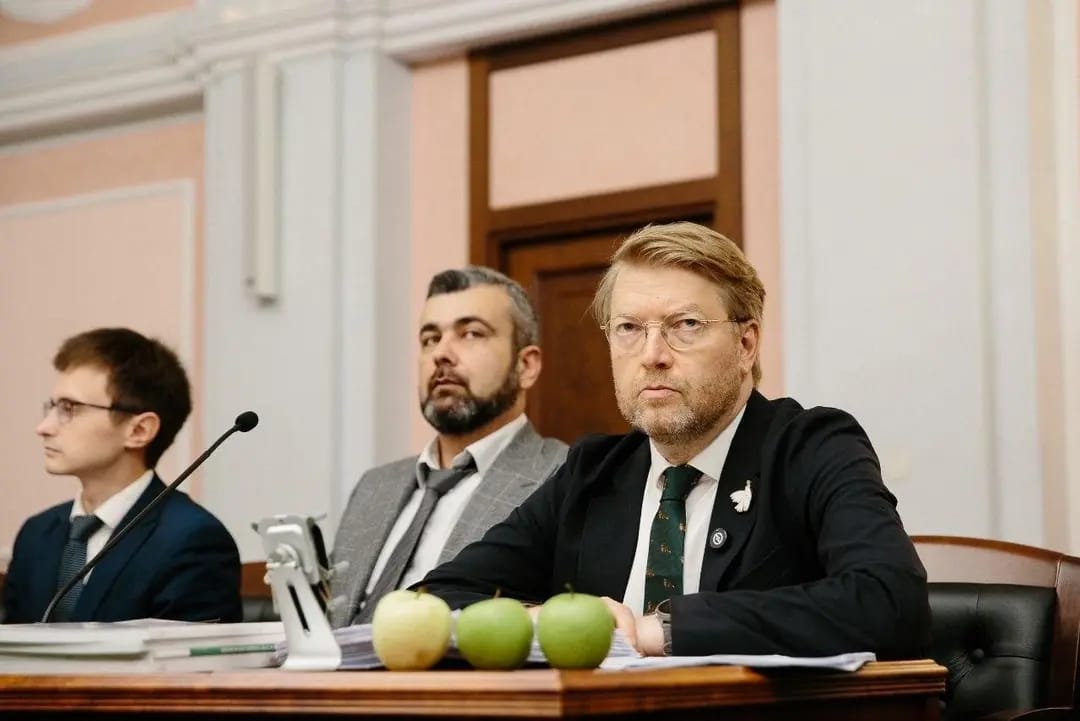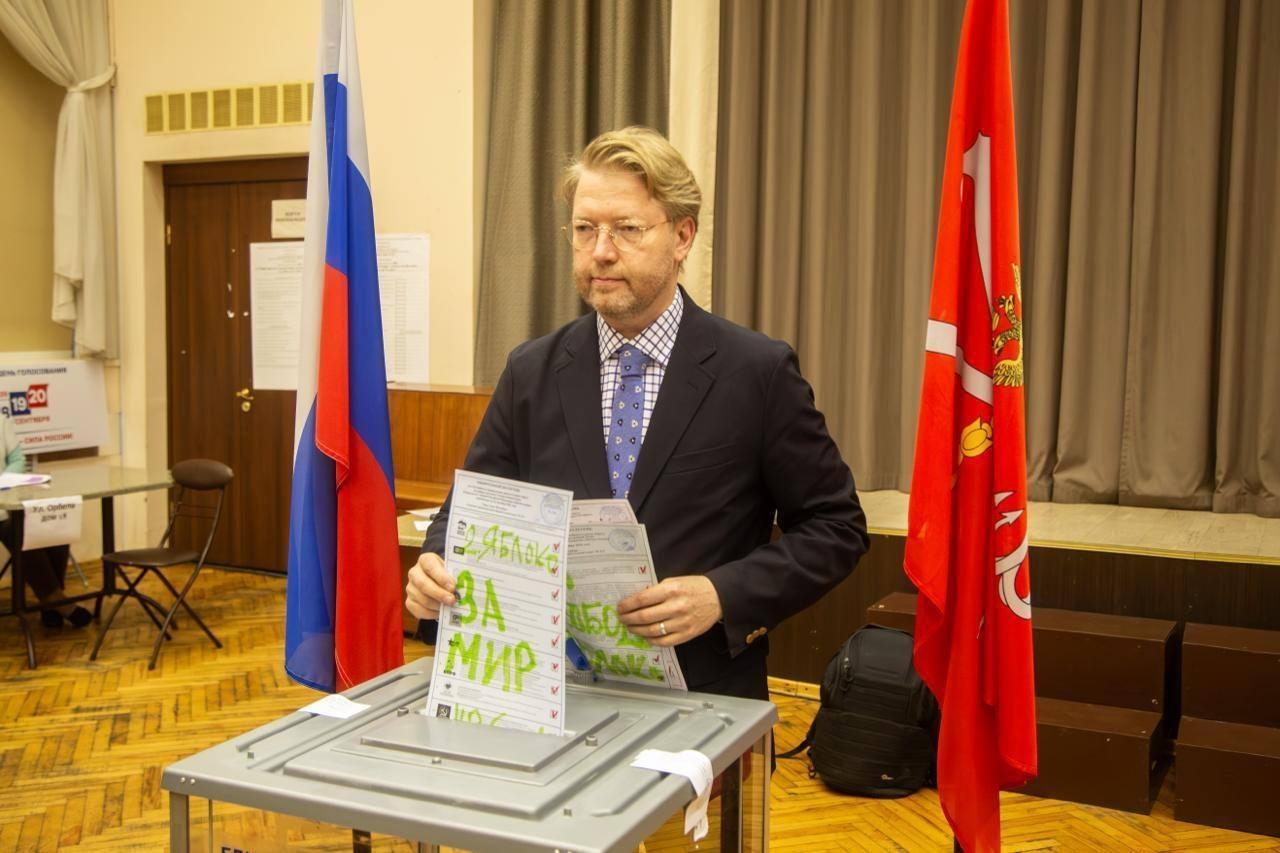
A citation for petty hooliganism was filed against Russian opposition politician Nikolai Rybakov, chair of the Yabloko party, after he wrote slogans on four ballots during elections in St. Petersburg. The Insider identified at least 13 similar cases since 2022 in which a message or drawing on a ballot served as grounds for administrative prosecution. Rybakov became at least the 14th such voter.
Yabloko’s press service reported the petty hooliganism charges against Rybakov on Sept. 29. His case is being heard by the Vyborgsky District Court of St. Petersburg.
On Sept. 20, Rybakov voted at polling station No. 360 in St. Petersburg. None of the four ballots he was given included Yabloko or its candidates. The politician invalidated the ballots by writing “For peace,” “For freedom,” “For a ceasefire agreement,” and “For a life without fear.”
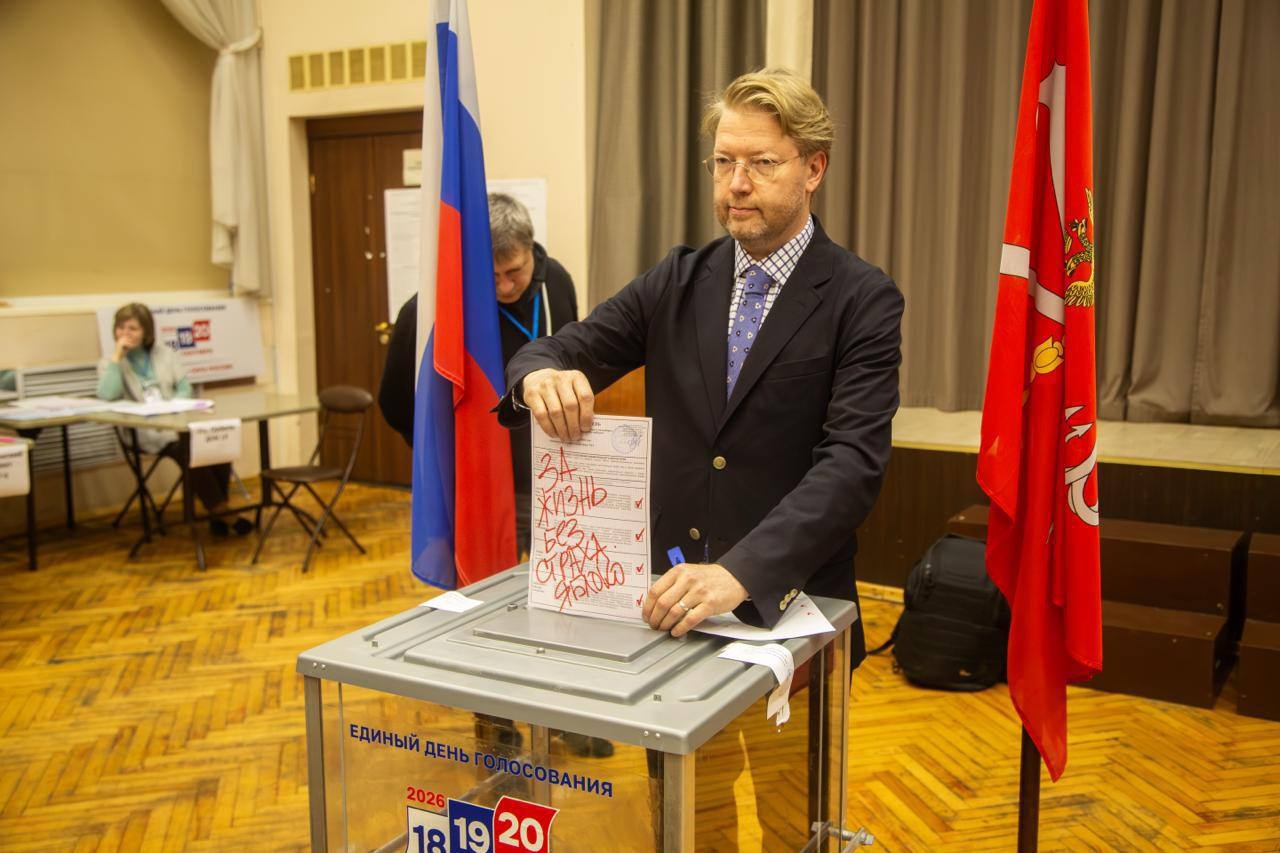
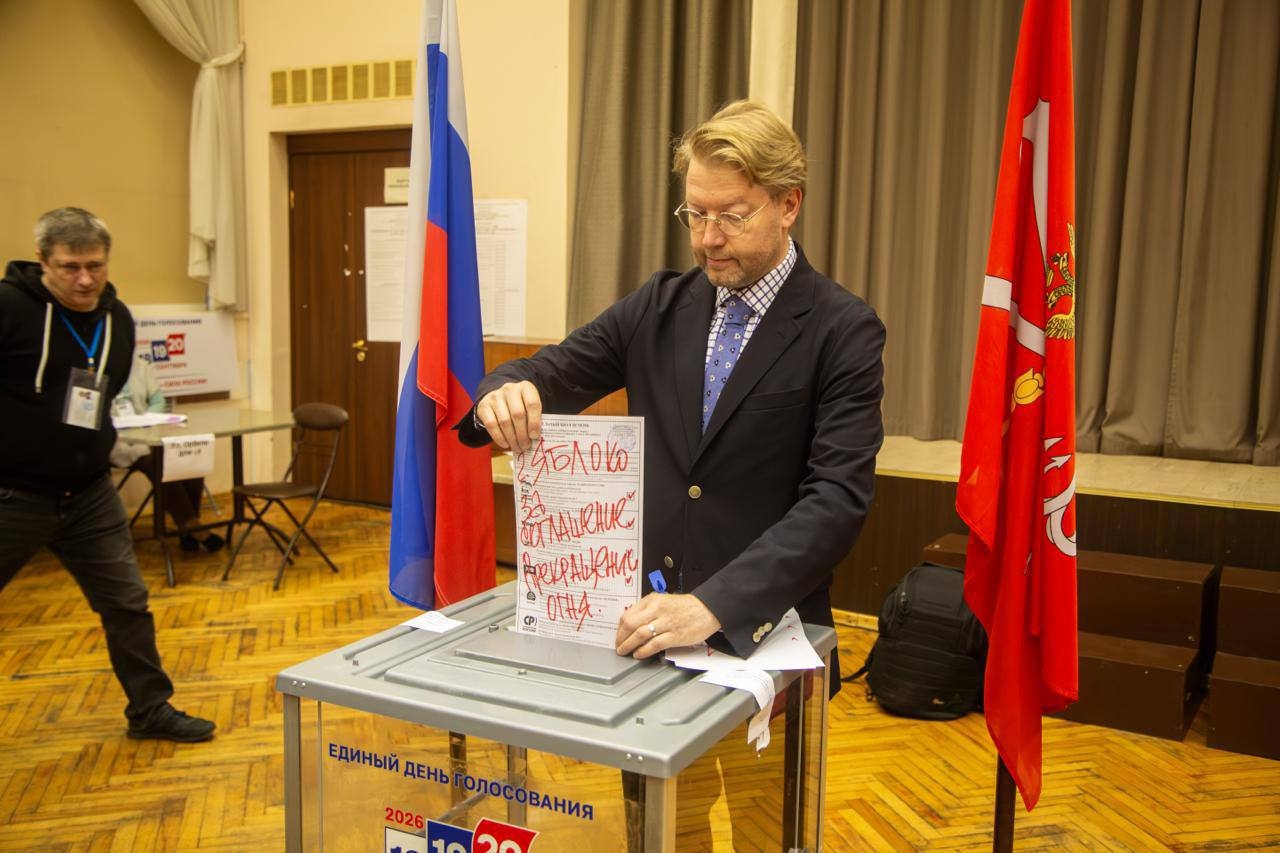
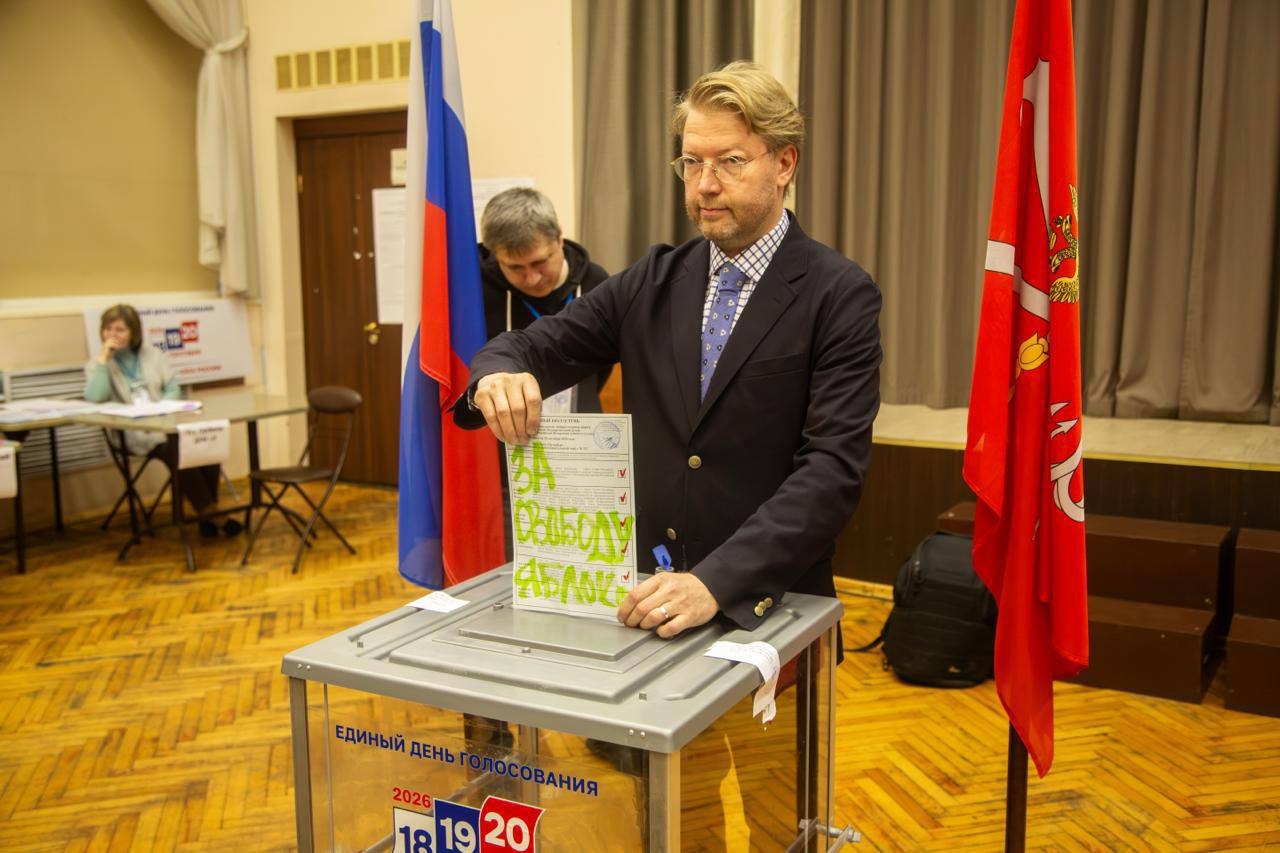
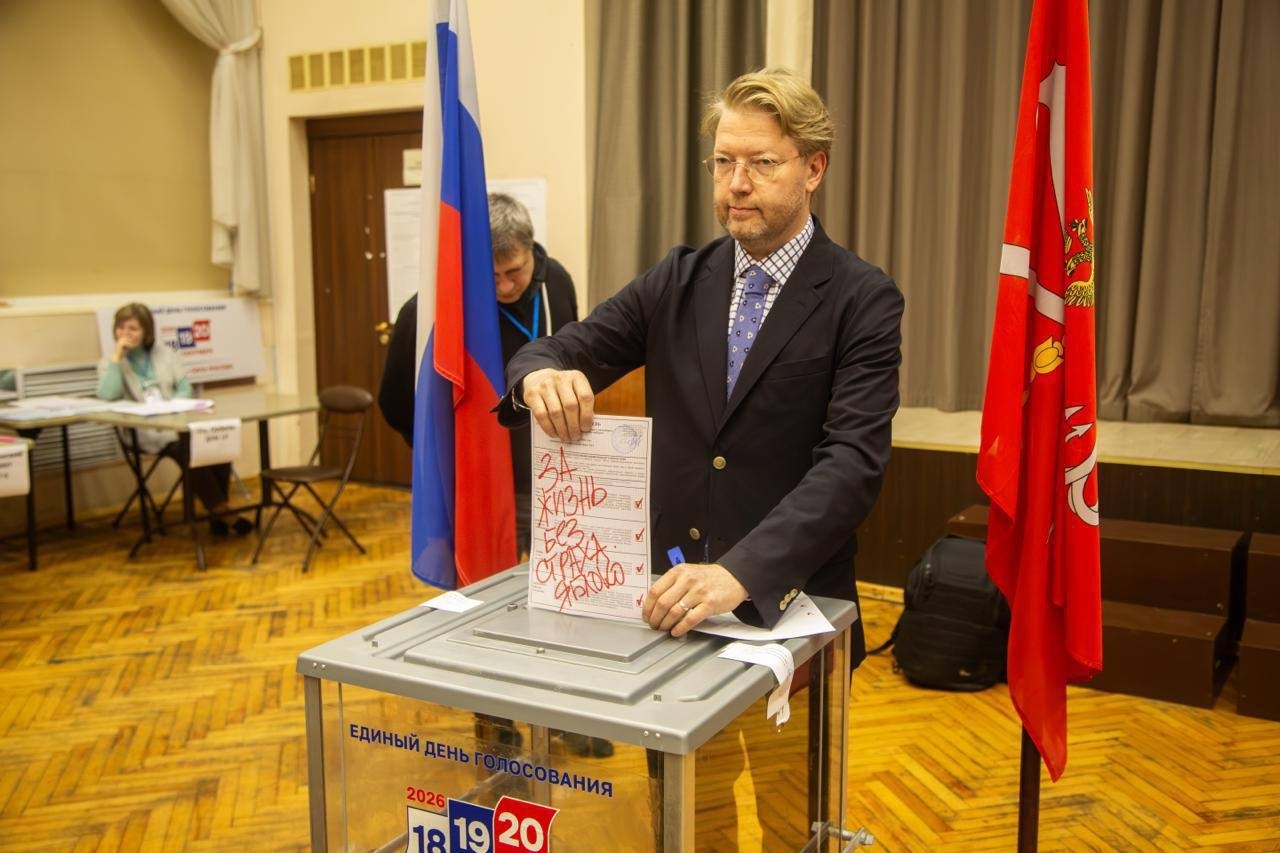
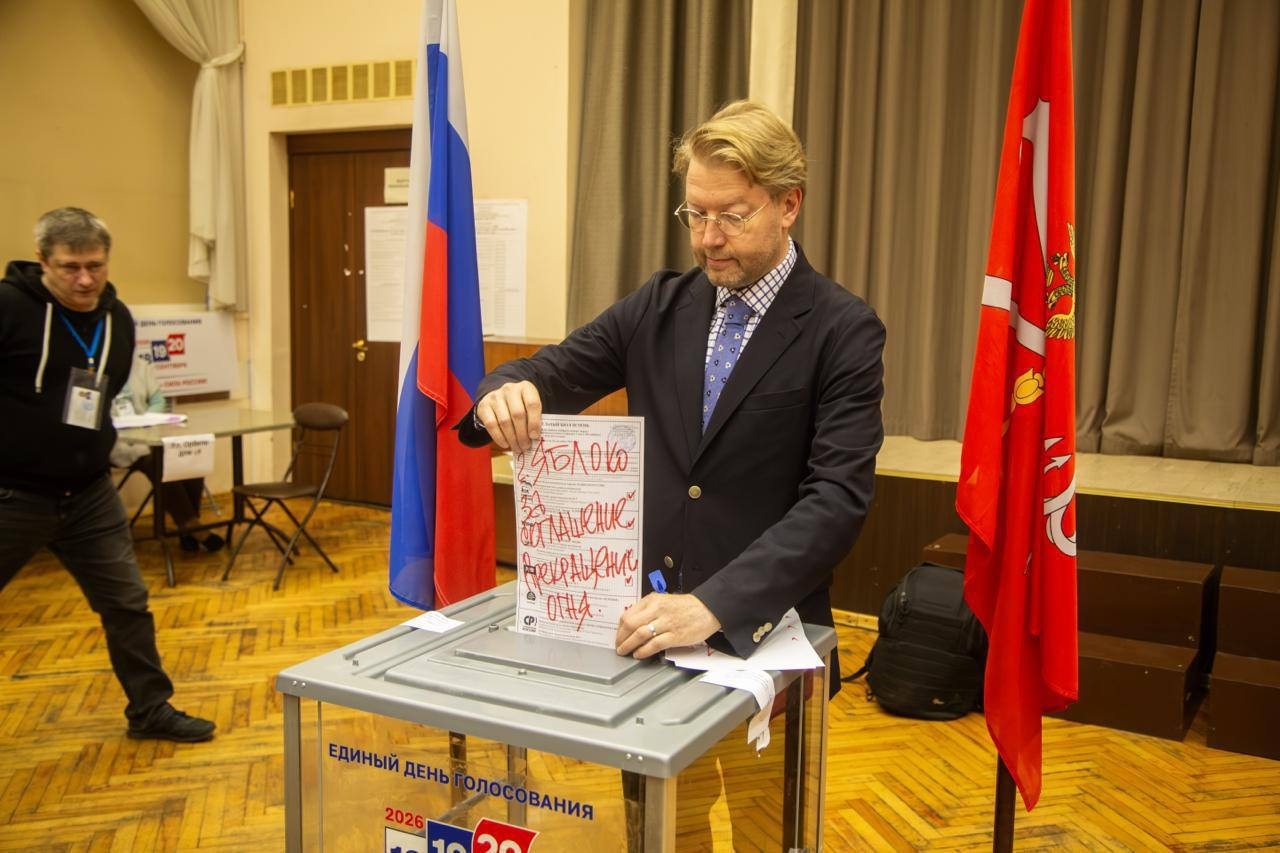
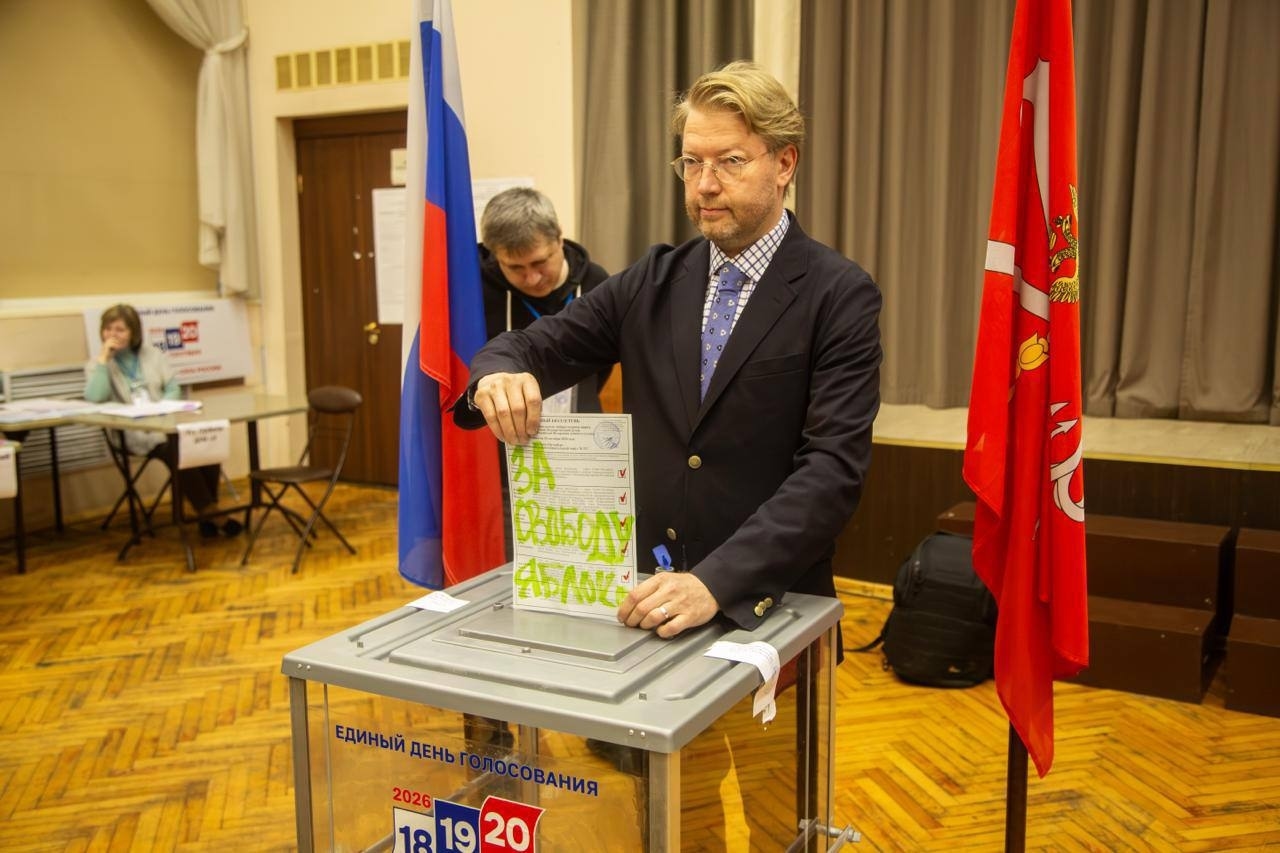
Rybakov had already done something similar in the September 2022 elections. At the time, according to photos published by the party, he wrote “I vote for peace” on his ballot before placing it in the box.
At least five such cases emerged in 2022
Some of the first known cases initiated over writing on ballots emerged during regional elections in September 2022.
In Moscow, Lev Karmanov drew a peace dove and wrote “No to war” on his ballot. Election commission members would not let him put the sheet into the electronic ballot scanner and offered him a new ballot instead while leaving the first one on the administrators’ table. Police detained Karmanov after he left the polling station, and the Chertanovsky District Court ultimately fined him 50,000 rubles ($600) for “discrediting the armed forces” — a ruling later upheld by the Moscow City Court.
The court found the message to be public, since the ballot is handed to commission members and later counted. In the ruling, it was thus stated that Karmanov “publicly displayed” a ballot with the message “No to war.”
That same day, in Veliky Novgorod, police filed a “discrediting” report against Anton Bochanov, who also wrote an antiwar phrase on his ballot before dropping it into a transparent ballot box. According to police, the message ended up facing outward and was visible to commission members and other voters.
In Kirov, a similar citation was filed against Natalia Ryabova, whose ballot bore the messages “Glory to Ukraine” and “Russia will be free,” along with an obscene phrase about Vladimir Putin. Additionally, media outlets reported on another administrative case concerning Moscow polling station No. 1936 in Orekhovo-Borisovo, where a voter left an anti-war slogan on their ballot.
Another case arose in 2022 in Aramil, Sverdlovsk Region, where art teacher Darya Sergeyeva wrote “No to war,” “Glory to Ukraine,” “Put Putin on trial,” and other phrases on her ballot while also drawing a peace dove and the Ukrainian flag. Commission members contacted the police. In November, Sergeyeva was fined 15,000 rubles ($180) for “discrediting the armed forces.”
The Insider found at least five episodes of administrative prosecutions over writing and drawings on ballots in 2022 alone.
Another six cases in 2024
The practice continued in the presidential election in March 2024. St. Petersburg resident Alexandra Chiriatyeva wrote “No to war” in red marker on the back of her ballot, and the Dzerzhinsky District Court charged her with two offenses at once: petty hooliganism and “discrediting the army.” Chiriatyeva was sentenced to eight days of arrest and fined 40,000 rubles ($480). A statement from St. Petersburg’s joint court press service claimed that by writing on the ballot, Chiriatyeva had “damaged state property.”
Another case emerged in Simferopol, where a woman wrote “No to war,” “Against human deaths,” and “Ukraine will win” on her ballot. The Central District Court of Simferopol fined her 40,000 rubles ($480) under the article on “discrediting” the army.
In Podolsk, near Moscow, Maria Alekseyeva was detained over writing on her ballot and charged with the same offense, after which the Podolsk City Court fined her 30,000 rubles ($360).
In Bratsk, Alexander Shokhirev wrote “No to war” and “Glory to Ukraine” on his ballot, photographed it, and then dropped it into a transparent ballot box. The Bratsk City Court found him guilty both of “discrediting” the army and of displaying banned symbols. He was sentenced to 12 days of administrative arrest.
A man from Dubna, Moscow Region, made a social media post featuring a photo of his ballot, which had been spoiled with the caption “No to war.” The Dubna City Court fined him 30,000 rubles ($360) for “discrediting” the army. In his case, the grounds for the charge were not just the message itself but also the posting of the ballot photo online.
Another case occurred during St. Petersburg’s regional elections in September 2024. Election observer Marina Popova dropped a ballot marked “No to war” into the box and was cited under two articles: petty hooliganism and “discrediting” the army. The Kuibyshevsky District Court sentenced Popova to five days of arrest and a 30,000-ruble ($360) fine.
The judge initially sent the citations back to police for revision, noting that the law does not provide for standalone liability for damaging a ballot. The following day, a different judge found Popova guilty after members of the election commission argued at the hearing that the ballot was state property and had been damaged.
In total, The Insider found at least six such episodes in 2024.
In 2026, ballot cases have already led to arrests
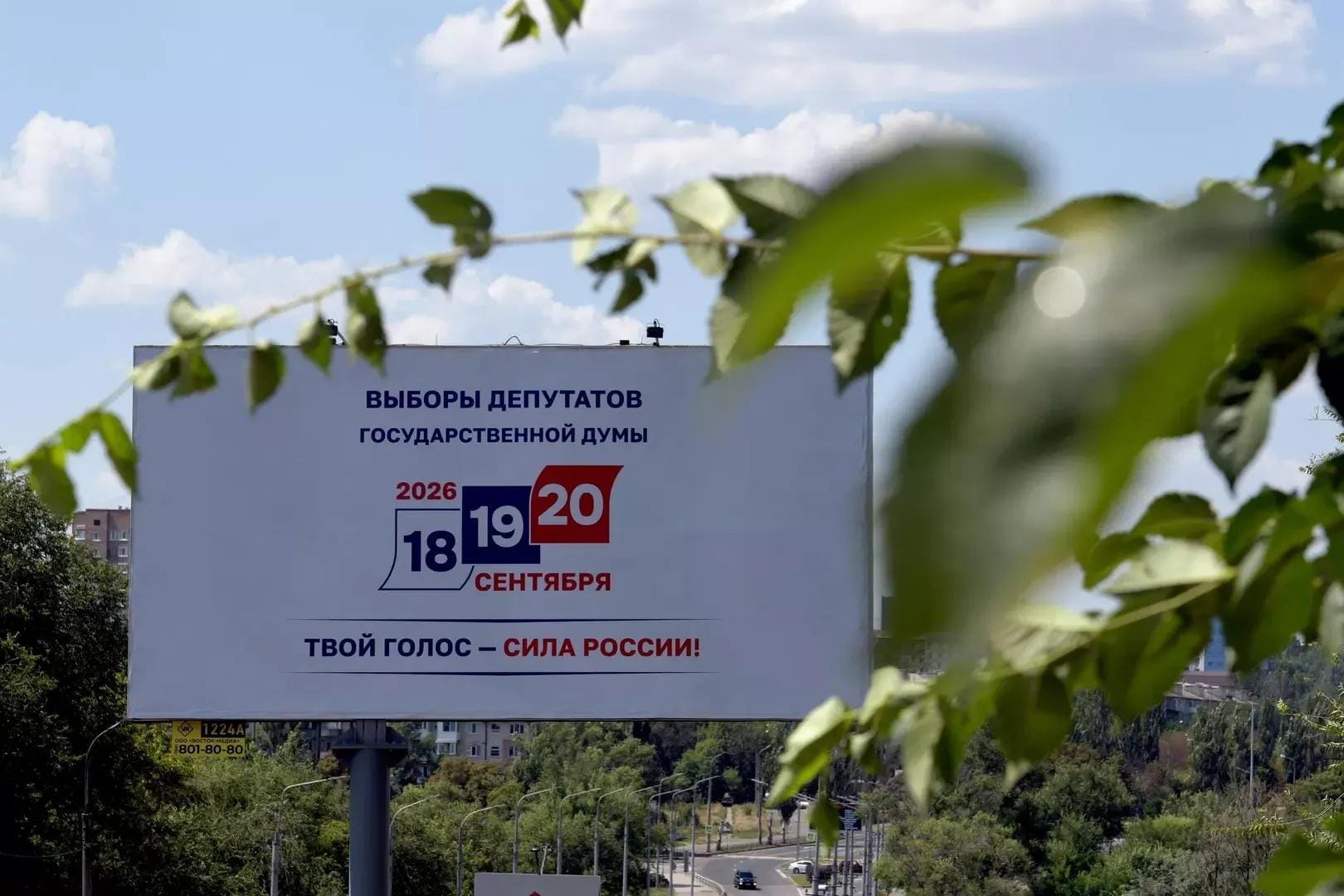
Besides Rybakov’s case, at least two more incidents are known from the September 2026 elections.
Stanislav Morozov, a blogger from Penza, posted a video of himself filling out ballots: on one, he wrote an obscene phrase about Vladimir Putin, and on another he crossed out the name United Russia and added a separate obscene message. The Pervomaisky District Court of Penza sentenced him to 14 days of arrest for petty hooliganism — the same article of the administrative code applied to Rybakov. The court’s published materials did not specify which of Morozov’s actions was deemed petty hooliganism.
In Vladimir, Alexander Stepanov wrote on his ballot: “No to war! For peace!” The slogan was noticed after the ballot ended up in a transparent ballot box. The Frunzensky District Court of Vladimir fined Stepanov 30,000 rubles ($360) for “discrediting” the army.
The Insider’s count of 14 such cases since 2022 excludes incidents in which people were only detained but no record of citation could be found, as well as detentions in which the report was filed solely over other actions, such as resisting police.
In at least three previous cases — those of Chiriatyeva, Popova, and Morozov — law enforcement used the same Part 1 of Article 20.1 of the Code of Administrative Offenses on petty hooliganism that is now being applied against Rybakov. The maximum penalty under this article is 15 days of administrative arrest.
Yabloko’s federal party list was removed from the State Duma race on Aug. 10 after internal polling appeared to show support for the anti-war party growing rapidly. Party leaders then urged supporters to invalidate their ballots by marking more than one box. By the start of voting, courts had also removed nearly 30% of Yabloko’s single-mandate candidates, The Insider calculated.