The Arab Republic of Egypt is expected to set two new world records by the end of 2026: for the number of tourists it attracts and for the number of political prisoners it locks up. Until recently, Egypt had trailed Syria in the latter ranking; however, after the fall of the Assad regime and the release of tens of thousands of Syrian prisoners of conscience, the Egyptians seized the lead, surpassing even the misanthropic regimes of Myanmar and Iran. Meanwhile, most foreigners visiting the Pyramids or spending a few days at an Egyptian resort never stay long enough to notice that the regime in Cairo rules by repression, fear, propaganda, and the personality cult of usurper president Abdel Fattah el-Sisi.
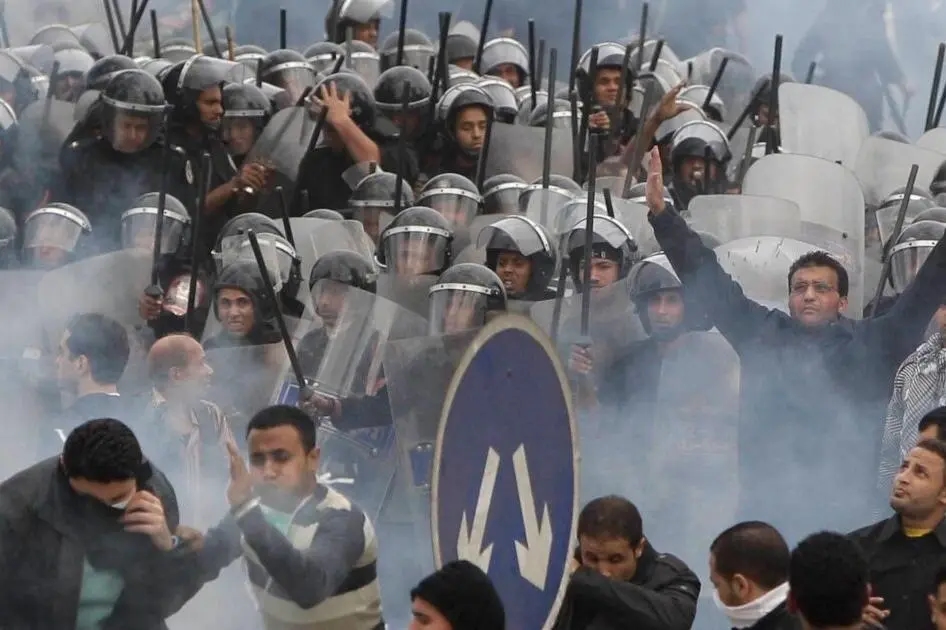
In the winter of 2011, amidst the Arab Spring protests, the streets of Cairo were patrolled not only by the army and police but also by Bedouins from neighboring Giza. On Feb. 2 of that year, armed with sharpened sticks, stones, and rebar, they staged a bloody attack on the protest camp. Eleven people were killed and several hundred wounded.
Later, the attackers explained to journalists that because of the revolution, tourists had almost stopped coming to the Egyptian capital. As a result, the Bedouins, who made their living giving tourists camel and mule rides along the roads of the world’s most famous necropolis, were left without income and could no longer support their families or feed their animals. The Bedouins hoped that breaking up the protest on Tahrir Square would calm things down and bring tourists back to the pyramids at Giza.
“Virginity tests” for protesters
At around the same time, the military was setting up torture chambers and special “medical rooms” in the famous Egyptian Museum — just a few hundred meters from the main revolutionary camp on Tahrir Square. At the Museum, intelligence officers carried out so-called “virginity tests” — sexualized violence against female protesters, who were forced to undergo gynecological examinations in public.
State propaganda at the time claimed that the women taking part in the revolution were all, without exception, prostitutes, and that the “virginity tests” were meant to prove this. But the public did not believe the state-sponsored stories, so the authorities tried to walk it back — claimed the tests were carried out solely to confirm that the detainees had not been subjected to sexual violence by soldiers or police, arguing that the revolutionaries were making baseless accusations of rape against security forces and that it was necessary to prove those accusations false.
The job of saying so publicly went to one of the generals leading the crackdown on the protests: Abdel Fattah el-Sisi. This was the first time many Western journalists heard his name.
According to one theory, it was el-Sisi himself who allowed the armed Bedouins onto Tahrir Square, since at the time he headed the country’s branch of military intelligence, which was responsible for carrying out acts of sabotage and provocation, among other things. However, it has never been definitively proven that el-Sisi personally issued the order.
What is not disputed is the fact that, in 2011, the general failed to live up to the expectations that then-President Hosni Mubarak had placed on him — he was unable to crush the revolution, which toppled the regime and led to Egypt’s first-ever democratic presidential election. But Mohamed Morsi, the Muslim Brotherhood Islamist who won that vote, saw a kindred spirit in the relatively young (he was 56 in 2011) and conspicuously devout general. It was Morsi who appointed el-Sisi as commander-in-chief of the armed forces.
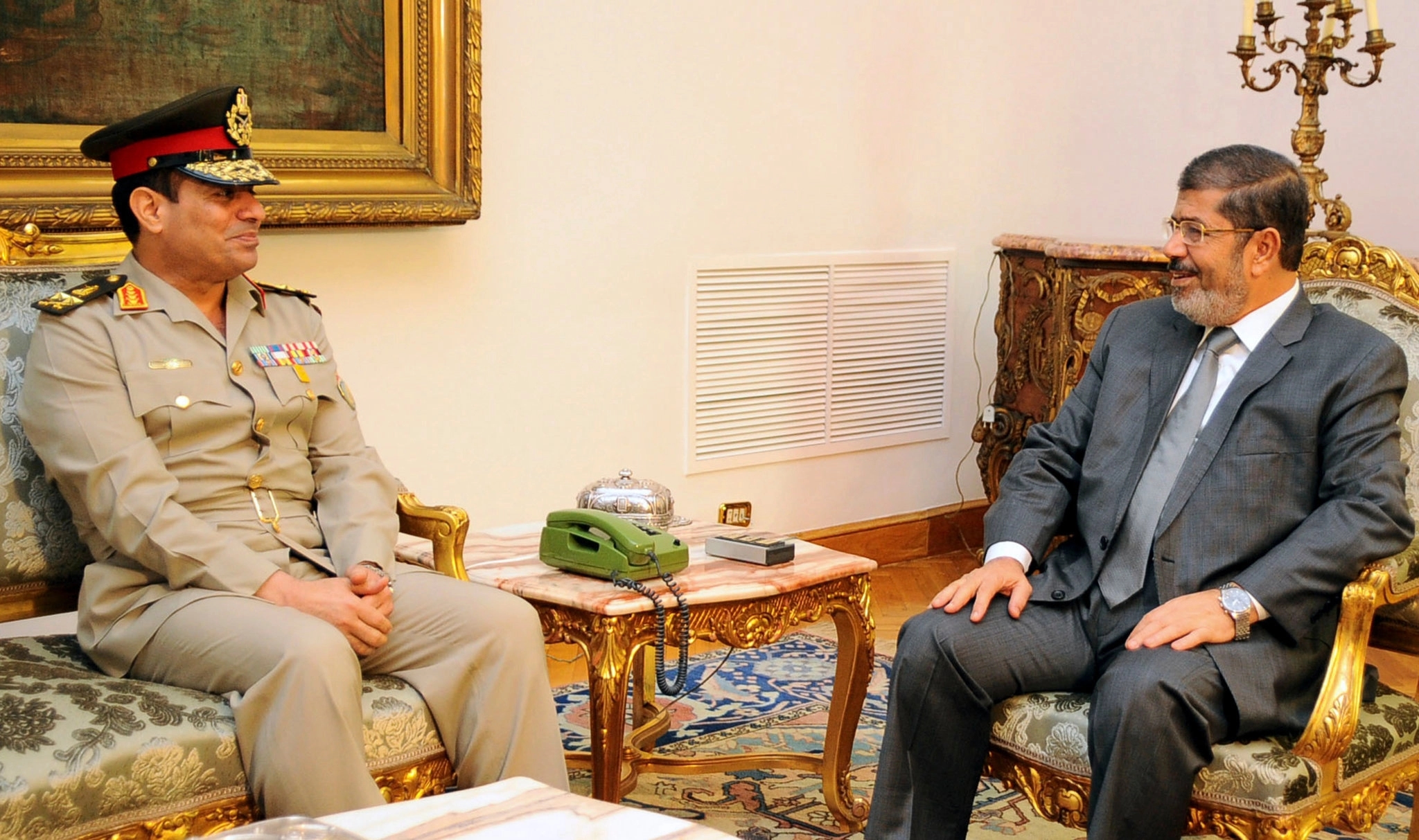
Just two years later, in 2013, el-Sisi would “repay” Morsi for that trust by overthrowing him and sending him to prison for life. The list of charges against Morsi was seemingly endless, but at the top of it was treason. Egypt’s first — and, so far, only — democratically elected president died behind bars in 2019.
El-Sisi, who took Morsi’s seat soon after his overthrow, presented himself as the savior of the nation. According to the military command’s version of events, he had saved Egypt from Islamist terrorists who had propelled their own man, Morsi, into power. Ever since, Abdel Fattah el-Sisi has ruled the country through propaganda about “revolutionary prostitutes,” mockery of the opposition, and outright violence.
Brother against “Brother”
On Aug. 14, 2026, the World Coalition of Egyptians Abroad published an appeal to the authorities in Cairo calling for the release of political prisoners and an investigation into the circumstances under which thousands of people had been jailed for their personal views. The appeal was backed by the Association of Families of Egyptian Political Prisoners and by the International Association of Families of Political Prisoners, which was founded in London that very week.
The date was not chosen at random. It was on Aug. 14, 2013, that Mohamed Morsi’s rule in the country came to an end. That July, Morsi and his entourage were taken into custody by soldiers under el-Sisi’s command. State television ran round-the-clock footage of the arrests of the country’s top officials and their supporters, captioned: “Egypt is fighting terrorism.” The deposed president was declared an agent of Hamas and Hezbollah, and his followers were branded accomplices of terrorists. Those followers had set up a protest camp on Rabaa Square, demanding the president’s release.
On Aug. 14, the military destroyed the camp with extraordinary brutality. At dawn, soldiers opened fire with automatic weapons against the sleeping camp residents. Armored vehicles and bulldozers were then sent in to raze the protesters’ tent city. At least 817 people died that day (Egyptian authorities themselves acknowledged 638 deaths). Thousands ended up behind bars. They were later joined by tens of thousands more, detained in raids on opposition party headquarters, in apartments, and in mosques.
Most of those arrested 13 years ago remain behind bars, many still awaiting trial. The Morsi supporters rounded up in the summer and fall of 2013 are the demographic that makes Egypt the world leader in political prisoners.
The Morsi supporters rounded up in 2013 made Egypt the world leader in political prisoners
Still, new prisoners are constantly being added as Egyptian authorities wage a genuine war on those they deem to be religious extremists (above all, followers of the Muslim Brotherhood movement, which Morsi himself came from). Every year, hundreds more people are put behind bars, often on unfounded charges of terrorism or espionage. According to human rights organizations, Egypt holds between 50,000 and 70,000 political prisoners.
For years, Egypt was second on the list of countries with the largest numbers of political prisoners — behind only Bashar al-Assad’s Syria, which had sent more than 130,000 people to prison on political grounds. However, after Assad’s overthrow in 2024, the new authorities in Damascus emptied entire prison complexes, granting Egypt the lead in this shameful contest.
Incidentally, Egypt also has prison compounds built specifically for political prisoners. The most notorious is Scorpion Prison, which holds 2,000 people and was specifically designed so that sunlight never reaches the cells. But deprivation of vitamin D is just one — and probably the most innocuous — form of torture faced by its inmates.
Human rights reports state that Egypt’s political prison complexes are overcrowded and lack adequate medical care. Poor food, non-functioning ventilation, and prison staff brutality often lead to mass hunger strikes and suicide attempts. Among those who have tried to take their own lives because of abuse suffered in confinement was Mohamed Morsi’s nephew, arrested in 2022 without any justification.
Not all political prisoners in the country are Islamists. The prisons also hold members of democratic movements who actively opposed Mohamed Morsi and staged mass protests against the unconstitutional actions of Egypt’s first popularly elected president. In 2013, they demanded that Morsi abandon his attempts to appropriate parliamentary powers for himself.
Paradoxically, it was the actions of democratic groups like the April 6 Youth Movement that gave el-Sisi a pretext to arrest Morsi and take his place. As a result, in 2013–2014 many of these democrats ended up behind bars, charged with participating in the activities of banned parties and movements. Thousands of detainees remain in prison to this day.
Man of the hour
It was also in 2013–2014 that it became clear el-Sisi was preparing for a long personalist rule. The new authorities set about building the aforementioned prison complexes (officially called “correction and rehabilitation centers”), which were clearly intended for political opponents. Sure enough, dissidents began to be arrested en masse based on even the slightest suspicion of disloyalty.
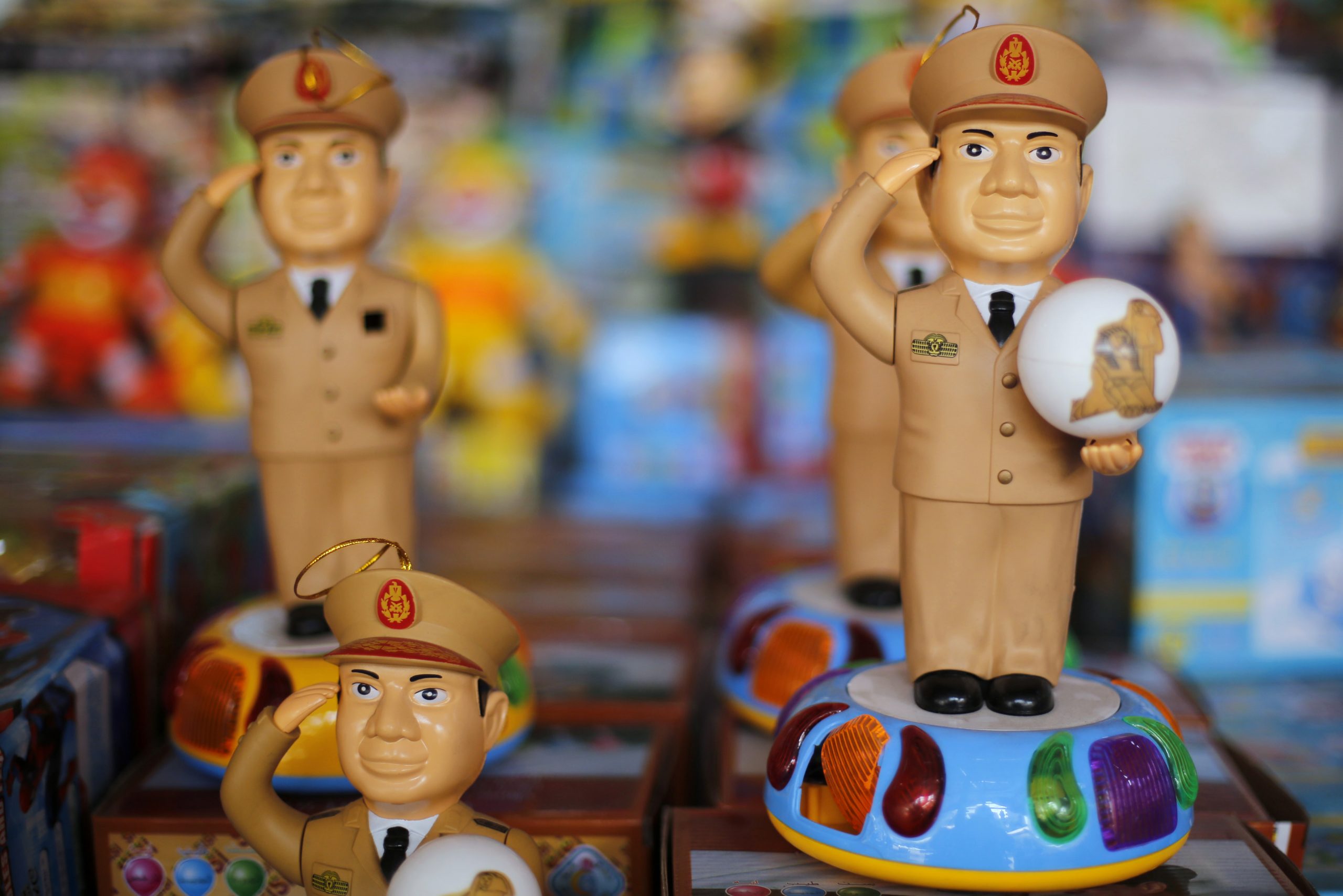
Then a campaign was launched to transform the little-known figure of el-Sisi into Egypt’s leading man — an irreplaceable, wise ruler without whom the country would be doomed to collapse. The construction of the general’s personality cult began before his presidency — even before he announced his intention to run for the top office. Just days after the Rabaa massacre, the streets of Cairo and other cities were decorated with giant portraits of el-Sisi bearing captions like “Conqueror of terrorism” or even “Lion of the nation.” Street vendors — whether picking up on the trend or acting on direct orders from the military — pulled T-shirts and other souvenirs commemorating the 2011 revolution from their stalls. New merchandise soon appeared in its place — this time bearing the portrait of the “savior general.”
The biggest musical hit in the summer of 2013 was a song by pop artist (and head of the musicians’ union) Mostafa Kamel, glorifying the heroism of the army and el-Sisi personally. The general is never named in the song — instead, it features an anonymous “hero” who “will sacrifice everything for the homeland.” Still, to make sure everyone understood exactly who was being described, the music video for the song cuts to el-Sisi every few seconds. As of today, 13 years after its release, the video has 38 million views.
In state and semi-state media, el-Sisi was called “blessed” and “long-awaited.” His looks were compared to the pharaohs of antiquity — his strength to Greek gods and heroes. Within a matter of weeks, a petition calling on el-Sisi to run for president gathered millions of signatures.
Over the years since Mohamed Morsi’s overthrow, his successor’s personality cult has evolved further. The Sisi-mania of 2013–2014, which at times took on comical forms, is now tightly controlled. Stories about saving the homeland and heroic battles against terrorists have given way to reports that presidential oversight is doing wonders for the economy, that from the very start of his rule el-Sisi has shown a “modern vision of statehood,” and that he governs Egypt skillfully and confidently, with the full approval of all Egyptians.
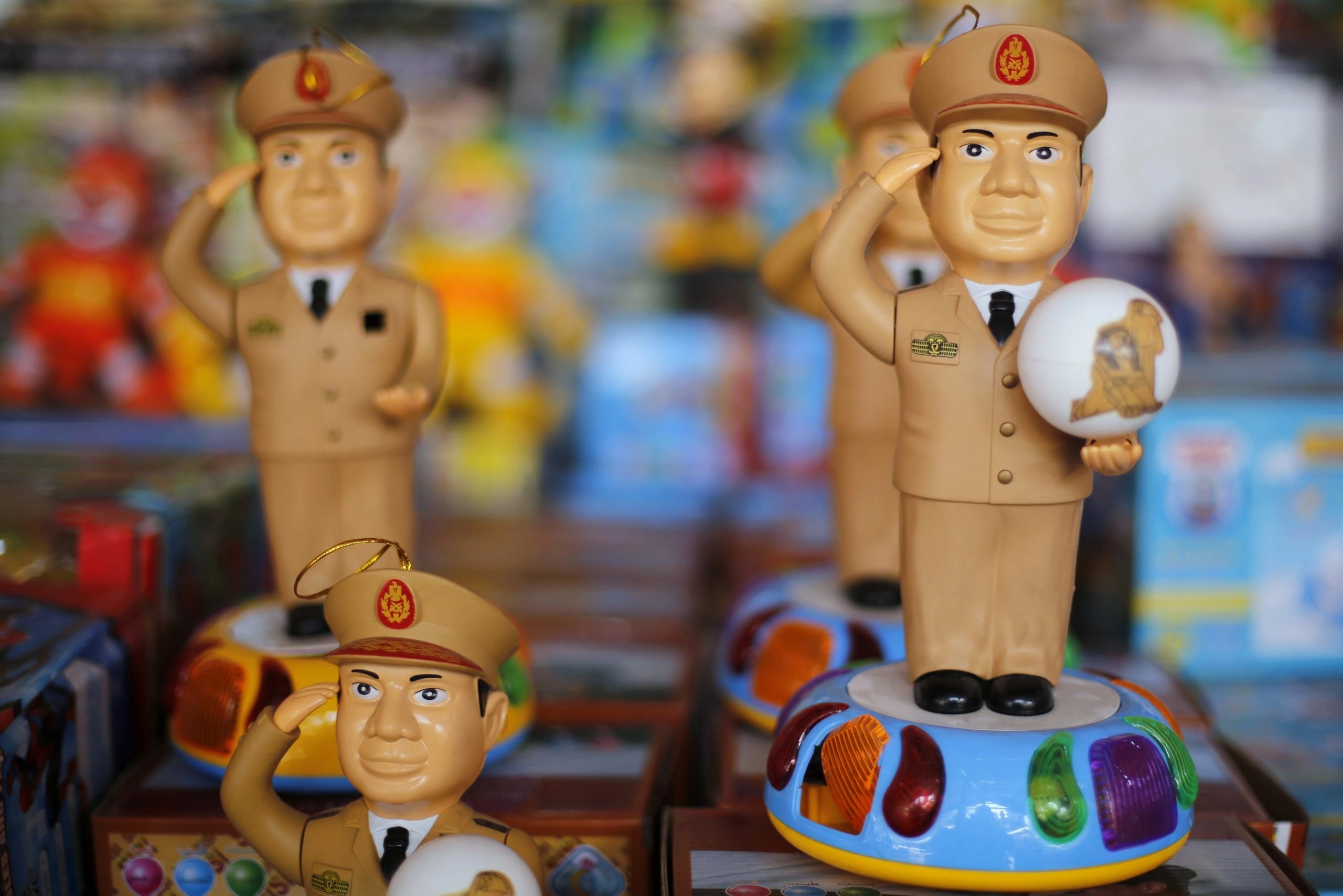
In state propaganda, the president remains, as ever, Egypt’s sole hope and mainstay. However, today, el-Sisi is portrayed less like a military superman and more like a merely visionary official. After all, the state no longer dares to irritate people with fairy-tale stories about an all-powerful el-Sisi at a time when Egypt is going through one of the most severe economic crises in its modern history.
Old friends, new enemies
El-Sisi has tried-and-tested methods for dealing with those unhappy with his presidency: torture, blackmail, intimidation. He has used this arsenal even against people who considered themselves the president’s associates and allies.
In 2018, a military tribunal sent Egypt’s former chief of staff Sami Anan to prison for announcing his readiness to run against el-Sisi, who was then seeking a second term. Anan spent nearly two years behind bars on charges of violating military statutes, and since his release has led a quiet life, making no attempt to return to politics.
Another prominent military figure, Air Marshal Ahmed Shafik, made it to the second round of the country’s first-ever democratic election in 2012, losing to Morsi by just a few percentage points. In 2018, Shafik withdrew his candidacy after Morsi’s people showed him documents allegedly proving his involvement in Mubarak-era corruption schemes. The compromising material also included several intimate videos of the marshal, filmed by hidden cameras installed in his bedroom.
However, these methods have not helped shore up el-Sisi’s popularity — a fact that presents a major challenge for the general-president. In 2023, on the eve of el-Sisi’s reelection to a third term, protests swept across Egypt, with participants demanding the president’s resignation and even burning posters bearing his photo. People were driven to protest by inflation, unemployment, and the authorities’ indifference to the fate of their neighbors in the Gaza Strip, who had become hostages of the war between Israel and Hamas.
People were driven to protest by inflation, unemployment, and the authorities’ indifference to the fate of fellow believers in the Gaza Strip
In the past three years, these problems have only gotten worse, and people blame the person who holds the most power in the country — the president — for the catastrophic rise in prices, for the state’s default on its social obligations, and for its foreign-policy failures. In this context, el-Sisi is changing both his propaganda narratives and his strategy for political survival. No longer a president backed by mass popular support, he now leads a clique of people strong and influential enough to keep the army and security services, if not the public, under his control.
The people in uniform have become the regime’s true mainstay. El-Sisi has not merely preserved the economic system formed under Mubarak, in which the military plays a key role across a whole range of sectors — construction, banking, telecommunications, and insurance among them. He has literally turned officers into the country’s economic elite. Companies run by military officers get priority in the allocation of state contracts. They have access to preferential loans. And state auditors give them the benefit of the doubt. In addition, an abundance of free labor — conscript soldiers — makes officers’ construction firms far more profitable than those that actually have to pay wages to their workers.
On top of that, under el-Sisi officers have gained effective immunity from prosecution, pensions far higher than those for civilians, and priority access to senior government posts after leaving the service.
City of dreams
El-Sisi and his inner circle understand that if a new popular revolution were to break out — one resembling the uprising that toppled Mubarak in 2011 — they would not stand a chance against it. Western analysts put the probability of mass protests breaking out in Egypt before the end of this year at 15–20%, and even in the more-than-likely event the regime makes it to January, nothing suggests public discontent will subside anytime soon — not with the currency devaluing at a near-record pace and modest economic growth failing to lift living standards or wages.
The situation has not yet ripened into an open revolt, but much could change in the easily foreseeable future. Through manipulation of the constitution, el-Sisi has not only secured the ability to run for president an unlimited number of times, but has also extended the length of a presidential term from four to six years. The next election is due to take place in Egypt in 2030, and by then el-Sisi is supposed to move — along with his government, parliament, and security agency — to an entirely new city currently being built in the desert 45 kilometers from Cairo.
This city is still unnamed — in official documents it is called the New Administrative Capital. Officially, it is being built to relieve overcrowded Cairo and free the city of smog and endless traffic jams. But the new capital has several features that indirectly underscore the authorities’ fear of a new revolution.
For one, the city under construction has no separate neighborhoods planned for the middle class or workers (the main actors of the 2011 revolution). It has no narrow streets (only wide avenues that cannot be barricaded). Every square and plaza is designed so that any crowd gathering there could be dispersed with machine-gun fire from the roofs of nearby buildings (which are all linked by underground passages). And on top of all that, the new capital has no public transit links to Cairo or other cities.
The new nameless city will have no narrow streets — only wide avenues that cannot be barricaded
In other words, Egypt is building a new “Tahrir-proof” capital — in part with money from foreign tourists. That same money also goes toward building prisons for political prisoners, funding propaganda, and paying the salaries of security officers who blackmail and intimidate dissidents.
One could say that Egypt’s two records — for tourists and for political prisoners — are interconnected. The more people come to Egypt, and the more money they spend, the bigger the budgets available to the military and security services that guard Abdel Fattah el-Sisi’s regime.