Al-Qaeda, one of the world’s largest international terrorist organizations, is predicting the imminent outbreak of World War III — and is seriously counting on emerging as one of its victors. More precisely, the infamous group aims to exploit a global conflict of all against all in order to expand its influence in Africa, Asia, the Middle East, and even Europe. The group is already taking control of several conflict-prone regions, effectively replacing dysfunctional authorities.
In late January 2026, several Arabic-language online media outlets affiliated with Al-Qaeda published a text titled “The Future of Islam in Light of Contemporary Global Transformations.” The text, reportedly authored by the analytical department of the branch operating on the Arabian Peninsula (most notably in Yemen) states that the planet is on a course toward World War III.
Al-Qaeda even lists the purported signs of an impending global catastrophe:
- The U.S. has abandoned “soft power” in favor of a more aggressive foreign policy.
- The confrontation between Western countries and the East (mainly China, Russia, Iran, and Türkiye) is weakening both camps.
- Donald Trump’s actions are effecting the breakdown of the U.S.–Europe alliance.
- The world’s ongoing economic and spiritual crises could lead to tensions necessary for the outbreak of large-scale armed conflicts.
Unsurprisingly, the document is rife with assumptions and overt manipulations — for example, attributing America’s kidnapping of now-former Venezuelan leader Nicolás Maduro to a supposed crisis of faith in the West. It also describes Trump as a “rather foolish pirate” who seeks to remain in power at any cost even after the end of his second term in the White House. However, the report also contains elements that truly are troubling for global stability.
Divided but robust
First of all, the very existence of this document shows that Al-Qaeda still operates, maintaining analytical units and media outlets under its control. Most importantly, the organization’s ambitions continue to grow — launching a global jihad, replacing Middle Eastern regimes with loyal or affiliated groups, and minimizing Western cultural, political, and military influence in countries with predominantly Muslim populations.
Second, the text suggests that Al-Qaeda intends to accelerate the perceived collapse of the Western world. The jihadist group is actively preparing for major crises and conflicts in order to be able to seize opportunities when the existing global order breaks down. A key focus of this effort is preaching jihad to everyone who is potentially willing to fight and die for the cause.
It would be misguided to discard these plans as scare tactics from bearded hermits who have long outlived their terroristic prime. Just days after the release of the document, the United Nations published its 37th report on the activities of ISIS, Al-Qaeda, and their affiliated groups, indicating that it would be premature to write off Al-Qaeda as irrelevant.
It would be misguided to discard Al-Qaeda’s plans as scare tactics from bearded hermits who have long outlived their prime
Naturally, the group will not launch an offensive on Brussels or Washington — in no small part due to the profound schisms outlined in the UN report. The organization’s central leadership struggles to earn the trust of rank-and-file members, and many of its foot soldiers do not even know who stands at the top, instead taking orders only from their immediate commanders.
Long gone are the days when Al-Qaeda was headed by a world-famous figure like Osama bin Laden. The name of the group’s current emir, Egyptian-born Saif al-Adel, likely means little to anyone outside the field of Middle Eastern affairs. Moreover, Al-Qaeda itself has yet to officially acknowledge him as its leader, and his reported elevation to the position of emir several years ago is based only on assessments by scholars and journalists rather than on direct evidence.
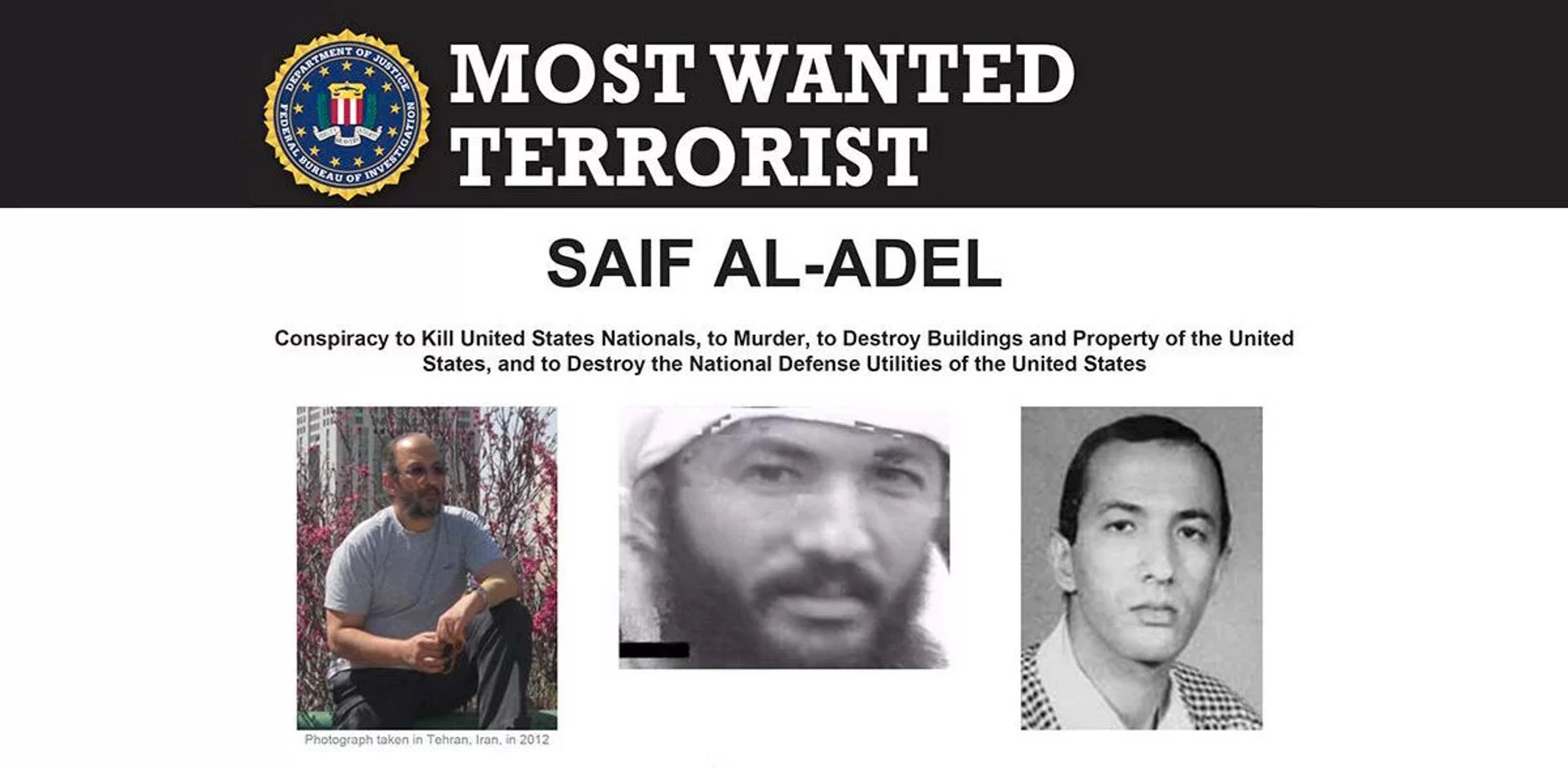
The uncertainty over top leadership reflects the organization’s weakness. Having a sinister but charismatic head ensured the group’s high profile and attracted followers sympathetic to the idea of jihad. On the other hand, this ambiguity also represents a source of strength for modern Al-Qaeda. The absence of a rigid hierarchy (and therefore of a dominant ideology imposed from above) grants its regional branches greater operational freedom.
Thus, the Al-Qaeda “subsidiary” known as Al-Shabaab is actively recruiting new members in Somalia and Kenya by exploiting inter-clan rivalries, positioning itself as a protector of weaker and smaller clans or as a mediator in conflict resolution. Meanwhile, Al-Qaeda in the Islamic Maghreb meddles in the politics of North African states, portraying itself as an opponent of corrupt governments and the foreign states supposedly backing them. In other words, Al-Qaeda is malleable, encouraging its regional branches to make themselves attractive to local populations across different parts of the Muslim world.
Flexibility and decentralization were among the key factors in Al-Qaeda’s survival despite competition with the more radical Islamic State, which originally emerged as the Iraqi branch of the group founded by bin Laden but split from its parent organization in 2014.
How is Al-Qaeda different from Islamic State?
Islamic State has indeed been the far more uncompromising jihadist organization — one that demands absolute obedience to the caliph. Within ISIS, even Muslims suspected of insufficient loyalty to the leadership were severely punished, whereas Al-Qaeda has generally avoided intra-confessional violence.
Another key difference was Islamic State’s immediate focus on building a so-called “just caliphate” in the Middle East — a quasi-state entity openly hostile to the rest of the world and isolated from the international system.
By contrast, Al-Qaeda, while not abandoning the idea of eventually establishing its own caliphate, has focused on local issues, betting on gradually gaining the requisite popularity to expand its influence and territorial control. This strategy has proven effective. After the defeat of Islamic State in Syria and Iraq, Al-Qaeda regained its status as the globe’s leading terrorist force.
Al-Qaeda is betting on gradually building popularity — and with it, influence and territorial presence
As a result of successful regional and ideological diversification, Al-Qaeda now claims to have up to 25,000 fighters in its ranks. The figure may not seem particularly impressive compared with the size of regular armies (even in smaller, peaceful nations). However, for a terrorist organization, it is indeed a substantial number. When Al-Qaeda first made global headlines with the attacks on the United States in September 2001, it had only about 500 members. Today, it has fifty times as many, and the number continues to grow.
Such numbers can be enough to achieve significant real-world results. At the peak of Islamic State’s expansion in 2015–2016, when the group controlled more than 100,000 square kilometers of Syria and Iraq that were home to several million people, it had a mere 15,000 to 20,000 active members, according to U.S. government data.
“Humane” terrorists instead of a failed state
Al-Qaeda continuously recruits new fighters in areas of active presence — Africa, the Middle East, Afghanistan, and Pakistan — while seeking to expand its reach. It preys on the weak, positioning itself as a force that can protect ordinary people from corruption, abuse by security forces, indifference from officials, and the rigid dogmatism of official religious institutions.
African branches of the group reinforce this image by funding humanitarian programs. Al-Shabaab even runs a Humanitarian Aid Distribution Office, which reportedly supplies significant amounts of food, water, and pharmaceuticals to Somalis. As a result, a share of the local population inevitably views the militants as heroes and guardians.
In Pakistan, where the government is struggling to manage a host of economic, natural, political, and even military crises, Al-Qaeda recruits those disillusioned with the government’s weakness, posing as a “strong hand” working to restore order. The group uses a wide variety of propaganda techniques — from sermons in mosques with sympathetic imams (a phenomenon also present in Western countries) to the development of computer games that glorify “jihad fighters.”
Al-Qaeda is active on the dark web and social media, where it attracts supporters with promises to build a new world founded on justice. In regions with unstable internet access, video sermons calling for jihad are distributed among potential recruits on flash drives.
Al-Qaeda is active on the dark web and social media, where it attracts new supporters with promises to build a new and just world
The group uses a wide range of recruitment methods: American convert Adam Gadahn ended up in Al-Qaeda after volunteering at a recruitment center disguised as a charity. Ibrahim Khalil, a leader of the group’s European branch, reportedly sought to purchase uranium on the black market, infiltrating the criminal underworld, where, alongside his search for radioactive materials, he also worked as a recruiter for the organization.
In Africa, Al-Qaeda integrates itself into insurgent movements opposing central governments, gradually bringing them under its influence, and it builds alliances with less radical groups that share the common objective of overthrowing existing regimes. The group’s recruitment approaches have become so diverse and dynamic that they attract close attention not only from terrorism experts but also from sociologists and psychologists.
Almost everywhere it has a presence, the group operates as a “shadow cabinet,” functioning as a kind of alternative government ready to assume social, policing, and even fiscal functions in areas where the state is no longer able to operate effectively. (The exception is Afghanistan, where Al-Qaeda is believed to maintain close ties with the ruling Taliban and where its global leadership may be located.)
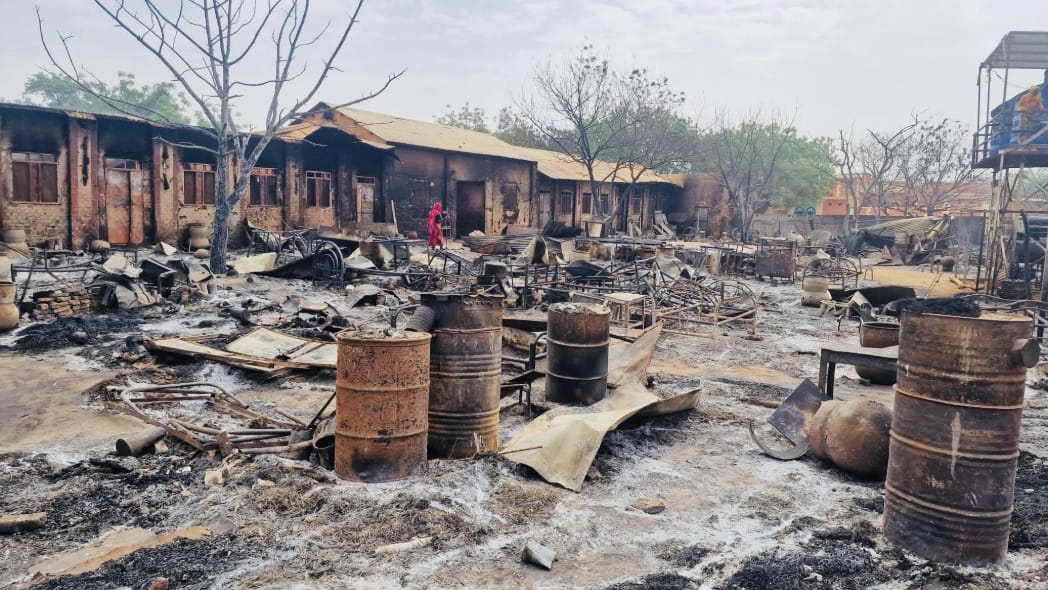
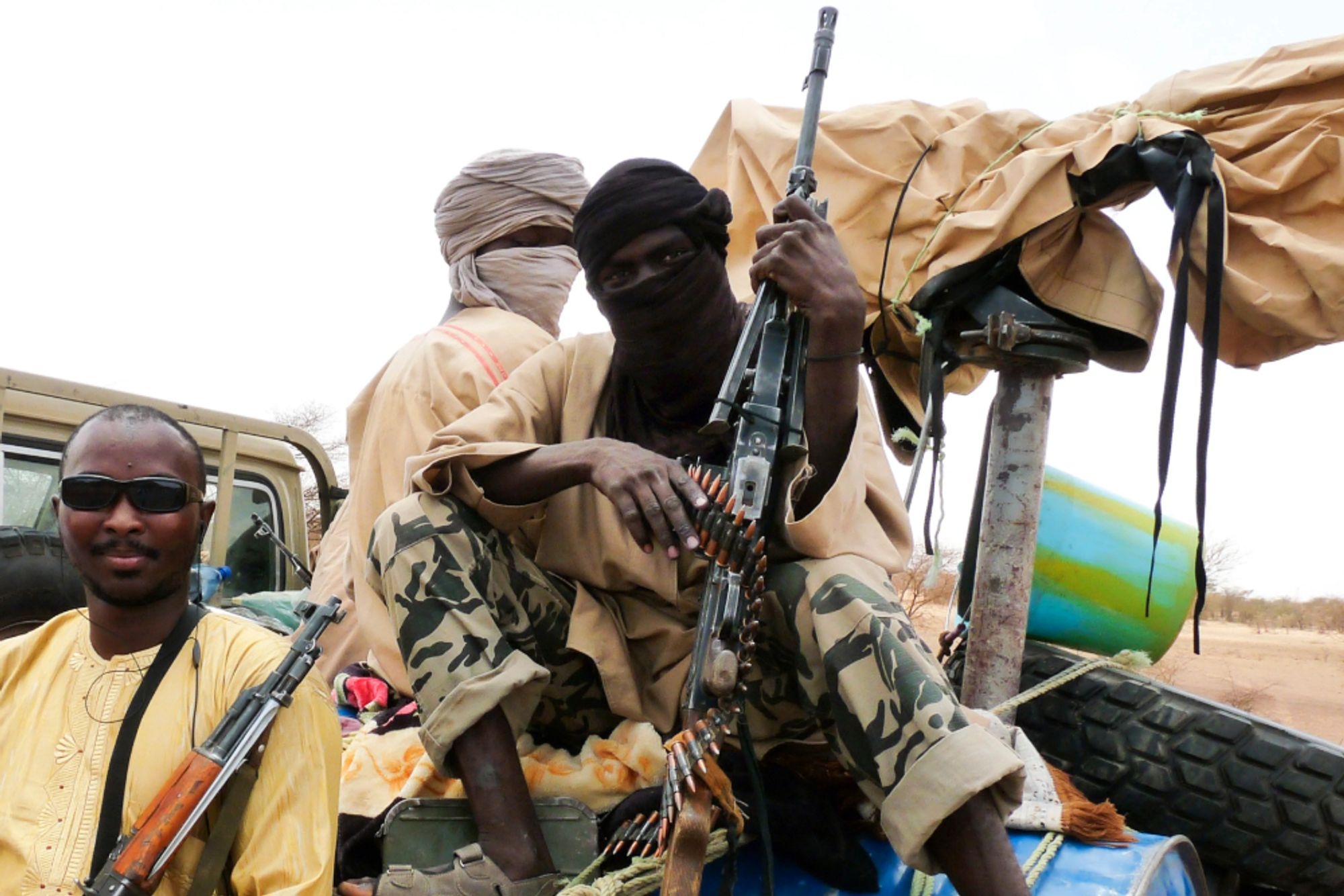
One of the most illustrative examples of this approach is Mali, where the local Al-Qaeda branch is engaged in an ongoing conflict with the central authorities, controlling a larger portion of the country’s territory than the official government does. In those areas, Al-Qaeda operates as a de facto state apparatus, not only distributing humanitarian aid but also combating crime, collecting taxes, and overseeing local courts. Similar zones of near-total Al-Qaeda control have emerged in Somalia and Yemen.
The Syrian branch of Al-Qaeda deserves a separate mention. After the fall of Bashar al-Assad’s regime and the rise of a transitional government headed by Ahmed al-Sharaa — himself a former field commander of Hayat Tahrir al-Sham, which emerged as an Al-Qaeda affiliate before later breaking away from the parent structure — the local branch announced its dissolution. However, some fighters refused to lay down their arms and even took part in attacks on U.S. military personnel. Now, amid the winding down of the U.S. military presence in Syria and al-Sharaa’s clear shift away from Islamist positions, Al-Qaeda may attempt to regain influence over parts of the country.
Global tactics
Al-Qaeda’s global tactics consist of gradually expanding its spheres of influence across different regions with the clear aim of subordinating entire states, as happened in Afghanistan and as may currently be underway in Mali. Unlike ISIS fighters, who deliberately relied on extreme brutality and promised to spill blood across much of the world, Al-Qaeda avoids overt, demonstrative executions.
The group presents itself as willing to cooperate with actors whom ISIS considers enemies and apostates deserving only of death. In Yemen, this approach has allowed Al-Qaeda to negotiate truces with the Shiite Houthi fighters — whom most Islamist groups regard as heretics and apostates — and, according to some reports, even to cooperate with them intermittently for mutual benefit.
A new global conflict, as described in the group’s analytical document, could indeed facilitate the achievement of its goals. Al-Qaeda skillfully exploits chaos in developing countries and has long been working to build networks in Russia (primarily in the North Caucasus) and even Europe. However, if a global war really were to break out, Al-Qaeda would hardly be the only — and most likely not the primary — threat to global security.