The new Iraqi government, formed in mid-May, has already carried out the largest wave of arrests of senior officials and prominent businessmen in the country's post-Saddam history. In the space of just a few hours, around 50 people were detained in Baghdad and other cities across Iraq. The unlucky group included former and current lawmakers, government officials, top executives at the state-owned Midland Oil Company, and even intelligence chiefs. Some elements of the opposition claimed the arrests were politically motivated, alleging that Prime Minister Ali al-Zaidi was seeking to remove figures viewed unfavorably in Washington in order to curry favor with the United States. However, al-Zaidi and his team say they possess evidence showing that the arrestees participated in a sophisticated criminal scheme that siphoned billions of dollars out of the state budget every year. The scheme also has a Russian connection.
On the night of June 28, residents of Baghdad awoke to the long-forgotten roar of heavy military hardware. Tanks, armored personnel carriers, and armored vehicles rolled into the part of central Baghdad that the American occupation authorities had turned into a veritable citadel in the 2000s, dubbing it the “Green Zone.”
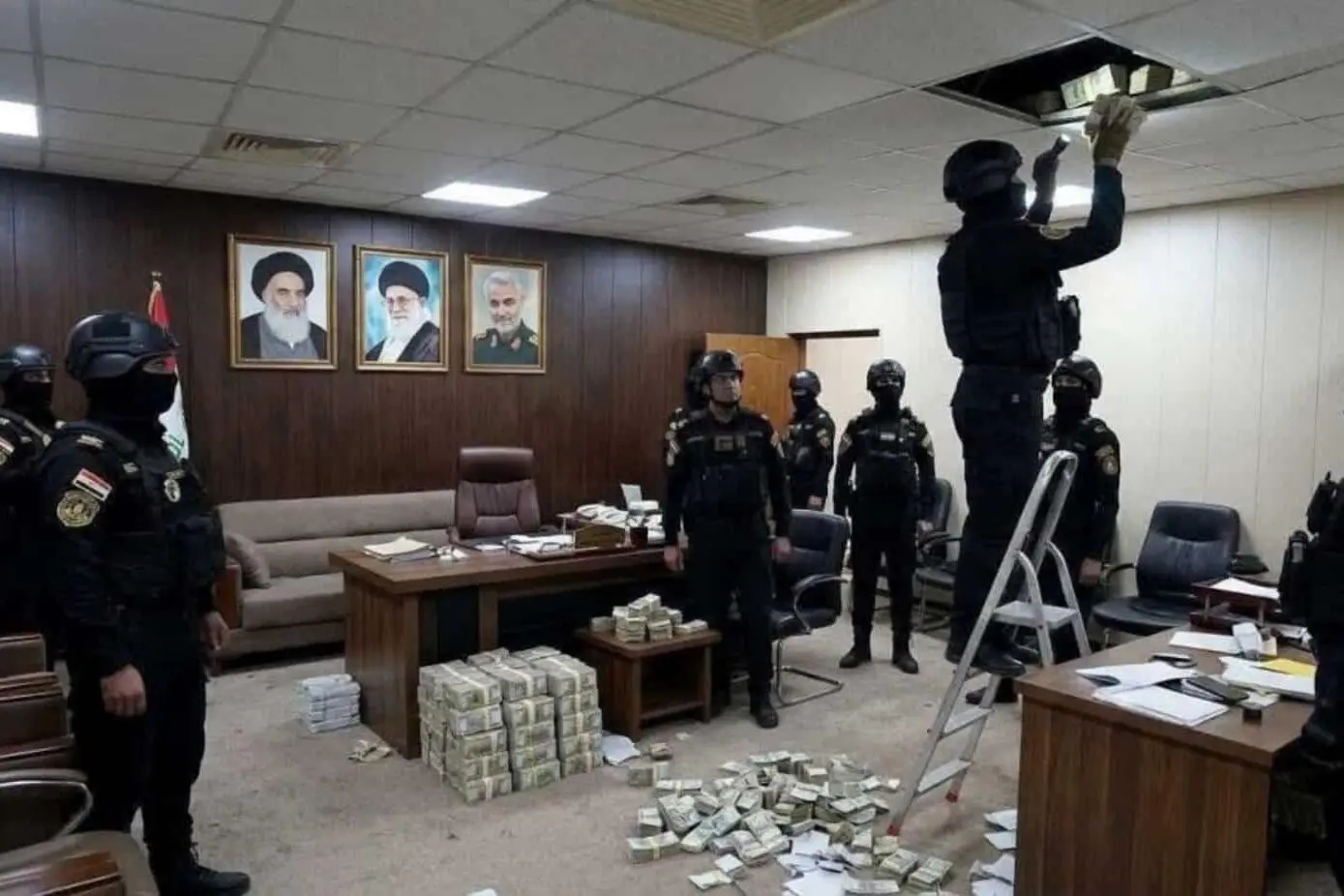
Control was established over all entrances to and exits from the zone, after which special forces armed with arrest warrants issued by the country's new authorities stormed the apartments of several dozen senior officials. Others were detained outside the Green Zone and in cities all across Iraq.
A total of 47 people were arrested. They included Deputy Oil Minister Ali Maarij, leaders of the Sunni political party Azem Alliance (“Alliance of Resolve”), Shiite lawmakers, and even representatives of the security services. The day before, parliamentary immunity had quietly been stripped from all sitting members of the federal legislature who appeared on the arrest list, a move made possible because parliament had already recessed for the summer, allowing the decision to revoke lawmakers' immunity to pass without a lengthy debate. The speaker of parliament simply acted on his own after receiving a request from Iraq's Central Anti-Corruption Court.
The government's press office said that all those arrested were suspected of involvement in corruption schemes related to oil production and sales, stressing that the detentions had absolutely nothing to do with Prime Minister Ali al-Zaidi's planned visit to the United States. That assertion appears to be an attempt to counter the opposition's claims that the arrests were politically motivated — intended to demonstrate the loyalty of the new government and its prime minister to Washington.
Those accusations did not emerge out of nowhere. For example, arrested deputy oil minister Ali Maarij had been placed on American sanctions list over his alleged ties to Iran, and the U.S. Treasury Department believes the official used his senior government position to divert part of the revenue generated by oil and petroleum product sales to Iran-backed armed groups in Iraq. He is also accused of falsifying documents to disguise sanctioned Iranian oil as Iraqi crude on the world market, allowing Tehran to obtain much-needed foreign currency.
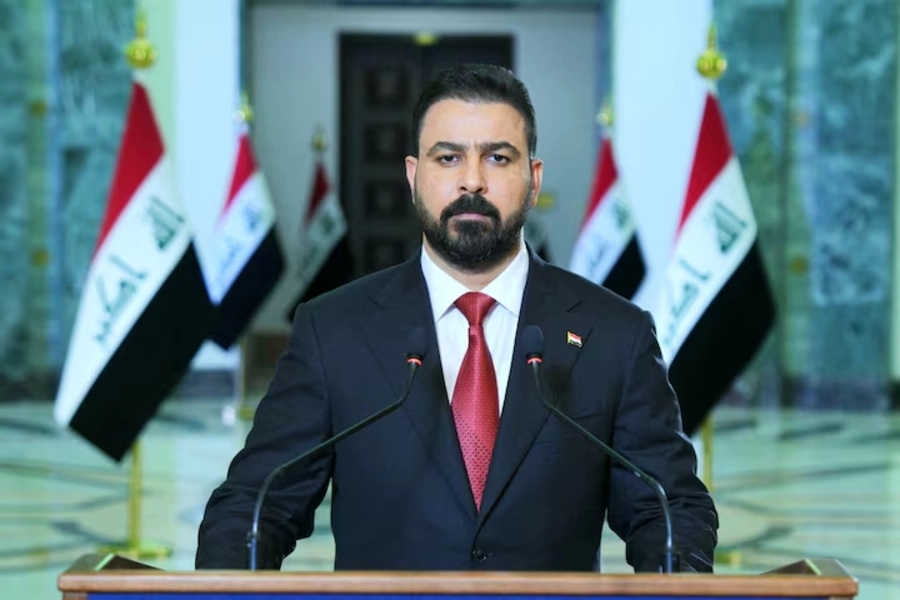
The timing is also telling. The United States placed Maarij on its sanctions list only this spring, just as Iran-aligned political forces in Baghdad were negotiating the formation of a new cabinet. The move appeared to be a clear signal that Washington did not want Maarij to become oil minister, a position he stood a strong chance of securing. U.S. pressure proved only partly effective: Maarij's allies in the country's highly diverse ruling coalition still managed to push through his appointment as deputy oil minister — even if he remained in the post for less than two months.
Vouchers-for-Cash
The deployment of tanks into central Baghdad was preceded by a much quieter operation by the security services. In May, almost immediately after the new cabinet was formed, Iraqi authorities arrested one of Ali Maarij's predecessors as deputy oil minister, Andan al-Jumaili. Investigators found tens of millions of dollars' worth of cash, gold, real estate, and other valuable assets among his property. Soon after, al-Jumaili’s wife and sister were also jailed. According to investigators, they burned about $5 million in illicit cash into a furnace.
The wife and sister of former Deputy Oil Minister Andan al-Jumaili allegedly burned around $5 million in illicit proceeds in a furnace
Members of the new cabinet describe the arrested former official as an “oil whale,” saying he sold key positions in the Oil Ministry to a range of political parties, which then inserted their own representatives into the scheme. Al-Jumaili did not act alone — everyone arrested on June 28 is suspected of belonging to al-Jumaili's group or assisting it.
Many Russian companies and politicians, incidentally, also played a role in the emergence of these schemes. Russians established a significant presence in Iraq during Saddam Hussein's presidency. After its failed attempt to annex neighboring Kuwait, in the mid-1990s Iraq was once again allowed to export oil on the condition that all proceeds be spent on food, medicines, and other goods needed by the country's population, which was suffering under international sanctions.
The program, known as “Oil-for-Food,” had several weak points, the most significant being that Saddam and his government retained the final say over which companies or people would be allowed to market Iraqi oil abroad. Investigations conducted after the fall of the regime in 2003 showed that roughly half of the 4,500 contracts awarded under the Oil-for-Food program went to companies and businessmen that helped the regime earn money in violation of the sanctions.
Altogether, Saddam Hussein and his associates received at least $1 billion through various schemes. The most common involved the sale of so-called “oil vouchers” — in exchange for payments made directly to Saddam or members of his inner circle, buyers received guarantees from Baghdad that they would be able to purchase Iraqi oil below cost. This drained funds from the Oil-for-Food program and worsened the country's humanitarian crisis while allowing the dictator and the officials and businessmen close to him to enrich themselves despite the outside economic restrictions.
According to the findings of the UN commission that investigated corruption within the Oil-for-Food program, more than 1,300 vouchers were sold in total. About 2% ended up in the hands of American companies and businessmen, 10% went to Chinese recipients, and 15% to French. However, Russians received the largest share by far, accounting for 30% of all oil vouchers.
The report states that the Russian beneficiaries included officials from the presidential administration and Foreign Ministry, State Duma deputies, the leadership of the Communist Party, the Liberal Democratic Party of Russia (LDPR), and, of course, oil companies such as Zarubezhneft, Sibneft, Tatneft, and Lukoil. Naturally, Communist party leader Gennady Zyuganov and late LDPR head Vladimir Zhirinovsky, who appear in the report as recipients of vouchers from Baghdad, were not engaged in the oil trade themselves. Instead, they simply profited by reselling their vouchers.
The corrupt schemes did not disappear after the fall of Saddam Hussein's regime in 2003 and the formation of Iraq's first coalition government two years later. The only difference was that, instead of enriching the dictator, they now benefited lawmakers, ministers, and security officials.
Quotas for bribes
After sanctions were lifted and the Oil-for-Food program came to an end, these schemes changed markedly. Instead of oil vouchers, what was now being sold were positions in ministries and state-owned oil companies. The political parties that bought them gained control over multibillion-dollar financial flows.
The cost of acquiring these posts was more than recouped through inflated contract prices, kickbacks from contractors, the creation of shell companies, and the fictitious procurement of equipment and services. Money was siphoned off through front companies, while some of the profits were distributed among officials, party leaders, and security officers who ensured the schemes remained untouchable.
The system extends far beyond the oil sector. Virtually every resource ministry, government agency, and state financial institution has, to one degree or another, become a source of income for political parties, which simply buy senior positions for their loyalists.
A few weeks ago, the Arab Center in Washington, DC described the existing system as feudal. Ministries have effectively become fiefdoms controlled by whichever political forces managed to buy the largest number of appointments for their protégés. Rigged tenders, bribes for licenses and permits, and the embezzlement of budgetary funds have become the principal — and in some cases, the only — source of income for political parties.
Corruption has become more than merely pervasive; it has evolved into the organizing principle of the system itself. For officials, corruption has become the primary incentive to work, while the main purpose of ministries is simply generating money for political bosses.
Corruption has become more than merely pervasive — it has evolved into the organizing principle of the system itself.
Notably, the term muhasasa (“quota system”) originally referred to the complex political arrangement under which power was divided among representatives of different parties, religious communities, and ethnic groups — Shiites, Sunnis, Kurds, and others. Over time, however, the term also came to describe the distribution of corrupt proceeds among those same groups. Today, the two meanings have become inseparable.
New prime minister Ali al-Zaidi has pledged to make the fight against systemic corruption his top priority. So far, however, observers remain unconvinced that the arrests he ordered and the widely publicized stories of millions of dollars burned in furnaces represent a genuine anti-corruption campaign. Instead, critics allege, the effort is merely an attempt to forcibly redistribute the quotas in favor of factions aligned with the prime minister. After all, al-Zaidi’s predecessors also promised to root out corruption, and they also staged high-profile (albeit less sweeping) arrests of allegedly corrupt officials.
Moreover, the arrests have so far targeted only second- and third-tier politicians and officials: deputy ministers and heads of security departments, leaders of relatively small political parties, rank-and-file members of parliament, and mid-level businessmen. The country's real political heavyweights — the leaders of the largest Shiite parties, many of them aligned with Iran — have remained untouched.
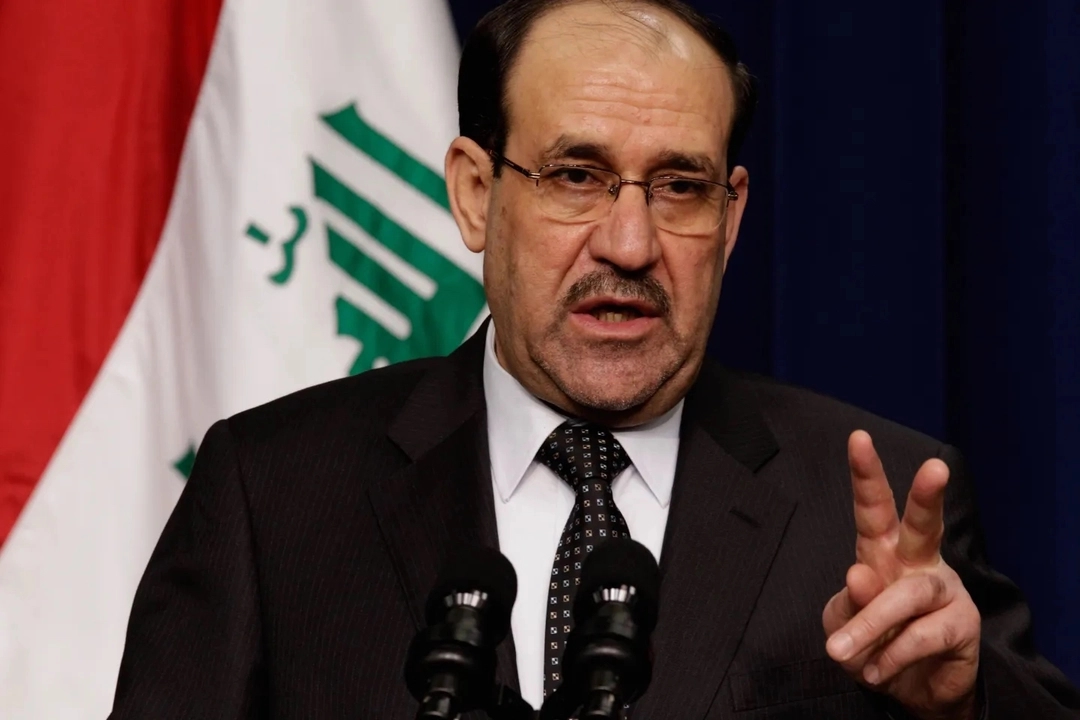
For example, during Nouri al-Maliki's years in office, an estimated $120 billion disappeared from the state budget, earning him a reputation as Iraq's most corrupt prime minister. Yet the current prime minister appears to have no quarrel with his predecessor. On the contrary, al-Maliki is now openly backing al-Zaidi’s actions while appearing entirely unconcerned about his own safety.
The reason is not necessarily that al-Zaidi, a Shiite himself, is protecting fellow Shiites — many of those arrested are Shiites as well. It may be that the new authorities are reluctant to go after the biggest fish immediately, or that they are waiting for American operations in Iran to run their course before moving against other pro-Iranian Iraqi figures. Or perhaps their objective really is simply to redirect the main streams of corrupt money — above all those flowing from the country's most profitable sector, the oil industry.
Moscow's shadow over Saddam
In 1997, without holding a competitive tender, Saddam Hussein awarded the rights to develop the West Qurna-2 oil field to Russia's Lukoil, Zarubezhneft, and Mashinoimport. The field's proven reserves were estimated at around 6 billion barrels, while total reserves were believed to exceed 10 billion.
Why Saddam handed such a prized asset to Russian companies remains unknown. One plausible explanation, however, is political corruption. Following his invasion of Kuwait, the Iraqi dictator had become an international pariah, with Moscow representing one of his few foreign-policy allies. Russia lobbied for the lifting of international sanctions on Iraq and vetoed anti-Saddam resolutions in the UN Security Council.
In addition, dating back to the Soviet era, Baghdad owed Moscow billions of dollars for Soviet military equipment and unpaid loans. Against that backdrop, granting Russian companies a concession to develop one of Iraq's richest oil fields looked both like a gesture of gratitude for Moscow's diplomatic support and an unconventional way of repaying those massive debts.
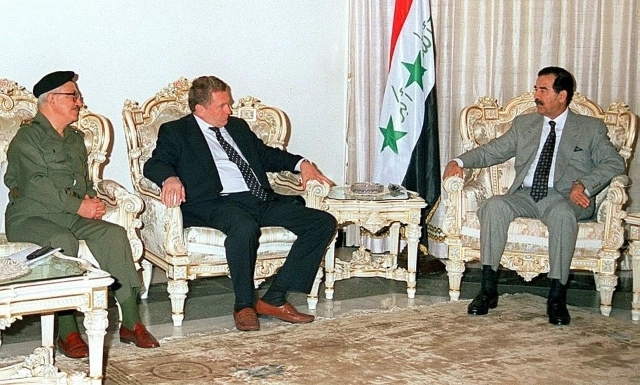
Lukoil, however, had to wait for the chance to profit from Saddam's gift. In 2002, Baghdad stripped the Russian companies of all their concession rights, arguing that they had failed to fulfill their commitments to develop the field and build the necessary infrastructure.
Those commitments had been made impossible by Western sanctions, which effectively prevented the import of the required equipment. Lukoil called Baghdad's decision to terminate the contract “blackmail” and vowed to challenge it in court.
For Hussein's regime, it was a last-ditch attempt to salvage the situation. The United States was openly preparing to invade Iraq, and Baghdad needed Moscow's diplomatic and financial support against Washington more than ever. In that context, terminating Lukoil's contract did indeed resemble blackmail: if Russia wanted Iraq's oil, it should find a way to deliver equipment despite the sanctions, then develop the field in order to fill Baghdad’s budget with tax revenues before purchasing Russian tanks and aircraft in defiance of the same sanctions. Moscow declined. Despite the Kremlin's strongly pro-Saddam public rhetoric, behind the scenes it quietly reached an understanding with Washington that Lukoil would regain West Qurna-2 after the Hussein regime's seemingly inevitable collapse.
Corrupt and weakened by sanctions
What neither side anticipated was that the collapse of the old regime would trigger a prolonged civil war in Iraq, delaying development of the field for years. Lukoil officially began operations at West Qurna-2 only in March 2014.
Its triumphant return to Iraq coincided with Russia's occupation of Crimea and parts of eastern Ukraine. In response to that aggression, Western countries imposed sanctions on a number of oligarchs considered to be close to Vladimir Putin. Those sanctioned included the Rotenberg brothers, Gennady Timchenko, Yury Kovalchuk, and several others whom the U.S. administration regarded as members of Putin's inner circle. Lukoil owner Vagit Alekperov, however, was not included on those sanctions lists.
The Kremlin nevertheless understood that it was only a matter of time. Behind closed doors, Putin reportedly urged Alekperov to sell off all of Lukoil's foreign assets. Alekperov ignored those appeals and continued the company's international operations, including in Iraq, where Lukoil may have become entangled in the country's corrupt muhasasa system.
According to the investigation that led to the June arrests, the corruption network in the oil sector revolved around the Oil Ministry, state-owned companies, and a web of private contractors. Investigators allege that officials siphoned off budget funds through inflated government contracts covering construction work, equipment procurement, and services. The case files include contracts involving foreign oil companies. So far, however, authorities have not publicly stated that the investigation is focused specifically on Lukoil or any other individual company.
Such schemes have long been regarded as one of the Iraqi oil industry's biggest problems. International companies operating in the country have repeatedly encountered opaque procurement procedures, political interference in the awarding of contracts, and pressure to work through local intermediaries connected to influential political factions. Within this system, foreign investors have often faced a stark choice: accept the imposed rules of the game or risk project delays and conflicts with the authorities.
In Iraq, foreign investors faced a choice: accept the rules of the game or risk conflict with the authorities
Investigators have not alleged that Lukoil's management knowingly participated in the corruption schemes. However, like other major foreign operators, the company conducted its business in an environment where a significant share of contracts was controlled by entities linked to the political elite. It was through such companies that public funds could be siphoned off. Whether foreign clients knew who ultimately received those funds or whether they were able to influence the selection of contractors remains a matter for the investigation to prove.
The systemic nature of corruption is underscored by other high-profile cases in recent years. The best known is the so-called “theft of the century,” which utilized forged documents, shell companies, and corrupt officials to siphon roughly $2.5 billion from Iraq's tax system. For foreign oil companies, such an environment meant not only reputational risks but also the constant danger of becoming entangled in corruption schemes, even if they were not the architects of those schemes.
That, however, is no longer Lukoil's problem — or, more accurately, it soon will not be. In the fall of 2025, the United States and the United Kingdom imposed sanctions on the company over Russia's continuing war against Ukraine. The sanctions made it impossible for the Iraqi government to settle its accounts with Lukoil, prompting the company to announce that it would begin withdrawing from Iraq. Baghdad is now searching for a new strategic investor for the West Qurna-2 project.
Almost 30 years ago, Lukoil took advantage of the vulnerability of a corrupt, sanctions-weakened, aggressive regime to establish itself in Iraq. Now it is leaving the country because of another corrupt, sanctions-weakened, aggressive regime. The difference is that in the 2000s it was Saddam Hussein's regime. Today, it is Vladimir Putin's.