The U.S. and Iran are caught between renewed war and a second round of talks in Pakistan, anticipated to take place in the immediate future. Saudi Arabia and the UAE have long been playing their own mediating role, and China is also waiting in the wings as a potential broker, with Donald Trump expected to travel to Beijing in mid-May. Although all of these countries are interested in helping resolve the conflict in the Middle East as quickly as possible given the economic importance of the Strait of Hormuz, the prospect of a real truce between Washington and Tehran appears illusory. In essence, it would mean one of the sides acknowledging its political defeat.
Passage through the economically critical Strait of Hormuz remains blocked. Earlier this month, the first round of U.S.–Iran talks ended in failure, as was acknowledged by both sides. The head of the American delegation, Vice President J.D. Vance, said that Iranian intransigence was responsible, while Iranian Foreign Minister Abbas Araghchi placed the blame on the Americans, accusing them of maximalism and an inability to inspire trust. The only side that refrained from making public accusations was the Pakistani government, on whose territory the meeting between the two delegations took place.
Islamabad has done everything it could to bring the Iranians and Americans back to the negotiating table, as it has a vital interest in ending the conflict on its borders. The Americans, while not abandoning diplomacy, are trying to persuade their regional allies to take a more active part in the war in order to defeat Iran. But judging by the evident failure of those efforts, Pakistan still has a chance to play one of the key roles in resolving this conflict. The next round of talks are expected to begin this week.
The Arabs keep out of it
Speaking at an investment forum in Florida in late March, U.S. President Donald Trump said that the crown prince of Saudi Arabia should kiss his ass. The continuation of that tirade, however, went almost unnoticed.
Realizing he had crossed the line of decency, Trump began praising Crown Prince Mohammed bin Salman, calling him a “fantastic man” and a “warrior” while extolling the Saudi leader’s readiness to come to America’s aid. “Saudi Arabia is fighting, Qatar is fighting, the UAE is fighting, Bahrain is fighting, and Kuwait is fighting,” Trump concluded that particular portion of his remarks.
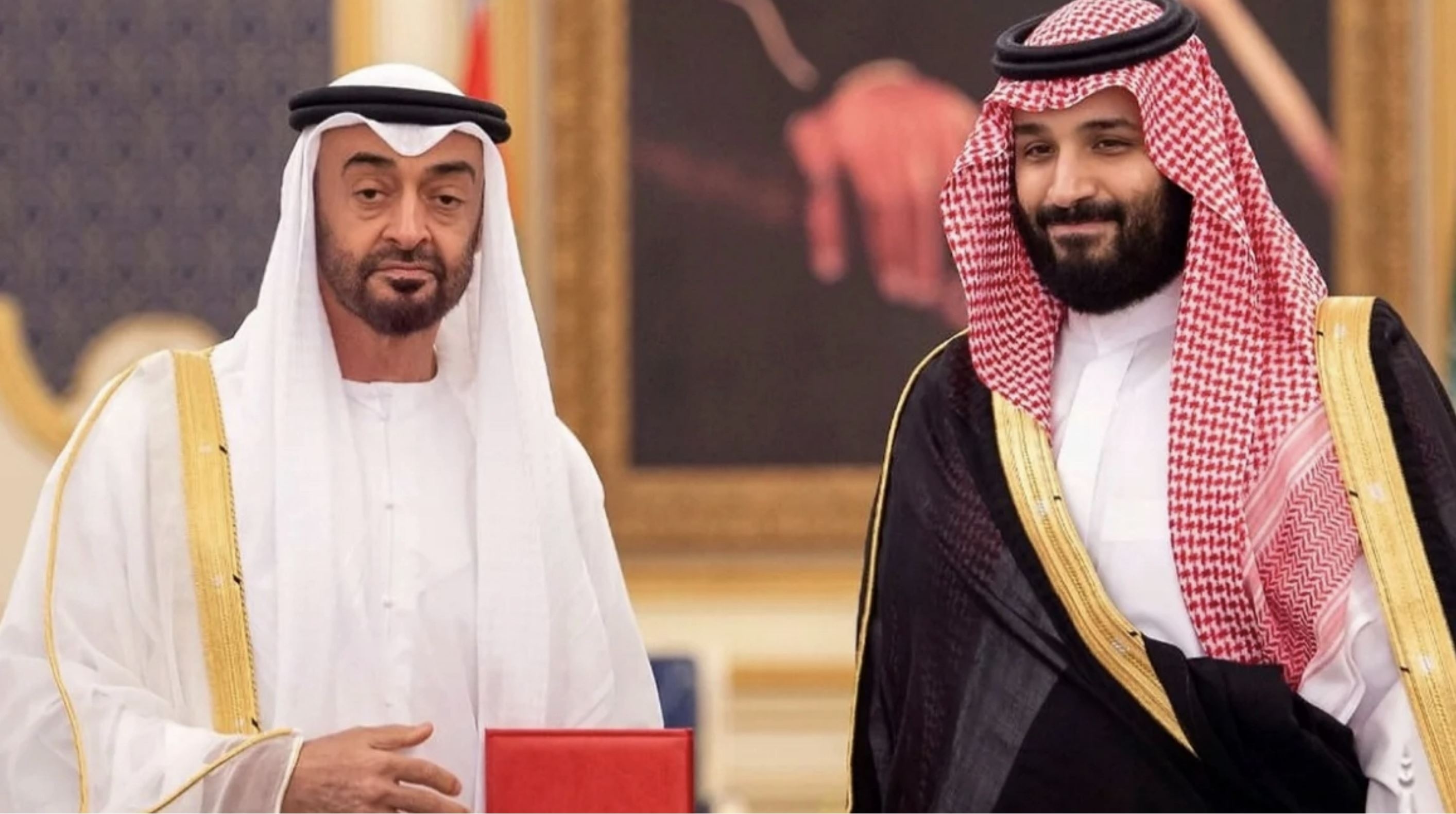
All of the countries listed here — plus Oman, which went overlooked by the president for some reason – belong to the alliance Unified Military Command, also known by the more poetic name Peninsula Shield Force. The reference is, of course, to the Arabian Peninsula. The grouping is sometimes called an “Arab NATO,” but in reality NATO can only envy the cohesion of the Peninsula Shield Force.
The Peninsula Shield Force is sometimes referred to as an “Arab NATO,” though NATO itself could only envy the cohesion of this alliance
The Unified Military Command has its own supranational armed forces, staffed by soldiers and officers seconded by each of the six member states. Open sources put the combined force’s total strength at 40,000 personnel.
In theory, Washington could use these troops in its war against Iran, but in practice that is highly unlikely. Any deployment of the Peninsula Shield Force in a conflict requires the consent of all governments in the coalition. That condition makes participation by “Arab NATO” in U.S. operations virtually unthinkable.
Each country has its own substantial reasons for staying out of the war. Qatar, for example, has spent decades building up an image as a mediator in the settlement of nearly every Middle Eastern conflict. It is unlikely to sacrifice that achievement to satisfy Trump’s ambitions. Bahrain, which has suffered significantly from Iranian missile attacks, is also reluctant to be drawn into the conflict given that many of its Shiite citizens support the Islamic Republic, meaning participation in a war against Iran could trigger an explosion of sectarian violence in a state already far from united.
Incidentally, the only real joint operation carried out by the Peninsula Shield Force in its more than 40 years of existence was the intervention in Bahrain to suppress the largely Shiite anti-government protests during the Arab Spring in 2011. Before that, the alliance had been involved only in auxiliary – and almost entirely non-combat –support operations for the U.S. invasions of Iraq in 1991 and 2003.
In other words, “Arab NATO” amounts to tens of thousands of troops who largely lack real combat experience, and there is no realistic prospect that the six states commanding them would agree to send those people into an actual war.
Arabian Trump
It is easier for Washington to win over individual states than entire coalitions, and the most promising target for such efforts is Saudi Arabia, which has the most advanced military in the region.
“Why should America do a defense agreement with a country like the Kingdom of Saudi Arabia that is unwilling to join a fight of mutual interest?” American Senator Lindsey Graham wrote on X. He was clearly seeking to leverage the Saudis’ desire to conclude a special defense pact with the United States, similar to those protecting Japan and South Korea, under which American troops would be deployed immediately in the event of an external attack.
“Why should America do a defense agreement with a country like the Kingdom of Saudi Arabia that is unwilling to join a fight of mutual interest?”
Senator Lindsey Graham
Graham, along with a significant part of the American establishment, is dissatisfied with Saudi Arabia’s refusal to take direct part in the Iran operation. The monarchy is allowing the United States to use its territory for the deployment of troops and equipment, but neither its army, air force, nor navy is involved in strikes on Iranian territory. The Saudis have ample reason not to get involved more directly. Mohammed bin Salman and his government are not convinced that the Americans will succeed in toppling the ayatollahs’ regime and replacing it with a preferable alternative.
If the current regime in Iran remains in place after the American bombing campaign ends, Riyadh could face enormous consequences in the event that the Saudi military actually takes part in the war. Once they recover and rebuild their missile arsenals, the Iranians could seek revenge against the Arabian monarchy by deliberately targeting its oil and port infrastructure.
It is enough to recall that just a single missile-and-drone attack by Yemen’s Houthis on two Saudi oil infrastructure facilities in 2019 temporarily cut the country’s oil production in half, costing the kingdom billions of dollars. That attack came in response to the invasion of Yemen by a group of Arab armies led by Saudi Arabia, whose aim was to eliminate the Iranian-allied Houthis. It had been assumed that the Arab armies, equipped with modern Western weapons, would easily defeat the fragmented and poorly armed rebel forces. However, the intervention that began in 2015 continues to this day. The Houthis have even carried out several successful counteroffensives and now control roughly one-third of Yemen’s territory, including the capital Sanaa and port cities on the Red Sea coast.
What Saudi officials and generals had envisioned as a brilliant blitzkrieg became one of the longest and bloodiest wars of modern times, with a current death toll of around half a million people. That ongoing war is yet another compelling reason for Riyadh to keep its distance from Iran militarily. After all, if Tehran’s proxies have shown such resilience, the far better armed Iranian army would pose an even more significant challenge.
A third restraining factor for the Saudis is the presence of at least two million Shiites in the kingdom. They have faced systematic persecution by the authorities and have traditionally looked to fellow Shiites in Iran as potential protectors. Even without a major war, the kingdom’s rulers fear the possibility of a Shiite uprising. The situation is further complicated by the fact that most of the Shiite population is concentrated in eastern Saudi Arabia, where the country’s main oil production infrastructure is located. Any conflict there would also lead to a sharp drop in state revenues.
And finally, there is the Israel factor. The war against Iran is being waged not simply by the United States, but by a U.S.–Israeli alliance. That means any country joining the Americans would automatically be joining the Israelis as well. Saudi society is wholly unprepared for that.
Any country that joins the Americans automatically joins the Israelis as well. Saudi society is not prepared for that
According to public opinion polls, more than 90% of Saudis favor a complete halt to dialogue between the entire Arab world and Israel. The crown prince is already facing criticism from conservatives for opening the country to tourism, gradually legalizing alcohol for foreigners, and pursuing policies that are broadly liberal by regional standards. If he were to turn the country into a military ally of Israel, it might not be only the Shiites who rise up.
The Emirates are staying on the sidelines
Similar considerations are keeping the United Arab Emirates from intervening. Although the UAE has a large, capable military and takes a far more tolerant attitude towards religious minorities, the country still does not want to be left one-on-one with an angry and vengeful Iran after the Americans depart.
Thanks to its direct participation in the invasion of Yemen, the UAE also knows perfectly well what Iran’s proxies are capable of — and therefore what the Iranians themselves may be capable of. Three-quarters of UAE residents are also opposed to cooperation with Israel to neutralize the threat from Iran, something the authorities must also take into account.
The Israeli factor, more broadly, appears to be an almost insurmountable obstacle to building a wider coalition for war against Iran. Most people in Arab countries and Turkey have never felt much affection for Iran, but they tend to sympathize even less with Israel. This remains the case despite the Abraham Accords, pushed through by Donald Trump during his first presidential term, which formally normalized relations between Israel and a number of Middle Eastern states.
Most people in Arab countries and Turkey have never felt much sympathy for Iran, but they tend to sympathize even less with Israel
For that reason, the expansion of the existing U.S.–Israeli military alliance to include even a single Middle Eastern state is unlikely. It is also important that, among the Arab countries of the Persian Gulf, only Saudi Arabia and the UAE possess truly large and capable militaries. Even in the unlikely event that Qatar, Oman, or Kuwait joined the alliance, they would hardly be able to alter the course of the fighting.
No allies, plenty of mediators
Although the Americans are clearly struggling to find allies, there is no shortage of countries eager to become peace brokers. In addition to those mentioned above, Turkey and Egypt are also seeking to play the role, and the new war has even given Pakistan an opportunity to present itself as a peacemaking power. Islamabad has already entered into active mediation between Washington and Tehran and has even hosted a conference of Middle Eastern foreign ministers devoted to a peaceful settlement of the conflict.
Pakistan is probably the only country in the world with close ties to both the United States and Iran. The Americans invest heavily in the Pakistani economy and are among Islamabad’s leading foreign partners. The two states also cooperate closely in the military sphere, regularly holding joint exercises.
Pakistan’s ties with Iran, meanwhile, are rooted in the existence of a common enemy – or rather, common enemies. The border regions of the two countries are an arena of confrontation, with Baloch separatists seeking to break those territories away and create their own national state.
In addition, both Pakistan and Iran view the Taliban regime in Afghanistan as a serious threat, given its territorial and ideological claims against neighboring states. Tehran maintains active diplomacy with Kabul in an effort to minimize the risks to itself, but armed clashes still occasionally erupt along the border between the two countries. Understanding that diplomacy does not always produce the desired result when it comes to dealing with the powers that be in Kabul, Tehran is also strengthening cooperation with Islamabad as a precaution.
An important factor in Pakistan’s emergence as a mediator between Iran and the United States has also been the presence of several million Pakistani citizens in the Middle East, most of whom work in the wealthy monarchies of the Persian Gulf. Pakistan’s economic security depends in part on these migrant workers, whose remittances support the families they left behind.
The war has already triggered a crisis in tourism and several other sectors across the region, affecting the incomes of many of those migrant workers. A prolonged war would deprive millions of people in Pakistan of their means of support, posing a serious test for a country that is already far from stable.
In addition, Pakistan recently signed what is known as a Mutual Defense Agreement with Saudi Arabia. The full text of the document has not been published in official sources, but its very title suggests that the countries assumed obligations to jointly confront a threat to either one of them. In other words, Islamabad has an additional interest in a peaceful settlement: avoiding involvement in hostilities should Saudi Arabia, under U.S. pressure, ultimately enter the war. It is therefore no surprise that Pakistan has already presented the Americans with its peace plan.
War looks easier than peace
Overall, the current situation resembles a deadlock: no one can retreat, yet neither side has been able to gain meaningful new allies. The Saudis continue to pointedly ignore Washington’s calls to join the alliance, while behind the scenes they are actively lobbying for a continuation of the fighting by other people’s hands.
Much the same is happening in the United Arab Emirates. In fact, journalists have found that the UAE government is unofficially urging the Americans toward ever more decisive action, including a ground invasion of Iran. The position of the Arab monarchies is entirely understandable: ending the war without destroying Iran’s military potential or toppling the current regime would leave the Middle East an even more dangerous place than it was before.
Ending the war without destroying Iran’s military potential or toppling the current regime would leave the Middle East more dangerous than before
Over the decades of the Islamic Republic’s rule in Tehran, the Arab states have learned to coexist with their turbulent neighbor, and even to engage with it. The present war has destroyed that status quo, offering nothing in its place other than Washington’s ultimatum to Tehran (which in the U.S. capital is being called Trump’s Peace Plan).
The plan consists of 15 points, the most important of which demand that Iran abandon its nuclear program and cut off support to its various proxies throughout the region. In short, Trump’s Peace Plan would require Tehran to renounce everything on which the ayatollahs’ regime rests. In essence, it is a demand for the capitulation of the Islamic Republic, whose ideology is centered on spreading its version of the Islamic revolution around the world.
Now Washington is pressuring Islamabad, hoping to use it to persuade Tehran to capitulate as quickly as possible. But the United States is not the only power trying to influence would-be peace brokers. China is also interested in ending the war as soon as possible. For years, Beijing has been the leading buyer of Iranian oil, and its economy is already suffering significantly from supply shortages caused by the blockade of the Strait of Hormuz. China, which has invested tens of billions of dollars in developing Iran’s infrastructure, risks losing those investments because of the war.
The Chinese even have their own peace plan, which they are trying to advance through Pakistan as well. It says nothing about capitulation or abandoning Iran’s nuclear ambitions. Instead, it contains only five points, only two of which are concrete: an immediate ceasefire and the resumption of shipping through the Strait of Hormuz. Everything else consists of calls for negotiations and respect for sovereignty.
Judging by the high-profile failure of the first round of talks in Islamabad, where the Chinese peace plan was also discussed, Washington still appears unwilling to discuss anything other than Iran’s capitulation on American terms.
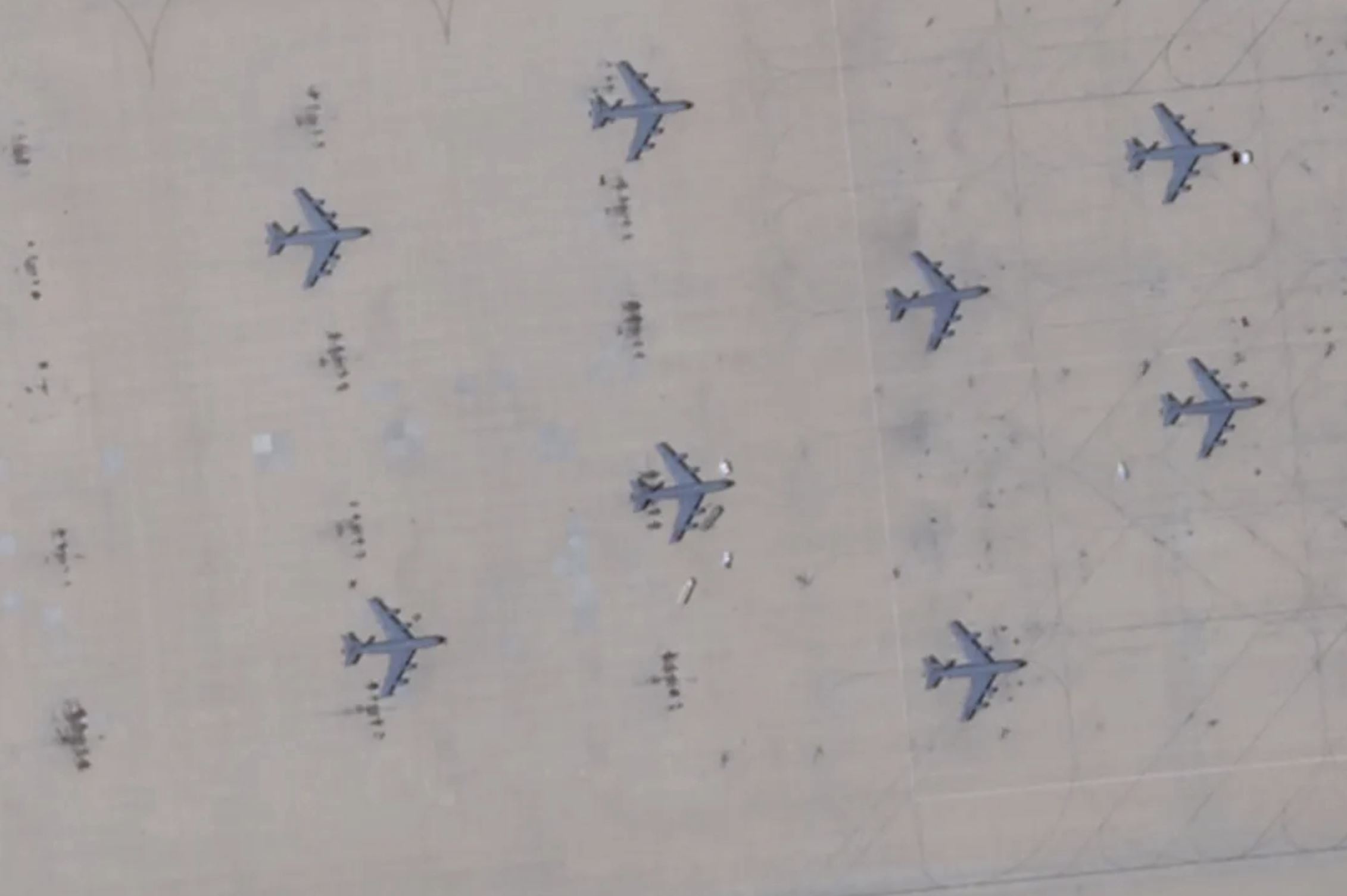
An escalation to the conflict remains possible. According to U.S. intelligence, the Chinese, who are losing billions of dollars in a war that is not theirs, are planning to transfer modern air defense systems to Tehran for use against American aircraft, and Trump is already aware of it. Meanwhile, the Financial Times reports that China has also sold Iran one of its surveillance satellites, allowing Iranian missiles and drones to strike the Americans with far greater accuracy.
The longer the war drags on, the more likely it is that the signing of an open-ended “China-model” peace plan is the outcome that will ultimately be reached. Still, in the end, everything depends on Donald Trump: in order for even a tenuous deal to be announced, Trump will have to settle for something less than the unconditional capitulation of the Islamic Republic.