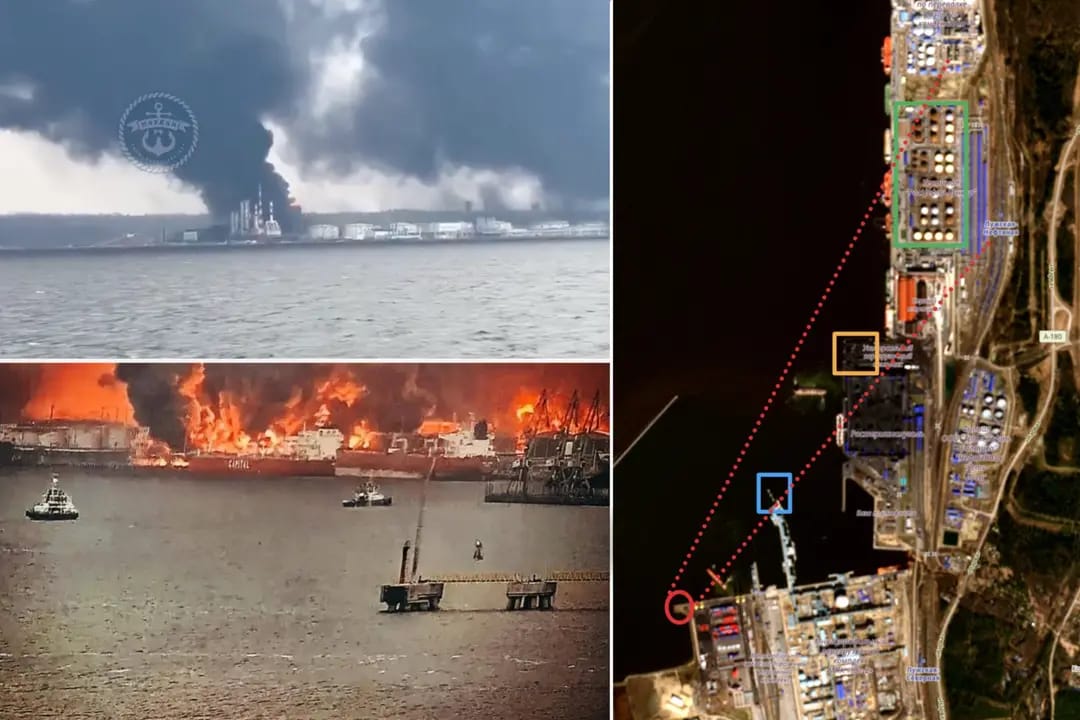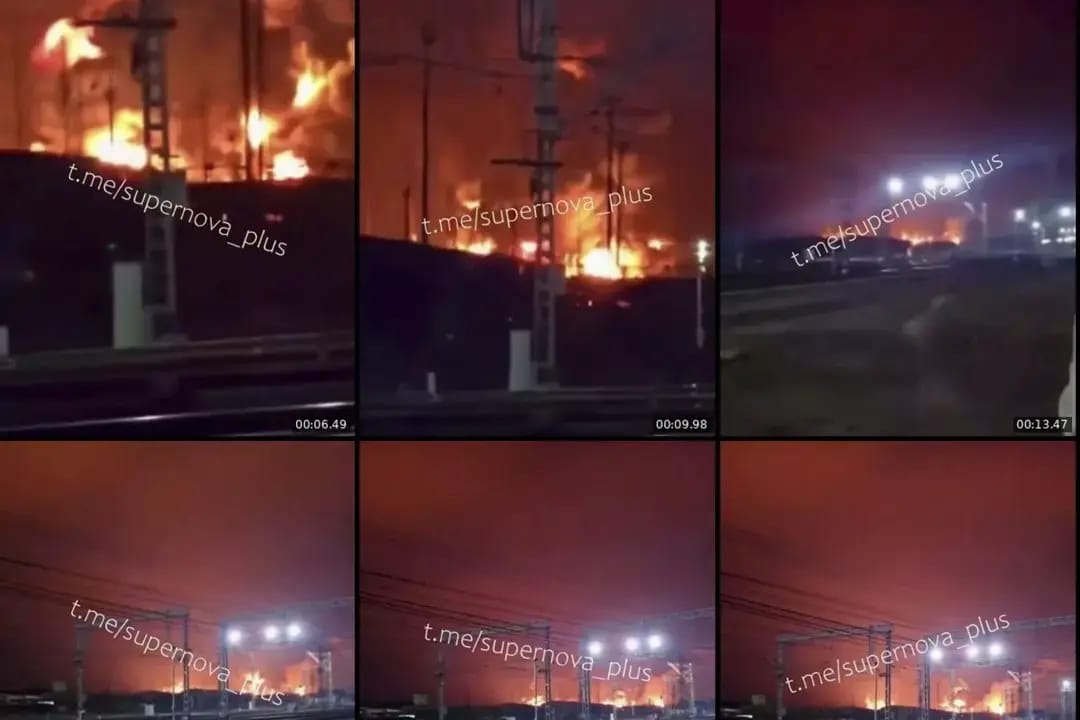
Three Russian helicopter crews — totaling seven service members — were reportedly killed while responding to a Ukrainian drone attack against the port of Ust-Luga in Russia’s Leningrad Region on Nov. 11. The claim was made by the pro-war Telegram channel Voevoda Veshchayet, with other Russian pro-war military bloggers reporting the loss of a Ka-52 attack helicopter and the possible loss of a Mi-8. The reports about the lost aircraft have not been officially confirmed. However, a major fire broke out at the port during the attack, and three workers were injured. The Insider compiled what is known about the strike and its aftermath.
The attack on the port and the blaze that followed
Ukrainian drones attacked the port of Ust-Luga overnight into Nov. 11. The port is one of Russia’s largest hubs for the export of oil and other commodities.
At about 6 a.m., Leningrad Region governor Alexander Drozdenko reported a fire in the Ust-Luga port area after several drones struck the site. He said 150 drones had been shot down over the region overnight. Drozdenko later said three port workers had been injured, but that their lives were not in danger.
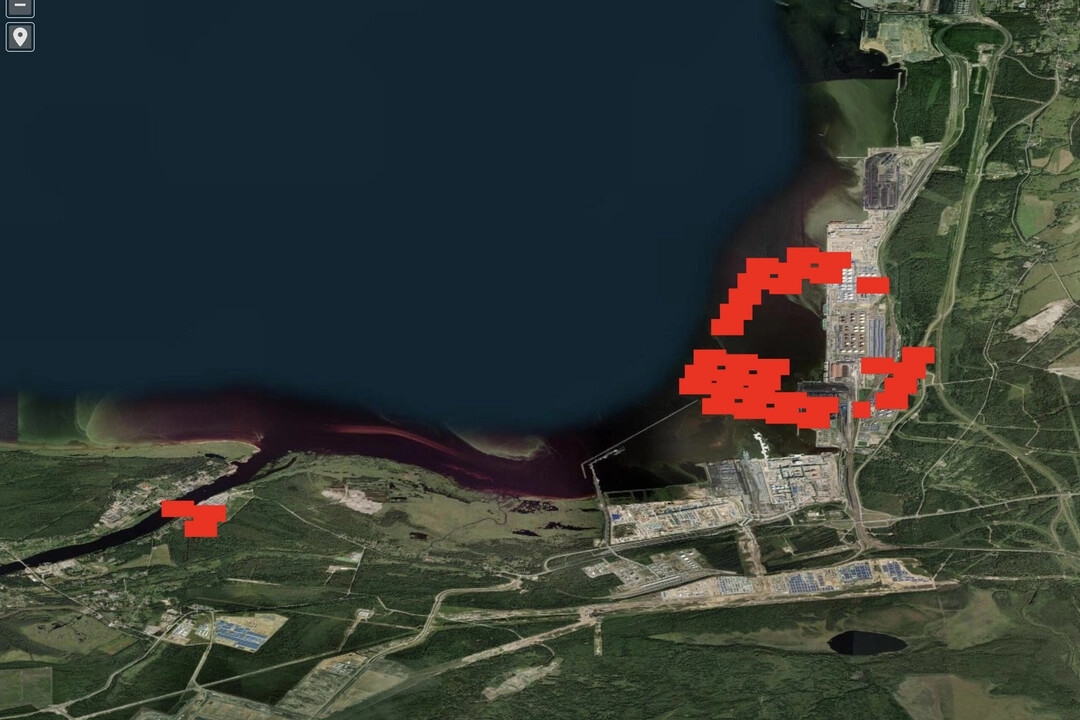
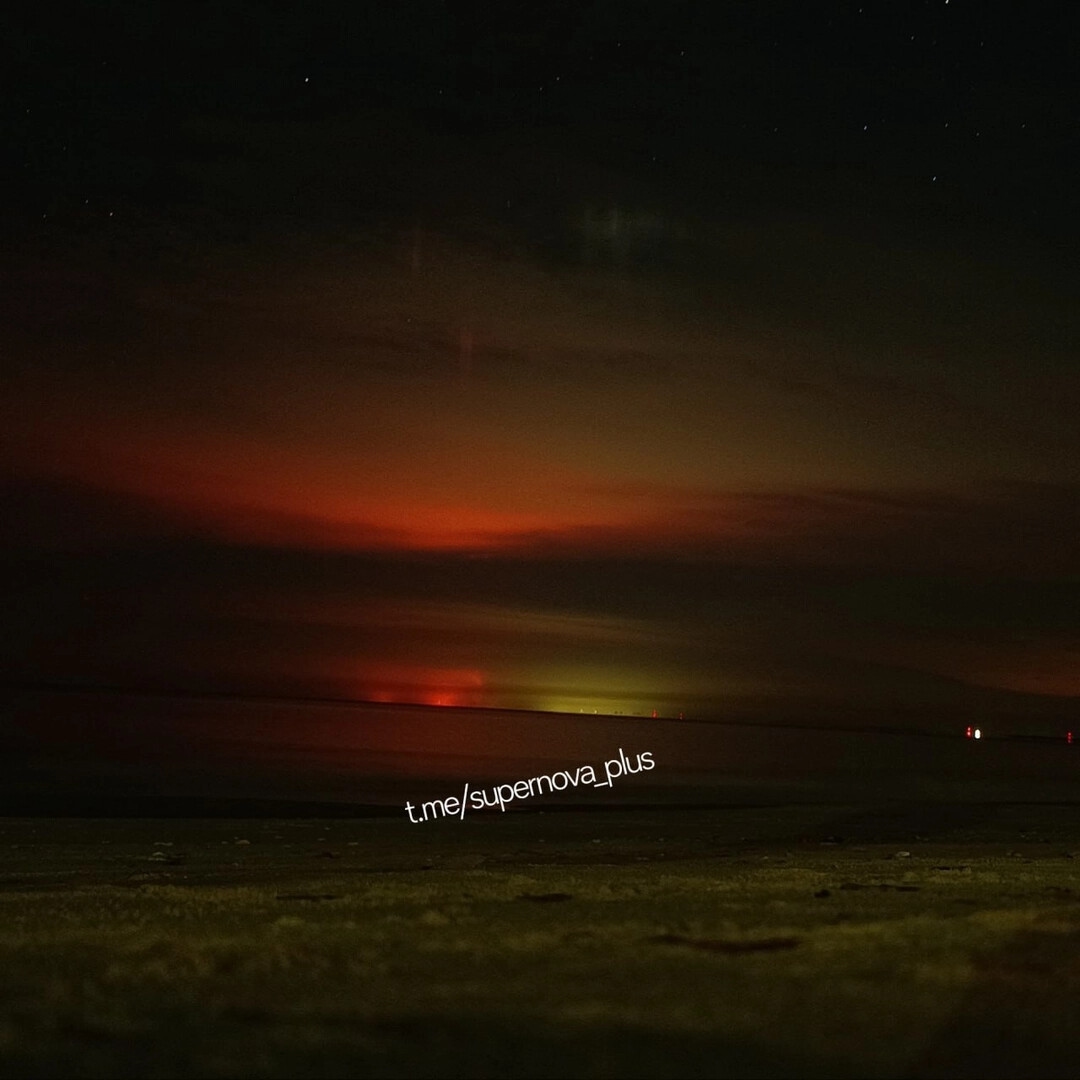
According to the independent outlet Astra, the fire broke out at the northern production and technology cluster of NOVATEK-Ust-Luga LLC’s complex for fractionating and transshipping stable gas condensate. NASA FIRMS satellite data showed several new thermal anomalies in the port area on the morning of Nov. 11, and the glow from the fire over Ust-Luga was visible from Estonia.
Reports of three crews killed
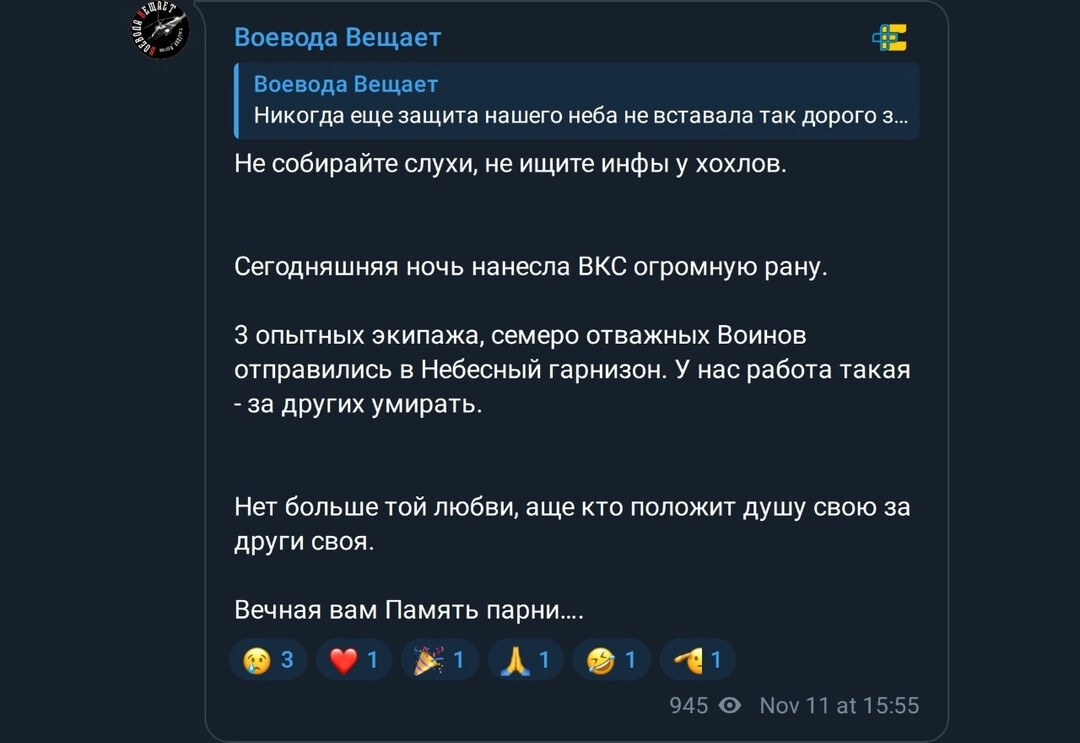
The pro-war Telegram channel Voevoda Veshchayet reported that three Russian Aerospace Forces crews had been killed, totaling seven service members.
“Tonight dealt a tremendous blow to the Aerospace Forces. Three experienced crews, seven brave Warriors, have departed for the Heavenly Garrison,” the channel said.
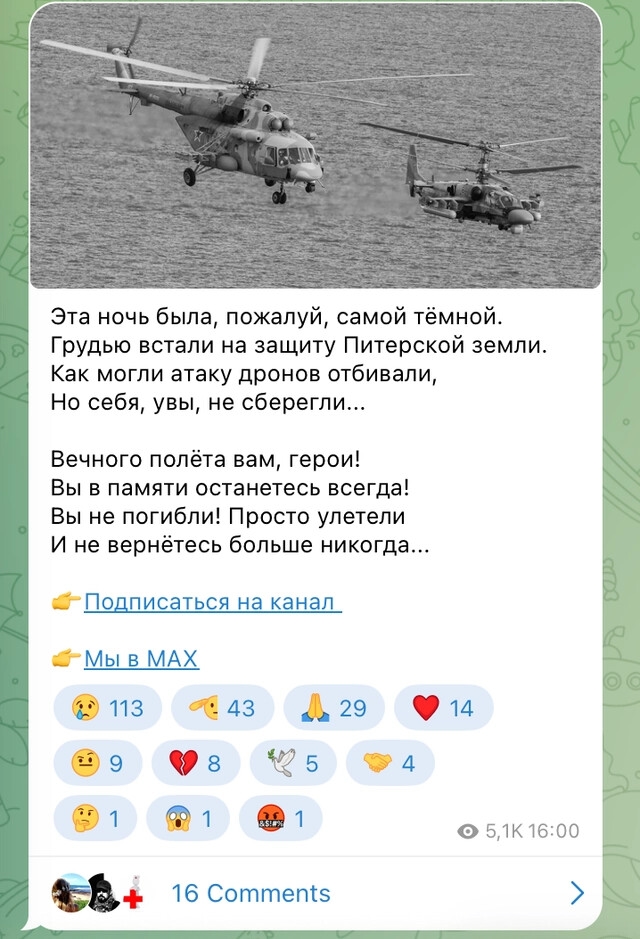
The Telegram channel “Ya i drug moi vertolyot” (lit. “My Helicopter Friend and I”), which is believed to be run by an active pilot or someone close to Russia’s military aviation, published a poem commemorating the dead pilots, along with a photograph showing a Ka-52 and a Mi-8.
The Voenny Osvedomitely (lit. “Military Informant”) Telegram channel reported the suspected loss of a Ka-52 attack helicopter and its crew. Other pro-war Russian channels also hinted that Russian pilots had been killed.
“Defending the skies over St. Petersburg from today’s drone attack cost us very dearly. Very, very, very dearly. Eternal flight, brothers,” wrote Fighterbomber, a channel linked to Russia’s Aerospace Forces.
The pro-war channel Na Predele (lit. “At the Limit”) posted: “Sometimes we lose the most precious thing we have. And, unfortunately, the guys cannot be brought back. Eternal flight, heavenly warriors.”
The cause of the reported helicopter losses is unknown. Possible explanations circulating online include a midair collision and friendly fire from Russian air defenses. There is currently no confirmation of either theory.
Russian authorities and the Defense Ministry have not confirmed the loss of the helicopters or the deaths of the pilots.
Flight restrictions and air alerts in the Baltic states
Residents of Lithuania, Latvia and Estonia were warned of an aerial threat during the attack. There were also reports that drones had entered the airspace of Baltic states and that NATO aircraft were operating in the area.
Because of flight restrictions at St. Petersburg’s Pulkovo Airport, passenger planes flying there from Istanbul and Hurghada landed in Helsinki instead.
Ust-Luga’s importance to Russian exports
Ust-Luga is one of Russia’s largest ports on the Baltic Sea. Russia exports crude oil, petroleum products, stable gas condensate, coal, fertilizers, and grain through the port.
According to an estimate by the KSE Institute at the Kyiv School of Economics, Ust-Luga accounted for about 20% of Russia’s seaborne oil exports in 2025, putting it second only to nearby Primorsk, which accounted for 22%.
Ust-Luga also became significantly more important for Russian grain exports in 2026, as shipments through the Baltic rose sharply amid Ukrainian attacks on Russia’s Black Sea ports.
However, in March 2026, a series of Ukrainian drone strikes on Ust-Luga and Primorsk halted oil loadings, and exports from the two facilities fell to their lowest level since the start of Russia’s full-scale invasion of Ukraine.
Drones also attacked Ust-Luga in September, damaging a NOVATEK facility.
New wave of strikes on Russian oil infrastructure
The attack on Ust-Luga came amid a new series of Ukrainian drone strikes on Russian oil infrastructure. According to Bloomberg, six Russian oil refineries with a combined capacity of around 1.7 million barrels per day have been attacked since the beginning of November. (The Nov. 11 strike on Ust-Luga was not included in that estimate).
On Nov. 9, drones struck the Kirishi oil refinery in the Leningrad region, which has a capacity of about 400,000 barrels per day. A fire broke out at the facility and was later contained, according to the governor. Regional authorities recommended that fuel suppliers limit gasoline sales to 30 liters per customer and diesel sales to 50 liters per vehicle in order to prevent panic buying.
Drones also attacked Russia’s Smolensk region overnight into Nov. 11. Governor Vasily Anokhin reported that 37 drones had been shot down and that two people were killed in Yartsevo, where he said drone debris struck a residential building and started a fire. A Rosneft oil depot is located in the city.
The strike on Ust-Luga took place several hours before Russia and Ukraine were set to resume U.S.-mediated talks in Abu Dhabi. Ukrainian President Volodymyr Zelensky said the sides planned to discuss possible de-escalation measures, including a ceasefire in the Black Sea and restrictions on strikes against energy infrastructure, as well as a potential meeting between the two countries’ leaders.