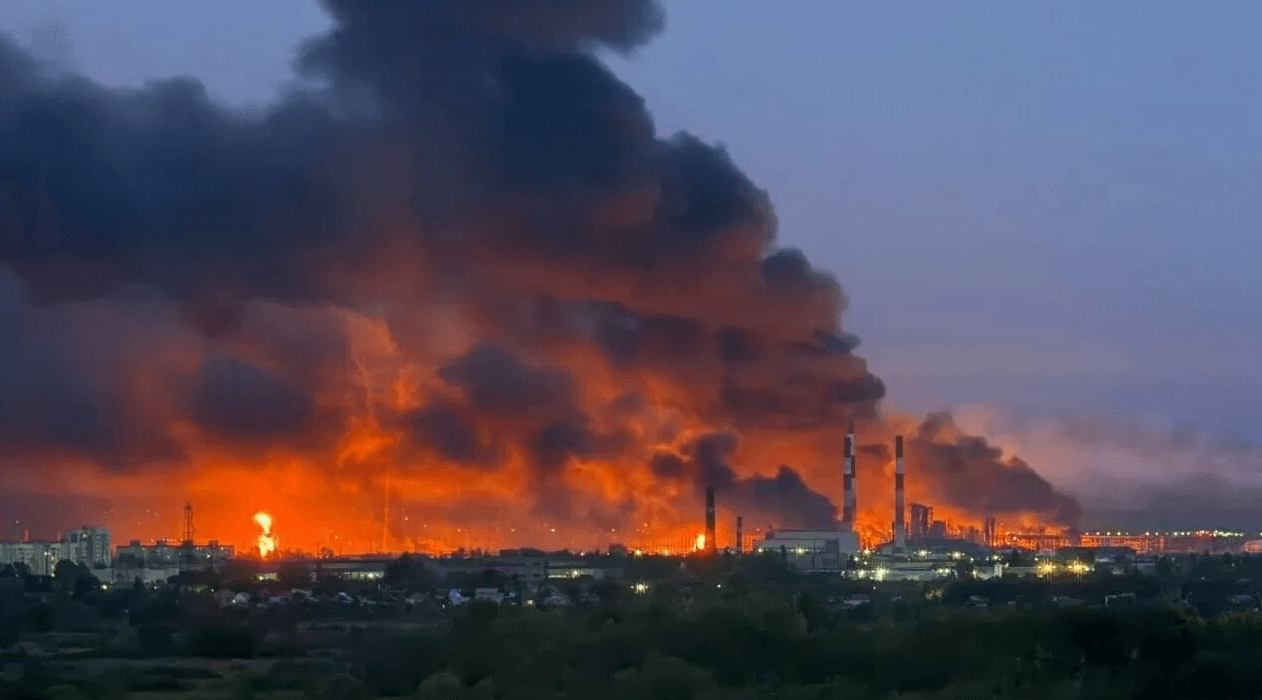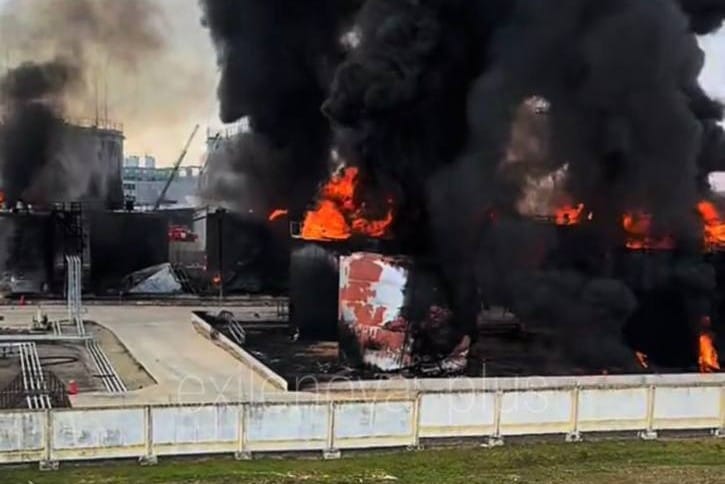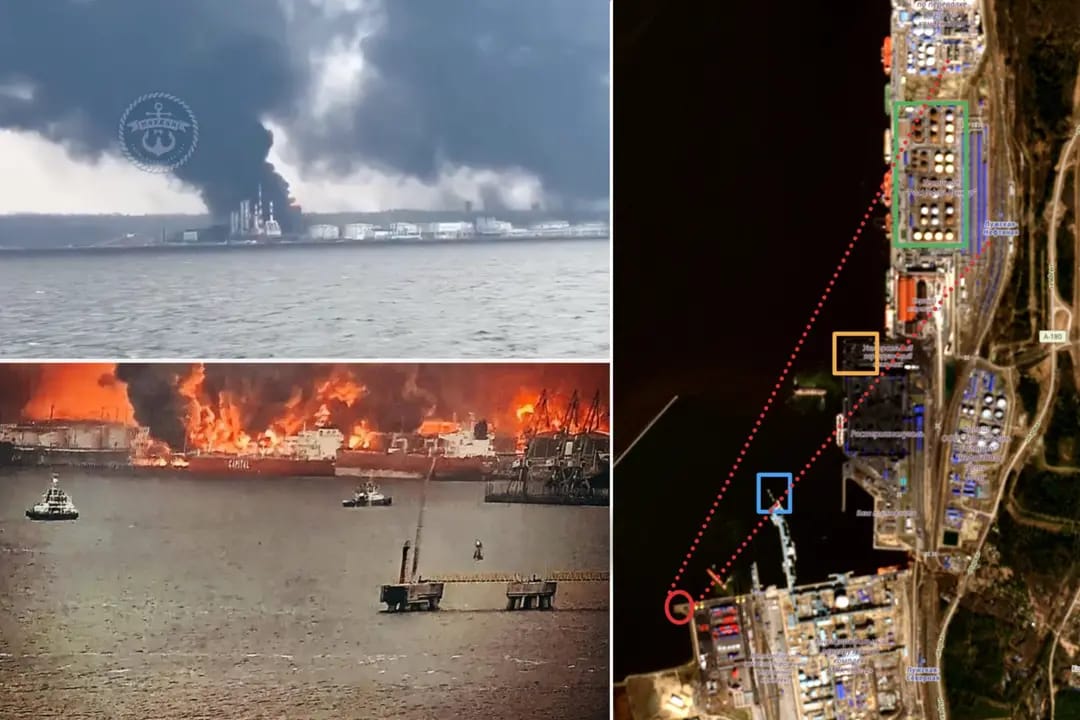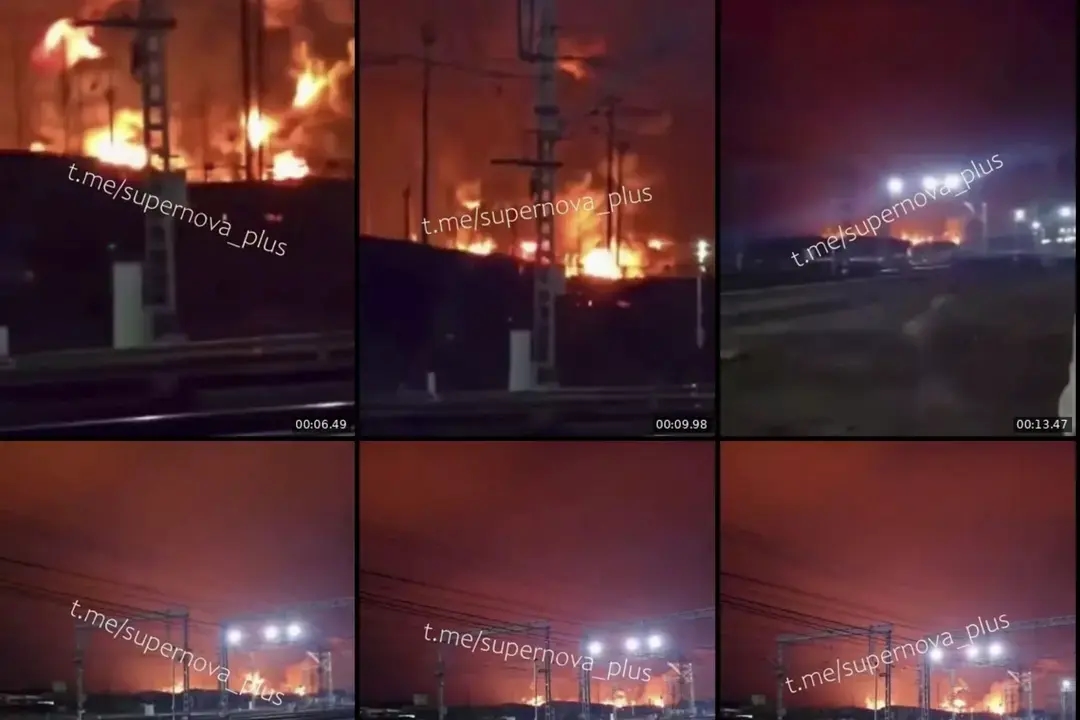
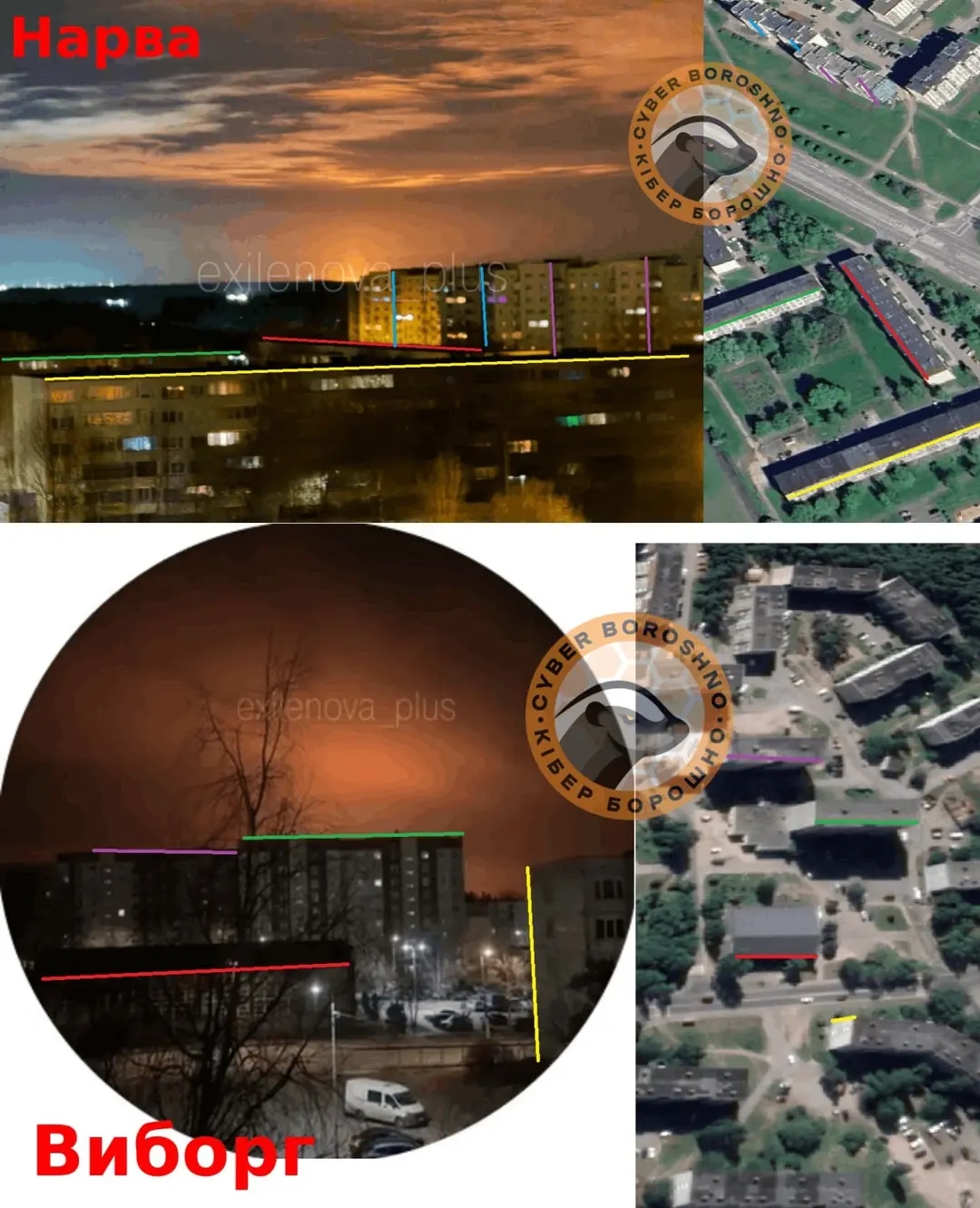
The open source intelligence (OSINT) project CyberBoroshno geolocated footage from some of the videos, identifying viewpoints from the town of Vyborg (showing fires emanating from the port of Primorsk) and from Narva (showing the same from the port of Ust-Luga). The group said the strikes on the ports appeared to have been carried out almost simultaneously. Reports described multiple explosions and detonations near the facilities, with the glow from fires visible for dozens of kilometers.
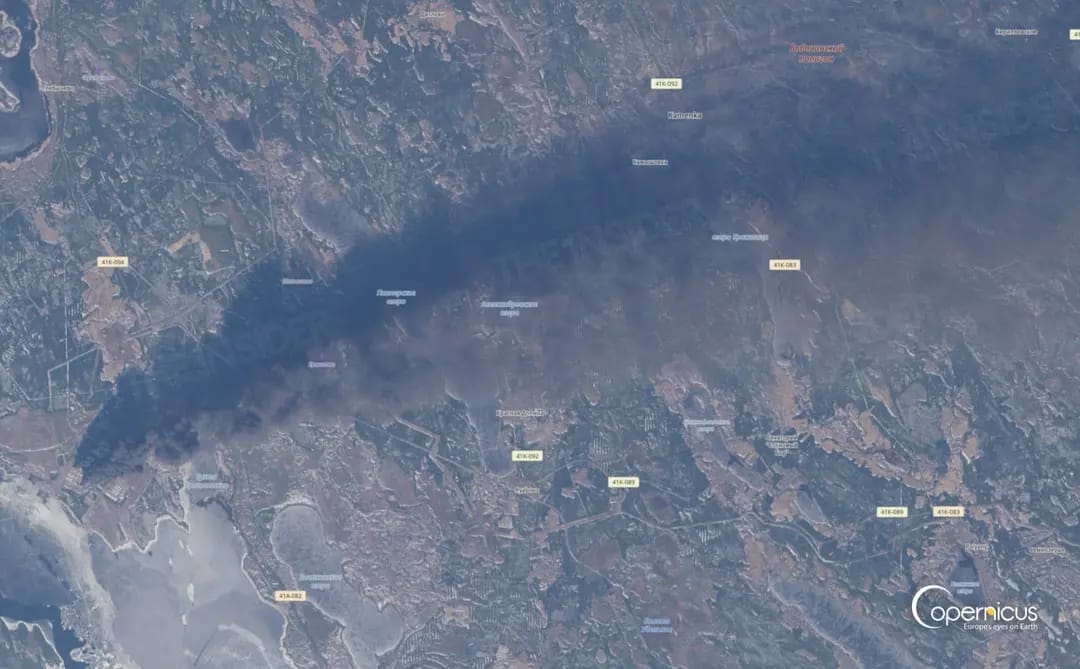
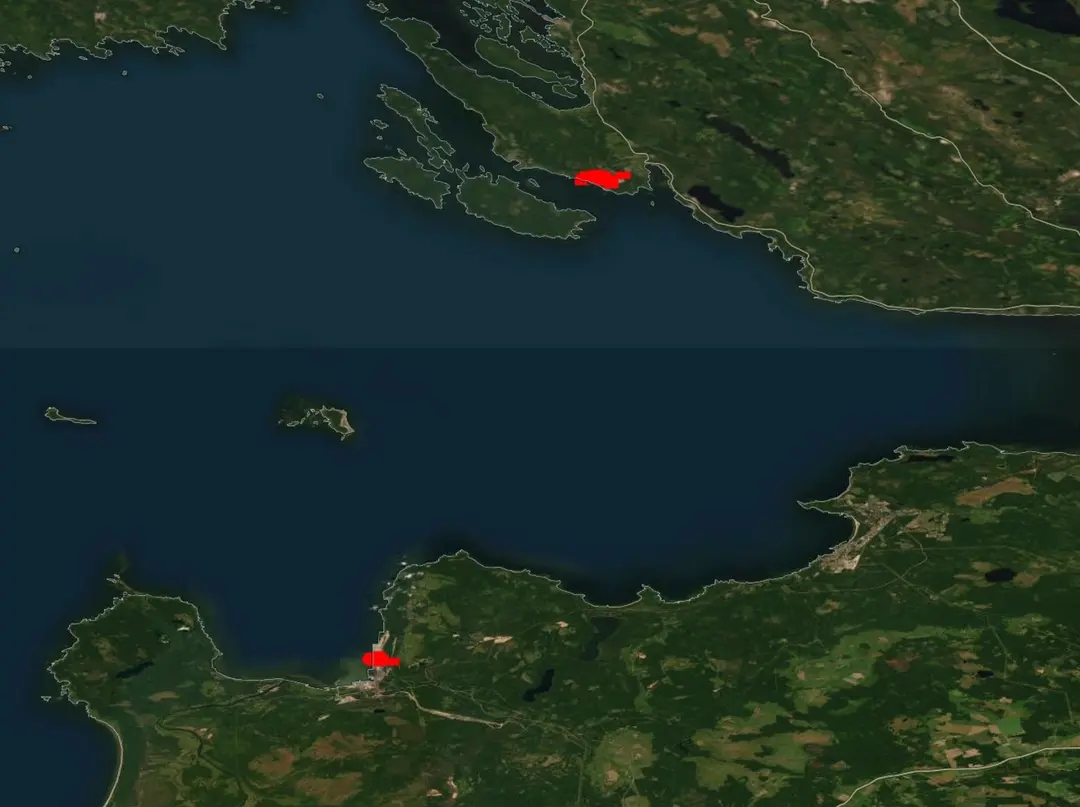
Additional confirmation of the fires comes from NASA’s FIRMS service, which tracks thermal anomalies in the areas of the ports.
The attacks mark the fourth consecutive night of strikes on Russian oil infrastructure in the Baltic Sea region. On March 23, drones attacked the port of Primorsk, with local authorities saying the resulting fire was contained only on March 25.
Both Ust-Luga and Primorsk, key hubs for Russian oil and petroleum exports via the Baltic Sea, reportedly suspended operations as a result of the March 23 attack.
At least 40% of Russia’s oil export capacity is offline, according to recent calculations by Reuters — the result of Ukrainian drone strikes, the seizure of tankers by Western countries, and damage caused to the Druzhba pipeline by Russian strikes on Ukrainian territory.
The disruption amounts to the most severe hit to Russian oil supplies in the country’s modern history. It comes just as oil prices have risen above $100 a barrel amid the U.S.-Israeli war against Iran.