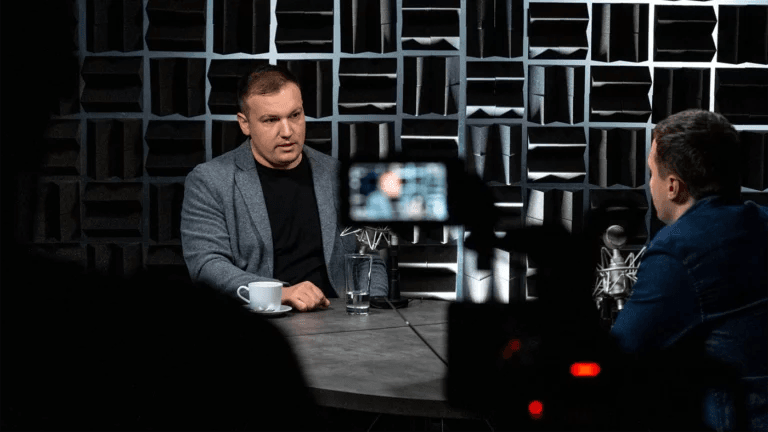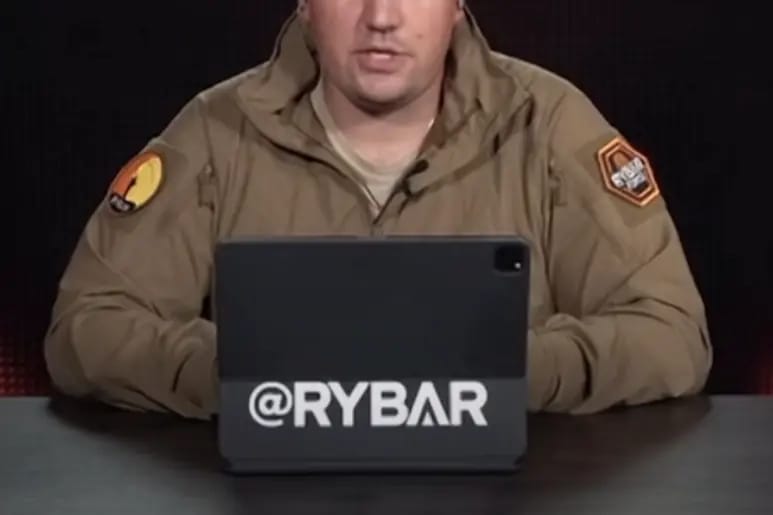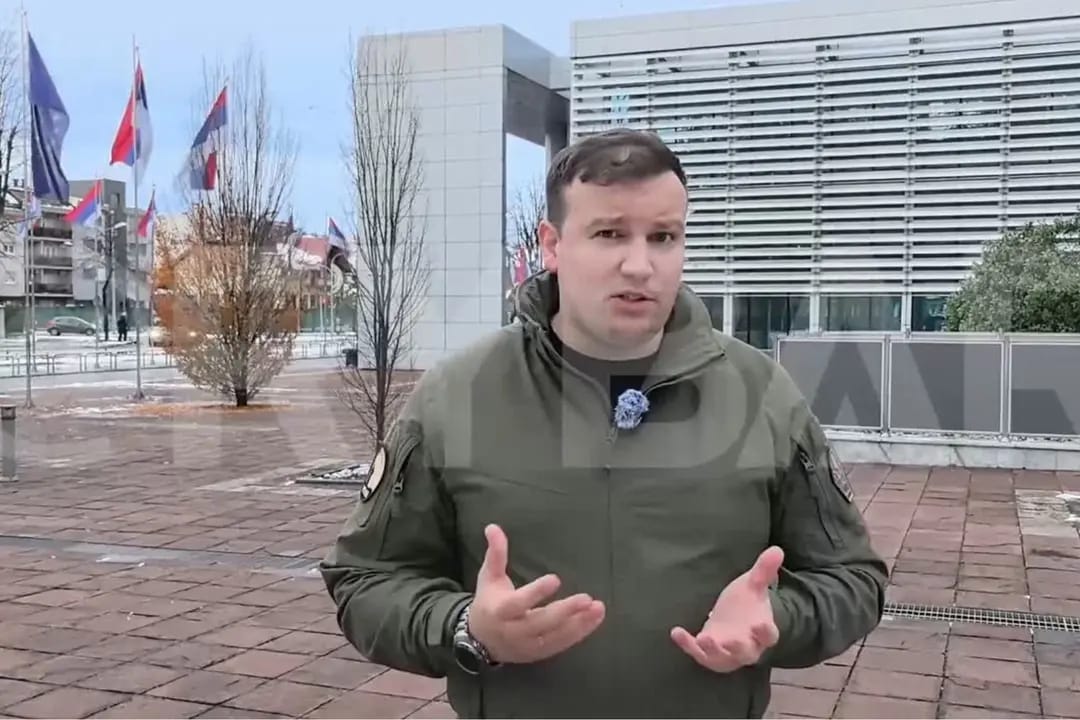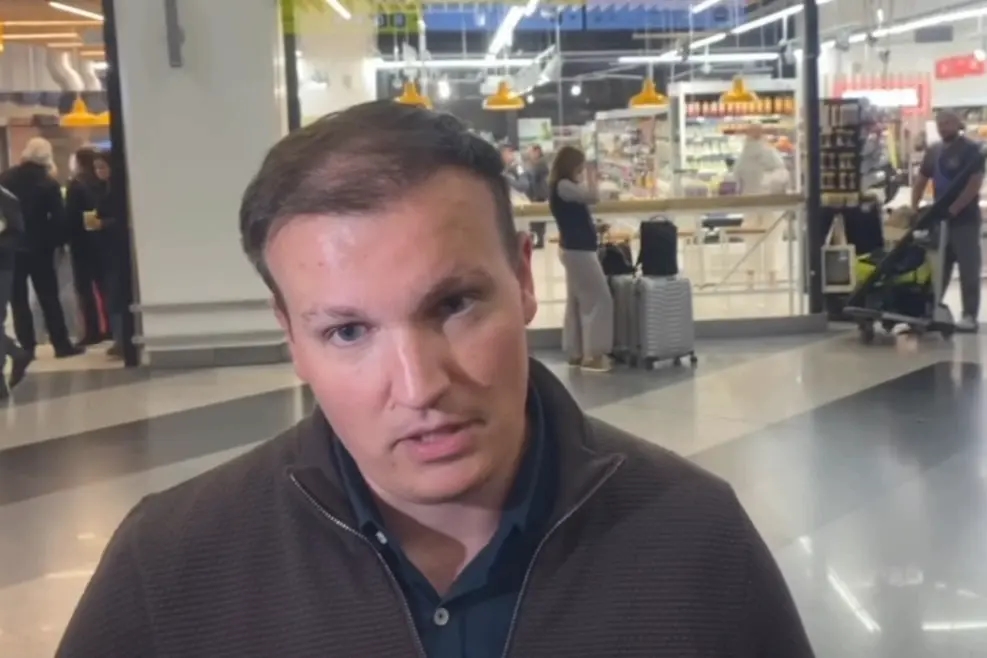
Mikhail Zvinchuk, founder of the Russian pro-war Telegram channel Rybar, returned to Russia after being detained and expelled from Montenegro. He arrived in Moscow from Belgrade overnight Oct. 11 with his wife, Valeria, and three Rybar employees. Meanwhile, Montenegrin President Jakov Milatović demanded an explanation as to how the EU-sanctioned propagandist was able to enter the country and whether local security services had prior information about his trip.
Zvinchuk told reporters that the Russian government, Foreign Ministry, security services, and state defense conglomerate Rostec had been involved in securing his release, with Foreign Ministry spokeswoman Maria Zakharova, former President Dmitry Medvedev, and RT editor-in-chief Margarita Simonyan also playing various roles. The U.S. has previously identified Rostec as one of Rybar’s sources of financing. The same claim appears in documents published by the UK Foreign Office.
“This is probably one of the few cases where both the state and private organizations worked in a coordinated way,” Zvinchuk told a correspondent for the Russian news channel RTVI at Moscow’s Sheremetyevo Airport. He also noted that Montenegrin police had not returned the filming equipment they seized, adding that of the equipment had been rented, and that Russian diplomats were now working to secure its return.
Zvinchuk also claimed that Montenegrin authorities had checked Interpol and Europol databases during his detention but found no basis for an international search warrant.
Montenegro president demands review of security agencies’ actions
On Oct. 10, the office of Montenegrin President Jakov Milatović issued a statement demanding that law enforcement agencies explain the circumstances of Zvinchuk’s entry into the country. The statement noted that the Rybar founder is under European Union sanctions, which Montenegro has aligned itself with as part of its EU integration policy.
The president’s office called for authorities to establish what information government agencies had about Zvinchuk, whether border procedures were followed, and whether there had been prior coordination with foreign intelligence services. Officials were also asked to explain whether they knew in advance that he was coming and what measures they took while he was in the country.
The Insider previously reported that Zvinchuk arrived in the Balkans from Germany. According to Bosnian investigative outlet Detektor, he and his team flew from the EU to Sarajevo on Oct. 2 and crossed the land border into Montenegro on Oct. 7.
Zvinchuk has been under EU sanctions since June 2023, and Brussels characterizes him as a member of a group created by Vladimir Putin to coordinate mobilization efforts for Russia’s war against Ukraine, in addition to his duties running the Rybar propaganda project.
His wife, Valeria, who was detained with him, has been under individual British sanctions since July 13, 2026. British authorities describe her as Rybar’s creative director. London sanctioned 10 other Rybar employees and managers at the same time.
When was Zvinchuk arrested?
Montenegrin police detained Mikhail and Valeria Zvinchuk, along with Sergei Belous, Pavel Lekatorchuk, and Kira Doroshenko, on the morning of Oct. 9 in the town of Risan on the Bay of Kotor. Montenegro’s National Security Agency took part in the operation. Officers seized cameras, a GoPro, a drone, and mobile phones from the group.
Dmitry Medvedev, deputy chairman of Russia’s Security Council, responded to the detention by suggesting that Russia expand its “exchange pool” with detained European and U.S. citizens. Kremlin spokesman Dmitry Peskov said Russian diplomats would work to protect Zvinchuk’s rights.
U.S. offered up to $10 million for information on Rybar employees
Since 2024, the U.S. State Department has offered a reward of up to $10 million for information about people linked to interference in U.S. elections, including Rybar employees. Mikhail and Valeria Zvinchuk are among those named on the department’s list.
U.S. authorities say the project was previously financed by organizations linked to Wagner Group founder Yevgeny Prigozhin and later began receiving money from Rostec. According to the State Department, Rybar employees created English-language information platforms aimed at interfering in the 2024 U.S. presidential election and deepening divisions in American society, including over immigration. In December 2025, Britain imposed sanctions on Zvinchuk and Rybar LLC.