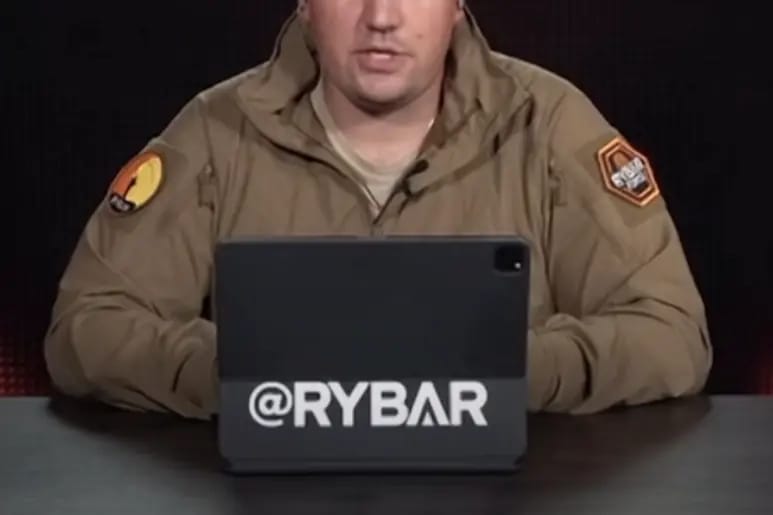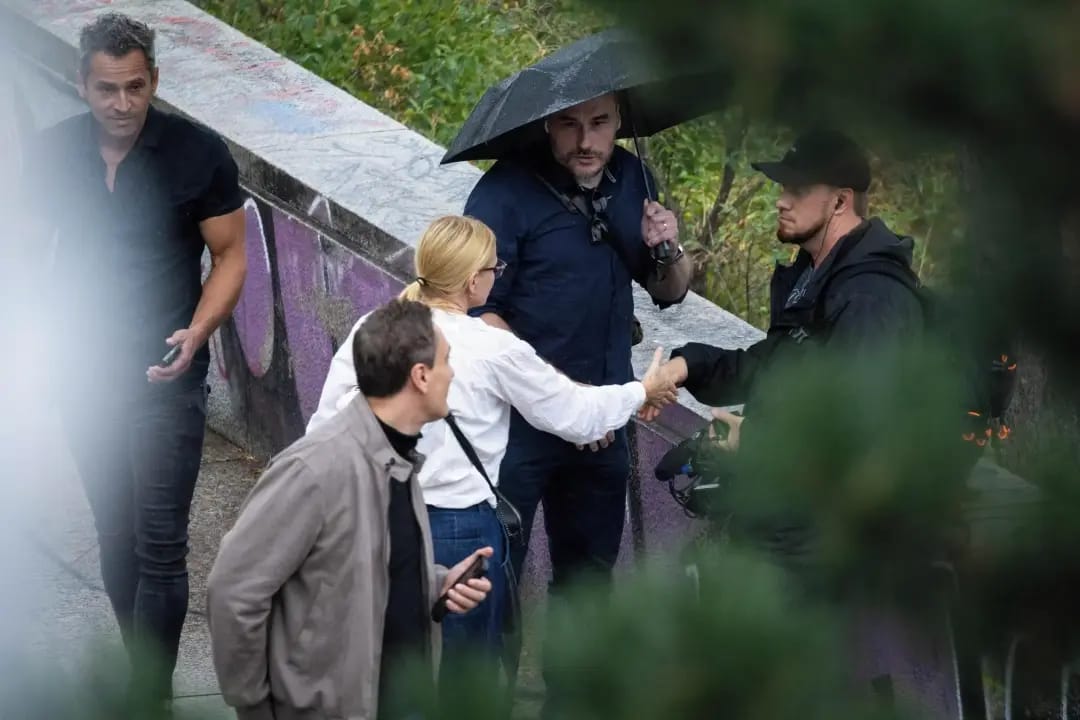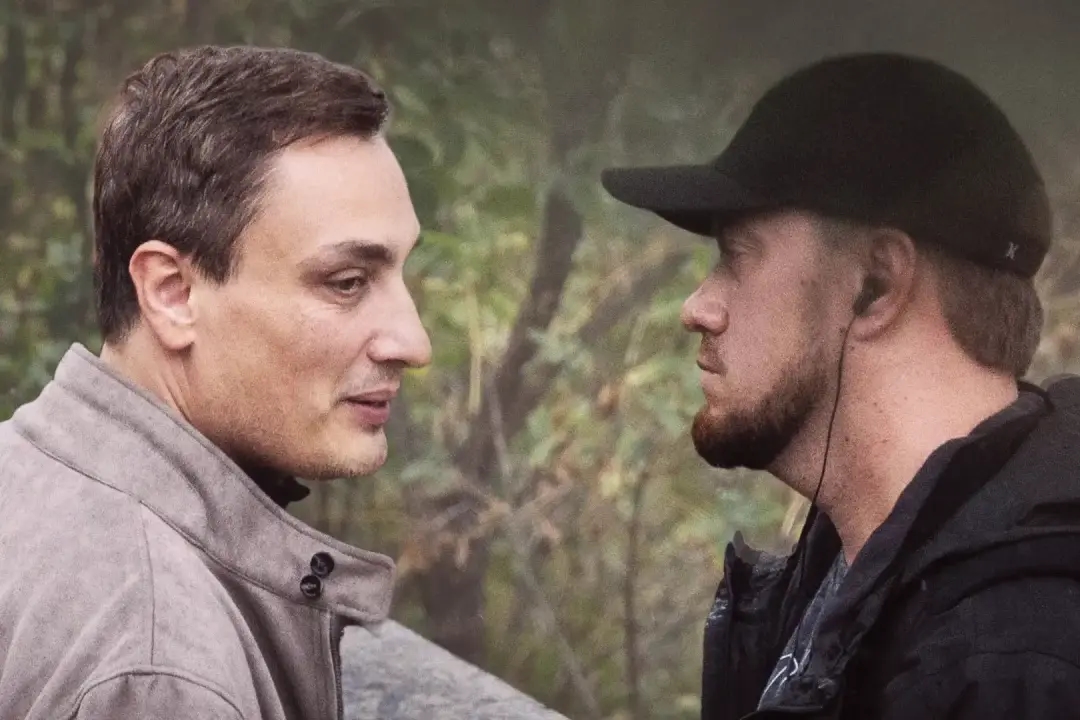
Czech police have detained and questioned Russians Vitaliy Chashchukhin and Igor Dolmatov, whom local journalists from the publication Seznam Zprávy had lured to a meeting in Prague that they secretly recorded. Chashchukhin and Dolmatov, who were working on behalf of the sanctioned Russian propaganda project Rybar, have now both been ordered to leave the Czech Republic within three days as undesirable persons, Seznam Zprávy reported on Sept. 22.
Czech police confirmed that procedural steps had been taken involving Chashchukhin but declined to disclose the outcome.
“We performed procedural acts with the mentioned person. Unfortunately, it is not possible to inform third parties about their result,” Ondřej Moravčík, spokesman for the Police Presidium, told Seznam Zprávy.
According to Seznam Zprávy’s sources, cameraman Igor Dolmatov received the same order to leave the country. The expulsion orders came after both of the Russians said during questioning that they worked for the Russian outlet Izvestia, a media organization that is also under European Union sanctions.
Filming organizer Boris Dvorkin, who was not physically present in Prague, told journalists that Chashchukhin was questioned for about nine hours.
“Vitaliy was interrogated by the Czech police for approximately nine hours. Subsequently, he was issued a document ordering him to leave the Czech Republic, after which he returned to Germany, where he legally resides. He obeyed this order,” Dvorkin said.
According to his own words during the hidden camera conversation he had with Czech journalists after his arrival in Prague, Chashchukhin has held permanent residency in Germany for about a decade and has performed work there for sanctioned Russian media outlets Izvestia, Channel Five, and REN TV. In his reports, he portrays Germany as a country in economic decline and argues that an end to arms supplies to Ukraine and a restoration of relations with Russia would remedy the situation. According to Seznam Zprávy’s sources, Czech security agencies are continuing to review Chashchukhin’s activities and have already informed their German counterparts.
Meanwhile, André Lenz, a spokesperson for Germany’s General Customs Directorate, told journalists that it is impossible to determine in advance whether working as a journalist for a sanctioned Russian media outlet constitutes a crime.
“Specific facts indicating a possible violation of sanctions are carefully reviewed in all individual cases. The competent public prosecutor's office decides on the initiation of investigative proceedings,” Lenz explained.
Seznam Zprávy’s operation to lure in the propagandists to Prague
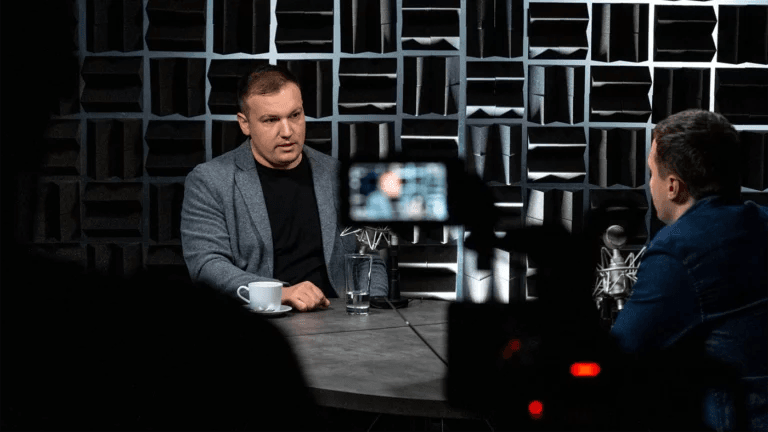
Seznam Zprávy published an investigation on Sept. 22 describing how its journalists set a trap for participants in Rybar’s European influence operation. Representatives of the sanctioned Russian project had approached Czech media literacy and disinformation expert Bohumil Kartous and asked him to give an interview for a documentary series about the political and economic situation in Europe. Kartous agreed, and the Czech journalists then arranged a hidden-camera recording.
Chashchukhin and Dolmatov traveled from Berlin to Prague for the meeting. During the conversation, Chashchukhin acknowledged on hidden camera that: “It’s the Rybar project. You might know it. It’s Rybar.” Then, when Seznam Zprávy journalists approached, identified themselves, and began asking questions, both of the Russians ran off in different directions.
Journalists established that the filming was organized by Moscow-based documentary filmmaker Boris Dvorkin, who had not previously been publicly linked to Rybar. One of Dvorkin’s past projects was funded by the History of the Fatherland Foundation — an organization created by the decree of Vladimir Putin and chaired by Sergei Naryshkin, the head of Russia’s Foreign Intelligence Service (SVR).
After the first investigation, Dvorkin claimed that Chashchukhin had only helped him with one interview in his spare time and had not been paid. However, journalists found that Rybar representatives had organized filming in other European countries and had tried to recruit politicians, experts, and public figures to take part as subjects.
Rybar founder Mikhail Zvinchuk is under European Union sanctions, and official documents state that he is a member of a working group created by Vladimir Putin to coordinate Russia’s mobilization efforts in support of the war against Ukraine. Rybar’s main Telegram channel has more than 1.5 million subscribers. In 2024, the United States offered a reward of up to $10 million for information about the project’s employees as part of an effort to combat Kremlin-backed influence operations.