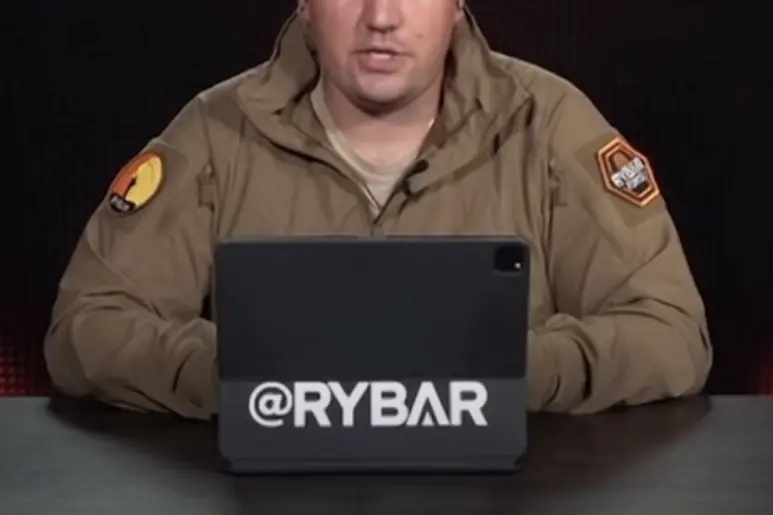
On July 13, the UK’s Foreign, Commonwealth and Development Office (FCDO) added 10 employees of Rybar LLC to its sanctions list. The company develops an eponymous Telegram channel that serves as one of Russia’s leading pro-war media and propaganda outlets. Rybar is Russian for “fisherman” or “angler.”
The people listed have been subjected to asset freezes, and they are now banned from entering the UK, receiving trust services, or holding management positions in British companies. A range of “internet sanctions” were also imposed, requiring social media platforms, internet providers, and app stores to restrict British users’ access to content and resources operated by those on the list.
The UK government considers all 10 people added to the list to have been involved in destabilizing Ukraine and undermining its territorial integrity, sovereignty, and independence. They are:
- Denis Vulf, director of Rybar LLC. He is also listed under the name Denis Shchukin.
- Valeriia Zvinchuk, the company’s creative director. The sanctions list includes several of her aliases, including Valeria Pobochnaya.
- Tatiana Kosterova, head of Rybar’s foreign-language resources department. According to the independent investigative Russian outlet Agentstvo, Kosterova previously appeared in records as a military police officer and has taught at St. Petersburg State University since 2019, including at its military training center.
- Daria Rosliakova, also known as Daria Kabakova, head of the regional analysis department.
- Aleksandr Kan, head of the video department.
- Aleksandr Minin, chief content officer for the project TEXASvsUSA. The U.S. State Department said Rybar used that X account to inflame tensions in discussions about undocumented migrants at the Texas border.
- Olga Kuznetsova, regional manager.
- Natalia Chebotaeva, video producer.
- Maksim Matveev, designer and head of the content team. According to the sanctions document, Matveev lives in occupied Donetsk.
- Evgeniia Grebneva, an administrator of Telegram networks linked to Rybar.
Rybar presents itself as a “military analysis center.” Its main Telegram channel has more than 1 million subscribers. The project was founded by Mikhail Zvinchuk, a former employee of the Russian Defense Ministry’s press service. In 2024, the U.S. State Department offered a reward of up to $10 million for information on people involved in the project. U.S. authorities accused Rybar of interfering in U.S. elections through the propaganda campaigns #HOLDTHELINE and #STANDWTHTEXAS.
Both Rybar LLC and Zvinchuk himself were placed under UK sanctions in December 2025 (along with neo-fascist ideologue Alexander Dugin and his Center for Geopolitical Expertise). In February 2026, OpenAI blocked a network of accounts linked to Rybar, as the project’s team had used ChatGPT as a “content farm” to generate texts in Russian, English, and Spanish.
Separately, the UK government said it would designate Iran’s Islamic Revolutionary Guard Corps, or IRGC, as a prohibited organization, according to reports by Sky News and the BBC. Security Minister Dame Angela Eagle told Parliament in a written statement that Britain had identified “activity linked to the IRGC involving threats to life and intimidation on UK soil.”
The UK government also prohibited the Iran-linked group Islamic Movement of the Companions of the Right Hand, or IMCR. The decision followed a series of attacks on Britain’s Jewish community. The law was also applied to a volunteer corps linked to Russia’s GRU military intelligence agency over “sabotage and other activity directed against the UK and Europe.”
Nikita Smagin, a journalist focusing on Iran, told The Insider that the consequences for the IRGC would be minimal.
“Britain is not the first country to recognize the IRGC as a terrorist organization, and previously that did not have much impact either on the organization itself or on Iran as a whole. Now it will have almost no significance,” Smagin said. “This is a symbolic action: Britain is stating its political position. In theory, it could limit some interactions between Iran and Britain, but those are already at a minimal level.”
In May, the Metropolitan police announced the creation of a special unit to protect London’s Jewish communities. In April alone, 140 antisemitic incidents were recorded in the capital. A pro-Iranian group, Harakat Ashab al-Yamin al-Islamiyya, claimed responsibility for some of the attacks, including attempted arson attacks on synagogues.