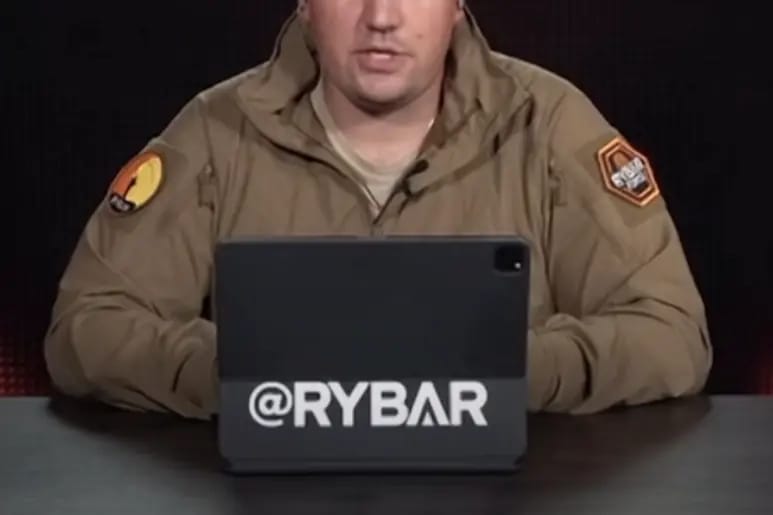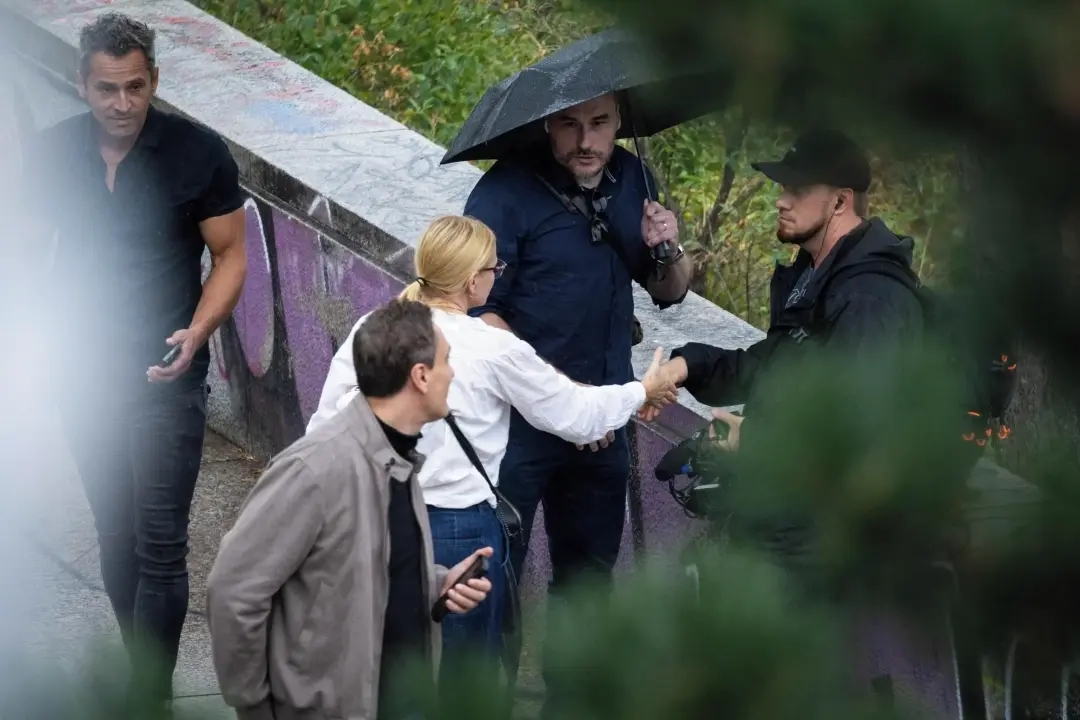
The Czech outlet Seznam Zprávy has exposed an operation by the Russian propaganda project Rybar to film a documentary series in Europe. The publication’s journalists lured a film crew working for Rybar from Berlin to a meeting in Prague and conducted secret recordings before identifying themselves and asking questions. The two Russians then ran off in different directions. The investigation identified them and determined that the Rybar project had conducted interviews in several European countries.
According to Seznam Zprávy, the operation began with an attempt by Rybar to interview Czech media literacy expert Bohumil Kartous, a representative of the Czech Elves volunteer group, which monitors and counters disinformation online. A person using a Russian phone number contacted Kartous on WhatsApp and introduced himself as a producer for the project.
“My name is Boris. I am a producer at the Rybar analytical center,” he wrote. Seznam Zprávy’s journalists decided to use the invitation and arranged a meeting together with Kartous.
Vitaliy and Igor arrive from Berlin
The interview was scheduled in Prague’s Letná district, near the site where a monument to Stalin once stood. The film crew was not there at the agreed time, but Kartous soon received a message from a German number saying the team had been delayed on the road from Berlin.
Two men soon appeared and introduced themselves as Vitaliy and Igor. One of them made a point of telling Kartous that he had held a German residence permit for more than 10 years.
Vitaliy did not want to say much more about himself or who had commissioned the filming. “I don’t know. I was hired to do an interview,” he repeated, not knowing that the conversation was already being recorded by a hidden camera. At one point, however, he directly named the client: “It’s the Rybar project. You might know it. It’s Rybar.”
Seznam Zprávy journalists then approached the crew. They identified themselves and asked the men to give their full names and to explain why they had come to Prague. The reaction was unexpected: neither answered, and both ran off in different directions.
One of the men who fled was a correspondent for Russian TV channels
Using photographs, the journalists later identified both men. The cameraman was Igor Dolmatov, and his colleague was Vitaliy Chashchukhin, a Russian living in Germany. Chashchukhin works with the pro-Kremlin Izvestia, Channel Five, and REN TV — Russian media outlets that are under EU sanctions.
In his reports from Germany, Chashchukhin has portrayed the country as being in economic decline, reporting on empty store shelves and presenting an end to Berlin’s military aid to Ukraine and its restoration of relations with Russia as solutions to the economic problems he purports to show. It was Chashchukhin who confirmed on hidden camera in Prague that the filming was being done on behalf of Rybar, a major Russian pro-war Telegram project with more than 1.5 million subscribers.
Rybar openly describes its work as participation in an information war:
“Our team is at the forefront of the information war today and defends the interests of the Russian Federation. We know how to wage an information war easily and effectively and to present Russia in the correct light.”
Rybar founder Mikhail Zvinchuk is under EU sanctions, and the European documents note that Vladimir Putin appointed Zvinchuk to a working group created in December 2022 to coordinate Russia’s mobilization efforts for the war against Ukraine. In 2024, the U.S. Rewards for Justice program offered up to $10 million for information about Rybar employees over their role in influence operations and interference in the U.S. presidential election. According to the U.S. authorities, the project was previously funded by entities linked to Wagner Group co-founder Yevgeny Prigozhin and later received funding from Russian state defense conglomerate Rostec.
Filming organizer had ties to a foundation headed by SVR chief Sergei Naryshkin
Seznam Zprávy identified the person who organized the interviews as “Boris.” The profile picture on his WhatsApp account showed a smiling young man, and using leaked Russian databases, the journalists determined that the account belonged to Boris Dvorkin, a Moscow-based documentary filmmaker who had not previously been publicly linked to Rybar.
Dvorkin presents himself primarily as a producer of historical projects, but Seznam Zprávy found that he had ties to the History of the Fatherland Foundation, which supported an exhibition he organized titled “The Proletarian Flies Over Europe.” The foundation was established by decree of Vladimir Putin and is chaired by Sergei Naryshkin, the head of Russia’s Foreign Intelligence Service, or SVR.
Dvorkin’s questions for Czech interviewees, however, were not about history. He planned to ask Kartous, for example, whether right-wing and Euroskeptic ideas were becoming more popular in the Czech Republic, whether relations with Russia could be normalized, and what the Czech Republic and “the Western world as a whole” would have to do to make that happen.
He was also particularly interested in disinformation. “Anything that does not fit into one’s personal information bubble or system of specific political values is declared to be disinformation,” he argued. Kartous said the questions appeared designed to portray disinformation as a universal phenomenon “on both sides of the border,” rather than something directly linked to Russian propaganda, and to cast doubt on the Czech Republic’s sovereignty within the EU.
The Russian film crews traveled across Europe
After the Prague meeting, the Czech journalists established that this was not a one-off shoot. Even before the operation was exposed, Dvorkin had written to Kartous: “Our film crew was delayed in Slovakia, so we won’t be returning to the Czech Republic until next week.” Seznam Zprávy obtained a list of seven other Czech interviewees whom the project planned to approach. Some confirmed that filming had taken place.
Among them was Andor Šándor, a former head of Czech military intelligence who now works as a security expert. He said a man and a woman came to interview him and introduced themselves as people from Berlin. They did not tell him about any connection to Rybar.
“They told me they were from Berlin. I was surprised that they were willing to come for a quick visit. A man and a woman. They arrived and I had the feeling that their English had a Russian accent. They wanted to talk about the EU and the Czech Republic’s stance, but suddenly they started firing off questions about the Ukraine-Russia war,” Šándor said. After the filming, he withdrew permission to use the interview because he feared his remarks could be edited in a biased manner.
Šándor remembered the woman in the film crew by name: Margarita Kostiv. Journalists determined that she works with Chashchukhin and has worked for sanctioned Russian media outlets. Two months earlier, for example, Kostiv had produced a report for REN TV from Paris about Ukrainian troops taking part in the Bastille Day parade.
Kostiv did not respond to questions from Seznam Zprávy.
Rybar’s list of interviewees included an MEP, a political scientist, and a former intelligence chief
Other prominent Czechs appeared on the list of potential or completed interview subjects. They included sociologist Petr Hampl, who said Rybar representatives had not contacted him and that he had “not spoken to journalists from Russia for years.”
Also on the list were SPD member of the European Parliament Ivan David and political scientist Petr Drulák. They declined to say whether they had given interviews to the film crew. “Write whatever you like. Goodbye,” David told the journalists.
Energy expert Vladimir Štěpán, who has repeatedly spoken out in opposition to European sanctions against Russia and in favor of importing Russian energy supplies, confirmed that filming had taken place. He said the interviewers introduced themselves as “international television,” though a text message sent before the meeting said they were from Rybar.
“They were filming in nine or 10 countries. They came from Vienna and travelled to Bratislava. It was an international team. A kind of boss and a couple of young guys,” Štěpán said.
Another potential interviewee was found in Slovakia, where journalist and translator Samo Marec was invited to take part but declined. “I didn’t respond to their email. I’m familiar with Rybar; I know what it writes. Sometimes it’s even interesting, but the overall tone is very pro-Russian, and that’s not something I’d want to be associated with,” he said.
Marec’s invitation was signed directly by sanctioned Rybar founder Mikhail Zvinchuk. The interview was being organized by a producer who called herself Tanya Petrova. Journalists were unable to establish her true identity.
“Just helping out a colleague”
When Seznam Zprávy contacted Dvorkin after the Prague meeting, he sent a response that ran to around 30 paragraphs. In it, he claimed Chashchukhin was simply a colleague who had agreed to help with one interview in his spare time. Because the interview ultimately did not take place and Chashchukhin allegedly received no payment, Dvorkin argued that no sanctions violation had occurred.
He also denied sending other film crews around Europe. However, that statement contradicted both his own messages before the exposure and accounts from people who had already been interviewed.
Work for Rybar could violate sanctions
A separate question is whether the film crews’ activities were legal.
The Czech Financial Analytical Office, or FAÚ, which is responsible for sanctions enforcement, declined to comment on the specific case. However, Czech Finance Ministry spokesperson Gabriela Krušinová said that if a sanctioned individual controls an organization, then providing services to that organization can be considered an indirect provision of economic resources to the sanctioned person.
Violating sanctions in the Czech Republic can carry criminal liability and result in a fine of up to 50 million Czech koruna.
Sanctions expert Jiří Skuhrovec of DatLab said a court’s decision could not be predicted in advance but that “given the scale, it could constitute a criminal offense.” In the most serious scenario, participants in the operation could theoretically face up to eight years in prison, according to Seznam Zprávy.
The Russians identified by the journalists as taking part in the filming did not have to enter the EU specifically for the assignment. Chashchukhin said he had held a German residence permit for more than 10 years, while other participants were also based in Europe. That allowed the crews to travel freely within the Schengen Area and to gather material in several countries for a project whose founder is under EU sanctions.