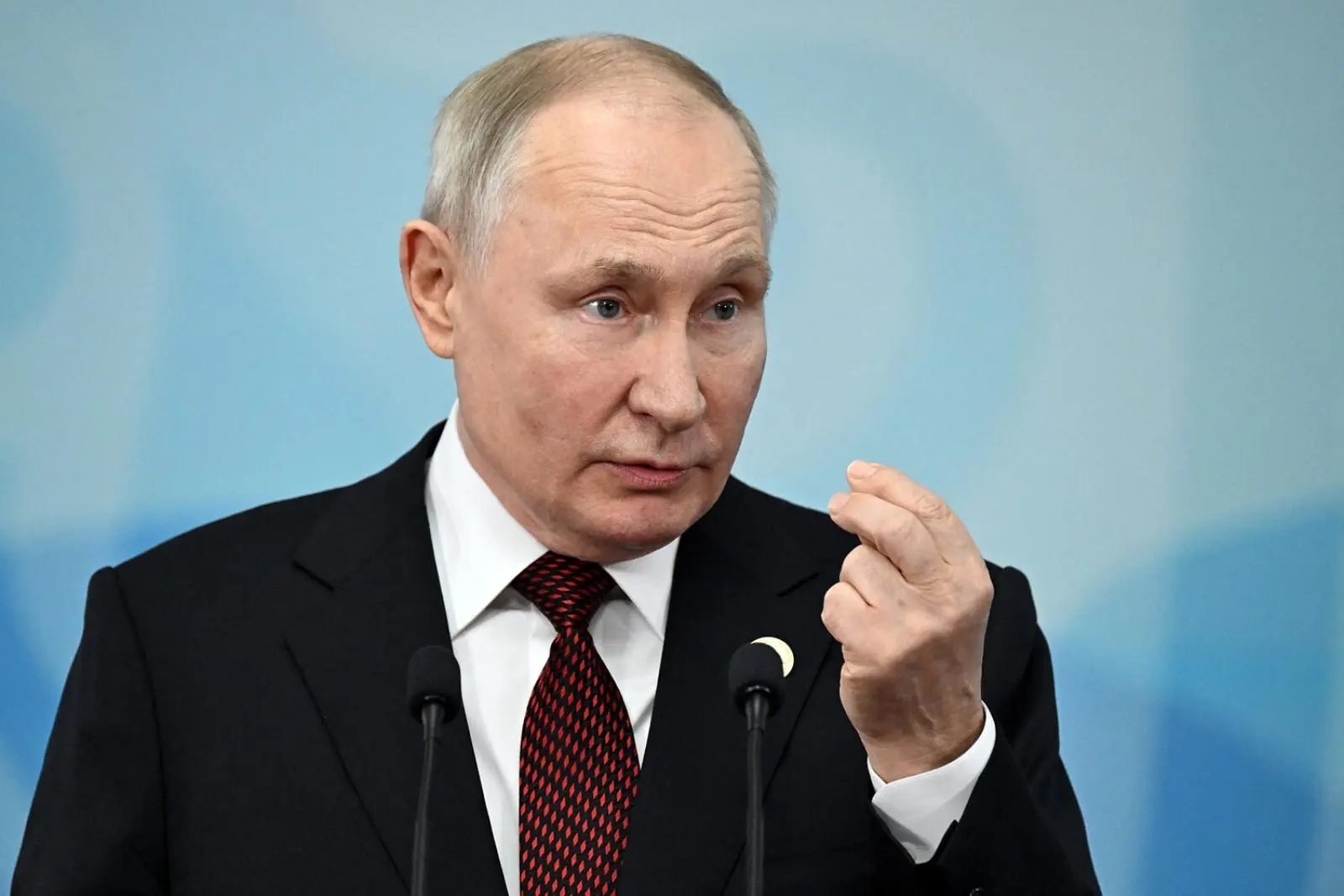
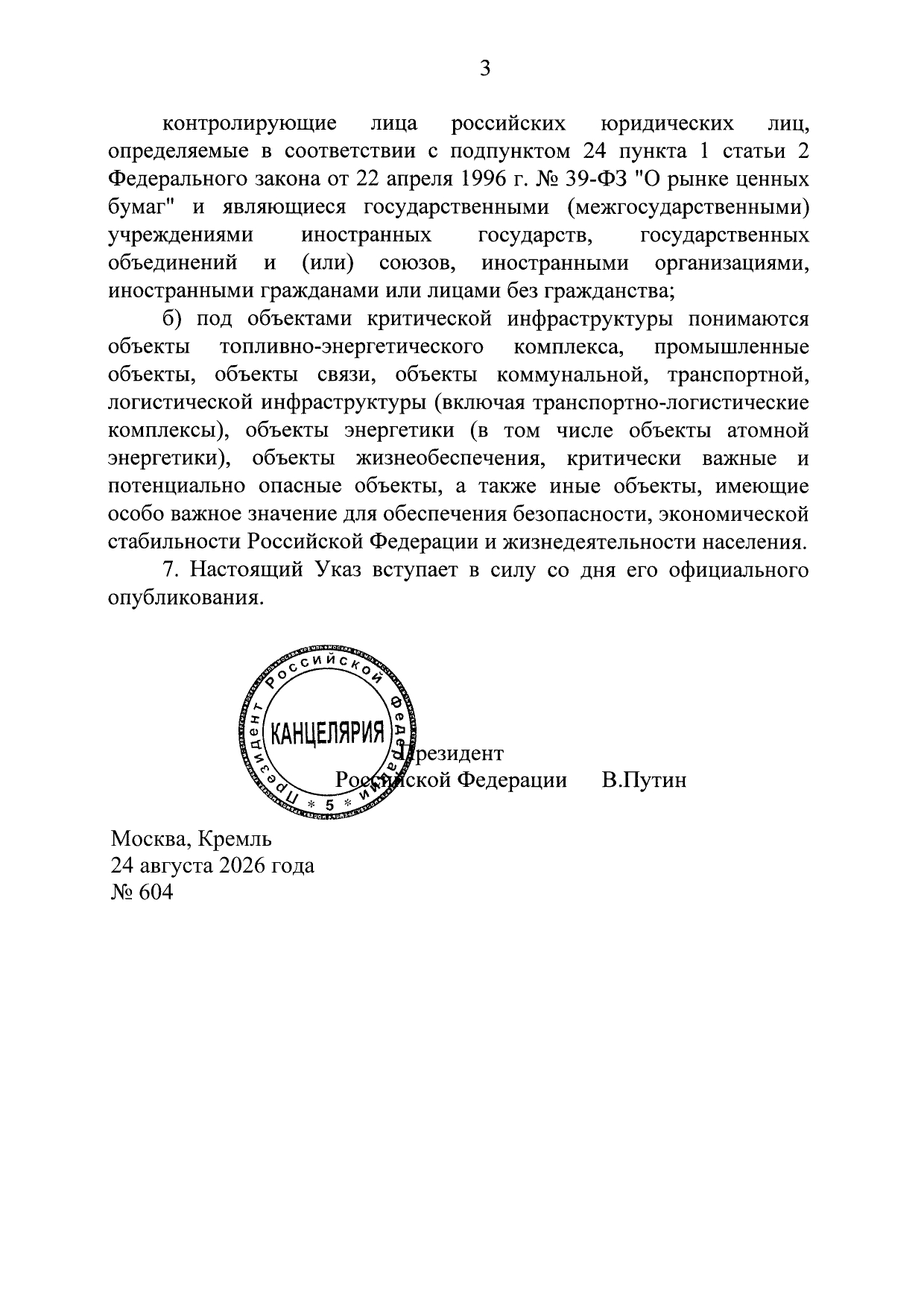
Vladimir Putin has authorized the imposition of temporary state control over the property of companies in cases where state authorities determine that firms are not adequately protecting important facilities, including against drone attacks. Putin signed Decree No. 604, “On Measures to Ensure the Security of Critical Infrastructure Facilities of the Russian Federation,” on Aug. 24. The document was published on the country’s official legal information portal and has entered into force.
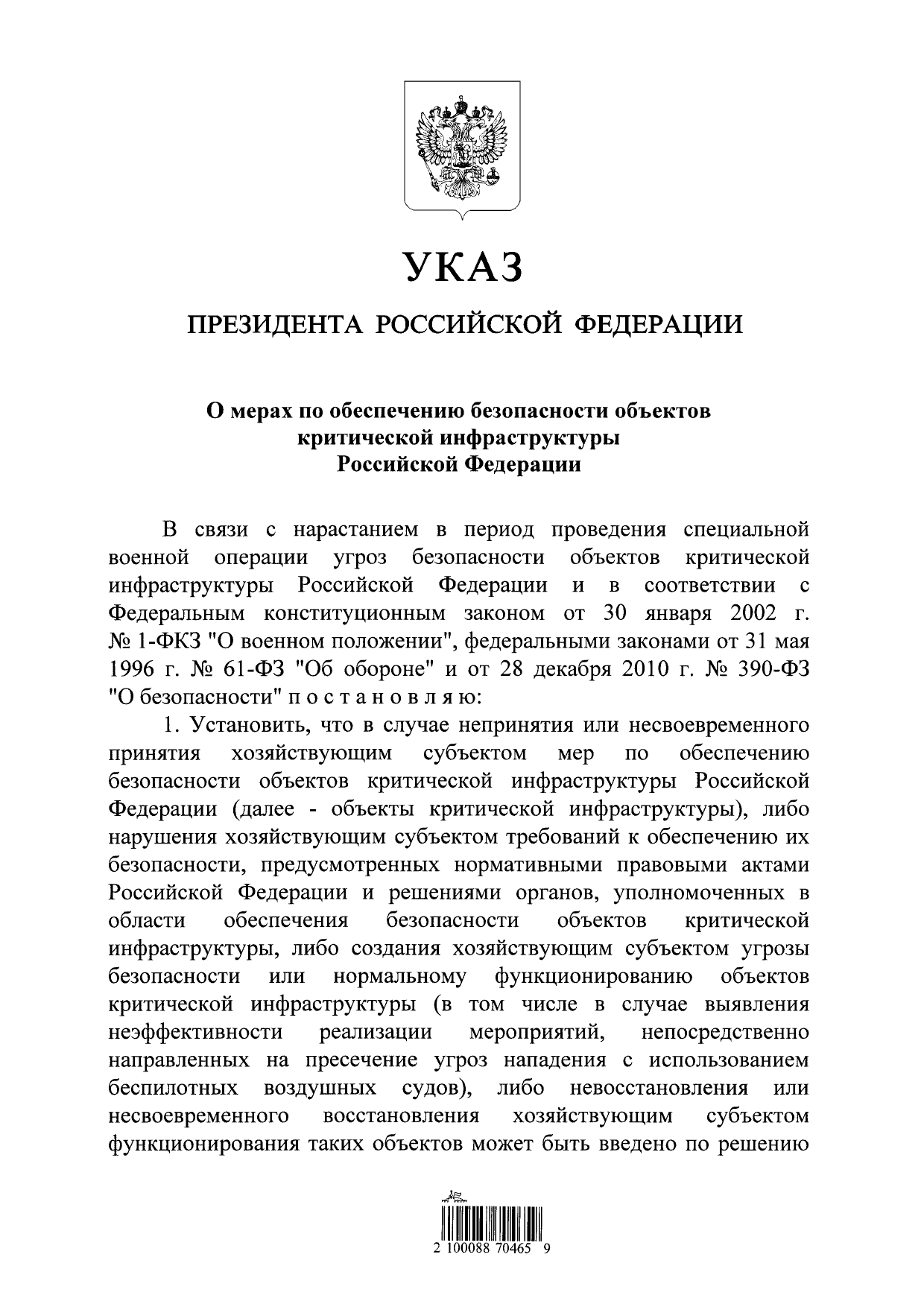
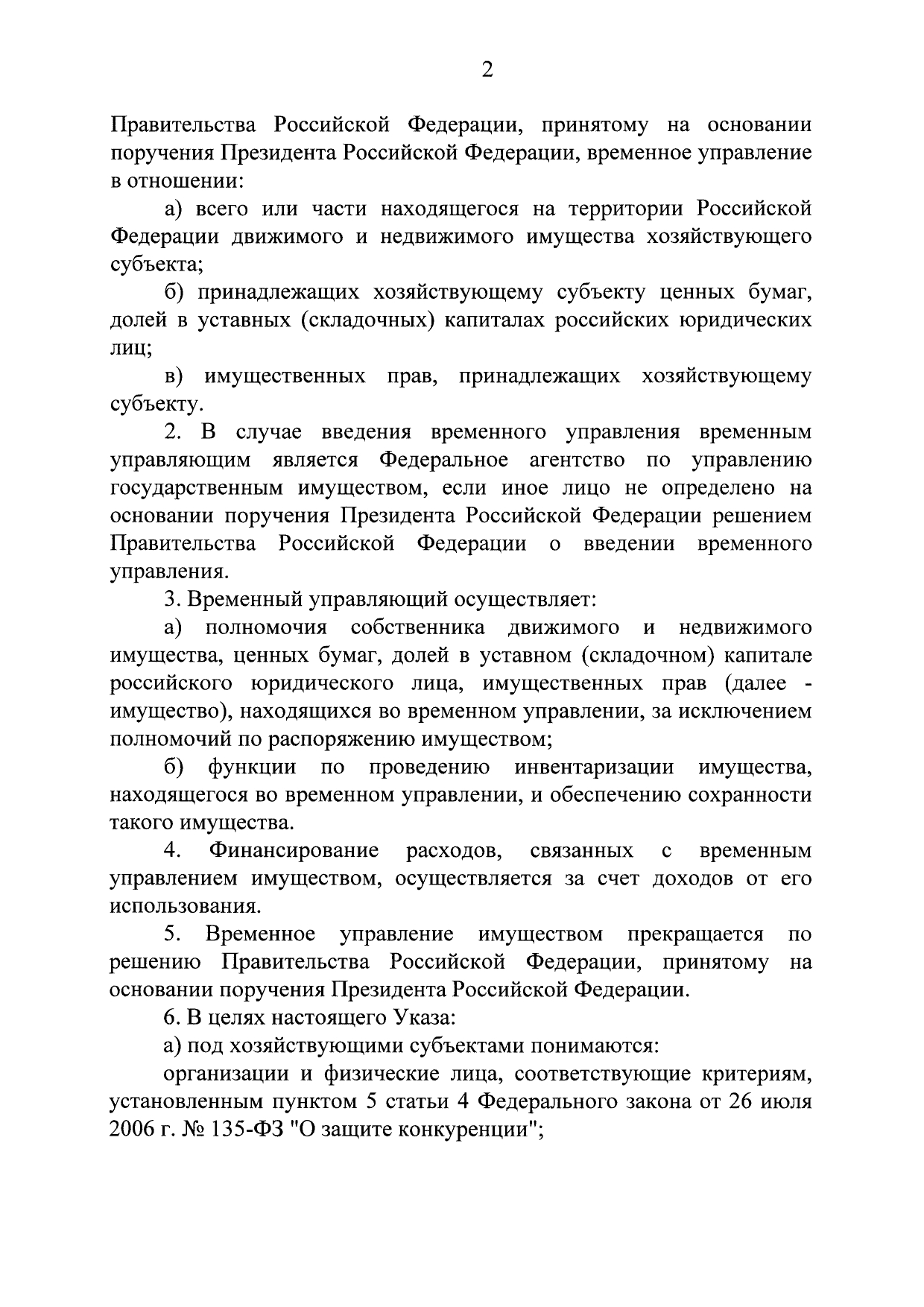

Grounds for imposing temporary control may include failure to take security measures or a delay in taking them, the violation of established requirements, creating a threat to the facility’s normal operation, or even a delay in restoring it after damage was incurred. The decree separately mentions “ineffective implementation of measures” aimed at preventing drone attacks.
Russian authorities will be able to place all or part of a company’s movable and immovable property, its securities and stakes in Russian legal entities, and its property rights under temporary control. The decision will be made by the government on Putin’s instructions. The Federal Agency for State Property Management (Rosimushchestvo) will step in as the temporary manager by default, unless replaced by a different organization. The manager will receive all relevant ownership powers other than the right to dispose of the transferred property. The decree does not limit the duration of temporary control, which can likewise be terminated by the government on the president’s instructions.
The decree defines “critical infrastructure facilities” as enterprises in the fuel and energy sector (including nuclear facilities), communications facilities, as well as utility, transport, and logistics infrastructure. The list remains open-ended, however, and the mechanism can also be applied to other facilities that authorities deem to be of “particular importance” for Russia’s security, economic stability, or the population’s livelihood.
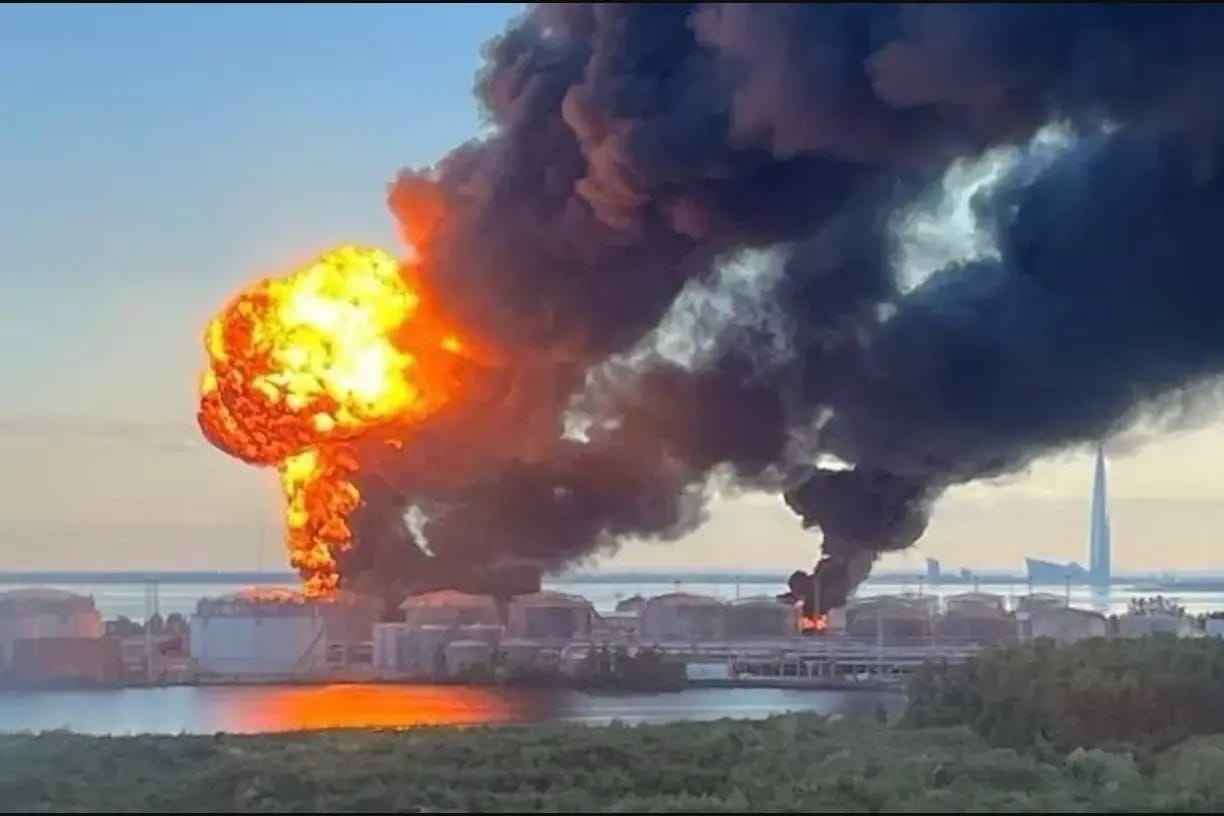
The decree comes amid a sharp increase in Ukrainian attacks on Russian industrial and logistics infrastructure. Oil refineries have been a constant target of Ukrainian drones since early 2024, with the intensity of the strikes increasing in 2025. In 2026, Ukraine further scaled up the campaign. As the Financial Times reported, in the first half of the year alone, Ukrainian drones successfully struck Russian refineries at least 194 times — at 11 times the rate in the same period of 2025. By April, the monthly average of successful strikes on refinery production facilities and tank farms exceeded ten and subsequently held at roughly that level. Following the attacks, some refineries scaled back or completely halted oil processing for extensive periods, sometimes taking weeks to return to normal operation. Notably, some facilities have been hit multiple times.
Three days before the decree was signed, Deputy Prime Minister Alexander Novak instructed oil companies to revise refinery maintenance schedules in order to avoid exacerbating the fuel shortage. Now, a delay in restoring facilities could have direct consequences for owners, as Putin’s decree explicitly names the untimely restoration of critical infrastructure after damage as grounds for imposing temporary control over a company’s property.
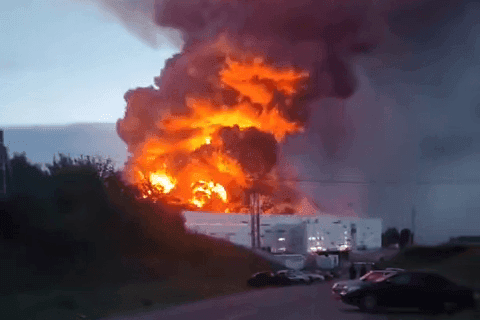
Since July 18, the warehouse infrastructure of the major online retailer Wildberries has also come under systematic attack. By Aug. 19, The Insider had counted 21 attacked marketplace facilities across 16 Russian regions and annexed Simferopol, affecting a combined storage area of about 2.3 million square meters. Fourteen facilities covering about 1.77 million square meters sustained significant damage, forcing the company to relocate some of its operations to other sites. Warehouse employees were killed and injured in several attacks. Volodymyr Zelensky has stated that the targeted logistics centers were used to supply the Russian army with drone production components, navigation equipment, and gear.
On Aug. 22, Ukrainian drones hit a logistics facility of another online retailer, Ozon, for the first time. The target of that strike was a warehouse in Chapayevsk, Samara Region. Then, on Aug. 23, a strike hit a facility in Orenburg, and overnight into Aug. 24, drones struck Ozon warehouses in Dagestan, Adygea, Krasnodar Krai, and Stavropol Krai. Fires broke out at the facilities near Krasnodar and Makhachkala, forcing them to halt operations.