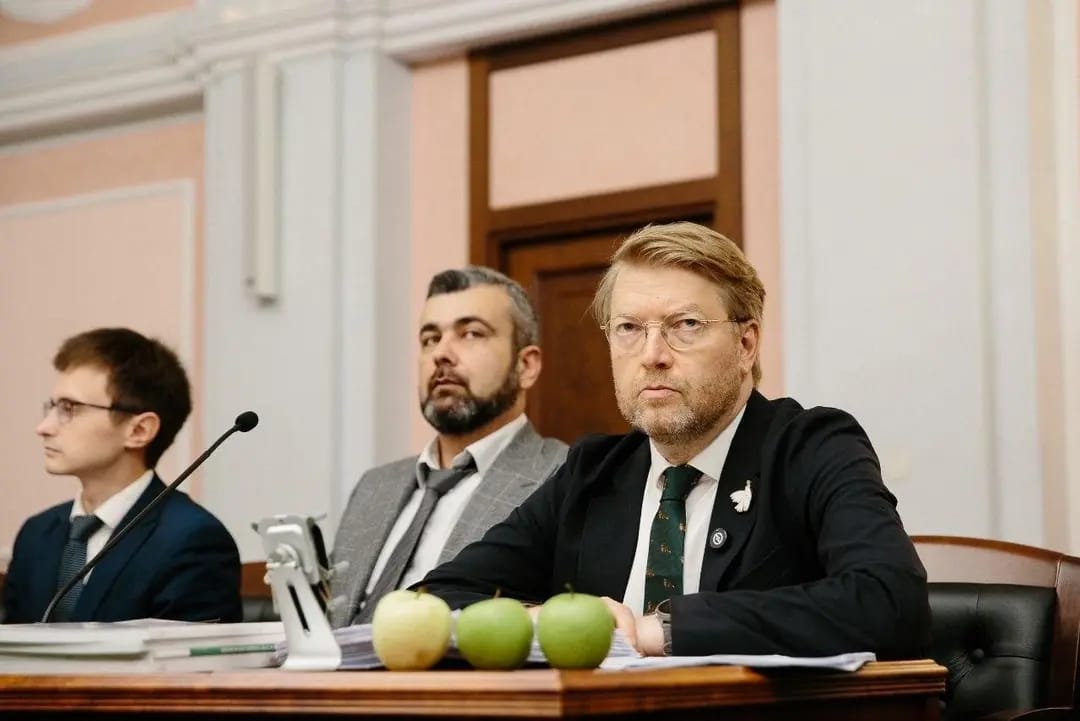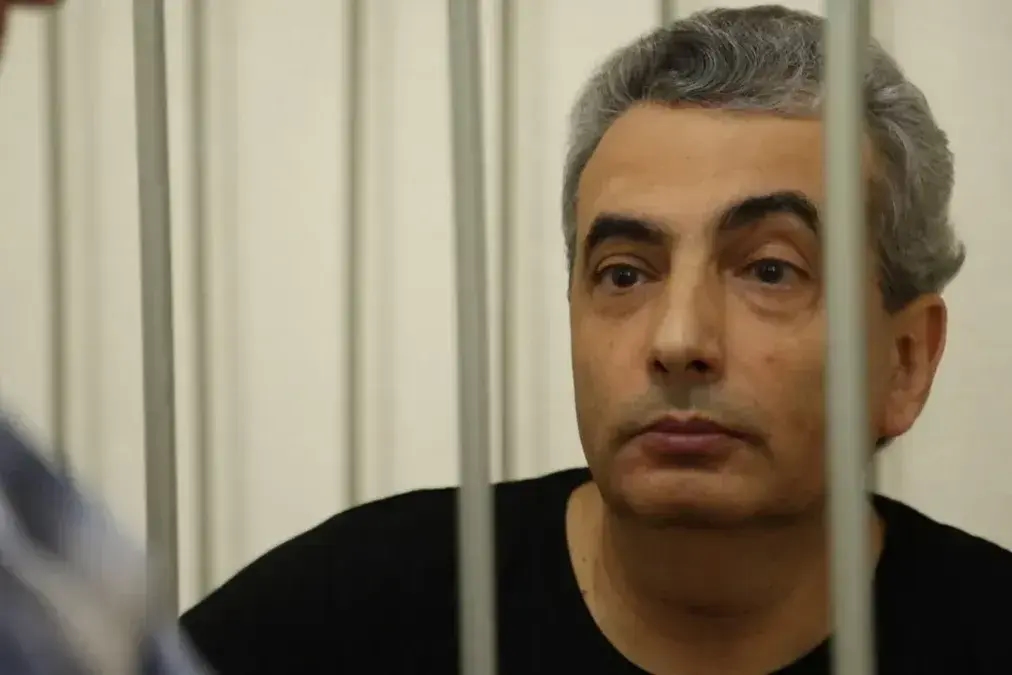
Earlier today, judge Viktoria Malyamova of the Pskov City Court sentenced Lev Shlosberg, the 63-year-old deputy chairman of the liberal Yabloko party and a well-known anti-war politician, to 11 years and one month in a general-regime penal colony. Shlosberg was convicted on charges of repeatedly “discrediting” the Russian armed forces and spreading “fake news” about the army, according to a report by the independent outlet Mediazona.
The final sentence combined Shlosberg’s punishments under two charges, partially added together, and took into account an earlier sentence under Russia’s “foreign agent” law. State prosecutor Anna Goryacheva had sought a harsher sentence, asking that Shlosberg be given 12 years and one month in prison.
Malyamova closed the judicial investigation on Aug. 14. Shlosberg’s defense lawyers did not appear at the hearing, and a state-appointed lawyer said he was not prepared for oral arguments. Shlosberg himself was never questioned in court, though his testimony from the investigation stage was read aloud on July 28 — despite his objections. Shlosberg insisted that he would speak only after the defense presented the rest of its evidence. The judge interpreted that as a refusal to testify and interrupted him during his final statement.
The politician’s final statement in court can be viewed (in Russian) above, while its key excerpts, translated by Mediazona, are available in the fold-out below.
Lev Shlosberg’s final statement in court
As noted by Mediazona, Shlosberg began by describing the case against him as a purely political exercise rather than a legal proceeding:
“The accused is not obliged to prove his innocence. Both the prosecution and the court are well aware that I am innocent... Why does the prosecution persist with an unjust charge, and why does the court, in rejecting practically all the defence’s motions, do everything possible to prevent new evidence of my innocence from emerging? Because this is a political criminal case. What is the essence and purpose of a political criminal case? In a political trial, establishing the truth is not the objective. The sole objective is to punish a person for their political, social, and civic stance, often simply for the fact that they disagree with the authorities. A political criminal case lacks any genuine legal substance. It is an imitation of investigation and justice designed to achieve a patently unlawful objective.”
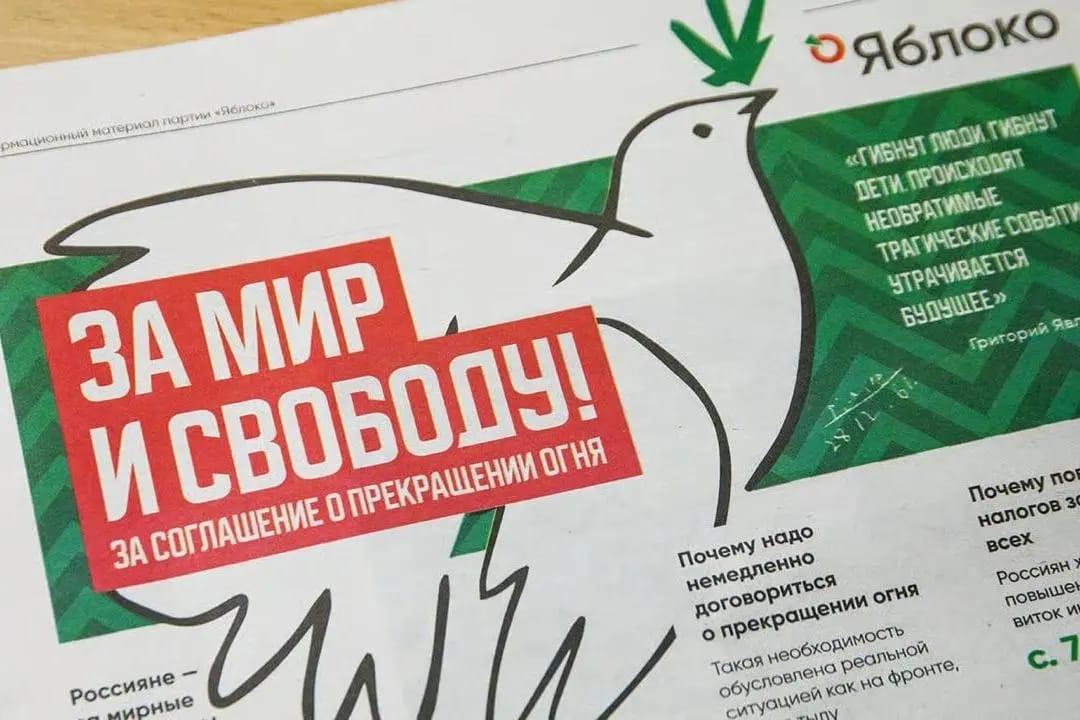
Addressing his calls for a ceasefire — the action cited to “prove” the prosecution’s charge of “discrediting” the Russian army — Shlosberg spoke about the human cost of the war and the Russian state’s disregard for human life:
"No state reorganisation, no political reshaping of the world is worth the deaths of so many people. For them, everything is over. They have no future. They are dead… My position is that it is now necessary to reach two agreements simultaneously. The first is a ceasefire agreement… The only pressing task today is stopping the killing of people and moving to political dialogue. We cannot say right now how long this political dialogue will last or how it will end. But every day of this dialogue saves thousands upon thousands of lives. Politicians must think about this. Historians, in my view, must also think about this. Because the victims of past wars are dead forever, and no one will return. But the people alive today can remain alive if this agreement is signed.
Who will defend a military man’s right to life in our country today? Who will defend a mother and father’s right to see their son alive? Who will defend a wife’s right to a family with a living husband? …The legislation of the Russian Federation is being applied today in such a way that a person demanding the preservation of human life, demanding compassion and political accountability, is accused of discrediting the armed forces. Meanwhile, people demanding the continuation of bloodshed are paraded by the prosecution and the court as disinterested witnesses for the state. This is how evil tries to force good out of the country’s life.”
Shlosberg also challenged the court itself, warning that turning the law into a political weapon would carry historical consequences.
“Since 2021, security structures in our country have been granted de facto political powers, leading to a sharp rise in disenfranchisement, lawlessness, and tyranny. Granting security forces political power...has stripped Russian courts of their independence.
Laws that directly diminish and abolish the constitutional rights and freedoms of man and citizen have, in strict accordance with their design, become tools for the extrajudicial persecution of citizens by the state. Law and justice have drifted further apart than at any point in the post-Soviet era. Anti-legal law destroys a state faster than rust destroys metal.
The destruction of judicial power is tantamount to the destruction of the state itself. The absence of justice is a diagnosis: the state has abandoned the judicial protection of human and civil rights and freedoms.”
Shlosberg closed his address by voicing the historical certainty that the current era of repression will eventually end.
“Over three and a half decades, Russia has journeyed from elation to despair, from hope to disillusionment, from the euphoria of sudden freedom to the fear of freedom. It is out of these despairs, disillusionments, and fears that our present time has developed…
Russia has paid more than enough for its lack of freedom. But, evidently, more must be paid.
Ahead of us lies a new window of historical opportunity. We do not know when it will open, when the light will become strong enough to push back and dispel the gloom. But it will undoubtedly happen, because the laws of history, like the laws of nature, are stronger than the voluntarism of temporary rulers. No one in history has ever managed to cheat time. Unlike good, evil has no access to immortality.”
As he delivered his final sentences, the judge interjected one last time, demanding that Shlosberg speak only for himself. However, he was able to finish his thought:
“I will suggest to my current prosecutors that they learn just one song: a lullaby, in which a mother promises her little one a happy life.”
The “fake news” case against Shlosberg stemmed from a repost on his Telegram channel made on Feb. 25, 2022: a post by the Russian media outlet Ekho Moskvy (lit. “Echo of Moscow”) showing the front page of Britain’s Daily Mirror, which showed a portrait of Vladimir Putin next to a photograph of a bloodied Ukrainian woman. The headline read: “Her blood… His hands.”
The second charge, involving “discreditation,” was built around a debate titled “A Shameful Peace or a Just War,” held on Jan. 10, 2025, on the YouTube channel Zhivoy Gvozd, an independent media project created by former Echo of Moscow journalists after the radio station was closed. During the debate, Shlosberg argued that a ceasefire agreement should be signed immediately. His opponent, historian Yury Pivovarov, argued for continuing the war until Ukraine’s victory and warned that a rushed peace would lead to another war. A recording of the debate appeared on the Russian social network Odnoklassniki on Jan. 12, and that recording became the basis for the case.
Shlosberg pleaded not guilty. In the “fake news” case, he noted that the repost on his Telegram channel appeared before the relevant article was added to Russia’s Criminal Code. In the second episode, he said he did not create the Odnoklassniki page and did not upload the video there. He also said the charges cite two remarks by Pivovarov taken out of context. This was not Shlosberg’s first day in court. In January 2025, Shlosberg was charged with failing to comply with his duties as a “foreign agent,” a Russian designation imposed on people and organizations that authorities claim are under foreign influence and that carries burdensome reporting and self-labeling requirements.
Lev Shlosberg is a well-known Russian opposition politician, human rights activist, journalist and longtime member of the liberal Yabloko party, where he serves as deputy chairman. Based in the western Russian city of Pskov, he founded the independent regional newspaper Pskovskaya Gubernia in the early 2000s. The publication gained national and international attention for fearless local reporting, including exposing the secret deaths of Pskov paratroopers fighting in Ukraine in 2014. The Russian authorities labeled Shlosberg a “foreign agent” in June 2023.