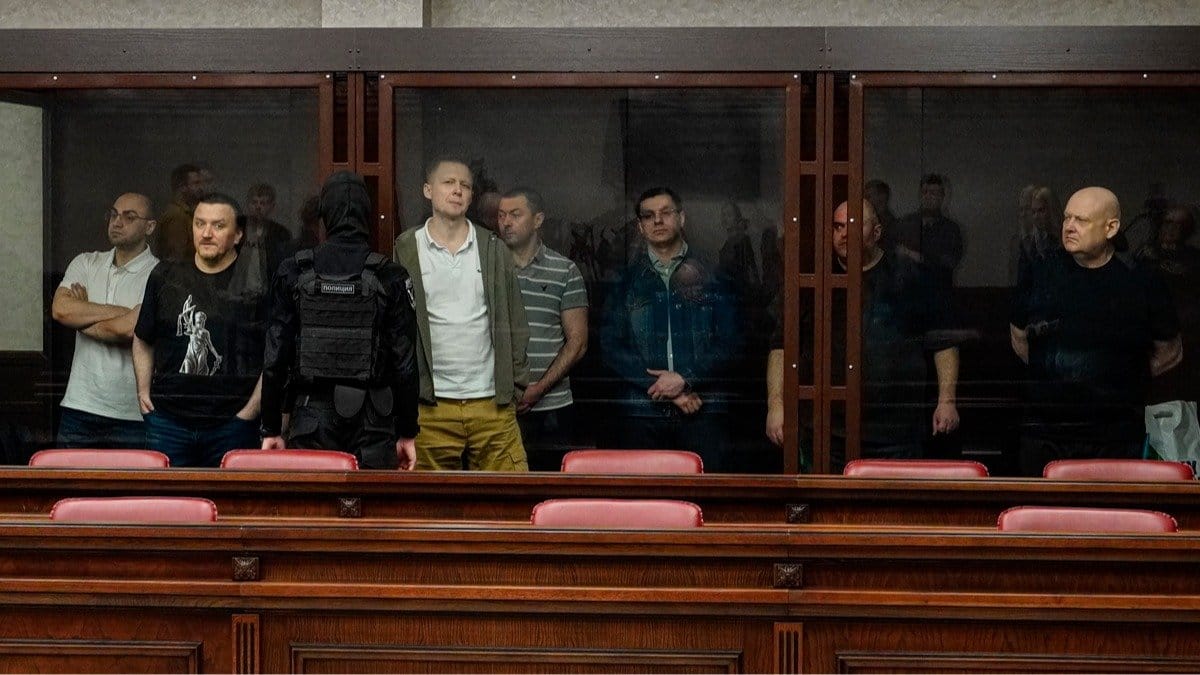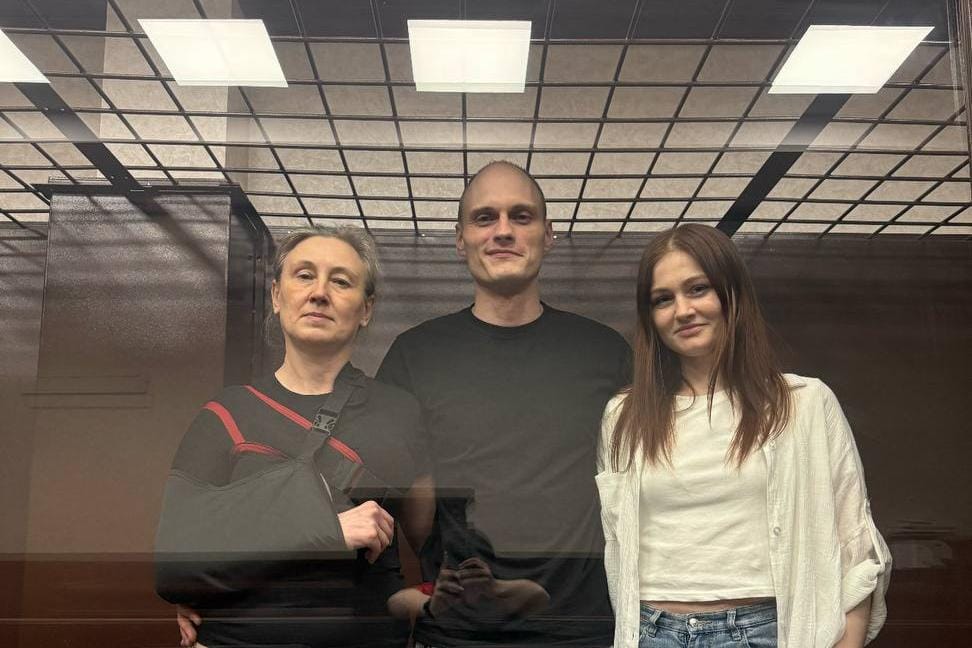
The level of politically motivated criminal prosecution in Russia remains stable — at about 500 new cases per quarter — but the structure of those cases is changing: the share tied to speech is falling, while the number of charges under more serious statutes is rising. That is the conclusion reached by the Barometer of Repression report for the first quarter of 2026, prepared by the Memorial human rights organization’s Support for Political Prisoners project.
A stable level of repression
According to the rights advocates, the overall situation within Russia’s internationally recognized borders has changed little since 2025 in numerical terms: roughly the same number of people become defendants in politically motivated cases each successive quarter. The share of those deprived of their liberty also remains unchanged.
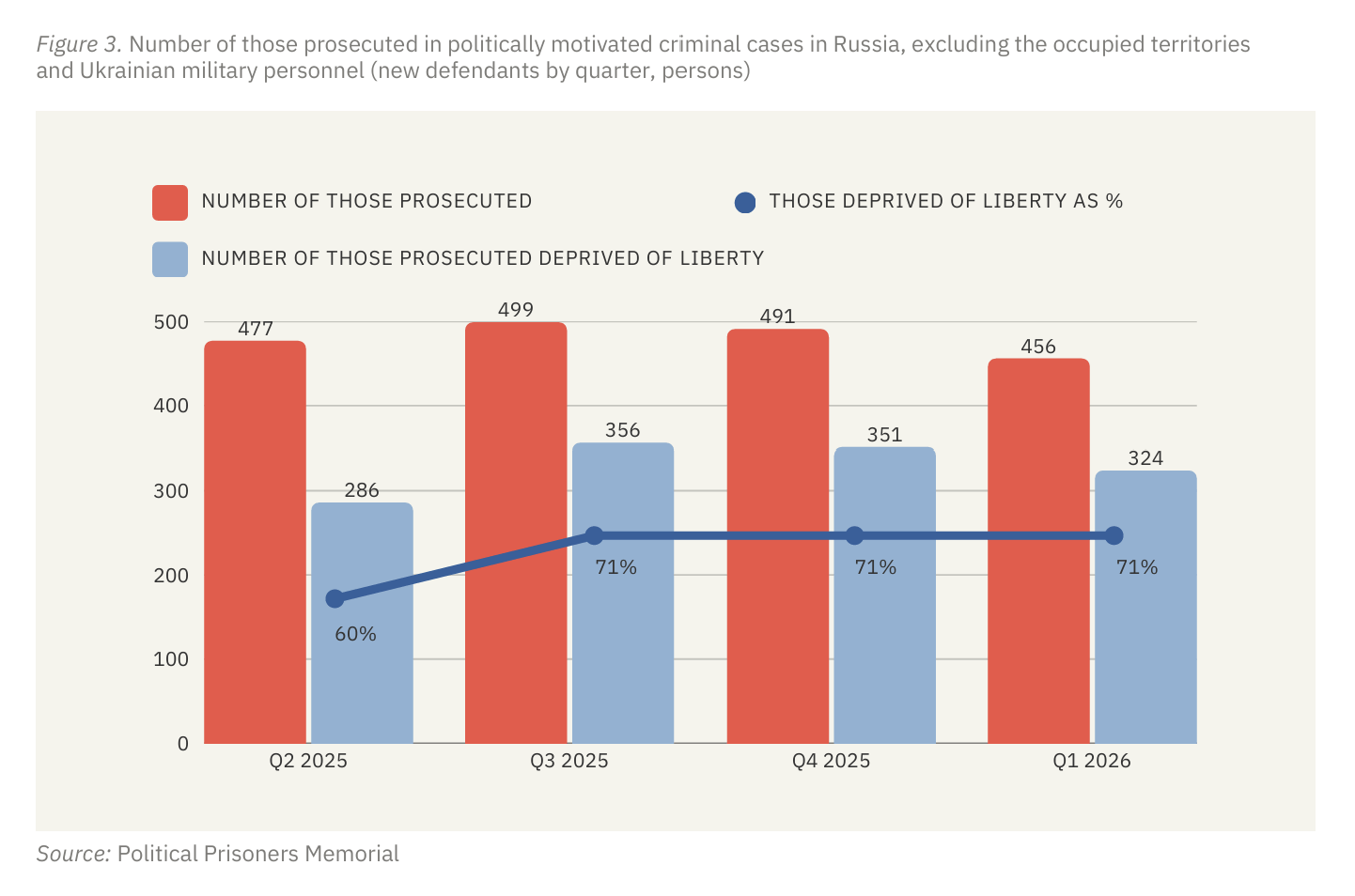
“The Russian authorities, it seems, view the current level of repression as optimal,” the rights advocates wrote.
Fewer cases over public statements
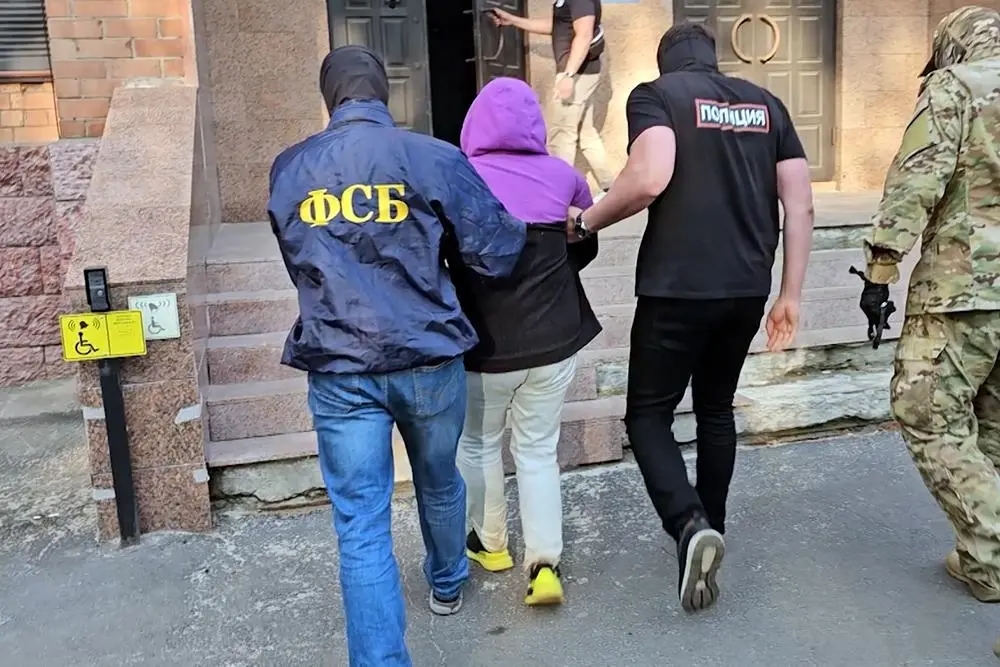
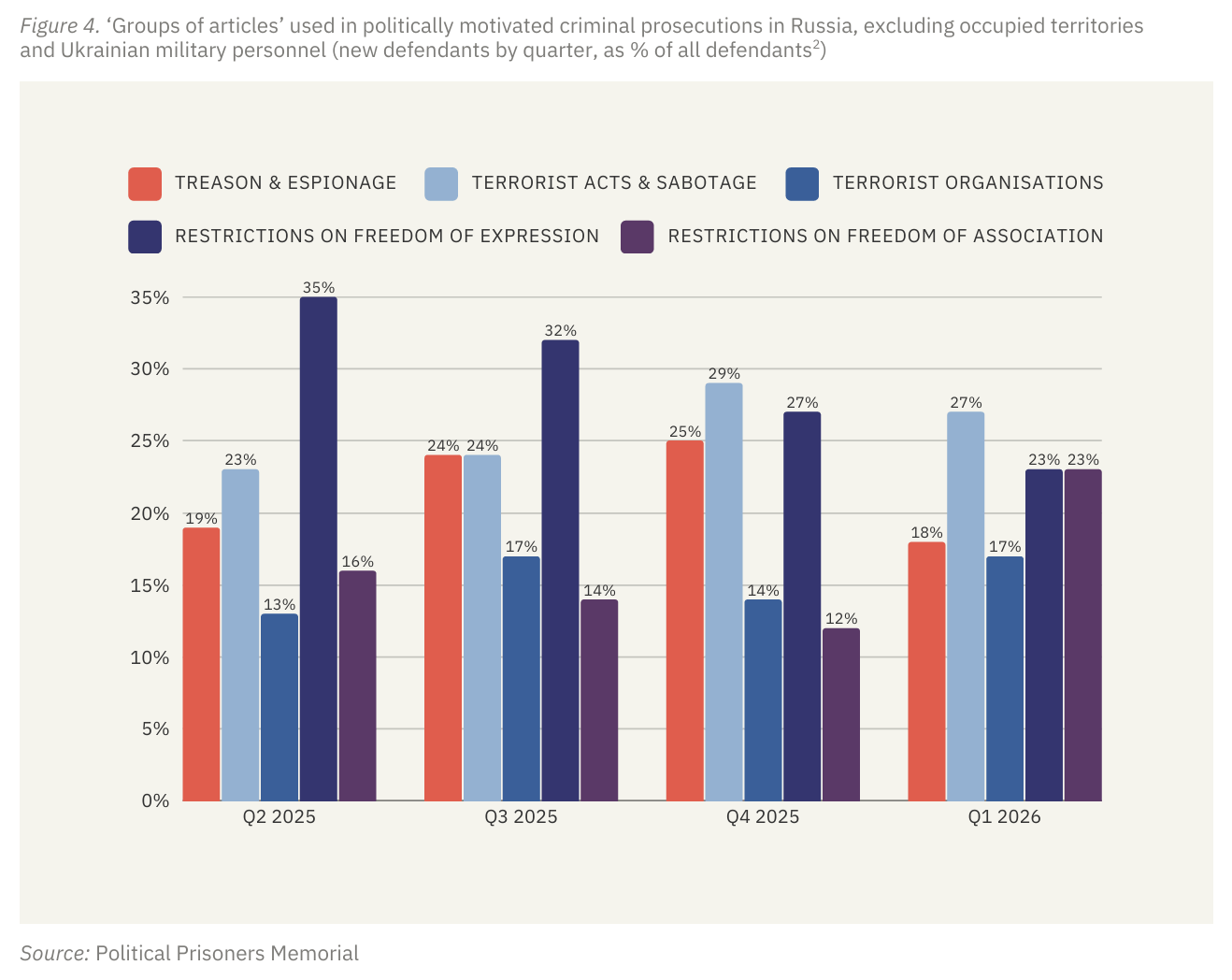
At the same time, the structure of the prosecutions is changing. In the first quarter of 2026, the share of cases connected to restrictions on freedom of expression fell below one-quarter. Meanwhile, however, the number of cases under more serious articles is rising, including those linked to “extremism,” “terrorism,” and “sabotage,” which carry longer prison terms.
Sergei Davidis, head of the Support for Political Prisoners. Memorial project, said in comments to The Insider that the decline in the share of speech-related cases has at least two likely explanations:
“The first is that the resources of the punitive machine are limited. There is a very specific number of people who fabricate criminal cases every day. And because the number of cases involving more serious charges is growing, it can be assumed that, in order to intimidate society more effectively, these punitive bodies have concentrated their efforts not on prosecutions over speech, which are still relatively mild, but on entrapment and prosecutions over actions.
The second explanation is connected to how such cases are perceived in society. In the overall number of speech-related cases, we see a decline in the share of cases under the articles on so-called ‘discrediting the army’ and ‘fake news.’ It is unlikely that the statements themselves have become less frequent. But society is less likely to view such prosecutions as justified. Punishment simply for an opinion — even if it is intimidating — provokes more rejection than cases involving allegedly committed acts, for example treason or terrorism.”
At the same time, Davidis added that within the category of cases launched over individuals’ statements, the article on “justifying and promoting terrorism” is playing an increasingly prominent role:
“The articles on ‘fake news’ and ‘discrediting’ look too unconvincing. They do a worse job of stigmatization: it is one thing to brand someone a ‘justifier of terrorism,’ and many people will not look into the details; it is another to accuse someone of spreading ‘knowingly false information,’ which is perceived simply as a different opinion. And despite all the polarization in society, especially now, when even supporters of the war have started to face charges of ‘discrediting,’ it looks rather absurd.”
More cases against Jehovah’s Witnesses and donors to Alexei Navalny’s ACF
In the first quarter of 2026, the number of cases tied to “extremism” rose sharply. In particular, prosecutions under the article on “participation in the activities of an extremist organization” increased, primarily against Jehovah’s Witnesses. In the first three months of 2026, rights advocates recorded 39 of these defendants, compared with 51 during the entirety of 2025. Criminal cases were opened against groups in several regions, including Zabaykalsky Krai and Krasnoyarsk Krai, as well the republics of Khakassia and Bashkortostan.
The number of cases over “financing extremism,” including donations to the late Alexei Navalny’s Anti-Corruption Foundation (ACF, also known as FBK after its Russian-language acronym) also continues to rise. In the first three months of 2026, 44 new cases were recorded — nearly half the total for all of 2025. At the same time, rights advocates note that some of those prosecutions may have begun earlier but became known only at the sentencing stage.
Overall though, the key trends of 2025 remain in place: the number of cases “for words” is declining, while repressive practice is increasingly based on more serious charges investigated by the FSB.
Cases against Ukrainians
The report also separately notes a rise in prosecutions of Ukrainian military personnel. Despite the end of the series of cases launched against Ukrainian soldiers captured during the offensive into the Kursk Region, the total number of criminal cases against Ukrainian service members continues to grow. In the first quarter of 2026, their share reached about 14% of all politically motivated prosecutions carried out by the Russian authorities.
In the Russian-occupied territories of Ukraine, where rising repression was recorded in 2025, the beginning of 2026 has seen a decline in the number of new criminal cases. However, rights advocates stress that it is still unclear whether this is a sustained trend or a temporary fluctuation.
At the same time, the level of repression in the occupied territories relative to population remains significantly higher than in Russia. According to Memorial’s estimates, by the end of 2025 the relative frequency of such prosecutions in Crimea was about five times higher than in Russia, while in the newly occupied territories it was as much as eight times higher. Rights advocates also noted that those territories bring a higher share of charges under especially serious articles, including “terrorism” and treason-related charges, reflecting a harsher pattern of persecution than in Russia itself.