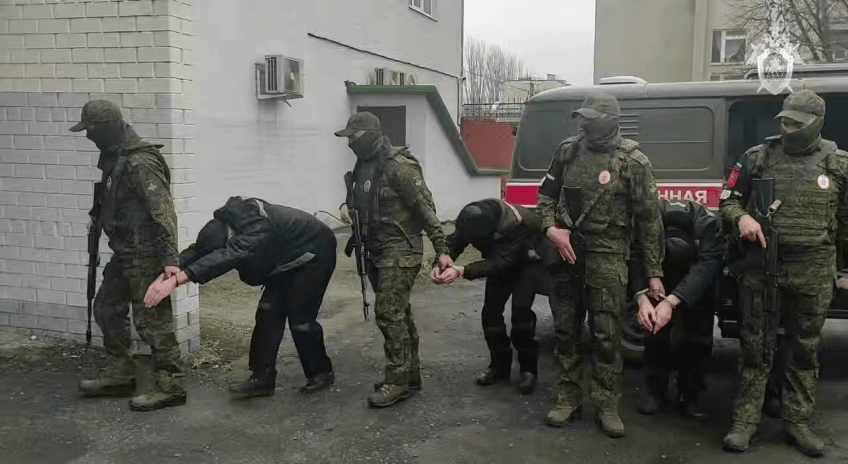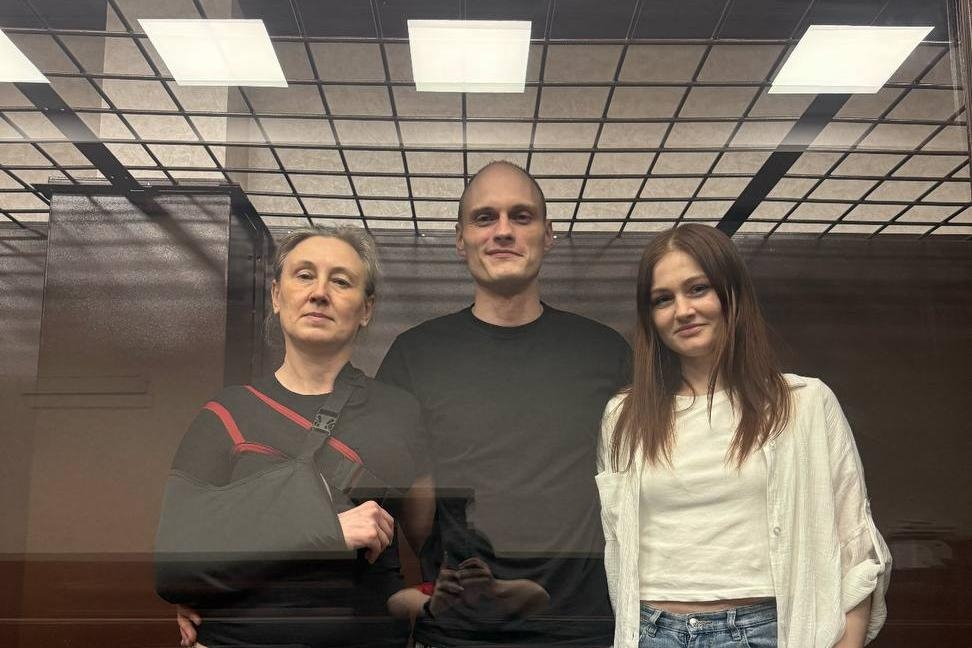
As of mid-March 2026, Russia has charged at least 2,278 Ukrainian citizens under terrorism and extremism statutes, according to calculations by the independent research association Parubets Analytics. At least 1,417 of them are known to be in custody, while 879 are considered missing. At the same time, fewer than 1% of those involved in these cases have been exchanged — just 56 people in total.
The authors of the study emphasize that charges brought under terrorism and extremism statutes against Ukrainian citizens have affected not only military personnel but also civilians. In the authors’ assessment, this amounts to a systemic practice of criminal prosecution used as a tool of pressure and intimidation.
Who is charged under “terrorism” and “extremism” statutes
Most of those involved are civilians. Researchers counted 1,366 civilians (60% of the total) and 912 servicemen of the Ukrainian Armed Forces. Among the military personnel, at least 280 people are linked to the Azov Brigade and 79 to the Aidar Battalion. However, the largest group, according to the authors, consists of participants in combat operations in the Kursk region in 2024–2025 — no fewer than 381 people.
Of the 2,278 defendants, 1,882 are charged under terrorism-related statutes, and another 396 under extremism statutes. At the same time, the report notes, such charges are often combined with articles on treason and espionage, allowing prosecutors to ask the court for even more severe sentences.
Most of the Ukrainian citizens who feature in the count have already been convicted — a total of 1,521 people. Of these, 1,146 have been sentenced to terms of physical imprisonment, 76 have received penalties that do not involve the deprivation of liberty, and 299 have been convicted in absentia and placed on wanted lists. Another 325 people are under investigation, most often in pretrial detention. For 399 defendants, there is almost no available information beyond the fact that they have been included on the Russian government’s “list of terrorists and extremists.”
Exchanges remain the exception
A separate section of the report is devoted to exchanges, and it is here that the gap between the scale of prosecution and the chances of release is most evident. Of the 8,669 people who have been returned to Ukraine via exchanges, as of mid-March 2026 only 56 were defendants in “terrorism” and “extremism” cases, less than 1% of the total number released.
Notably, the situation of civilians is even more difficult than that of military personnel. The authors of the study note that international humanitarian law does not provide provisions demanding that civilians receive the privileges afforded to prisoners of war, meaning that standard exchange mechanisms frequently do not apply to them. As a result, criminal prosecution under such statutes effectively prevents their return.
For this reason, Parubets Analytics does not publish a full list of defendants. The study explicitly states that the authors have grounds to fear that such lists could be used by the Russian side to complicate exchange procedures and exert additional pressure on those being held. However, the researchers say the full data has been provided to Ukraine’s Coordination Headquarters.
879 people are considered missing
According to the study, 879 defendants are included in Ukraine’s official register of missing persons. Another 47 people have been removed from it — typically after being freed, including through exchanges.
The largest number of such cases is recorded in the Donetsk region, primarily in Mariupol, where there are at least 266 disappearances. The second major cluster is linked to Russia’s Kursk region, where researchers counted 298 cases. Another 74 cases are attributed to the Zaporizhzhia region.
By examining the timing of the disappearances, the authors were able to identify two waves. While only 21 cases were recorded in the database before February 24, 2022, the number rose to 369 in 2022. After declining to 77 cases in 2023, there was another surge in 2024, with 355 recorded disappearances. In 2025, researchers documented a further 104 such cases.
The lists compiled by human rights organizations include fewer than half of the total known defendants
The authors of the report draw particular attention to the fact that a significant share of these cases is virtually absent from the public record. The database of the human rights project “Support for Political Prisoners. Memorial” contains information on 1,045 defendants, while the OVD-Info database lists 498. The study itself concludes that more than half of the defendants are not represented in any human rights lists at all.
Among the accused are teenagers as young as 16 and elderly defendants as old as 87. The authors of the study note separately that at least 11 of the accused were minors at the time of analysis.
Still, the bulk of the accused are middle-aged, with the average age of defendants coming in at 41.8 years, with a median age of 41. The largest group falls between 35 and 44. Most of the accused are men (2,057 people), while 211 women are listed in the database.
How the data was compiled
The study was prepared by Parubets Analytics using its own database, which has been assembled from open sources, court materials, media publications, human rights databases, official statements by Russian agencies, and Ukrainian registries. As a starting point, the authors used the Russian government’s Rosfinmonitoring list, then verified each defendant using additional identifiers, including place of birth, date of birth, origin, and information from human rights sources.
The authors emphasize that in a number of cases, matching had to be carried out using incomplete data, relying on digital reconstruction of a figure’s identity. At the same time, they consider the resulting dataset sufficiently reliable, while acknowledging the inevitable limitations associated with the lack of transparency of the information.