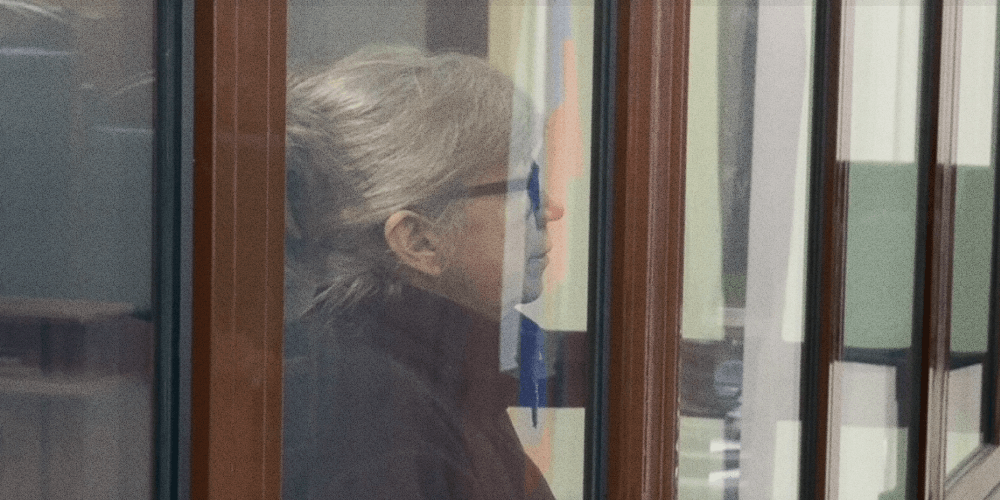
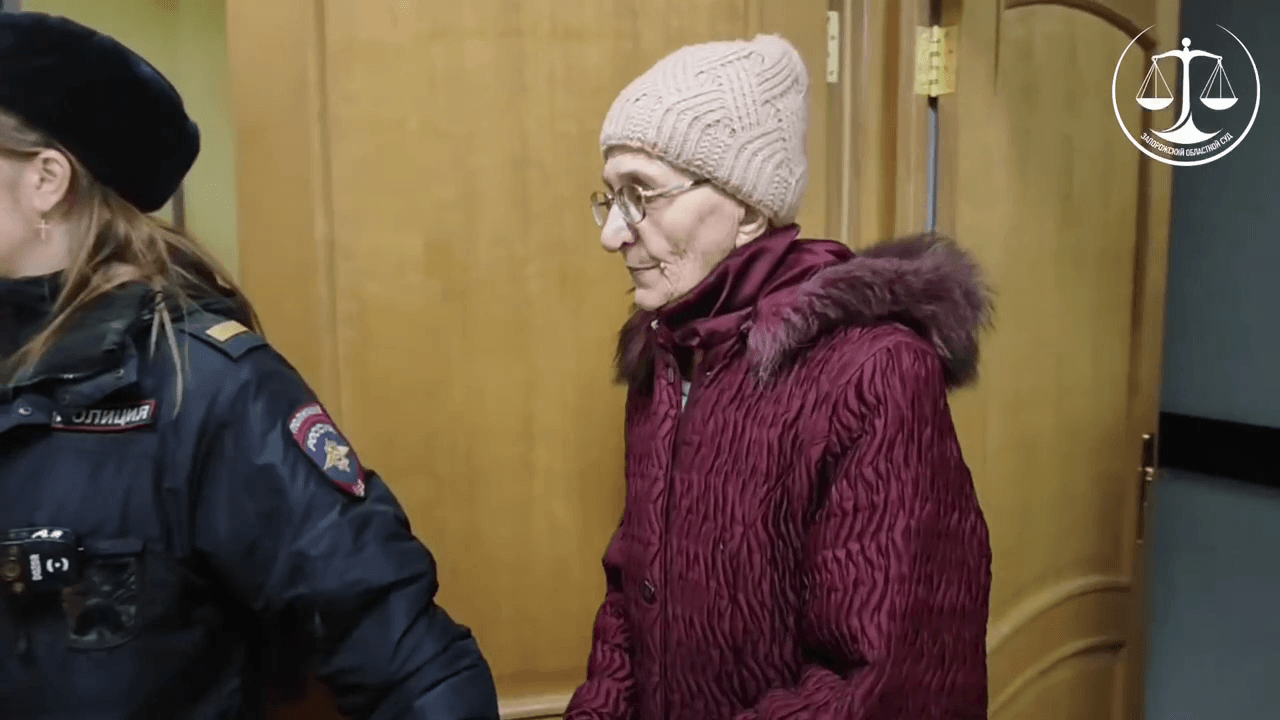
In March 2026, a Russian court sentenced 68-year-old Galina Bekhter, a resident of the occupied part of the Zaporizhzhia region, to 11 years in a penal colony in a case of “state treason.” The charge stemmed from a transfer made through a mobile app of a Ukrainian bank. According to Russian security services, the money was intended to support the Armed Forces of Ukraine. In recent months, such cases have become routine: prosecution for transfers through Ukrainian banks has become one of the pillars of repressive practice in the occupied territories. Criminal cases can be initiated over donations of as little $10, and the victims are most often elderly women. Even if the money was not sent directly to foundations assisting the Ukrainian army, Moscow’s law enforcement officials can still interpret any such transfer as constituting support for “the needs of the Armed Forces of Ukraine.”
- 1.“God, such a small thing, and how dearly it cost me”
- 2.Surge in “state treason” charges
- 3.How security services identify transfers
- 4.“Any Ukrainian account is a red flag for security services”
- 5.Forced passportization
- 6.Why so many of the accused are women
- 7.“State treason” without citizenship: a new threat for foreigners
“God, such a small thing, and how dearly it cost me”
On March 5, a Russian court in the occupied part of the Zaporizhzhia region sentenced 68-year-old Galina Bekhter to 11 years in a penal colony on charges of “state treason.” The case stemmed from a transfer made through the mobile app of a Ukrainian bank. According to Russian security services, the money went to support the Armed Forces of Ukraine. Bekhter’s case is far from unique. Courts in the occupied territories regularly report convictions for money transfers that investigators interpret as assistance to the Ukrainian army.
Bekhter’s case is not an isolated one. Marina Belousova worked as a seamstress in occupied Prymorsk, Zaporizhzhia region, where she cared for her 86-year-old mother, who had lost her sight. In May 2025, Belousova was detained. From jail, she wrote to volunteers: “God, such a small thing, and how dearly it cost me. It’s a one-way road.” She was referring to 450 hryvnias ($10.27) that she had sent to a Ukrainian foundation. According to a relative, Belousova did not see the transfer as anything serious: “She’s just that kind of person — if she does something, there’s no malicious intent. She herself said she didn’t think this could lead to such a sentence.” The court gave Marina 12.5 years in a penal colony.
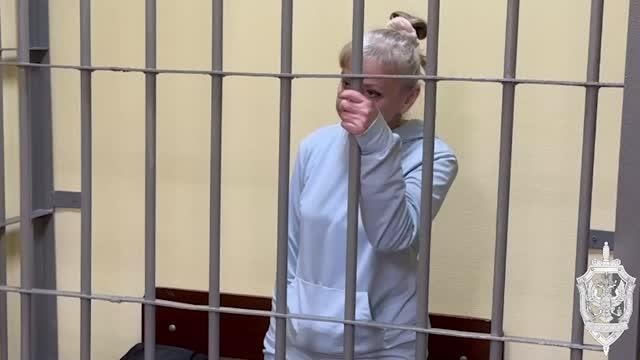
65-year-old Irina Sukhovei, from Melitopol, lived alone. Before the war she had already buried her daughter, mother, and brother. When the occupation began, the pensioner was unable to leave — because of an illness, her legs would swell up to her knees. “She told me: ‘I talk to the television — it’s my only companion,’” says Irina’s sister, Tatyana.
In March 2023, Irina used a banking app to set up automatic payments to an account supporting the Ukrainian military. According to Tatyana, she only learned about these transfers after her sister’s detention. Shortly before Irina’s arrest, armed men came to search her home twice, first taking her phone and documents, and then, a few days later, confiscating a new mobile phone that acquaintances had bought for her. By the time the verdict was handed down, Irina had already obtained Russian citizenship and was receiving a pension, but the transfers continued to be debited from her old Ukrainian account. The court sentenced her to 15 years in prison.
By the time the verdict was handed down, Irina had already obtained Russian citizenship and was receiving a pension, but transfers continued to be debited from her old Ukrainian account
43-year-old Olga Gulchak from the Kherson region was accused by an occupation court of making several transfers in 2023 totaling 1,200 hryvnias ($27.38). According to the investigation, the money was sent to the account of a Ukrainian citizen and was intended for the provision of “financial support, material and technical assistance” to the Armed Forces of Ukraine. In a video published after her detention, Gulchak said she had transferred money to an acquaintance who was collecting aid for the military. In June 2025, the court sentenced her to 12 years in a penal colony.
The pattern in all such cases is the same: investigators claim that money was sent to an account “used for the needs of the Armed Forces of Ukraine,” and they classify the transfer as “state treason.” In most cases, the sums involved do not exceed $100, while the sentences are almost always more than 10 years.
Surge in “state treason” charges
Before the start of the full-scale war, Russian prosecutors applied criminal code provisions on “state treason” and “espionage” relatively rarely. According to a study by the human rights project “First Department” and the Parubets Analytics center, since the adoption of the Criminal Code in 1997 until the start of full-scale invasion in 2022, 196 people were prosecuted under these charges. An acquittal was issued only once — to environmentalist Alexander Nikitin in 1999.
After Feb. 24, 2022, the situation changed dramatically: more than 1,400 people have been accused of “state treason.” In 2025 alone, courts issued a record 468 verdicts in such cases. Punishments also became harsher. In 2024 the average sentence was about 12 years, while in 2025 it increased to around 15.
Some of these cases are linked to money transfers. According to data from researchers, in 2025 about 10% of charges under provisions on “state treason,” “espionage,” and “confidential cooperation with a foreign state” were related to donations to Ukrainian organizations or transfers that investigators interpreted as constituting financial support for the Armed Forces of Ukraine. At the same time, in 2024–2025 Russia’s security services continued to prosecute people for transactions made back all the way back in the opening months of the full-scale war.
In 2025, about 10% of charges under so-called espionage provisions were linked to donations to Ukrainian organizations
A significant share of cases brought under “espionage” provisions concern residents of the occupied territories of Ukraine. Of the 468 people convicted under these provisions in 2025, 161 held Ukrainian citizenship.
How security services identify transfers
In many such cases, the key source of evidence is not complex operational work but a routine phone check. According to Yevgeny Smirnov, a lawyer with “First Department,” this most often happens when a person is crossing the border — for example, at Sochi airport or at other filtration points between Russia and the occupied territories.
During such checks, Russian security services examine the contents of phones, opening banking apps and reviewing transaction histories. If they find a transfer to a Ukrainian account that they consider to be linked to support for the Armed Forces of Ukraine, this may be enough to initiate a criminal case. Sometimes case materials contain neither bank payment documents nor screenshots from apps; instead, the evidence can consist simply of correspondence in which a person says they transferred money.
“It creates the impression that at the border they already know whom to stop. The person is immediately taken aside, their phone is seized, and banking apps are checked. It may be random checks. Or they may already have some databases or leaks, whether from Ukrainian banks or from the foundations through which donations are collected. We don’t know for certain,” Smirnov says.
Checks do not take place only at the border. In the occupied territories, phones may be inspected at checkpoints or during so-called filtration procedures. “Even lawyers working in these territories may have their phones checked. It is effectively a gray zone, where such checks happen constantly,” Smirnov explains.
“Even lawyers working in the occupied territories may have their phones checked. It is effectively a gray zone”
At the same time, residents of the occupied regions have virtually no legal protection. Security services can come to people’s homes for searches and seize documents and devices “for inspection.” Sometimes this process drags on for weeks or months.
This is what happened to Marina Belousova of occupied Prymorsk. According to a relative, security officers were looking for her with a printed photograph from Facebook, questioning neighbors in her building. When they found Belousova, she was taken out of her apartment in handcuffs with a bag over her head. “They immediately told her what kind of sentence she could face — almost a life sentence. But that time they let her go and warned: ‘we’ll come back for you.’ A year later they returned and took Marina away for good,” the relative says.
“Any Ukrainian account is a red flag for security services”
In such cases, the substance of the charges almost always looks the same: investigators claim that the transferred money was sent to accounts “used for the needs of the Armed Forces of Ukraine.” These may include transfers both to charitable foundations and to private people. “Any Ukrainian account is a red flag for the security services,” says lawyer Nikolai Polozov.
In cases involving charitable organizations, investigators typically use as evidence the stated fundraising goals or reports on how the funds were spent. For example, if a foundation reports that the collected money was used to purchase prosthetics for wounded Ukrainian soldiers, this can become grounds for opening a criminal case against the donor.
In other cases, private accounts are involved — for example, fundraising efforts for a specific combatant organized by relatives or friends. According to Irina Sukhovei’s sister, Tatyana, during the search security officers showed particular interest in money transfers from Irina’s relatives. “My husband and I sent her money to maintain the apartment so she could pay utility bills for hers and ours,” Tatyana says.
In practice, the evidentiary basis for such charges is often built on internal documents from security agencies. In some cases, this amounts to just a few lines in an FSB memorandum stating that a particular account is used to support the Armed Forces of Ukraine.
As lawyer Polozov explains, such documents often become the key argument for the prosecution. “FSB officers are effectively unrestricted in their imagination. A classified memo or the results of operational-search activities can appear in a case file, and it is impossible to verify what these conclusions are based on,” he says.
According to Polozov, such cases also serve another function: they act as a demonstration to others. Russian authorities use them to sever ties between residents of the occupied regions and their relatives and acquaintances in territories under Ukrainian control.
Forced passportization
In order for Russian authorities to initiate a case of “state treason,” the accused must hold Russian citizenship. For Ukrainian residents of the occupied territories, obtaining Russian documents often becomes all but unavoidable. Tatyana Sukhovei says her sister Irina resisted for as long as she could. “They stopped admitting her to hospitals. They said: ‘without a passport, we cannot treat you.’ So she had no choice but to obtain one,” Tatyana says. Over the course of the occupation, Ukrainians without Russian documents began to lose other opportunities as well — first they were paid so-called “relocation allowances,” then it was announced that without a Russian passport all support would be cut off.
Marina Belousova also postponed obtaining documents for as long as possible, her relative says. However, over time it became clear that without them it was impossible to move around even within the region. “There are checkpoints between cities everywhere. They stop you and ask: ‘why don’t you have a Russian passport?’ Without it, they may not let you through. In the end, you realize that whether you want to or not, you have to get one,” the woman says.
Forced passportization is gaining momentum: without Russian documents it is impossible to move normally even within the occupied region
In many cases, Russian documents were also required to retain property. According to lawyer Yevgeny Smirnov, people who left the occupied territories are often forced to return in order to re-register apartments or houses under Russian law. “The authorities now require personal presence for property re-registration. If this is not done, people risk losing their property. Many decide to travel back, and it is during such trips that problems often arise,” the lawyer says.
Why so many of the accused are women
Among those charged in cases involving transfers to Ukrainian accounts, many are women, often elderly. Older women are more likely to continue traveling between the occupied territories and Russia in order to deal with everyday matters related to housing or documents, making them more likely come under inspection.
At the same time, according to lawyer Nikolai Polozov, the focus on women may also be linked to the logic of the repression itself. “The aim is to terrorize different segments of the population, to show that no one is protected — whether a man or a woman, an elderly person or a young one,” he says.
As Polozov notes, the persecution of vulnerable people has a stronger demoralizing effect: “It is an attempt to use the tragic fate of these women to demonstrate to others what happens to those who oppose the Russian authorities.”
“State treason” without citizenship: a new threat for foreigners
At the end of 2024, a new article — 276.1, “Providing assistance to the adversary in activities knowingly directed against the security of the Russian Federation” — was added to the Russian Criminal Code. It effectively repeats the language of “state treason,” but allows prosecution not only of Russian citizens, but also of foreigners or stateless people.
“Now not only Russian citizens are at risk. This article allows the prosecution of foreigners as well, if investigators believe they provided assistance to the adversary,” says lawyer Smirnov.
Verdicts under the new article are already being handed down. Lawyers note that the purpose of such cases is not only to punish alleged support for Ukraine, but also to sever any ties between people living on opposite sides of the front line.