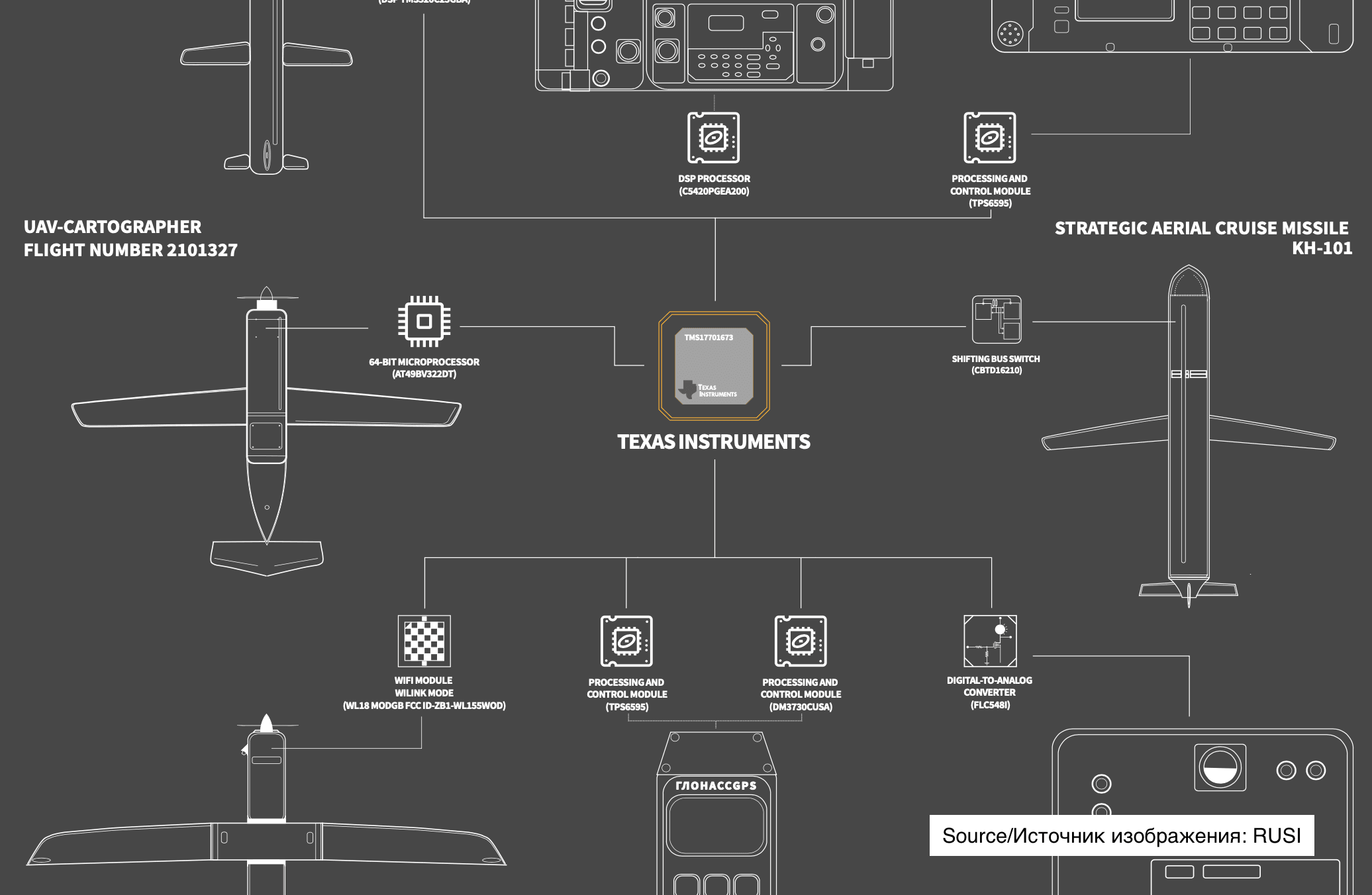
The Insider has identified over 6,000 companies that are directly violating international restrictions by trading with sanctioned Russian enterprises and defense industry suppliers, thereby profiting from the war in Ukraine. More than 4,000 of them are based in China, while many of the others are Turkish and Emirati businesses. Among their Russian counterparties are numerous entities that have already been placed on sanctions lists by the U.S., UK, and EU. Yet these sanctioned Russian companies continue to procure the goods they need from abroad.
China takes the lead
The Insider analyzed the foreign trade data of Russian companies for 2024–2025, examining shipments exceeding $10,000, and found that more than 6,000 foreign exporting firms supplied goods to sanctioned companies, defense industry counterparties, and directly to the defense sector. The compiled list is not exhaustive and only includes companies we were able to identify based on fragmented data. The infographic below shows the largest entities by export volume.
The Insider identified several hundred Russian entities that continued to purchase goods abroad after being placed under U.S., EU, or UK sanctions. These sanctioned Russian companies disregarded the risk of exposing their foreign partners, and those foreign partners, in turn, ignored the risk of bank restrictions (as banks typically do not look favorably on transactions with “tainted” entities).
The Insider also identified Russian companies that have not yet been placed on sanctions lists but, according to obtained domestic trade data, supplied goods and services to defense industry enterprises. These entities resold third-party products and also delivered their own goods that had been manufactured from imported components. The Insider established the names of all foreign companies that traded with them and is publishing the full list for the first time.
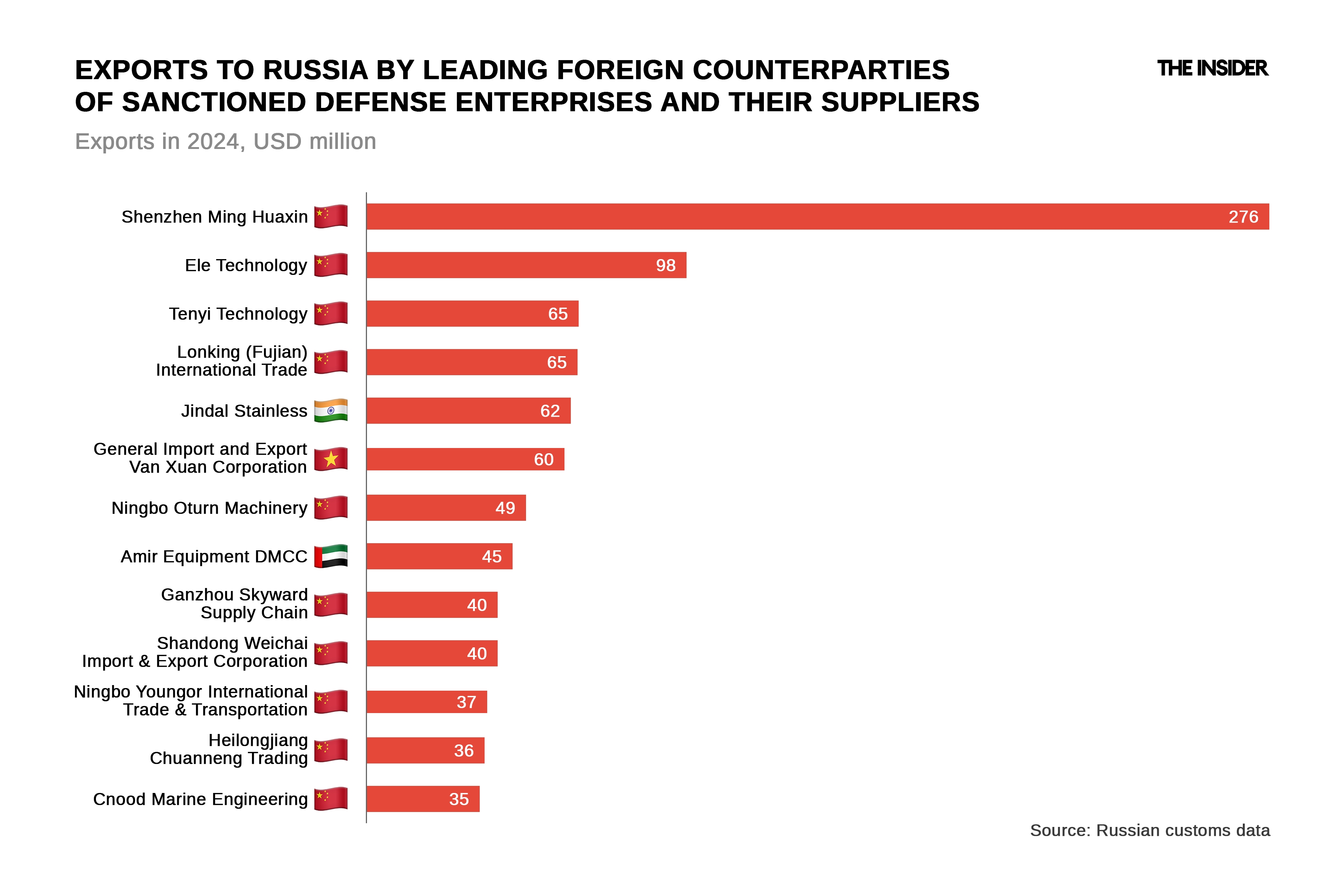
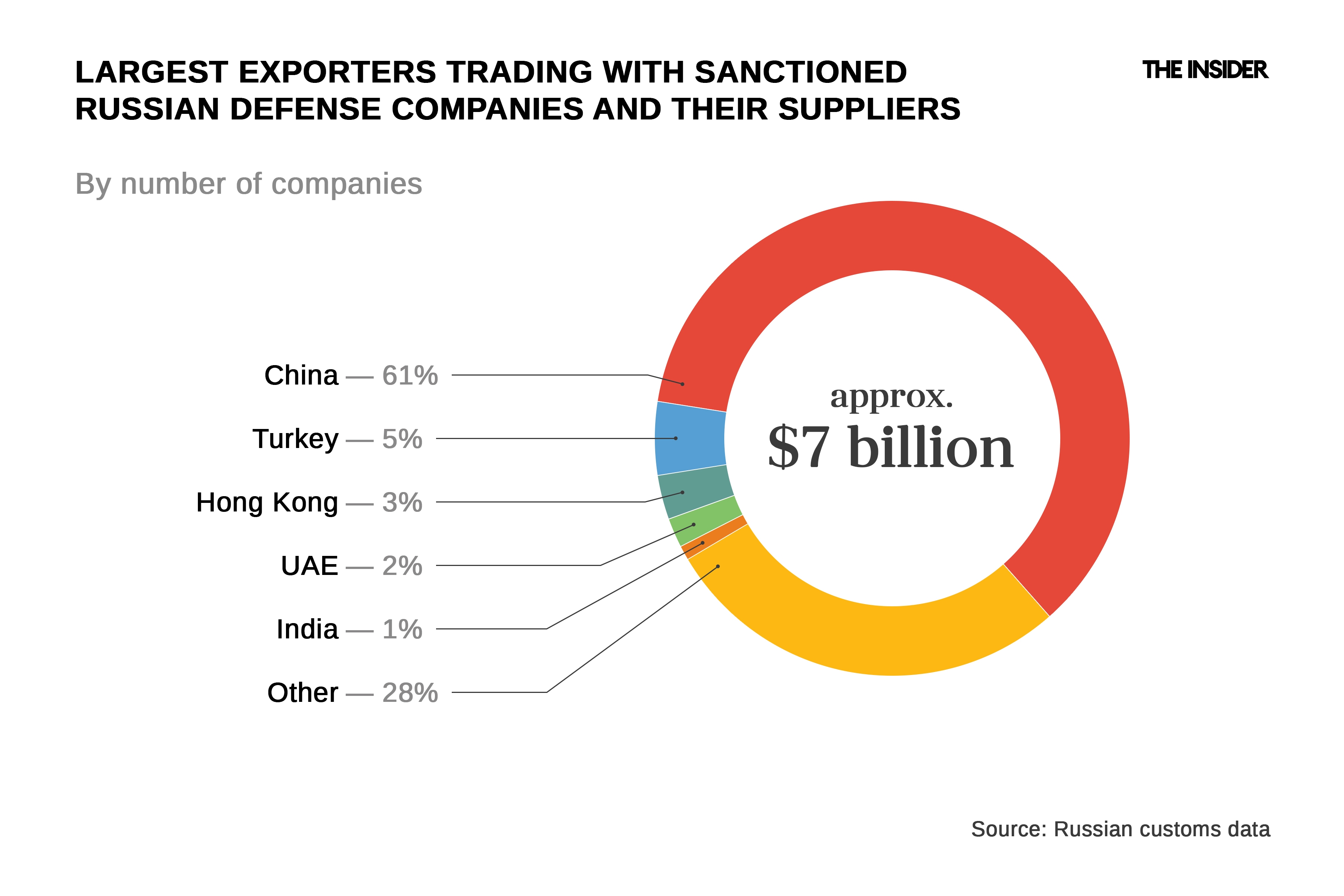
The majority of exporting companies are based in China (around 4000, including entities based in Hong Kong), Turkey (around 300), the UAE (around 120), and India (60). Together, they account for two-thirds of trade with sanctioned companies and defense-industry clients.
Examples of the goods that the largest-volume exporters sent to Russia for use by sanctioned companies or by suppliers of the military industry include:
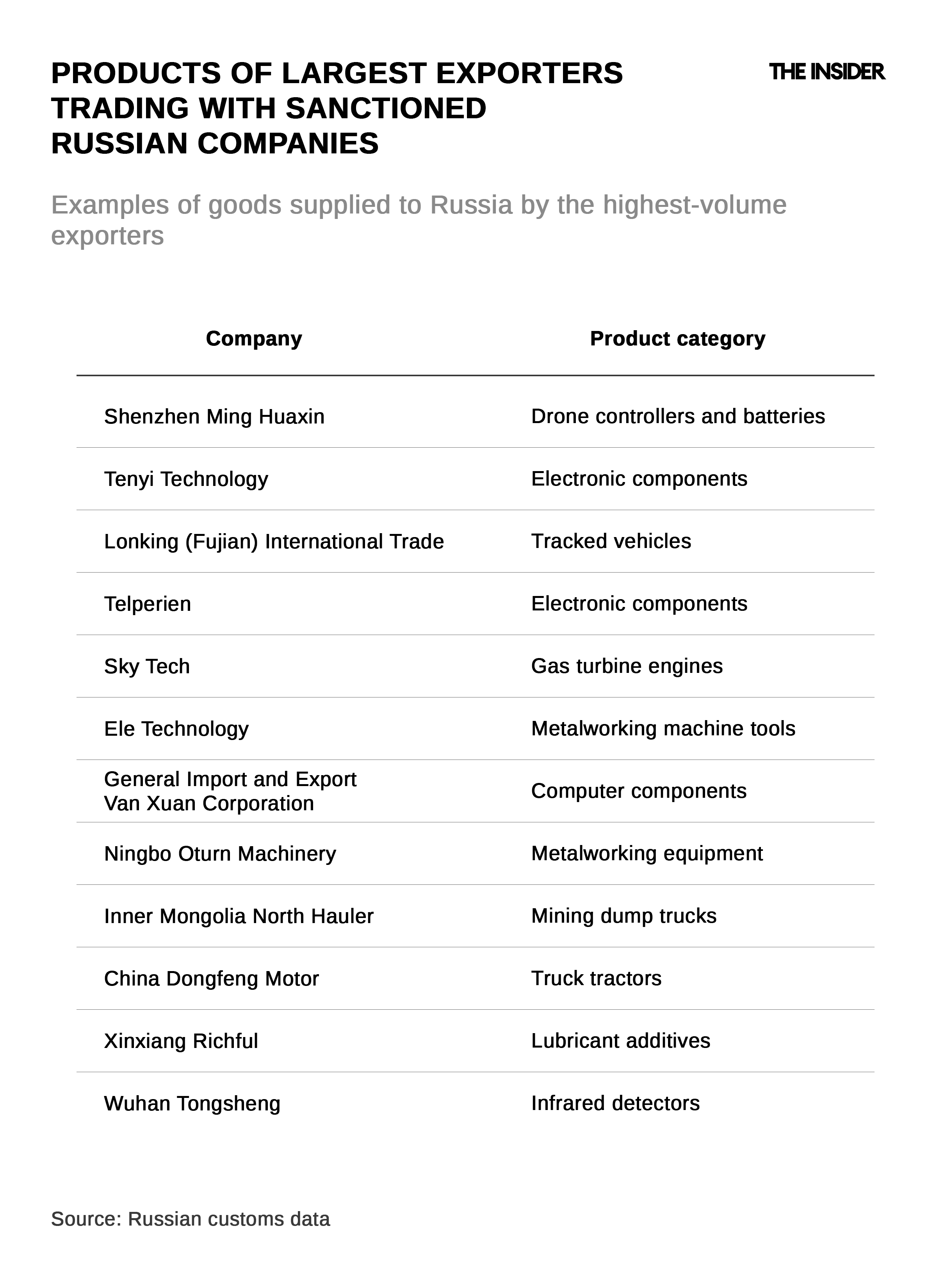
For example, the Chinese company Henan New Silk Road International Co., Ltd. delivered more than 100 turbojet engines worth about $3 million to the sanctioned Russian company Chipdevice LLC. With a thrust of 80 kilograms, these engines are fit for use on large military UAVs (to compare, the thrust of the Geran/Shahed drones is about 40 kilograms). The listed manufacturer of the product is a non-existent company, while the Chinese seller is not yet under sanctions.
Another example: the Isetsky Forging and Mechanical Plant, which produces titanium products, has increased its output nearly eightfold since the start of the full-scale war. It is therefore reasonable to assume that the enterprise has been focusing primarily on production for the military sector. The plant has purchased a high-speed hydraulic forging press, together with two forging manipulators and a charging machine — equipment used in the production of titanium alloys for a wide range of operations. Yet the supplier, Shanghai Yanghuang Trading Co., Ltd., is not under sanctions.
Titanium forging is an advanced industrial process that is complicated by the material’s poor thermal conductivity. In the defense sector, this technology is relevant for the manufacturing of armor components for vehicles and personal protective equipment.
Turkey supplies the most critical goods
While China ranks first in terms of the quantity of exporters and the total volume of trade with the Russian defense sector, the leader in terms of the quality of goods imported by sanctioned Russian companies and defense industry trading partners is Turkey. Sixty-eight percent of Turkish exports in the most technology-intensive categories (metalworking, non-consumer electronics, optics, equipment for metallurgy and energy, and non-household measuring instruments) consist of high-end equipment made in Europe, Japan, and South Korea.
Turkish suppliers delivered a vertical milling machine — a five-axis CNC machining center made by Leadwell CNC Machines — to Russia’s Mobula LLC, which sells machine tools to military plants. Such machines are used, for instance, by the Kalashnikov Concern, which produces small arms and ZALA drones.
Soyuz Engineering, another Russian defense industry supplier, went to Turkey to shop for a new five-axis high-performance vertical milling machining center — the R5A.6, from the Raffaello line manufactured by the Italian company Rema Control SRL.
Turkey has also been supplying Italian Seica PILOT V8 automatic printed circuit board testing systems to Sovtest ATE LLC, which works with Russian defense industry clients.
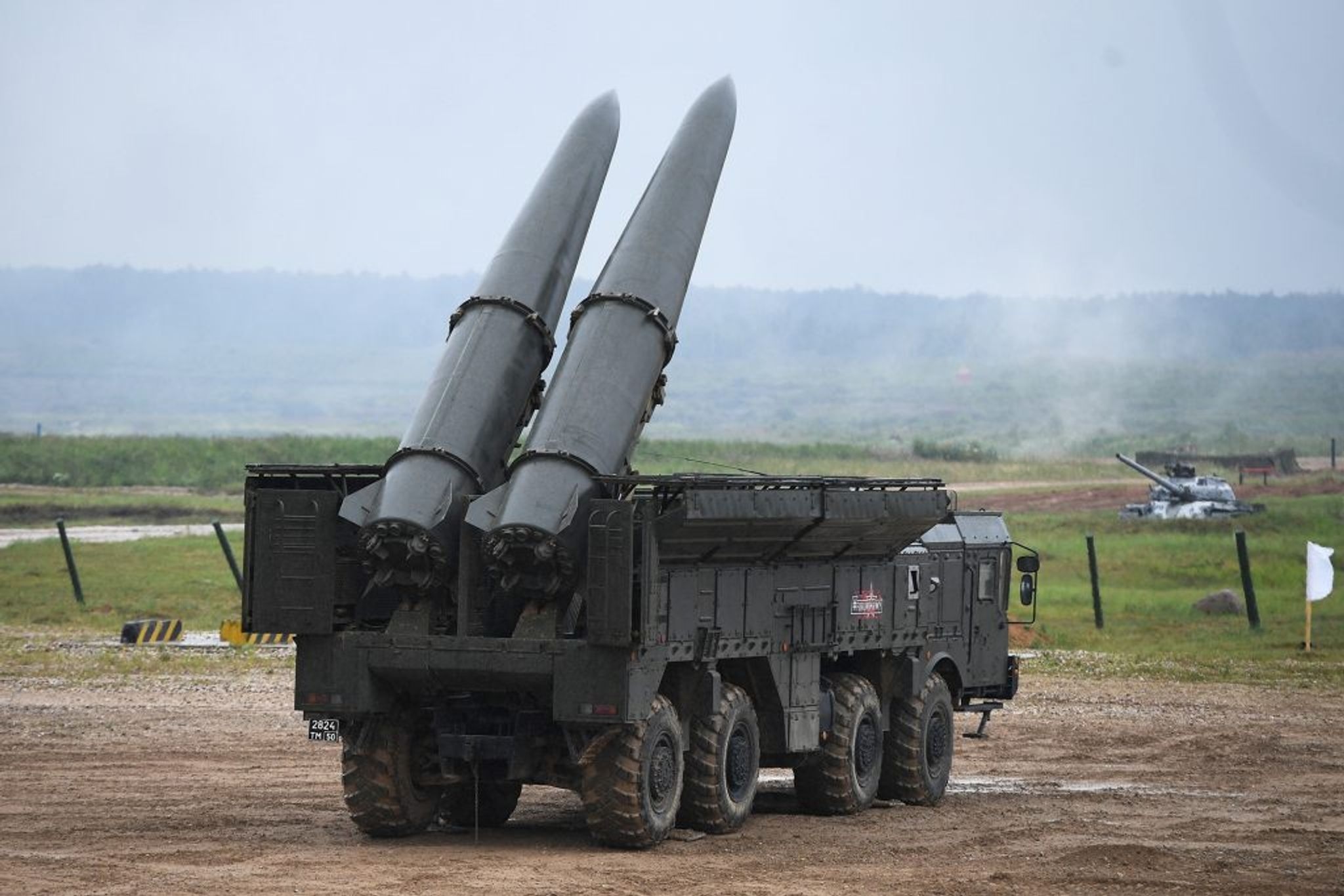
In addition, Russian company JSC Ruspolymet purchased via Turkey a used vertical CNC turret lathe with two tool posts and a turret head (model TITAN SC 43) produced by the Romanian plant Umaro. Ruspolymet is a regular subcontractor supplying titanium and steel rings to the Votkinsk Plant in Udmurtia, which needs metal rings for the production of Iskander missiles, among other products.
Reselling high-end Western equipment to Russia is a popular line of business in Turkey. Meanwhile, Chinese supplies are mainly characterized by their large overall volumes (while the quality of products they supply is also gradually increasing).
Why mass sanctions can work
Targeted sanctions that blacklist individual reseller companies cannot produce a significant effect. Instead, they merely lead to a shift in exports from one player to another. Many of these entities are created as shell companies in order to conduct trade with Russia; as a result, shutting them down creates only brief disruptions. However, if Western authorities were to sanction several thousand suppliers of the Russian defense industry at once, such a move could indeed inflict serious damage on the Kremlin’s military production.
First, sanctions imposed under such a mass approach would inevitably hit not only shell companies, but also firms with vital interests in the United States and Europe, incentivizing them to cease all transactions with Russian defense industry contractors.
Second, sweeping sanctions could significantly affect the activities of Chinese and Turkish banks — the only actors in this market that are actually capable of halting transactions between Russia and its suppliers. Assessing their risks, the banks may conclude that profits from suspicious clients trading with Russia are not worth the risk of potentially facing sanctions themselves.
Third, even if most sellers are small intermediary shell companies, a mass sanctions approach would considerably disrupt supply chains, especially if new sanctions lists are adopted faster than those chains can be reorganized. Even with the use of front companies, redirecting supplies to other legal entities takes time: the firms must be registered, bank accounts opened, new contracts signed, goods cleared through customs, and so on. In many cases, suppliers to the Russian defense industry are not prepared to replace intermediaries every few months. Therefore, Western authorities have the opportunity to outpace them so as to effectively choke off the flow of prohibited dual-use and military-grade imports into Russia.