For the first time since September, last month the Russian budget posted a small surplus — albeit thanks to the lagging effect of the brief oil price spike caused by the war in the Persian Gulf. Nevertheless, the overall deficit for the first half of the year remains at a record high. The authorities are scrambling for money to fund ever-growing military expenditure (46% of the budget) and for ways to rewrite the rules of public finance in their favor. The State Duma has given the government the green light to do whatever they see fit with state finances, sharply reducing the system’s predictability and leaving markets bewildered. Meanwhile, the Bank of Russia has definitively refused to lower its key rate and is unlikely to let the Finance Ministry borrow cheaply. All of this has translated into a falling stock market, declining investment, and a growing share of loss-making enterprises.
Why the budget deficit spooked the head of Central Bank
The Bank of Russia has slowed its key rate cuts: between June and September 2025, the rate was reduced from 21% to 17% in three steps of one to two percentage points each. Then, from October 2025 to May 2026, five more cuts followed, each of 0.5 percentage points. However, this past June 19, the reduction was the smallest yet — just a quarter of a point, from 14.5% to 14.25%.
Russian financial markets had expected more, and on June 22 the Moscow Exchange index plunged 4.23% in a single day, marking the market’s worst performance since the fall of 2022. By July 7, the index had dropped to 2,190 points, culminating a fall of 20% in just three months.
The Russian Central Bank explains its actions using the theory of aggregate demand and aggregate supply: since the government’s military-heavy budget deficit is increasing aggregate demand beyond expectations, the Bank of Russia must keep the money supply in check by being more conservative with key rate reductions. As Bank of Russia governor Elvira Nabiullina put it in her statement:
“Fiscal policy over the next three years will be more stimulative than what was built into our baseline forecast… The contribution of fiscal policy to money supply growth remains elevated and, given the revision of budget parameters, will continue to exceed our previous assumptions. If lending growth continues at such a high rate under these conditions, this may require us to pursue a tighter policy than envisaged in the baseline scenario. The combined impact through the fiscal and credit channels has already pushed money supply growth to the upper bound of our expectations, and even slightly beyond.”
Nabiullina’s statement that fiscal policy will be “more stimulative” for a full three years means, in effect, that the Central Bank expects the government will run deficits. So how long will the federal budget’s troubles drag on?
The trends in Russia’s federal budget are extremely unfavorable. From January to June 2026, revenues totaled 18.6 trillion rubles, with a year-on-year increase of 5.8%. Expenditure, however, amounted to 24.4 trillion rubles, an increase of 16%. The first-half deficit came to 5.7 trillion rubles — 70% more than the 3.4 trillion accumulated over the same period in 2025. It also exceeded the full-year 2026 deficit target by a factor of one and a half.
However, May and June were far better than the first four months of the year. From January through April inclusive, at least 1 trillion rubles were added to the federal deficit each month. In May, however, the deficit amounted to just 130 billion rubles, and in June, for the first time since September 2025, federal revenues exceeded expenditure, with the surplus coming in at 280 billion rubles. The June fiscal success is striking when compared with the previous year — when a deficit of 660 billion rubles was recorded. Over the whole of 2025, there were only three months with a budget surplus: March, August, and September. In 2026, March delivered a trillion-ruble shortfall, even if June came in positive.
For the full year 2025, the federal deficit was 5.645 trillion rubles — five times the figure initially set by the budget law. As a share of GDP, however, this amounted to just 2.6%.
The law of lawlessness
A great deal of uncertainty has been introduced by Russia’s hastily adopted 2026 law on the special features of the budget process (No. 195-FZ of 26.06.2026). Its draft was submitted by the government on June 8; that same day, it passed through the relevant committee and the legal department of the State Duma apparatus with a recommendation to adopt it immediately, without amendment. By June 10, the document had already been passed in its first reading, with no votes against (380 in favor, 70 did not vote). The law’s main purpose is to allow the Finance Ministry to adjust the budget process quickly, without the need for additional parliamentary approval or undue public scrutiny. This applies above all to the size of the deficit and borrowing levels (article 5 in the table below).
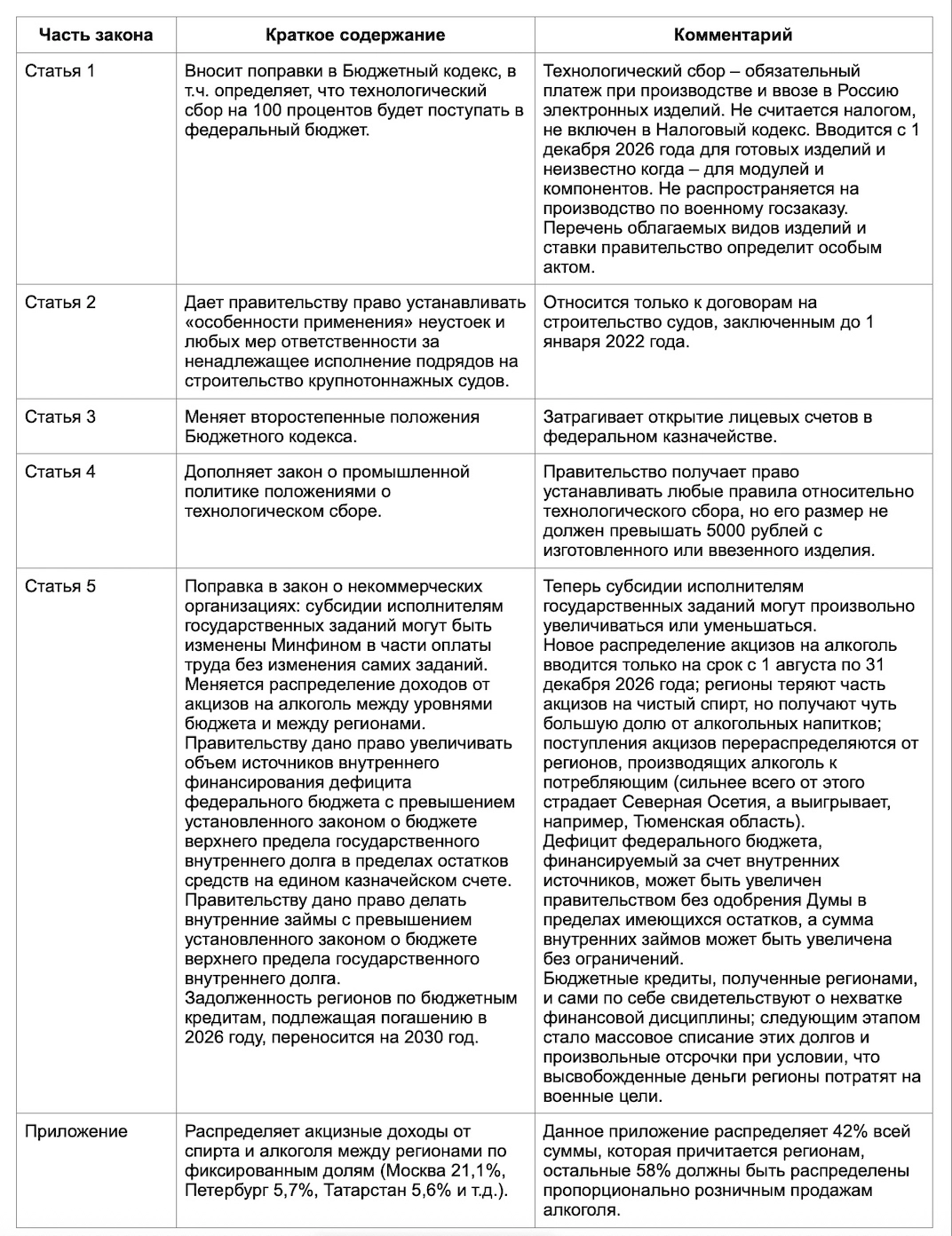
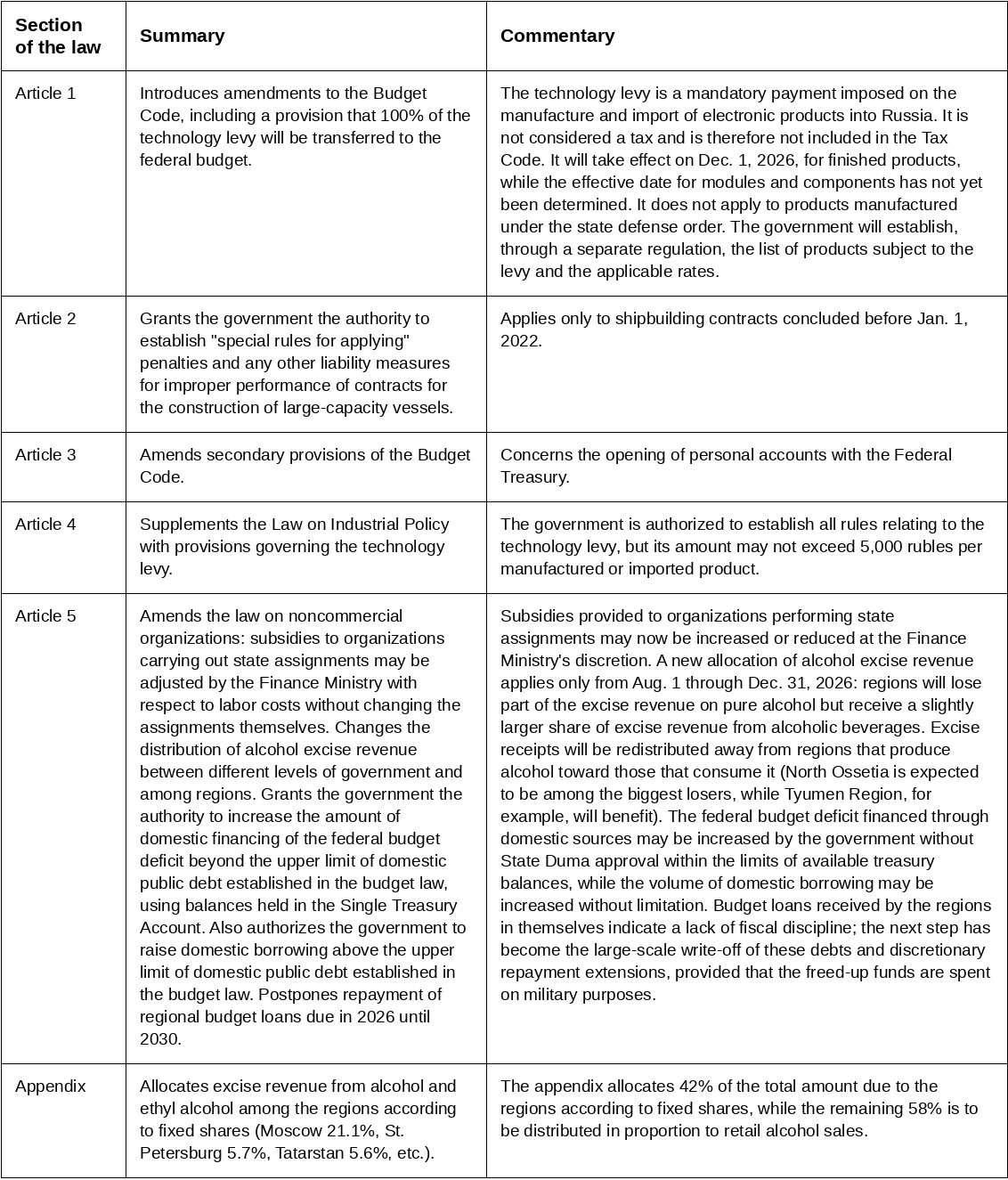
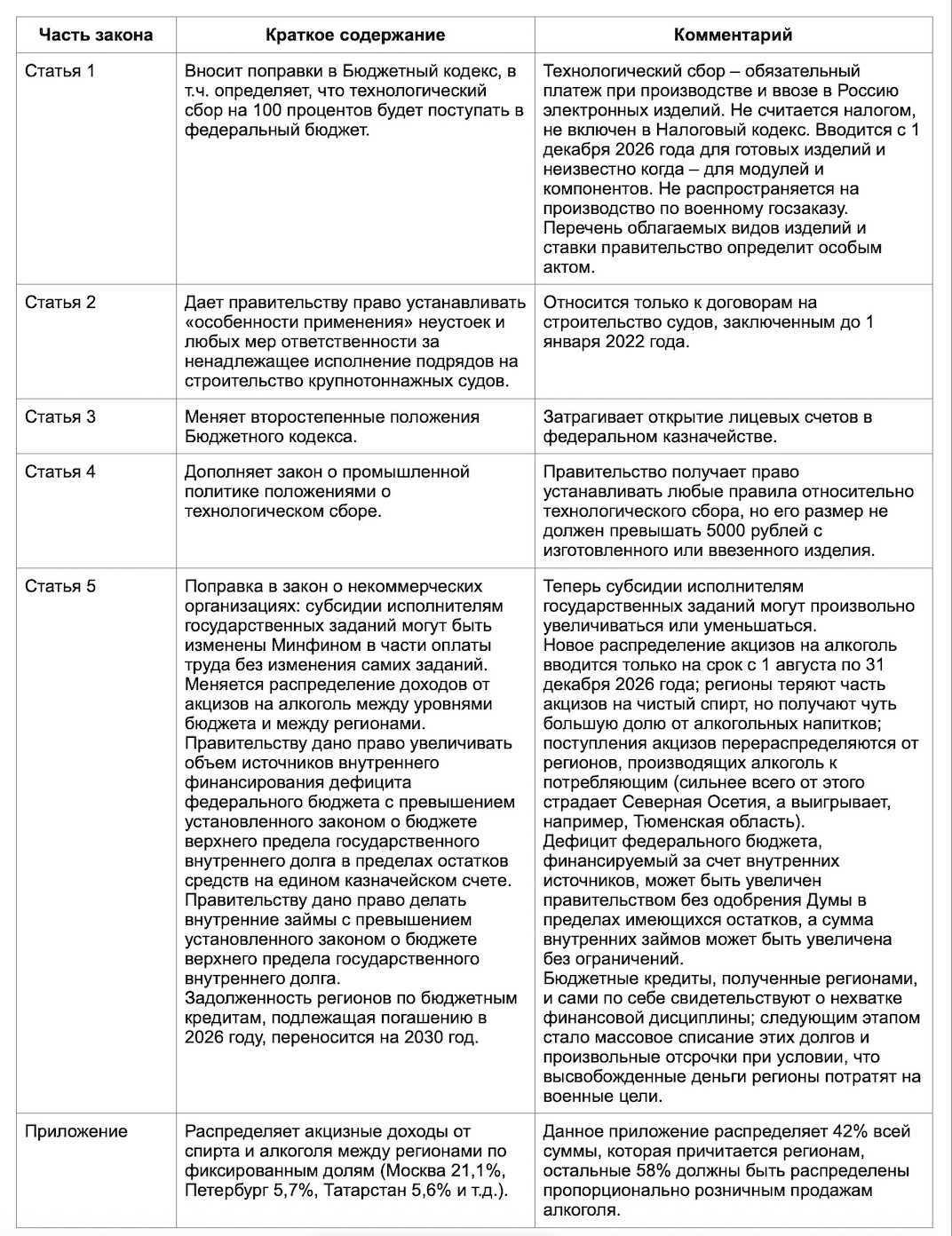
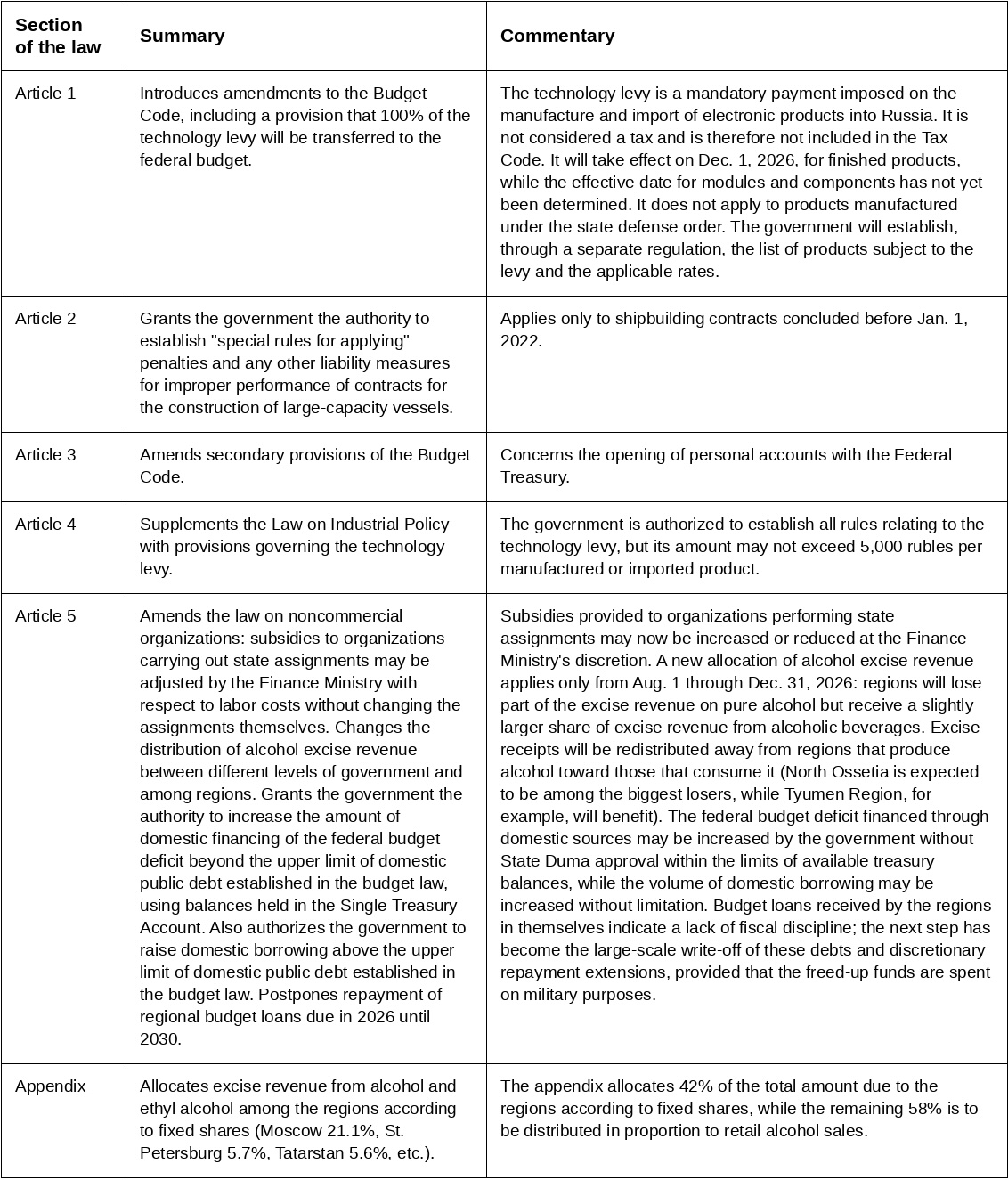
The general thrust of all the provisions included in the law is clear: to expand the government’s powers while weakening legislative and parliamentary oversight. The government will decide for itself how much to spend and borrow, what liability standards should apply to shipbuilders who miss delivery deadlines, and how much and on which products the technology levy should be charged.
Many of the measures are presented as temporary and short-term, applying only in 2026 or even for specific months only. For example, the change relating to alcohol and spirit excise duties is set to apply from August 1 to Dec. 31 of this year. The technology levy was initially due to be introduced on Sept. 1, but it has now been postponed to Dec. 1. It is also unknown what revenue, expenditure, and deficit figures will now be considered target levels for the federal budget (or how many times these benchmarks may change over the remaining six months of the year).
With a State Duma entirely subservient to the Kremlin, it would not be difficult to stage a formal ritual every month in which the government submits amendments to the current year’s budget and parliament rubber-stamps them without scrutiny. However, such ceremonies appear to have been deemed tedious — and perhaps even politically dangerous. A less public process for revising budgetary targets will attract less attention, raise fewer questions, and perhaps do less visible damage to the authorities’ credibility.
A less public process for revising budgetary targets will do less visible damage to the authorities’ credibility
For businesses and investors, however, this means greater risk and uncertainty. If even a government equipped with a powerful coercive apparatus cannot responsibly forecast its own revenues and expenditures for the next six months, what planning horizon can private individuals realistically have?
Oil and gas revenues: the Persian Gulf inferno brought no warmth
The war in the Persian Gulf and its aftermath significantly reduced the global supply of oil. This seemed highly advantageous for the Russian oil and gas sector, which was even partially exempted from U.S. sanctions from April 17 to June 17.
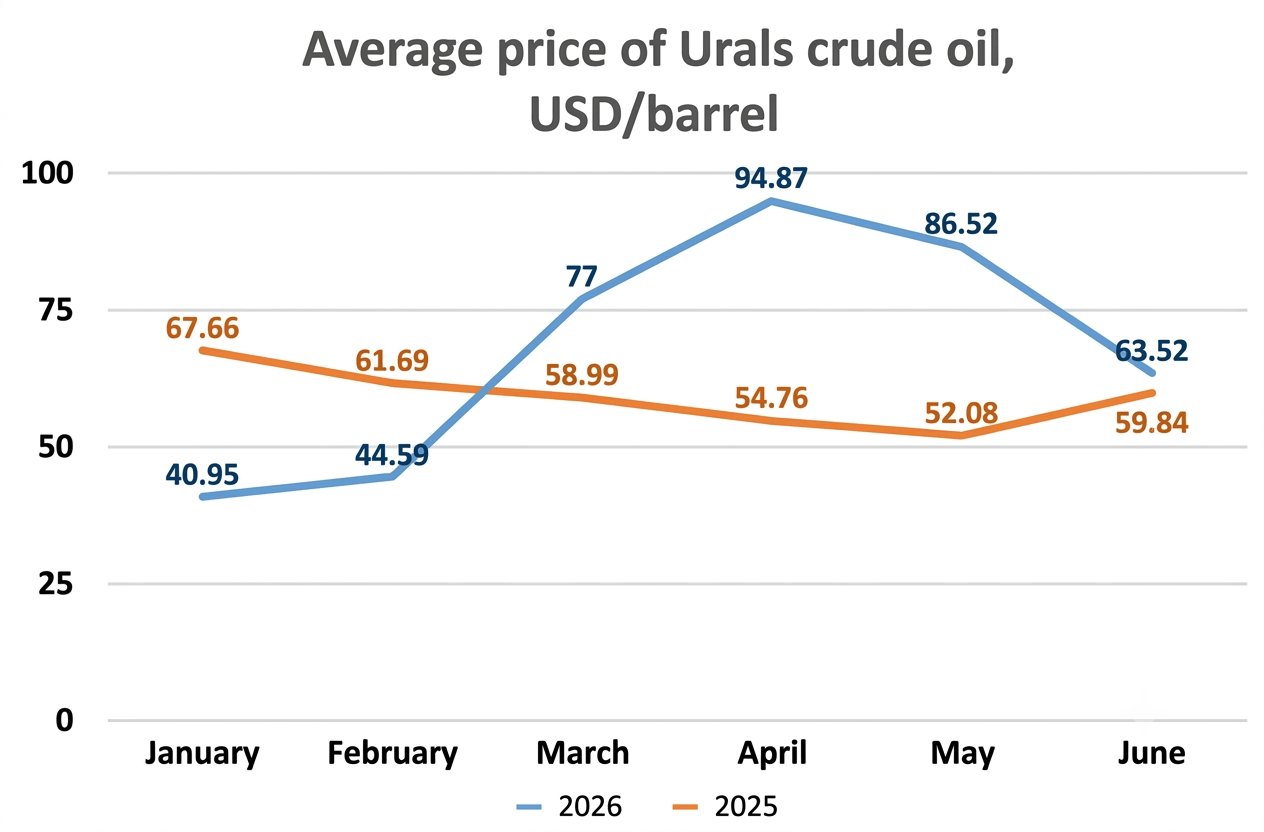
As a result, since March average prices for Russian Urals crude have remained above last year’s levels. However, the windfall is shrinking, with prices in June coming in at $63.5, compared with $59.8 a year before.
Source: Russian Ministry of Energy
And even the gains that Russia did receive were leveraged poorly. Oil and gas revenues for the federal budget in the first six months of 2026 amounted to only 3.7 trillion rubles — 23% below last year’s level of 4.7 trillion rubles. A breakdown by month shows that the most favorable month in 2026 so far was April, when Urals was selling for around $95 per barrel. That month, oil and gas contributed 856 billion rubles to the budget — yet in April 2025, when a barrel cost $55, the budget received 1.086 trillion rubles.
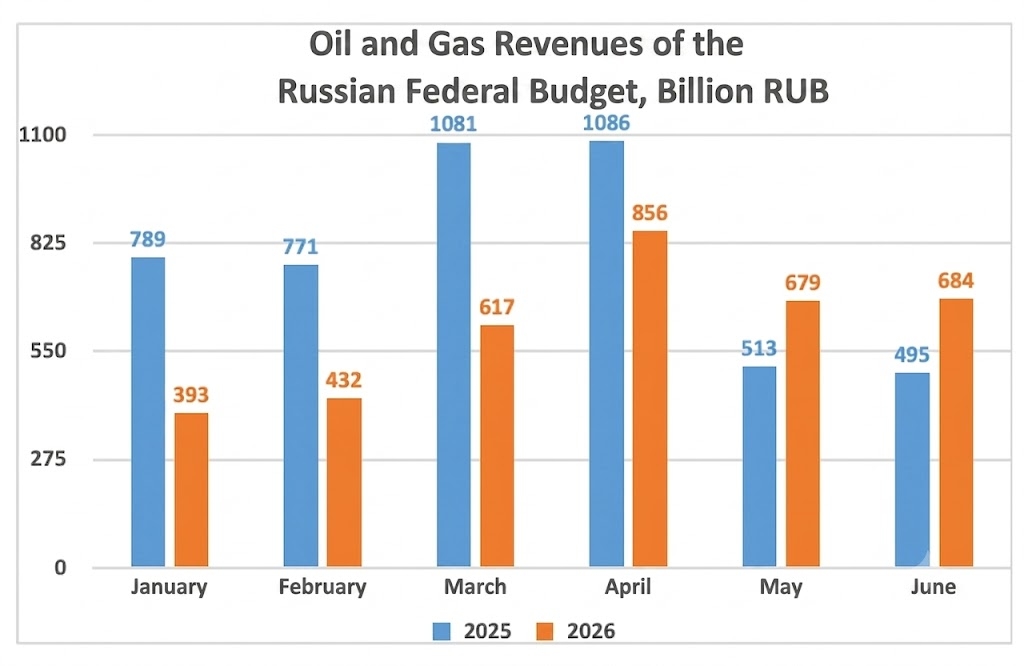
Source: Russian Finance Ministry
Two months ago, The Insider reported that in an optimistic scenario for the Russian budget, oil and gas revenues would come in at just under 1 trillion rubles per month — and in the inertial scenario, at 600–700 billion rubles per month. It is now clear that revenues exceeded 700 billion only in April, while in May and June they have held at precisely the inertial range. The relative settling of the situation in the Persian Gulf and Russia’s mounting losses from Ukrainian strikes on oil infrastructure offer little prospect of improvement.
Other revenues: the tax squeeze at full force
While oil and gas revenues are down, the intake from other sources was 16% higher from January to June 2026 than a year before. VAT receipts from production and imports (8.6 trillion rubles) grew 23%. Domestic VAT receipts for January-May (5 trillion rubles) were up 33%. Even corporate income tax collections came in nearly 8% higher than in the same period last year. Excise duties, however, showed no growth (—0.1%), and import-related revenues posted negative dynamics: -2% on import VAT (1.7 trillion rubles), and -11% on import duties (387 billion rubles).
The growth in domestic VAT revenues is explained by higher rates and an expanded scope of the tax. The new policy has harmed production, consumption, and investment in the country. A heavier tax burden, the diversion of people and resources from peaceful production to military needs, prohibitive regulatory measures, the erosion of property rights and legal guarantees, environmental unpredictability, and direct destruction and casualties are combining to hold economic growth to a minimum. According to estimates by the Ministry of Economic Development, GDP grew 0.2% in the first five months of 2026, and industrial production rose 0.4%, including 0.3% in manufacturing. Still, despite the obstacles, according to official data consumer spending was up 4.5% and real wages grew by 7.8%.
Meanwhile, the Ministry of Economic Development acknowledges that agricultural production in 2026 is not expanding, wholesale trade has risen only 0.6%, and freight transport volumes have fallen 1.1% (excluding pipeline transport, which experienced a 1.0% growth). Construction has fared even worse, with volumes dropping 7.4%.
The most troubling macroeconomic indicator has been investment in fixed capital. In the first quarter of 2026, investment was 14.3% lower than in the first quarter of 2025 — a clear sign of an acute crisis. Investment volumes have been falling for four consecutive quarters, and the pace of decline is accelerating.
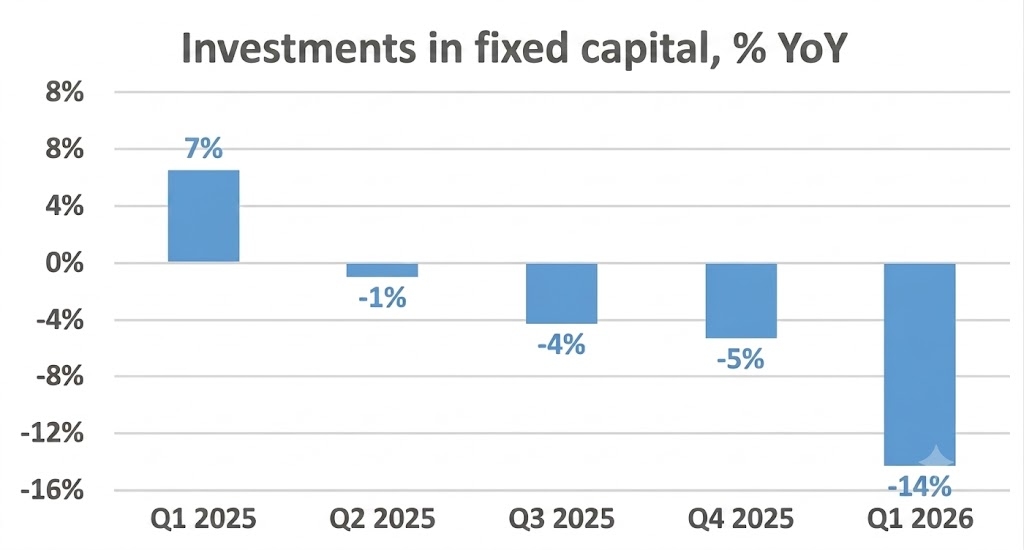
Source: Russian Ministry of Economic Development
In general terms, declining investment means the economy is creating fewer capital goods — buildings, machinery, tools, valuable inventories, and everything else that enables productivity growth. Such dynamics typically foreshadow a fall in consumer goods production (a category that includes weapons consumed by the state), as production cannot be sustained at previous levels without sufficient equipment.
That said, Russian statistics frequently classify expenditures that do not benefit any productive sector — such as money poured into outright loss-making projects that serve officials and politicians purely for prestige or window-dressing — as “investment.” In other words, this data should be treated with caution. When Rosstat was showing an “investment boom” in 2023—2024, that was not to be believed, and today’s “collapse” is — likewise — presumably not quite as extreme as it appears. And in any case, the official negative investment record has yet to be broken: in the first quarter of 2009, investment was 15.4% lower than a year earlier.
The present “collapse” in capital investment is likely not as extreme as it appears
The contraction is not confined to construction and transport but also affects multiple manufacturing industries: the metals complex (-4.7% for January-May 2026), light industry (-4.6%), woodworking (-8.1%), and coke and petroleum products (-4.9%). In the engineering complex, growth (7.6%) is driven exclusively by military subsectors, namely “other vehicles and equipment” (+31.3%) and “computers, electronics, and optics” (+2.1%). In the chemicals sector, overall growth of 1.4% is sustained entirely by the “pharmaceuticals and medical materials” component (+14.2% for January-May and +22.2% in May 2025 relative to May 2026). However, this “medical boom” most likely reflects the massive demand for treatment resulting from the war.
Although the state has extracted more corporate income tax from businesses than last year, the overall volume of taxable profits is not growing. The table below compares corporate income tax receipts with the profits and losses of Russian non-financial organizations for January-April over the past three years (excluding small businesses and the public sector).
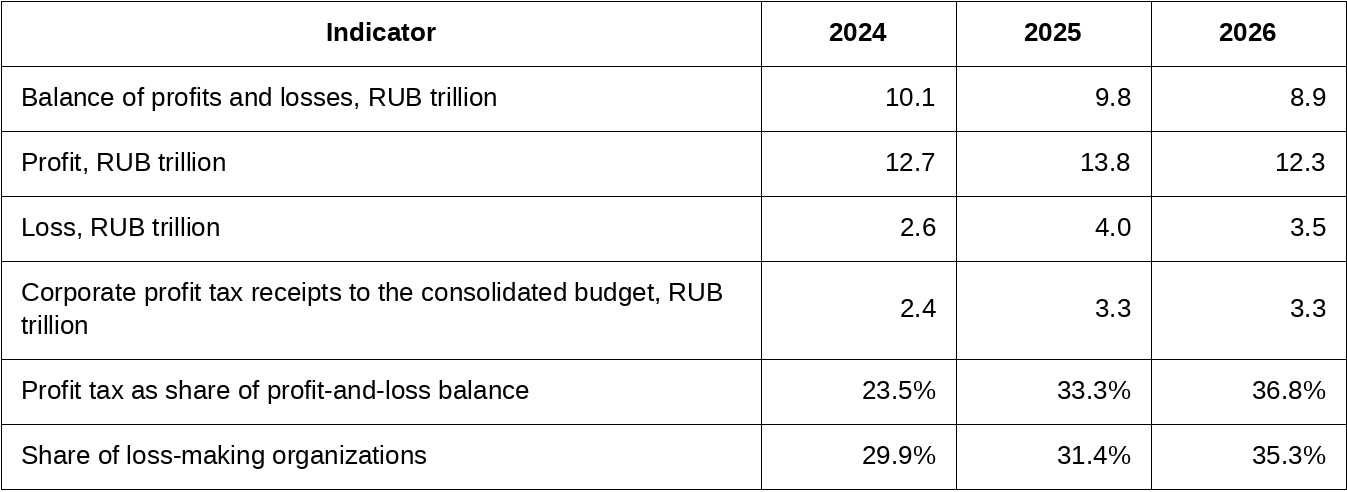
Sources: Rosstat [1, 2], Finance Ministry
The share of loss-making enterprises in the first four months of the year has been growing, from 30% in 2024 to 31% in 2025 to 35% in 2026. Increasing the tax burden against this backdrop can only worsen an already worrying trend.
The military spending tsunami is being concealed
With a six-month expenditure of 24.4 trillion rubles, average monthly outlays came to just over 4 trillion. In the past two months, the Finance Ministry has shown relative restraint, spending 3.19 trillion rubles in May and 3.56 trillion in June. However, this is likely the result of a seasonal effect: the Telegram analytics channel Tverdye Tsifry (“Hard Numbers”) noted that “expenditure for the second month in a row is staying at the upper end of the seasonal norm.”
Hypothetically, even if all remaining months of the year prove to be as successful as the anomalous June, full-year federal revenues would come to 41.7 trillion rubles and expenditure to 45.7 trillion, meaning a deficit of 4 trillion. In short, even if June’s favorable outcome were to be repeated six more times, the budget would still fail to meet its targets: expenditure of 44.1 trillion and a deficit below 3.79 trillion rubles.
The expenditure breakdown is known only from the Treasury’s report for the first quarter and only for the unclassified portion. At the level of the official functional classification, it is as follows:
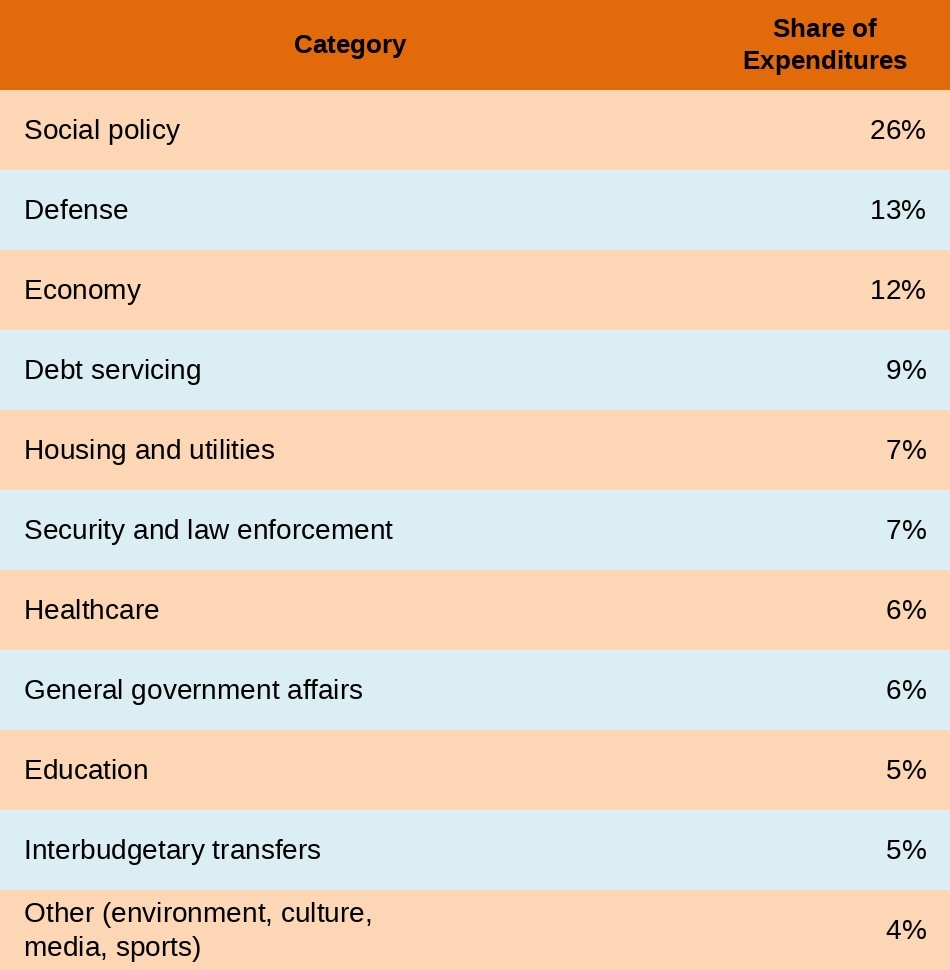
Source: Russian Treasury
The indicated figures understate military spending. For example, the “Social policy” section contains a great deal of genuine military expenditure, as roughly a third of it falls under subsection 1003, “Social support for the population,” which covers one-off signing bonuses for contract soldiers, social payments to mobilized personnel, monthly payments to combat veterans, payments for wounds and disability, and payments to the relatives of servicemen killed or deceased. All of these line items are front-loaded: by the end of the first quarter, they had already been disbursed well in excess of 25% of the annual allocation. The state program “Ensuring the country’s defense capability” accounted for 17% of unclassified expenditure — significantly more than the “National defense” section. In the first quarter, 37% of the full-year appropriation for this program had been spent.
In addition to open expenditure, there is also classified spending. The Treasury reported first-quarter federal budget expenditure of 7.93 trillion rubles, while the Finance Ministry put the figure for the same period at 12.89 trillion. The difference of 4.96 trillion represents expenditure whose purpose is classified, which amounts to an unprecedented 38.2% of total spending. If Janis Kluge’s estimate that 85% of classified expenditure has a military purpose is correct, then the military absorbed 46% of federal budget appropriations in the first quarter of 2026.
In the first quarter of 2026, the military absorbed 46% of Russia’s federal budget appropriations
This share of military expenditure is itself an all-time high. Comparing first-quarter figures only (traditionally the most militarized), military spending constituted 22% of all expenditure in 2022, 33% in 2023, 39% in 2024, and 41% in 2025 — compared to 46% now.
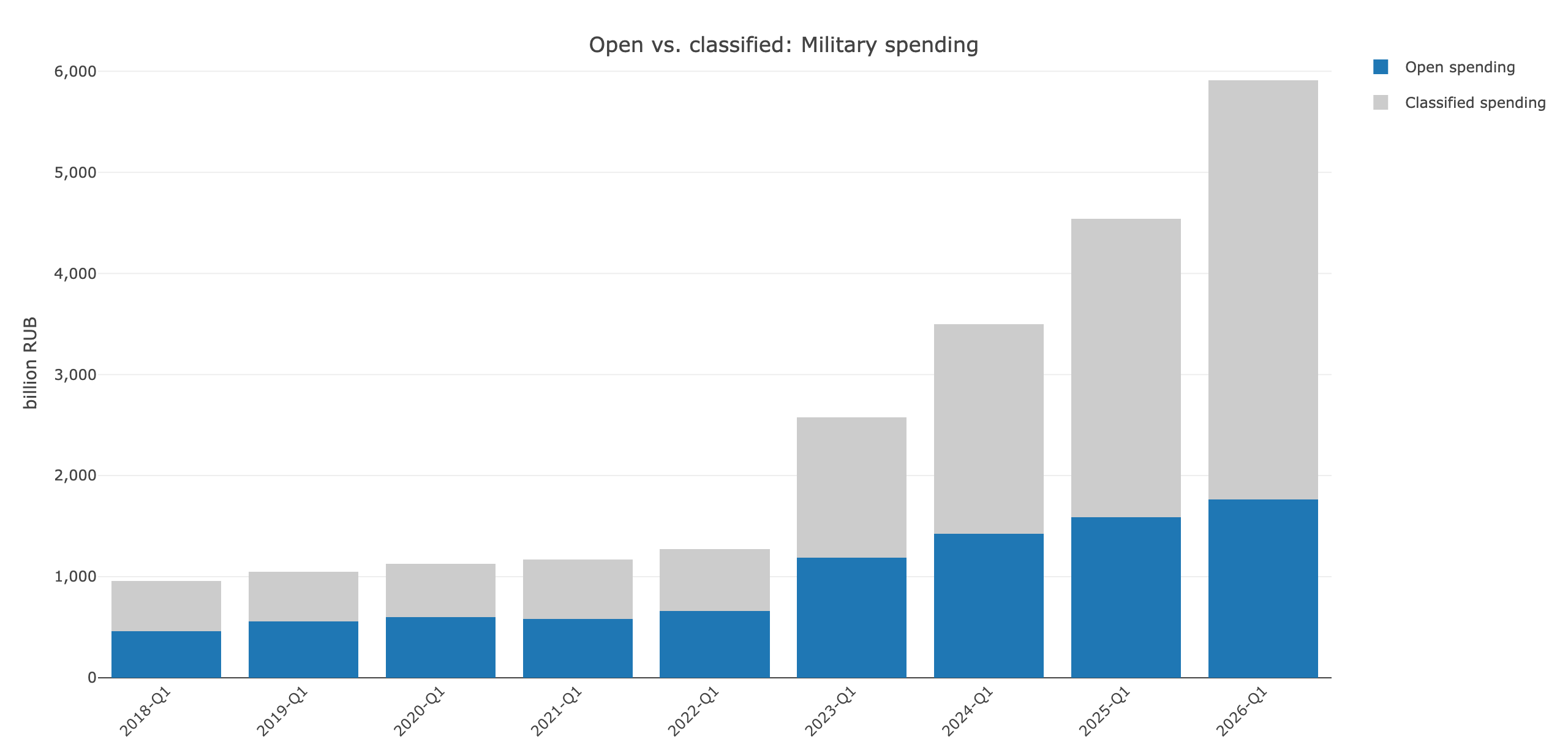
Source: analysis by Janis Kluge
These figures once again confirm a simple point: were it not for the war, Russia would have a far leaner budget, taxes would be lower, and income and output would actually be growing.
What to spend and where to borrow
Over the past six months, Russia’s official expenditure has exceeded revenues by 5.73 trillion rubles. Over the past 12 months, the accumulated deficit has reached 7.7 trillion rubles, and based on past trends, the budget looks to be on pace to reach a deficit of 9.6 trillion for 2026 alone. However, we cannot rule out that the Finance Ministry will repeat last year’s trick of “normalizing December expenditure.”
Traditionally in Russia, December accounted for around one-sixth of annual budget expenditure, rather than one-twelfth. In 2023 and 2024, December accounted for 17-19% of all spending, and it was reasonable to expect something similar in 2025. However, the Finance Ministry had promised in the first half of the year that this December spending anomaly would be less pronounced — and it kept its word. Last December accounted for only 13.4% of annual expenditure. In 2026, the Finance Ministry promises that the reduction of the December anomaly will continue.
However far the “normalization” of December goes, the month is still likely to see the highest outlays of the year. Given that in March and April 2026 the federal budget was spending 4.7 trillion rubles a month. Logically, given that this year’s overall level of expenditure is running around 16% higher than last year’s average, a similar trend should hold in December as well — putting December federal expenditure in the ballpark of 6.7 trillion rubles, plus or minus two trillion.
This range of estimates makes public finances a major source of uncertainty for the entire economy. Markets cannot see the size of the coming deficit or the sources of its financing. How much will the state borrow through federal loan bonds, and at what rates? No one can tell. And the special law that has been passed allows the government to keep the nation in the dark indefinitely.
A range of estimates of “plus or minus two trillion” makes public finances a major source of uncertainty for the entire economy
Beyond federal loan bonds, the government covers the deficit using liquid National Wealth Fund assets and Treasury cash balances. Other options — such as the sale of illiquid assets or external borrowing — are also available, but these are currently marginal. The NWF’s liquid assets stood at 4.1 trillion rubles on Jan. 1 and at 3.6 trillion on July 1, meaning that less than 10% of the federal deficit accumulated over six months has been financed from this source.
Domestic public debt rose from 30.65 trillion to 32.92 trillion rubles from the start of the year to June 1, covering roughly 40% of the federal deficit. The remainder has been covered by drawing down cash balances and reserves.
The Finance Ministry follows a distinctive seasonal borrowing schedule. In the first three quarters, it borrows relatively little and draws primarily on its reserves. In the final quarter, it borrows at least as much as it did in the preceding nine months. Reserves are then replenished, and total annual borrowing roughly equals the annual deficit. This pattern held in both 2024 and 2025, and the first half of 2026 looks to be following a similar pattern.
There are occasional deviations, however. In 2023, the borrowing season fell on the second rather than the fourth quarter — a shift explained by fairly straightforward logic: from mid-2023 onward, the Bank of Russia began hiking up its key rate, marking the start of an unfavorable period for borrowers. Clearly knowing in advance that rates would rise, the Finance Ministry wisely placed the bulk of its bond issuances before this moment.
So where do things stand as of mid-2026? The Bank of Russia is warning against expecting any meaningful rate cuts, causing anxiety in the financial markets in the process. And the Finance Ministry, unlike in 2023, has not placed the bulk of its bond issuances ahead of the usual schedule, meaning it will have to borrow later and at a higher cost. In this context, the Central Bank’s statement that it must tighten its policy to offset the government’s excessive looseness sounds quite confrontational.
The state of Russia’s federal budget cannot yet be described as a crisis, but its management is unpredictable and subject to arbitrary decision-making. The budget is destabilizing the economy and generating uncertainty, choking off any positive momentum under the weight of military spending and a chaotically growing national debt. In the meantime, the permanent emergency mode is wearing down the productive capacity of the vast majority of economic actors.