On October 30, the Court of Arbitration for Sport (CAS) ordered the International Ice Hockey Federation (IIHF) to readmit Russian teams to its tournaments, ruling that their exclusion was unlawful. It might have seemed that Russia had scored a major victory. In the end, however, the situation for Russian athletes only got worse. They faced such a wave of opposition that athletes in other sports were also affected, including Russians who had already been competing as neutrals and were preparing for the season’s major events. The paradoxical situation arose because Canada and Finland stood their ground. Other countries are now threatening to deny visas or refuse entry even to Russians who already have all of the necessary documents, while the European Union is banning athletes from competing under the Russian flag altogether.
At first, the main challenge seemed to be the technical implementation of the Court of Arbitration for Sport’s (CAS) decision. In its statement, the court immediately identified the next five tournaments Russia was due to enter, starting with the junior world championship in December. The first round of discussion focused on the details of how to fit Russia back into the schedule.
However, the focus has since shifted to much broader questions, and as a result, less than a month after the decision, the outlook for Russian sport as a whole is considerably worse. Countries involved in hockey tournaments have rapidly tightened what had until then been a fairly accommodating approach toward athletes with Russian passports.
The first consequences will be felt in winter sports, where the season has already begun or is about to start. In figure skating, there is a substantial risk that Russians will miss the world championships in Tampere, Finland, and the European championships in Lausanne, Switzerland. Skiers risk missing every race: all the World Cup stages are in Schengen countries, and the world championships are in Falun, Sweden.
The situation is similar in speed skating, short track, freestyle skiing, bobsleigh, skeleton, and other disciplines. Ahead of the 2026/27 season, Russian athletes received many times more neutral athlete statuses as they had for the previous season, including for the Olympics. But visa problems may prevent them from using those exceptions.
In addition, the European Union included a ban on competing under the Russian flag in its 22nd sanctions package, which is expected to be adopted soon. In several sports, athletes will likely have to switch back to neutral status depending on the country hosting the event.
A legal counterattack and a conflict of interest
To win its case, the Russian side hired the major law firm Curtis, Mallet-Prevost, Colt & Mosle, headquartered in New York with an office in Geneva. Its lawyers found a weakness in the International Ice Hockey Federations' (IIHF) decisions and successfully challenged them.
The IIHF formally justified the ban by saying it could not ensure safety and order at a tournament involving Russia, but it failed to substantiate its position in court. The CAS found that the arguments were not backed by sufficient evidence.
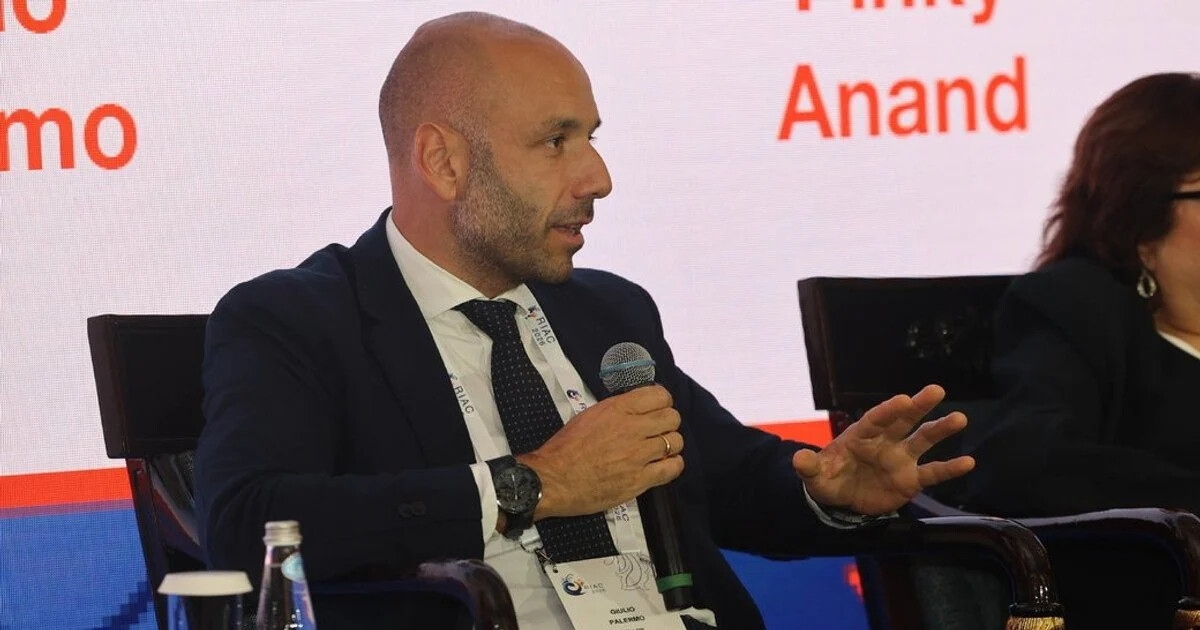
There were, however, suspicions of a conflict of interest among the arbitrators. The CAS panel that unanimously ruled in favor of Russia’s national hockey teams consisted of Italian Giulio Palermo, Egyptian Ismail Selim, and British arbitrator Mark Howell.
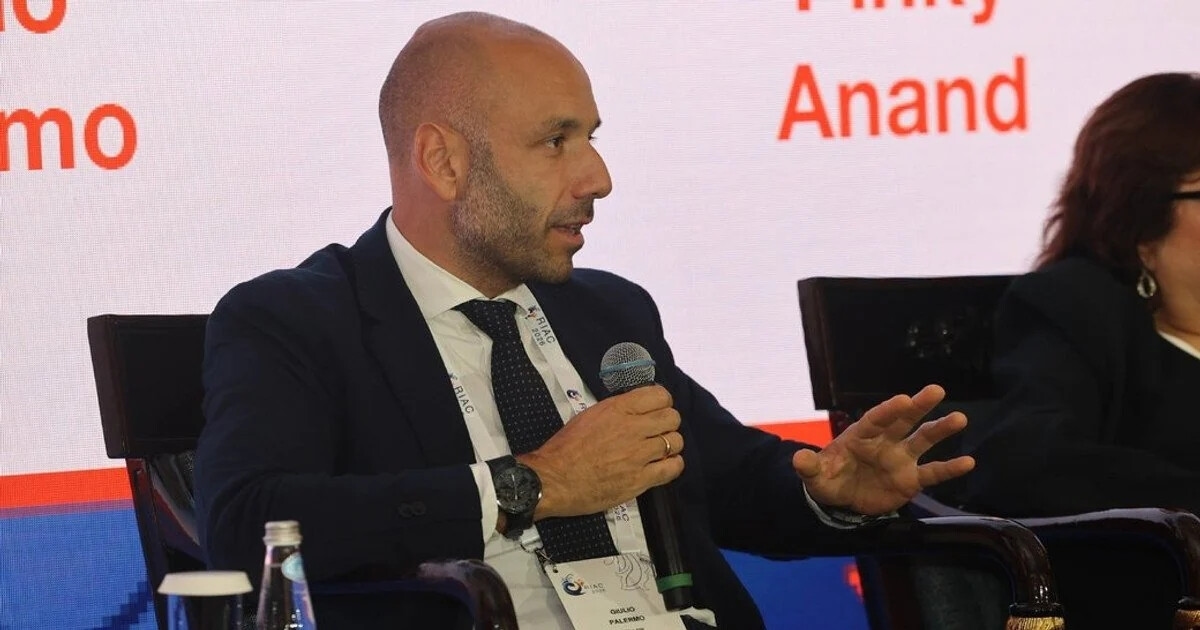
A week and a half after the ruling, the Swiss outlet Inside Paradeplatz reported that Palermo, the panel’s chair, had visited Moscow in late September. While there, he spoke at the Russian International Arbitration Congress as part of a session titled “The History of Arbitration: Who Writes, Who Tells, Who Believes.”
CAS told Inside Paradeplatz that the Italian had traveled to the Russian capital at his own expense and that at the time of his trip he did not yet know that he would hear a case involving Russia. He was appointed to it on Oct. 9, and the two hearings took place on Oct. 23 and 26.
Another arbitrator, Egypt’s Ismail Selim, had worked with Russian organizations for several years, speaking at an event in Moscow as late as May 2025. In 2022, during his time as head of the Cairo Regional Centre for International Commercial Arbitration, he signed an agreement with the Russian Arbitration Association.


Against this backdrop, the IIHF asked for the panel members to be disqualified. On Nov. 16, CAS said it had referred the request to the arbitration panel, but three days later it declined to consider the matter due to the fact that the arbitrators had already issued and published their decision.
The importance of legal technicalities in cases of this kind is illustrated by the nearly simultaneous rejection of Russia’s bid to reinstate its senior curling teams. On Oct. 13, CAS agreed that Russia’s return would create more practical problems for the federation: other countries might refuse to play Russians or host tournaments, while the athletes themselves would face difficulties obtaining visas.
These cases show how divided the international sports federations are and, as a result, how vulnerable they are to a coordinated strategy of appeals to CAS by Russia. The Russian side has won favorable rulings in table tennis, skiing (whose federation governs six Olympic sports), luge, and hockey. In figure skating, speed skating, and short track (which share one federation), as well as rowing, artistic gymnastics, and rhythmic gymnastics, Russia filed CAS appeals, and its athletes were granted neutral status before the court issued any formal ruling. This may have resulted from informal agreements with governing bodies, which were pressured by the risk of losing the cases.
The international sports federations are divided and, as a result, vulnerable to a coordinated strategy of Russian appeals to CAS
Although sports federations face the same problem, each handles it in its own way. The International Olympic Committee (IOC) can only recommend a course of action to federations; it cannot direct or oversee them. The IOC responded to the latest wave of problems for Russian athletes only with a statement saying it would help them obtain visas, while immediately stressing that the matter remained “the sovereign responsibility of individual states.”
It is hardly surprising that Russia’s lawyers found grounds to challenge the bans. In the early spring 2022, mere weeks after the start of Putin's full-scale invasion of Ukraine, sports organizations made their decisions to exclude Russian athletes in a rush, usually relying only on their own lawyers and on statutes that did not cover situations of this kind.
Why the court ruling did not help hockey players
After the CAS ruling, Russia’s first tournament was supposed to be the junior world ice hockey championship in Canada, scheduled for late December and early January.
The IIHF did take steps to implement the court decision. For example, Norway received notice that it would be relegated to a lower division, as Russia was due to take Norway’s place on the schedule.
But Canada immediately announced that it would not allow any Russian national team to compete on their territory while the war in Ukraine continued. On Nov. 11, Canada’s Secretary of State for Sport, Adam van Koeverden, confirmed that Russian hockey players could not take part in the junior world championship, emphasizing that his country would not only refuse to issue visas to Russians, but would also bar any team consisting of hockey players who already held valid Canadian visas. (Russia had considered pursuing the latter option in the event that visas were denied.)
Such a team could indeed have been assembled: more than 40 eligible players under 20 are currently playing in Canada’s three top junior leagues alone. The Canadians understood this too and ruled out that possibility in advance, with van Koeverden clarifying that exemptions allowing neutral participation apply only to individual athletes — tennis players, for example, compete in Canadian tournaments without restrictions — not to national teams.
In addition to opposition from the hosts, potential opponents — Sweden, Finland, the Czech Republic, Switzerland, and Latvia — were also publicly refusing to play against team Russia. Among the tournament's ten participants, only the U.S. and Slovakia were willing to take the ice against Russia.
In the end, the decision to admit Russia to the junior world championship stood for just over two weeks. On Nov. 15, the IIHF announced that Russia’s team would not take part in any form, citing Canada’s government restrictions. An IIHF representative later said the organization would soon consider other options for Russia’s return.
For now, however, it is impossible to get details directly from the IIHF. On Nov. 17, hackers attacked the federation’s website. Its homepage displayed a shot of Ilya Kovalchuk after his winning goal against Canada in the final of the 2008 world championship , along with the message: “Afraid to face Russia? You banned the only team you can’t beat.”
The next tournament Russia could theoretically enter is the women’s under-18 world championship in the Czech Republic, scheduled for Jan. 8–16. But the Czechs said they would not allow players into the country even if they held valid visas issued by other EU states, because a government ban prevents athletes from representing Russia in the Czech Republic.
In addition, Russia could still theoretically appear are the men’s under-18 world championship, which begins in the U.S. on April 22, and the senior world championship, which starts in Germany on May 14. The IIHF had approved a formula for Russia’s return in advance: Russia would keep its ranking, which would put it back in first place, and replace the second team promoted from the lower division. Based on the 2026 results, that team is Ukraine.
Russia would replace the second team promoted from the lower division; based on the 2026 results, that is Ukraine
Ukraine had not played in the top division of the world championships for exactly 20 years. Its last appearance was in 2007, when the tournament was played in Moscow. From then until May 2026, the Ukrainian team remained in lower divisions. Now its place is in doubt because of Russia’s possible return. The coincidence could clearly give countries that refuse to play Russia at the senior level an additional argument to refuse to take the ice.
Russia’s participation would also be financially disadvantageous for the IIHF: five sponsors have threatened boycotts or cuts to their financial support if Russia is admitted. Finland’s Nokian Tyres announced that it would end its partnership with the 2027 world championship. Sweden’s AJ made a similar statement. Germany’s Strauss said it would consider withdrawing and certainly did not want its logo displayed at such a tournament. Czech companies Škoda and Tipsport announced they would review their sponsorship terms.
Under the current circumstances, it is almost impossible for the IIHF to organize Russia’s return to the world championship. Moreover, according to Canadian journalist Gord Miller, the federation has launched an internal investigation into the fact that the Russian Ice Hockey Federation included teams from the occupied Ukrainian regions of Donetsk and Luhansk in its youth tournament system.
If the IIHF confirms this, it could provide a new basis for exclusion. The Russian federation, for example, makes no secret of the fact that teams from the Donetsk hockey school, registered in Donetsk, play in Russian children’s tournaments. If used, this would be a much stronger justification for excluding Russian hockey from international tournaments than the safety risks, which are very difficult to substantiate.
Border checkpoints
But the bigger problem for Russian athletes is that a court victory in hockey has led to increased scrutiny of their compatriots in other sports. Finland has taken the toughest line. Seven Russian figure skaters had been set to compete at the Grand Prix in Helsinki on November 20–22: pairs Anastasia Mishina and Aleksandr Gallyamov, Aleksandra Boikova and Dmitry Kozlovsky, and Ekaterina Chikmareva and Matvei Yanchenkov, as well as men’s singles skater Evgeni Semenenko. They had Schengen visas, but a special order from the Finnish authorities made it impossible for them to enter the country.
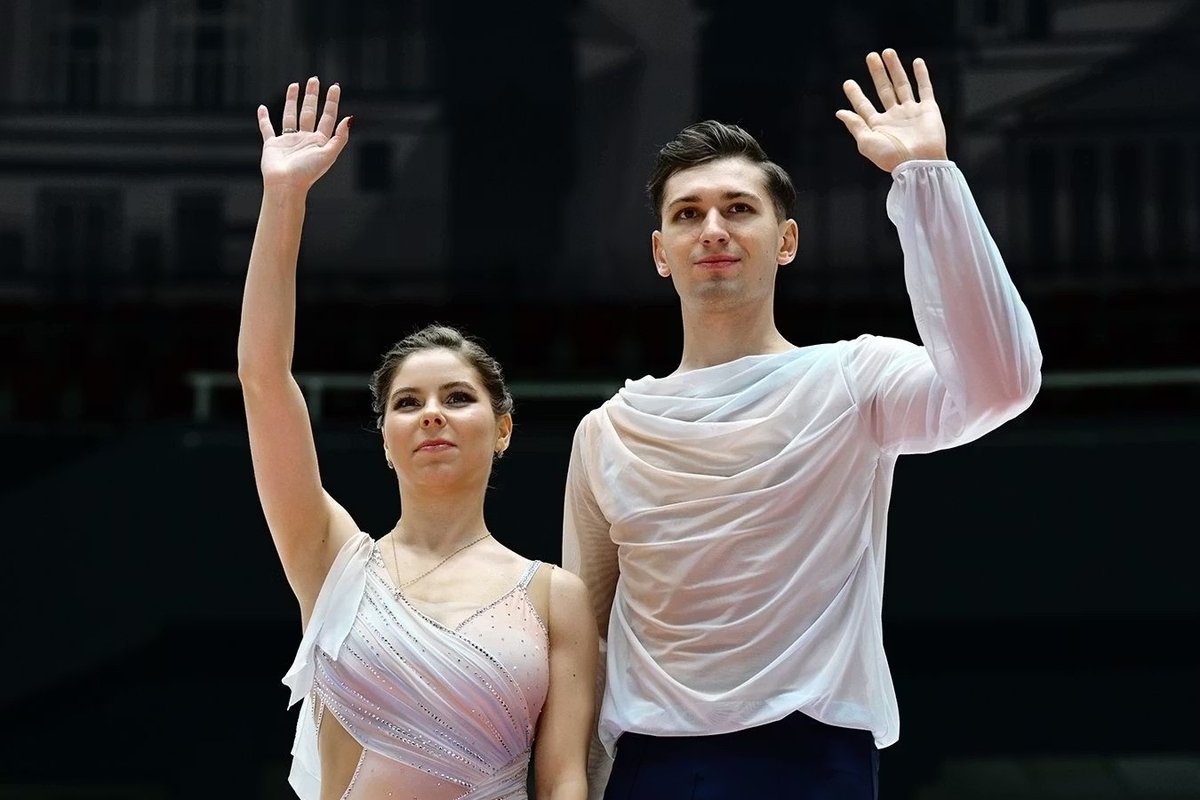
The order was published on Nov. 12 and took effect on Nov. 16. None of the skaters managed to enter before it came into force.
In another twist, Helsinki only began hosting a figure-skating Grand Prix after Russia’s full-scale invasion of Ukraine, when the annual event was moved from Moscow. By missing the Finnish event, the three pairs and Semenenko lost their chances of qualifying for the Grand Prix Final.
As Finnish Foreign Minister Elina Valtonen explained: “As long as Russia continues its war of aggression, Russian athletes have no place in Finland. Their entry into the country would pose a threat to Finland’s international relations.” She later clarified that she supported a unified EU decision under which all countries would act in unison to refuse visas to Russian athletes.
Finland’s foreign minister made no secret of the fact that the urgent measure was intended to keep Russian athletes out
Similarly, in its comment to The Insider, the IOC publicly regrets the restrictions facing Russian athletes, but says it cannot influence the governmnets of independent states. The Insider also asked CAS, which said athletes cannot appeal entry bans through the court because such matters fall outside the jurisdiction of sports arbitration.
Finland’s position, as a key country for winter sports, could upend many Russian plans for the 2026/27 season. The figure-skating world championships — the season’s main event — are scheduled there for March 17–21.
In addition, World Cup stages in cross-country skiing, moguls, and ski jumping will take place in Ruka and Lahti, Finland, through mid-February. Several Russian athletes have received neutral status from the International Ski and Snowboard Federation in all these sports.
The nearest example is the opening stage of the ski season in Ruka, November 27–29. A large Russian team, including coaches and staff, had planned to travel there. But it is quite possible that only Savely Korostelev, Sergei Volkov, Natalya Terentyeva, and Darya Nepryaeva will be able to compete, as they arrived in Finland before the restrictions on taking part in local competitions came into force.
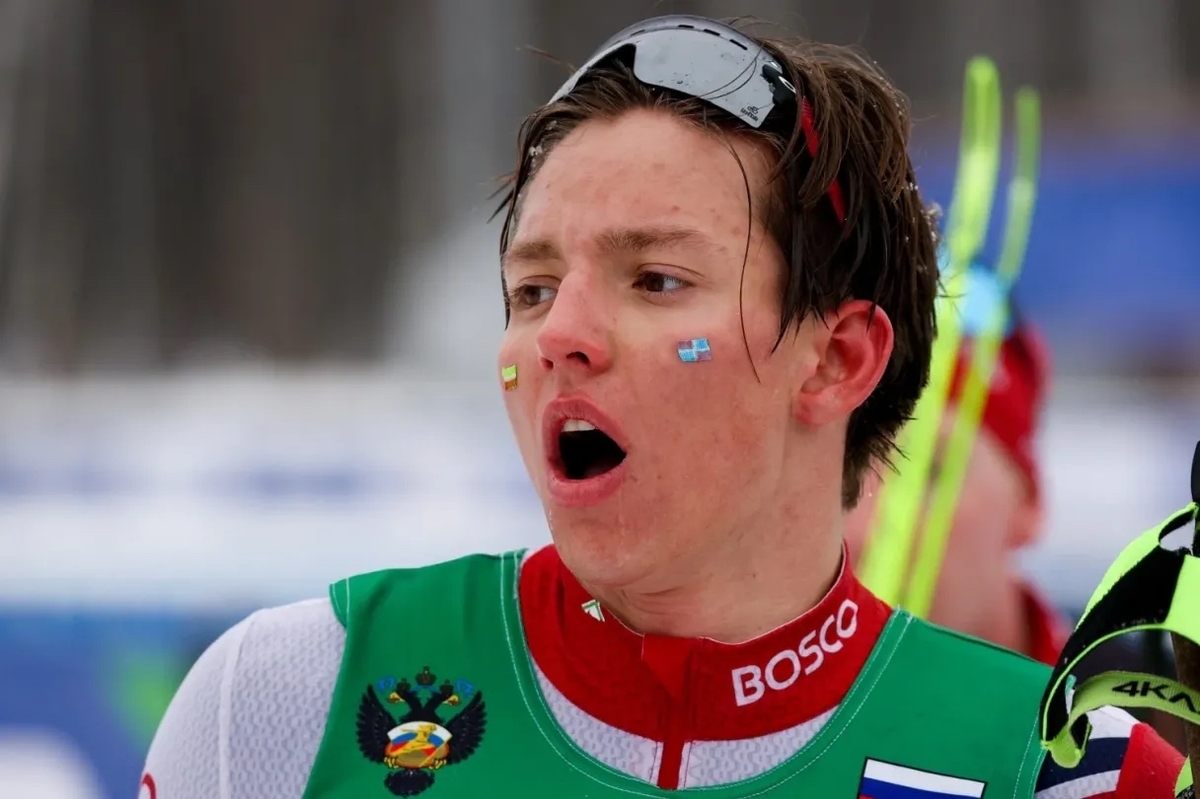
It is not known how long Korostelev, Terentyeva, and Nepryaeva’s visas are valid, but that does not matter: Finnish officials have already said Russian athletes would not be allowed to compete on Finnish territory. On November 21, Matti Pitkäniitty, deputy head of the Finnish Border Guard, explained to Norwegian outlet Dagbladet how it would work:
“The new rules also apply to Russian athletes who have already entered Finland. The purpose of their trip is no longer a legal basis for staying in Finland. If they risk staying in the country, it could make it harder for them to obtain visas in the future. We will inform them that their stay in Finland is no longer permitted and issue an official decision declaring them unwelcome, requiring them to leave Finland.”
In the end, however, the Finnish authorities allowed them to compete, ruling that the decision did not apply to Korostelev, Nepryaeva, or Terentyeva.
Sergei Volkov, another neutral skier, also competed at preseason events in Finland and Norway. He has a European residence permit, as he lives and trains in Slovenia. But according to Finland’s Yle, the Russian Ski Federation did not enter him in the competition. Its head had previously said the decision was still under consideration.
The ski World Cup schedule also includes cities in Norway, Sweden, Switzerland, Germany, France, and Italy. None of these countries allows visa-free entry, so travel documents are certain to be a key issue throughout the season. The same is true, with minor variations, in most other winter sports. Major snow-sport events tend to take place in the same or nearby locations.
Sweden, for example, has already said that the presence of Russian athletes in the country could pose a threat to international relations, and has developed special measures to keep them out. This matters particularly for skiers because their world championships will be held in Falun, Sweden. Norway and Estonia take the same position.
The International Ski and Snowboard Federation told The Insider it would help Russian neutral athletes reach competitions, but noted that it could not directly influence countries’ political decisions.
With Canada’s prime minister having already stated the country’s position on visas for hockey players, Russian Sports Minister Mikhail Degtyarev said:
“We have a Plan B. We won’t reveal it, but everything will be fine for Russia and bad for Canada. It will lose the right to host international competitions. The IOC has just carried out a reform: it reinstated the Russian Olympic Committee and lifted all restrictions and all previously adopted discriminatory recommendations. It also amended the Olympic Charter, calling on all international federations to avoid politicization and make decisions independently of political — and, importantly, public — pressure.”
It seems Degtyarev revealed the very Plan B he said he would keep secret: Russia will seek, including through the courts, to have major tournaments moved to countries that guarantee visas and entry for Russian athletes.
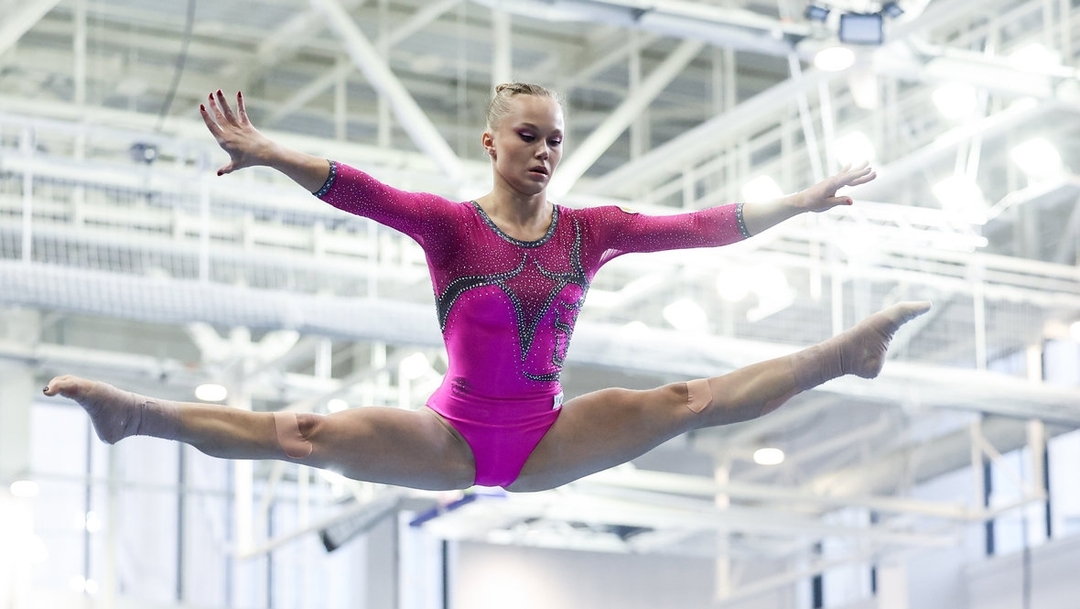
There have been several similar episodes in recent months. Before the European artistic gymnastics championships, Croatia initially denied visas to nine athletes. Then, three days before the event, it reversed several decisions and allowed Olympic champion Angelina Melnikova to enter at the last minute. She won five medals there, three of them gold. Two months later, the Netherlands denied visas to Melnikova and two other gymnasts ahead of the world championships, even though Melnikova had been a two-time world champion in 2025. The reason given was that some Schengen countries considered the gymnasts a threat to their international relations.
Over the summer, Poland denied visas to Russians set to compete in the junior and youth world championships in canoe slalom. In October, Russian karate athletes who had traveled to the youth world championships as neutrals were expelled from the country. They had entered Poland by land with visas issued by Hungary. In November, it emerged that Romania was refusing visas to Russian taekwondo athletes. Russia’s Foreign Ministry summoned the Romanian ambassador over the matter.
There is one example of a major tournament being moved away from a country that refused to issue visas to Russians: in January, it became known that the European fencing championships would be held in France rather than Estonia. But that decision was made five months before the tournament. Clearly, the larger the event and the more extensive the preparations, the more lead time is needed even to consider such an option.
In addition, travel to European countries could become much more complicated for Russian athletes if the EU adopts its 22nd sanctions package. On Nov. 16, EU foreign policy chief Kaja Kallas warned that it could include strict restrictions aimed at keeping Russian athletes out of competitions across the bloc.
Later, Politico published a letter to European Council President António Costa and European Commission President Ursula von der Leyen, signed by the prime ministers of seven countries: Denmark, Estonia, Finland, Lithuania, Latvia, Poland, and Sweden. The leaders argued that easing restrictions on Russian athletes sends the wrong signal, that it will be seen by the Kremlin as a victory, and that it would amount to accepting Russia’s war of aggression. The letter also recalled the European Council’s position that the participation of Russia and Belarus in sport and cultural events should not be normalized until peace is established in Ukraine.
Since the review of the Visa Code cannot begin before the first quarter of 2027, they proposed acting immediately:
“The issue is so urgent that it cannot wait until the new Code enters into force. The recommendations should set a clear course to prevent non-essential travel by Russian citizens to the EU, including for participation in European sports competitions. We recognize the member states’ own powers in this area, but call on them not to issue visas to Russian and Belarusian athletes, as this would allow them to take part in sports competitions in the EU.”
On Nov. 23, European Commission President Ursula von der Leyen emphasized in a statement announcing the package:
“Sports events cannot be a platform for propaganda. That is why we are introducing a ban on Russian teams and athletes competing under the Russian flag. We propose banning the display of Russia’s official symbols. We will also restrict financial flows from Russian sponsors to cultural and sports organizations based in Europe.”
This means the conditions for Russian athletes will become stricter in sports including aquatics, judo, wrestling, fencing, volleyball, and handball, where international federations had previously allowed Russians to compete without restrictions. For example, the 2027 world aquatics championships will be held in Budapest, and dozens of Russian athletes are expected to compete, including the national water polo teams. They competed under the Russian flag at world events in 2026, but the new restrictions will prevent them from doing so again — even if they somohow manage to obtain visas to enter Hungary or another EU country and compete under neutral status.