Russia’s medical universities have failed to fill their state-funded residency programs, with nearly 40% of targeted-training places remaining empty. Some universities have also struggled to fill fee-paying residency places. The shortfall follows the adoption of a new law that, starting with the current academic year, effectively binds future doctors to compulsory service. Residents in state-funded programs must sign a targeted-training contract before completing their studies; if they do not fulfill its terms, they must repay the state for their training. Those paying tuition must also spend between 18 months and three years working under a mentorship scheme. The reform’s authors sought to address staff shortages at outpatient clinics and hospitals, but the new rules may make the shortage of medical specialists even worse.
The 2026 admissions campaign at Sechenov First Moscow State Medical University failed to fill nearly a quarter of its residency places. It had initially announced 702 state-funded and 1,018 fee-paying spots, for a total of 1,720 (not including places for foreign students). In September, the university reported that only 1,317 students had enrolled in residency programs, and 198 state-funded places still remained vacant as of Aug. 10, at least 205 fee-paying students must also have failed to enroll.
Other universities have likewise been unable to fill their state-funded places — the result of a sweeping reform of medical education that came into effect in 2025.
The new serfs
The 2025 law stipulates that anyone admitted to a state-funded residency program after March 1, 2026, must sign a targeted-training contract before completing their final assessment. In effect, doctors will have to spend several years after graduation working wherever the state decides, choosing only from among the options offered to them. Medical institutions are already explaining the new rule to applicants in blunt terms: “all state-funded places are now targeted.”
Second, those admitted under a targeted-training quota who fail to complete their required period of service must repay the state three times the cost of their education. At Sechenov University, for example, a fee-paying residency in internal medicine currently costs at least 616,000 rubles ($7,331) a year. But a doctor trained under a targeted contract who refuses to fulfill its terms would have to find 3.5 million rubles ($ 41,654) in a hurry.
The terms are less stringent for students in ordinary state-funded programs who sign a contract while still studying. They need only reimburse the cost of their education, with no penalties. They also have more choice, as applicants entering under a targeted-training quota select a specific offer from the outset, sign a contract with the sponsoring organization, and know where and under what conditions they will have to work. Those admitted through the general competition have up to two years before they must sign a contract, potentially giving them greater freedom: they commit to a workplace only closer to graduation, and only if a suitable offer is available.
Third, all young doctors will be subject to mandatory mentorship, requiring them to work for 18 months to three years at a hospital or clinic covered by the compulsory medical insurance system. Those admitted under targeted-training quotas and other state-funded residents will be exempt because they already have service obligations, but graduates of fee-paying residency programs will now face restrictions on their career choices as well.
The bill’s authors stated in its explanatory note that the aim was to address staff shortages. The document cited a shortfall of 29,000 doctors and 63,000 mid-level medical workers. The Health Ministry had also complained that around 35% of graduates who received publicly funded medical degrees subsequently chose not to work at state or municipal healthcare facilities.
The reform is forcing recent graduates to change their plans. MSK1.RU reports the story of a high-scoring Sechenov University graduate who asked to remain anonymous. She had planned to pursue a state-funded residency in gynecology but ultimately opted to pay tuition, considering it the “safer” choice:
“Enrolling in a state-funded program means signing a targeted-training contract. You have to find a suitable offer yourself on the [state] website within the two years of your residency. There is absolutely no guarantee that you’ll be able to secure a contract with a hospital in your home city. Moving away may not be a problem for some people, but in my case, it was the main reason I turned down a state-funded place.”
How many places went unfilled
The admissions campaign has faltered, and some universities have had to hastily convert targeted-training places into ordinary state-funded places. At Tver State Medical University, for example, 161 of the 166 state-funded places were initially reserved for targeted training, leaving just five open to general competition. In the end, only 118 students were admitted under the targeted-training quota, and the remaining 43 places had to be reassigned to the general competition.
At Krasnoyarsk State Medical University, only 179 admitted students signed targeted-training contracts, against a quota of 207. However, another 46 students were admitted through the general competition, allowing the university to fill all its state-funded places.
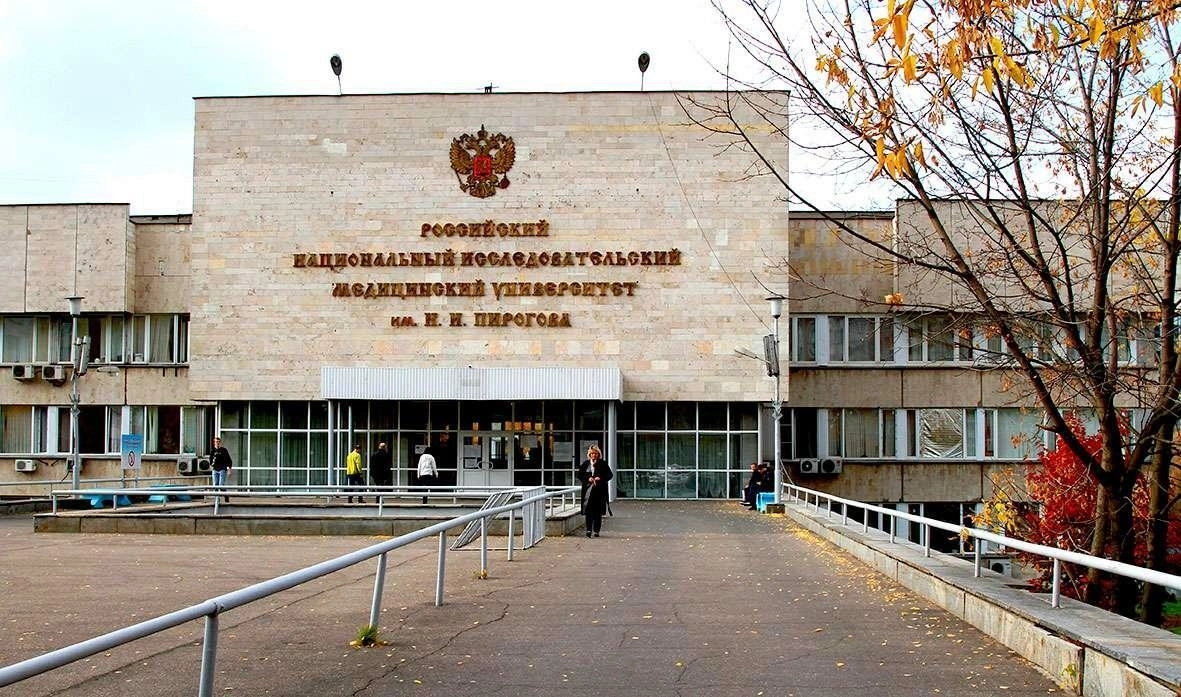
Other universities failed to meet their state-funded enrollment targets altogether. Before the admissions campaign, Moscow’s Pirogov University announced 974 state-funded residency places: 704 for targeted training and 270 for the general competition. After the main admissions round, 289 places remained vacant. The university opened an additional admissions round, but that still failed to fill them all.
According to the university’s final official admissions statistics, 820 students enrolled in state-funded programs, against the target of 974. Even after the additional admissions round, one of the country’s largest medical universities had 154 unfilled state-funded places, amounting to 16% of its original target.
Another example is Mechnikov North-Western State Medical University. At the start of the admissions campaign, it offered 513 state-funded residency places, 407 of them reserved for targeted training. After the main admissions round, the university opened an additional round for another 115 state-funded places. According to its final report, 928 people were admitted to residency programs, including 472 fee-paying students. This leaves approximately 456 students in state-funded places, meaning that 57 places — 11% of the planned total — remained unfilled.
The nationwide picture is less dramatic, but the shortfall is still significant. On Aug. 17, the Health Ministry reported that there were 20,000 state-funded residency places. A month later, when it announced the results of the admissions campaign, it reported 18,856 students admitted to state-funded places. The initial figure was rounded, of course, but around 1,000 places remained unfilled — 5% of the total.
Nationwide, around 1,000 state-funded residency places remained unfilled – 5% of the total
Statistics for 2025 have not yet been published, but the latest Education Indicators report from Moscow's Higher School of Economics provides exact figures for 2024: 19,300 students were admitted to state-funded residency programs that year, around 450 more than the 18,856 reported by the Health Ministry for 2026.
The HSE report did not include the Ukrainian territories recently illegally annexed by Russia, whereas the Health Ministry’s 2026 figures do. Since only two medical universities in those territories offer residency programs, the numbers can easily be adjusted. In 2026, Donetsk’s Gorky State Medical University admitted 328 students to state-funded residency places and 140 on a fee-paying basis. Luhansk’s St. Luke State Medical University admitted 229 state-funded students and 82 fee-paying students. Subtracting the state-funded students at these two universities from the 2026 total brings the figure to around 1,000 fewer students entering Russian state-funded residency programs than in 2024.
The authorities’ response and criticism
The authorities appear reluctant to acknowledge the problem and instead insist publicly that everything is going according to plan. On Sept. 18, the Health Ministry announced that the admissions campaign had been successfully completed — a total of 36,858 people had been admitted to residency programs, including 18,856 to state-funded places. The ministry singled out targeted admissions, which it said were “directly linked to the healthcare system’s staffing needs.” A total of 9,926 young doctors had been admitted under this scheme.
Half an hour earlier, TASS had published a separate report citing an even more optimistic figure: “The effectiveness of targeted admissions at universities run by Russia’s Health Ministry increased by more than 6% compared with 2025.”
It might seem that the crisis that erupted in mid-August, when numerous medical universities announced that state-funded residency places were going unfilled, has passed. But it is worth comparing the ministry’s latest figures with those it released just a month earlier.
On Aug. 17, as reports of universities launching additional residency admissions rounds were already appearing in the media, the ministry’s press service told TASS that 39,000 applications had been submitted for 20,000 state-funded places, nearly 16,000 of them reserved for targeted training. A month later, only 9,926 students had been admitted under targeted-training quotas, leaving 38% of those places unfilled. In the final weeks of the admissions campaign, universities were forced to convert targeted places into ordinary state-funded places at short notice.
Despite these clearly unimpressive results, the Health Ministry is unwilling to acknowledge the problem, says pulmonologist Vasily Shtabnitsky:
“They simply don’t understand why people aren’t enrolling in residency programs. They think some kind of sabotage is going on. They’ll find someone to blame, punish them, and everything will be fixed. The system is designed so that it cannot improve in response to criticism. All it knows how to do is find someone to blame.”
Criticism of the reform has been harshly suppressed from the outset. In autumn 2025, Sechenov University made headlines for the mass dismissal of staff who had criticized the medical education reform.
The first to lose his job was Valentin Fadeyev, head of the Department of Endocrinology and a corresponding member of the Russian Academy of Sciences. He argued that staff shortages could not be addressed simply by increasing enrollment and turning medical education into a business. He described the proposed compulsory-service legislation as the Health Ministry’s “war of attrition” against the medical community. In November 2025, his department was abolished in the middle of the academic year, and Fadeyev left the university.
Other faculty members in the department soon followed him out. Then Anton Yershov, a professor in the Department of Pathophysiology, was dismissed. He told journalists that he had been forced to resign after publicly criticizing the reform.
Many other professors sympathized with those who had been dismissed but chose to remain silent, physician and lecturer Andrey (name changed for security reasons), who is familiar with the situation at the university, told The Insider: “If more people had spoken out, across the country, perhaps we could have stopped this.”
What is putting off fee-paying students
One might expect many graduates to follow the example of the anonymous Sechenov University graduate and simply opt for fee-paying residency programs. But the increase in fee-paying enrollment has been far smaller than the decline in state-funded admissions.
According to the same HSE Education Indicators report, in 2024 universities admitted 17,600 fee-paying residents, (excluding those in the recently annexed territories). In 2026, the Health Ministry reported 18,002 fee-paying students across all territory under Russian control. Subtracting the 222 fee-paying students admitted in Donetsk and Luhansk brings the total to 17,780. In other words, fee-paying enrollment has grown only slightly.
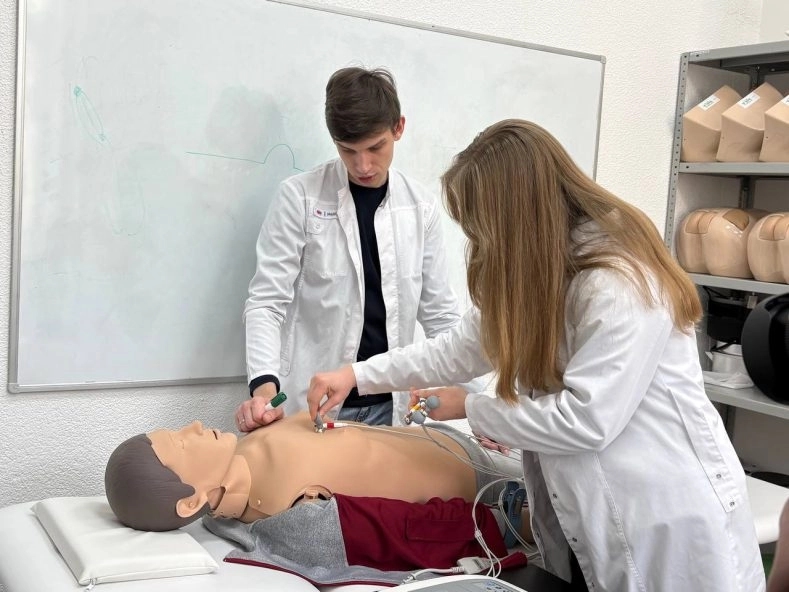
The problem is the mandatory mentorship requirement. Depending on the specialty, doctors must complete between 18 months and three years of service, with oncologists, neurosurgeons, neonatologists, plastic surgeons, cardiovascular surgeons, and certain other surgical specialists obligated to complete the longer variant. Most clinical specialties — internal medicine, surgery, cardiology, neurology, pediatrics, obstetrics and gynecology, anesthesiology, psychiatry, otolaryngology, and ophthalmology — require two years. The period is 18 months for dentists, dermatovenereologists, radiologists, cosmetic medicine specialists, and several other specialties.
Only three relatively niche specialties were excluded from the list: aviation and space medicine, diving medicine, and medical and social assessment. The required service period can, however, be cut in half for those who work in rural areas or in the Russian-occupied territories of Ukraine.
This arrangement reinforces the suspicions of many students and faculty members that mentorship was introduced not to improve the training of young doctors, but to plug staffing gaps.
Mentorship was introduced not to improve the training of young doctors, but to plug staffing gaps
The system itself is ill-suited to achieving its stated goal, lecturer Andrey argues:
“Just look at the requirements for a mentor: at least five years of professional experience. That doesn’t make someone an outstanding doctor. At university, students were taught by academics with PhD-equivalent degrees, but now their mentor can be a doctor with just five years of experience. Look at any doctor: they work two jobs, each at one and a half times the standard workload. They’re constantly firefighting. Where and when are they supposed to train young doctors?”
Igor (name changed), an oncologist interviewed by The Insider, also doubts that doctors in outpatient clinics are equipped to teach others:
“No one has trained them to teach. Even a good doctor isn’t necessarily a good teacher — let alone a bad doctor. We know all too well how residents in Russia are sometimes treated by their supervisors: ‘This is my slave. He can write up the case histories for me.’”
The new system also has a financial incentive. Doctors in the regions will receive an additional 5,000–10,000 rubles ($60-$120) a month for mentoring, as was reported by Anatoly Domnikov, chairman of the Russian Healthcare Workers’ Union, after reviewing practices across the regions.
Andrey points to another potentially dangerous aspect: administrators are also allowed to serve as mentors. “I wouldn’t be surprised if chief physicians and their deputies simply signed up a bunch of trainees to collect the extra pay.”
More importantly, he says, the reform has shown doctors that the rules can be changed at will:
“When the reform was being drafted, compulsory service was supposed to apply only to residents in state-funded programs. In the end, it was extended to fee-paying students as well. Now doctors won’t be able to choose where to work freely until eleven years after enrolling: six years at medical school, two years of residency, and another three years of so-called mentorship. I’ve spoken to applicants and their parents, and they’re asking: 'what guarantee is there that the rules won’t change again in eleven years,' forcing them to complete another five years of compulsory service?”
A second attempt
This is not the first attempt to keep young doctors in the state healthcare system for longer. Nine years ago, the Health Ministry tried to address the same staffing problem in almost the opposite way: instead of extending compulsory service after graduation, it allowed medical graduates to start working sooner. After the abolition of the internship year, graduates of general medicine programs were allowed to work as primary-care physicians after completing initial accreditation, while pediatrics graduates could work as primary-care pediatricians. In other words, they could start treating patients immediately after the completion of their six-year medical degree, without residency training.
That experiment failed. As Andrey explains:
“They weren’t fully trained doctors. Formally, a graduate could work as a primary-care physician, but they lacked full specialist training. Employers are very reluctant to hire them because inspectors scrutinize their work particularly closely. They’ll take them only if they’re absolutely desperate.”
Many graduates also viewed these jobs not as the start of a career but as a stopgap before entering residency. As a result, they ended up spending roughly the same amount of time in the healthcare system as they would have without the reform — only their first few years were spent working without adequate training.
Another Insider source, physician and lecturer Vladimir (name changed), links the current reform directly to the consequences of its predecessor:
“For centuries, traditional medical training has included clinical practice after university. In the Soviet Union, doctors completed either a two-year residency or a one-year internship. Then it was decided that postgraduate training was no longer necessary. But outpatient clinics soon found that graduates weren’t ready to practice independently. That was when the idea of mandatory mentorship emerged. What began as a way to help young doctors adjust to practice gradually turned into a compulsory requirement for everyone.”
What will the consequences be?
The first cohort of residents under the new rules has only just begun training. But the doctors interviewed by The Insider agree on one thing: even if the reform temporarily boosts staffing at state hospitals and clinics, it will drive some graduates out of medicine altogether, at least in Russia.
Lecturer Vladimir believes that “some graduates will become couriers or do something else.” Universities will produce more and more doctors, but the shortage will persist.
Oncologist Igor has tried to quantify the expected loss to the profession, estimating that around 1,750 doctors will leave each year. He warns that even a modest decline in the number of specialists in his field will lead to excess deaths and disability. “In oncology, numbers matter. If the nearest place offering chemotherapy is a thousand kilometers away, some patients simply won’t be able to get there.”
In oncology, even a modest decline in the number of specialists will lead to excess deaths and disability
Although one of the reform’s aims is to ensure adequate staffing at medical facilities in the regions, they will be the first to feel its effects, Andrey believes:
“Over the long term, the number of healthcare workers outside Moscow, St. Petersburg, Yekaterinburg, and Novosibirsk will decline year after year. Supporters of the reform often compare the new compulsory service to the Soviet system of job assignment, but they forget that in the USSR, young doctors earned above-average salaries and were provided with housing. Now, after spending eight years in a Moscow dormitory, a graduate is expected to move to a small town and pay rent out of pocket. A newly qualified doctor there may earn less than a courier.”
Hospitals risk feeling the effects of the reform even before the first graduates begin their mandatory mentorship. Residents are an indispensable source of labor for many clinics, Igor notes. “They write up medical records, take patients to procedures, and do all kinds of menial work. If the number of residents declines, hospitals will feel it immediately.”
Igor sees the war as another major factor accelerating the move away from state-funded residency programs. Medical graduates fear mobilization and do not want to be tied to a specific workplace for several years under threat of a multimillion-ruble penalty.
An artificial shortage
The paradox of Russian healthcare is that the country has plenty of doctors yet also has a shortage of them, says pulmonologist Vasily Shtabnitsky:
“Russia is one of the few countries with an adequate number of doctors per capita. Moscow alone has around a hundred hospitals, plus clinics, dispensaries, and departmental healthcare facilities. The same pattern holds in the regions: a city hospital, a regional hospital, a perinatal center, a railway hospital, a military hospital.”
Indeed, according to World Health Organization data for 2022, Russia had 51.1 doctors per 10,000 people. By comparison, Germany had 45.9, Spain 44.3, Israel 39.2, the United Kingdom 33.5, and Canada 28.5.
But this does not mean patients can easily see the specialist they need. A significant part of the staffing shortage stems from the way the healthcare system itself is organized, Shtabnitsky argues.
The problem is inefficiency and excessive paperwork. Tasks that elsewhere might be handled by medical secretaries, physician assistants, nurses, or other mid-level medical staff are often left to Russian doctors. As a result, doctors end up doing the work of both secretaries and clerks, Shtabnitsky explains:
“Here’s a typical situation in a hospital: the morning briefing ends, and instead of seeing patients, doctors line up with stacks of medical records to see the deputy chief physician. They need signatures authorizing antibiotics and approval for procedures. The number of required sign-offs keeps growing. A doctor can spend hours waiting for a signature.”
Oncologist Igor describes the same problem from another angle, focusing on outpatient clinics:
“Doctors there often end up doing the work of nurses: issuing sick-leave certificates and prescribing fever reducers. Meanwhile, the hallways are packed with endless queues where people infect one another. Patients are assigned to a specific clinic and receive most of their free care there. The clinic has little incentive to attract patients or improve its services. An enormous, inefficient structure has been created, and now they’re trying by any means to fill it with staff.”
Shtabnitsky believes this approach leads to nowhere good. “If the system stays as it is and you simply add more people, the problems will remain. But instead of addressing these inefficiencies, the authorities are trying to force doctors to work off their obligations. Rather than undertaking genuine reform, they have chosen serfdom.”