On Sept. 23, Russian Foreign Minister Sergey Lavrov once again voiced Moscow’s rejection of a Ukrainian proposal to halt fighting along the current front line. Now Kyiv is preparing for another series of strikes on its critical infrastructure that appear intended to freeze the country during the upcoming winter and result in a humanitarian disaster. Ukraine’s military and civilian institutions have already begun preparing for what they expect to be an especially difficult Russian campaign, with energy companies inspecting equipment and stockpiling fuel while apartment associations buy up generators.
In September, air raid alerts have sounded in Kyiv every day — and almost continuously. Jet-powered Shahed drones circle over the city, disrupting the work of municipal services, shops, businesses, and public institutions. A new operating protocol took effect on Sept. 10, introducing a “yellow” alert level for Shaheds and a “red” level for missiles. Under a yellow alert, most businesses and institutions now remain open.
The changes do not apply to schools, which are still required to suspend classes during air raid alerts. Schools without underground classrooms have moved children to online learning. Across Ukraine more broadly, local authorities have been given discretion over how to respond to alerts.
In August and September, central government officials held a series of meetings with businesses. Entrepreneurs were advised to consider setting up air defenses on their own, to cooperate with existing volunteer territorial defense formations (known by the Ukrainian acronym DFTG), and to move warehouses underground.
Russian forces have been striking warehouses belonging to home improvement retailer Epicentr and delivery company Nova Poshta for years, but the logistical networks of supermarket chains recently started coming under systematic attacks for the first time. Strikes on warehouses reduced the range of goods available in stores in August, though the situation had largely stabilized by mid-September.
As fall begins, everyone in Ukraine seems to be asking the same question: how can the country make it through a winter of relentless strikes? It is already clear that the infrastructure responsible for heating and other fundamental civilian services will be among Russia’s targets.
The military shield and the front line
Ukraine needs interceptors to defend against ballistic and cruise missiles. But increasingly frequent attacks by jet-powered drones have created another challenge.
A volunteer (call sign Max) with a Kyiv Region DFTG told The Insider that his unit formed teams of interceptor-drone pilots in preparation for the winter campaign, alongside its regular gun and mobile fire teams. Training began in mid-spring, and by the end of summer, most volunteers had passed examinations and received certificates — along with combat interceptor drones.
But a problem emerged: older interceptor drones work well against conventional Shaheds traveling at speeds of up to 250 kilometers per hour, but new interceptors designed to take out jet-powered Shaheds have only recently completed testing. Russia is expected to use both conventional and jet-powered Shaheds during the fall and winter, meaning crews are expected to use different interceptors depending on the target.
Volunteer formations are part of Ukraine’s Territorial Defense Forces (TDF) and their supply system tends to lag somewhat behind those of the Unmanned Systems Forces, the Security Service of Ukraine (SBU), and the National Guard. Newer technologies only reach the TDF and volunteer groups after they have been tested by regular units.
By Sept. 20, videos had emerged showing jet-powered Shaheds being intercepted by high-speed fixed-wing interceptor drones and Sting S quadcopters.
“We have to remember that there is no such thing as 100% effective air defense. Some missiles and Shaheds will get through any defenses. That is why residents should always follow the recommendations of Ukraine’s Defense Forces. New Ukrainian interceptor drones are more maneuverable and can engage targets at greater distances and altitudes than the usual weapons used by ground-based fire teams. But they cannot offer a complete guarantee either. The same applies to Russia, where they are also technologically behind. So if power stations, thermal power plants, and combined heat-and-power plants burn here this winter, there is an even greater likelihood that they will burn in Russia as well,” Max said.
Ukraine’s new interceptor drones are more maneuverable and can hit targets at greater ranges and altitudes, but they cannot provide a complete guarantee against Moscow’s aerial attacks
A Kyiv volunteer territorial defense formation commander called Asgard said his unit has gun teams equipped with a wide range of weapons “from 5.45 mm up to 23 mm,” along with interceptor-drone crews. “The biggest target was probably a cruise missile we shot down in 2024. Believe it or not, we brought it down with a 7.62 mm Maxim machine gun manufactured in 1942.” Unsurprisingly, Asgard’s unit also engages jet-powered Shaheds.
There has been no particular need for “retraining” this year, the Kyiv DFTG commander said. “Every day we face new challenges and learn. Before, they were ordinary Shaheds. Those are very easy targets for us now. We still have work to do with the jet-powered ones.”
Ukraine’s small mobile air defense units shoot down conventional Shaheds in 95% to 99% of cases, but their success rate against jet-powered versions is no more than 40% to 60%. Volunteer formations hope that rate will increase soon as interceptor-drone teams receive more high-speed drones of their own.
At the front itself, winter could provide Ukraine with some advantages, according to Silver, an FPV drone pilot who flies fiber-optic-controlled drones.
“There will be more work in winter. First, the leaves will fall, which will make things easier. Even now we manage to fly fiber-optic drones through forests, but without the ‘greenery’ [the military term for dense seasonal foliage] we will create far more problems for the Russians. Second, we will rely on skill, quality, and careful planning rather than quantity. We are changing our approach, adapting technically and improving our skills. Everyone is talking about AI-equipped drones now, but artificial intelligence will not replace the person who still decides which target to send it toward. I’ve worked with AI-assisted terminal guidance, and it works!”
Even if Russia carries out another mobilization, conditions will become harder for Russian soldiers in winter, according to a Nemesis bomber-drone pilot who has flown 1,000 combat missions over a year and a half.
“The Russian military is adapting too, changing tactics and infiltrating our lines. Maybe they have something new prepared for us. But overall, we’re ready. We’ll see how their mobilization goes and how many more targets we have along the line of contact,” the pilot said.
Front-line cities
About 127,500 people live in the Ukrainian-controlled portion of the Kherson Region — about a quarter of the prewar population. In the city of Kherson itself, 63,000 out of the prewar population of 283,000 remain — roughly 22%.
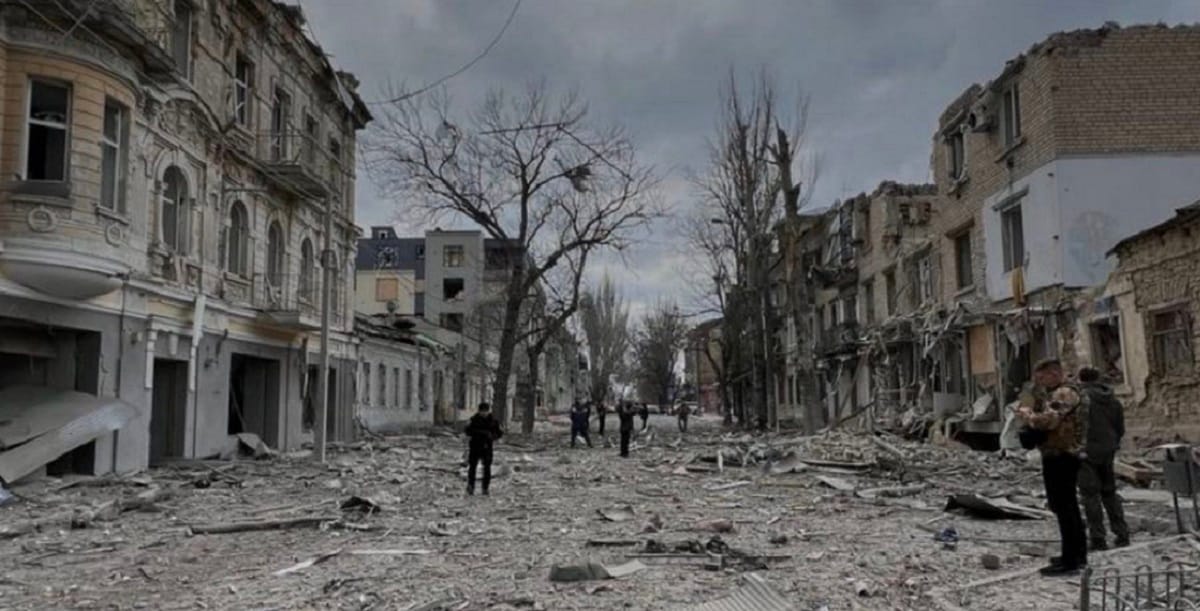
The situation there is difficult. Russian forces deliberately target energy and heat-generating facilities in an effort to deprive residents of basic services. Strikes take place around the clock, with explosions heard roughly every two minutes. Since the area was liberated in November of 2022, the regional administration has recorded 400,000 Russian attacks involving more than 900,000 munitions.
Elvina Osmanova, head of the Kherson regional administration’s domestic and information policy department, told The Insider that between three and 10 guided aerial bombs (known by the Russian and Ukrainian abbreviation KAB) are dropped on Kherson each day. “They hit infrastructure sites one after another, including the combined heat-and-power plant, and essentially everything responsible for electricity, heating, gas, and water supplies.”
Alongside guided bombs, Russian forces make extensive use of conventional drones, a particular problem for Kherson, Nikopol, and other cities within a 20-kilometer range of the front line. Osmanova lists off the drone types that most frequently attack the city: “FPV drones, Mavics, cheap Molniya kamikaze drones, and other systems. Most of them use fiber-optic control, which makes them difficult to stop. As many as 5,000 drones can be launched at Kherson in a week.”
Still, food deliveries still make it to central Kherson, Osmanova said:
“The city has a sufficient supply of food. But the Russians deliberately destroy trucks and kill drivers transporting bread and other foodstuffs, so issues with deliveries cannot be ruled out. Due to constant shelling, some parts of Kherson are already effectively dead — riverside areas such as Antonivka, Voyenne, Korabel, and several others near the Dnipro. They haven't had normal municipal services for a long time.
Last winter, there were times when people went 10 days without electricity or water. Right now, one district of the city has been without power for 14 days. In other areas, electricity has been restored through the heroic efforts of utility workers. Many have unfortunately been wounded or killed. Drones deliberately target workers while they repair infrastructure.
We understand that the Russians will only increase their attacks in the fall and winter. The number and severity of enemy attacks are increasing every day. Kherson may end up without electricity and heating not just for hours or days but for prolonged periods, and we're preparing for that. We're adapting our anti-drone system — detection systems, electronic warfare, and mobile fire teams — and increasing physical protection for important facilities.”
Shelters are another major focus. Osmanova said 307 protective structures have been repaired and 439 mobile shelters installed in crowded public areas. Protection for critical infrastructure is also being strengthened through backup power, additional physical defenses, and alternative systems intended to allow facilities to continue operating after Russian attacks.
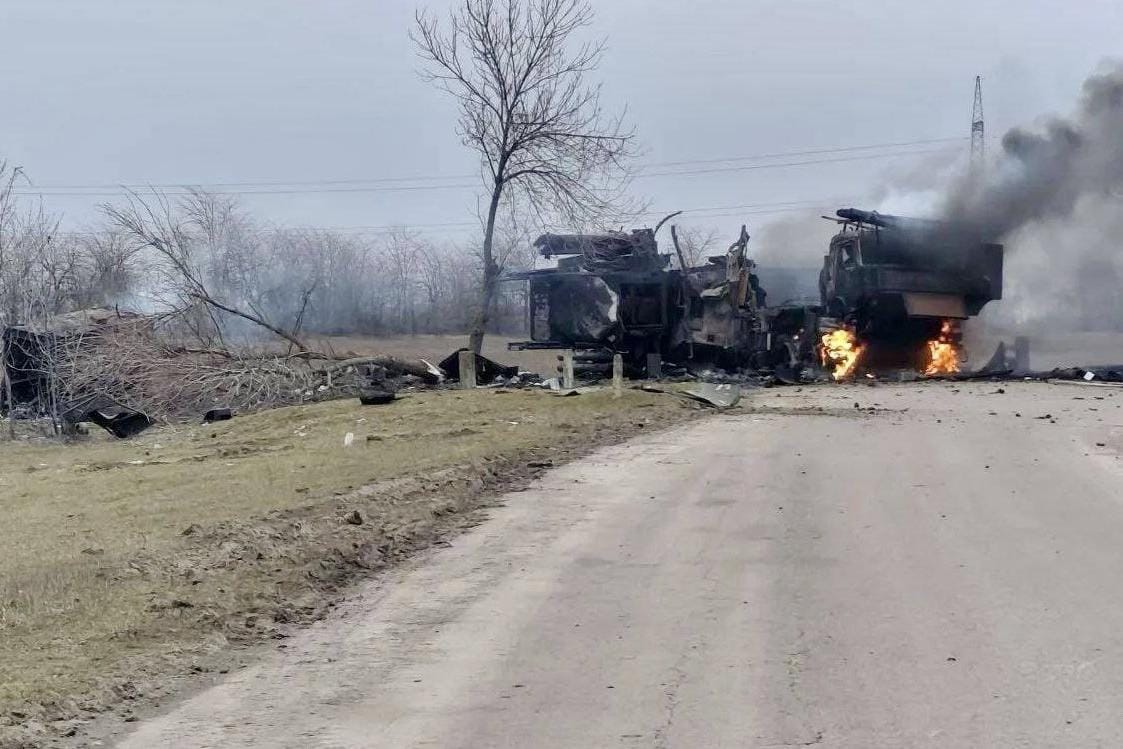
“The Russians attack any kind of transportation with drones: mopeds, passenger cars, trucks, ambulances, municipal vehicles, and public transit,” Osmanova said. “Last week alone, about 40 vehicles were damaged or destroyed. We are doing everything possible to protect the city’s supply routes, including covering roads and streets with anti-drone nets. About 270 kilometers of roads have already been protected that way.”
Zarina Zabrisky, an American journalist with Byline Times who lives in Kherson, told The Insider that residents are preparing for winter however they can. Residents with standalone, private houses were able to heat their homes with firewood in previous winters and are preparing to do so again — and many of them have generators. Zabrisky’s apartment has access to a supply of natural gas, which she used to heat her home last winter.
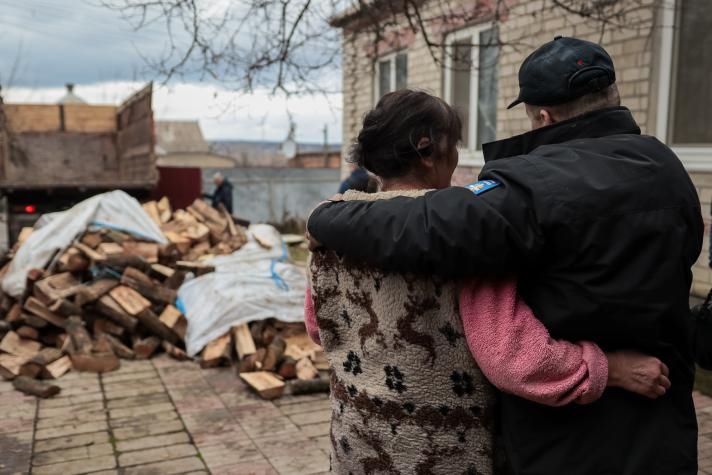
At the same time, the local administration is advising residents — particularly older people, those with limited mobility, and families with children — to seriously consider temporarily relocating to safer parts of Ukraine. The authorities say they are prepared to assist at every stage, including organizing evacuation, finding housing, providing humanitarian aid, and offering psychological and legal assistance.
Kyiv
Locals in Kyiv are not counting on an energy ceasefire. Instead, they are preparing for something resembling a repeat of last year. The main difference is that the upcoming winter is expected to be milder, with frequent thaws.
Vyacheslav Hryb, who heads three condominium associations in Kyiv, told The Insider how preparations are going:
“We’re buying additional inverters, checking the generators, and connecting elevators to them. If the power goes out, our calculations show the elevators can operate for five to six hours. Heating should also be fine. We have a large building and a 110-kilowatt generator that powers the cold-water supply, hot-water supply, and heating.
Last year, the unprecedented cold made everything harder, and after the strikes, many buildings had to drain water from their heating pipes. Restarting the heating at minus 22 Celsius [about negative 8 degrees Fahrenheit] was what you might call an advanced-level challenge. The instructions say it’s impossible, but we pulled together and managed to get it running.”
Kyiv’s energy situation is among the most difficult among Ukrainian cities not located near the front. Last winter, residents of several buildings on the eastern bank of the Dnipro went without centralized heating for around a month after heating pipes burst. Electricity schedules were largely maintained, with power generally available for four hours followed by four hours without it.
Kyiv’s energy situation is among the most difficult of Ukraine’s non-frontline cities
Residents are now buying batteries and inverters in order to be more self-sufficient. Buildings with condominium associations are generally better prepared, often with generators or high-capacity battery and inverter systems that can keep heat, water and elevators running during outages. But only about 2,000 of Kyiv’s more than 10,000 residential buildings have these associations.
Other buildings are serviced by municipal housing offices, commonly known by the Soviet-era abbreviation ZhEK. Their residents therefore often have to go to special “Points of Invincibility” set up by city authorities and Ukraine’s State Emergency Service to warm up and charge their devices.
The Zhytomyr phenomenon
The city of Zhytomyr is located less than 100 miles from Kyiv, but last winter it did not even suffer widespread short-term power cuts. Vitaliy, a Zhytomyr resident, told The Insider that while Kyiv spent days at a time without electricity, Zhytomyr experienced only a handful of outages, none lasting more than an hour:
“Specialists had told me before that Zhytomyr had inherited many military factories from the Soviet era. It was also an early adopter of power systems designed for wartime conditions. The city developed a distributed energy system, which is why, despite repeated attacks, we did not face major disruptions or prolonged power outages last winter or the winter before.”
In Ukrainian cities where power distribution has been managed effectively, utility services remain close to prewar levels. Residents of Kyiv — and perhaps soon Moscow and St. Petersburg — can only look with envy at Zhytomyr.
The overall state of Ukraine’s energy system
The risk of new large-scale attacks remains one of the most serious and unpredictable factors facing Ukraine this winter. DTEK, the country’s largest private energy company, is preparing for a range of possible scenarios.
“First and foremost, we are repairing and restoring thermal power plants around the clock after attacks,” the company told The Insider. “There is not a single DTEK generating unit that has not been damaged or destroyed during the years of the full-scale war, and some units have had to be rebuilt several times.”
At the same time, the company is carrying out scheduled equipment repairs in order to improve reliability during the winter. It is also stockpiling fuel and supporting the operation of mines, machine-building facilities, and repair businesses. DTEK spent more than 7.6 billion hryvnias ($170 million) on those efforts in the first half of 2026 alone. Since the start of the full-scale invasion, it has spent more than 51 billion hryvnias ($1.2 billion) restoring thermal generation, supporting its businesses, and preparing for wartime winters.
In the first half of 2026, DTEK invested 3.3 billion hryvnias ($74 million) in repairing and modernizing power grids. Since the start of the full-scale invasion, investment in that area has exceeded 15 billion hryvnias ($335 million). The company says its central goals are to restore as much available capacity as possible, maintain sufficient supplies for emergency repairs, and be prepared to respond as quickly as possible to new attacks.
DTEK is advising Ukrainians to use electricity carefully, particularly during periods of peak demand, and says it will do everything possible to minimize the effects of attacks. Ukrainian President Volodymyr Zelensky, meanwhile, said the government would prepare the country’s air defense network for the winter.
“This is extremely difficult, but it has to be expanded. Absolutely everyone is working on it: the Defense Ministry, the Foreign Ministry, and the Foreign Intelligence Service. The obvious challenge, as you know, is missiles for the Patriot system. But we are working on that as well,” Zelensky told reporters Sept. 25. “Separately, we are working on our own anti-ballistic air defense system. That is the FREYJA system. We will work on all of this so there is no collapse.”
Zelensky also said Ukraine would retaliate for attacks on its energy system by striking not only Russian oil refineries — but its energy facilities as well.