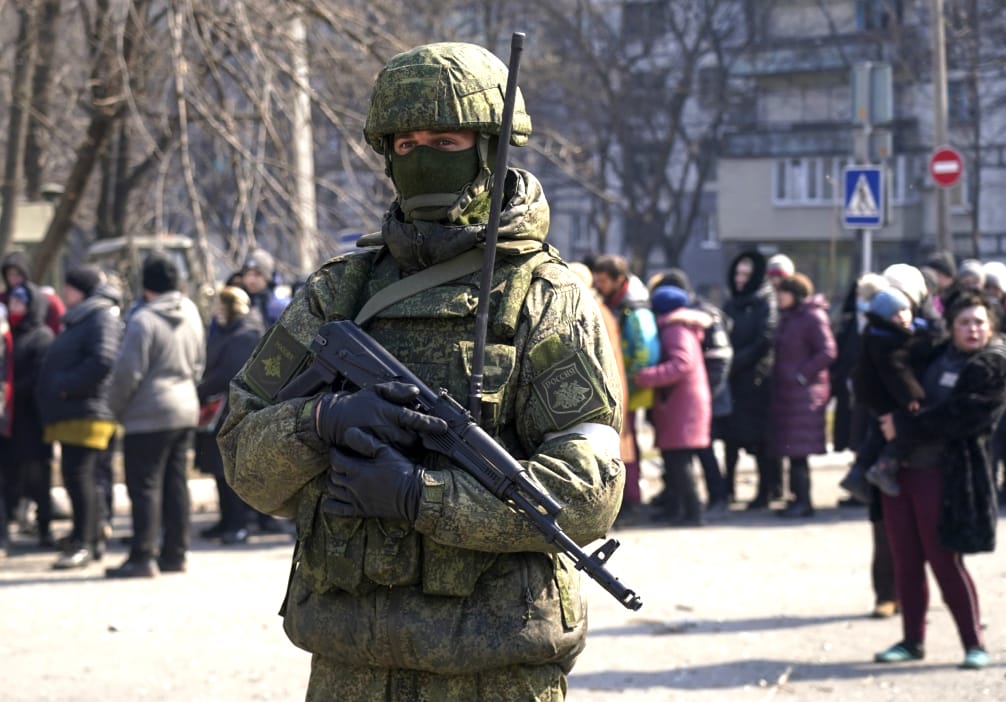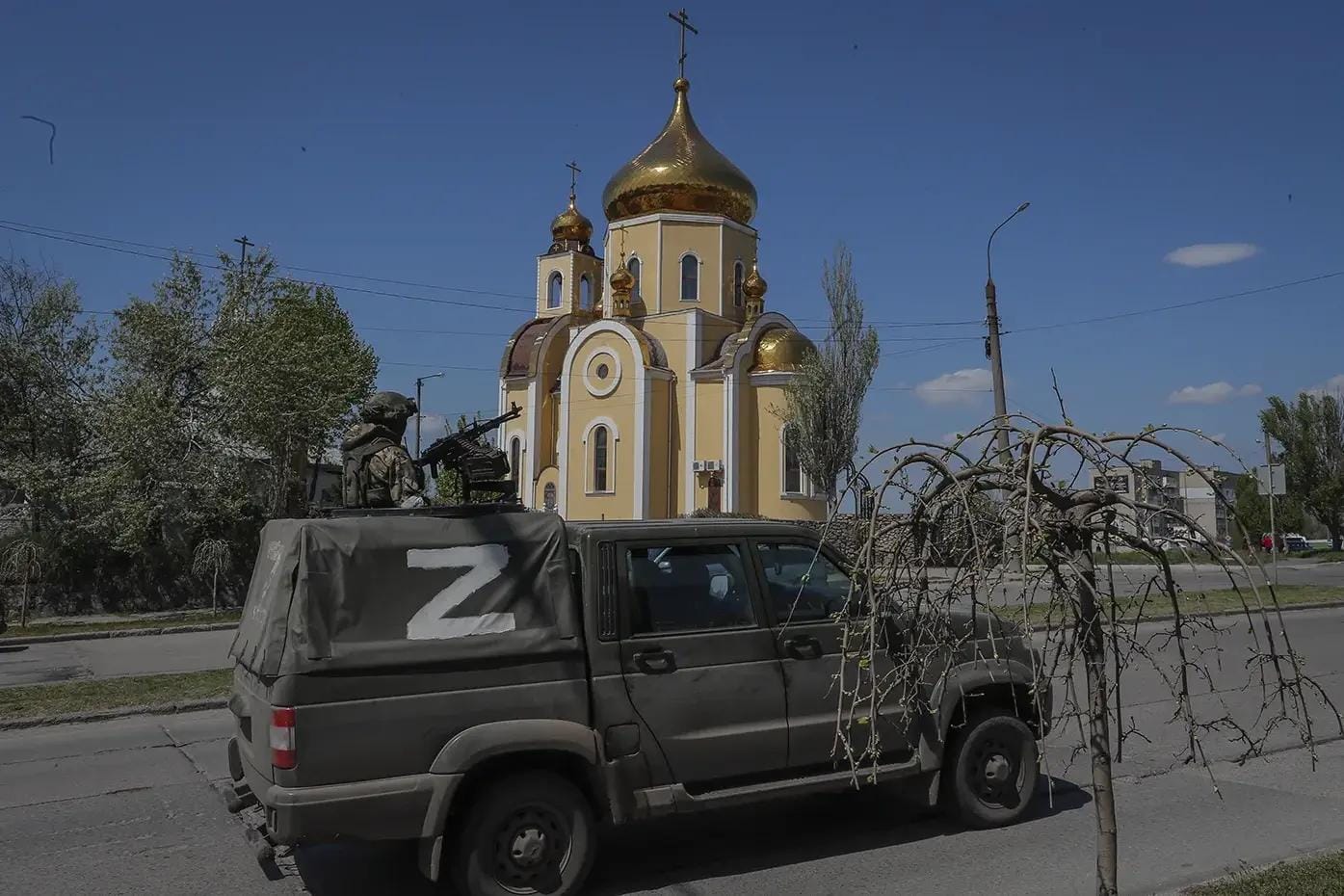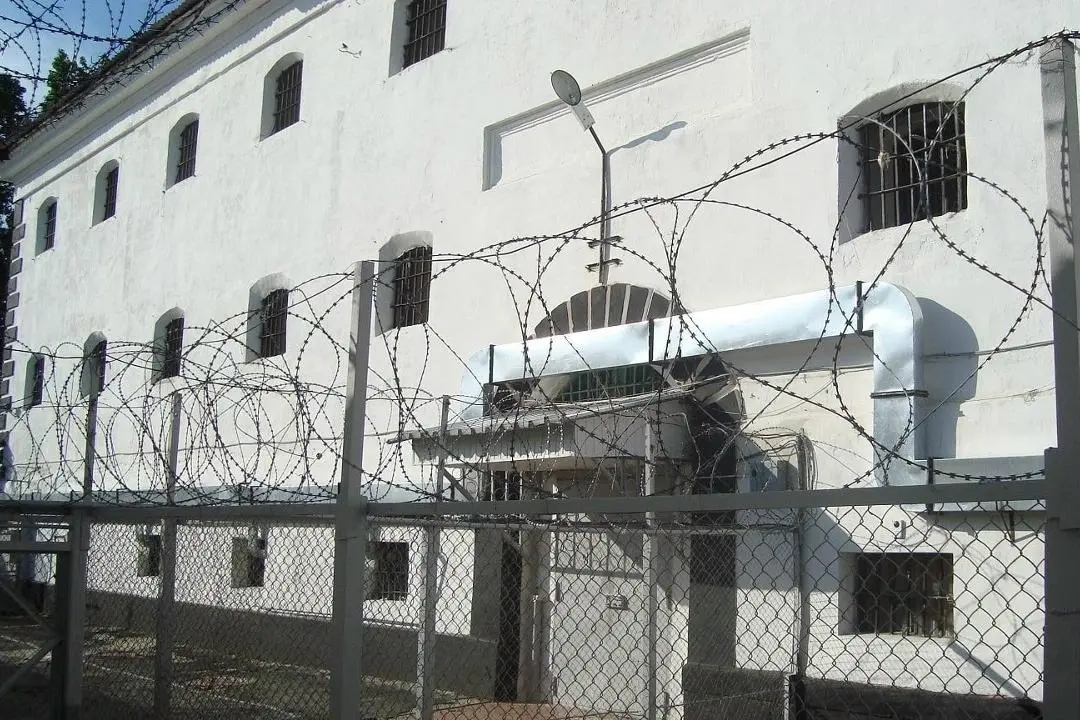
Systematic, institutionalized violence is an everyday reality in the Russian detention facilities holding Ukrainian prisoners of war. Electric shocks, brutal beatings with a wide range of objects, strangulation, sleep deprivation, beatings to death, and torture through filth, hunger, cold, enforced silence, and even the mandatory singing of the Russian national anthem are not isolated abuses — instead, they are all part of an organized system approved by prison authorities. The Insider recorded the testimonies of Ukrainian servicemen who returned from captivity in May 2026. They described enduring years on end of relentless abuse and torture.
Tank commander Yurii Anatoliiovych Yeremenko, 58
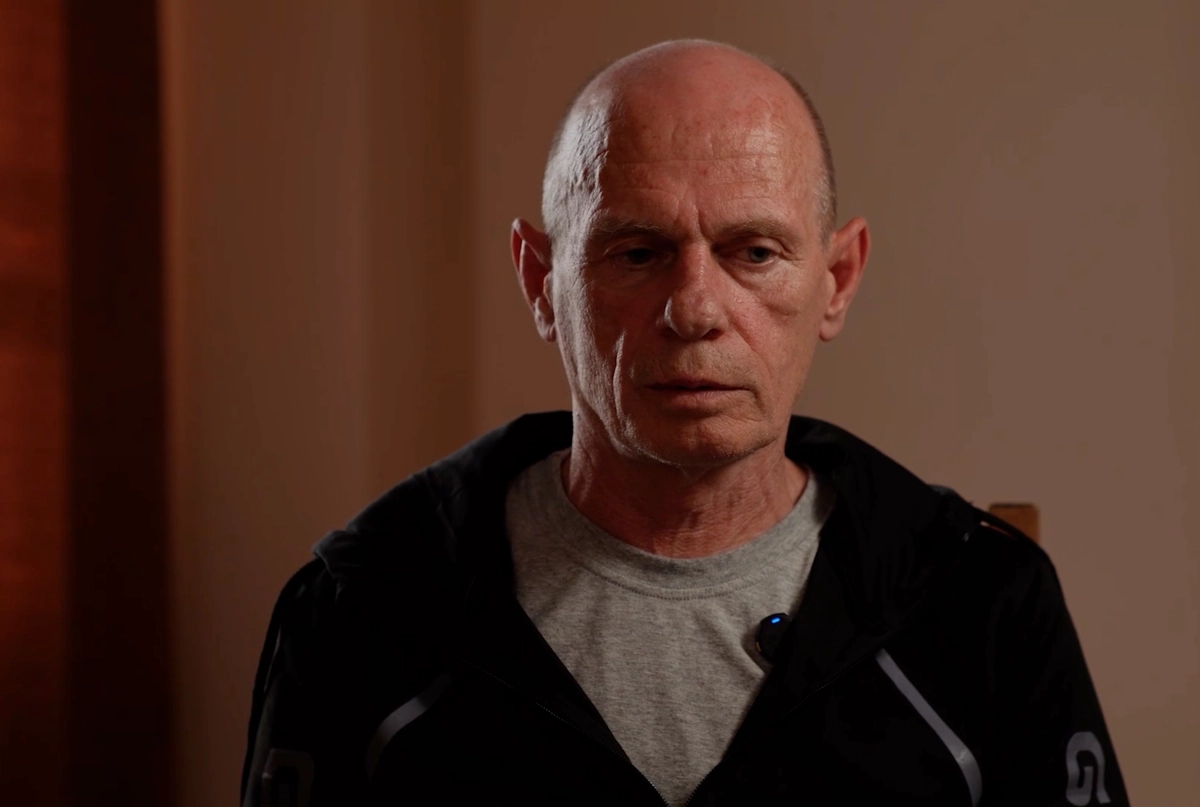
A native of Novomoskovsk in Ukraine's Dnipropetrovsk Region, Yurii Yeremenko graduated from a military academy and left the armed forces in 1993. He later worked making furniture. In September 2022, he volunteered to return to the front as the commander of a tank platoon. He was captured in the Kherson Region after his tank was hit.
After searching us, they threw all of us who had been taken prisoner into a pit. We stayed there until morning — stripped, tied up — and in the morning they loaded us onto a KamAZtruck and took us for interrogation. They tried to get information from us about our unit and the objectives of the offensive. Later we were transferred to the SBU garages in Nova Kakhovka. They gave us a few field rations for twenty people. The next day we were taken to Henichesk. Food was extremely scarce, and sometimes they simply forgot to feed us. The wounded were taken somewhere for treatment and bandage changes. We were held there for about a week. Then they loaded us onto a KamAZ truck again, and the senior warrant officer said, “Rejoice, khokhols, yesterday we made a gesture of goodwill — we left Kherson.”
In Sevastopol, we were held at the Ushakov Naval Academy. One floor that had been used as barracks was converted for prisoners of war, with bars installed on the windows. But conditions there were normal. They let us wash, gave us clean clothes, and cut our hair. We weren't beaten or abused.
On January 10, 2023, they loaded us onto a plane with our hands tied and our eyes covered. We landed in Kamyshin, in Russia's Volgograd Region. From there we were taken to SIZO-2.
What is known about SIZO-2 in Kamyshin? Commentary by Olga Romanova, journalist, human rights advocate, and founder of the prisoners' rights organization Russia Behind Bars
The harshest conditions are at SIZO-2 in Kamyshin. We know of deaths there and of an extremely severe regime of total isolation from the outside world. Ukrainian prisoners of war are assigned lawyers only after they emerge from incommunicado detention and enter criminal proceedings. Only then can a lawyer visit them and at least see the prisoner's condition and the extent of any injuries. But even that usually happens only after the verdict has already entered into legal force. The most terrifying situation is when a prisoner never enters the judicial system at all. In those cases, neither lawyers nor civilian volunteers — no one — is allowed access.
At the intake procedure, the officers were separated from the enlisted soldiers and sergeants. I was with the officers, so I went through intake first. They beat me badly. They made me run the gauntlet twice. Later I realized I had actually been lucky to be first — they hadn't really warmed up yet. The men who came after me were beaten even more severely.
There were already two people in the cell who had arrived earlier, even though it was designed for only two occupants. There were civilian detainees in the detention center as well, but only military personnel were housed in my cell. It was an officers' cell in a special block.
The cell measured roughly 3 by 6 meters, with the toilet partitioned off in one corner. We were taken out only for interrogations and to shower — there were no outdoor exercise periods. The cell was under constant video surveillance. There were two bunk beds with a passage only 70-80 centimeters wide between them. Everything was made of metal. Only one person was allowed to move around the cell at a time; everyone else had to remain seated on the upper bunks. Sitting on the lower bunks was forbidden because the surveillance camera could not see you there. After spending a full day sitting like that, our legs would swell. The sewage system leaked, flooding the cell about twice a week. We would call the guards, and they would pump the water out. At first they responded quickly, but later they simply stopped bothering.
The interrogations were much harsher. At first they happened frequently. I was questioned by a local operative. They pulled a bag over my head and beat me with their feet, fists, and batons. The operative always wore a balaclava. He was under forty, of average height, and stockily built. He used every method: “tapik” field telephones, a stun gun, batons, strangulation, and straightforward beatings. He had assistants. They addressed one another simply as “colleague” — never by name.
"You're Lying Naked on the Ground": Ukrainian POWs Reveal Torture Inside Russian Prisons
The Insider World
On average, each interrogation lasted about half an hour. But sometimes the interrogations and torture went on much longer if they had “information” about a prisoner — alleged evidence of “crimes.” This was especially true for the men from Mariupol who had spent a long time on the front line. They tried to accuse them of crimes against civilians while also forcing them to provide “information.” Sometimes they would bluff someone by claiming they already had evidence against him and demand that he incriminate himself or someone else.
I went through those particularly brutal interrogations twice. After that, I was summoned once a week, and later once every three months, for questioning and filming. They also kept calling me in with new recruitment schemes. They claimed to be forming yet another “volunteer battalion.” Four months before the prisoner exchange, they filmed me supposedly agreeing to join a volunteer battalion to fight the Ukrainian regime.
At the same time, they began reclassifying men from the Mariupol Brigade of the National Guard, which had included the Azov Regiment, as “Azov fighters.” They fabricated criminal cases against them and told them: “As Azov members with criminal charges, you'll get exchanged faster.”As far as I know, after two prisoner exchanges, not a single member of either the Mariupol Brigade of the National Guard or Azov was included. I suppose they're waiting for trial.
Why shouldn't prisoners of war be held in penitentiary institutions? Commentary by Olga Romanova
Under the 1949 Geneva Convention Relative to the Treatment of Prisoners of War, POWs must not be held in penitentiary institutions. They are to be detained in facilities operated by the Ministry of Defense. Russia is a party to the Convention. However, unlike Ukraine, it does not comply with this requirement.
During the three years I spent in Kamyshin, many people died. Some died after severe beatings, others because they did not receive medical treatment in time. One night, a man in the cell opposite ours, known by the nickname “Gypsy,” died. They said he had suffered a fatal fall.
After about two years, they finally started taking us outside for walks. That meant we could exchange information, and from what we heard, at least twenty people had died from torture or illness. There were many prisoners with tuberculosis and heart conditions. A few times we crossed paths during exercise with a civilian from the Kyiv area. He had a severe mental illness. He also died in SIZO-2.
The Azov fighters who had passed through Taganrog told us that eight people had been beaten to death during the intake procedure there. The Azov men were not treated as human beings. They were called fascists. The goal was to break them completely, to leave them with not the slightest will to resist. In Kamyshin, all you wanted was food and sleep — you wanted nothing else.
We were given just enough food to keep us alive. Before I was captured, I weighed 70 kilograms. In the detention center, my weight dropped to 56. Some men lost as much as 40 kilograms. Inspection commissions came to see us, and we were made to stand with our backs to them. We overheard them asking each other, “What have you done to them? Why do they look like this?” They ordered us to strip, examined us, and looked for bruises.
Toward the end of 2024, the treatment changed. They started taking us outside — first once a week, then every day. Apparently they were preparing us for prisoner exchanges. They also improved the food. It seemed they had replaced the kum — the prison's security chief. He came into the cell and told us the war would soon be over, that we would all live together peacefully, so they had decided to feed us a little better. They even gave us extra rusks, and on a couple of occasions we were served salad.
At the beginning, though, there was nothing but watery gruel. You might find a couple of cabbage leaves floating in the water and a few small pieces of potato. A lot depended on where your cell was in the food distribution line — whether they started with you or ended with you. As a rule, the first cells got the least food. You had to eat as quickly as possible. If there were four people in the cell, two would eat while the other two waited their turn. Then you switched places, finished eating, washed the dishes as fast as you could, and handed them back. If you weren't quick enough, you'd be beaten. The next time, they might reduce your ration or not feed you at all.
We ate in turns, washed the dishes as quickly as possible, and handed them back. If you weren't fast enough, they'd beat you and deprive you of your next meal
They forced us to sing the Russian national anthem and memorize patriotic poems and songs — it was one of the forms of torture. Songs blared constantly over the loudspeakers, and every night before lights out the anthem was played without fail.
Reveille was at 6:00 a.m. We had to get up immediately, get dressed, line up, and make our beds. Sometimes we were given time to wash, sometimes not. We had half an hour for the toilet and morning exercises. Breakfast came after exercise, and lunch was at noon. Before lunch, we were either taken out for interrogations or simply left sitting in the cell. There was absolutely nothing to occupy ourselves with — no paper, no pens.
After two years, they started issuing books, one book for every three prisoners. Chess sets and dominoes appeared on the floor. Every two weeks, each cell received a game set for twenty-four hours before it was passed on to the next cell. There could also be interrogations after lunch. Then came another exercise session. We had physical exercises twice a day, about half an hour each. One day they made us exercise six times.
Some exercises were permitted, while others were forbidden — the rules changed constantly. Strength exercises such as push-ups or pull-ups were prohibited. At first, even squats were banned. Later, squats themselves became a punishment. We could be forced to squat for the entire exercise period. In half an hour, that meant about 850 squats. Then squats were banned again. Later they were allowed once more. If the guards thought you were practicing combat techniques — something as simple as shadowboxing — they would immediately beat everyone in the cell.
There were also “talks.” We were told that Ukraine no longer existed, that half of it would become part of Russia, and whatever remained would go to Poland. “You'll end up living under them or under us,” they said. But because we had received news while we were in Sevastopol, we had at least some information and could draw our own conclusions. At the very least, we had seen maps of the fighting.
Toward the end of 2025, they switched on the radio. Every cell had a loudspeaker. During meals, they played Vesti radio for half an hour. They broadcast Russian songs, Karamzin's History of the Russian State, and World War II military reports.
As for our future, they told us different things. The usual version was: “You'll serve about eight years. Those who aren't guilty of war crimes will be released and will live in Russia.”
Correspondence was prohibited. In fact, paper, pens, pencils, and even eyeglasses were forbidden. One man in my cell received a letter from his mother that had been written six months earlier. I don't know of any other such cases. But we kept believing that we would eventually be exchanged, that Ukraine would endure. So did the hatred they instilled in us. It was probably the strongest emotion anyone experienced there.
We kept believing that we would eventually be included in a prisoner exchange, that Ukraine would endure — as would the hatred they had instilled in us
We heard on the radio that talks had taken place in Turkey and that the sides had agreed on prisoner exchanges. We hoped there would definitely be an exchange after Victory Day. For them, it's a highly symbolic occasion. Usually, before an exchange, they told us to put our uniforms in order. They were running short of footwear by then — nobody was getting combat boots anymore.
Before the exchange, they issued me a uniform, then took it back two days later. A couple of days after that, they gave it to me again. That's when I realized I really was going to be exchanged this time. That evening they moved me to another cell with the others who were also due to be exchanged. There were twelve of us. Only then did I believe it.
I traveled in the same prison transport van as a man who later gave an interview. Among other things, he spoke about Kolia Bruev, who was beaten to death in the detention center. I shared a cell with Kolia Bruev for a while. His call sign was “Khokhol.” He was a former MMA fighter. Because of his athletic background, he had many tattoos. He had also served in Azov and had a swastika tattooed on his leg. In SIZO-2, they were simply killing him. On the eve of our exchange, the others told us Kolia had been carried away on a stretcher and was now “Cargo 200.” Our executioner, commandant Anikeyev, said he had “sent Kolia to Bandera.”
Senior Warrant Officer Ivan Alekseyevich Anikeyev was the commandant of the prison compound. Together with the head of the operational unit, he took part in torture and killings. Anikeyev was known as “the bathhouse attendant” and “the welder.” He was the prison's local executioner. Everyone hated him. He beat people to death.
The worst thing in Kamyshin was the weekly trip to the bathhouse. First, you had to make it there. You were constantly under the supervision of guards and special forces officers. The slightest “mistake” could earn you kicks, punches, blows from a baton, or electric shocks. But the main ordeal took place inside the bathhouse. You washed yourself as quickly as possible, then stood naked in the changing area in what they called the “one-and-a-half” position — bent over, hands clasped behind your head, eyes closed — while Anikeyev “worked on you.”
No one left the bathhouse without being “processed.” He didn't rape people — he beat them on the head, kidneys, and liver. He used a stun gun with the word Handsome written on it. On bare skin, the electric shocks were especially painful. The marks on my back remained for a long time.
Later, it seemed the stun gun was taken away from him. After that, Anikeyev used a baton and a metal-plastic pipe instead. He never went anywhere without it.
Military finance officer Oleksandr Oleksiiovych Ivanov, 33
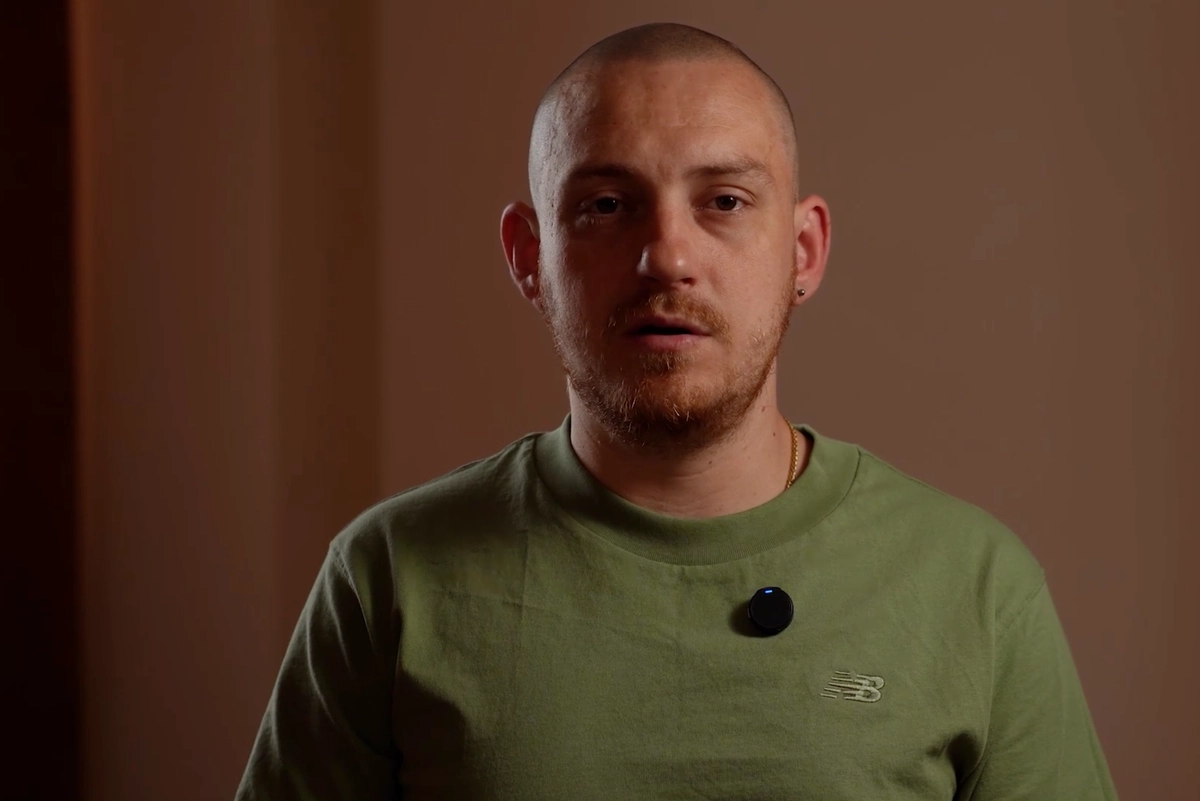
A native of Kyiv, Oleksandr Ivanov graduated from the Ivan Bohun Kyiv Military Lyceum and the Military Institute of Taras Shevchenko National University of Kyiv, specializing in finance and credit. He served as chief of the financial and economic service of the 501st Separate Marine Battalion. In 2019, he was appointed head of the financial and economic service of the 3rd Separate Marine Brigade in Mykolaiv. When Russia launched its full-scale invasion, the brigade was stationed in Mariupol. Ivanov sent his subordinates back to Mykolaiv but remained in the city himself. During the battle for Mariupol, acting on orders from his commanders, he organized two attempts by his unit to break through the Russian encirclement. During the second attempt, in April 2022, he was taken prisoner.
They captured us and said, “That's it, Ukrainian servicemen. You're prisoners now. No one is going to kill you.” There were two other officers with me. They searched our belongings, tied our hands, and blindfolded us. They took us to one of their unit’s outposts. From there we were transferred to hangars, where I saw other prisoners from our brigade.
On the night of April 15, we were loaded into minibuses and driven to Olenivka. We waited to find out where they were taking us. The guards were conscripts from the DNR. They kept saying, “You'll get to Olenivka, they'll check you over there, and then you'll be exchanged.” Of course, the conscripts knew nothing. As we approached, we heard people screaming. When we arrived, we saw why they were screaming and who was screaming. That was when we learned what the twisted minds there meant by “intake.”
You step out of the minibus, and two men in blue uniforms are waiting. One asks for your last name, first name, patronymic, rank, and position. While you're answering, the other stands behind you punching you in the kidneys. Then you run into a large exercise yard through a “corridor.” On both sides stand men in blue uniforms. Each one is holding either a chain, a belt, or a black rubber baton. As you run through the corridor, every one of them tries to hit you. After that, you're forced into the “spread-eagle” position against a wall — hands on the wall, legs spread wide — while they beat your legs. You stand there waiting until it's your turn. Then you run through the corridor again and into a large two-story barracks. On the second floor they record your last name, first name, patronymic, rank, and position. Then you step back into the corridor, stand facing the wall, and wait to be taken into a large room. That was when I began to understand what captivity really meant.
I was wearing the Ukrainian pixel camouflage uniform, with a blue-and-yellow Ukrainian flag patch on it. One of the DNR guards tore the flag off my uniform and said, “Eat it.” I replied, “I'm not eating it.” He threw the Ukrainian flag on the ground and stomped on it. Then he said, “See what I did to your flag?” I told him, “That's because you're jealous. At least my country has a flag. You don't have a homeland or a flag. You're nothing but Russia's lackey.” A few seconds later, five of his comrades came in — some with belts, some with chains, others with batons. They made it very clear that I wasn't supposed to talk like that. They beat me.
About 800 of us were herded into that room. There was no air to breathe. People were losing consciousness. I think a couple of people died during the intake procedure. They also set dogs on us. There, they had what they called a “green light” — complete permission to do anything they wanted.
After it was all over, their superior came in and said, “All right, that's procedure. That's how it's supposed to be. The toilet is downstairs.” There was no running water — they said the utilities had been destroyed first. They told us, “We'll bring you water. You'll get breakfast, lunch, and dinner.” Whenever they gave the order, we had to go out into the exercise yard and line up.
We spent a week in Olenivka. It was a filtration facility where officers were separated from enlisted soldiers and sergeants. Some of our men from the Mariupol police, who had also been taken prisoner, were brought in. Inside the prison, they worked with the administration, recording prisoners' personal information.
On the night of April 22, I and several others were loaded onto military vehicles. Our eyes were blindfolded, and our hands were bound with tape. Then we were driven away. They told us we were being taken to Russia for a couple of months: “This will all be over soon, and you'll go home. We just have to check whether you've committed any war crimes. If you haven't committed war crimes, you have nothing to fear.”
We arrived at an airfield near Taganrog. They told us: “Second lieutenants and below, over there. The rest of the officers, this way.” The junior officers were separated from us, put on a plane, and flown away. We remained standing there, waiting. Then we heard military vehicles arriving. The first thing they said was: “What are you, tough guys? Why are your hands in your pockets? Don't worry — we'll teach you to love your Motherland.” They beat us and literally threw us into the military vehicles. My boots flew off my feet. Why did they come off? That's one of the prison obsessions of a country that refuses to move forward. Belts are forbidden, shoelaces are forbidden, you're not allowed to clench your fists, and even the word “trash” — a derogatory slang term for police — is prohibited. That's how they took us to SIZO-2 in the city of Shakhty, not far from Taganrog.
There, it was the same routine: intake, the “corridor,”fingerprinting, inspection of fingernails and teeth, saliva samples. They stripped you of everything you had. It was outright looting. Five or six special forces officers beat me, then dressed me in prison clothes and threw me into a cell. That was when I realized I had entered a completely different country, one where you had absolutely no rights.
There were three of us in the cell. The cells were small. Every morning and evening there was an inspection. You had to run to the wall and assume the “spread-eagle” position. They supposedly searched you with a metal detector to make sure you had no prohibited items. While they were doing that, they beat you until you collapsed. It happened almost every day.
There was one proper interrogation conducted by the Investigative Committee. A lieutenant colonel handled it. He asked where I had been born, where I had been baptized, what my military duties had been, and he questioned me about Mariupol.
There was also a senior investigator permanently stationed in the detention center. He was drunk all the time. You could recognize him by the rose tattoo on his arm, his swollen face covered in acne, his large ears, and a voice like that of a chain-smoking bear. He walked up and down the corridor shouting: “You're nobody here. Nobody knows you're here. I can do whatever I want to you.”
The investigator walked up and down the corridor shouting: “You're nobody here. Nobody knows you're here. I can do whatever I want to you”
He would pick one of us and take him in for his own interrogation. The questions were the same as those asked by the Investigative Committee. The difference was in the procedure. They took you out of the cell and immediately explained what would happen if you lied or held anything back. In other words, they beat you before the interrogation even started, then threw you in with that bastard. He would talk to you for about five minutes. Then he would get bored and start beating you.
The questions were framed like this: “I'll never believe you don't know.” In other words, “I don't know” was not an acceptable answer. Everyone survived there in their own way. If you managed to preserve your dignity and your answers didn't bring harm to anyone else, that was already a victory. How you accomplished that was your own business. You simply had to understand their psychology a little. Captivity is also a form of war. You try to adapt — and that's 60 to 70 percent of success.
I wasn't a particularly interesting target for him. I was a finance officer — what was he supposed to get out of me? Still, he tried to invent something. He questioned me for two hours. After that, they took me out and made me write down everything I had said. Then they brought me back in and started lecturing me again about who I was and what I was.
Then, without asking me a single question, he said, “All right, take him away.” They grabbed me by my arms and legs and carried me down to the basement. There was a large cast-iron furnace there. They opened the furnace door and shoved my head inside, as if they were going to burn me alive. My eyebrows and eyelashes were singed. Then I heard someone say, “No, pull him out.” They dragged me back and said, “Let's film the video first, otherwise he'll look charred on camera.”
They took me upstairs, sat me on a chair, and said, “Repeat everything you wrote into the camera.” I did exactly that. They didn't take me back to the furnace a second time. Instead, they returned me to my cell. I was never interrogated or tortured again in that facility.
On May 17, they had all of us change back into our own clothes in the morning. But not everyone was taken out. We were loaded into prison transport vans and driven back to the same airfield. A plane arrived. We were forced to run the usual gauntlet into the aircraft — they beat us again before departure. By then we understood that this wasn't a prisoner exchange.
Why are Ukrainian POWs beaten and tortured? Commentary by human rights advocate Olga Romanova
First, because their captors can do it. They develop a taste for it.
Second, prison staff are taught to see Ukrainians as the enemy. Propagandists come in and constantly tell prison personnel stories about “fascists” and “Banderites,” about how many Russian children they have supposedly killed, about mosquitoes that bite only Russians, and similar fabrications. Poorly educated staff are susceptible to virtually any kind of disinformation.
Third, when you read accounts of the torture, it is clear that specially designed electrical devices have long been in place for that purpose and that personnel have been trained to use them. They are not hidden during inspections because they are part of state policy.
Fourth, there was an order to torment Ukrainians — to torture them everywhere and all the time. In other words, no one is ever reprimanded for doing so. And if anyone is criticized, it is only in the sense of: “Why aren't you beating them in the bathhouse? What about during exercise? You could beat them there too.” As far as we know, no one has ever been held accountable for the death of a Ukrainian prisoner. On the contrary, if a Ukrainian dies in your custody, you are rewarded. That is why the practice spreads so quickly.
Judging by the testimony of prison personnel, they received orders from the director of Russia's Federal Penitentiary Service (FSIN), Arkady Gostev, to torture Ukrainian prisoners of war. Formally, the FSIN is part of the Ministry of Justice, but in practice it does not answer to the ministry because it is one of Russia's “power ministries.” Legally, Gostev reports to Justice Minister Konstantin Chuychenko, but Chuychenko could not have ordered the use of torture. Since the security agencies report directly to Vladimir Putin, we conclude that Gostev did not devise this policy on his own but received the order personally from Putin. That is how torture became state policy.
They unloaded us from the plane into prison transport vans and took us to Novozybkov, in Russia's Bryansk Region. The intake procedure there was even more brutal: blows to the groin, stun guns applied to the spine, neck, head, arms, legs, and genitals. We were forced to run completely naked from one room to another. All the while they knocked you to the ground, beat you, and shocked you with stun guns. I was especially “lucky” because I have tattoos. To them, that was like waving a red flag. They questioned me about every tattoo, and while I answered, they beat me. I spent three hours naked before they finally gave me clothes in the cell.
In Novozybkov, there were six of us in a relatively small cell, though it wasn't unbearably cramped. At first we thought, “This is great — it's not too hot because there are gaps around the windows.” Then winter came, and we realized it wasn't so great after all. The walls were covered in mold, the floor was tiled, the wooden fixtures were rotting — complete unsanitary conditions and freezing cold. Still, when we were later transferred to Mordovia, we realized what real filth looked like. Compared with that, conditions in Novozybkov — both in terms of food and everyday living — were still tolerable. The facility was serviced by local inmates, who distributed food, cleaned, and performed other work. The daily routine remained the same: two inspections a day.
We were placed in the wing that housed prisoners who had been there since March 2022. The marines from my unit were assigned to a newer wing on the third floor. Once, on my way to see the investigator, I heard them being taken out of their cells. It took about fifteen minutes just to move one cell's prisoners because they were being driven through a barrage of stun gun shocks and blows from batons to their heels and genitals. That kind of violence frenzy took place only in the mornings. In the evenings, they rushed through it — hit someone with a baton and moved on.
In general, all the scheduled activities took place in the morning: showers and exercise. We were allowed to shower once a week and shave once a week. Those procedures were relatively uneventful, and there was even hot water.
When the Investigative Committee and the FSB started working on us, we realized their policy was to pin on us everything they themselves had done. They first started asking about Tochka-U after they had begun using it against us. They brought up white phosphorus only after they had used phosphorus munitions against us. They accused us of shelling maternity hospitals only after they themselves had struck one. In our case, they tried to pin three charges on us: rape, looting, and the murder of civilians — the very crimes they had systematically committed in Mariupol and in the Kyiv Region, including Bucha, Irpin, and Hostomel.
The FSB aren't stupid. They know how to manipulate people, and they understand psychology. Here's what one interrogation looked like: you were forced onto your knees facing a bedside cabinet used as a stool. Then they used what they called a “tapik” — a field telephone wired up for electric shocks — until your ears, arms, and legs were “ringing.” At the same time, they hit you with a stun gun, though by then you couldn't even feel it because the field telephone shocks overwhelmed everything else. After that, they let you catch your breath. While you were recovering, they beat you again — sometimes with fists, sometimes with kicks. During all of this, they asked only one or two questions. The process went on for nine hours.
Some people broke after just two or three hours. They would say things like, “Yes, I ate kittens,” or “Zelensky ate kittens.” Those prisoners were treated very differently. No more field telephone shocks, no stun guns, no batons. They sat you down, gave you a pack of cigarettes, tea, candy, and cookies. “Go on,” they would say. “Tell us about the kittens you ate. Where? How many?” You returned to the cell feeling relieved and happy. You looked at the others, who were still being electrocuted, beaten, and tortured, while everything seemed fine for you. It created the illusion that freedom was close because they immediately promised: “We'll convict you quickly, and you'll be exchanged sooner.” You would tell your cellmates, “They'll sentence me now, and I'll be home before you.”
But then the FSB began building an entire case around your “confession.” They started torturing you everywhere and at every opportunity. Everyone in the facility learned that you were supposedly a “rapist and murderer.” There was no guarantee they would even take you to trial. Your life in that prison became a living hell. Twice a day, during inspections, the entire cell would be ordered into the corridor. The guards would ask, “Which one of you is the rapist and murderer?”knowing full well that one prisoner in the cell had incriminated himself. The others would be sent back into the cell without being touched. But the supposed “rapist and murderer” would be beaten mercilessly in the corridor — twice a day, sometimes three times, sometimes four, as often as they wanted.
Once the FSB starts building a case around your “confession,” they start roasting you everywhere they can
Then you tell them you didn't actually “eat kittens.” After another nine-hour interrogation, they change tactics. They say: “All right then. Maybe you didn't eat them yourself, but either you did, or you know who did.” In other words, you can save yourself by identifying someone else. The torture stops, and the officer says, “Well, now you understand what will happen to you tomorrow if you still don't admit to eating kittens.” Then they send you back to your cell, leaving you alone with your thoughts until the next morning. You lie there realizing that you don't know anyone who “ate kittens.” You didn't do it yourself, and by some miracle you survived those nine hours today. You imagine what's waiting for you tomorrow. You don't sleep all night because you're convinced they're going to kill you.
The next day you return and say, “I didn't eat kittens, and I don't know anyone who did. Kill me if you want.” They sit you down in a chair, hand you a pack of cigarettes, and simply start talking. I once asked one of the FSB officers, “Why did you put me through all that?” He replied, “Now we know you're telling the truth.”
It's a strange way to establish the truth. I don't understand how consumed by hatred a person has to be to do something like that. There are polygraph tests, but they don't use those. They use torture.
One method was what they called the “water treatment.” You walk into the interrogation room, they pull a pillowcase over your head, and they start beating you. Even if you don't scream, the blows make you breathe faster, and eventually your mouth opens involuntarily. Then they pour water through the fabric into your mouth. Because you can't control your breathing, you inhale the water, and it goes into your lungs. You start choking and eventually lose consciousness. I experienced that “water treatment” myself. That's why it was so striking later to watch Russian television claiming that it was Ukraine that tortured people with waterboarding.
They were also assisted by the prison's internal administration— the local operational officers. If a prisoner began to waver, they would single out that weak link and keep applying pressure. It was clearly an established policy. Sometimes they deprived people of sleep. One man shared my cell after spending a week in solitary confinement without being allowed to sleep at all. He was forced to remain standing in the punishment cell for an entire week. At the same time, every day he was taken out for inspections and for exercise, where they beat him mercilessly. Seven days in a row — simply to force him to confess to something.
On May 11, 2023, I was transferred to Penal Colony No. 7 in Pakino, in Russia's Vladimir Region. During the intake procedure, no one laid a finger on us. Everything was quiet and calm. Strangely enough, they were playing “Chervona Ruta,” Imagine Dragons, and a mix of other songs over the loudspeakers. In Bryansk, by contrast, every morning had begun with the Russian national anthem. Then, for about an hour, they would play songs by the Ryazanochka folk ensemble, settings of Yesenin's poetry, sometimes Lyube, and “I’m Russkiy” by the unhinged Shaman. When you hear it every single day, you end up memorizing it.
In Pakino, by contrast, the playlist included normal music. Some of the staff even asked us, “Do you really have to listen to that garbage every morning?” One guard was on the night shift until morning, and he'd put on Russian rap, American rap — all kinds of things. He knew I was an Eminem fan. When I heard “Lose Yourself,” I was unbelievably happy. He came over and asked, “Better than the usual stuff?” I said, “Absolutely. It's great.” It was a small thing, but it lifted my spirits.
In Pakino, they brought us to our cell and said, “You haven't slept all night, so you can lie down and get some rest.” We couldn't understand what was happening. It turned out that the International Committee of the Red Cross was making what, as far as I know, was their first — and, as far as I know, only — visit. At least that's who those people of rather dubious identity said they were.
They took down our personal details and gave us some kind of cards. They also recorded my wife's information and her phone number, and I dictated three short sentences for her. They passed the message on. The next morning they came back and brought replies for most of us. But not everyone was included. The sick, the disabled, and those with amputations were not shown to them.
I call them “dubious” because, for example, one of them was introduced as being from England. He supposedly spoke Russian poorly, so they assigned him an interpreter. But I could tell the interpreter wasn't translating what I was saying. I started speaking to the representative in English, and he couldn't understand me. I thought, Wait a minute. What part of London is this guy from? Another man was introduced as being from Turkey. He handed me a three-sentence message from my wife. I was deeply moved because I hadn't heard from her in a year, and I said, “Çok teşekkür ederim” — Turkish for “thank you very much.” He didn't understand me either.
I still don't know what organization those people actually represented or who they really were. But at least we managed to establish contact with our families. They told us, “We've brought you books, cigarettes, and candy. Once everything has been inspected, you'll receive it.” I have no idea what they expected to find in cigarettes or candy. We smiled because we knew we would never receive any of it. At least almost all of us did get toothbrushes and toothpaste.
We remained there until June 26, 2023. Looking back, I realized I'd had it relatively easy there. Hardly anyone laid a hand on me.
Then we were transferred to Penal Colony No. 10 in the settlement of Udarny, Mordovia. It felt as though they had brought us there to die. People died, and the doctor wouldn't come to examine the body until four or five hours later. I heard people dying one after another in the neighboring cells — about ten of them altogether.
The intake procedure in Mordovia was simple: you were stripped naked and forced to lie on the ground. The staff carried four batons and stun guns. They beat the soles of your feet with batons while shocking you from every direction. Every single prisoner went through it.
“Intake” in Mordovia meant lying naked on the ground while the guards beat the soles of your feet with batons and shocked you with stun guns from every direction
You ran into the cell to the sound of a blaring radio. There was no way to turn the volume down. It played a downloaded compilation called Russian Patriotic Songs, interspersed with lectures on Russian history. They broadcast the ravings of some crank who claimed that even the word "Ukraine" had been invented. I listened to it for nearly three years, and now I know the names of every French marshal and every Russian general who fought against Napoleon.
Seven or eight times a day, the playlist was interrupted by the Russian national anthem. Every single time, you had to stand up, put your hand over your heart, and sing it with all the feeling you could muster. You shouted it, barked it. Even if you were eating, you still had to sing. If you didn't finish your meal in time, that was your problem.
At least interrogations were less frequent there. Some prisoners were questioned by local investigators. Some were tortured, others were beaten. And there were still people, even in their second year of captivity, who believed that if they confessed to killing twenty-five civilians, they would quickly be convicted and then exchanged.
There was one inspection a day. We spent fifteen to twenty minutes standing in the corridor, where we were beaten. We tried to figure out whether certain guard shifts were less violent, but there weren't any. They used not only batons and stun guns but also metal-plastic pipes and chair legs. One prisoner was doused with antiseptic and then set on fire with a stun gun. He was burning in the corridor while they stood there laughing.
There was also a white line painted on the floor of the cell. You stepped onto it at six in the morning and didn't step off until ten at night. Except for showers, exercise, and inspections, you stood on that line in silence, facing the wall. You could go to the toilet only on command. The one small consolation was that they allowed you to march in place so your legs wouldn't go numb. But they still became swollen and stiff.
There was virtually no medical care. A doctor or medical orderly would occasionally make a token appearance. Prisoners who had prescriptions from previous facilities — people with hypertension, for example — continued receiving their medication. But if you developed any other medical problem, whether a fever, a toothache, stomach pain, swollen legs, or scabies, at best you received no treatment. There was one doctor everyone called “Evil,” who suddenly disappeared in 2024. If you asked him for help, you'd get shocked on the arm with a stun gun. In other words, if you wanted a pill, you first had to undergo a dose of “electrotherapy.” There was effectively no medical care at all.
Why are prisoners forced to stand? Commentary by human rights advocate Olga Romanova
Prisoners are forced to stand because it is easier to keep them under constant observation when they are not moving around. In other detention centers, prisoners are required to sit on the upper bunk and are not allowed to lie down. From the standpoint of discipline or security, however, there is no practical justification for such restrictions.
In Kamyshin, and in other facilities as well, there was another particularly cruel practice: prisoners were forbidden to speak. You had to remain completely silent. One former prisoner from Kamyshin was so deeply affected by this enforced silence that, after returning to Ukraine, he couldn't even speak to his own mother.
That regime remained in place until November 2023. Then we were told that some inspector was coming — the staff jokingly referred to him as “the animal rights inspector.” Overnight, everything changed. Until the middle of December, while they were waiting for him to arrive, no one laid a hand on us. The day after he left, however, they shocked everyone with stun guns during the morning inspection. Even so, things became somewhat easier afterward. They still beat us, but without the previous level of brutality. They understood that someone was watching, even though they kept telling us that everyone had forgotten about us and that Ukraine no longer existed. By then, we had learned to filter out the propaganda. When they started handing us letters, we knew it meant someone had issued an order and that we had not been forgotten.
Prisoners selected for exchange were taken into a separate room, stripped down to their underwear, and photographed from every angle. They also filmed us on video. You had to state your name and say: “I am being held on the territory of the Russian Federation. I am well fed, the medical care is good, and I have no complaints or statements to make.”
A day later they would come for you. On May 5, during dinner, my cell door opened and I was taken out for this procedure. But I didn't leave on May 5. Then, on May 13, the cell doors started opening one by one, and guards began calling out different names. I listened closely. Then my cell door opened. “Ivanov, come here.” That's when I knew I was going home.
Marine musician Oleksandr Mykolaiovych Zui, 30
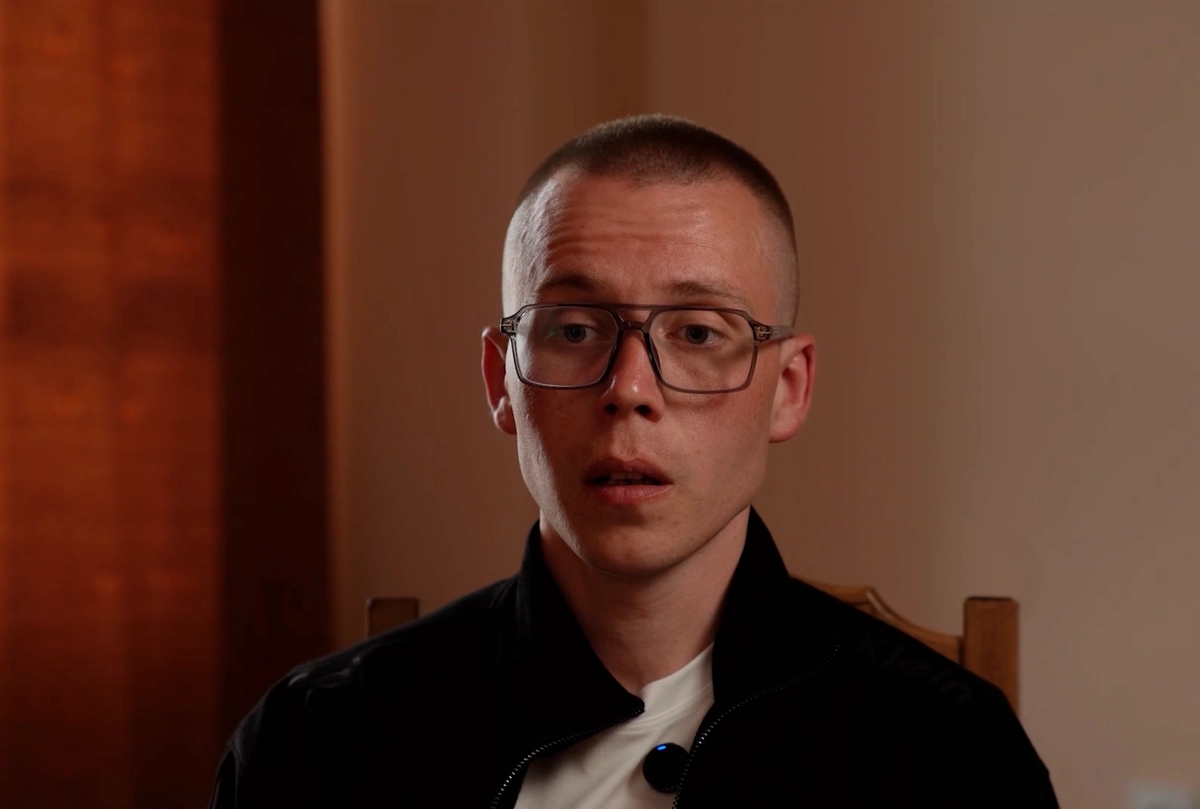
Oleksandr Zui graduated from the Chernihiv Music College and worked at the Chernihiv Philharmonic Center for Festivals and Concert Programs. He later signed a contract with the 36th Separate Marine Brigade of the Armed Forces of Ukraine, serving as a first-category musician in the brigade's orchestra. At the start of the full-scale invasion, he was in Mariupol. He was taken prisoner on April 12, 2022.
When we were captured, I had a small keychain with a picture of my wife on it. They took everything. They confiscated all my documents, stole all my valuables, even the ring and chain my parents and my wife had given me.
Right after we were captured, they didn't use force or torture. But as soon as we arrived in Olenivka, we got the kind of “welcome” prisoners receive in jail. You stepped into the “corridor,” and they beat you. You ran through it, sat down, they beat you there, and then you waited for your turn. When they finally got to you, you gave your name, went through the registration questions, and then they beat you some more. I saw men who were on the verge of death.
On April 21, we were taken to Russia's Ivanovo Region. I was surprised that they didn't beat us immediately. They jabbed us with stun guns, hit us with batons, and set dogs on us, but for the first three days they didn't actually beat us. They let us wash in cold water. To be honest, I was simply happy to see running water coming from a tap. All I wanted was something to drink.
At first, it seemed as though the food was adequate. There were supposedly three meals a day. But before the war I weighed 100 kilograms. When I returned from captivity, I weighed 62.
The hardest part was the beginning of captivity. They beat you constantly. Any wrong movement, and they dragged you out of the cell and beat you. There were no warnings — they went straight to the stun gun. When I came down with scabies, they “treated” it with electric shocks. They would say, “The ointment is only on Sundays. The stun gun is every day.”
When I came down with scabies, they “treated” it with electric shocks. They would say, “The ointment is only on Sundays. The stun gun is every day.”
In Ivanovo, I shared a cell with Sviatoslav Saltykov from the orchestra of the 36th Separate Marine Brigade. I stayed with him until the day he died. He developed internal bleeding, they took him out of the cell, and he never came back.
One thing I remember especially well was when they brought us a list of “the children of Donbas killed by the Ukrainian nationalist movement.” They forced us to memorize it. We spent about six months learning it by heart.
After Ivanovo, I was transferred to SIZO-2 in Taganrog. Compared with Ivanovo, I felt almost free there. They gave me a book to read and even let me look out the window. I remember thinking, “This is wonderful. I'm happy.”Everything is relative. There were interrogations, but given my position, there wasn't much they could try to extract from me.
I spent the last eighteen months of my captivity in a detention center in Russia's Perm Region. You got up in the morning, did your exercises, and sang the Russian national anthem. Not singing was not an option. The regime was harsh: you were allowed to sit for only three hours a day; the rest of the time you had to stand. There were also mandatory half-hour sessions of running in place. Talking was forbidden. You were allowed to read for one hour a day. One cellmate would take the next book and read it aloud.
In Taganrog, I heard about female prisoners. Among them was Viktoriia Roshchyna, a journalist from Berdiansk. She had become emaciated to the point of severe malnutrition. I never saw her myself, but I heard that she had to be fed with a spoon. She was an extraordinary woman — incredibly strong. She did everything she could to earn the guards' respect.
By the third year, they hardly beat us anymore, but we were forced to stand all day. You were allowed to sit for only three or four hours out of every twenty-four.
Driver-rifleman Oleksandr Volodymyrovych Zadorozhnyi, 57
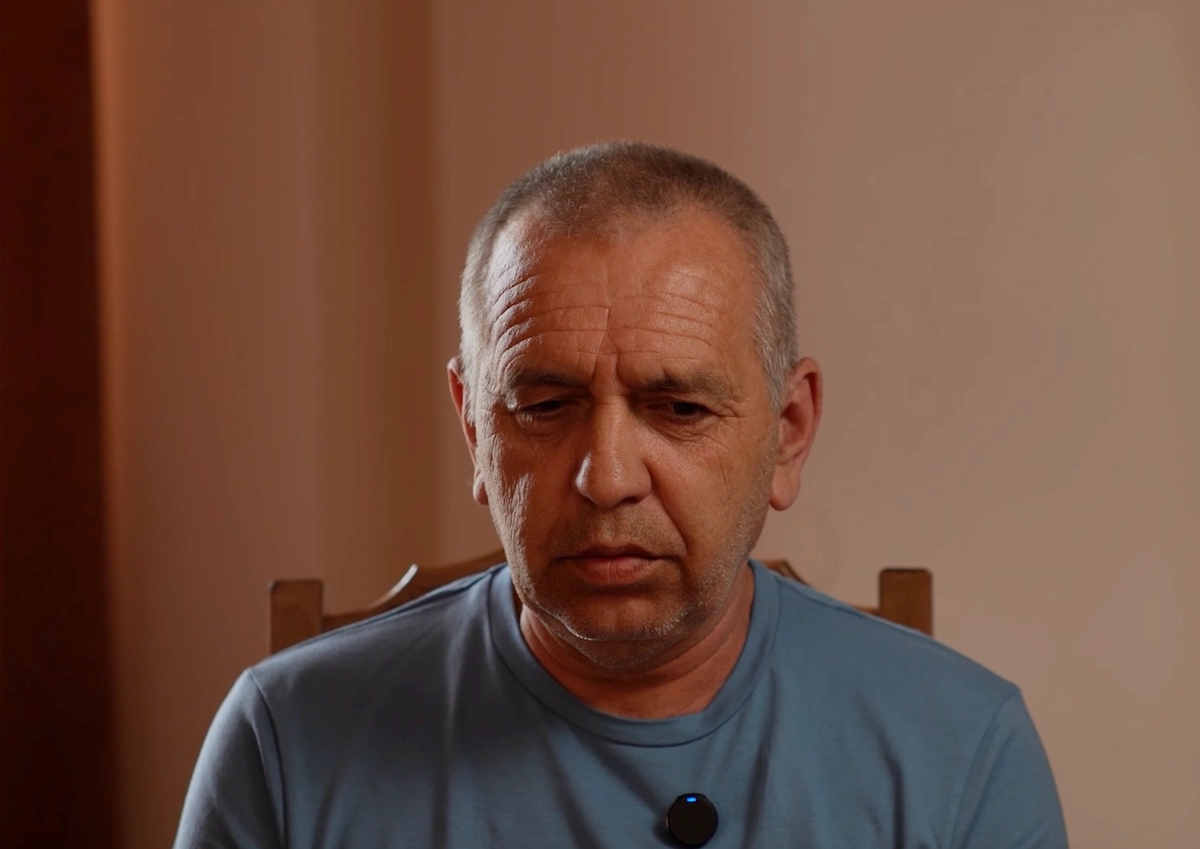
A native of Kirovohrad, Oleksandr Zadorozhnyi worked as a driver before the war. He volunteered for military service in March 2022. From March to July 2022, he remained in reserve in Ukraine's Mykolaiv Region. In July, he was assigned to the 57th Brigade. In September 2022, he was captured while moving to a combat position.
I spent the first three days in a basement in the village of Bezymenne in the Mykolaiv Region. Then we were taken to Nova Kakhovka and held in garages. From there we were transferred to Sevastopol.
For the first ten days they didn't beat us. The conditions in the barracks were more or less normal as well — no beatings, no insults. Then we were taken to Taganrog for two days, where the intake procedure was extremely brutal. On September 28, we were transferred from Taganrog to Kamensk-Shakhtinsky, where we remained until 2024.
The intake procedure in Kamensk-Shakhtinsky was brutal too. They made us run between two lines of guards, each of whom tried to land a couple of blows. Every day after that, during the morning inspection, in the exercise yard, and in the showers, we were beaten as well — with kicks, punches, and whatever else they had at hand.
People died in Kamensk-Shakhtinsky, though not in our cell. Two men died in neighboring cells. One, I was told, was beaten to death by a special forces officer. I didn't witness it myself, but that's what I was told. Another prisoner had a heart condition and also died. Once, while we were in the exercise yard, I overheard guards talking to each other. One of them said, “We've already buried nine of them.”
I spent the last two years in Kamyshin. During the morning inspection they forced us into the “star” position against the wall. They beat us with wooden mallets and stun guns. We were also beaten brutally in the bathhouse. They made us kneel and struck the soles of our feet and our ribs. The beatings in the bathhouse were carried out by the “bathhouse attendant,” who was also the commandant. If he was on duty, going to the bathhouse felt like being led to an execution. If he wasn't there, everything was relatively normal.
The beatings in the bathhouse were carried out by the “bathhouse attendant,” who was also the commandant. If he happened to be on duty, being taken to the bathhouse felt like being led to an execution
After the Red Cross and other organizations visited Kamyshin, the regime became somewhat less harsh. But the “bathhouse attendant” kept beating people even after those visits.
Before I was exchanged, I weighed 57 kilograms. Before I was captured, I had weighed 80. And I was one of the ones who lost relatively little weight. There were men there who looked like survivors of Buchenwald. In Kamyshin, we often didn't have enough time to finish our rations. The food was basically prison gruel, though it wasn't the worst. The worst food was in Taganrog. It was practically just water with a cabbage leaf floating in it. As for the porridge, if you turned the bowl upside down, it would stay stuck inside.