Russia is systematically building a system of religious control in the occupied territories of Ukraine. Russian troops are destroying and seizing churches as the new authorities force clergy to inform on parishioners and permit inspections during services — or worse. According to Ukrainian authorities, by the spring of 2025 Russian forces had killed at least 67 religious figures, and in the occupied Donetsk and Luhansk regions most non-Orthodox religious communities had either ceased to exist or gone underground.
Religious map of the war
Over the first four years of Russia’s full-scale war in Ukraine, the Religion on Fire project documented at least 742 cases of religious sites being destroyed or damaged. These included Orthodox churches, Protestant houses of prayer, Catholic churches, synagogues, mosques, and theological schools and seminaries — at least 146 sites in the Donetsk region, at least 83 in the Luhansk region, at least 78 in the Kherson region, and at least 51 in the Zaporizhzhia region.
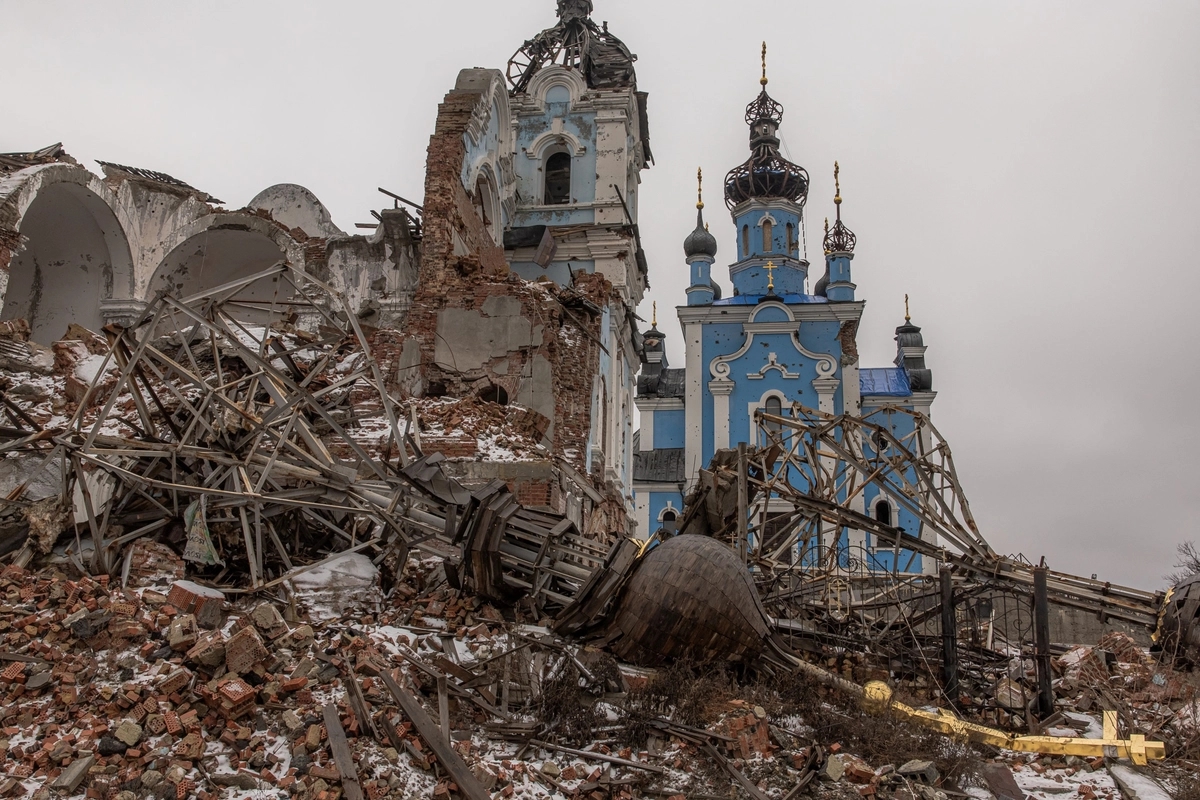
In Mariupol, which fell under Russian occupation after a months-long siege, buildings belonging to various religious communities were damaged. In May 2022, it became known that Russian troops had completely destroyed the local synagogue and the premises of the Jewish community center.
Valentyn Zahreba, pastor of the Seventh-day Adventist Church, said that both buildings belonging to his congregation in the city had also been completely destroyed. One of them was located on Mykolaivska Street, in the historic building of a former synagogue that had been transferred to the Adventist church. The second, on Shevchenko Boulevard, was also used by other Protestant communities.
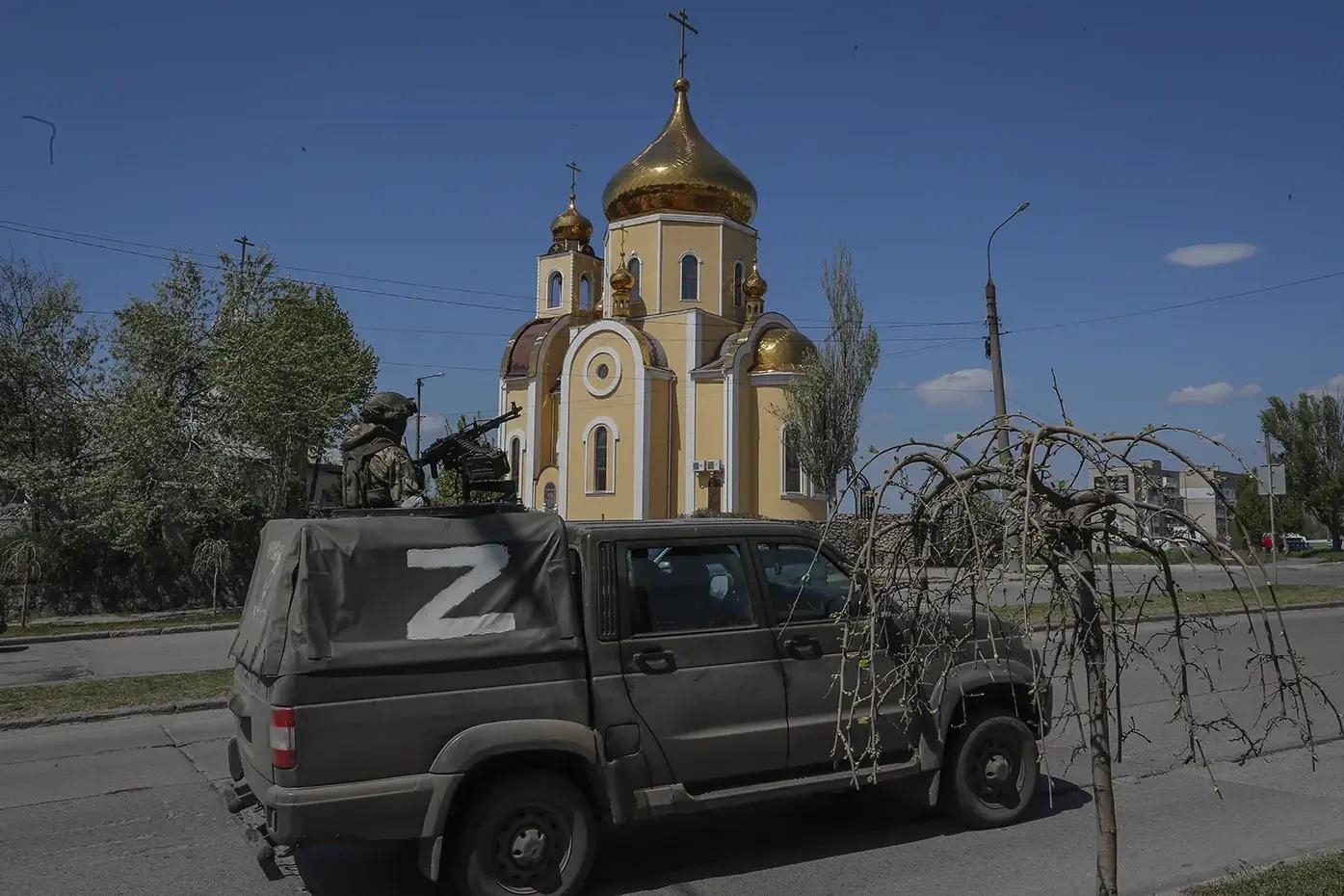
In the occupied territories, religious buildings were not only shelled. They were also seized, closed, and handed over to occupation authorities for use as military and administrative facilities.
Religious buildings were not only shelled – they were seized, shut down, and handed over to the occupation authorities
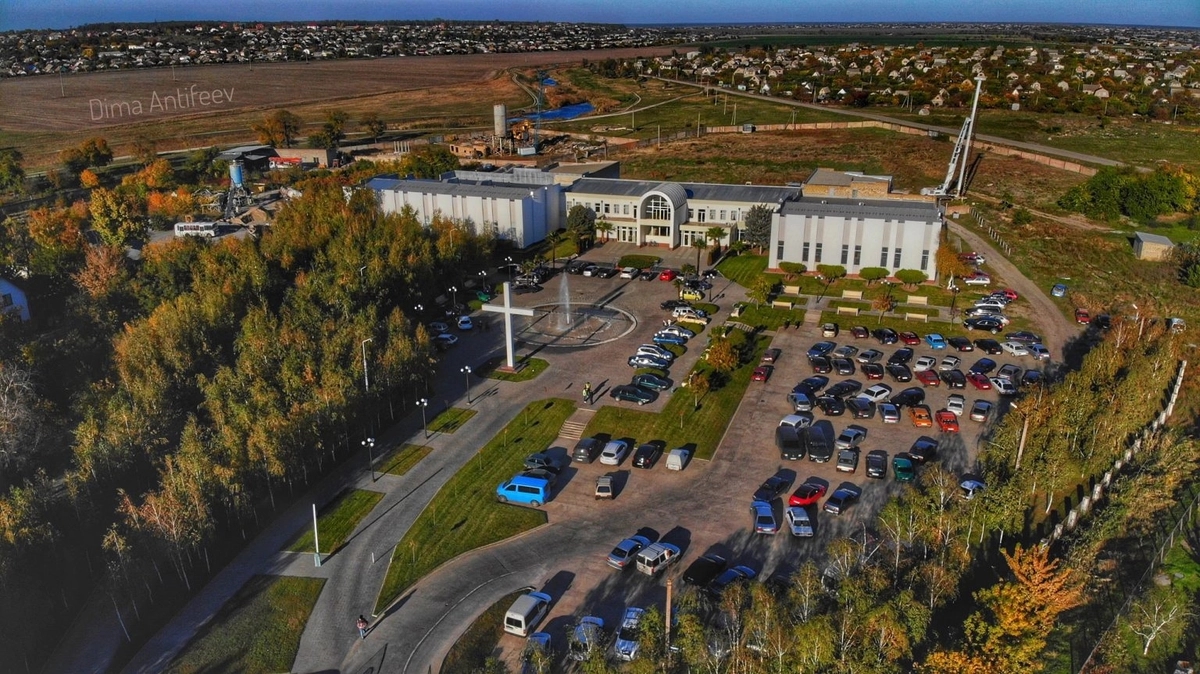
In Melitopol, Russian troops appropriated the Grace Evangelical Christian Church, founded in 1910. During the Soviet era, the congregation endured repression and the confiscation of its buildings, and the premises on the city’s main street were returned to believers only in 1991. Services continued there until September 2022, when armed men in masks stormed the church.
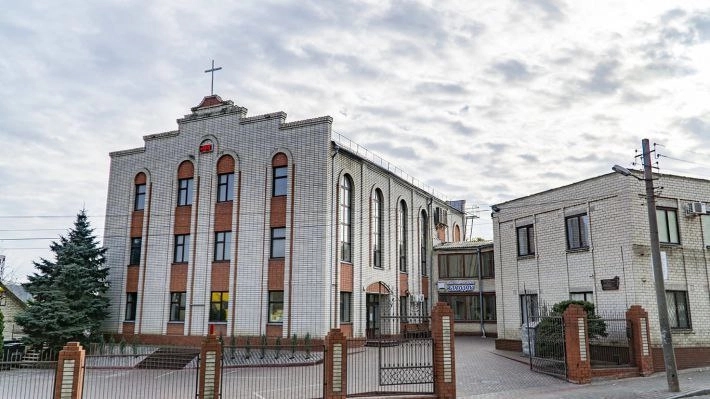
During the takeover, they blocked the exits, led parishioners out in groups, confiscated documents, and carried out a search. Pastor Mykhailo Brytsyn and the church administrator were detained and interrogated, after which they were given an ultimatum: leave the city within 48 hours, or else. The church itself was accused of “extremism.”
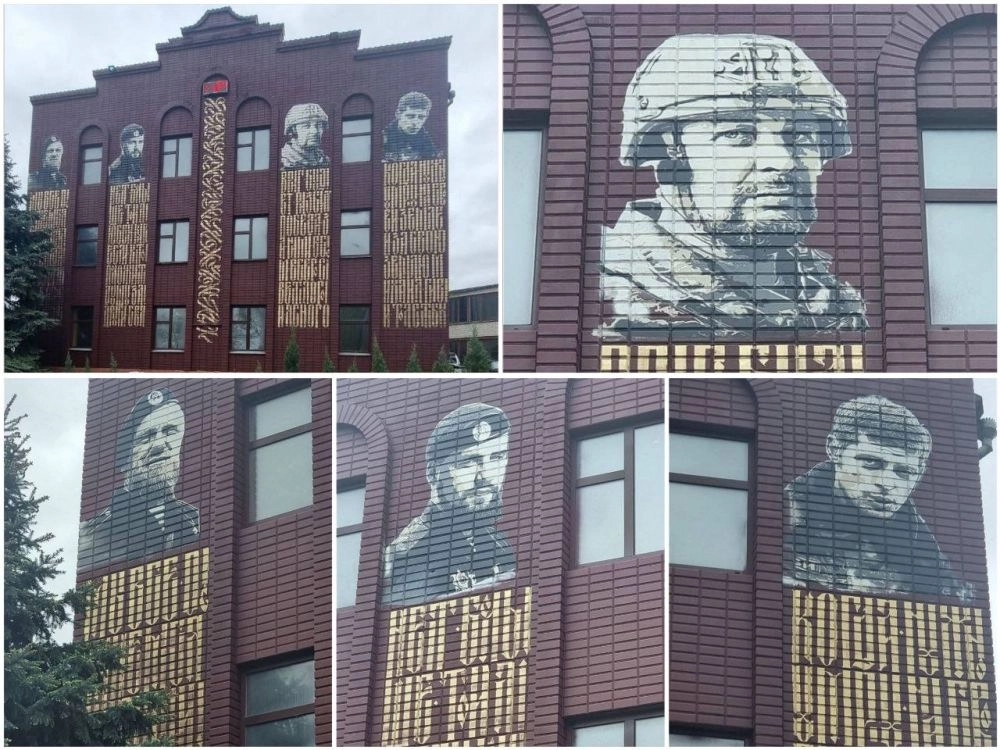
According to Brytsyn, the Grace building has now been handed over to the so-called Ministry of Culture of the Zaporizhzhia Region and is now used for concerts and ceremonies honoring pro-war propagandists. The cross was removed from the building’s facade.
Not only buildings came under attack. According to an estimate by Ukraine’s Ministry of Foreign Affairs, by the spring of 2025 Russian forces had killed at least 67 clergy members from a range of denominations. Some were executed for refusing to cooperate with the occupation administration or for publicly opposing Russian aggression. Others died during the shelling of churches and houses of prayer while remaining in place alongside their congregations.
Some were executed for refusing to cooperate with the occupiers or for publicly opposing the aggression, while others were killed during shelling
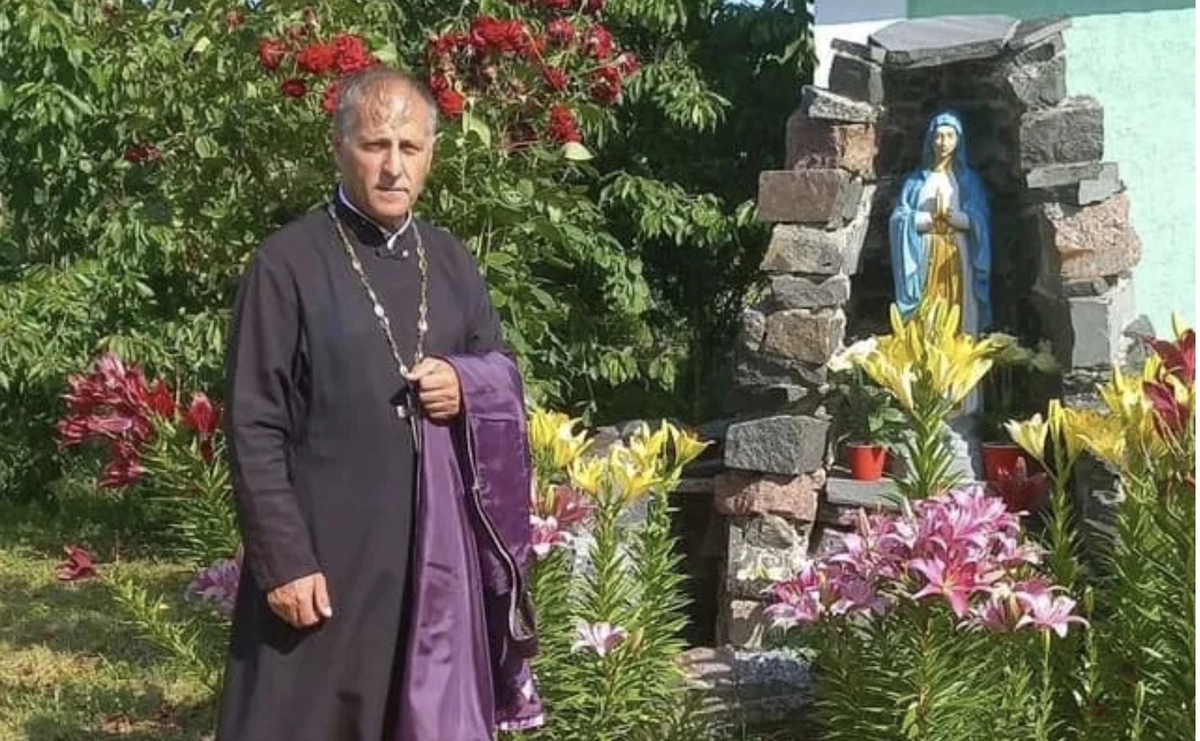
In February 2024, in the occupied part of the Kherson region, Russian troops took Orthodox Church of Ukraine (OCU) priest Stepan Podolchak from his home in Kalanchak, where he served. He was led away barefoot with a bag over his head. Two days later, the priest’s body was found bearing signs of torture.
Before the full-scale war, Podolchak conducted services in Ukrainian and continued to do so even after the occupation. He was repeatedly summoned for “conversations” with the FSB and pressured to join the Moscow Patriarchate. He refused.
Some religious figures in the occupied territories were subjected to arrest, interrogation, and imprisonment. In Melitopol, Russian troops detained Dmytro Bodyu, pastor of the Protestant Word of Life church, after he took part in public prayer services for Ukraine and helped believers leave the city.
In the Kherson region, Ukrainian Orthodox Church (UOC) priest Ihor Novoselsky spent 262 days in captivity. He was ordered to stop using the Ukrainian language and submit directly to the Russian Orthodox Church, but he refused and was imprisoned.
Maksym Vasin, director for international advocacy and research at the Institute for Religious Freedom, says that Ukrainian priests, pastors, imams, and other religious figures in the occupied territories were often among the first targets of the Russian occupation authorities. Then, as Russia consolidated its hold over the region, the pressure changed, as overt violence was gradually replaced by “legal” forms of repression through the imposition of Russian legislation.
“It is repressive at its core and serves as a smokescreen for the international community. Under the cover of law, the authorities are systematically destroying any form of dissent both in Russia itself and in the territories of Ukraine under its control,” Vasin says.{{
images_idcIhH5DjQi7yN3JLQ }}
From destruction to control
After the start of the full-scale invasion, most religious communities in the parts of the Donetsk and Luhansk regions controlled by Russia ceased to exist. Since 2014, Moscow had been developing its methods of repression in the occupied territories. Once Russian legislation was introduced, persecution could be formalized through administrative and criminal procedures.
Mykhailo Brytsyn, director of the religious freedom department at the international Christian organization Mission Eurasia and an elder at the Grace church, says that this legally formalized model of pressure allows the occupation authorities to portray the persecution of believers as “restoring order” or “combating extremism.” Such a system intimidates communities not only through direct violence, but also through fines, courts, paperwork, and registries. “The violence did not disappear. It was built into a bureaucratic and judicial framework,” Brytsyn says.
One of the main instruments of this pressure is the forced registration of religious communities under Russian law. According to Maksym Vasin, the occupation authorities threaten believers with the confiscation of church buildings and other property, demanding that they re-register under Russian regulations. To do so, the head of a religious community and its founding members are required to obtain Russian citizenship.
“The demand to accept Russian citizenship is part of the strategy of forced Russification and the destruction of the Ukrainian identity of the local population in the occupied territories of Ukraine, including churches and other religious communities,” Vasin says. At the same time, he adds, re-registration itself does not guarantee that property will be preserved. Moreover, the personal data of founders submitted during the registration process can later be used by the FSB for surveillance and raids on “illegal” home gatherings of believers.
In practice, the demand for registration is often presented to church leaders during summonses to military commandants’ offices for so-called preventive conversations, Brytsyn says. There, the clergy are threatened: either register in one form or another, or face bans, repression, and deportation.
Under Russian law, conducting religious activity without registration or without filing a required notice is prohibited. “Clergy are effectively faced with a difficult choice: accept the conditions imposed by the occupation authorities or go underground,” Brytsyn says. Those who continue to hold services without registration face administrative cases, followed by criminal prosecution.
Clergy are threatened: either register in one form or another, or face bans, repression, and deportation
The registration requirement functions not only as a way to legalize a religious community, but also as a mechanism of selection: some are allowed to exist officially, while others are denied that right. In the occupied Luhansk region, all Protestant communities were denied registration. Orthodox churches not affiliated with the Moscow Patriarchate were likewise unable to obtain permission to operate. Jehovah’s Witnesses, already banned in Russia, decided not to submit documents at all, fearing further persecution would follow the submission of believers’ personal data.
Refusal to register leaves a community without legal status and therefore without any formal right to use its church building. In practice, this paves the way for the forcible seizure of property: Russian troops and security services occupy church buildings, cut down crosses, and repurpose the premises for the needs of the occupation authorities. According to Brytsyn, by the summer of 2023 at least 15 churches of different denominations had been seized in Melitopol. Police officers now live in one of the buildings, while another houses the occupation “Ministry of Youth.” Several others simply stand empty.
Another instrument of pressure is Russia’s restrictions on “missionary activity.” In the ordinary sense, this means preaching and spreading religious beliefs. However, after the adoption of the “Yarovaya package” in Russia in 2016, the country began to interpret missionary work much more broadly. The amendments were introduced as anti-terrorism measures, but in practice they made it possible to punish almost any expression of religious belief outside officially authorized premises. Prayer meetings, home services, conversations about faith, and the distribution of religious literature could all be treated as violations.
In the occupied territories, this mechanism primarily targets communities that have lost their buildings or are unable to register under Russian rules. If an unregistered community gathers in private homes, the gathering itself can be declared “illegal missionary activity.”
One community subjected to such pressure in the city of Sorokyne was a congregation of Evangelical Christian Baptists (ECB). It is affiliated with the International Union of ECB Churches, which refuses state registration as a matter of principle. As a result, over the past few years Russian security forces have repeatedly carried out searches and raids during its services, while Pastor Vladimir Rytkov and other ministers were fined for “illegal missionary activity.” In March 2026, Rytkov was ordered to leave the occupied part of the Luhansk region within two weeks. The deportation order was issued ten days after yet another protocol was drawn up against him for “holding religious services without authorization.”
Went to a church service and ended up under FSB scrutiny
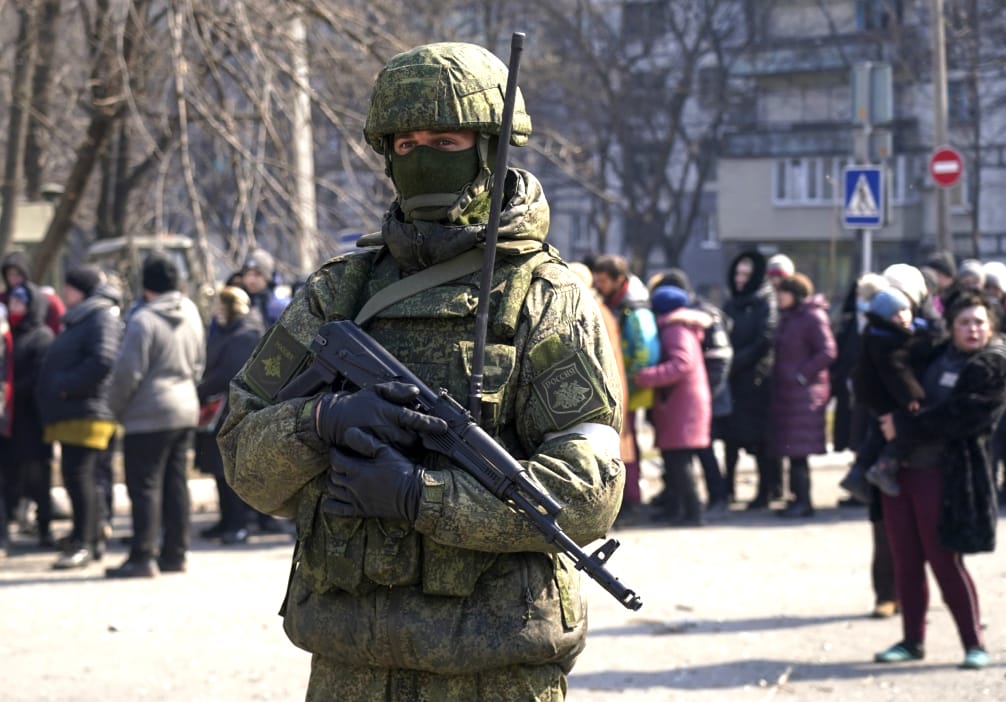
Even if a religious community in the occupied territories manages to retain legal status, religious services cease to be safe spaces, as Russian security forces can burst in for an inspection at any moment. “During such raids, they try to find signs of disloyalty among parishioners. First of all, they check whether people have Russian passports. Then they search phones for Ukrainian contacts, ties to the military or volunteers, subscriptions to Ukrainian social media, anti-Russian messages, and banned applications,” says Brytsyn.
If the occupation authorities begin to doubt a person’s loyalty, their home may be searched. “And very often it turns out that a Ukrainian almost always has something Ukrainian at home – and therefore something ‘prohibited,’” the pastor says.
The control does not stop at raids. After his release, Protestant pastor Dmytro Bodyu remained in Melitopol for a little while even though he understood that he would not be able to continue his ministry. To stay, he would have had to accept the occupation authorities’ terms — a concession that involved more than formal declarations of loyalty. According to Bodyu, the security forces demanded that he hand over lists of parishioners and their personal data, including places of work and income, and report on their attitudes towards the occupation.
Ukrainian churches do not collect such information, and this, the pastor says, baffled the security services. During interrogation, he was asked who in the SBU supervised him. “I told them: we don’t have anything like that. – What do you mean you don’t? That’s impossible,” Bodyu recalls his conversation with the security officers. According to him, they could not understand how a church could exist without supervision from the security services: “It’s a different way of thinking, a different view of life. For them it’s logical and understandable, but for us it isn’t.”
The Russian security services could not understand how a church could exist without supervision from the intelligence agencies
The pastor refused to cooperate with the occupation authorities and left Melitopol. Another minister remained in the city, and according to Bodyu, he was required to submit his Sunday sermons in advance for review. People who continue attending services now “walk as if through a minefield,” the pastor says. “You have to be extremely careful about expressing your opinions and think about who you are speaking to.”
In such an atmosphere, people begin to fear going to church, praying aloud, speaking Ukrainian, bringing their children to religious activities, or gathering in private homes. According to Brytsyn, there have been cases in which priests were ordered to disclose what they had heard in confession, even though the secrecy of confession forbids such disclosure. “Church life is turning from a space of trust into a space of fear and self-surveillance,” says Brytsyn.
Who is being targeted
According to Maksym Vasin, those most frequently subjected to repression are clergy and communities that the Russian security services regard as openly pro-Ukrainian: the Orthodox Church of Ukraine (OCU), which is independent from Moscow; the Ukrainian Greek Catholic Church (UGCC), which is subordinate to the Vatican; and Protestant denominations, primarily Baptists, Pentecostals, and Adventists. “Evangelical churches are also stereotypically viewed as pro-American structures and ‘dangerous’ sects supposedly leading the Orthodox majority astray,” Vasin adds.
In Crimea, Vasin says, the Russian authorities have effectively destroyed the presence of the OCU and the UGCC by eliminating all of their parishes, while Protestant churches were forced to sever their spiritual and administrative ties with Kyiv.
In the newly occupied territories, the OCU’s presence remains, but in an underground format. According to Metropolitan Epifaniy, the head of the Orthodox Church of Ukraine and Metropolitan of Kyiv and All Ukraine, OCU priests still remain in the Donetsk, Luhansk, and Kherson regions, but the church does not disclose statistics or details about their activities so as not to place people at additional risk.
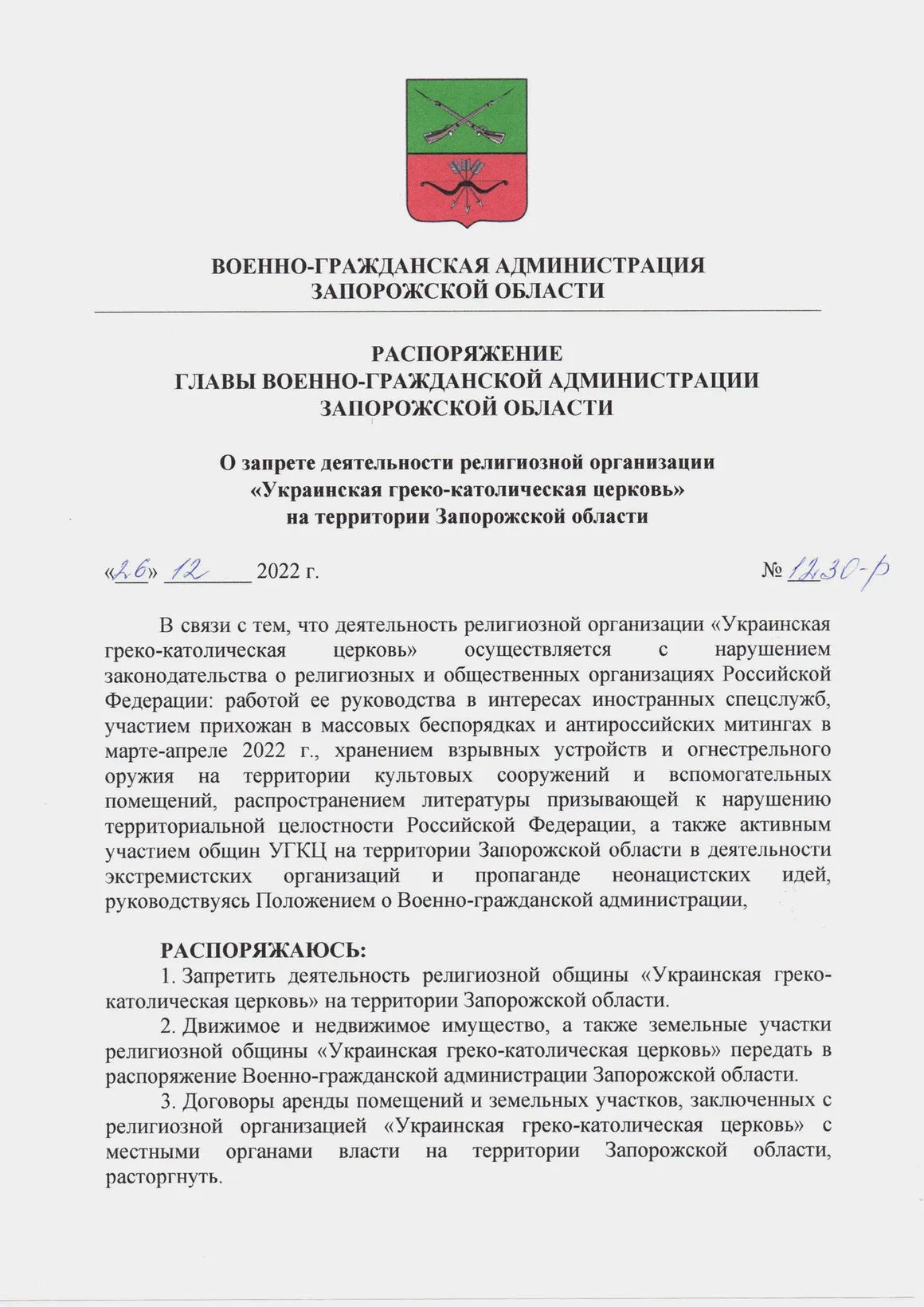
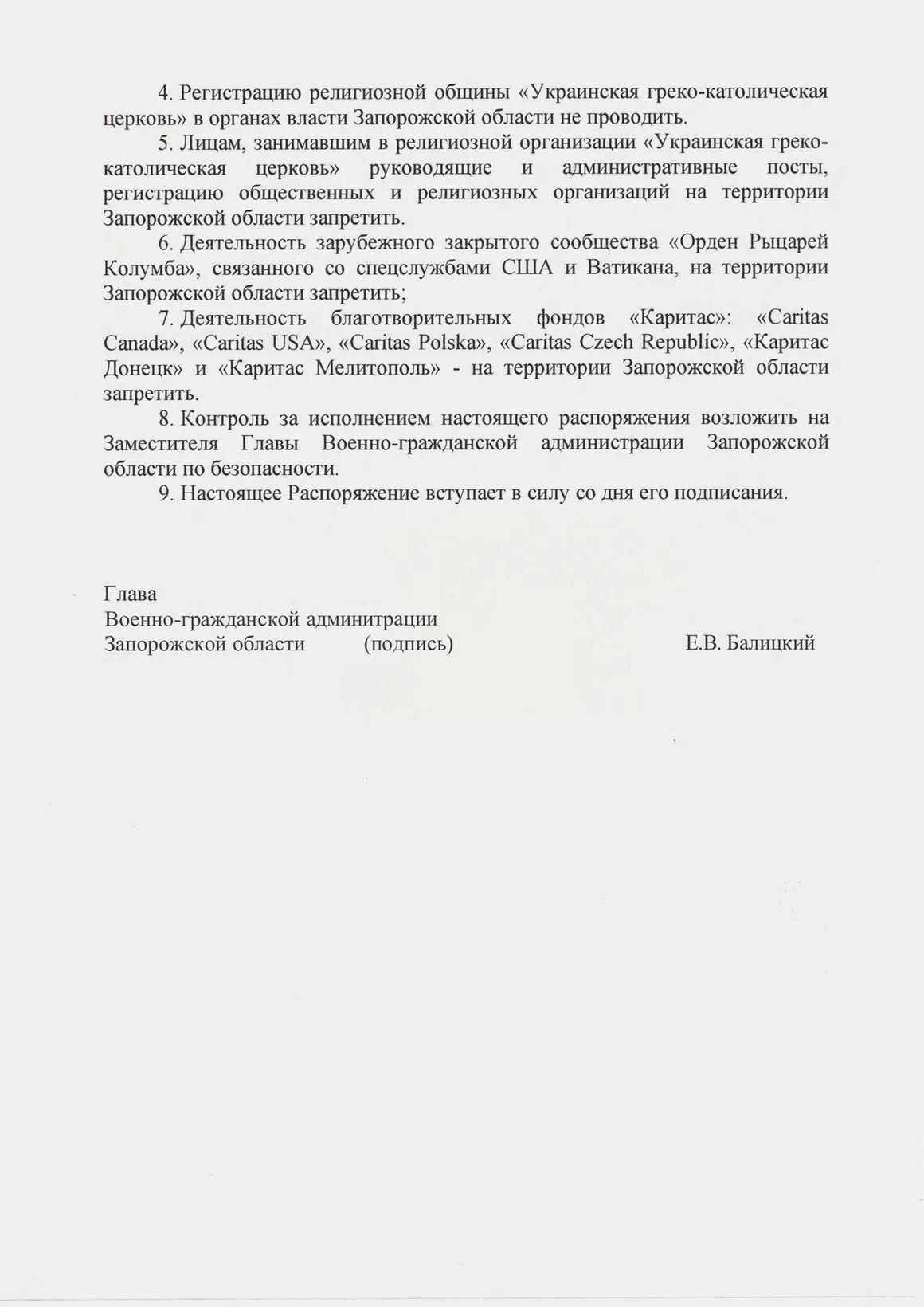
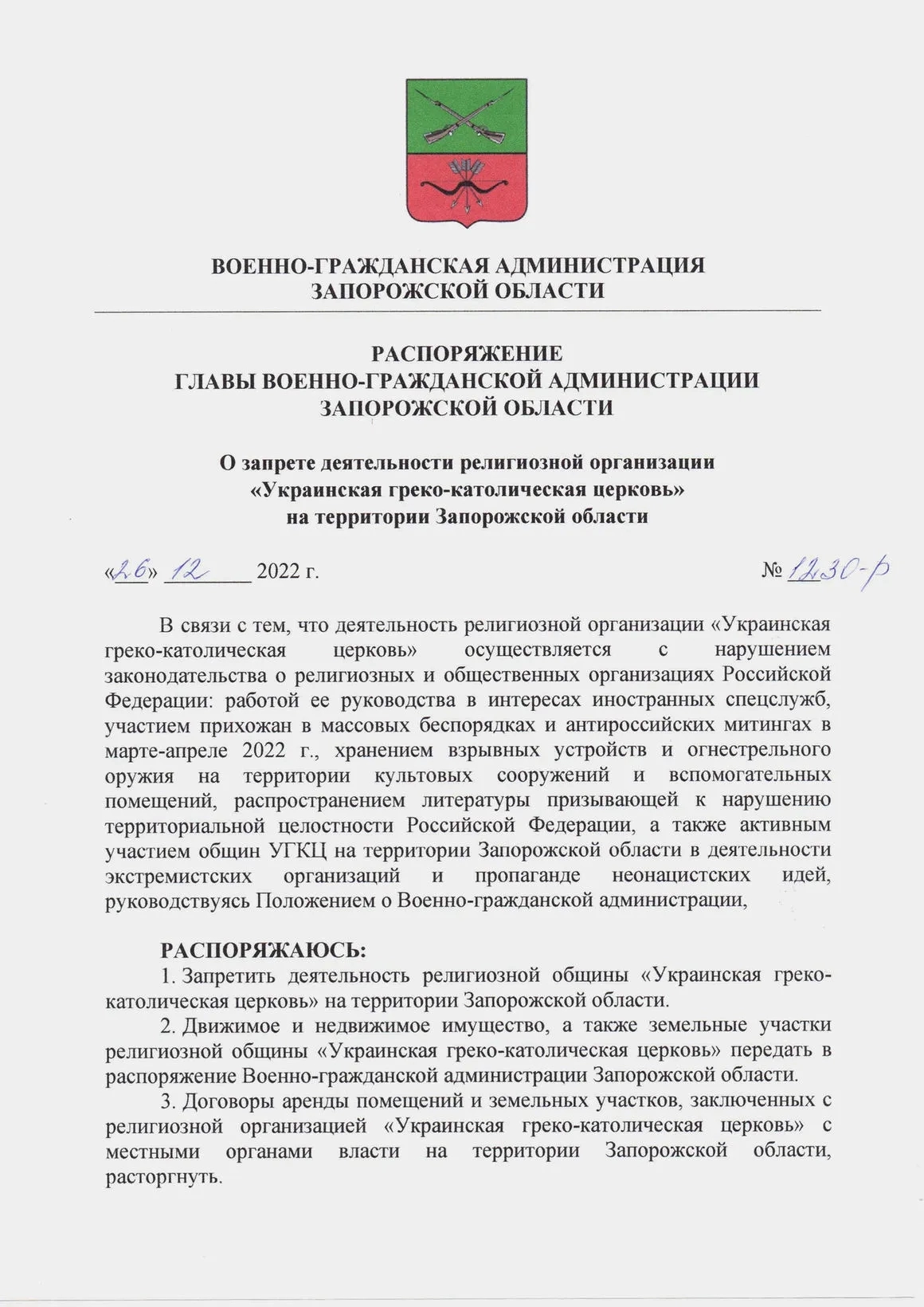
In the Zaporizhzhia region, the UGCC was banned by a separate order issued by the occupation administration. The document, dated Dec. 26, 2022, accused the church of operating “in the interests of foreign intelligence services,” participating in anti-Russian rallies, storing weapons and explosive devices, and engaging in the activities of “extremist organizations.” UGCC property and land plots were transferred to the military-civilian administration, lease agreements were terminated, and the registration of UGCC communities was prohibited.
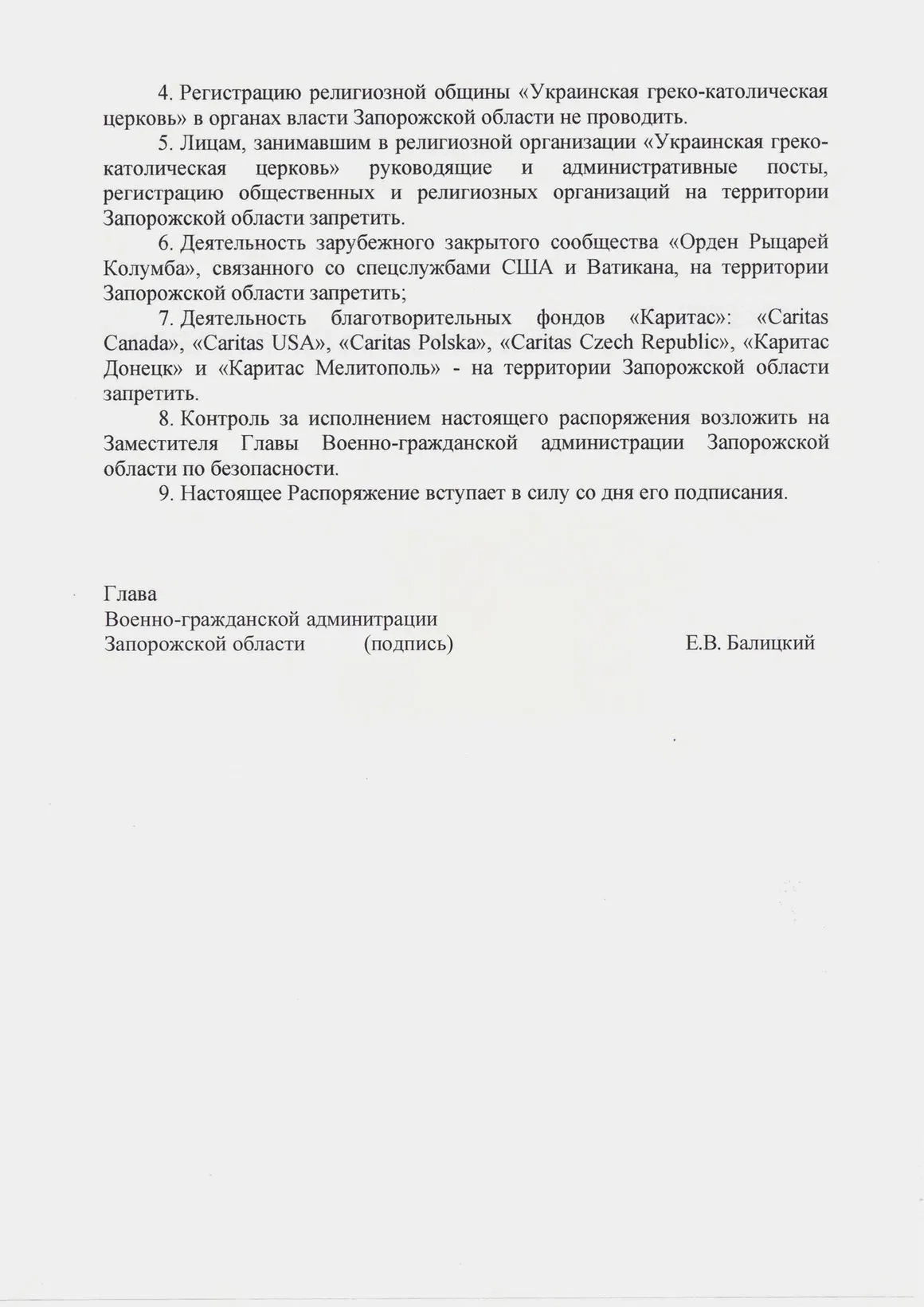
The head of the UGCC, Major Archbishop of Kyiv-Halych Sviatoslav Shevchuk, reported that not a single Greek Catholic parish remains in the occupied territories of Ukraine. “This means that UGCC parishioners have been left without the sacraments of confession and communion, which can only be administered by an ordained priest. And where can one be found under occupation?” asks Brytsyn.
Before the occupation, Protestant churches in Melitopol were a visible part of city life. Pastor Bodyu says that the city once had an interfaith council, communities held joint events with the local Ukrainian authorities, and clergy could directly approach the mayor, deputies, and officials whenever help was needed.
“Our city is small, and relationships between people matter a great deal. This isn’t about supervision – it’s about living together in one city and working for the good of our community,” he says. During Bodyu’s detention, Russian security officers were surprised to find the phone numbers of the mayor, deputies, the police chief, the prosecutor, and the head of the SBU in the pastor’s phone. As he recalls, “The remarks were along the lines of: we didn’t expect churches in Melitopol to be this influential and this organized.”
Bodyu believes the security forces did not come for him by chance. Instead, they had studied local churches in advance, knew where he lived, and had monitored him for some time.
“The reason for the repression is simple: these religious communities have their own horizontal ties, authority among local people, and often do not fit into the Moscow-controlled religious vertical. They are accustomed to the basic democratic norms by which they lived in Ukraine,” Mykhailo Brytsyn says.
The “correct” religion
In the occupied territories of Ukraine, pressure affects different denominations differently. In the case of the Ukrainian Orthodox Church (UOC), which is canonically linked to the Moscow Patriarchate, congregations are often simply forcibly integrated into the hierarchy of the Russian Orthodox Church. According to Maksym Vasin, the Russian authorities demand that UOC bishops and priests abandon the Ukrainian language, sever their ties with Kyiv, and submit directly to the religious authorities in Moscow. “For the Russian authorities, local church communities and religion in general are instruments of propaganda and control over the population of the occupied territories,” he says.
The Russian authorities demand that UOC priests abandon the Ukrainian language, sever ties with Kyiv, and submit directly to the ROC
After the start of the full-scale war, the UOC declared its independence and autonomy from the Moscow Patriarchate, but the ROC did not recognize this status. As a result, several UOC dioceses in the occupied territories have already been incorporated into the ROC, while bishops and priests who opposed the move have been pushed out or persecuted.
In the Berdyansk diocese, Metropolitan Yefrem (Yarynko) opposed the transfer, but most priests petitioned Patriarch Kirill to accept their parishes into the Moscow Patriarchate. In May 2023, the diocese was incorporated into the ROC, and another bishop was appointed in place of Yefrem.
One of the priests who refused to sign the appeal to Patriarch Kirill was Kostiantyn Maksymov. Two weeks later, he was detained by the occupation authorities, and in August 2024 a court in occupied Crimea sentenced him to 14 years in a maximum-security penal colony for espionage. According to the investigation, Maksymov collected information about Russian air defense systems and passed it to an SBU officer.
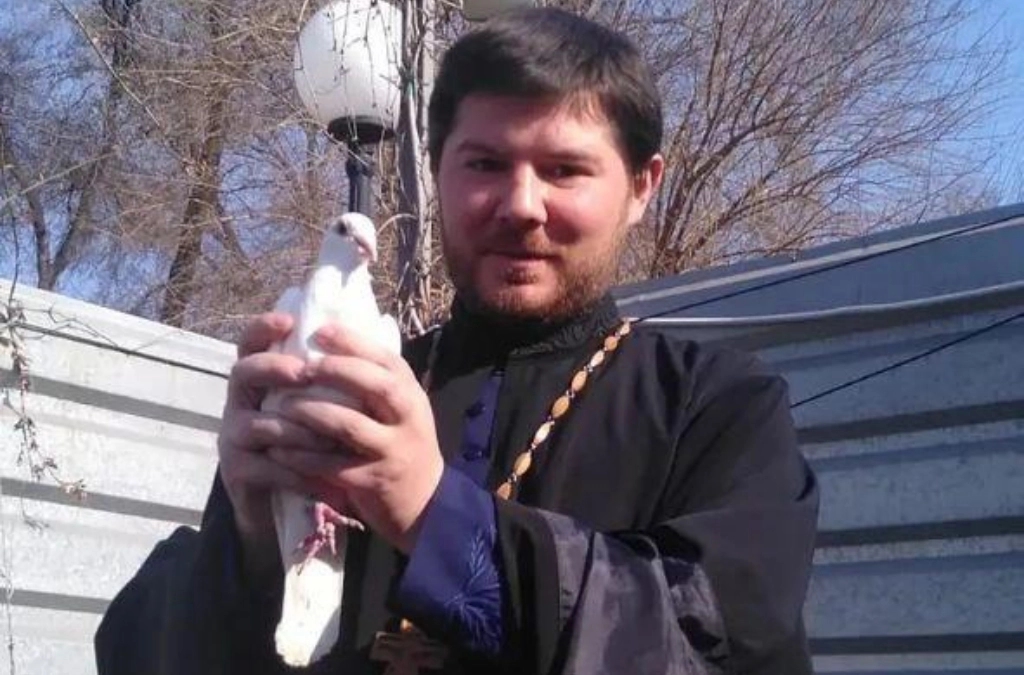
At the same time, the ROC was not only integrating occupied dioceses into its hierarchy, but also giving religious meaning to Russian aggression, describing the war as “sacred.” OCU priest Andriy Dudchenko, who lived through the occupation in the Kyiv region, recounted how an ROC chaplain had convinced Russian soldiers of the morality and necessity of the war against Ukraine.
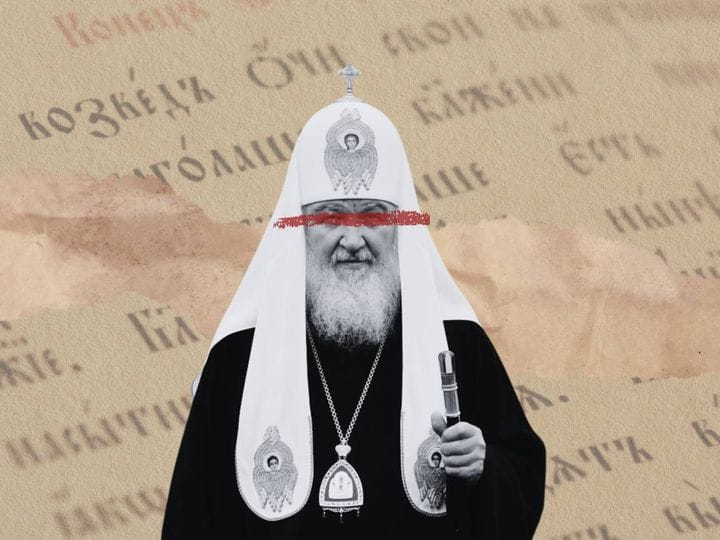
Patriarch Kirill and other representatives of the Russian clergy continue to justify the war despite the deaths of civilians and the destruction of civilian infrastructure, including of Orthodox churches. “The leadership of the ROC and other religious structures loyal to Russia legitimize the regime’s hatred and xenophobia through religious terminology: ‘spiritual struggle,’ ‘spiritual bonds,’ ‘traditional values,’ and the ‘Russian world,’” says Mykhailo Brytsyn.
Religious genocide
Brytsyn describes the Russian authorities’ repression of religious communities in the occupied territories as religious genocide. In his view, this is not a series of isolated episodes, but a systematic policy aimed at destroying the religious identity and everyday life of these communities.
“In essence, the very core of religious freedom is being destroyed — the ability to live according to one’s faith and convictions. The Kremlin regime, having merged with the Russian Orthodox Church and adopted the ideology of the ‘Russian world,’ has carried out a total purge of the religious sphere. Everyone who refuses to openly support this system is subjected to pressure and driven out,” Brytsyn says.
The very essence of religious freedom is being destroyed — the ability to live according to one’s faith and convictions
Ukrainian believers are forced to choose “between bad and even worse.” Those who have left search for new communities in other cities and countries, while those who remain must engage in only extremely cautious forms of ministry. “Communities fragment, lose their public presence, but do not always disappear. They continue to exist in small groups through dispersed support networks and personal ties,” Brytsyn explains.
Pastor Bodyu says that, in Melitopol, little remains of the local religious communities’ former public life after church buildings were seized. Elderly parishioners, who find it easier to adapt to the new conditions, now make up most of those attending services. “The church is now in survival mode. Believers need to gather, communicate, and pray so as not to completely lose heart,” Bodyu says.
Mykhailo Brytsyn reflects on what is happening — not only as a researcher, but also as a pastor. For him, the survival of communities is not dependent on the ability to hold public services in an established building. “The true Church of God knows how to survive under any conditions. Neither comfort and prosperity nor repression and killings can destroy it,” he affirms.