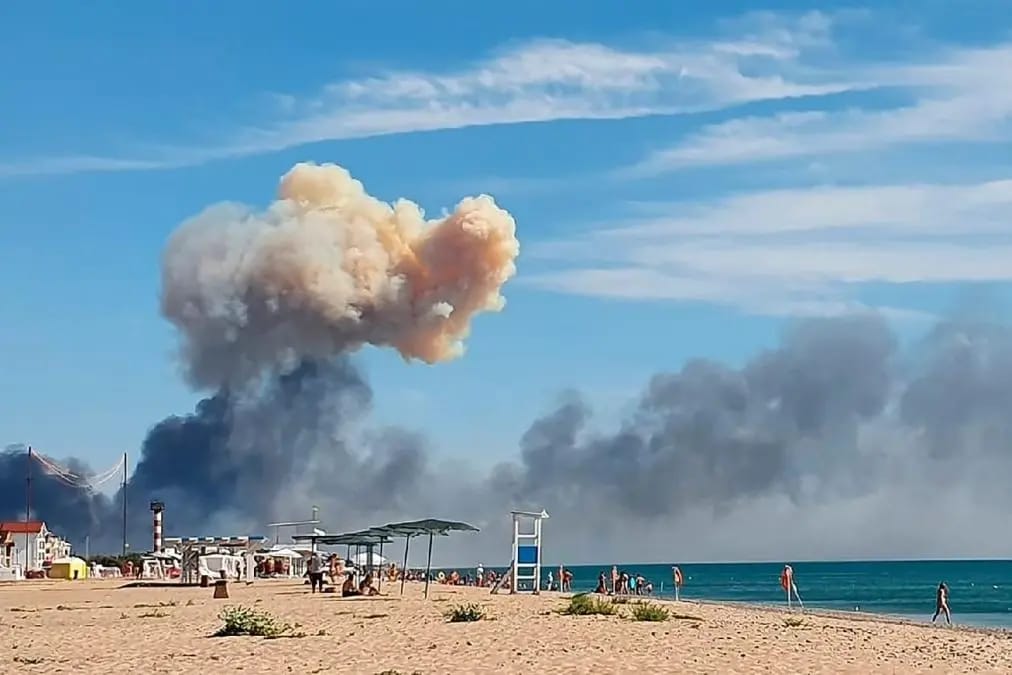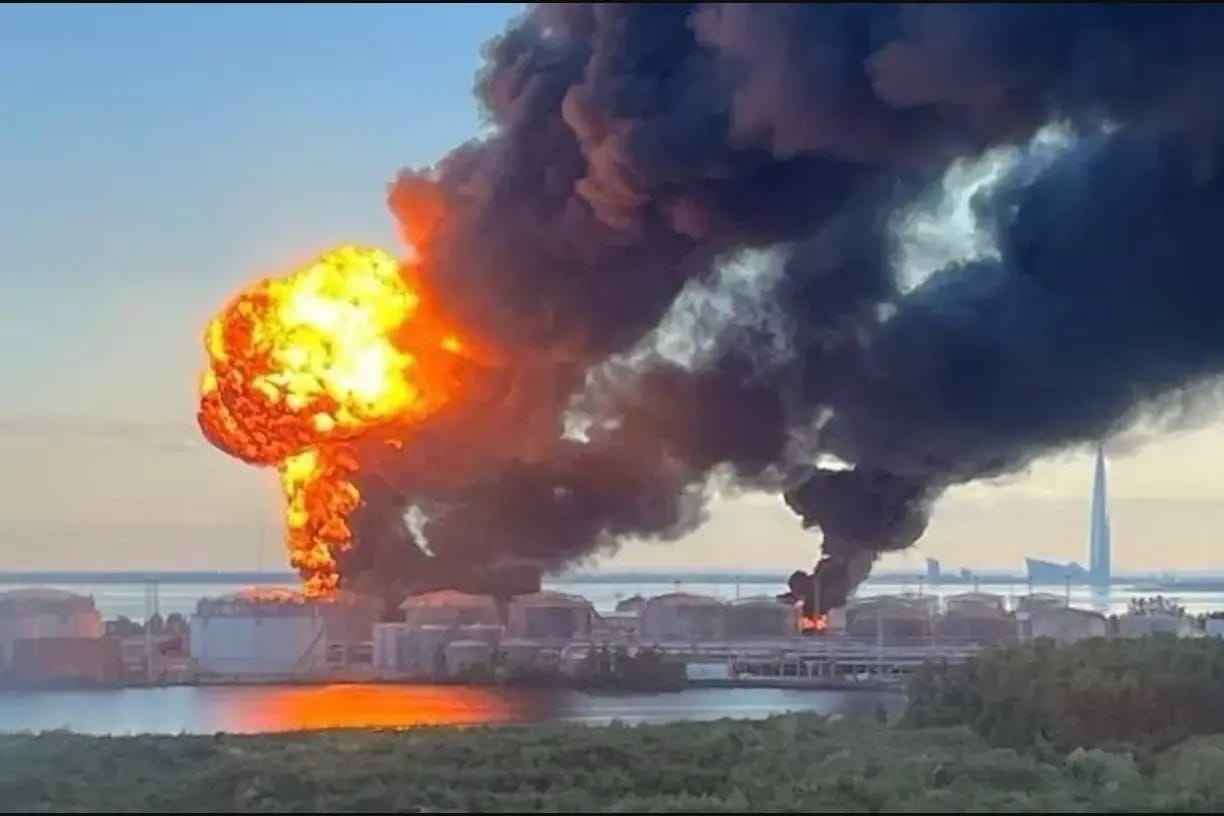
Russian travel agencies are taking stock of the first half of the summer, and the results are dismal. Hotel bookings in June were down by 15% year-on-year, and the situation is dire not only in occupied Crimea and along the oil-polluted coast around Tuapse, but across all tourist destinations from Lake Baikal to Kaliningrad. Amid drone strikes, a fuel crisis, constant airport closures, and an overall decline in living standards, Russians have completely rethought their approach to summer vacations. Trips have become cheaper and shorter, with far more excursions planned at the last minute.
Tour operators have taken stock of the start of the summer, and the results are discouraging. In June, 15% fewer hotel rooms were booked in Russia than a year earlier, while bookings for July and August were down 10%. The share of online bookings that were canceled has already reached 20%.
According to the figures for last summer, Krasnodar Krai ranked first in bookings (20.3% of the total), while Crimea came in fourth (4.7%). The results from the first half of this summer already make clear that the trend has shifted. Moscow (15%) and St. Petersburg (12%) were the leading regions for bookings in June, while Krasnodar Krai (11%), hit by drone attacks and oil spills, came in only third. Crimea, which is suffering power outages and gasoline shortages while surviving on the verge of complete isolation, failed to make the top ten, falling behind Moscow Oblast (5%), Tatarstan (3%), Nizhny Novgorod (3%), Sverdlovsk (3%), Rostov (2%), Samara (2%), and Kaliningrad (2%).
At a press conference held by the Russian Union of Travel Industry (RST), industry representatives said that since the beginning of the year prices had generally been raised by an average of 10–15% year-on-year; however, they added that “as early as May, the number of special offers rose sharply across the board, while a trend toward lower prices gained momentum.”
As Marina Goncharenko, executive director of the B2B hotel booking platform Bronevik.com, noted at the RST press conference in June: “for the first time in many years, the average nightly rate also fell. The average daily rate is now 5,600 rubles, down 3% from last year.” The trend is the same for July and August.
RST President Ilya Umansky separately summed up the results of the first half of 2026. After analyzing data from Travelline, an IT platform for hotel management, he found that the number of bookings for May–September had fallen by 5.4% compared with last year.
The decline is, of course, most pronounced in Crimea. In early July, Travelline recorded a 41% drop, although that figure has since become badly out of date. Regions that, in theory, should have benefited from Crimea’s collapse also lost customers. Stavropol Krai saw bookings fall by 14.8%, while Kaliningrad Oblast lost 9%.
Umansky concluded that “the domestic tourism market has entered a correction phase” — a popular euphemism in the Russian lexicon denoting an economic downturn. Umansky attributes sectoral recession to four factors: declining consumer activity, the strengthening of the ruble (which has made vacations abroad cheaper), mass flight delays and airport closures due to drone attacks (or “transport restrictions,” according to the official euphemism), and “the concerning situation with fuel supplies for road tourism.”
The Russian tourism market began experiencing problems at the start of the year — even before the Ukrainian Armed Forces launched their campaign of long-range strikes. As to a tourism industry representative named Viktor (name changed at his request): “Purchasing power in Russia has fallen sharply. In addition, a tourist tax was introduced in 2025. People are looking at the political and economic situation and cutting back on expenses they can do without for now.”
Under the circumstances, Viktor says, the hotels that did not raise their prices came out ahead. The problem is that almost all of them introduce price hikes. For one thing, 2024 was the best year in the history of Russia’s domestic tourism industry: demand was enormous. As a result, in 2025 and early 2026 market participants expected something comparable and raised their prices.
There were also underlying reasons for the price increases, The Insider’s source continues. Payroll costs have risen sharply. And as of this year, small hotels operating under Russia’s simplified tax system are required to pay VAT.
Crimea: discounts, generators, and free gasoline
“Hoteliers have realized a simple truth: ‘zero tourists’ is scarier than ‘making no revenue.’ And they flooded the market with offers at discounts of up to 50%. On travel booking platforms, hotels in Yalta, Alushta, and Sevastopol began offering discounts of up to 40–50%,” the local outlet Ruinformer writes, describing the situation in occupied Crimea.
As a result of Ukraine’s successful campaign to cut off the peninsula, tourist traffic to Crimea has fallen catastrophically. This has effectively been acknowledged at the state level: the Russian government is urgently allocating 3.7 billion rubles to Crimea and another 584.5 million rubles to Sevastopol to support the tourism industry. The government's website says the money is intended “for one-time payments to employees of more than 4,600 companies operating in the tourism industry.”
Without government assistance, Crimean hotels cannot even refund customers who have canceled their bookings. Sergei Makovey, head of the Crimean Hoteliers Association, explained to journalists that advance payments for the season have often already been spent on renovations and food. Still, he insisted that “the money will be refunded in full” once the government comes up with mechanisms to assist hoteliers.
Without government assistance, Crimean hotels cannot even refund customers who have canceled their bookings
Dissatisfied customers are already complaining. “It’s been 13 days since I submitted my refund request. No one is responding anywhere. It looks like I’m not going to get my money back, and I’ll have to go to court too,” one customer wrote in the chat for the Yalta-Intourist hotel.
“For obvious reasons, I had to cancel my reservation at a resort in Saki. The owner hasn't refunded my advance payment for almost a month. She says [that] she can’t leave the resort to go into town and transfer the money to my card,” another tourist says.
Meanwhile, the number of people unwilling to vacation without electricity and amid drone attacks continues to grow. According to more recent figures cited by Ruinformer, 79% of bookings in Crimea have now been canceled. At some hotels, 90% of customers canceled their June stays.
In addition to discounts, hotels are trying to lure tourists by advertising their “independence” from centralized electricity and water supplies — promising vacationers access to generators, private wells, and fiber-optic internet. Some have launched a “free gasoline” promotion, offering at least 10 liters with bookings of two nights or more.
Tourists are still coming to the southern coast of the occupied peninsula. Yalta is attracting customers to upscale hotels equipped with backup generators at prices comparable to budget vacations in Sochi — around 13,000–15,000 rubles per night. Beregovoye (Feodosia) is pitching itself on the grounds that “it is a quiet location that doesn’t make the news for attacks and emergencies.”
Krasnodar Krai: fuel oil spills and “Carpet” alerts
It might seem that Kuban should be picking up the tourists who have abandoned vacations in Crimea. Instead, oil in the sea, drones in the sky, and lines for gasoline on the roads are having their effect in mainland Russia as well.
Airports in the south of the country periodically impose a “Carpet” alert, suspending operations for several hours because of the threat from drones, and the word has already entered the jargon of tourism industry workers. Viktor says this is one reason Sochi has barely benefited from the decline in visitors to Crimea: “There are serious transportation problems there in general. The coastal highway was never built, not everyone wants to take a commuter train to their hotel, and traffic jams are compounded by the constant ‘Carpet’ alerts at the local airport.”
Another factor is prices. The cost of vacationing in Sochi has risen sharply on two occasions in recent years. The first increase came during the Covid pandemic, when foreign travel was suspended, and the second during the domestic tourism boom of 2024. As a result, Viktor says, the resort now has “a lot of properties whose prices don’t match their quality.” And indeed, according to RST data, between May 1 and July 8, Sochi and Tuapse “posted year-on-year declines.”
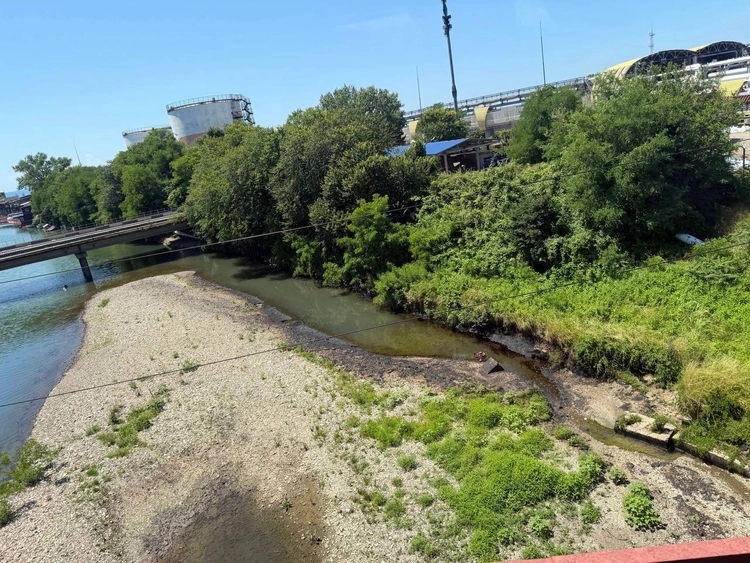
In Tuapse, however, the main factor is pollution stemming from a major fire at an oil depot — the result of a successful Ukrainian Armed Forces strike in April. Local authorities claim that the beaches have been cleaned up, but local social media channels say otherwise. As the My Tuapse Telegram channel asked in mid-June, “Primorsky Beach was checked for fuel oil and everything was cleaned up, but is the rest of the coastline just going to stay ‘black’?” In another post from July, the channel noted: “The mouth of the Tuapse River is covered in oil, which currents and wind carry out to sea, and then we wonder why swimming in the sea feels like taking a Naftalan bath…”
Meanwhile, tourists are returning to Anapa, which was virtually shut down last season following a fuel oil spill in late 2024. According to RST data, Anapa received 25% more tourists from early May to early July than during the same period last year. And in June, according to the Association of Tour Operators of Russia (ATOR), the number of bookings doubled year-on-year.
Against the backdrop of Crimea’s collapse and the environmental disaster in Tuapse, Anapa continues to recover. But it is still a long way from its 2024 levels, The Insider’s industry source says: “This is one of the few destinations where demand has risen sharply. But last year Anapa was essentially shut down because of the fuel oil spill. So the increase is coming from a fairly low base. Even with such impressive growth, the number of vacationers there is still lower than in 2024.”
Following the disastrous 2025 season, many Anapa hotels introduced discounts, in some cases as high as 35–40%. ATOR cites inexpensive all-inclusive vacations as one of the drivers of growth. And Anapa has all-inclusive options for every budget — at both five-star and three-star hotels. Viktor explains that not all tourists go to Anapa to swim: “There’s a fairly large supply of hotel rooms there, and for many vacationers, swimming isn’t the main attraction. Besides, they really did clean up the beaches and sift through a fairly large amount of sand.”
Officially, Anapa’s beaches are considered to be cleared of fuel oil. But vacationers writing on social media regularly report petroleum pollution.
“For those asking about the fuel oil: unfortunately, we found traces of it that had been poorly covered up. Some of the fuel oil had simply been buried under sand. The sea had washed it out, and you could see bags and remnants of netting. Incidentally, after a strong storm, almost all of it was washed back into the sea. I tried touching it with my fingers — and it really did smear and was difficult to wash off,” a vacationer writes.
Another blogger says that she had always vacationed in Anapa on undeveloped beaches because they were quieter and less crowded. But that has now become impossible: “First we went to our usual undeveloped beach and found fuel oil. In some places there were fresh patches, in others it had already soaked in. Plus rotting seaweed.”
Vacations are also being actively discussed on parenting forums. “I canceled Anapa for June. We decided to go to Turkey again. At home you’re constantly hearing air raid alerts and explosions — you don’t really want that while you’re on vacation,” one member of the Babyblog forum admits.
Kaliningrad loses out anyway
At first glance, what is happening at the Black Sea resorts should have been a real boon for the tourism industry in Kaliningrad. But that has not proven to be the case. By the start of the summer, local hotels had nearly 20% fewer bookings than a year earlier.
The slump subsequently became less pronounced, but Kaliningrad’s tourism industry is now hoping, at best, to receive as many vacationers this year as it did last year. No one expects growth. Local businesses report a 40–50% drop in tourist traffic from organized groups. They also point out that even the most popular hotel still “has rooms available for mid-July, which basically never happens.”
Even the most popular hotel has rooms available for mid-July, which basically never happens
Why haven’t vacationers switched from the Black Sea to the Baltic? Swimming in 19°C (66°F) water will not appeal to everyone. But that is not the main factor, Viktor explains. Prices in Kaliningrad Oblast were pushed up quite aggressively in 2024–2025, and that move has now backfired.
There is another issue as well: “Kaliningrad Oblast is heavily dependent on air travel. There are trains, of course, but people who can afford a decent vacation fly there. And with the constant ‘Carpet’ alerts, you can end up losing part of your vacation.”
Lake Baikal: a fuel disaster
Lake Baikal is among the tourist destinations hit hardest this year — also as a result of successful Ukrainian strikes on Russian oil refineries, which have affected drivers’ access to gasoline.
Marina Grigoryeva, chair of the Tourism, Resort, Recreation, and Hospitality Business Committee at the East Siberian Chamber of Commerce and Industry, estimates that 20–45% of hotel and tourist lodge bookings have been canceled because of the fuel crisis. She believes that if gasoline rationing at filling stations continues, 90% of tourists from other regions will cancel their trips to Lake Baikal.
If gasoline rationing at filling stations continues, 90% of tourists from other regions will cancel their trips to Lake Baikal
The problem is that tourism around Lake Baikal is heavily dependent on gasoline. The main tourist attractions are 200–350 kilometers from the nearest airport or railway station. Additionally, passenger boats and motorboats that operate on the lake need fuel as well.
Elvira Tokareva, CEO of the Baikal Nord tour operator, says that “people have to wait in line for fuel for as long as 12 hours.” And boat and helicopter operators are raising prices, pushing costs far above what was expected when trips were booked, Tokareva explains:
“The number of bookings is falling. Tourists are probably worried that excursions might be canceled. Overall, the situation is very bleak. Of course, we hope things will somehow improve. We have an oil refinery in Irkutsk Oblast that could meet our needs. But as it turns out, most of the fuel has been shipped out of the regions to Moscow and central Russia. Our region produces this fuel but cannot make use of all of it.”
On the other side of Lake Baikal, in Buryatia, the situation is no better. Dmitry Belozerov, head of the tour operator Ves Baikal (“All of Baikal”), explains that tourism is being hit both by rising gasoline prices and by fueling restrictions. Every ten-ruble increase in the price of gasoline adds 1,000 rubles to the cost of an excursion from Buryatia to Olkhon Island. According to him, “you can only buy 30 liters a day, while a trip from Buryatia to Olkhon Island requires 150–200 liters.” His own company has only enough fuel left for a few more trips.
Residents of the regional capital, Ulan-Ude, have also stopped traveling to Lake Baikal, Belozerov adds, because they simply have nowhere to buy enough gasoline for a long journey. Normally, local residents make up the bulk of visitors to Lake Baikal in June. But the start of this season has been a complete washout because of the fuel shortage, admits Vadim Kopylov, deputy chairman of the Siberian Baikal Tourism Association. If gasoline does not become available within the next few days, he says, the entire season will be lost.
Former Irkutsk mayor Viktor Kondrashov, whose family owns the Port Olkhon hotel, told reporters that hotels have already been forced to cut staff. Employees are being placed on unpaid leave, and hotels are no longer hiring the seasonal workers they would normally bring on for the four-month peak tourism period.
Small business owners and independent tour guides have been hit the hardest. Professional online groups in Irkutsk receive 300–400 messages every day from drivers and guides trying to find places to refuel. Some tour guides have already decided to leave the industry altogether.
As of July 1, the East Siberian River Shipping Company has curtailed its regular services. Ferry crossings and essential water routes have been maintained, but sightseeing cruises on Lake Baikal have had to be canceled, according to Forbes.
Closer to home
The same Forbes report, however, says that the fuel crisis has affected river transport across the country, from the Lena to the Oka. A boat owner from Tarusa told reporters that he has to wait in long lines to refuel. Meanwhile, the fare for the ten-minute boat ride from Tarusa to Polenovo has already risen in price from 1,100 to 1,300 rubles. Volga cruise ships are also having trouble refueling in the Tver area.
The fuel shortage has affected bus tours and road tourism across the country, another industry source told The Insider. Because of logistical problems, Russians are increasingly opting for short trips within their own or neighboring regions:
“The number of trips ‘closer to home’ began to grow in the post-pandemic period. And every new bout of transportation disruptions makes people wonder: ‘Will I be able to get back home?’ ‘Carpet’ alerts, the crisis in the Middle East, gasoline shortages — all of this has reinforced the trend. Obviously, the destinations benefiting the most are those near major cities: Moscow, Leningrad, Tula, Kaluga, Tver, and Novgorod oblasts.”
Viktor points to the same trend. Hotels located near major cities — in the Golden Ring around Moscow, as well as country hotels in the Moscow and Leningrad regions — have performed relatively well. “You can’t say they have benefited enormously. Quality properties were always in demand during the summer, on weekends, and during school vacations anyway. But at least they haven’t lost out. Demand for summer camps in people’s home regions has also increased.”
However, gasoline shortages can arise even in the heart of Russia. In a column about road trips around the Golden Ring, a Delovoy Peterburg columnist complains about empty gas stations and advises travelers to “bring a gas can with you.”
We’ll take a vacation later
The main trends of this year’s tourist season are shorter trips and last-minute bookings. RST head Umansky noted in his review of the first half of the year that the average number of nights per booking had fallen by 6.9% compared with last year. In other words, people are not only vacationing less often, but their vacations have also become shorter.
A closer look at the figures from the hotel industry platform Travelline, which Umansky cites, shows that the average length of trips across Russia as a whole has barely changed over the past year. But the worse the situation at a particular resort, the fewer nights tourists spend there on average.
In Crimea, for example, the average length of stay fell from 5.67 nights in the summer of 2025 to 5.46 in 2026. In Kaliningrad Oblast, it dropped from 3.66 to 3.54 nights. In Anapa, by contrast, it rose from 4.51 to 5.55 nights, while in the Golden Ring cities it increased from 2.15 to 2.22.
Last-minute travel can also be measured using an indicator the industry calls the “booking window” — the time between making a reservation and the start of a trip. According to Travelline, the booking window across Russia fell from 36.9 days last summer to 35.2 days this summer. It is important to bear in mind, however, that Travelline does not serve every hotel, and not all of the hotels it does serve cater primarily to tourists.
Tourism industry sources say the booking window has shrunk much more dramatically. ATOR data show that while last year it stood at 45–60 days, this year it has fallen to an average of 21–25 days.
Viktor says the decline began about six months ago, and hotel rooms are now being booked a week in advance, or even just one to three days before arrival: “Last year, hotels could forecast occupancy, at least during the months of peak demand. Now they can’t. When unforeseen circumstances arise, people change their plans. And for many, the best option is simply to postpone their vacation.”
For many, the best option is simply to postpone their vacation
Another factor masking the extent of the decline is bookings for the fall season. As the RST reports, this year Russians have begun booking September–October vacations even earlier: the booking window for this period has increased by nine days, to 132 days. Planned fall vacations are also longer than they were in 2025.
Both vacationers and the tourism industry are pinning high hopes on the fall “velvet season.” Crimean hotels are urging customers not to demand refunds now but instead reschedule their trips for later dates. And 15–20% of vacationers are taking them up on the offer. Moreover, Russians continue to book hotels on the occupied peninsula for August and the fall.
In Russia, the hope is that somehow things will improve before the end of the season: gasoline will become available again, Ukrainian drone attacks will stop, businesses will avoid bankruptcy, and vacationers will come. The same hopes are echoed in reports from across the country — from Lake Baikal to Kaliningrad.