Sevastopol, the largest city in Russian-occupied Crimea, was left completely without power overnight into June 24. The fuel crisis on the peninsula is rapidly getting worse as Ukraine continues to attack Russia’s transportation infrastructure. The Moscow-installed authorities have introduced scheduled power outages, and gasoline is officially no longer being sold to the public. Only the most determined tourists remain, and businesses are going bankrupt en masse.
A hot summer
Life in Crimea changed sharply in June. Until then, the routine of local residents had been interrupted only by occasional air raid alerts in Sevastopol. But since the start of summer, the news has grown steadily worse: a passenger train car operated by Grand Service Express caught fire, the railway station in Dzhankoi was closed after a strike hit the main building, gasoline vanished from local filling stations, the power plant in Simferopol was knocked out, and electricity supplies were restricted.
A passenger train caught fire, gasoline vanished from local filling stations, the power plant in Simferopol was knocked out, and electricity supplies were restricted
“We were riding in one of the passenger cars. They started shooting, and we tried to run out, but the door jammed. A man was running past, and we shouted for him to help. Somehow he opened the door to the car. We ran to the station and thought we could take shelter there. They started shooting at it too, so we ran to a neighboring building and waited it out there. Nobody wants to travel anywhere by train,” said a Sevastopol resident.
The full range of transportation options have been affected. Rail traffic through the Dzhankoi station was canceled entirely, and most routes on the peninsula have switched over to bus service. Ukrainian forces struck ferries at the Kerch crossing overnight into June 21, making it harder to reach the Russian mainland. And gasoline sales to civilians have been stopped entirely. Electric commuter transport also began running noticeably worse, with Crimeans complaining of suburban trains arriving two hours late.
A failed tourist season
Given the circumstances, tourists are canceling trips en masse, depriving many local residents of their main source of income. According to TravelLine, bookings have fallen by 58% year-on-year, and locals say the real situation feels even worse.
The few visitors who are coming tend to be people who do not believe the news or are die-hard fans of the peninsula. For Russians, Crimea had always been associated primarily with vacationing. The fact that it has become part of Russia’s military logistics infrastructure became clear to them only when Ukrainian drones began striking targets there.
In mid-June, Sudak’s waterfront is usually packed with tourists. Just a year ago, people had to literally squeeze through the crowds, especially near stalls selling chebureki (fried meat pastries) and beer.
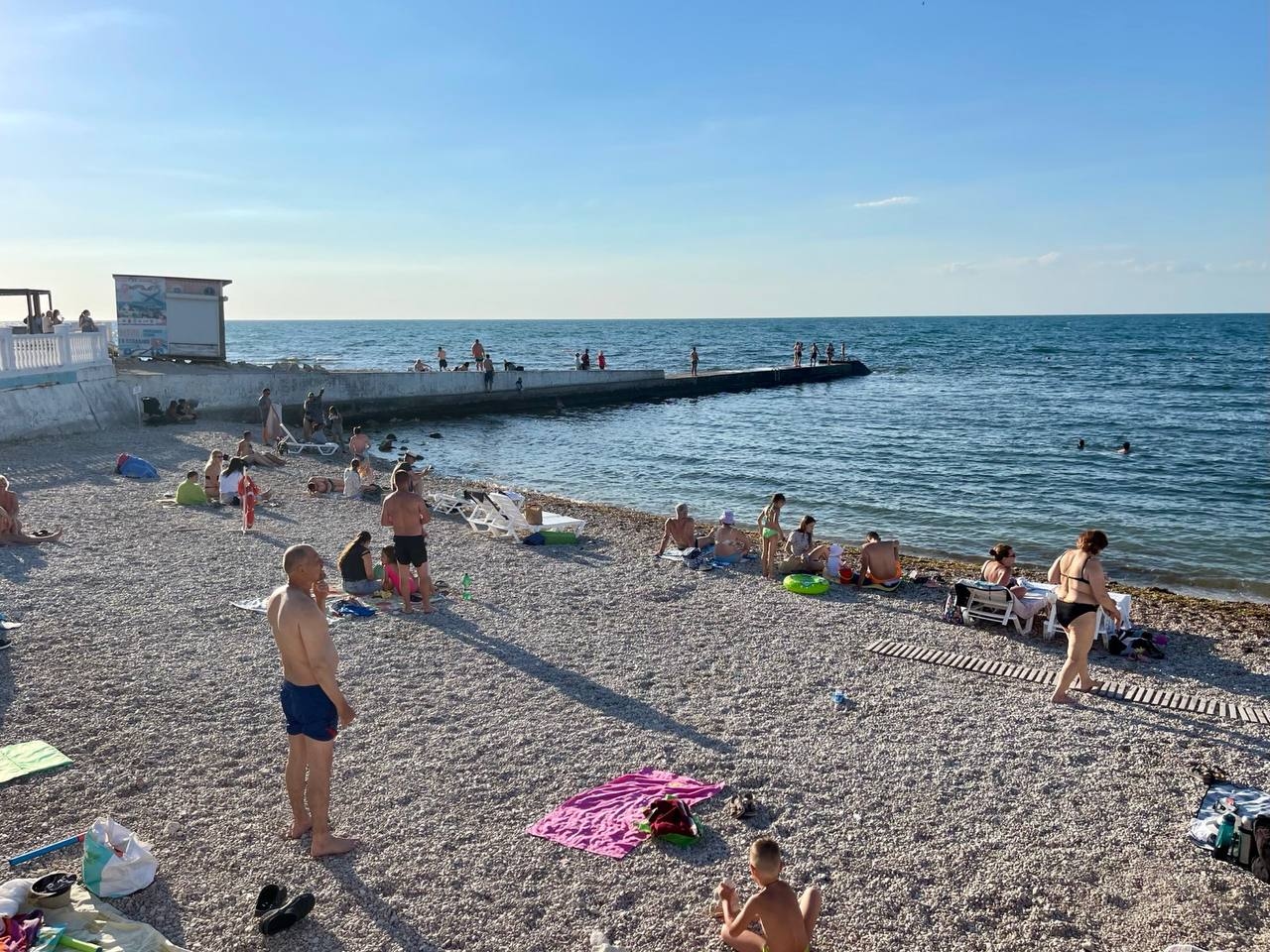
It isn’t empty this year. Alexandra, a blonde woman working in an excursion booth, energetically tries to persuade people to take a trip to Cape Meganom. “For now, they’re still coming,” she says, as many people bought tours in advance and do not want to cancel.
Indeed, tickets at the Sudak Fortress are selling well, and groups of ten or more line up one after another. Nikita, a charming tour guide, explains that the Genoese lived fairly well but not long — 35 to 45 years on average — because of raids, famine and fires. The tourists nod understandingly.
After the tour, many go for coffee and lunch at a nearby cafeteria. There is still no shortage of food, and there are plenty of empty seats and plenty of food. Prices are reasonable by local standards: lunch costs 500 to 700 rubles. Nearby, however, is a trendy Sudak coffee shop where drinks start at 200 rubles and desserts cost nearly 300 rubles. There are no customers. The barista sighs and says tourists have become thrifty, while locals do not want to spend money because they are saving it for gasoline.
The barista sighs and says tourists have become thrifty, while locals are saving money to buy gasoline
Pop music plays on the waterfront, and visibly drunk people dance to it. When they get tired, a few drift into 1990s-style eateries, which proudly call themselves “restaurants.” Prices there are also high: salads and soups cost 500 to 600 rubles, while main courses start at 800 rubles. There are few customers there, too.
“I closed my cafe in Sudak for the season. You have to pay rent, you have to buy food — and buying it is one thing, but you also have to bring it in from somewhere. I looked at the gasoline situation and decided to shut down before I ended up owing everyone,” said Mikhail, a local resident. “Maybe I’ll drive a taxi. I’ll get up at night, stand in line, fill up the tank, and then drive people around.
“As for bankruptcy, in Shtormove, near Yevpatoria, people fought for years to get their beaches opened. They were closed when the war started. They wrote to the president, they wrote everywhere. And what happened? They went broke and left to try to get back on their feet on the mainland. And they still owed huge sums of money. I don’t want that. I saw that a total mess was starting, so I closed, and that’s it. The state won’t help me anyway.”
Others are still trying to stay afloat. The owner of a small guesthouse located a 10-minute walk from the waterfront says he does not plan to abandon the business. A two-room unit costs a modest 3,000 rubles, but the beds creak, the plumbing appears to date back to the “Kuchma era,” and the toilet and shower look frightening even in daylight.
“Well, what do you want? At least it’s cheap,” the owner says. “Of course there are no people. But someone will rent it, and it will be fine. At least it’s some money. There’s no heating now, and for water we have our own payment scheme here, a Crimean one. Complicated, in short.”
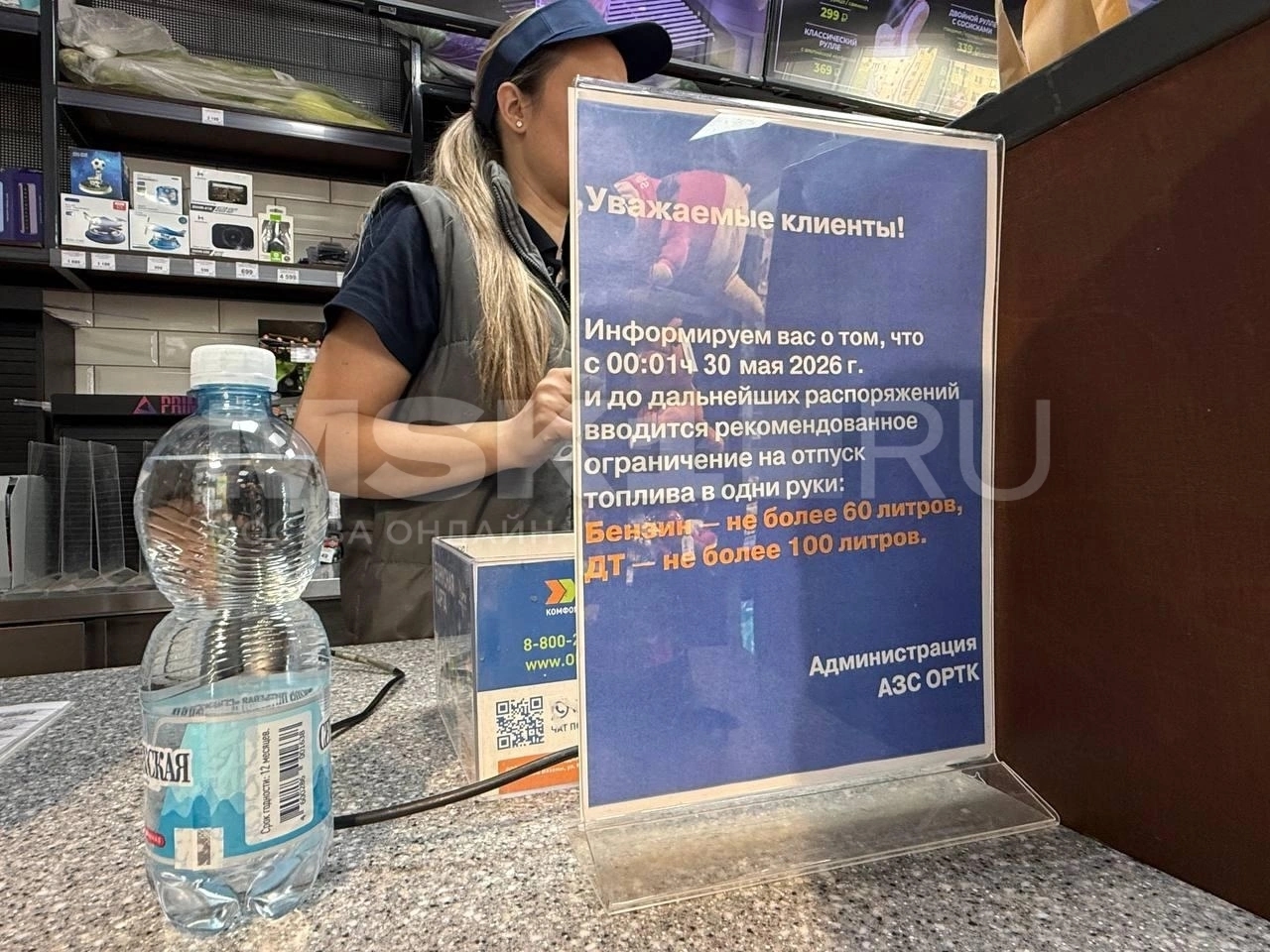
The owner has a relative who works at a boarding house in Sudak, where nearly all August reservations have been canceled. Tourists do not want to take the risk of coming to Crimea, and even if the threat of Ukrainian drones is not enough to keep them away, it is still necessary to reach the resort town amid a fuel situation that shows no sign of improving. On June 21, Sergei Aksyonov, the Russian-installed “head” of Crimea, said open fuel sales had been halted and supplies were being reserved for state companies, and Sevastopol “governor” Mikhail Razvozhaev soon followed his lead.
Heroic madness
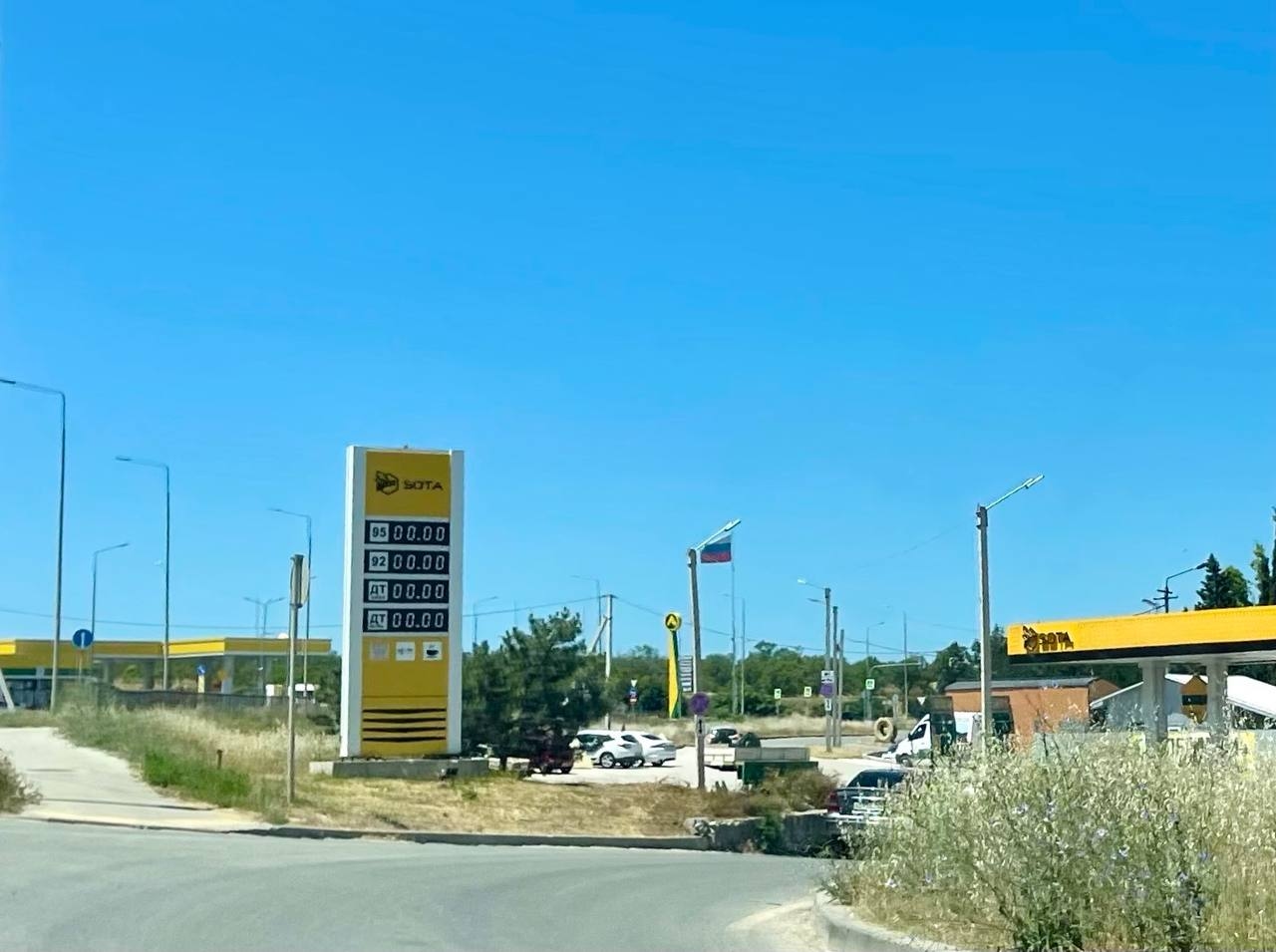
The fuel situation in Sudak is still relatively tolerable. Profiteers there sell gasoline for around three times the pre-crisis price, and before the June 21 strike on the ferries, drivers could fill up after waiting in line for as little as 30 minutes.
Crimea’s outskirts are another matter — and that also goes for Sevastopol. The “hero city,” as it is known for its role in World War II, seems to be under siege again. There are almost no private gas stations, and since the start of the fuel crisis drivers have been forced to wait in line for five to six hours to fill up. Briefly, a system issuing drivers weekly QR codes made it possible to fill up in as little as 15 minutes, but the strike on the Kerch ferry has complicated the situation once again. Notably though, in neighboring Bakhchisarai and Simferopol, drivers can fill up without codes after waiting only 15 to 20 minutes, and sometimes with no lines at all.
The booking situation is no better. Tourists are being offered discounts and 20 liters of gasoline for at least a few days’ stay. But guests are still not coming.
“Since early June, they started canceling July and August bookings, and they’re still canceling. Many say, ‘We don’t read official media, we watch Ukrainian Telegram channels. They tell the truth there, and we see what is happening in your area,’” explained Yelena, a local resident who rents out apartments by the day. She says all hope now rests on locals, and lovers hiding from their spouses do provide her with at least some income. They rent apartments for 2,000 rubles for three or four hours, which helps cover utility costs.
All hope now rests on locals who want to have sex somewhere other than at home
Yelena adds that property owners are still surviving somehow, but the entertainment sector is in a much worse state. A friend of hers runs a small stand in Omega Bay, a traditional tourist spot. Locals do not swim there — it is shallow and dirty. Tourists, however, love the bay: the water is warm, and there are many eateries and children’s playrooms. However, the tables are largely empty.
The situation is somewhat better in Victory Park, which locals do frequent. There the beaches are full, and popular cafes, at least, are not empty.
“There are always people at Three Palms; it’s a well-promoted place. But we have almost nothing,” said Sergei, a young fast-food seller working at a food stand. “A year ago, we were earning 80,000 to 100,000 rubles, and now nothing. When there are air raid alerts, we sit here and see missiles being shot down over the sea. It’s scary, but what can you do? Everyone understands this little box won’t protect us. We work until 11 p.m., then take a taxi back and split the fare — 200 rubles each. There are three guys here. I have a moped, but now you can’t ride it after 10 p.m.”
A tanned, well-fed man who runs a nearby rental stand operating electric cars for children says the situation does not scare him.
“A couple of weeks ago, a drone fell on a car in the Victory Park parking lot. I saw it with the guy sitting over there in the shade. And then he dragged the drone away from the car. What can you do? If it hits me, it hits me. That means it’s fate.”
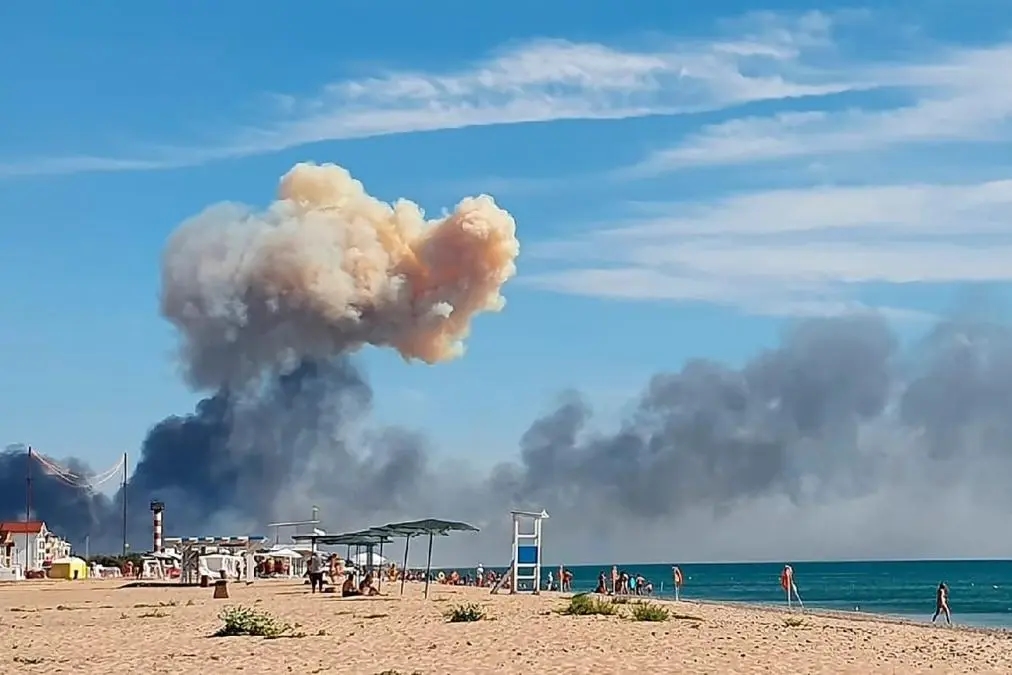
At that moment, a boy of about seven walks past and appears to tell his father: “Look, the birds are flying low. That means we have to leave. There will be drones.” His father quickens his pace slightly but tries to calm his son, assuring him that it means rain is coming. At the same time, Telegram channels are reporting a drone threat in Sevastopol. The boy was right.
They reach an electric shuttle bus that carries passengers from the waterfront to a public transport stop. The ride takes 10 to 15 minutes, sometimes long enough for drones to arrive.
“You should have seen what happened here a couple of days ago, when they shot down a drone over the sea! You could hear and see everything. People ran to me and said, ‘Get us out of here quickly.’ Well, I charged them the regular fare and drove off. Nothing fell,” the electric shuttle driver says, his demeanor communicating that he is not afraid of drones at all.
A little farther away, a band is playing. They have just arrived on the Victory Park waterfront. The words of a song by the Russian band SerGa can be heard: “And what do we need? Just a light in the window. And what do we dream of? That the war will end.” People sing along quietly — they could be reported, after all. Soon, an air raid alert is announced. The beach slowly begins to empty.