Ukrainian authorities say they intend to evacuate the residents of Oleshky, a city on the Russian-occupied left bank of the Dnipro River in Ukraine’s Kherson Region. Ukrainian Ombudsman Dmytro Lubinets is developing the evacuation plan together with the International Committee of the Red Cross (ICRC). A humanitarian crisis is unfolding in the city, with residents cut off from electricity, gas, and water and facing shortages of food and medicine. Constant shelling, Russian FPV drone attacks, and mined roads have made safe evacuation nearly impossible. The Insider examines conditions in the occupied city and the Ukrainian authorities’ plans to evacuate its residents.
With reporting by Tetiana Popova.
“We need to get the people out”
Ukrainian Parliament Commissioner for Human Rights Dmytro Lubinets appealed to the International Committee of the Red Cross (ICRC) for assistance in evacuating residents of occupied Oleshky, a city on the left bank of the Dnipro River in the Kherson Region. The request concerns a humanitarian corridor and security guarantees for those willing to leave. Lubinets also called on the international community to secure access for international missions to the occupied city.
As the ombudsman’s office told The Insider, the negotiations are currently focused on possible options for safely removing people from Oleshky and nearby settlements. Ukraine has already given the ICRC a list of residents in need of help.
“From a legal point of view, evacuation measures must be organized in compliance with international humanitarian law, taking into account security factors and the operational situation,” the office said.
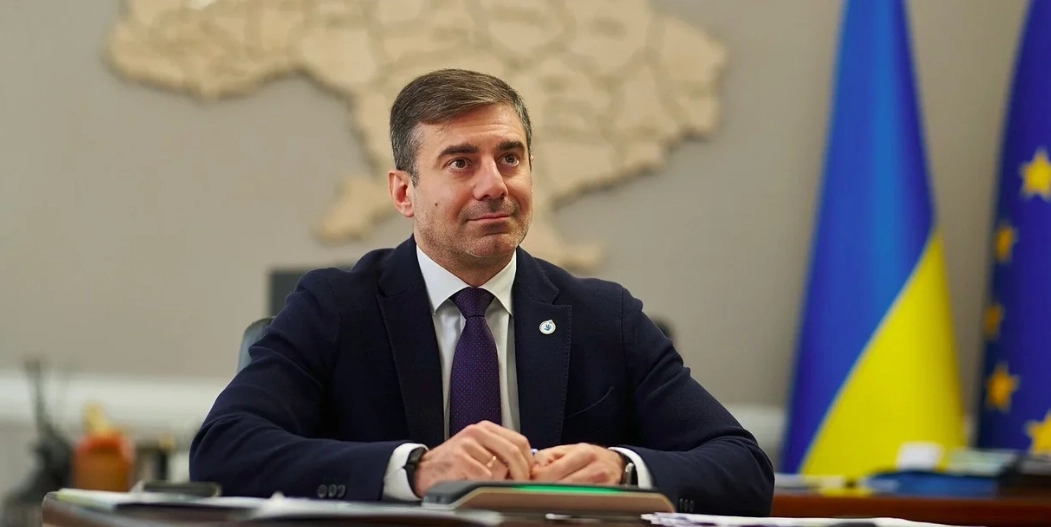
The office emphasized the need for an urgent evacuation due to a rapid deterioration of the humanitarian situation. Since the beginning of February, the ombudsman’s secretariat has received 127 appeals from local residents.
“A significant part of the civilian population has been forced to spend long periods in basements and shelters because of systematic shelling and bombing. Among those remaining in the city are children, elderly people, people with disabilities, and those in need of medical assistance.”
Importantly, people cannot evacuate on their own.
“Departure is difficult because there are no safe evacuation routes: the roads are mined, checkpoints are in place, so-called filtration measures are being carried out, and there are no organized humanitarian corridors. Under these conditions, people have found themselves in a situation where they cannot safely leave the area.”
On May 7, the ICRC confirmed it was ready to assist with the evacuation. Ukrainian President Volodymyr Zelensky later repeated the call for international involvement on May 12, describing the situation in the occupied parts of the Kherson Region, including Oleshky and nearby towns and villages, as dire. “It is precisely from this part of the occupied territory that evacuating people is particularly difficult,” he explained.
“It is important that international organizations, everyone who can help with this, be actively involved. We have discussed the process in detail. I am grateful to everyone trying to help: our partners, the Kherson regional authorities, the ombudsman, and the government team,” he said.
Tetiana Hasanenko, the exiled head of Oleshky’s military administration, said about 2,000 people remain in the city, including 47 children.
“The city has been living without gas, electricity, or running water for five years now. Since May 4, there have been no food deliveries to Oleshky. In April, there were no deliveries for three to four weeks, and in winter, for a month and a half. We need to get the people out,” she said.
Oleshky has been under Russian occupation since the first days of the full-scale invasion. After the destruction of the Kakhovka hydroelectric dam in 2023, the city was almost entirely flooded, leaving local residents without running water. Since late 2025, the city has also been struggling with food shortages.
“All the food that somehow makes it into Oleshky is sold, and the prices are very high, even by the standards of the so-called Russian rubles,” Hasanenko said.
Even when residents have money, accessing it is difficult. Hasanenko said there are no working ATMs in Oleshky or nearby villages, leaving residents unable to withdraw Ukrainian social benefits or payments issued by the occupation authorities. She said people have to give their bank cards to random drivers heading to larger occupied cities such as Skadovsk, with no guarantee the drivers will return with the money.
“There is no authority in Oleshky. It is absolutely impossible to file a complaint or get any kind of help. People have simply been left there to fight for survival,” she said.
Leaving the city has become a paid service, she said. Some volunteers still evacuate people for free, but most drivers charge money. “I do not judge anyone. People are risking the most precious thing, their lives, by entering and leaving the city,” she added.
Hasanenko said 20 ambulances were blown up in the Oleshky area between October and April. One attack killed three medics who were trying to deliver generator fuel to a hospital.
According to the administration head, evacuation from Oleshky has become “a one-way road.” People get into any vehicle they can find, hoping to escape, but not knowing if they will make it. “In some cases, ambulances evacuating people still came under fire. And they had to walk back to Oleshky, again risking their lives,” she said.
Dense mining of the area poses an additional danger. Hasanenko said mines began to be laid at the start of the fighting, along the river, in the wetlands, and in adjacent areas, but the situation has now become much worse.
“The density of mining is increasing not just every month, but every day. It is unclear why the Russians are mining the roads. Their logic is impossible to understand. If they had logic, they would never have come to our land,” she said.
The Russian occupation authorities, meanwhile, explain the ban on leaving by citing “attacks” from Ukraine’s Armed Forces. Residents are told that humanitarian corridors are not an option because the Ukrainian side would supposedly shell people.
“That is exactly what they write in their Telegram channels,” Hasanenko said.
Even those who manage to leave Oleshky often remain in occupied territory, in places such as Radensk, Kostohryzove, or Skadovsk. Hasanenko said many are afraid to travel to Ukrainian-controlled territory because of constant Russian propaganda, which convinces people that “Russia has conquered almost all of Ukraine” and that “no one is waiting for them” in areas controlled by Kyiv.
“I cannot say it is safe there. There are also strikes there, and people are killed. But it is still safer than in Oleshky because it is farther from the water. We need to remove people from immediate danger. To make sure they have enough food,” she said.
At the same time, Hasanenko said some residents still hope to wait out the war at home and return to their old lives, despite the constant shelling and humanitarian disaster. After years under occupation, many people have also developed severe psychological trauma.
“One woman told me: ‘I already know I will die here.’ She said: ‘You cannot imagine the state I was in when I had been talking to my neighbor, and 20 minutes later that neighbor’s intestines were hanging on the fence. I already know I will die here. I do not want to go anywhere. I will die — either in my own home or on that road.’”
“I will die — either in my own home or on that road”
Drone blockade and bodies in the streets
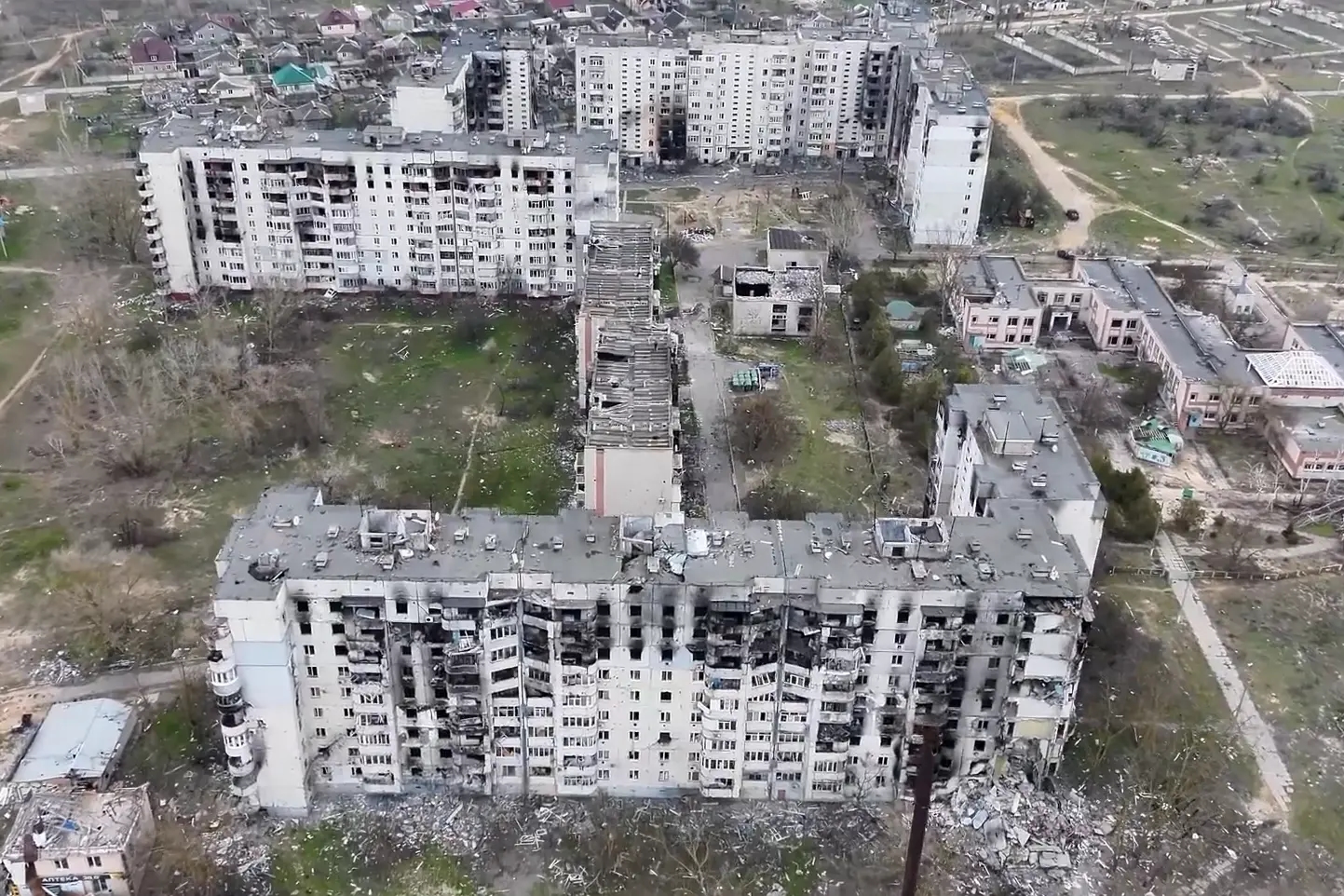
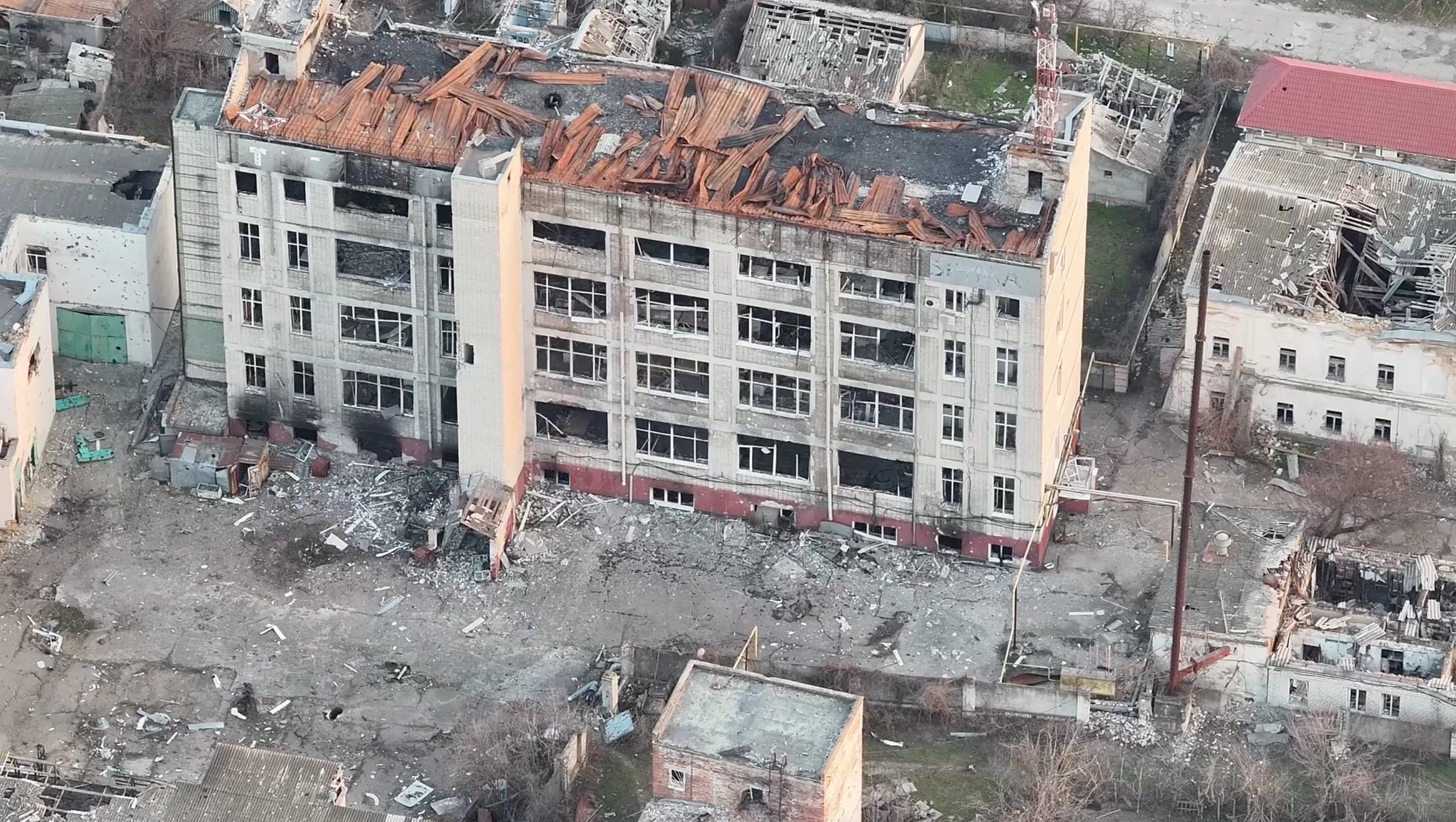
Judging by drone footage taken by the 34th Marine Brigade, Oleshky looks almost destroyed after four years of fighting. Some apartment blocks have been razed to the ground, while others have partly collapsed after explosions. Footage from March 22, 2026, shows burned-out apartments and torn-down balconies; footage from April 20 shows bombed-out houses and partly collapsed roofs.
Journalist Zarina Zabrisky, who has lived and worked in Kherson since spring 2023, said she began documenting the situation on the occupied left bank of the Dnipro in late 2025. The “left bank” refers to the eastern side of the Dnipro River in the Kherson Region, much of which remains under Russian occupation. She said the humanitarian crisis has long since spread beyond Oleshky alone.
“The problem is that not only Oleshky, but also Hola Prystan and other towns are effectively under a drone and mine blockade,” she said.
She said roads around the settlements are mined, vehicles are regularly blown up, and any movement carries the risk of a drone attack. As a result, it is almost impossible to deliver food, medicine, and fuel to the towns. The hospital in Oleshky has stopped functioning. “It was running on a generator, and now it is impossible to bring in gasoline. People have run out of medicine,” Zabrisky said.
The dead have become a separate problem. With no electricity, the morgue’s refrigerators do not work. “The bodies are just lying there. No permission was granted to move them, to Henichesk, for instance,” Zabrisky said.
Tetiana Hasanenko, head of Oleshky’s military administration, said the city’s morgue effectively stopped working after the destruction of the Kakhovka dam. The building was damaged during the flooding and has repeatedly come under shelling.
She added that in recent months, bodies have been placed in the hospital basement simply because it was the only building with thick walls left in the city. Burying the dead without a forensic medical examination is prohibited, but the nearest forensics team is in the town of Kalanchak.
“That means you have to travel along this road of death, carrying a dead body — forgive my cynicism — only to lose living people as well. No one wants that,” she said.
Hasanenko said she knows a woman whose son was killed in the winter. In December, his body was taken to Kalanchak for a forensic examination, but there is no way to bring it back.
“The man still has not been buried, because it is impossible to bring the body back to Oleshky, and the mother will not agree to have him dumped somewhere there. Because what guarantee is there that anyone will bury him at all?” she said.
She added that the exact number of deaths is impossible to establish. The administration is trying to keep its own count, but it includes only confirmed cases.
“We collect this information for ourselves, but it is incomplete. We record only confirmed cases: when we know the person’s date of birth and place of residence in the Oleshky community,” she said.
According to Hasanenko, some of the dead remain unidentified. “There are people who were simply left lying there, on the road of death, and that is all,” she said.
There are also bodies still lying in the streets, decomposing as the weather warms. “There are bodies of Russian soldiers. Stray dogs are dragging them away. They already know the taste of human flesh. And these dogs start chasing the living,” she said.
One resident, Hasanenko said, carried food with her when riding around the city by bicycle, hoping to distract dogs if they attacked.
“But they did not react to bread. Because a dog that already knows the taste of human flesh wants a human being. It is a terrible thing. People in Oleshky know one another, and if something happens, someone will at least take a dead body to the hospital on a garden cart. But this katsapnya is not needed by either our side or theirs,” she said.
Residents also report seeing bodies in the streets in local Telegram channels. A March 24 post reads:
“The photo may be fake, but the fact that bodies are lying there and hungry dogs are gnawing at them is true. They destroyed a five-story building where drone operators were sitting. They kept hitting it until it collapsed. After that, the bodies of the rashists were scattered around, with dogs chewing on them. Civilians try to avoid the place because the scene is horrifying.
“You may not believe it, but Oleshky is horror. We still do not know how many people have died from cold, hunger, or lack of medicine. I talk to those who stayed, and it makes your blood run cold. And you are calling on people not to believe it! Yes, not everything should be believed, but unfortunately, not in this case.”
“They won’t survive another winter”
Volunteer Ksenia Arkhipova described how evacuations from Oleshky are now carried out. She has been evacuating residents from the occupied left bank since the start of the full-scale war. In recent months, she said, evacuations have become especially difficult and depend on brief windows when mined roads can still be used.
“We catch the moment when the road in Oleshky is demined. I always know when that happens. Ambulances go there to take the wounded to Skadovsk, because our hospital cannot provide assistance or perform serious surgery, such as amputations. In Oleshky, a lot of people are blown up by mines, by ‘petals,’ including children. And when ambulances leave Oleshky, we understand that the road has been demined and that there is an opening,” she said.
“Petals” refers to PFM-1 antipersonnel mines, small Soviet-designed scatterable mines whose shape resembles a leaf or petal. They are especially dangerous for civilians because they can be hard to notice.
Arkhipova said organizing evacuations is becoming harder because the city is almost completely cut off from communications, and any movement remains extremely dangerous.
She estimated that fewer people may now remain in Oleshky than earlier figures suggested. “I think there are about 1,500 people there, and even that is a stretch,” she said.
Children are a particular concern. Many parents are afraid to evacuate because they lack Russian documents and fear that if they try to leave, the Russian side could take their children away. Even so, volunteers continue trying to persuade people to leave, promising to help them after evacuation with housing and papers.
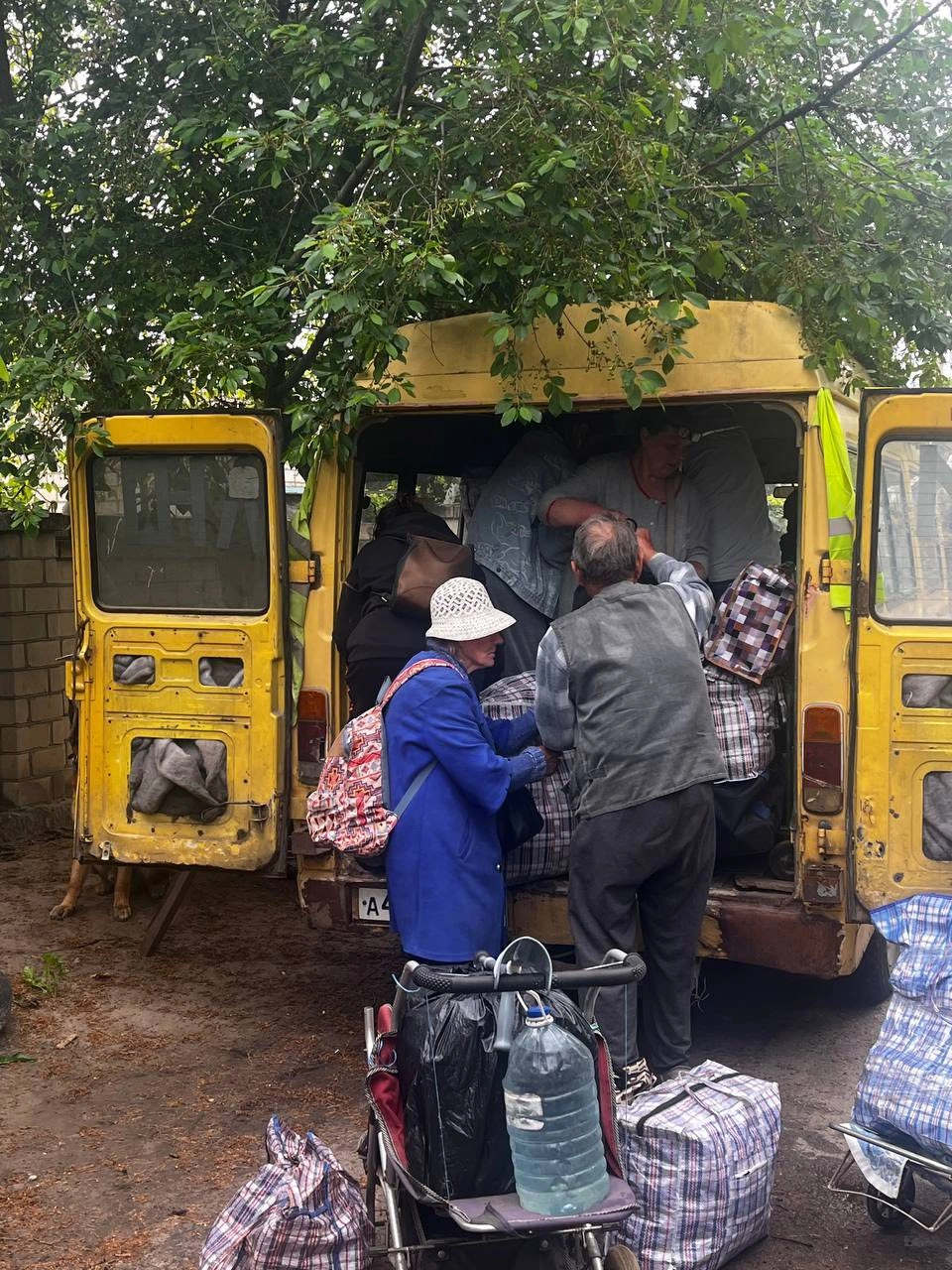
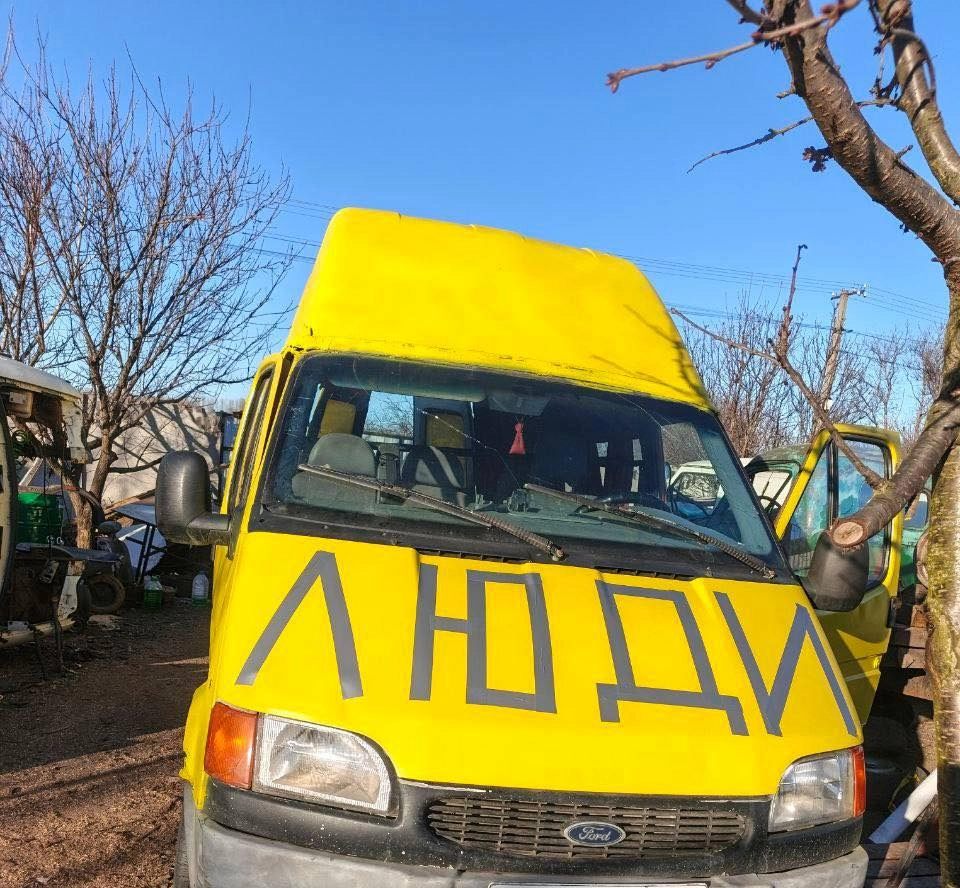
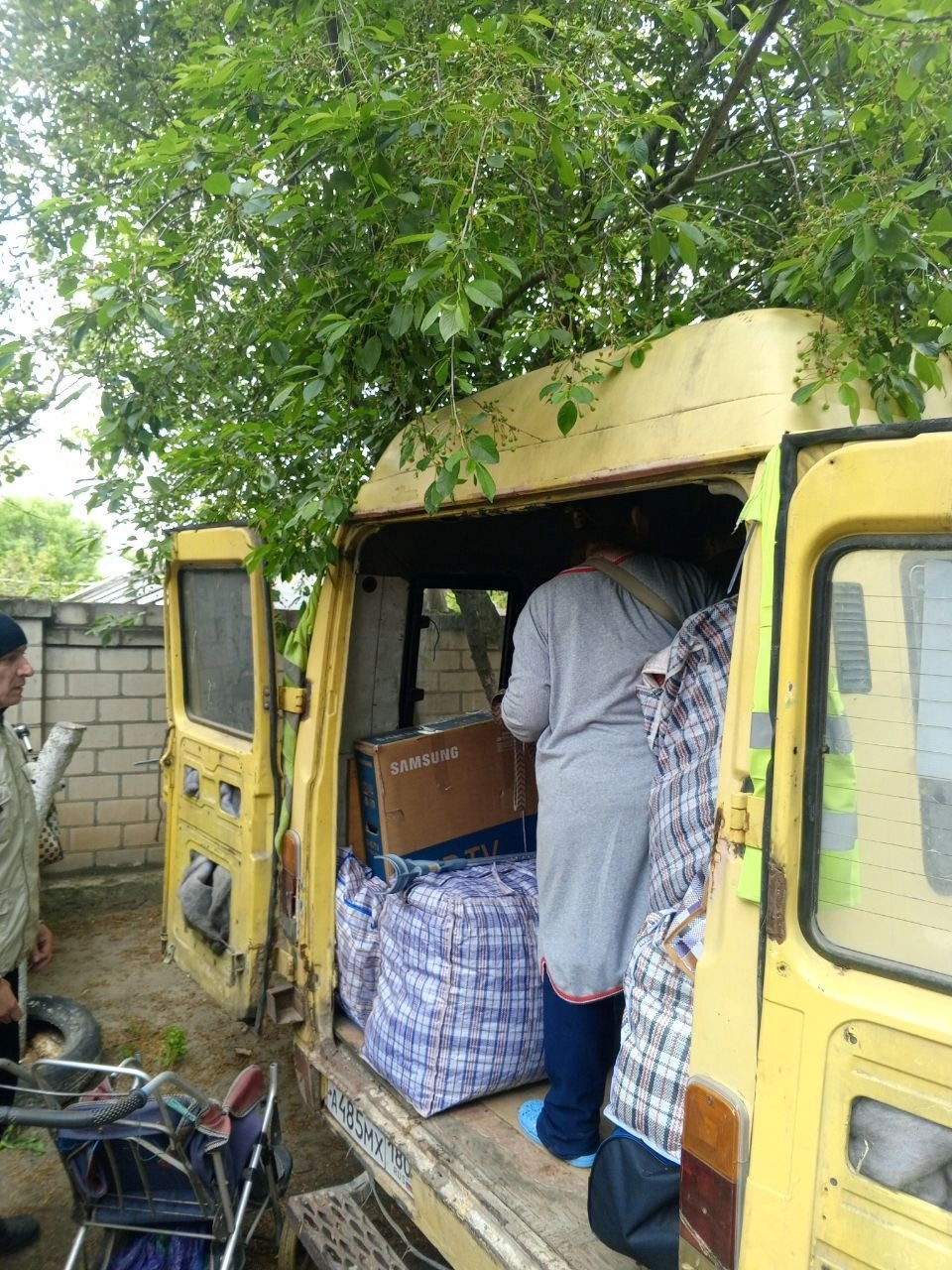
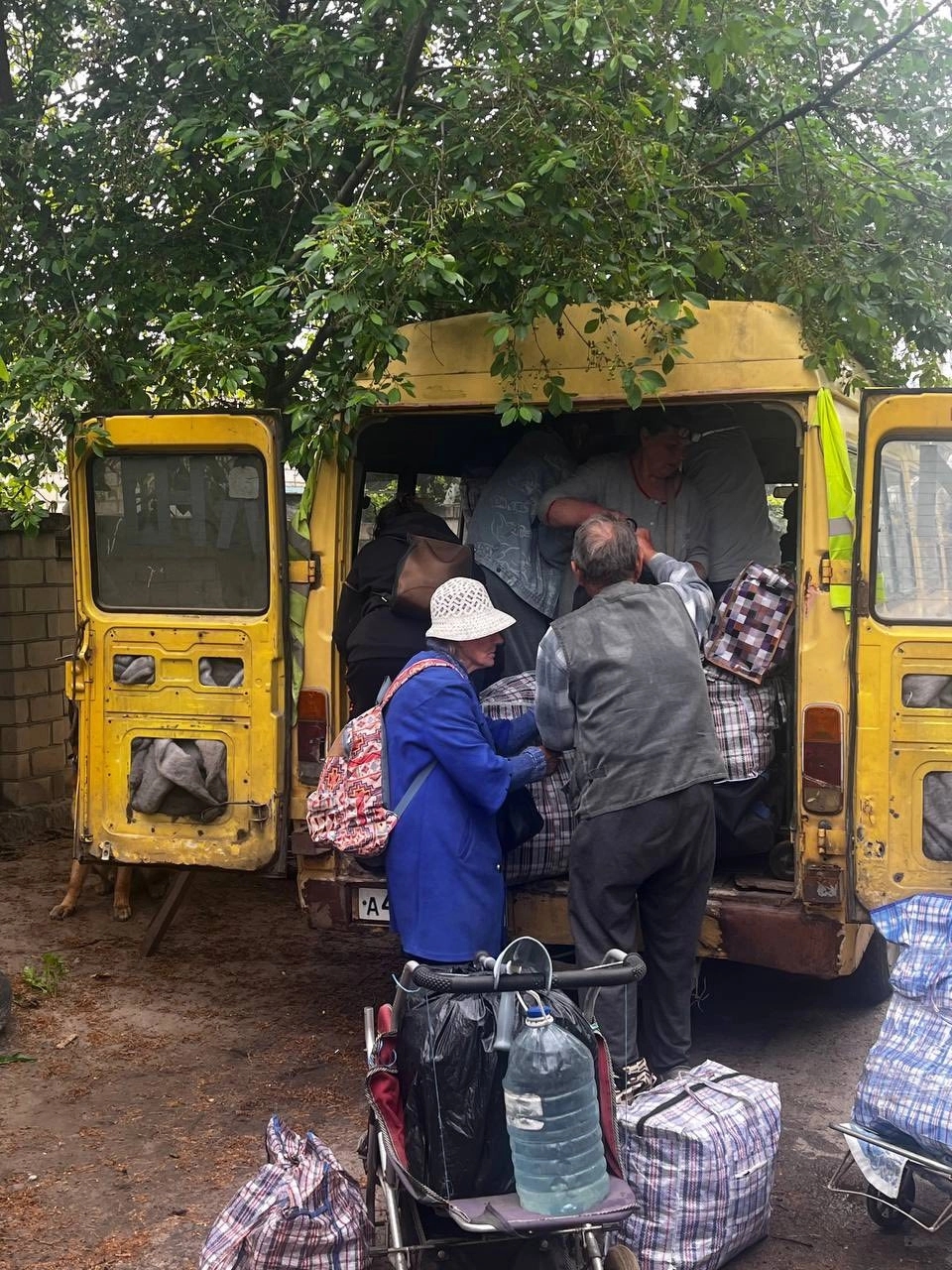
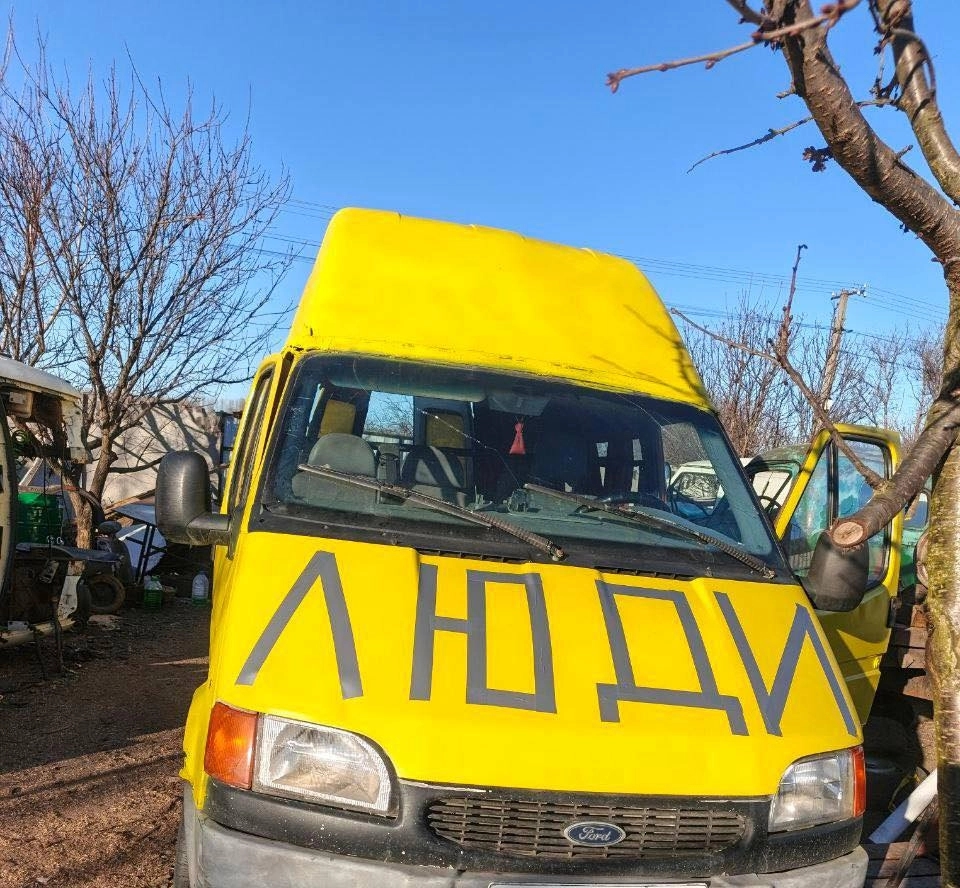
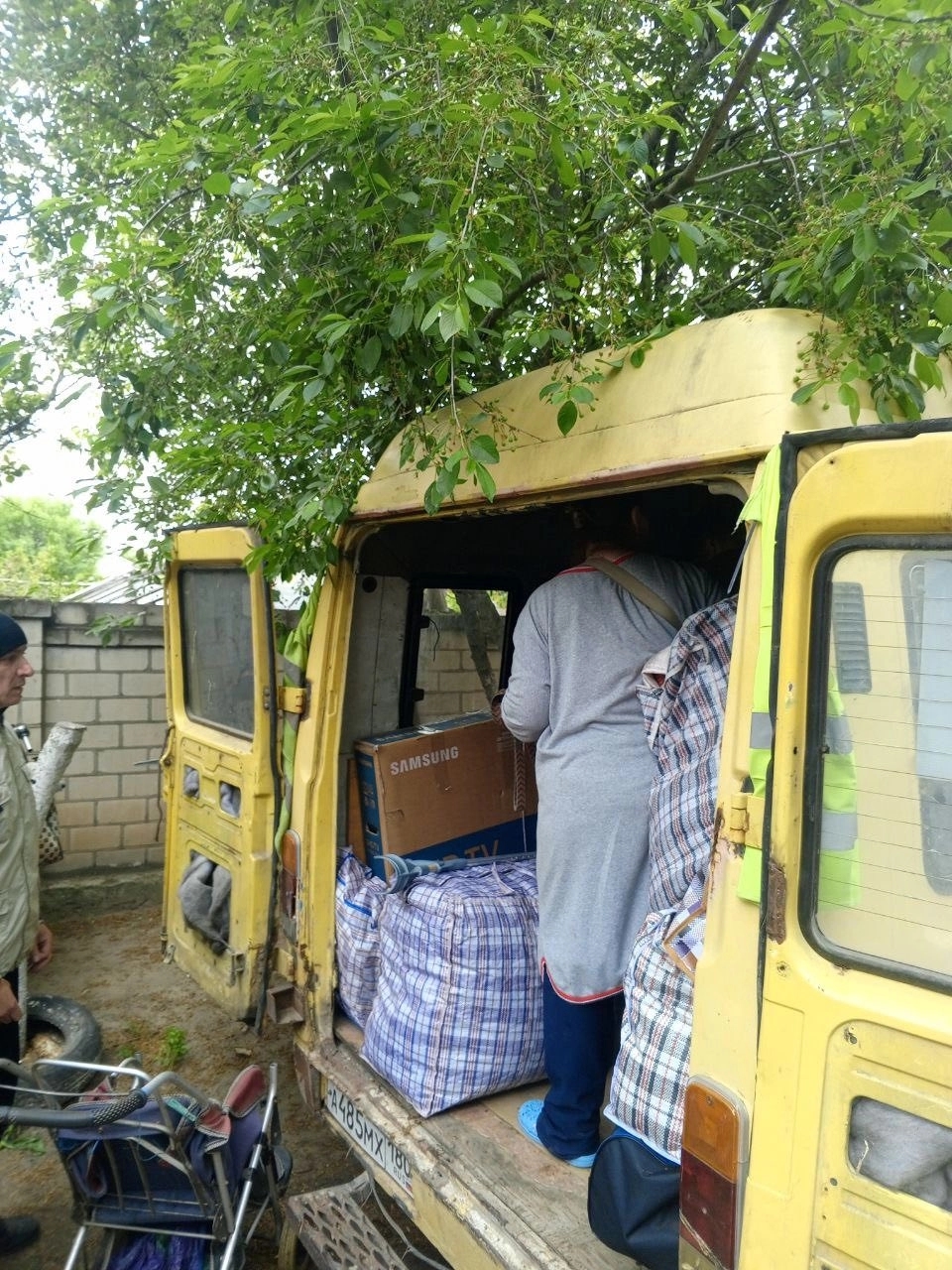
Arkhipova said that across all evacuation efforts, 153 people have been moved to safer locations. But the situation in the city continues to worsen. She said even utility workers have come under shelling and drone attacks.
“On May 12, there was a drone drop. A utility crew came out in orange vests. There were seven of them. The drop came from a Russian drone, and a woman was killed. The others had shrapnel wounds, and one man lost an eye,” she said.
Last winter, Arkhipova said, many residents were freezing in their apartments, with indoor temperatures staying around 3 to 5 degrees Celsius, or 37 to 41 degrees Fahrenheit.
“There is no gas, no electricity, nothing for them to heat their homes with. People in private houses have already cut down everything, even fruit trees. They built potbelly stoves and burned that wood. They won’t survive another winter. We need to get them out before winter, as many of them as possible, take everyone who agrees to leave.”