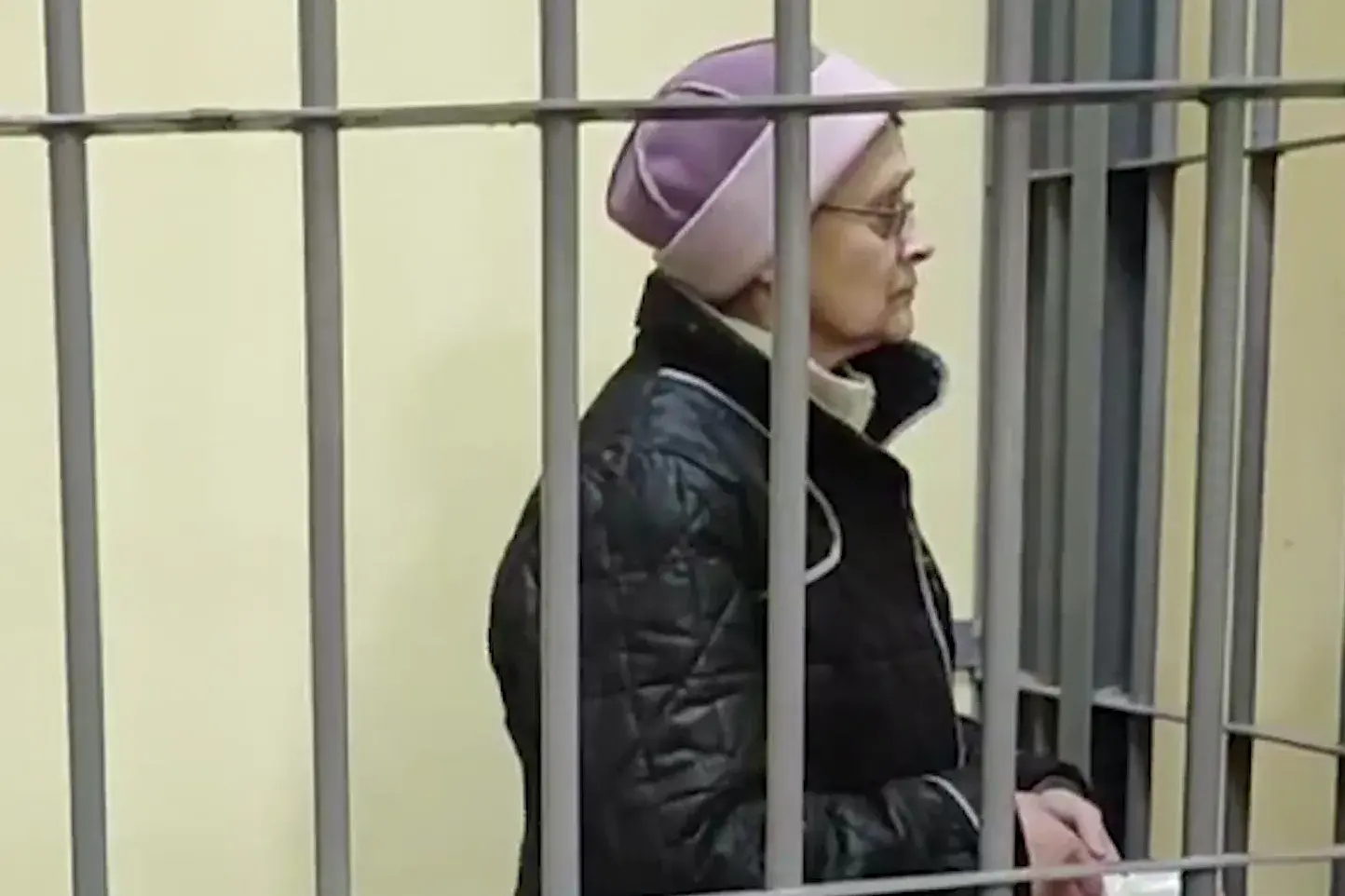
In March, Russia’s Federal Financial Monitoring Service (Rosfinmonitoring) added a record 115 Ukrainian natives to its “list of terrorists and extremists.” Forty-eight of them were born in areas of Ukraine that are currently occupied by Russian forces.
Human rights defenders interviewed by The Insider note a steady increase in politically motivated cases in the occupied territories of Ukraine, a large portion of which involve “terrorism” charges. Although people can be added to the “list of terrorists and extremists” at different stages of criminal proceedings — sometimes immediately after a case is opened, in other cases after a conviction — the rise in the number of those listed correlates with the number of criminal cases opened based on unfounded suspicions.
According to data from the Memorial human rights project provided to The Insider, the number of Ukrainians subjected to criminal prosecution in politically motivated cases in Russia and the occupied territories has risen significantly in recent years. In 2022, 376 such cases were recorded; in 2023, the figure fell to 295; in 2024, it jumped to 692 cases; and for 2025, 436 cases are currently known (with more likely to come to light as research continues).
Human rights defenders track prosecutions in the occupied territories separately. There, the trend also shows a similar trend: 288 cases in 2022, 246 in 2023, 338 in 2024, and 276 in 2025.
Memorial emphasizes that the decline in figures for 2025 does not reflect the full picture, as information on many criminal cases emerges with delays. Therefore, the 2025 statistics remain incomplete and are expected to be significantly revised during 2026.
Sergei Davidis, head of the Support Program for Political Prisoners at Memorial, explained to The Insider that there is a significant gap between the statistics on politically motivated criminal cases in Russia and those in the occupied regions of Ukraine:
“In the past two to three years, the number of criminal cases with signs of political motivation in Russia has remained steady at 500 people per quarter. But the occupied territories of Ukraine, including Crimea, have shown a consistent increase. This also applies to prisoners of war, for whom the pace of criminal prosecution is also rising.
In search of objective measurements, we calculated the rate of politically motivated criminal cases per capita. In the occupied territories of Ukraine, this indicator is several times higher than in Russia. By the end of last year, we found that it was roughly five times as high in Crimea, and eight times as high in the newly occupied territories. There is clearly a trend toward harsher measures and the use of more severe charges, with an increasing share of terrorism, treason, and sabotage cases even within Russia.”
Lawyer and human rights defender Nikolai Polozov, who assists persecuted Ukrainians, also told The Insider that he has observed an increase in the use of “terrorism” charges in cases against Ukrainians from the occupied territories. In his view, the course of the war does not correlate with the level of repression against Ukrainians in the occupied areas: “On the contrary, we are seeing an increase in the number of such cases regardless of developments on the front.”