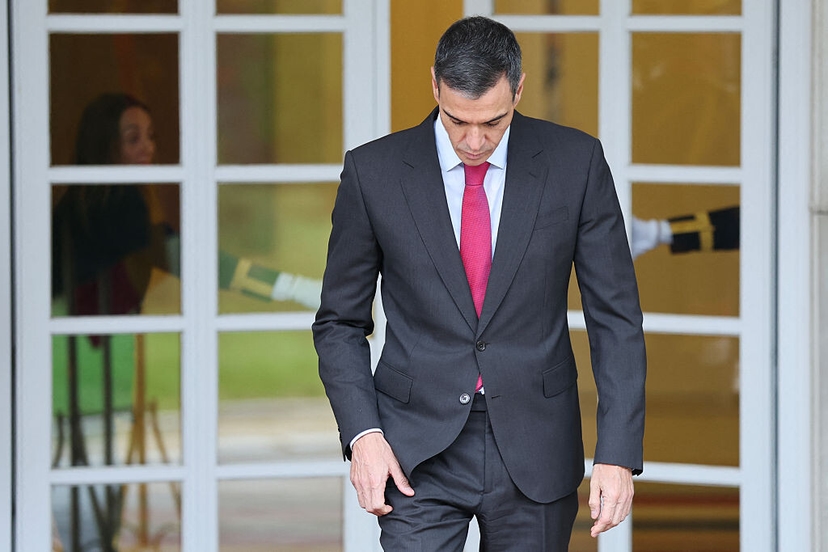
Spain’s Socialist Prime Minister Pedro Sánchez remains the country’s most popular political leader, but his Spanish Socialist Workers’ Party (PSOE) is nevertheless expected to lose power when the results come in from Sunday’s snap parliamentary election. Although support for PSOE is still around 30%, the far-left parties Sánchez needs as coalition partners have fractured into three rival camps and are on course to lose dozens of seats, which will likely go to the far-right Vox party. The result could send the European Union’s last major left-wing government into the opposition and put radical right-wing politicians in Spain’s Cabinet for the first time since the death of dictator Francisco Franco in 1975.
- 1.Economic performance: plenty to boast about
- 2.The country’s biggest problem: housing costs in major cities
- 3.Does Spain have a migration problem?
- 4.Crime and “okupas”
- 5.What Sánchez is offering voters
- 6.Why Sánchez could lose
- 7.Regionalists and separatists surge
- 8.A victory for the right without a Feijóo triumph
- 9.The contentious agenda of a right-wing government
- 10.The end of Europe’s last major left-wing government
After two terms as Spain’s prime minister, Pedro Sánchez — known among supporters as perro (Spanish for “dog”) and by some detractors as hijo de puta (a crude insult roughly equivalent to “son of a bitch”) — enters the Nov. 29 snap election still ranked as the country’s most popular politician.
Normally, approval ratings for leaders of governing parties fall sharply by this stage in their reign, but during the past four years, Spain’s strong economic performance has kept support for Sánchez and his social democratic PSOE party largely unchanged. Only 24.3% of respondents said they wanted center-right opposition leader Alberto Núñez Feijóo to head the government, compared with 38.3% for Sánchez. Polling shows their parties running virtually even, with each at roughly 30%.
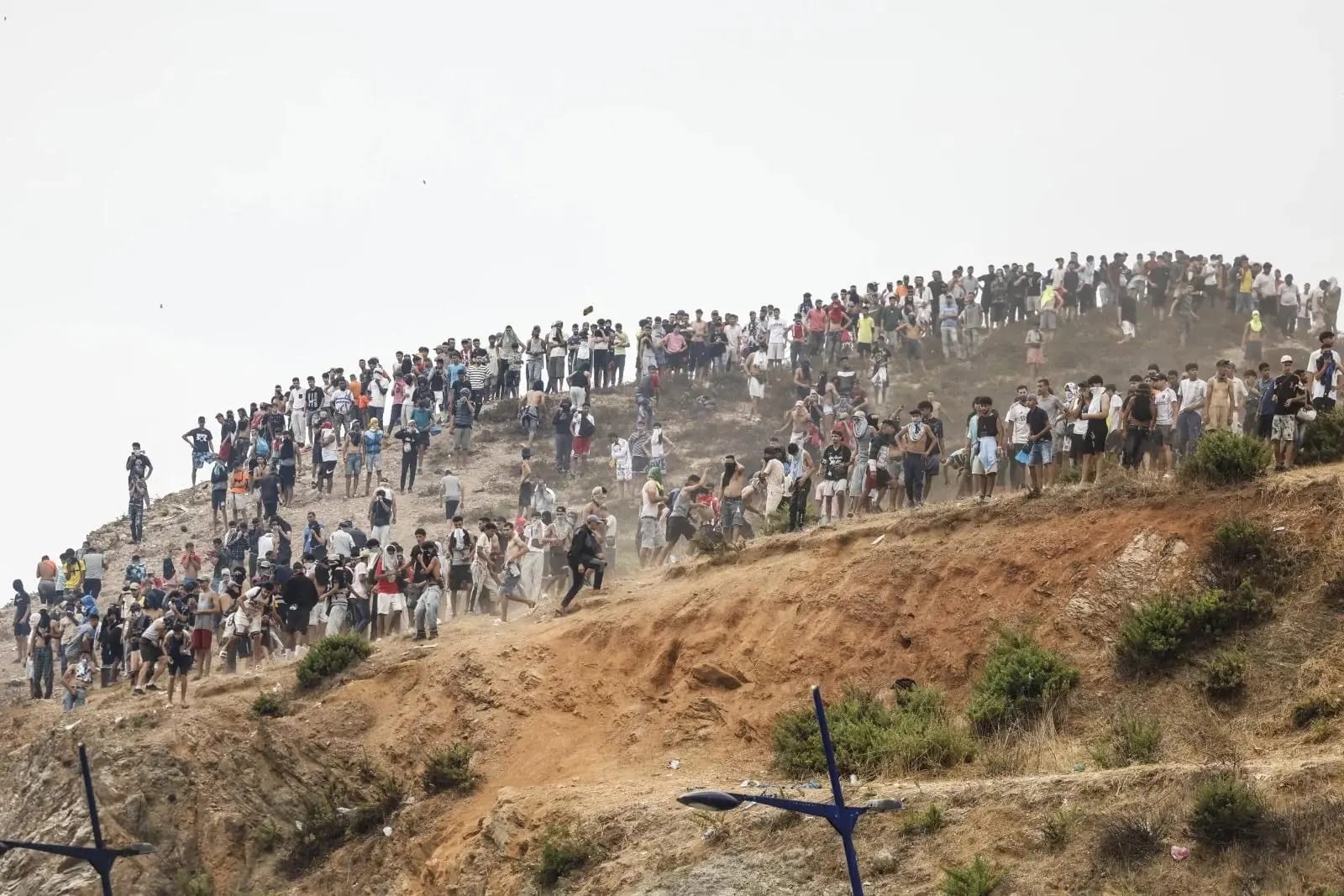
Over the past four months, the government has suffered a string of blows that in almost any other European country would probably have cost a leader a significant share of their support. In late July, tens of thousands of Moroccans broke through the border cordon into Ceuta, the Spanish enclave on the North African coast, amid what critics described as near-total inaction by security forces. Although no Ceuta residents were injured during the crisis, it triggered a powerful wave of anger across Spain.
Sánchez’s latest term has also been overshadowed by numerous corruption investigations involving people in his inner circle, and even members of his family. Among those implicated were former Transport Minister José Luis Ábalos and adviser Koldo García. Sánchez’s wife was also subjected to criminal proceedings amid accusations of influence peddling.
Even more importantly, on the morning of Oct. 28, an automated rail safety system failed in the town of Urda. Dispatchers at Madrid’s Atocha station then became confused by radio communications, and an AVE train traveling at full speed crashed into the rear of an Iryo train. Sixty-nine people were killed and around 200 injured. It was Spain’s second deadly rail disaster of the year after a January train crash in Adamuz.
The series of disasters badly damaged the reputation of Spain’s high-speed rail network. Yet PSOE’s poll numbers did not move after the crash. Polls suggest the Socialists could win 28% to 30% of the vote and 116 to 123 seats — almost exactly the results the party took into the 2019 and 2023 elections. Even with that relatively solid base, however, electoral models give the opposition right-wing bloc the advantage.
Economic performance: plenty to boast about
During the three years of Sánchez’s coalition government, Spain has settled into an unfamiliar role as one of the European Union’s engines of economic growth. GDP was up 3.5% in 2024 and another 2.9% in 2025, compared with an EU average of 1.4%. Germany barely avoided recession, with growth of 0.2%, while Italy managed just 0.5%. In November, the European Commission and the Bank of Spain both confirmed a 2.6% growth forecast for 2026, more than double the eurozone average of 1.1%.
Since the COVID-19 pandemic, Spain has consistently outperformed Europe’s other major economies — Germany, France and Italy — across key macroeconomic indicators. What began as a tourism-driven rebound evolved into sustained growth supported by an influx of migrant labor. Cheap solar and wind power lowered electricity costs for households and factories and helped the government redirect investment toward knowledge-intensive manufacturing and exports outside the tourism sector.
Spain’s real industrial output rose 9.4% from 2019 to 2025 at the same time production stagnated in France and Italy and fell by between 3.2% and 5% in Germany. Spain’s information technology sector grew 45% over the same period, compared with an average of about 10% in Germany, France, and Italy. Pharmaceuticals expanded 38%, compared with 17% among Spain’s European competitors, while chemical production rose 3% against a 16% decline in the EU’s main industrial economies.
Spain’s labor market reached a record high. The economy created 465,500 jobs over the past 12 months, bringing total employment to a record 22.9 million people. Unemployment fell to around 10% for the first time since spring 2008.
Spain’s economy created 465,500 jobs over the past 12 months
Public debt fell to 98.5% of GDP, while in February the government approved its eighth increase in the statutory minimum wage since 2018. After a 3.1% increase, the minimum monthly salary reached €1,221. It has risen a total of 66% under Sánchez, directly increasing wages for 2.5 million employees.
Unemployment is no longer Spaniards’ biggest concern. In a November GAD3 survey, only 8% cited a shortage of jobs as a major issue. For Sánchez’s campaign, however, that has become something of a disadvantage. Housing affordability is now by far the country’s biggest concern, cited by 55% of respondents — more than concerns over the economy (27%) and political polarization (22%) combined. Immigration ranks only sixth, at 12%.
The country’s biggest problem: housing costs in major cities
Economic growth and an expanding labor market have created additional demand for housing in metropolitan areas and tourist regions, but the pace of new construction remains stuck near levels seen in previous decades. Rents have risen 43% in recent years — twice as fast as wages — while home purchase prices jumped another 12.9% in the first quarter of 2026.
Among tenants renting at market rates, 30.6% spend more than 40% of their income on housing, contributing to a rise in the poverty rate among employed Spaniards from 11.5% to 15.5% — a total of 770,000 people with permanent jobs fall below the poverty line after paying their landlords. With rent increasingly unaffordable, 67.1% of Spaniards under 34 continue to live with their parents. The average age at which young people move into their own rented or purchased home has risen to 30, compared with an EU average of 26.2.
The Housing Law adopted in 2023 gave regional governments the power to impose rent caps. But 11 of Spain’s 17 autonomous communities (including Madrid) are governed by the center-right People’s Party, and those governments refused to introduce the reforms. Three years after the law took effect, rent caps were operating in only four regions, covering just 16.7% of the country’s population.
At the same time, the law left a loophole for short-term, seasonal, and nightly rentals. Seeking to avoid rent controls and eviction moratoriums, landlords shifted tens of thousands of apartments into seasonal, tourist, and room-by-room rentals, further reducing the supply of long-term housing.
Government attempts to enact labor reforms also ran into the coalition’s lack of a stable majority in the Congress of Deputies, Spain’s lower house. When forming his coalition in 2023, Sánchez relied on the seven lawmakers from separatist leader Carles Puigdemont’s conservative Junts per Catalunya (‘Together for Catalonia’) party, leaving his government dependent on an ally with a conservative economic platform. In September 2025, Junts votes defeated the government’s flagship proposal to cut the workweek from 40 hours to 37.5. When parliament was dissolved in October 2026, proposed regulations covering temporary and room-by-room rentals also died in committee after failing to win Catalan support.
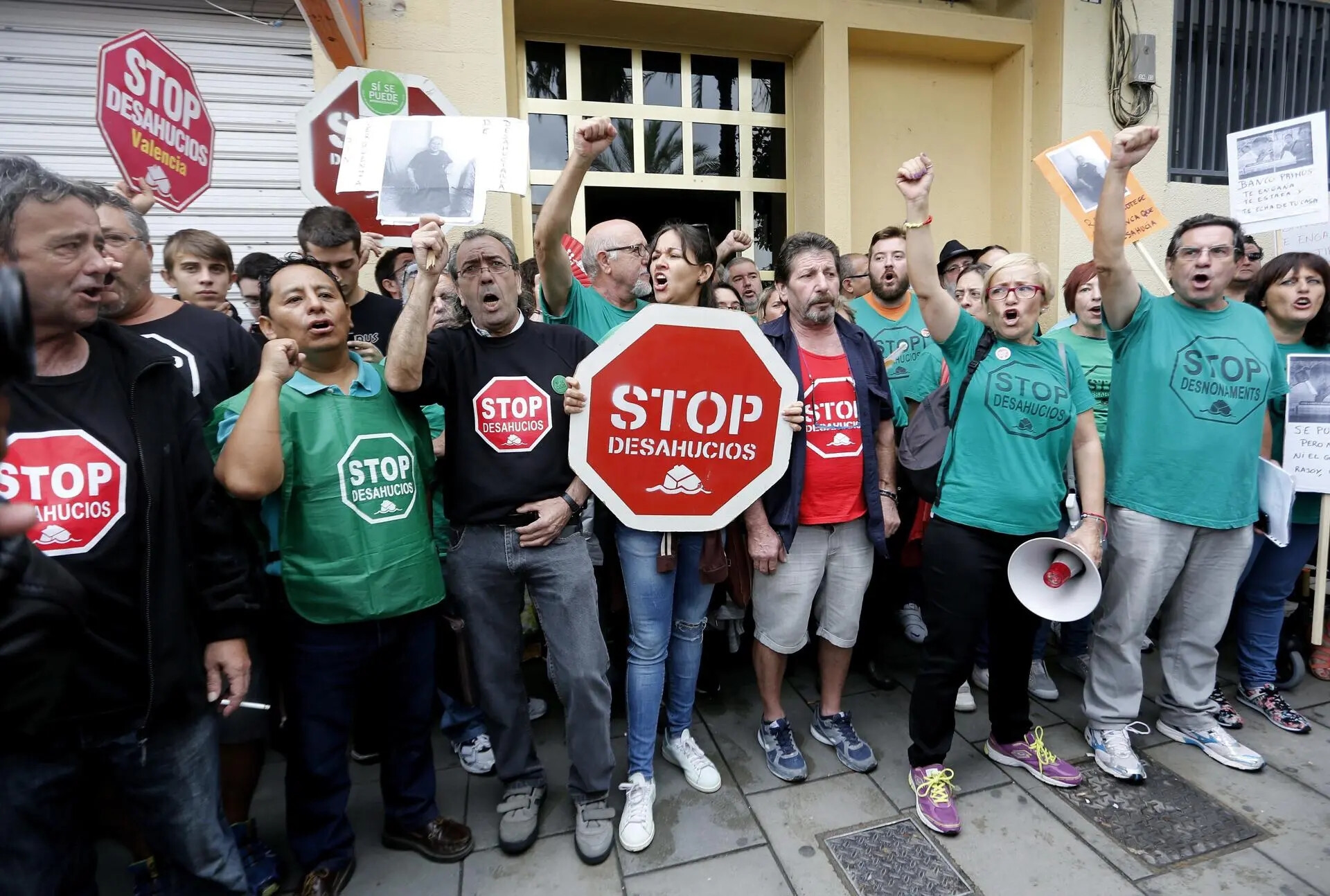
Housing was ultimately what led Sánchez to call the snap election. In the fall, images of the forced eviction of 87-year-old Maricarmen Abascal from an apartment in Madrid triggered widespread outrage. Sánchez saw the crisis as an opportunity to break the parliamentary deadlock, re-energize a tired left-wing electorate, and outmaneuver the right.
The government could no longer afford to wait until 2027, when it had hoped to secure a workable majority in the Congress of Deputies. The Cabinet introduced an emergency “Maricarmen” legislative package that would extend a moratorium on evictions of vulnerable families through the end of 2030, prohibit investment funds from buying residential buildings, offer €50,000 interest-free government loans for first-time homebuyers, and introduce indefinite rental contracts.

The Socialists had anticipated that the Conservatives would not dare challenge major landlords, thereby handing PSOE an ideal campaign narrative. On Oct. 2, the People’s Party, the far-right Vox, and the Junts all voted against the “Mari Carmen” package. Three days later, Sánchez dissolved parliament, called the election for Nov. 29, and built his campaign around that direct confrontation. The Socialists say extraordinary measures are needed to help tenants and young families, while accusing the right-wing parties of acting on behalf of landlords and investment funds. Street protests followed as labor unions and tenants’ organizations led millions of people in a nationwide housing strike.
But Sánchez’s calculation still appears to have been off: November polling shows the right-wing bloc comfortably ahead of PSOE and its left-wing allies just ahead of the vote.
Does Spain have a migration problem?
The image of a Spanish “migration apocalypse,” a narrative promoted over the course of Sánchez’s term by foreign far-right media and Kremlin-linked bot networks, does not fit the day-to-day reality inside the country, where attitudes are considerably calmer. As a result, the conservative opposition’s attempt to make the Ceuta border breach the defining issue of the fall campaign has largely been met with voter indifference.
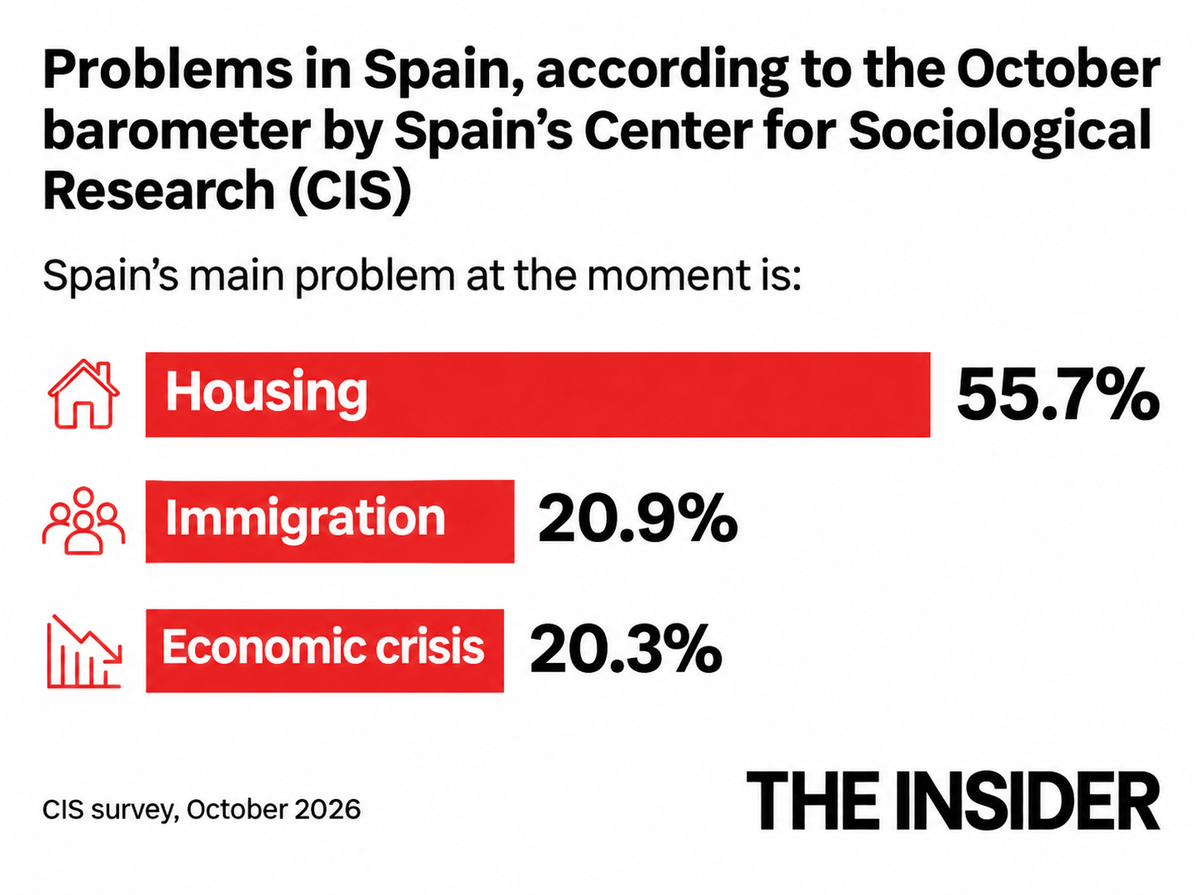
In the October barometer from Spain’s state-run Center for Sociological Research (CIS), only 20.9% of respondents listed immigration among the country’s main problems — far below the 55.7% who pointed to the housing crisis. When respondents were asked which problems affected them and their families personally, immigration fell to fifth place (11.2%), behind rent and mortgage costs, grocery prices, waits for medical care, and working conditions.
Spain’s far right, which has centered its campaign on border enforcement and the deportation of migrants and refugees, hit its high point of support at the height of the border crisis, but at 20%, it still lagged well behind similar movements elsewhere in the EU.
One possible reason is that immigrants contribute to the common welfare in Spain. In October 2026, the number of people paying into the Seguridad Social reached a record 22.62 million, and 3.7 million of them (16.4%).
People arriving from abroad accounted for 84% of Spain’s population growth, particularly in aging provinces. Migrant workers have filled jobs many native-born Spaniards do not want, particularly in elder care, entry-level health care jobs, crop harvesting, construction, and cleaning hotel rooms.
A reform carried out by the Sánchez government brought 490,500 people out of the informal economy and into the tax and Social Security system after they had previously worked without contracts. Against that backdrop, Vox leader Santiago Abascal’s campaign promises to reverse migrant regularizations and launch forced “remigration” threaten to harm the country’s demographic health and reduce the supply of labor. Hotel chains, southern agricultural cooperatives, and construction contractors oppose mass deportations, and in the field of healthcare, reducing the number of foreign workers could have catastrophic results for patients.
Crime and “okupas”
Despite the large number of migrants Spain has taken in, it remains one of the safest countries in the world. The rate of conventional, non-cyber crime stands at 40.4 offenses per 1,000 residents, and according to the UN Office on Drugs and Crime figures for intentional homicides, Spain ranks among the world’s 20 safest countries and among the 10 safest large countries.
The country records between 111 and 124 residential burglaries per 100,000 people, as opposed to over 400 in Belgium, between 350 and 400 in the United Kingdom, between 250 and 300 in France, and 150 to 180 in Sweden and the Netherlands. According to a November 2026 GAD3 poll, crime and personal safety rank only 10th among Spaniards’ main concerns. Just 3% of voters listed the issue as a major worry, putting it at the bottom of the ranking, on par with taxes and transportation.
Despite the widespread claim that Sánchez has been permissive toward squatters — commonly known in Spain as okupas — the government built what amounts to the toughest anti-squatting framework of Spain’s modern era during his eight years in office. In July 2018, the government introduced an expedited civil eviction procedure against unidentified occupants, requiring courts to order their removal if they could not produce a rental contract or property title within five days.
In September 2020, Spain’s Prosecutor General’s Office and Interior Ministry extended the legal protections for primary residences to vacation homes and second homes, classified their occupation by squatters as a serious offense, and allowed police to remove unauthorized occupants without a warrant in certain circumstances. In spring 2025, even the occupation of vacant investment properties was outlawed, and the process for prosecuting offenders was expedited to allow verdicts to be handed down within an average of around 15 days.
According to CIS polling reports for 2026, only 0.5% to 1.4% of respondents mentioned the occupation of property by okupas as a problem. Statistically, squatting currently affects less than 0.06% of Spain’s housing stock.
What Sánchez is offering voters
The Socialists’ election manifesto reads like an ultimatum to major landlords and regional party “barons” backed by the right-wing opposition. At its core is a plan to merge Sareb — Spain’s state-backed “bad bank,” created after the financial crisis to hold distressed property assets — with public land agency Sepes into a single construction corporation. The new entity would develop unused public land and provide as many as 184,000 apartments with rents capped at no more than one-third of household income.
The party promises a 100% deterrent tax on home purchases by non-EU foreigners, sharp limits on tourist apartments in overheated urban housing markets, and cuts to central-government transfers for People’s Party-run autonomous communities that refuse to enforce rent caps. Construction and €50,000 interest-free loans through the state credit institute ICO would be financed by making taxes on corporate windfall profits permanent.
During its first 100 days, PSOE promises to cut the workweek to 37.5 hours without reducing salaries, lower fares on Cercanías commuter trains, and redirect €12 billion from the construction of new high-speed rail lines toward repairs to older tracks and replacement of safety systems.

And yet, even though PSOE’s support remains around the same level that allowed it to win in previous elections, power is still likely to change hands, due to the collapse of its coalition partners. Spain’s Socialists have never been able to attract more than around 30% of the vote, and in both 2019 and 2023, Sánchez remained prime minister only through alliances with parties to PSOE’s left.
Three years ago, the Sumar platform brought together about 15 movements, winning 12.3% of the vote and contributing 31 seats to the governing camp. But the sudden dissolution of parliament this fall caught the left unprepared. During the 10 days allowed by law to register coalitions, party headquarters descended into disputes, and at the start of the campaign, voters to the left of the Socialists found three competing camps on the ballot: the hastily assembled Frente Amplio bloc led by former Barcelona Mayor Ada Colau, Podemos under former Equality Minister Irene Montero, and separate lists fielded by regional left-wing parties.
Why Sánchez could lose
Ada Colau is proposing cooperation with Sánchez. Her bloc’s program largely consists of more radical versions of PSOE proposals: reducing the workweek to 32 hours without cutting pay, introducing a universal €200 monthly child benefit, and creating a state housing fund made up of 1.5 million affordable homes.
At the same time, Frente Amplio’s manifesto calls for the progressive expropriation of housing from large corporate landlords, beginning with companies that own more than 1,000 homes. They also promise a complete ban on home purchases by investment funds and a 100% inheritance tax on amounts above €10 million per beneficiary.
Irene Montero and Podemos have built their campaign around a complete break with Sánchez’s government. Their more radical manifesto calls for the uncompensated expropriation of housing owned by foreign investment funds, the nationalization of energy companies, government price controls on basic goods, and a freeze on military spending.
Judging by the polls, neither approach has worked. Colau’s promises have failed to convince many left-wing voters after three years in which Sumar ministers served in a government that still could not push labor reform through parliament. Sánchez, meanwhile, seized the initiative on emergency housing measures with his “Maricarmen” package.
Montero’s program has been overwhelmed by internal warfare and relentless attacks on former allies. Three years of infighting have driven voters away from both projects.
Spain’s use of the D’Hondt method to allocate seats makes the split particularly costly. Members of Congress are elected not in a single nationwide constituency but across 52 separate provincial districts. In medium-sized provinces electing five to 10 lawmakers, a party often needs roughly 8% to 10% locally to win even one seat. When the same pool of left-wing voters is divided between two or three competing lists, none may clear that threshold, leaving hundreds of thousands of votes without representation.
In medium-sized provinces including Zaragoza, Málaga, and Valencia, separate left-wing lists fall below the effective threshold, allowing the remaining seats to go to larger parties, including those on the right. Once votes are translated into seats district by district, the entire far-left bloc is projected to fall from 31 seats to between seven and 12, concentrated largely in Madrid and Barcelona. Podemos risks ending election night without a single lawmaker.
Regionalists and separatists surge
As national left-wing lists collapse, the prospects for regional left-wing movements and parties representing Spain’s distinct regional identities look considerably stronger. Rather than running nationwide, they compete only in their home regions, such as Andalusia or Catalonia.
While Madrid’s far-left parties spent years settling internal scores, local lawmakers focused on everyday regional issues: opposing uncontrolled coastal development and tourist apartments, pressing the central government for money to repair chronically delayed Cercanías commuter trains, and defending local clinics and rural schools. That record has given regional parties greater voter trust than the nationwide projects led by Colau and Montero.
According to polling by 40dB, one-quarter of former Sumar voters have moved to regional left-wing blocs — more than the combined share remaining with the national Frente Amplio list, at 11%, and Podemos, at 13%.
Adelante Andalucía, which broke with the Madrid-based leadership, has fielded its own candidates in all eight Andalusian provinces. It is polling at 1.7% to 2.2% nationally and could win two to four seats.
Valencia’s Compromís bloc is running an autonomous regional campaign, polling at 0.9% to 1.5% nationally and projected to take three to five seats.
Left-wing nationalists in Catalonia, the Basque Country, and Galicia are doing even better. They were not part of the government but spent the past several years supporting PSOE and voting for Sánchez’s legislation in Congress. Catalonia’s Republican Left (ERC) is rising from 1.9% at the previous election to between 2.5% and 2.9%, potentially expanding its parliamentary group by five seats to 12. The Basque left-wing coalition EH Bildu, polling at between 1.5% and 1.7%, is projected to win seven or eight seats, up from six in 2023, overtaking the more moderate Basque Nationalist Party (PNV), which is expected to take four to six. The Galician Nationalist Bloc (BNG), has risen to around 1% and could win two or three seats in Madrid, compared with one previously.
Left-wing nationalists in Catalonia, the Basque Country, and Galicia, who did not serve in the government, are performing strongly
Together, those five regional and left-nationalist forces — ERC, EH Bildu, Compromís, Adelante Andalucía, and BNG — are projected to send between 26 and 32 lawmakers to the lower house, while the nationwide Frente Amplio “united left” list is expected to shrink to just eight or nine.
Adding together all of the parties to PSOE’s left that could support Sánchez (Frente Amplio together with Compromís and the Canary Islands left, with 12 to 15 seats; Adelante Andalucía, with two to four; Catalonia’s ERC, with 12; the Basque EH Bildu, with seven or eight; and Galicia’s BNG, with two or three) gives the governing camp another 35 to 42 seats.
But even with PSOE’s projected 116 to 123 lawmakers, the coalition reaches only 151 to 165 seats — well short of the 176 needed for a majority coalition.
A victory for the right without a Feijóo triumph
Alberto Núñez Feijóo, leader of the right-wing opposition, is preparing to move into the prime minister’s residence despite relatively weak projected results for his own party. November polling gives his center-right People’s Party (PP) 31% to 32% of the vote and 121 to 130 seats — fewer than the 137 the conservatives currently hold.
Three years of trench warfare against Sánchez’s government have failed to broaden the center-right’s electoral base. During the outgoing parliament, PP lost 17% of its previous electorate as roughly 700,000 voters who previously backed Feijóo shifted to the far right.
The opposition leader spent the entire term balancing between two internal camps. The Madrid wing, led by regional President Isabel Díaz Ayuso, demanded a sharper ideological assault on the government, while more moderate regional power brokers in Galicia and Andalusia favored a calmer managerial tone aimed at winning centrist voters.
As a result, the party went into Nov. 29 with an indistinct profile. Sánchez seized the social agenda and tenant protections, while the radical right claimed ownership of border security after the July breach in Ceuta.
The People’s Party manifesto is built around repealing the left-wing coalition’s main economic and social legislation during the new government’s first 100 days. On housing, Feijóo promises to repeal the 2023 law and the fall “Mari Carmen” decrees immediately after taking office, to eliminate state rent caps, and to hand municipally owned vacant land to private developers for commercial construction. To protect the interests of landlords, the conservatives propose tax deductions for renting apartments to young families and a tough law targeting delinquent tenants that would allow police to evict nonpaying renters without court proceedings in as little as 48 hours.
On taxes and energy, PP plans to eliminate windfall taxes on banks and energy companies, adjust income-tax brackets for inflation, abolish the wealth tax, and extend the operating lives of the Almaraz, Ascó, and Cofrentes nuclear plants, which the Socialists had planned to close between 2027 and 2035.
A separate section of the manifesto calls for a purge at the Transport Ministry following the October disaster near Urda. The conservatives promise to remove political appointees at state rail companies Renfe and ADIF, end free commuter-rail passes, and transfer technical oversight of high-speed tracks to independent auditors.
The biggest beneficiary of the rightward shift and the left’s collapse in provincial districts is Santiago Abascal’s far-right Vox party, which has the most disciplined voter base in the country: 78% of those who voted for Vox in 2023 say they are certain to do so again. They have been joined by hundreds of thousands of defectors from the People’s Party and young voters in working-class suburbs.

After the summer storming of the border fences in Ceuta, Vox’s polling rose to between 16.5% and 18.2%, while its projected number of lawmakers doubled from its current 33 to between 61 and 66 seats. The far-right campaign has drawn a direct link between illegal immigration, street crime, and waiting lists for public housing.
Abascal is campaigning on demands for a naval blockade of the Canary Islands coastline and Spain’s land borders in North Africa, the deportation without trial of all foreigners found to have entered the country illegally, the closure of reception centers for unaccompanied migrant minors, and the introduction into law of a principle of “national priority,” under which welfare payments, daycare services, and municipal housing would be reserved exclusively for Spanish nationals.
With around 60 lawmakers, Abascal is making tough demands of the People’s Party. In exchange for Vox’s votes, the party wants the deputy prime ministership, along with the Interior, Defense, Justice, and Family ministries. Its conditions for signing a coalition agreement also include a commitment to ending all state subsidies for the UGT and Comisiones Obreras labor unions, banning humanitarian NGOs that assist refugees, returning education and policing powers in Catalonia and the Basque Country to direct control from Madrid, and repealing laws around gender violence, EU green quotas, and the historical memory of repression under the Franco dictatorship.
Spain is turning right not because voters have embraced Feijóo, whose personal approval rating remains stuck at around 20%, but because the far-right vote has grown from the 12% Vox won in 2023 to the 18% to 20% it is projected to take in the snap election.
In medium-sized districts across Castile, Andalusia, and the Levant, the right combines votes from its two main parties, while the left loses ground because of competition among Colau, Montero, and regional groups. In Zaragoza, Málaga, Murcia, Alicante, and Toledo, the final contested seats lost by fragmented left-wing lists under the D’Hondt allocation system instead go to second- and third-ranked candidates on the Vox and PP lists.
The contentious agenda of a right-wing government
By mid-November, models from most polling organizations left little suspense for election night. Together, the People’s Party and Vox are polling at around 50% and are projected to win 182 to 197 seats, more than the 176 needed for a majority in the lower house.
Even under the most favorable scenario for the left, its coalition will reach only 151 to 165 seats.
Moderate regional parties cannot make up the difference. The Basque PNV and Catalonia’s Junts are themselves projected to lose seats and could not save the governing camp even if they agreed to support Sánchez for prime minister. For the first time since Franco’s death in 1975 and the adoption of Spain’s new Constitution in 1978, a far-right party would enter the Council of Ministers as a full member of a governing coalition.
A majority of roughly 15 seats would hardly guarantee a quiet term for a future Feijóo government. The programs of the two right-wing parties diverge on matters of the budget, foreign trade, and labor policy. Large businesses represented by the CEOE employers’ confederation, construction groups, and agricultural companies in southern provinces that support the People’s Party depend on hundreds of thousands of foreign workers arriving every year and on money from the EU’s NextGenerationEU fund. Abascal, meanwhile, is demanding a naval blockade of ports, along with mass deportations, the termination of trade agreements with Morocco, and the scrapping of Brussels’ green quotas.
Santiago Abascal is demanding a naval blockade of ports, mass deportations, the termination of trade agreements with Morocco and the abolition of Brussels’ green quotas
The new government’s first decrees repealing the “Mari Carmen” housing package and resuming evictions in winter 2027 would immediately put the Cabinet into conflict with the CCOO and UGT labor confederations and tenants’ unions, which mobilized 3 million people for a general strike on Nov. 11.
At the same time, an attempt by Vox-appointed ministers to reduce the powers of the regional police or to place schools in Catalonia and the Basque Country under direct control from Madrid would reignite Spain’s territorial conflict. Moderate nationalists in the PNV and Junts would move into the opposition, with Barcelona and Bilbao becoming the main centers of resistance to the new administration.
On foreign policy, Sánchez’s government has sharply criticized Israel, enforcing an arms embargo while officially recognizing Palestinian statehood. A right-wing alliance would reverse that Middle East policy. For Vox, solidarity with Israel is fully in line with the party’s stated commitment to “Judeo-Christian values” and its criticism of Islam.
The issue of support for Ukraine is more complicated. Feijóo himself maintains a pro-European and Atlanticist position, supporting continued aid to Kyiv and proposing that increases in Spanish defense spending be enshrined in law. But Vox’s election manifesto mentions neither Ukraine nor NATO and calls for cuts to foreign policy expenditures under the slogan “Spaniards first.”
The end of Europe’s last major left-wing government
Trying to preserve his party’s support amid corruption trials, the Ceuta border breach, and the Urda rail disaster, Sánchez seized control of the housing issue, building his fall campaign around the idea of the voto útil — a “useful” or tactical vote designed to concentrate the left-wing electorate behind one large party rather than dispersing it among smaller groups.
The strategy worked almost too well. PSOE held its 28% to 30%, but it did so by draining support from the junior partners in the outgoing government and by attracting hundreds of thousands of former far-left voters.
The Nov. 29 vote brings to a close a decade-long political cycle that began in the mid-2010s after the debt crisis and the protest camps of the “Indignados” movement. The emergence of new parties broke apart Spain’s old two-party system and produced two broad political blocs, each dependent on more radical allies on its flank.
On the right, Vox became an institution, doubling its parliamentary group to more than 60 seats and putting itself in a position to control several key cabinet posts. On the left, the political project to the left of Sanchez’s party has fractured into hostile camps and shrunk to levels last seen in the early 2000s, portending the fall of the EU’s last major left-wing government.
For three years, Sánchez and his allies bucked a broader European trend. While others cut social spending and tightened border controls, Spain raised the minimum wage, imposed windfall taxes, and granted legal status to hundreds of thousands of migrants. Conservatives and right-wing parties have already won the right to govern in most EU countries — now they are poised to take charge in Spain as well.