As the U.S. puts up barriers to would-be migrants coming across the southern border, Latin America is undergoing a sharp political shift. Politicians from Peru to Colombia are copying Donald Trump’s style and are themselves launching crusades against migrants and the left. Disillusionment with socialism and fears of ending up like Venezuelan leader Nicolás Maduro — i.e., captured by U.S. special forces — have turned Latin American societies riven by class hatred into a showcase for what may be Trumpism’s only foreign-policy triumph to date.
- 1.Fault lines
- 2.Every country is different
- 3.Roots of disillusionment with the left
- 4.From a source of migration to hostility toward migrants
- 5.Solidarity has led to a dead end
- 6.Trump for the poor
- 7.Direct intervention in South American elections
- 8.No longer Catholic?
- 9.Why has Trump had such success in Latin America?
Fault lines
The left-right divide in Latin America has its own peculiarities, with geography, class, race, and historical trauma all intertwined. It is the region with the highest inequality in the world. The right has traditionally served as a shield for landowners, transnational corporations, and big business, while the left has called for a greater role for the state, particularly when it comes to the redistribution of wealth.
This economic foundation is linked to “pigmentocracy,” in which a person’s social class often correlates with their skin color. White and light-skinned mestizos are more likely to make up the economic and political elite, while Afro-Latin Americans and Indigenous people are predominantly poor. The picture is further complicated by a geographic divide between wealthy, globalized megacities and coastal areas.
Over the past two decades, traditional class conflict in Latin America has also been complicated by culture wars. The conservative right, backed by the conservative wing of the Catholic Church and rapidly growing neo-Pentecostal (Evangelical) churches, faces liberal Catholic “liberation theology” and secular urban leftists with a progressive agenda focused on feminism, LGBT rights, and the legalization of abortion.
Every country is different
Each country, of course, has its own particularities. In Peru, the conflict has a pronounced territorial and ethnic dimension. Lima’s white and mestizo financial elites, along with the country's coastal elites, have integrated into the global economy and tend to side with the right. Opposing them is a left-wing camp made up largely of Indigenous people, peasants, and miners from the Andes and the south. People in these areas feel that resources are extracted from their lands while the profits all end up in the capital.
In Chile, the divide stems from the country’s economic model and the legacy of dictatorship. The right defends the Pinochet-era constitution, while the left calls for taking basic resources such as water out of private hands while creating a welfare state that provides free education and healthcare.
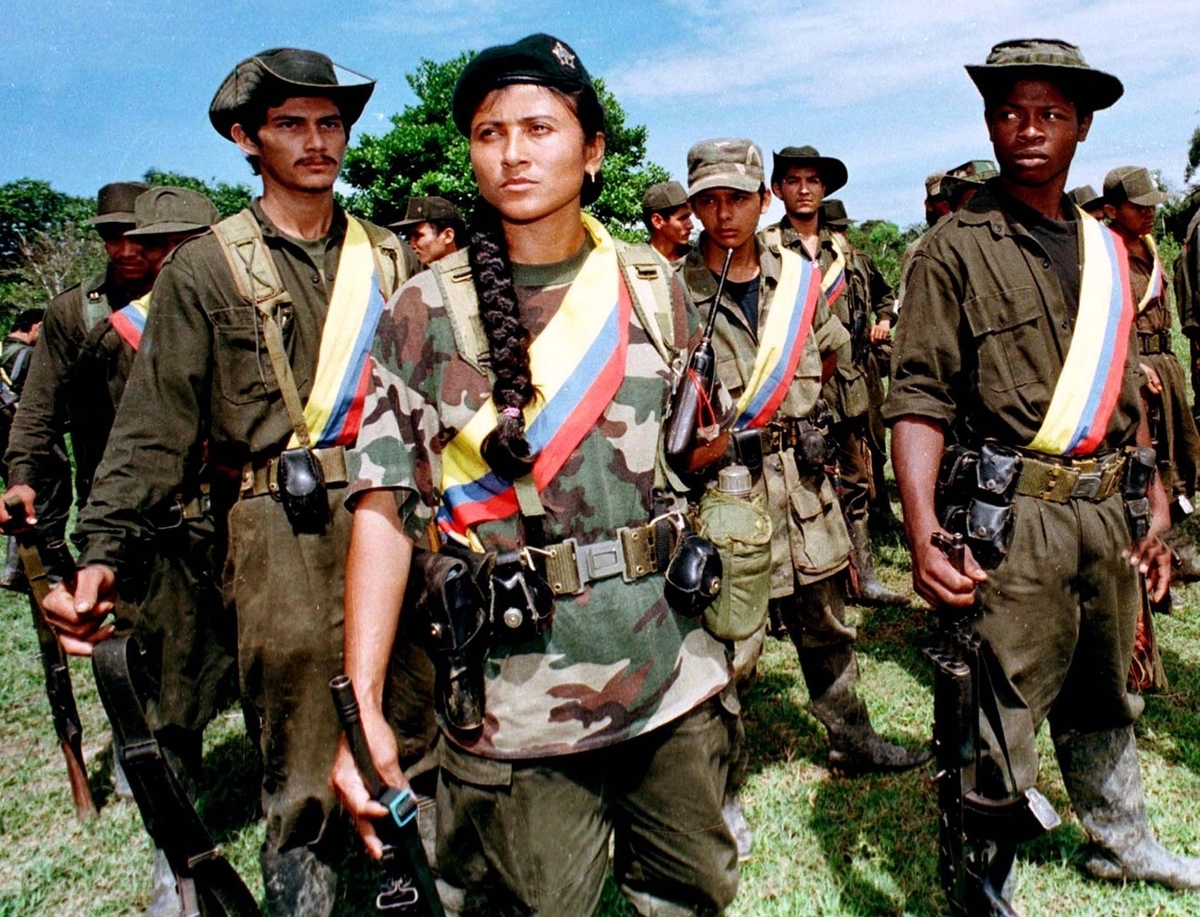
In Colombia, the divide has been shaped by drug trafficking and 60 years of civil war. Against this backdrop, the right dominated for decades by appealing to demands for stability and security. Its electoral base consists of traditional elites, big agribusiness, and regions that suffered heavily at the hands of the left-wing FARC guerrillas.
In Brazil, polarization is expressed through the struggle between Lulism and Bolsonarism, representing the left- and right-wing ideologies of the current and former presidents. A territorial and economic divide splits the country between the wealthy, industrial South and Southeast and the poorer, agricultural Northeast. The South and Southeast tend to vote for the right out of fear that rule from the left will mean corruption and a bloated bureaucracy. The Northeast, meanwhile, is a rock-solid base for the Workers’ Party, whose supporters see left-wing social programs as literally a matter of survival.
The deep domestic hostility in these countries, where different segments of society fear one another more than external enemies, can be traced to the history of Latin American statehood. In the 20th century, these countries fought virtually no major interstate wars. Their armed forces and security apparatus were therefore built not to repel foreign invasions but to suppress uprisings and maintain internal control.
While European right-wing leaders such as Marine Le Pen and Giorgia Meloni build their agendas around an “external threat” in the form of migrants and the EU’s supranational institutions, their Latin American counterparts direct their anger at domestic enemies. A study of speeches and social media posts by right-wing leaders in the 2020s shows that crime and security are central themes in Latin America, with domestic left-wing forces, courts, and human rights organizations cast as the main villains.
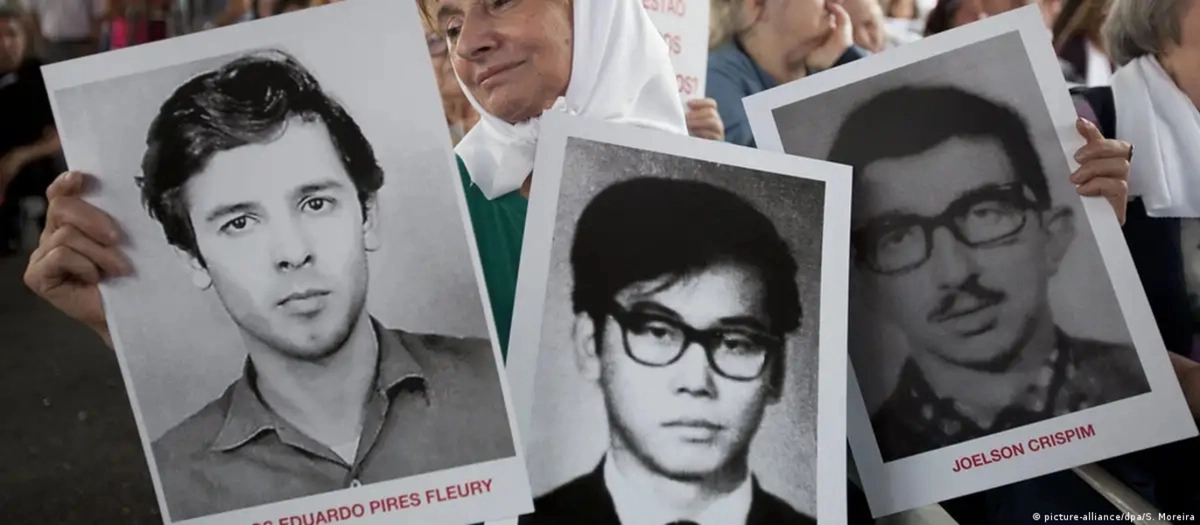
The right fears that a left-wing victory would mean a guaranteed path to “Venezuelization,” with its expropriations, hyperinflation, and institutional collapse. The left, in turn, has equally well-founded fears of the right, remembering the military dictatorships, thousands of “disappeared” (Desaparecidos), and death squads that used extreme violence to protect elite interests.
The right fears “Venezuelization,” with its expropriations and hyperinflation; the left fears brutal military dictatorships
This paranoia is fueled by centuries of internal colonialism, in which elites viewed their own Indigenous and poor populations not as equal citizens, but as savages and sources of cheap labor to be controlled or “civilized.” For the right, patriotism comes down to Catholicism or Evangelicalism, the flag, and the military; for the left, it means Indigenous rights, anti-imperialism, and defending sovereignty against transnational corporations.
Roots of disillusionment with the left
The political cycle that began in 2021–2022 with left-wing presidents taking office in Chile (Gabriel Boric), Peru (Pedro Castillo), and Colombia (and Gustavo Petro) failed to meet voters’ expectations for sweeping social reforms.
In Colombia, Petro’s “Total Peace” initiative, which envisioned dialogue with drug cartels and rebel groups, instead coincided with economic stagnation and a deteriorating security situation. In 2025, kidnappings exceeded 700 cases. The security crisis triggered an electoral shift that culminated in right-wing candidate Abelardo de la Espriella’s victory in the 2026 election.
In Peru, Castillo’s presidency ended in a protracted confrontation with the opposition-controlled Congress and corruption investigations into his inner circle. On Dec. 7, 2022, seeking to preempt another impeachment proceeding, Castillo announced that he was dissolving Congress and declaring a state of emergency. Congress ignored the decree, the move was ruled unconstitutional, and Castillo was arrested on rebellion charges as he tried to seek refuge in the Mexican Embassy.
In Chile, the effort to rewrite the Pinochet-era constitution proved to be a setback for the governing bloc. In 2022, 62% of voters rejected a new constitution backed by President Gabriel Boric and the left. The document, which enshrined the concept of a “plurinational state,” Indigenous autonomy, and sweeping social guarantees, was seen by a significant share of the population as a threat to national unity and economic stability. The left’s referendum defeat paved the way for the ultraconservative Republican Party led by José Antonio Kast, who took power this past March.
In Argentina, years of center-left Peronist dominance drove annual inflation into the triple digits and ended in late 2023 with the election of Javier Milei as president. His campaign centered on fierce criticism of the political establishment and promises of economic “shock therapy” to cut the budget deficit.
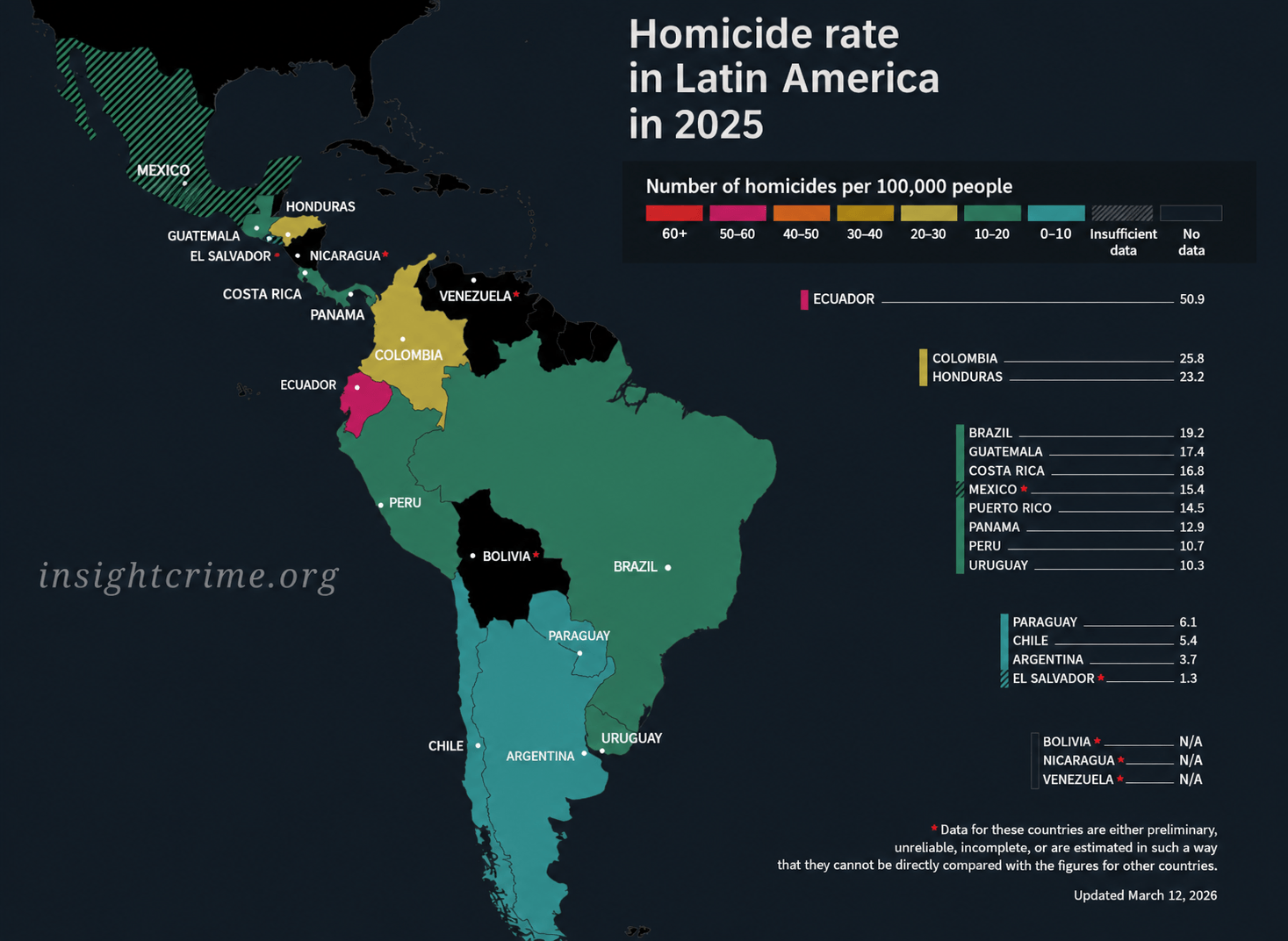
In El Salvador, the failure of previous administrations to tackle organized crime led to the emergence of a hard-line model of governance. President Nayib Bukele declared a state of emergency in order to combat crime. A sharp decline in homicides, achieved through mass arrests and restrictions on civil rights, won the government high public support, and the approach became a model for right-wing politicians in neighboring countries.
In Brazil, conservative populism has become institutionalized as a durable political force. Despite left-wing candidate Luiz Inácio Lula da Silva’s victory in the 2022 election, former President Jair Bolsonaro’s movement retains considerable influence. The movement consolidated its electoral base and controls a significant share of Congress and regional governments, substantially constraining the current government’s ability to implement its left-wing agenda.
From a source of migration to hostility toward migrants
The fact that Latin Americans support Donald Trump’s hard-line anti-immigration rhetoric and ICE raids, which regularly target their own compatriots living in the United States, seems paradoxical only at first glance. Latin American society is deeply divided. An Argentine middle-class professional or Brazilian farmer may not be offended by aggressive claims about “illegals” storming the Texas border due to the fact they simply do not identify with the poor people fleeing to the U.S.
Right-wing segments of society in Chile, Colombia, Peru, and Brazil – particularly the middle class and affluent coastal residents – have long been accustomed to culturally distancing themselves from poorer compatriots, measuring themselves against European or North American standards. Because migration flows consist predominantly of poor mestizo, Indigenous, or Afro-Latin American people, conservatives view those who leave through the familiar lens of “pigmentocracy,” with undisguised class and racial contempt. To them, poor labor migrants belong to the same hostile social class that votes for left-wing populists at home do. As a result, right-wing Latin American media readily recycle Republican talking points, portraying migrants not as victims of structural poverty but as a criminal mass bringing shame on their homeland from abroad.
Right-wing media portray migrants not as victims of structural poverty but as a criminal mass that shames their homeland abroad
Colombia, Peru, and Chile have taken in millions of Venezuelan refugees, and while locals welcomed the first waves with sympathy, later arrivals became targets of accusations that they were straining social systems and driving up crime. In Chile and Peru, calls for the immediate deportation of undocumented migrants, the militarization of border areas, and border closures have consequently become political tools for the right. When local voters hear Trump talk about “building a wall,” they project the idea onto their own borders, demanding similarly tough measures.
The process is particularly visible in Colombia, where the number of Venezuelan migrants rose from 78,000 in 2015 to 2.7 million by 2023. In 2016, 66% of Colombians said they would be comfortable having a migrant as a neighbor, but by 2019, that figure had fallen to 45%. Unfavorable attitudes toward Venezuelan migrants entering the country reached levels of 70% in 2023.
Between two-thirds and three-quarters of the populations of Ecuador, Peru, and Colombia, where more than 70% of the over seven million Venezuelans who have left the country have settled, believe that immigration lowers wages and worsens working conditions for locals. About 70% of respondents in Peru, Colombia, and Chile associate the influx of Venezuelans with rising crime, even though statistics show that Venezuelan migrants commit violent crimes far less often than the native population in all of the Latin American countries that have received them.
Against this backdrop, a recent UNHCR Return Intentions Survey, conducted in early 2026 among Venezuelan refugees in Ecuador, Peru, Chile, Brazil, and Colombia, found a new trend: about one-third (33%) of respondents are already considering returning home in the coming years. They cite growing xenophobia and difficulties obtaining legal status among the reasons for leaving.
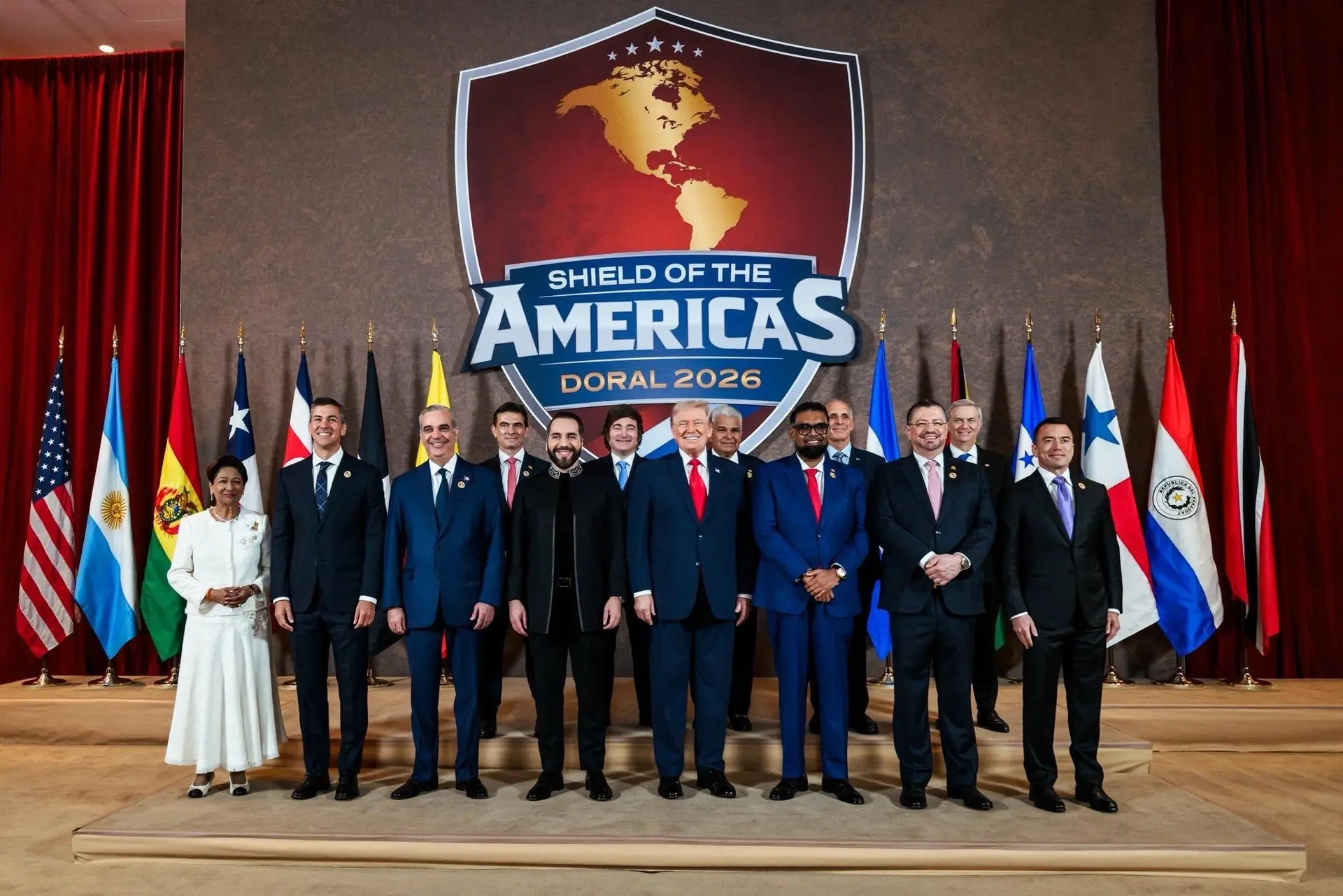
Faced with this crisis, South America has found political support for Washington’s tough measures. Several countries in the region have joined the U.S. “Shield of the Americas” initiative, which is intended to stop migrant caravans well before they reach the U.S. border.
Migration is also rising in Chile, increasingly alarming local residents. Nearly 80% of Chileans believe the border should be closed to new immigration until existing problems are resolved. Chileans also support Trump-like measures, especially when it comes to deploying the military to the border (76%) and deporting undocumented immigrants (73%). The situation is similar in Peru, where an IEP poll found that a majority (83%) view the arrival of Venezuelans negatively. Only 4% view it positively.
Even in Latin American countries that have not experienced large influxes of Venezuelan refugees, right-wing politicians are seeking to mobilize conservative voters and stoke anti-immigrant sentiment in order to strengthen their political standing. Javier Milei’s government is deliberately breaking with Argentina’s longstanding tradition of openness, shifting migration from the realm of human rights to that of national security, creating an atmosphere of xenophobia in the process. Officials use aggressive rhetoric, linking foreigners to “chaos and abuse.” Authorities urge citizens to report undocumented migrants through a security hotline, stigmatizing immigrant communities.
As part of this strategy, the government issued an emergency decree that streamlined deportations even for minor offenses and expanded authorities’ power to detain foreigners for up to 60 days at any stage of legal proceedings. The government also manipulates economic data. For example, officials claim that millions are being spent on healthcare for foreigners without providing any evidence. Such arguments are nevertheless used to justify ending free healthcare and education for nonresidents. Despite the reality that migrants account for a historic low of 4.2% of the population, the Argentine government continues to promote a narrative of a “mass influx,” using migration policy as a form of ideological performance to strengthen ties with right-wing movements in the U.S. and Europe.
Solidarity has led to a dead end
The Latin American left often suffers from excessive “professional solidarity,” refusing to acknowledge the authoritarian nature of the regimes in Venezuela, Cuba, or Nicaragua. The identity of the old-school Latin American left is built around radical anti-imperialism rather than the defense of democratic procedures. In the 20th century, Washington systematically backed right-wing military dictatorships and sponsored coups. For the Latin American left, the U.S. remains the ultimate threat, and any leader who challenges Washington is automatically seen as a historic ally.
As a result, a deeply entrenched bloc mentality has taken hold across the region. Latin America’s left-wing elites view human rights almost exclusively through a geopolitical lens. They demand that abuses by right-wing governments be investigated immediately by international tribunals, and they justify authoritarian practices by socialist regimes as a response to Western economic pressure and a necessary defense of national sovereignty. The same considerations even lead left-wing governments to turn a blind eye to the crimes of Putin’s regime when doing so helps counter the influence of their closer and more threatening North American neighbor.
Trump for the poor
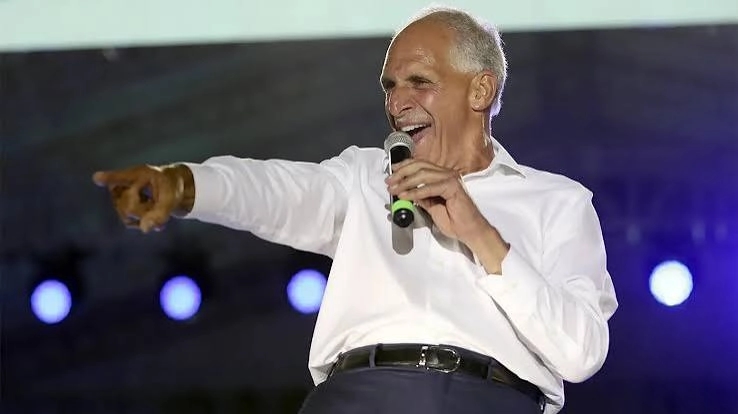
South America’s political landscape has been filled up with “mini-Trumps” who use aggressive theatrics and grand gestures to mobilize voters exhausted by criminal chaos and economic decline. The most grotesque embodiment of this style is Colombian millionaire Abelardo de la Espriella, who came to power in August.
A political newcomer with three citizenships, he turned his rallies into pyrotechnic spectacles. De la Espriella appeared before crowds behind bulletproof glass, cultivating the image of a besieged hero. Emulating Trump, he deliberately clashed with the mainstream media, filing more than 100 lawsuits against journalists and outlets over their criticism of him. His ostentatious contempt for journalists, especially women, only strengthened his support among voters seeking a “strong hand.”
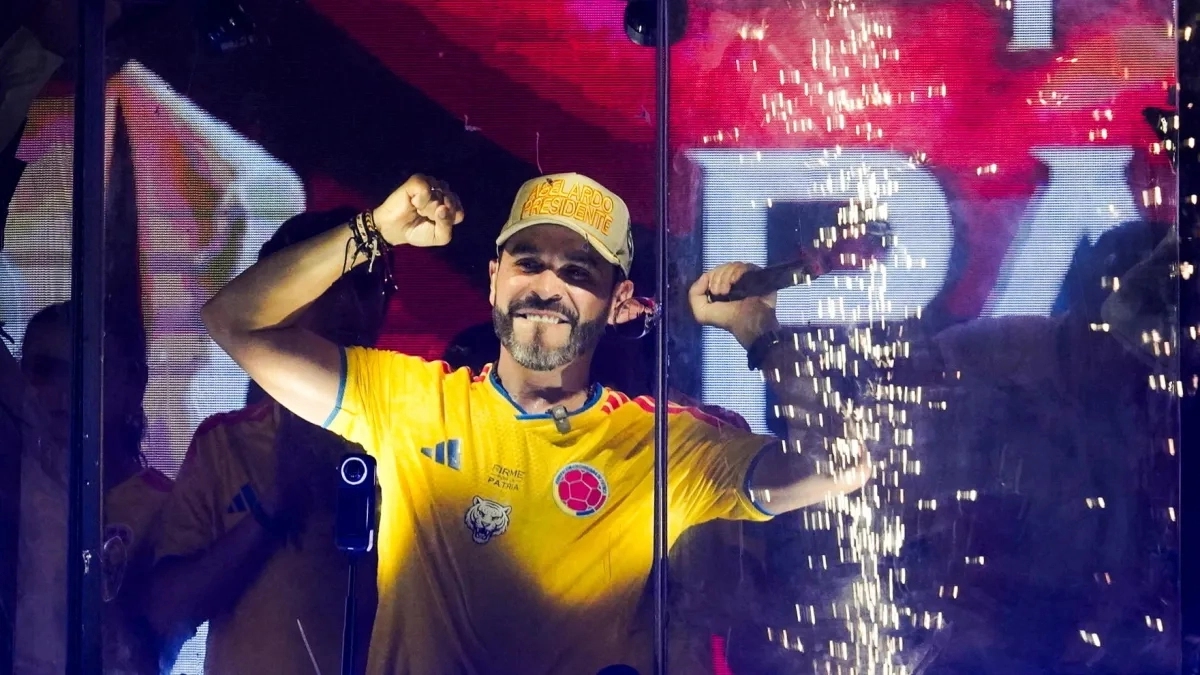
For years, Trump has sold merchandise bearing his name, from the iconic red “MAGA” caps to ties and fragrances. De la Espriella has brought the same business model to Latin America. He personally promotes premium sausage, rum, olive oil, wine, and perfume under his De la Espriella brand. He also publishes books and puts out music albums on which he performs popular songs himself. He regularly posts videos of himself in a tuxedo and bow tie singing Italian pop classics, posing against backdrops of mansions and expensive antiques. De la Espriella has made “The Tiger” his official alter ego. He even signs documents that way and promotes the brand on social media and in his campaign imagery.
Like Trump, who relishes his image as commander in chief despite never having served in the military, de la Espriella regularly appears in public giving conspicuous military salutes and standing at attention (he too has never served in the armed forces).
The Colombian president openly surrounds himself with imposing-looking bodyguards carrying briefcases straight out of Hollywood gangster movies. He smokes expensive cigars, wears exclusive custom-made three-piece suits, and goes out of his way to project the image of a “dangerous and wealthy alpha male” challenging the establishment. His rhetoric toward his left-wing opponents ahead of the 2026 election verged on calls for physical violence – he vowed to “gut” Marxism and put an end to outgoing president Gustavo Petro’s “narco-communist tyranny.”
The Colombian president goes out of his way to project himself as a “dangerous and wealthy alpha male” challenging the establishment
“Given his extraordinary achievements in life and his political support for me personally, it is a great honor to give Abelardo my full and unconditional support,” Trump said of de la Espriella in June during the Colombian presidential campaign. Immediately after the election, Trump gave him a billion dollars in aid.
In Chile, José Antonio Kast simply copied the best ideas from his idol. His supporters flooded the streets in red caps emblazoned with “Make Chile Great Again,” turning the country into an ideological outpost of the MAGA movement. Just five days after his inauguration in March 2026, Kast made a highly publicized trip to the northern border in the Atacama Desert. With TV cameras rolling, he launched work on a project to dig 11 kilometers of trenches and build concrete barriers topped with electrified barbed wire.
Keiko Fujimori’s election campaign in Peru provided another example of the “Trump playbook" at work in Latin America. The most striking parallel was her rejection of the 2021 election results. After narrowly losing, Fujimori claimed without evidence that there had been “systemic fraud” and sought to annul around 200,000 votes. International observers and commentators directly compared this with Donald Trump’s attempts to overturn the results of the 2020 U.S. election. This method of delegitimizing institutions became the foundation of her political style, built around mobilizing supporters with the rhetoric of a “stolen victory.”
Direct intervention in South American elections
Under Trump, the U.S. returned to a policy of overt intervention in Latin American affairs, which researchers describe as a “new Monroe Doctrine.” Unlike previous administrations, the Trump team stopped hiding its objectives and adopted a strategy of “suppressing the left and supporting the right,” with the MAGA movement treating Latin American countries as a direct territorial extension of the United States.
The foundation of this influence was a transnational network, coordinated through the expansion of the Conservative Political Action Conference (CPAC) and the signing of the so-called “Madrid Charter” by far-right parties in Europe and the Americas. This gave formerly marginal political forces access to U.S. social-media manipulation techniques and Republican Party resources.
CPAC networks fostered a layer of hundreds of “political micro-entrepreneurs” – influencers who spread the movement’s ideas, put pressure on opponents, and wage “culture wars” modeled on the work of American podcasters. CPAC thus became not just a forum for debate but a technology hub.
This enabled right-wing forces in Chile, Colombia, and Peru to wage aggressive campaigns amid a “temporal asymmetry”: the left offered long-term change, while the right offered flashy digital spectacles and promises to restore order. Through these networks, José Antonio Kast, Keiko Fujimori, and Abelardo de la Espriella forged close informal ties with Trump’s circle, allowing them to portray themselves as White House favorites at home long before their electoral victories.
Nasry “Tito” Asfura’s victory in the 2025 Honduran presidential election provided another example of how overt pressure from Washington can shift the electoral balance in Central America. Long before election day, the White House turned the campaign into an instrument of direct geopolitical coercion. Donald Trump publicly endorsed the National Party candidate and threatened to cut off all financial and economic assistance to the country if the right lost, effectively presenting voters with a stark ultimatum. Experts note that the unprecedented pressure from Washington undermined the legitimacy of the entire electoral process.
In addition to threats to cut off aid, the White House deployed high-profile political levers, including the controversial pardon of former President Juan Orlando Hernández, an Asfura ally and fellow party member. Hernández was serving a lengthy sentence in the U.S. for drug trafficking. The move sent an unmistakable signal to local elites that the rules of the game had changed and that unconditional loyalty to the outside power center was required.
For Asfura’s camp, securing Trump administration support became the main tool of political survival and voter mobilization. With the country’s economy heavily dependent on foreign markets and remittances, Honduran right-wing leaders willingly cast themselves as conduits for Washington’s interests. The culminationation was the creation in March 2026 of the previously mentioned military-political bloc, the “Shield of the Americas” (ACCC), bringing together 17 countries under US. .leadership to combat “narco-communism.”
No longer Catholic?
As recently as the 1970s, more than 90% of the continent’s population identified as Catholic, but the picture has changed. Across the region, the share of evangelical Protestants and Pentecostals has risen to 20% on average. In Brazil, it has surpassed 30%, up from barely 5% half a century ago. In Guatemala, Honduras, and El Salvador, it stands at around 40–50%.
For decades, the traditional Catholic Church flirted with left-wing ideas. At one point, Latin American priests embraced “liberation theology” en masse, calling for structural reforms, criticizing capitalism, and justifying social protests by the poor.
Protestant preachers offered a fundamentally different approach. They brought prosperity theology and the concept of perpetual spiritual warfare to the region. Their black-and-white ideology divides the world into absolute good and demonic forces. People are expected to pursue financial success, defend the traditional family, and reject liberal innovations.
Evangelical congregants have become an effective foot force for mobilizing around the “culture wars” agenda: defending the traditional family while opposing abortion, LGBTQ+ rights, the feminist movement, and what right-wing leaders refer to as “narco-communism.”
For outsider right-wing politicians such as Jair Bolsonaro and Javier Milei, who often lack the backing of established party machines, evangelical and Pentecostal communities have become a ready-made organizational structure. Pastors act as “intermediaries,” giving political leaders access to a large, disciplined audience through their churches and communication channels.
In Argentina, Javier Milei used the same trick. His La Libertad Avanza party had virtually no local presence in poor provinces or in the working-class suburbs of Buenos Aires, but local evangelical pastors became his informal campaigners. They saw Milei as a defender against progressive reforms and the legalization of abortion. In the end, church networks delivered his ballots to areas where no libertarian activist would have dared to go.
Church networks delivered Milei’s ballots to areas where no libertarian activist would have dared to go
Their direct political influence is growing as a result. The Protestant bloc in Brazil’s National Congress, known as the Evangelical Parliamentary Front, controls 35% of the seats, and its members hold 213 of the 513 spots in the lower house. They were instrumental in the presidential victory of Trump ally Bolsonaro.
Chile’s parliament now officially has an “evangelical bench” (bancada evangélica), a group of ultraconservative lawmakers in the lower house. Without their votes, the right-wing camp cannot form a majority.
Colombia’s megachurches operate as mobilization networks. Their pastors can deliver hundreds of thousands of coordinated votes for the right-wing candidate of their choice.
Traditional politicians understand this arithmetic and are forced to pledge allegiance to conservative values in exchange for access to the church-going electorate. In Peru’s elections, for example, the far-right Popular Renewal party embraced religious fundamentalism, and seats in parliament went to actual pastors from evangelical megachurches. Together with conservatives from the Fujimorist party, evangelical lawmakers consistently form an informal bloc of 15–20 legislators – enough to paralyze progressive education reforms and force out ministers they oppose.
Evangelical churches are a political channel for exporting Trumpism. The explosive growth of Protestantism on the continent began during the Cold War with direct support from Washington. Missionaries from conservative southern U.S. states deliberately traveled to Latin America. For Republican administrations at the time, this was an elegant way to fight communism and the left-wing Catholic “liberation theology.”
The American right continues to openly fund the continent’s conservative turn. Investigators at the openDemocracy organization found that evangelical foundations linked to Donald Trump have poured about $280 million in “dark money” into global far-right campaigns. A huge share of these funds has gone to Latin America, fueling campaigns against the legalization of abortion, attacks on minorities, and efforts to block left-wing initiatives.
Why has Trump had such success in Latin America?
Unlike Europe, Canada, or Australia, Latin America has become the only region where Donald Trump has achieved sustained success in advancing his interests and helping his allies win power. In wealthy countries, right-wing radicalism runs up against strong institutions, functioning welfare states, and an established elite consensus.
One key factor has been the absence of a “cordon sanitaire” in Latin American countries. In Europe and other developed democracies, mainstream right-wing parties often maintain such a political barrier, refusing to ally with radical populists in order to protect democratic institutions. In Latin America, by contrast, figures such as Javier Milei, José Antonio Kast, and Abelardo de la Espriella have carried out a “hostile takeover” of the traditional right, control of old party structures. Local elites chose to abandon their commitment to institutions in pursuit of a quick return to power. This allowed Trumpism to become government policy in a number of countries.
The financial and military stick has also played an important role. Countries in the region depend on the U.S. for access to loans from the IMF, World Bank, and Inter-American Development Bank. The Trump administration has actively used its veto power in these institutions to reward loyal leaders, as it did with loans to Milei and Bukele, and to punish left-wing opponents. In Canada and Europe, such U.S. economic coercion is far more limited because of their greater economic self-sufficiency.
With the region’s old party systems and traditional media in a state of collapse, voters have become highly vulnerable to manipulation on social media. The CPAC and Steve Bannon networks have given local leaders access to technologies that allow prejudices to “go viral,” while yesterday’s political outcasts can use TikTok and Instagram to reinvent themselves as messianic heroes. Latin America has thus become an ideal testing ground for Trump and Trumpism.