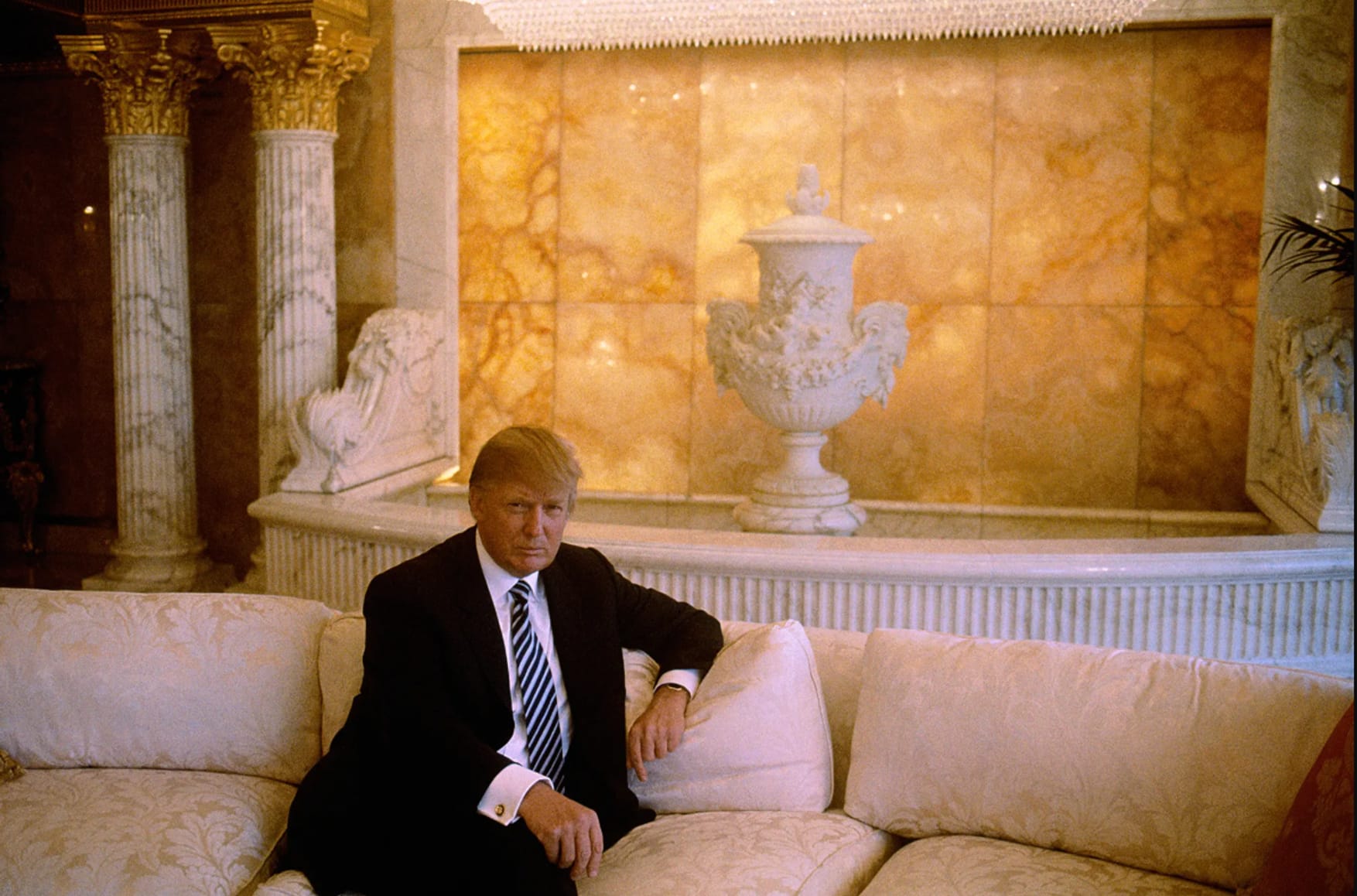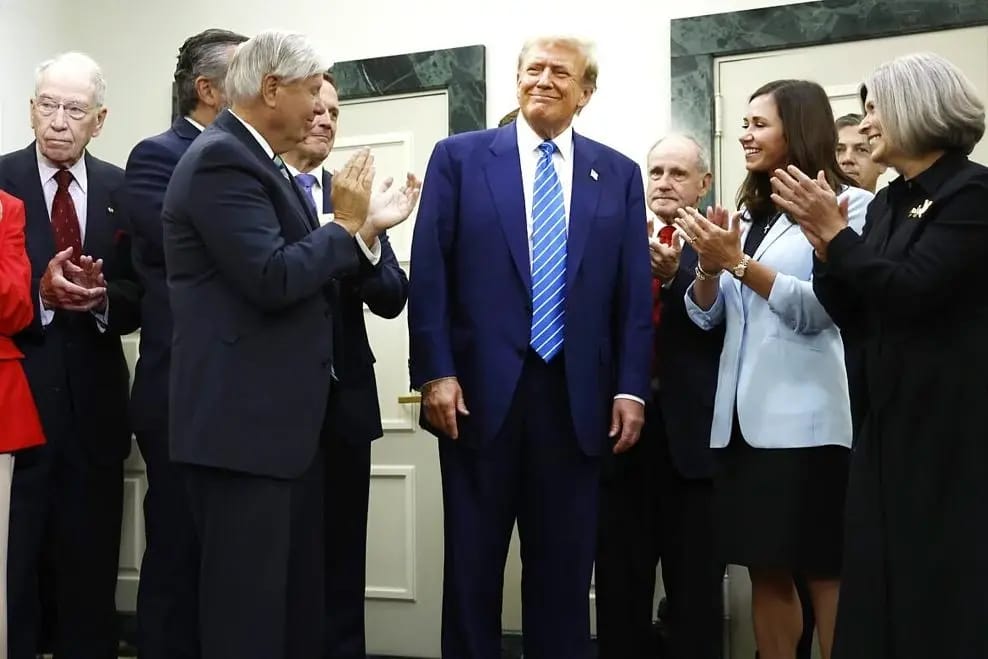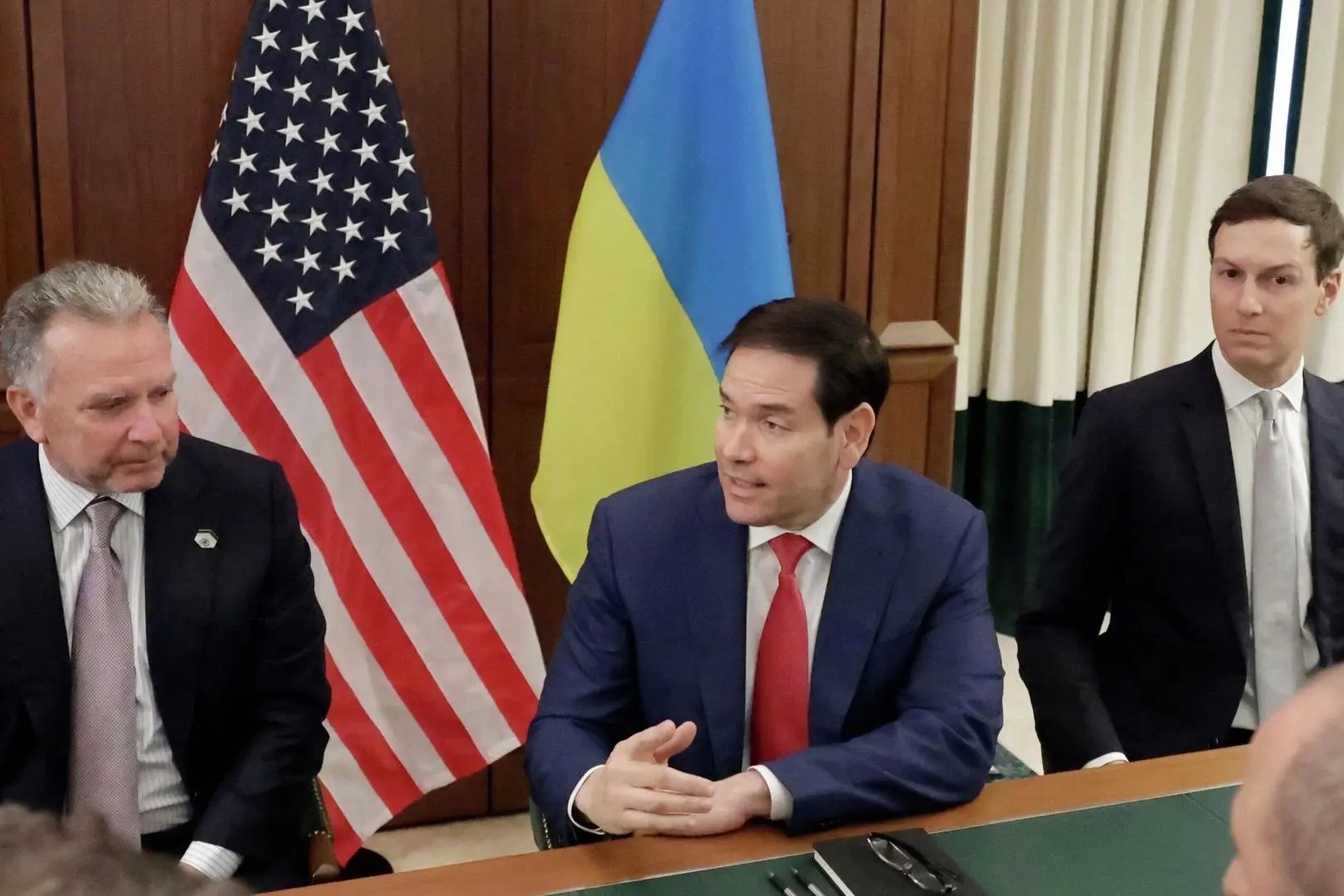
At first glance, Donald Trump’s foreign policy appears to be a monolithic embodiment of the “America First” slogan. In reality, however, behind the MAGA façade lies a fierce bureaucratic struggle between several competing factions, each with its own vision of how the United States should project its power throughout the world. Analysts at the European Council on Foreign Relations (ECFR), for example, divide the foreign policy establishment surrounding Trump into radical isolationists (Restrainers), advocates of prioritizing the Indo-Pacific (Prioritizers), globalist hawks (Primacists), and cynical pragmatists from the business world (Developers). The categories are admittedly broad — and somewhat artificial — but the very fact that these disparate camps coexist within the administration helps explain the inconsistency and unpredictability of American policy under Trump.
Four major factions are commonly identified as leaders in the competition to shape U.S. foreign policy under Donald Trump. The first, representing the radical populist wing led by Vice President JD Vance (often seconded by Tucker Carlson), is fixated on rebuilding America at home. Its members call for an immediate end to aid for Ukraine, the freezing of ongoing conflicts, abandoning America’s informal role of global policeman, and imposing steep protectionist tariffs even on traditional allies (whom they openly regard as free riders).
The populists’ central argument — that “forever wars” are ruinous — is shared in part by the second faction, whose leading ideologue is former Pentagon official Elbridge Colby (backed by Senator Josh Hawley). These advocates of strict strategic prioritization argue that America's overstretched defense industrial base cannot sustain its current count of confrontations on multiple fronts and that Washington should thus redeploy its naval forces and advanced technologies to the Indo-Pacific for what they see as an existential struggle with China. Under this scenario, responsibility for Europe's security — and for Ukraine's future — would be shifted onto the Europeans themselves.
Both of these camps are fiercely opposed by the traditional Reaganite hawks, led by Secretary of State Marco Rubio (and his predecessor as National Security Advisor, Mike Waltz). They embrace the doctrine of “peace through strength,” arguing that an American retreat from Europe would only signal the kind of weakness that could encourage Beijing to invade Taiwan. Accordingly, they argue that the United States must maintain overwhelming military dominance across all key regions of the world in order to pressure the informal axis of Russia, China, and Iran, while simultaneously pushing NATO allies to increase their defense spending.
The fourth faction, made up of business-oriented investors led by Jared Kushner, seeks to reconcile the financial interests of the Saudi monarchy with a pro-Israel vision of the global order.
At the center of this political cacophony stands Trump himself. A transactional pragmatist, he has shown little hesitation in alternating between these mutually contradictory approaches (his critics like to joke that he invariably echoes the views of whichever adviser spoke to him last). He readily borrows Vance's isolationist rhetoric to mobilize his core electorate and shares Colby's fixation on the threat posed by China, while at the same time deliberately appointing uncompromising hawks to key positions. Critics describe this as foreign policy schizophrenia, whereas supporters argue that Trump has turned the chaos and unpredictability of his own personnel decisions into his greatest political asset.
Restrainers — the new isolationists
The isolationist “restrainers” previously appeared to be the chief intellectual force driving the MAGA movement, and the group's position had seemed unassailable after JD Vance was appointed vice president. However, the Trump administration's military campaigns against Iran exposed a clear fault line within the president’s inner circle, with the isolationists losing out in their confrontation with the Republican Party's traditional hawks — at least when it came to the Middle East.
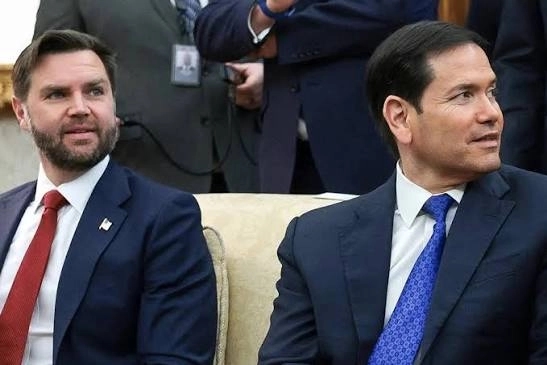
In addition to Vice President Vance and his longtime media ally Tucker Carlson, this camp has traditionally included Rep. Marjorie Taylor Greene and a collection of other hardline Trump loyalists in the House of Representatives. Its intellectual backbone consists of organizations such as the Quincy Institute for Responsible Statecraft and the right wing of the Heritage Foundation, which has sought to provide a theoretical foundation for American neo-isolationism.
The faction's electoral base is made up of the disillusioned working class of America's Rust Belt who most eagerly consume content from the movement’s sprawling network of alternative media outlets and far-right activists. Weary of “forever wars,” this faction has even found common cause with left-wing anti-imperialists (like Tulsi Gabbard).
The isolationists' immediate objectives have always been highly practical. They seek to block all financial and military aid to Kyiv, force America's European NATO allies to pay for their own security, and redirect the resulting savings toward securing the southern border. Over the longer term, however, the group aims to dismantle the global security architecture created after World War II, replacing it with rigid economic protectionism and sweeping tariffs. Their ideal is to turn the United States into a self-sufficient “fortress” that attacks foreign markets with tariffs rather than missiles. Achieving that vision would require the complete abandonment of the Republican party’s Reagan-era legacy of internationalism.
The isolationists' ideal is to turn the United States into a self-sufficient “fortress,” attacking foreign markets with tariffs rather than missiles
In their struggle for influence, the restrainers work closely with right-wing populist leaders in Europe, above all former Hungarian Prime Minister Viktor Orbán. They also rely on the backing of tech billionaires led by Elon Musk, who shares the group’s skepticism toward Washington's global commitments.
Their principal adversaries are the traditional Washington establishment, the defense-industrial complex, and the powerful pro-Israel lobby represented by the Republican Jewish Coalition. Within the administration itself, they have been engaged in an unrelenting bureaucratic struggle with the globalist hawks led by Rubio and Waltz — who ultimately seized the initiative by drawing the White House into a major military escalation in the Middle East.
Recent events have led to a de facto split within the isolationist camp itself. Tucker Carlson, who publicly denounced the strikes on Iran as a vile and immoral decision driven by Benjamin Netanyahu's manipulation, has definitively broken with Trump, saying he deeply regrets his past support for the president. Like Marjorie Taylor Greene, his dramatic split launched a public debate over the potential creation of an independent political movement.
At the same time, JD Vance has been forced to play an extremely careful game of internal politics, balancing loyalty to his boss against his own presidential ambitions for 2028. In his public appearances, the vice president has had to defend Trump's hard-line policy on Iran while assuring the press that he does not take orders from Carlson.
Trump himself, driven solely by transactional calculations and a desire for quick geopolitical victories, has for now pushed the restrainers to the sidelines. Responding to Carlson's criticism, he remarked that the real MAGA movement supports the president’s decisive actions — making it clear that the isolationist agenda has lost at least some of its influence to Washington’s familiar advocates of military force.
Prioritizers — strategic prioritizers with an anti-China focus
The faction of prioritizers, which has become the intellectual backbone of the Defense Department during Donald Trump's second term, represents the most pragmatic — and, for America's European allies, the most troubling — wing of the revamped Republican foreign policy establishment.
Unlike the outright isolationists, who dream of retreating behind America's borders, this camp thinks in terms of geopolitical “realism.” Its leading figures include Elbridge Colby (the grandson of a former CIA director), who serves as the Pentagon's under secretary of defense for policy, and populist Senator Josh Hawley. The group's ideological core also includes Defense Secretary Pete Hegseth, under whose nominal leadership Colby has effectively taken the lead in shaping America's new National Defense Strategy. Other prominent members include former Rep. Mike Gallagher, along with analysts at the Marathon Initiative, a think tank co-founded by Colby.
The faction's principal financial backers come from Silicon Valley's conservative wing, most notably venture capitalists such as Peter Thiel and Palmer Luckey, (founder of the defense startup Anduril). They are interested in redirecting government contracts toward artificial intelligence, satellite reconnaissance, and autonomous combat systems capable of competing with China.
The prioritizers' immediate tactical objectives involve suspending the deployment of purportedly scarce U.S. resources currently going to Ukraine and Europe and directing them towards Asia instead. In the short term, they seek to freeze all secondary conflicts in order to rapidly redeploy American aircraft carriers, air defense systems, and precision-guided missile capabilities to the Taiwan Strait.
Their long-term strategic objective is to prevent Beijing from establishing hegemony in Asia and to carry out a sweeping economic and technological decoupling that would completely cut China off from Western intellectual and financial resources. To that end, Hawley has introduced legislation in the Senate calling for a radical separation of American and Chinese artificial intelligence capabilities, banning all U.S. investment in China, and imposing severe penalties on American corporations that transfer technology there. In the prioritizers’ worldview, the European Union is seen not as a historic ally bound to the United States by shared values, but as a geopolitical free rider and potential economic competitor that must be forced to achieve full strategic autonomy, even if doing so leads to the collapse of transatlantic unity.
The prioritizers' long-term strategic objective is to prevent Beijing from achieving hegemony in Asia
On the international stage, the prioritizers are working to develop an architecture of bilateral partnerships, working closely with Australia through the AUKUS alliance, as well as with Japan and Taiwan. Colby has demanded unequivocal commitments from these partners to commit substantial resources in the event of a conflict with China — including by engaging in the fight directly.
At the same time, the prioritizers are engaged in two relentless bureaucratic struggles back in Washington — defending themselves against the globalist hawks led by Rubio, and supporting Congressional efforts to investigate major technology companies such as Meta over senior executives’ secret concessions to the Chinese Communist Party, made in order to preserve their access to Asian markets.
Colby and his team are now fully focused on implementing a new doctrine of flexible realism. They have been traveling to regional summits, where they have sought to build barriers against China's expanding influence by forcing America's allies to choose sides.
The group has retained Trump's favor because it provides the president with an ideal intellectual justification for his distrust of European leaders. At the same time, however, its narrow strategic focus and reluctance to divert attention to other regions periodically irritate the White House — especially when Trump becomes captivated by dramatic escalations in the Middle East that call for a classic display of imperial power rather than the long-term planning required for a decades-long technological competition with China.
Primacists — Washington's global hawks
The primacist faction, or global hawks, represents the Reaganite neoconservative wing of the Republican Party. Despite fierce resistance from the isolationists, this group has staged an impressive bureaucratic comeback during Donald Trump's second term. Its leading figures include Rubio and Waltz, along with former National Security Advisor Robert O'Brien, former Secretary of State Mike Pompeo, and influential Republicans on key congressional committees, including Michael McCaul and Mike Turner.
The faction's intellectual and financial foundation rests on the traditional American defense-industrial complex (represented by giants such as Lockheed Martin and Raytheon), the old guard of the intelligence community, and the influential pro-Israel lobby (including the Republican Jewish Coalition). They see the primacists as the last line of defense against a complete American withdrawal from the world's key geopolitical flashpoints.
The global hawks' immediate tactical objectives center on projecting overwhelming military power and containing Washington's principal adversaries through direct escalation. This was clearly reflected in their role as the leading advocates of the military campaign against Iran and the large-scale strikes in Venezuela in early 2026.
Over the long term, the primacists seek to preserve total U.S. dominance across all three critical regions — Europe, Asia, and the Middle East — and they believe any concession to Russia or Iran would immediately encourage China to move against Taiwan. To that end, they are reshaping America's traditional alliances, promoting concepts such as the “Shield of the Americas” while demanding that European NATO members assume full operational responsibility for the continent's security while continuing to act under American leadership.
The hawks seek to preserve total U.S. dominance across all three critical regions: Europe, Asia, and the Middle East
On the international stage, the primacists closely coordinate with Benjamin Netanyahu in Israel and with right-wing Latin American regimes while simultaneously waging an intense behind-the-scenes struggle in Washington. Their principal rivals remain JD Vance’s restrainers (who accuse the hawks of dragging the United States into endless proxy wars) and Elbridge Colby's camp of Asia-focused pragmatists (who argue that Washington should abandon Europe in order to concentrate on Taiwan).
Rubio's team is currently consumed with managing the aftermath of the strikes on Iran, shaping a new security architecture in South America, and protecting the Pentagon’s bureaucracy from the influence of the prioritizers. The global hawks enjoy Trump's favor only so long as their operations deliver quick, headline-grabbing victories that benefit the president politically — like the capture of Venezuelan dictator Nicolas Maduro in January. Their influence nevertheless remains precarious, as Trump could pivot back toward isolationism if protracted military campaigns begin to damage his domestic approval ratings.
The sudden death of Sen. Lindsey Graham on July 11 — just days after his tenth visit to Kyiv, came as a profound shock to the global hawks. Graham consistently championed the neoconservative doctrine of "peace through strength,” steadfastly supported Ukraine, advocated for maximum pressure on Iran, and regarded NATO as one of America's most important strategic assets, firmly rejecting calls to scale back the country's global presence. Graham's unique strength lay in his remarkable ability to translate geopolitical strategy into the “language of deals” that Trump understood best. For example, he successfully lobbied for continued aid to Kyiv by pragmatically emphasizing Ukraine's lithium and titanium reserves, arguing that they could not be allowed to fall into the hands of Moscow or Beijing. Through countless rounds of "golf diplomacy," the senator effectively implanted traditional hawkish ideas directly into the president's thinking, skillfully counterbalancing the influence of Vance's radical isolationists.
Shortly before his death, Graham had even secured White House approval for a new package of sanctions against Russia. His passing, however, has created a critical vacuum: deprived of their most effective political negotiator, the hawks now risk ceding control of U.S. foreign policy to the isolationists.
Developers — New York dealmakers
The faction of transactional business pragmatists — the so-called “developer diplomacy” team led by Trump's son-in-law Jared Kushner — has emerged as the most secretive and financially driven center of influence in U.S. foreign policy. Kushner's official appointment in February 2026 to the newly created position of special envoy for peace formalized what had previously been an informal network. In addition to Kushner, the group includes his closest partner and ally, New York real estate magnate Steve Witkoff, who simultaneously serves as special envoy for the Middle East and as the administration's chief negotiator with the Kremlin.
The team is backed by the sovereign wealth funds of the Gulf states — above all Saudi Arabia's Public Investment Fund. It also enjoys financial support from the ruling elites of the United Arab Emirates and Qatar, which view Kushner and Witkoff as reliable interlocutors capable of converting American geopolitical influence into concrete investment projects.
The developers' immediate tactical objectives are centered on concluding the highly sensitive backchannel negotiations between the United States and Iran. Working through intermediaries in Doha and Oman, Kushner and Witkoff are seeking to finalize the terms of a nuclear agreement while launching large-scale postwar reconstruction projects in the Gaza Strip that would transform its ruins into potentially lucrative waterfront real estate. The group's long-term strategy is to replace traditional alliances and international institutions with a network of cross-border commercial consortia, in which regional stability would be guaranteed not by an American military presence but by the intertwining of capital from authoritarian regimes and Western investors.
The group's long-term strategy is to replace traditional alliances and international institutions with a network of cross-border commercial consortia
On the international stage, they work closely with the Gulf monarchies and Israel's right-wing government. At the same time, they are engaged in an intense behind-the-scenes struggle against Rubio’s global hawks, who view Kushner's business-oriented approach as a threat to U.S. national security, as the developers’ approach exhibits a willingness to accommodate authoritarian regimes in pursuit of personal gain.
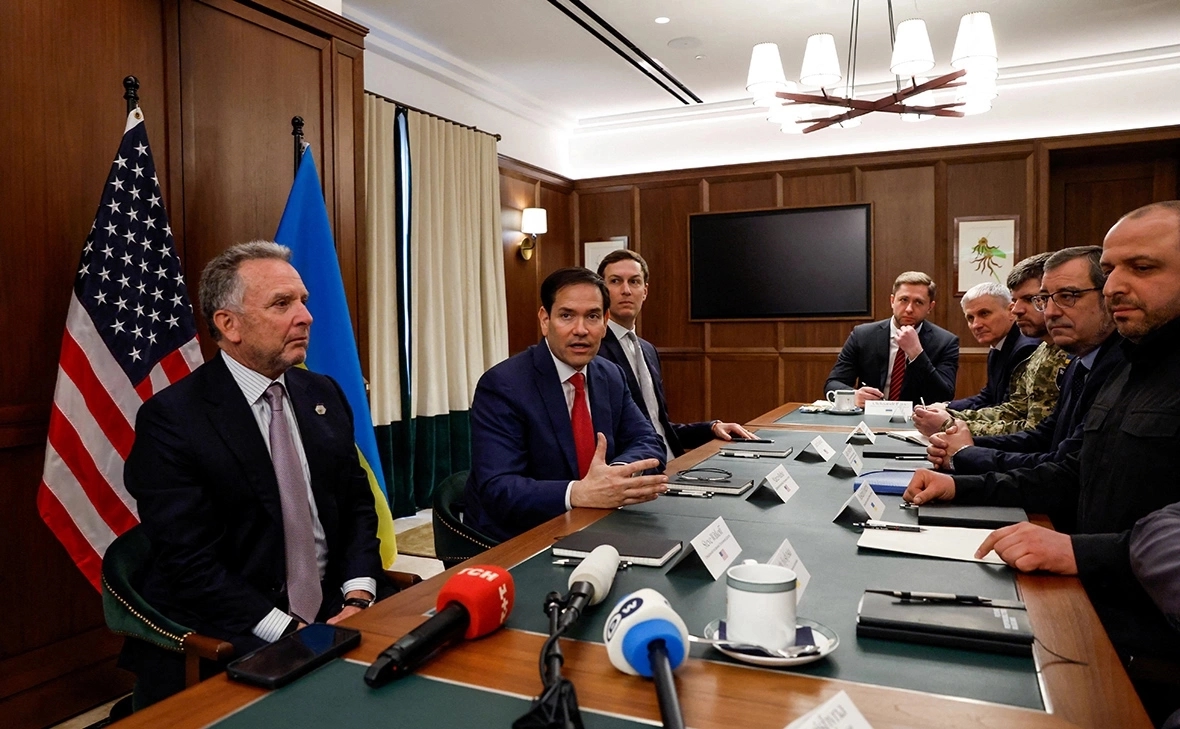
In Washington, Kushner's team is under a barrage of investigations by congressional Democrats and watchdog organizations such as CREW, which accuse the envoys of unprecedented conflicts of interest. By mid-2026, the assets under the management of Kushner's investment firm, Affinity Partners, had surpassed $6 billion — much of it coming from foreign governments with which Kushner was simultaneously conducting official negotiations on behalf of the White House. At the same time, Witkoff has been accused of promoting the cryptocurrency venture World Liberty Financial (launched together with Trump's sons) to Middle Eastern sovereign investors.
Kushner and Witkoff are currently preoccupied with preserving the fragile June 2026 ceasefire with Tehran in order to prevent repeated regional exchanges of fire from derailing the technical consultations taking place in Qatar. Despite mounting criticism and legal scrutiny, Kushner remains under Trump's protection. His ability to package geopolitical crises into business proposals that resonate with the president — combined with the administration's disregard for the bureaucratic conventions of old Washington — has been enough to turn him into Trump’s personal envoy.
At the same time, however, the lack of meaningful diplomatic experience on the Kushner-Witkoff team has undermined their initiatives. That has been particularly evident in Moscow, where transactional business deals have proven ineffective against the Kremlin's uncompromising imperial ambitions.
The battle of Washington's power centers
By the middle of 2026, the internal struggle over foreign policy within the Trump administration had escalated into an all-out battle for survival. Each of the four factions has sought to secure its own independent sources of power, reducing its dependence on the president's shifting preferences. The primacists (global hawks) led by Marco Rubio and Robert O'Brien possess the deepest institutional roots and the strongest external backing. They are supported by the traditional American defense-industrial complex, the Republican Party's old establishment, and powerful lobbying organizations such as AIPAC.
The prioritizers (Asia-focused hawks) led by Elbridge Colby and Josh Hawley have built a very different power base. They rely on Silicon Valley's defense-tech ecosystem and billionaires such as Peter Thiel and Palmer Luckey, who finance startups developing autonomous drones and artificial intelligence systems for the Pentagon.
The restrainers (isolationists) led by JD Vance draw their strength directly from the right-wing populist media empires of Elon Musk and Tucker Carlson, giving them direct access to the MAGA grassroots.
And the developers (business world “pragmatists”) led by Jared Kushner stand out as a genuinely transnational force, with support coming not from American institutions but from the multibillion-dollar sovereign wealth funds of Saudi Arabia and the United Arab Emirates.
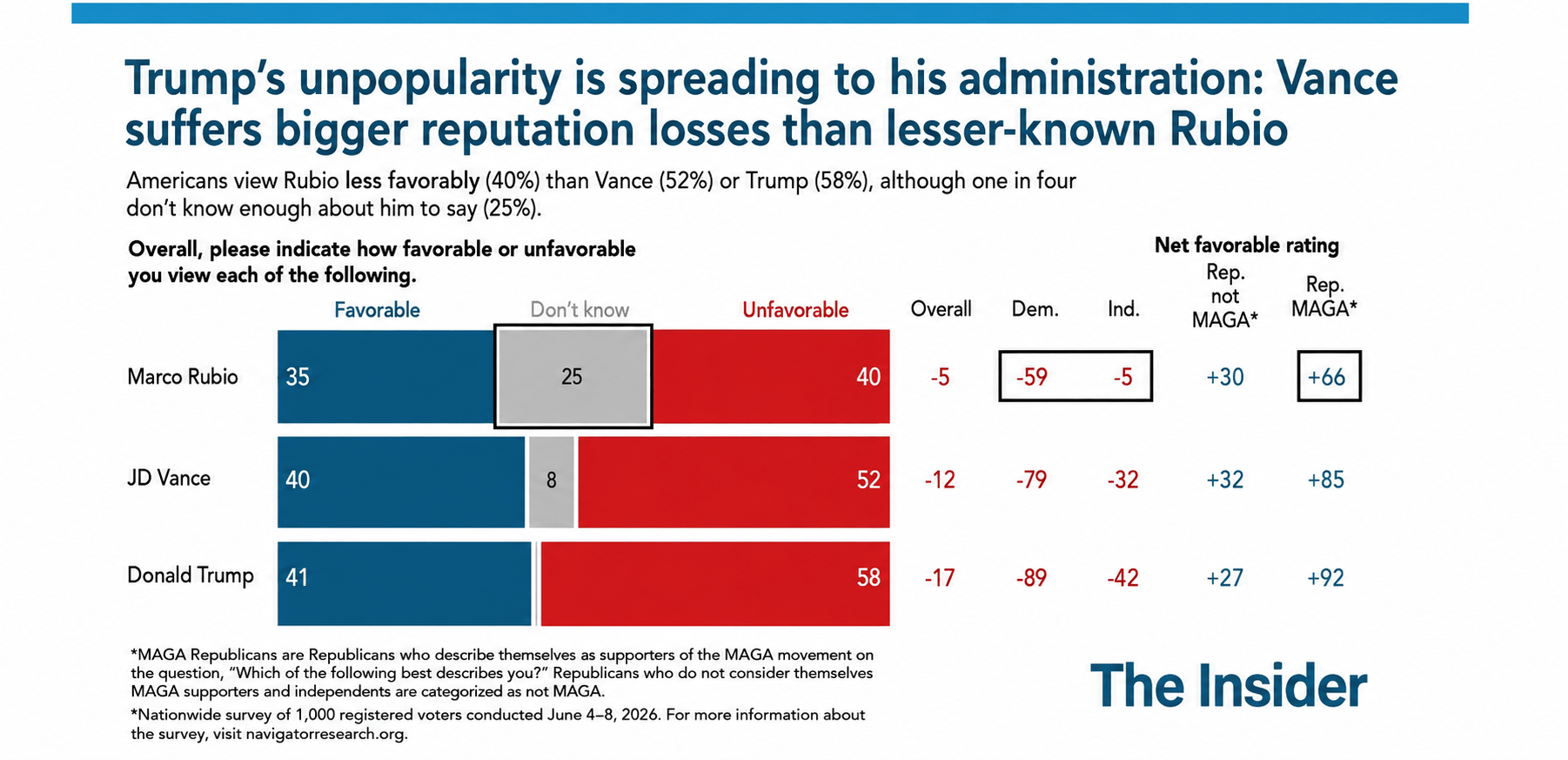
This diversification of political and financial resources directly shapes the standing of each faction's leaders among ordinary Americans as the country approaches the 2026 midterm elections and the 2028 presidential race.
Marco Rubio remains the most popular figure among moderate conservatives and independent voters, embodying a sense of stability and traditional American strength. By contrast, JD Vance, despite serving as vice president and being regarded as Trump's likely successor (at least by the party's more radical wing), remains a deeply polarizing figure with very high unfavorability ratings among centrists. His ally Tucker Carlson, meanwhile, commands enormous but highly polarizing popularity, making him more of a media kingmaker than a plausible electoral candidate.
The prioritizers' intellectual leader, Elbridge Colby, is virtually unknown to the broader public. He deliberately avoids electoral politics, preferring to work behind the scenes at the Department of Defense. Jared Kushner, meanwhile, consistently ranks among America's least popular and least trusted political figures due to allegations of nepotism and his cynical blending of public office with private business interests.
The bureaucratic and ideological confrontation among these factions has intensified with each passing month as the battle to inherit Trump's political legacy in 2028 rages on. Vance is attempting to use the vice presidency to purge the party apparatus of the Republican old guard. His position, however, has been significantly weakened by Tucker Carlson's open break with the administration.
Rubio and O'Brien quickly moved to exploit that split. Through loyal allies on congressional committees, they are seeking to convince Trump that only their vision of global American primacy can guarantee the Republican party victories at the ballot box.
Colby's prioritizers are pursuing a more subtle strategy, trying to establish confrontation with China as a permanent pillar of U.S. national security doctrine — one that would outlast any future president. Kushner, meanwhile, has largely distanced himself from electoral politics, focusing instead on locking in his Middle Eastern business deals before Trump leaves the Oval Office.
On the question of Israel, Rubio's primacists and Kushner's business diplomats alike advocate unwavering support for Jerusalem. Kushner, in particular, views a firmly pro-Israel policy as the foundation for bringing Saudi Arabia into his broader economic projects. The prioritizers, by contrast, are considerably less enthusiastic about supporting Israel, arguing that Washington should remain focused on Taiwan. The isolationist wing surrounding Carlson has gone even further, launching sharp attacks on Benjamin Netanyahu that accuse the Israeli prime minister of manipulating the U.S. military in order to drag America into a major Middle Eastern war.
The differences between the factions are also evident in their responses to less visible crises. One example of this behind-the-scenes struggle has been the debate over Trump's repeated threats to launch direct military or missile strikes against Mexican drug cartels on Mexican territory. This hard-line proposal has been enthusiastically embraced by the isolationists around JD Vance, who see it as the literal embodiment of the promise to defend America's borders. They are joined by Rubio’s global hawks, who view military action in Latin America as a classic demonstration of American power inside Washington's geopolitical backyard. Colby's Asia-focused hawks, however, have expressed frustration with such plans, arguing that drawing the Pentagon into a prolonged and resource-intensive counterterrorism campaign on America's doorstep would tie up scarce intelligence assets, special operations forces, and logistical capabilities that are critically needed to deter China in the Taiwan Strait.
An equally fierce conceptual clash is unfolding over technological protectionism and the regulation of artificial intelligence. In this arena, Colby's prioritizers, backed by Silicon Valley defense technology advocates, argue that American defense-tech startups should be granted maximum regulatory freedom while cutting China off from access to advanced semiconductors in order to win the next-generation global arms race. This military-technological approach is directly opposed by Jared Kushner's camp, which views artificial intelligence not as a doomsday weapon but as an unprecedented commercial opportunity. The group is currently working to channel billions of dollars from the sovereign wealth funds of Saudi Arabia and the United Arab Emirates into the construction of massive data centers. Such commercial opportunism on the part of the president's son-in-law has infuriated national security hawks of every stripe, who accuse Kushner of being willing to place the critical infrastructure of the future under the de facto control of authoritarian Gulf monarchies for the sake of personal financial gain.
In the long run, experts generally regard Colby's prioritizers as the faction with the greatest staying power. Their narrow focus on the technological competition with China aligns closely with the broad consensus among America's traditional conservatives and the intelligence community.
Rubio's global hawks, for their part, are widely regarded as highly effective bureaucratic operators, capable of skillfully managing the machinery of government. Their vision of the United States as the global policeman, however, is increasingly viewed as outdated and is rapidly losing support within a changing Republican Party.
Kushner's faction, by contrast, is generally seen as having only short-term, opportunistic potential — capable of delivering high-profile but fragile diplomatic successes that could quickly unravel in the face of any major systemic crisis.
Experts assign the lowest marks for governing capacity to the isolationists led by Vance and Carlson. Their overwhelming dependence on Trump's personal favor, along with their internal divisions and lack of experienced personnel to fill senior government positions, leave them highly vulnerable to the institutional weight of Washington's traditional bureaucracy, which has repeatedly managed to reassert control over the actual conduct of White House policy.