Contrary to the forecasts of some political scientists, the new wave of protests in France has not led to any significant shift in the country’s political alignments. The sharp rise in social discontent among the French youth has so far had no substantial impact on the ongoing presidential campaign. Polling does not show a strengthening of the positions of radical candidates such as Marine Le Pen and Jean-Luc Mélenchon. Instead, paradoxically, after a month and a half of turmoil, it is the moderate forces (such as the Socialist Raphaël Glucksmann) that have come out ahead — even if the shift has not yet been enough to put them through to the second round of the election this spring.
This April, France will go to the polls to choose Emmanuel Macron’s replacement. Almost from the beginning, however, the election campaign has been driven not by the candidates, but by the citizens in the streets. It all started with protests by high school students, who on Sept. 17 announced a blockade of high schools. Their example spread quickly, aided by the fact that parents and teachers alike acknowledged that the demands of the older students were justified.
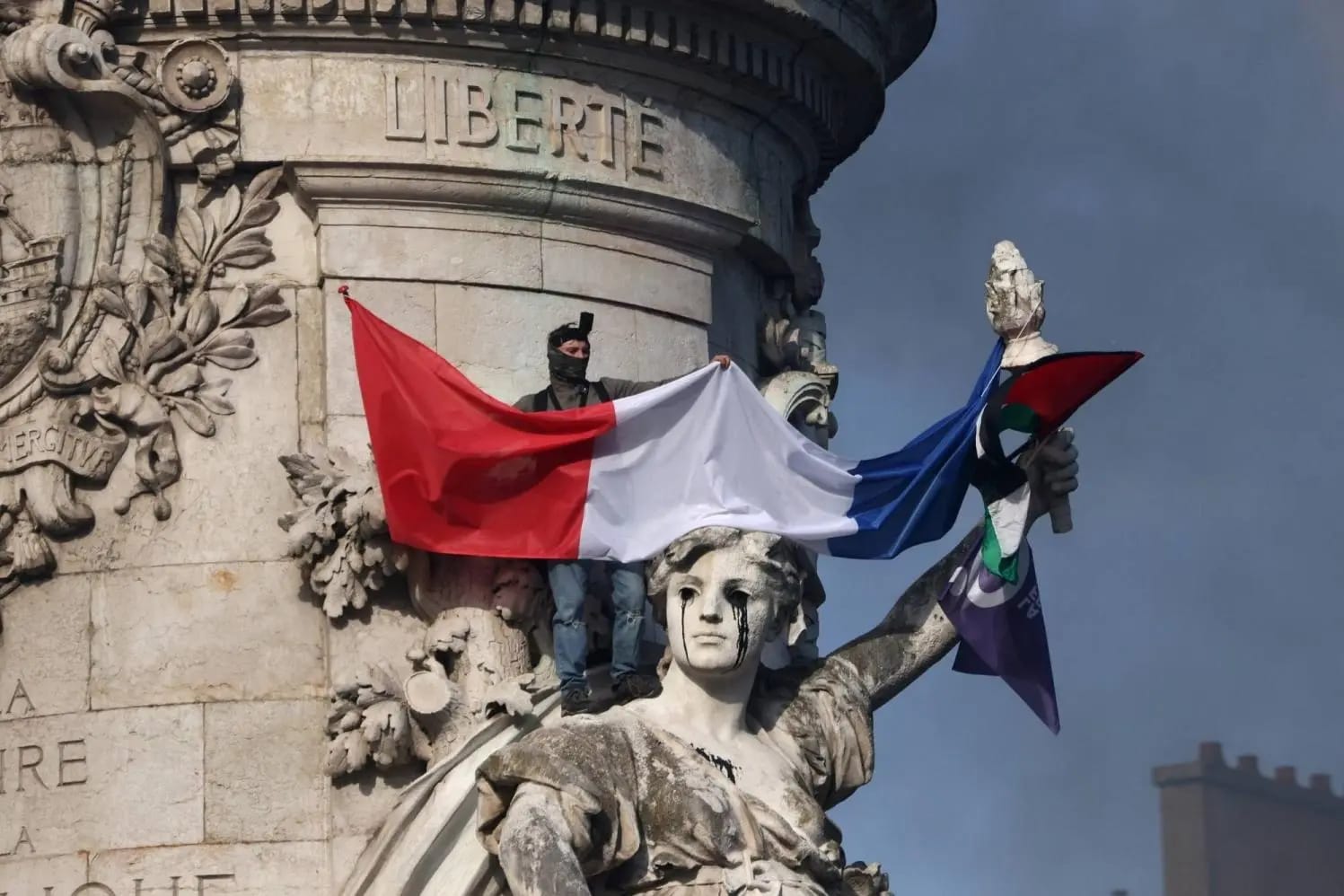
While the government was pondering how to deal with the situation, the demonstrations escalated to include clashes with the police and fires not only in garbage containers but in classrooms and even entire high schools. Very soon, college students joined the protests by blockading universities. Negotiations between the government and the students failed to produce a compromise, and youth leaders called for their actions to continue.
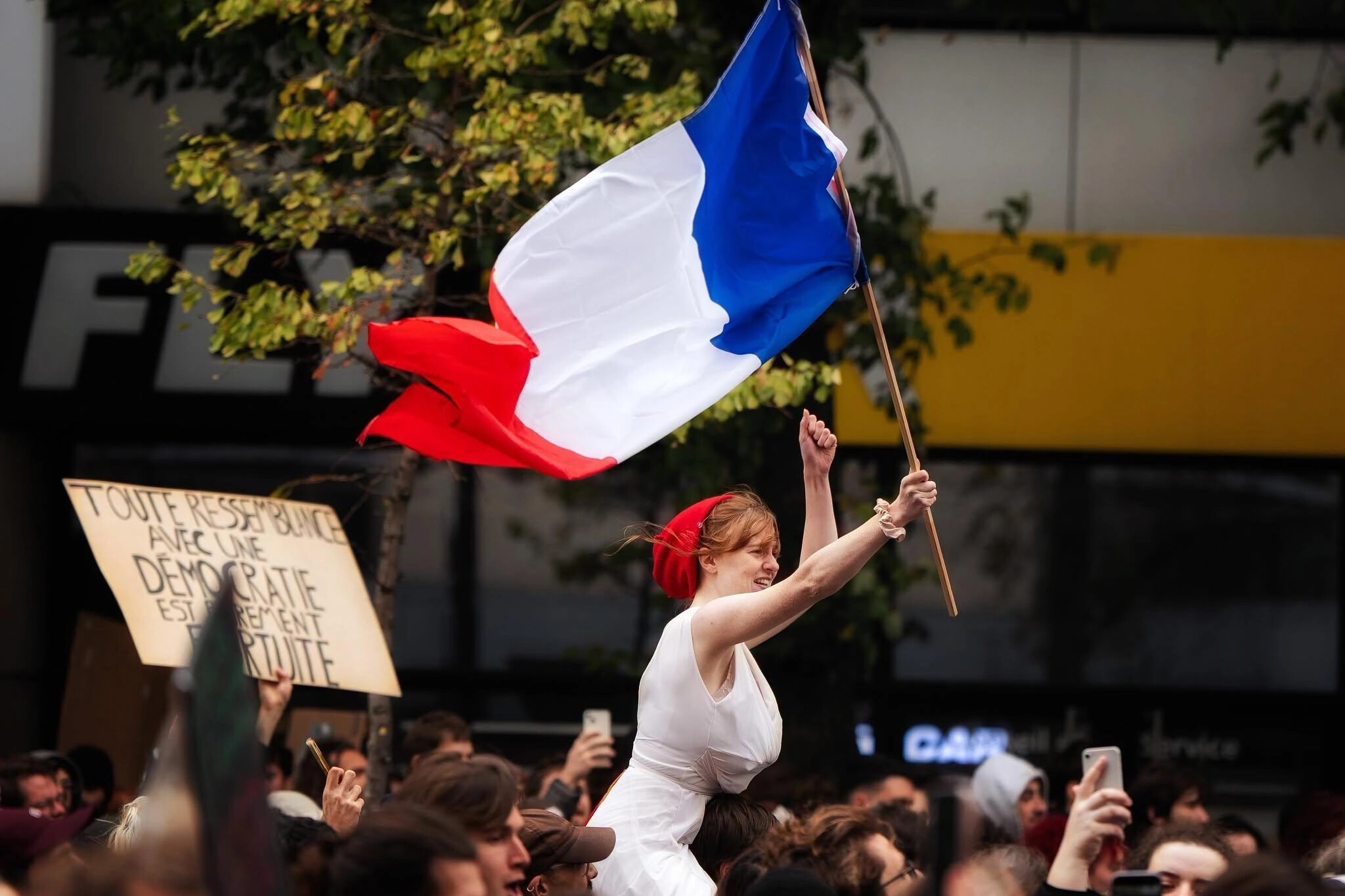
Perhaps the government hoped that the unrest would simply subside during the nationwide school vacation in late October — after all, it might seem pointless to blockade high schools that are closed anyway. Instead, however, the protest movement received a new impetus: “adult” unions, as well as numerous left-leaning political and civic forces (from Jean-Luc Mélenchon’s La France Insoumise party to the yellow vests and environmentalists) called for nationwide demonstrations on Oct. 17 to rally against the “rising cost of living” and, more broadly, a lack of social justice.
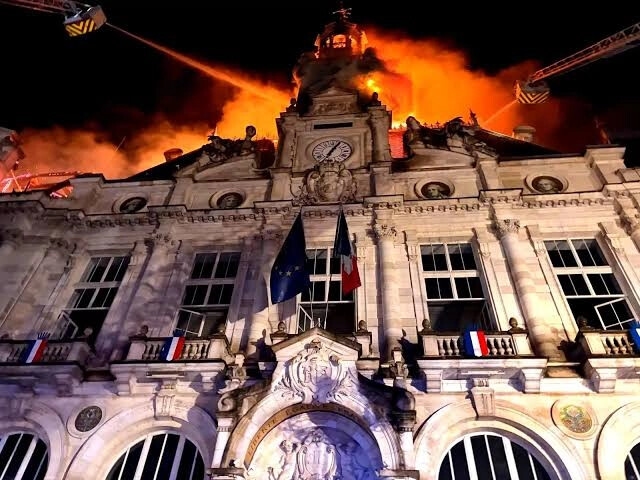
The Oct. 17 protests were marked by street riots and fights with the police, massive fires that destroyed the city hall in Limoges and the tourist office in Lyon, damage to numerous administrative buildings, and looting at hundreds of small shops, cafés, and offices. The number of demonstrators reached 800,000, according to the organizers, and 550,000, according to police estimates. France had not seen such violence since the peak of the yellow vest movement.
Despite the obvious domestic shock and the deterioration of France’s image around the world, the same forces called for the action to be repeated a week later, on Oct. 24, under the same slogans — as if nothing had happened.
This time the police were better prepared, and as a result, the number of clashes and detentions was lower and no city halls burned. But riots still took place. The organizers again claimed 800,000 participants, while the police counted 410,000.
The government is trying to meet the high school students halfway. The authorities promise to increase funding for problem areas and to abolish Parcoursup — the electronic system for assigning graduates to universities, which has attracted widespread criticism. Despite these accommodating steps, the unions are not inclined to reconcile.
On Saturday, Oct. 31, 70,000 law enforcement officers maintained order on the streets, although the new marches drew fewer participants and were almost entirely peaceful.
This may be explained both by the fact that the authorities had earlier opened 83 criminal cases over the use of excessive force by police and gendarmes, and by the festive occasion: Oct. 31 marked both the end of the vacation and Halloween. As a result, many potential protesters had made personal plans, putting civic engagement on hold.
From protests to riots
The most spectacular feature of the French unrest was footage of rioting. One might get the impression that a significant part of the demonstrators consists precisely of this type of people — athletic-looking, masked, clad in black, and pulling incendiary devices out of backpacks.
The reality, of course, was different. Mass protests can only happen if they are supported by a multitude of very different people willing to set aside their daily affairs. Those who plan to provoke violence first hide in the crowd, using the columns of demonstrators to cover their intentions.
At the current protests in France, there are two types of rioters. The first is members of various ultra-left groups that recognize revolutionary violence as one of the legitimate methods of defending their rights. They are not large in number, but they coordinate their actions online and how to show up where the police are not expecting them. They act quickly, and even if only a few dozen of them are present, that is enough to cause serious damage.
The second category is residents of disadvantaged neighborhoods who are not political but are always up for looting a shop with broken windows. In a sense, these two types complement each other. In the last 10 to 15 years, French left-wing protests have frequently seen the involvement of rioters, even if the unions and Socialists always disavow them.
French left-wing protests have frequently attracted rioters
Not all mass events in France turn violent. When Pope Leo XIV came to the country for a four-day visit at the end of September, no unrest occurred during or after public Masses despite the fact that the religious events gathered hundreds of thousands of believers. As a result, many got the feeling that rioters feel uncomfortable in Catholic France, while in Mélenchon’s France they can count on understanding, if not support.
Political beneficiaries of the protests
Marine Le Pen’s rating has been coming in at 35% or more in almost all recent polls. Moreover, she has now become the perceived leader of any potential second-round runoff in May, regardless of who her opponent is. The government’s inability to suppress the unrest is largely seen as a weakness of Macron’s policy, affecting the ratings of all center-left or center-right candidates.
Throughout her long political career, Le Pen has maintained an image counter to that of more traditional party leaders, with their tendency to always negotiate and often buy social peace by yielding to pressure from the street. Instead, Le Pen has assured voters that she would use the harshest methods to deal with the rioters, and while these are nothing but promises so far, the more burned buildings and looted shops ordinary citizens see, the sooner they will tie their hopes to a political force that prioritizes restoring elementary order.
One clause in Le Pen’s program provides for cutting social benefits for foreigners, even for those with legal residency and employment. It goes without saying that she is preparing additional sanctions against participants in the unrest, as well as against the migrant parents of underage high school students who have been implicated in illegal actions. At the same time, Le Pen promises tax breaks to raise the overall standard of living, although how she expects to finance them remains unclear.
Notably, her program says nothing about the boring legal and technical obstacles that would have to be overcome in order to implement these plans, but such details are of interest to relatively few voters. Nor do they care about the fact that the overwhelming majority of those detained during the unrest on Oct. 17 and 24 were French nationals.
If France gets bogged down in protests, as it did in the days of the yellow vests, the pre-election wind will keep blowing in Le Pen’s sails, maintaining the illusion that she is the only candidate who knows what to do to solve the problem.
If France gets bogged down in protests, as it did in the days of the yellow vests, the pre-election wind will keep blowing in Marine Le Pen’s sails
The left-wing Jean-Luc Mélenchon is too partisan to enjoy broad support. It would seem that the protests should help raise his rating, keeping him in the spotlight and offering him the stage to voice his most radical views as he tries to assign roughly equal responsibility to the rioters and the police. But such rhetoric convinces only his supporters. His rating remains unchanged at approximately 18%, putting him second in the first round of the election.
Moderate candidates, both on the right and on the left, are in for a hard time. They clearly condemn violence and call for rioters to be held to account, but these declarations remain mere words. The centrists’ opponents are armed with a convincing reproach — that the moderates, who have been in power for decades, are responsible for bringing the country to its current riotous state.
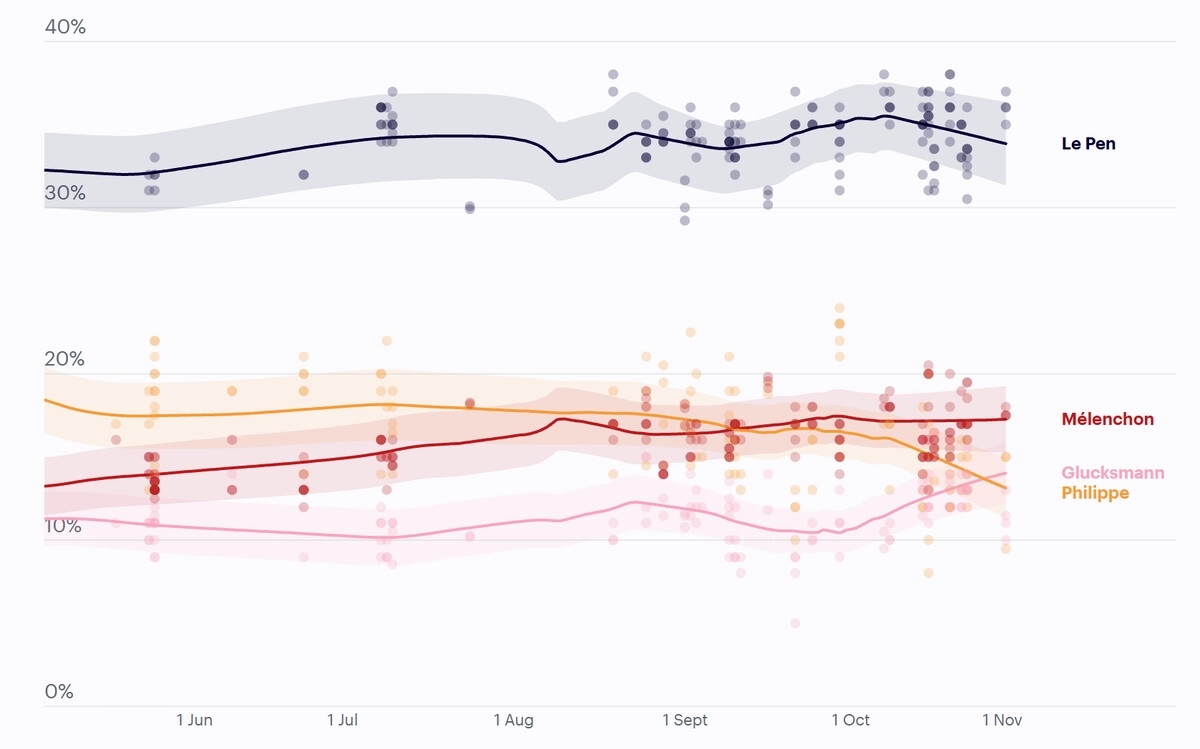
Judging by the ratings of moderate candidates from Édouard Philippe to Raphaël Glucksmann, the only way either of them could pass Mélenchon and get the chance to go head-to-head with Le Pen in the second round is by joining forces. The problem is that such a broad union of centrists is unlikely because of both their personal ambitions and discord within their potentially overlapping electorate. Nevertheless, in January and February some alliances may still take shape.
Impact of the crisis
The cost of servicing France’s government debt, as The Insider has noted, exceeded 5% for ten-year bonds, meaning that the budget needs emergency austerity measures. Meanwhile, practically all the demands of the demonstrators involve additional funding.
High school students were the first to present the government with a bill for overcrowded classes, a shortage of teachers, and poor operation of cafeterias and school nurse offices. Obviously, eliminating these shortcomings would require money immediately, and the allocations would have to become regular.
The protesters' demands grew with the scale of the protests. The slogan against the “rising cost of living” alone means that the problem cannot be fixed with targeted measures. The demonstrators call for lower fuel prices, an increase in the minimum wage, better social services, and lower taxes. Even those who have not been taking part in rallies largely agree that the outrage of their fellow citizens is justified. It is precisely this public support, not always explicit but nevertheless tangible, that lends legitimacy to those who propose continuing the protests.
The government has no good options. On the one hand, it is under pressure from Brussels and the financial markets. On the other, the pressure from angry crowds is growing. It is impossible to keep on track with gradually reducing the budget deficit and restoring manageability of government debt while simultaneously handing out more money to various categories of citizens.
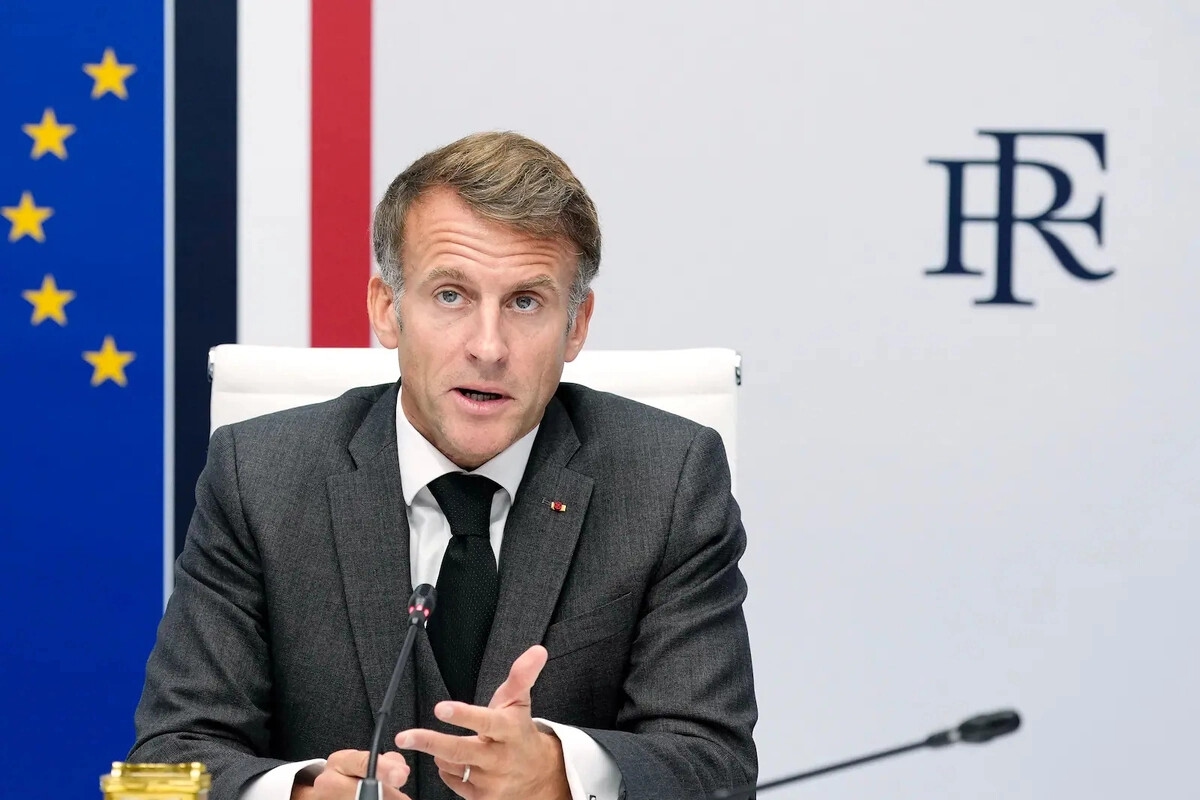
President Emmanuel Macron, in his speech in the wake of the events of Oct. 17 and 24, did not declare a state of emergency but urged the nation to show its civic stance by postponing the protests so as not to interfere with the election. But the street is not inclined to wait.
As a result, the election campaign is taking place against a backdrop of destructive unrest and growing public discontent. In such conditions, populists thrive, as they provide straightforward solutions that many voters find appealing. At the same time, the radicalization of the protests brings back to the forefront the problem of necessary but unpopular reforms.
During his campaign ten years ago, presidential candidate Emmanuel Macron published a book titled Revolution, proposing a plan of transformations that was supposed to bring France to prosperity. The author boldly criticized the indecisiveness of the political elites and their inability to act.
Today, summing up Macron’s two presidential terms, citizens reproach him for the same indecisiveness, and pension reform still remains one of the most pressing problems. Time has been lost, France’s economic situation has become significantly worse, and voters will have to entrust someone new with the authority to look for solutions: Marine Le Pen with her rhetoric of national priority, a new reformer from the centrist camp, or the elemental force of the street protests themselves.