Since the spring of 2026, Ukrainian forces have steadily expanded their strikes against targets in the area of Russia's operational rear. Thanks to SpaceX’s satellite communications, Ukrainian drones have been able to hit moving objects dozens or even hundreds of kilometers behind the front line. Thousands of Russian military vehicles, supply routes, crossings, and air defense systems have come under attack, in part enabling Ukrainian offensives like Operation Vivaldi. However, in October sudden restrictions on satellite communications exposed Ukraine’s critical dependence on American infrastructure for its mid-range strike capabilities: on the first day of the disruption, the number of recorded hits on Russian equipment fell by 71%. Although the restrictions were lifted on Oct. 24, Volodymyr Zelensky announced on Nov. 12 that they had been reimposed along the entire front line and in Russian-occupied Ukrainian territories. Ukraine currently has no full-fledged alternative to SpaceX’s military satellite service, Starshield, and building an independent satellite network would take years. The most realistic alternative, therefore, is to combine different communications channels with the development of autonomous drone systems.
Starlink and Starshield: Ukraine's dependence has become a vulnerability
Ukrainian drone strikes against Russian vehicles deep behind the front line fell sharply on Oct. 14. The disruption was linked to restrictions on SpaceX’s Starshield military satellite service, primarily affecting drones that rely on satellite communications for in-flight control.
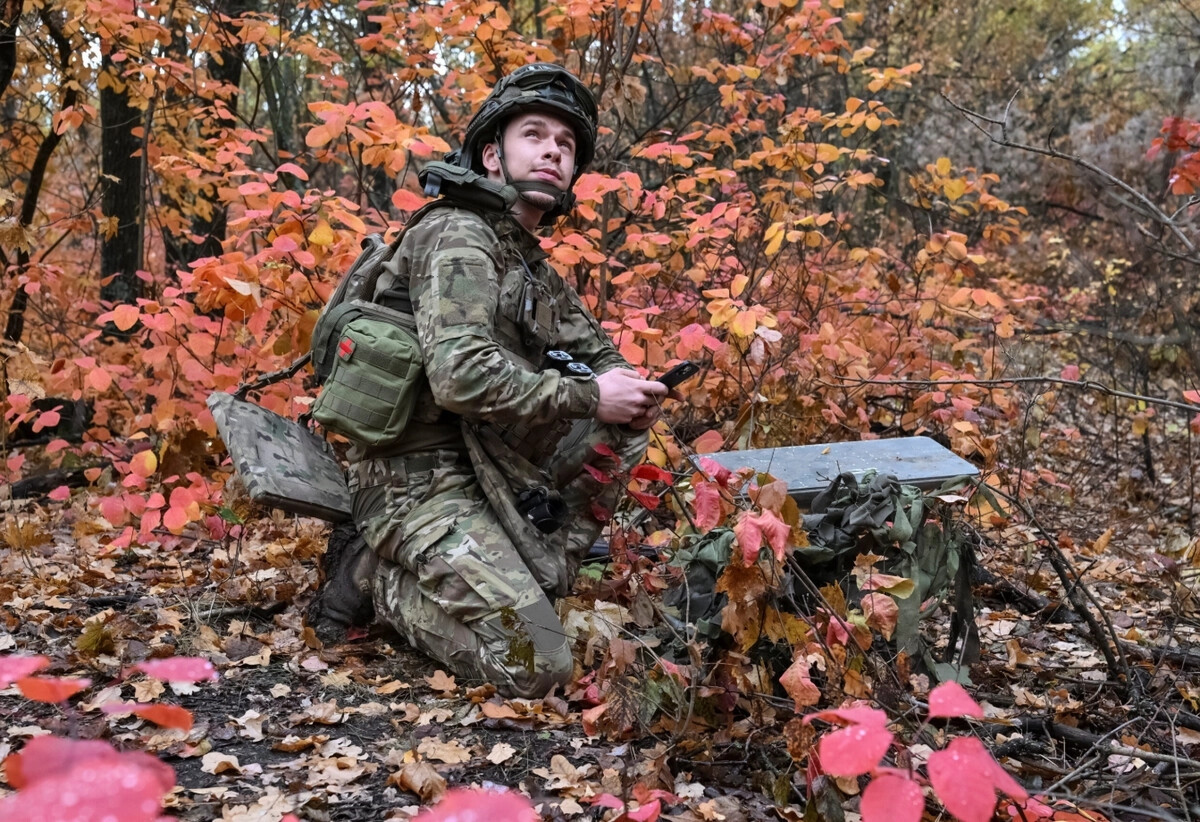
According to figures compiled by the OSINT project Oko Gora, the number of recorded hits on Russian equipment on the first day of the disruption was 71% below the average for the previous month. Ukrainian drone operators described the extent of the problems, with a representative of the 414th Separate Unmanned Systems Brigade, known as Magyar’s Birds, saying that units had to constantly test the speeds at which they could maintain communications and adjust their tactics accordingly. Slower drones mean greater vulnerability to Russian mobile fire groups,and another Ukrainian commander said his unit had lost more than $1 million worth of drones during the first night of the restrictions alone.
Starlink, developed by Elon Musk’s SpaceX, provides broadband internet access through a constellation of low-Earth-orbit satellites. Its relatively compact terminals, high data-transfer speeds, and low latency make it suitable for use in the field, including in areas without terrestrial communications infrastructure.
Starlink became widely used in Ukraine in the first days of Russia’s full-scale invasion. The first batch of terminals supplied by SpaceX arrived in Ukraine on Feb. 28, 2022. By December 2023, around 47,000 terminals were operating in the country, according to Ukraine’s Ministry of Digital Transformation, after being supplied under agreements with international partners.
In early 2025, the total number of Starlink terminals in Ukraine was estimated at around 160,000. Up to 100,000 of them may have been used by the Ukrainian Defense Forces, according to Serhiy “Flash” Beskrestnov. By the fall of 2025, Ukraine had around 200,000 terminals, according to The Insider, making it Starlink’s largest European market by number of users. However, only half of those terminals had been paid for and supplied through official channels.
Ukraine is Starlink’s largest European market by number of users
In October 2026, the head of Adaptis, a Ukrainian company involved in supplying Starlink equipment, said that tens of thousands of new terminals were arriving in the country every month. Satellite communications have become central to Ukraine’s military command-and-control system, as units use Starlink to relay intelligence, receive live video feeds from drones, coordinate artillery fire, and maintain communications between command posts.
One Ukrainian artillery serviceman said that having access to a live feed from a reconnaissance drone enabled his unit to begin observing a target and open fire within 3–5 minutes. Without such a link, artillery crews would have to rely on coordinates relayed to them, increasing response times and reducing targeting accuracy.
However, commercial Starlink was not originally designed to control attack drones, and in February 2023, SpaceX President Gwynne Shotwell said the company was restricting the use of its satellite network for that purpose. To meet military requirements, SpaceX launched a separate service: Starshield. It uses Starlink technology but is provided under government contracts, primarily with the Pentagon. The service offers secure data transmission and other capabilities required by military users.
In December 2024, it emerged that the Pentagon had signed a new contract with SpaceX to connect an additional 2,500 Starlink terminals already in Ukraine to Starshield. Together with the 500 terminals covered by an earlier agreement, this brought the total to 3,000. The value of the new contract was not disclosed; the previous one was estimated at around $40 million.
The Ukrainian military’s dependence on SpaceX’s decisions was already apparent in 2022. While preparing an attack on Russian ships in Sevastopol that September, Ukrainian forces found that there was no Starlink coverage around annexed Crimea to control its unmanned surface vehicles. As Elon Musk’s biographer Walter Isaacson later explained, the restrictions were already in place before the operation, and Musk refused a request from Ukrainian authorities to activate the connection. During Ukraine’s counteroffensive in the fall of 2022, Kviv's troops advanced into territories previously occupied by Russia, they encountered Starlink outages — primarily in the Kherson and Zaporizhzhia regions and, to a lesser extent, along the front line in the Kharkiv, Donetsk, and Luhansk regions. Reuters later found that at least some of the restrictions had been imposed as a result of Musk’s personal orders.
Musk was already restricting Starlink’s capabilities for Ukrainian forces in 2022
In February 2025, the possibility of a Starlink cutoff resurfaced during negotiations with the United States over a deal on Ukraine’s mineral resources. U.S. negotiators were reportedly considering restricting Ukraine’s access to satellite communications as a pressure tactic, even if Musk denied reports that such threats had been made. Ukrainian military personnel were already warning that although a complete shutdown would not deprive the military of all communications, it would significantly slow the transmission of intelligence, target acquisition and coordination of fire.
On Oct. 14, 2026, restrictions affected Starshield’s operation on moving platforms. According to Ukrainian military personnel, connections on various types of drones dropped out at speeds ranging from 72 to 161 km/h. The precise threshold depended on the type of platform on which the terminal was mounted. For drones relying on Starshield as their primary control link, this meant having to change their flight speed or abandon certain missions, as a high-speed kamikaze drone cannot carry out its mission as planned if it loses contact with its operator when accelerating.
The reasons behind the imposition of the restrictions were unclear from the outset. On Oct. 15, Reuters reported that the order to restrict Starshield had come from the White House and that the relevant instructions were subsequently passed on to the Pentagon. The Trump administration did not officially accept responsibility for the decision. Musk, for his part, said that the military Starshield service was regulated by U.S. authorities, while the commercial Starlink network was controlled by SpaceX.
The US administration has not accepted responsibility for the decision to restrict Starshield
On Oct. 20, The Wall Street Journal reported that Musk himself had ordered the restrictions. However, whether the decision was coordinated with the Trump administration remains unclear. Four days later, Musk publicly explained the restrictions for the first time, accusing Ukrainian forces of using commercial Starlink for offensive drone strikes in violation of the platform's terms of service. In a letter to Congress, SpaceX claimed that it had only changed Starlink’s settings, making no changes to Starshield.
Ukraine rejected Musk’s accusations. As former Defense Ministry adviser Serhiy Sternenko explained, since February 2026, satellite terminals operating on moving platforms had required a connection to the military Starshield service, making it technically impossible to use commercial Starlink to control kamikaze drones. As of Oct. 19, SpaceX equipment at various points along the front line was ceasing to function at speeds of 130–161 km/h, hampering frontline logistics and limiting the use of drones, particularly for mid-range strikes.
Military analyst Michael Kofman clarified that even with a nominal speed limit of 160 km/h, the connection remained unstable and could drop out at speeds as low as 130–140 km/h. Then, on Nov. 12, Volodymyr Zelensky announced that Ukrainian units had been experiencing Starshield outages for several days along the entire front line. According to Zelensky, the connection was again failing at speeds above 161 km/h. Ukrainian military personnel determined that these were not random disruptions but a systematic speed restriction. They were introduced around the time of trilateral talks between Russia, Ukraine, and the United States, held in Abu Dhabi on November 10–11.
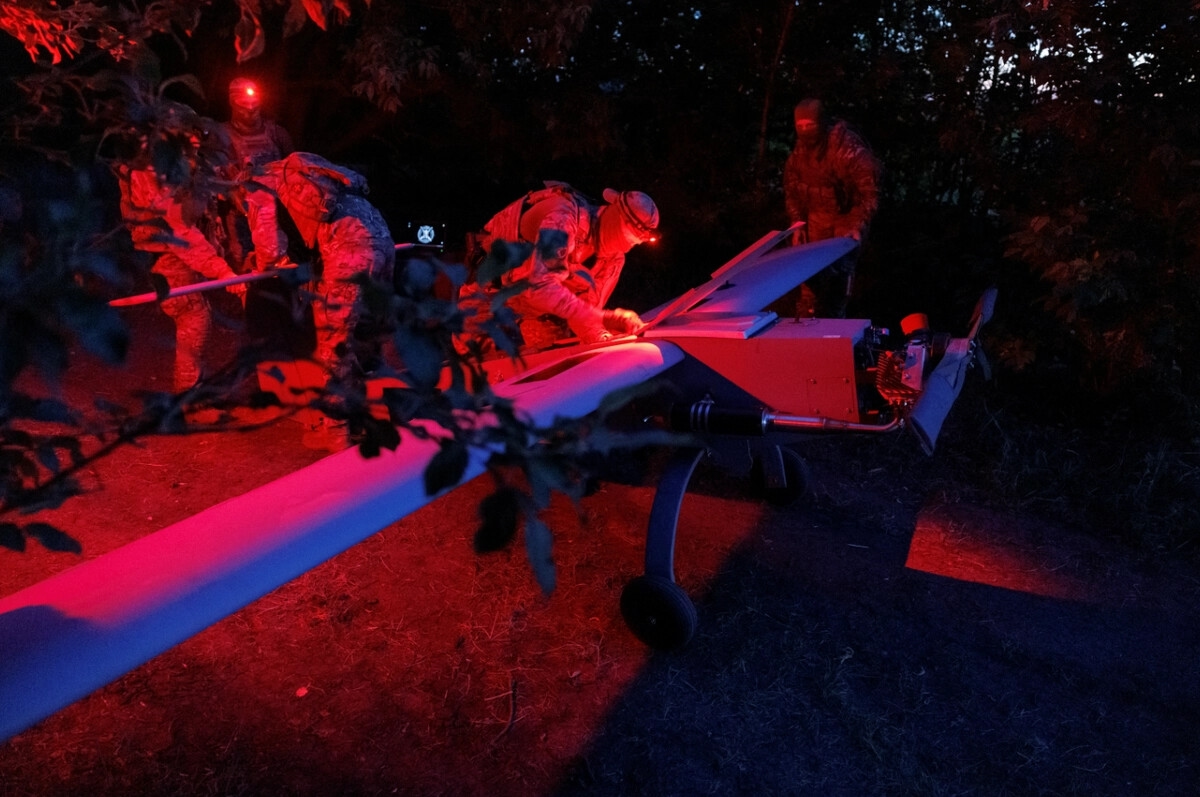
The restrictions also affect Ukraine’s defensive capabilities. Back in October, according to Serhiy Beskrestnov, Starshield’s speed limit prevented Ukrainian forces from using jet-powered interceptor drones against fast-moving Russian Shaheds. The disruptions also affected one of the key channels for relaying information to Ukrainian combat helicopters, which also help repel drone attacks. Since helicopters fly at speeds exceeding 160 km/h, the satellite communications restrictions hampered their ability to carry out combat missions. This did not, however, mean that all drone interception capabilities had been disabled or that helicopters could no longer engage UAVs.
Starshield restrictions hampered the use of Ukraine’s jet-powered interceptor drones
Of course, not all Ukrainian drones use Starshield — those equipped with autonomous navigation, conventional radio links, or fiber-optic controls can operate without a direct connection to SpaceX’s service. Nevertheless, satellite communications have become a key factor in enabling the large-scale use of remotely controlled drones deep behind Russian lines.
Starlink and Ukraine’s mid-strike capabilities
Starlink has enabled Ukrainian forces to control drones from hundreds of kilometers away, making it possible not only to strike targets deep inside Russia, but also to hit targets whose locations are not known in advance. Operators can monitor the situation through a drone’s onboard camera, change its course, and select a target while the UAV is in flight. This is particularly important when targeting moving vehicles, mobile air defense systems, and other assets that can change location.
Previously, the range of communications links was one of the factors limiting the use of Ukrainian drones deep behind enemy lines. The reliability of conventional radio signals depend on terrain and the positioning of antennas and repeaters, and can also be jammed by electronic warfare systems. Starlink makes it possible to control drones beyond direct radio line of sight by relaying data through its satellite constellation (even if satellite signals can also be jammed, disrupting a drone’s navigation with the use of electronic warfare).
In 2025, Ukrainian forces began building a drone-saturated “kill zone,” but even heavy Russian losses failed to halt their advance. Russian assault groups continued to infiltrate gaps in Ukraine’s thinly spread defensive lines, while Russian ammunition depots, command posts, drone crews, and major supply routes remained largely beyond the reach of mass-produced, low-cost strike weapons.
Changing this situation required extending the range of Ukrainian strikes and targeting not only assault units but also the logistical infrastructure supporting them. Conventional weapons for striking operational rear areas, primarily HIMARS and ATACMS, could not accomplish this task on the necessary scale. However, mass-produced, relatively inexpensive drones made it possible to attack a much wider range of targets. Satellite communications were one of the factors that made it possible to combine relatively long flight ranges with remote control.
Satellite communications enabled Ukraine to deploy drones on a large scale against targets deep inside Russia
Unlike long-range drones programmed to follow a predetermined route to a fixed point, drones with reliable video and command links can search for targets within a designated area and adapt to changing circumstances. Since the beginning of 2026, Ukrainian forces have stepped up their use of mid-strike drones, including the FP-2, RAM-2X, Bulava, Darts, Baton, and Hornet. Not all of these drones are equipped with Starlink, with some relying on other communications systems or autonomous targeting.
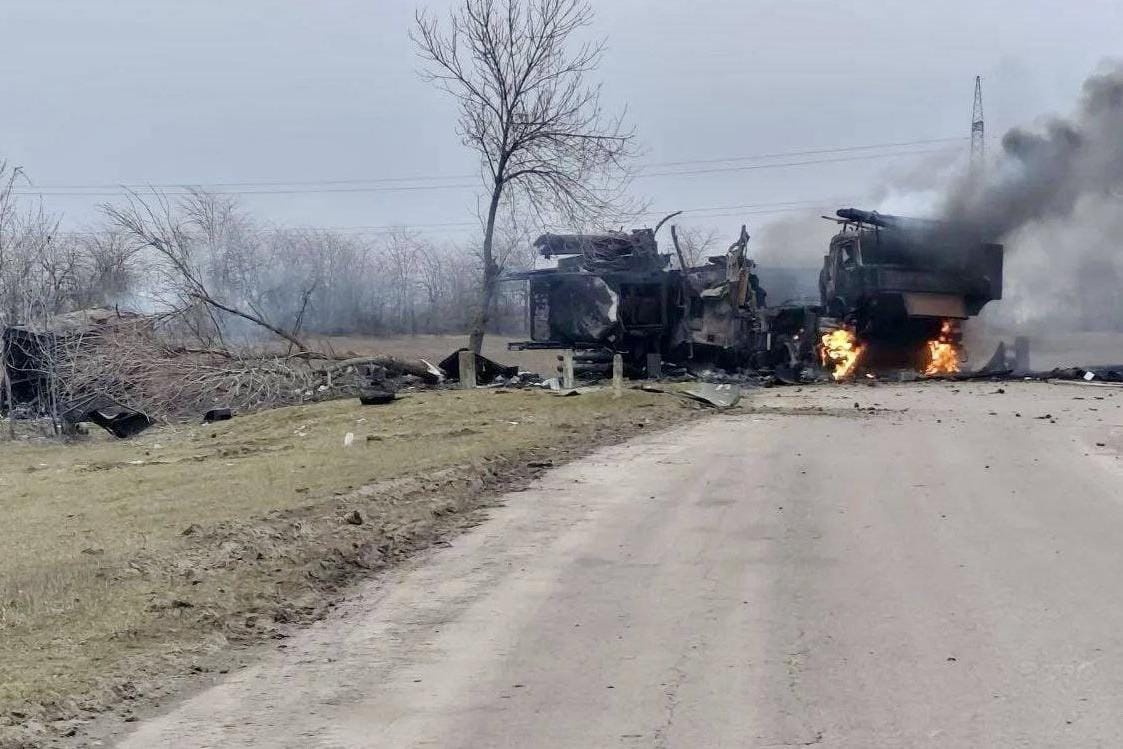
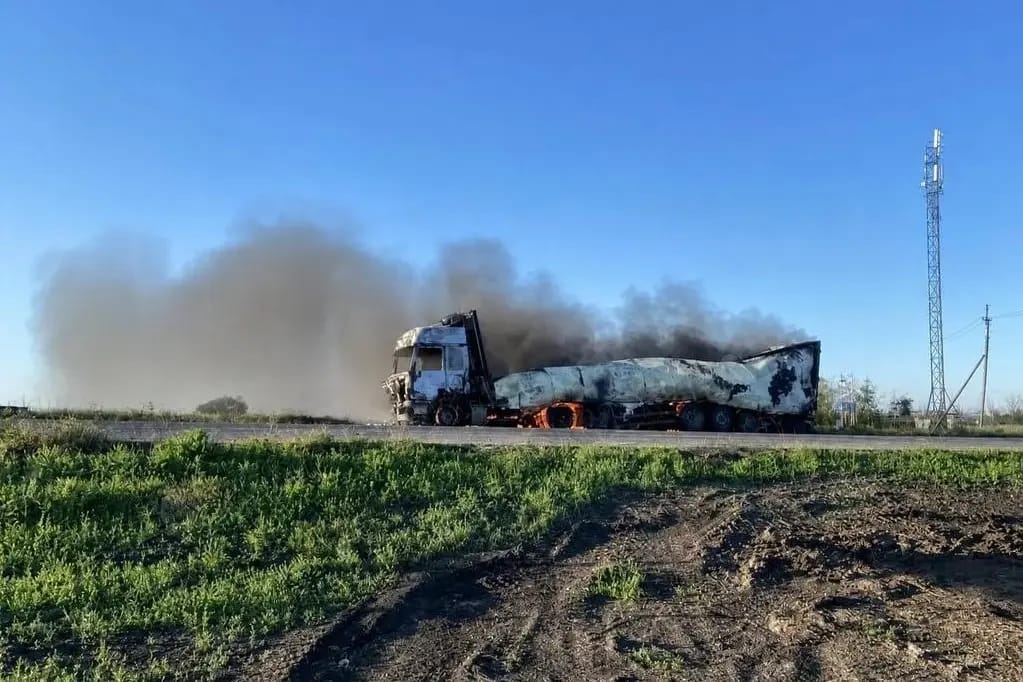
In May 2026, Ukrainian forces launched a large-scale campaign against Russian logistics deep behind the front line, dubbing it “Logistics Lockdown.” According to figures compiled by French OSINT researcher Clément Molin, who analyzes strike footage published by Ukrainian military units, in May 214 Russian trucks and other vehicles were hit at distances more than 20 km from the front line. The figure rose to 586 in June, reached 656 in July, and fell to 630 in August before hitting a record 770 in September. In October, however, only 537 strikes were recorded, a decline Molin attributes to a nine-day disruption of Starlink and Starshield services. (It should be noted that these figures cover only strikes documented in publicly available footage, not the full number of operations carried out.)
Disruption to Starshield operations led to a 30% drop in strikes against Russian vehicles
According to reports by Unmanned Systems Forces commander Robert “Magyar” Brovdi, the number of tactical and mid-range targets hit across all categories rose from 44,100 in May to 64,800 in October, while the number of strike sorties increased from 113,300 to 151,500. Over the same period, strikes against vehicles, specialized equipment, and fuel tankers rose from 2,356 to 3,297, while attacks on depots increased from 443 to 574.
The main target of “Logistics Lockdown” was the land corridor running from Russia’s Rostov region through Mariupol, Berdiansk, and Melitopol to Crimea. The heaviest attacks were concentrated along the R-280 Novorossiya highway and surrounding roads.
Ukrainian drones primarily targeted trucks carrying fuel, ammunition, and other supplies. Bridges and railway infrastructure also came under attack. By the end of June, hundreds of attacks on transport had been recorded, causing damage to several key bridges, including those on routes linking Crimea with the mainland part of occupied Ukraine. Russian authorities, for their part, repeatedly announced that traffic had been restored.
One notable incident occurred in late July, when Yevgeny Balitsky, the Russian-installed head of the occupied part of Ukraine's Zaporizhzhia region, told Vladimir Putin that the R-280 highway was under full control. Russian military blogger Vladimir Romanov accused Balitsky of submitting a false report, pointing out that the highway was subjected to regular strikes from “Ukrainian kamikaze drones.” Magyar responded by publishing footage showing a Hornet drone striking Russian trucks and a vehicle used by a mobile fire group.
By August, Russian forces had reorganized their transport operations. Trucks increasingly traveled in convoys escorted by mobile fire groups (MFGs) armed with antiaircraft weapons. A typical convoy consists of three to five trucks and two to three escort vehicles. Russian forces also use electronic warfare (EW) systems and interceptor drones to counter Ukrainian UAVs.
In early October, Russia's Rubicon Center claimed that its units had intercepted around 7,000 Ukrainian drones since the beginning of 2026, including 1,800 in September. Although Molin cautions against taking these figures at face value, their sheer scale is striking. Meanwhile, Ukrainian forces have stepped up their use of decoy drones.
The Russian MFGs themselves have become targets in their own right. According to Molin’s estimates, footage published by the end of September showed hundreds their personnel killed or wounded. However, he identifies Starlink jammers as being Russia's most effective means of countering Ukraine’s mid-strike drones, noting that such systems are very expensive and cannot be deployed everywhere.
Attacks on bridges also forced Russian forces to reroute their supply lines. In August, Molin identified 15 locations where pontoon bridges and new crossings had been established along the Henichesk–Melitopol–Mariupol–Taganrog route. Some were set up near bridges previously targeted by Ukrainian forces. Trucks have to slow down when crossing pontoon bridges, making them easier targets for drones.
In July, the Ukrainian campaign expanded to include Crimea’s energy infrastructure, along with ships. On July 6, Ukraine’s Unmanned Systems Forces launched Operation MoLoCHka (an acronym based on the Ukrainian phrase “Moscow Will Fall Through Crimea”), targeting Russian vessels in the Black and Azov seas.
By July 22, Brovdi had reported 196 maritime targets struck, and the Unmanned Systems Forces’ final July figures listed 206 vessels hit. In total, 309 vessels had been struck between the start of the campaign and the end of October. By August, shipping in the Sea of Azov had ground to a halt, and the region’s ports subsequently ceased operations as well.
At the same time, a large-scale campaign titled Operation Crimean Switch-Off began targeting the peninsula's energy infrastructure. After reporting no strikes against energy facilities in May, Ukraine's Unmanned Systems Forces claimed 181 in July, 168 in August, and 105 in October.
It is important to note that these figures do not represent the number of vessels or energy facilities permanently put out of service. Still, attacks on electrical substations in Crimea have visibly caused periodic blackouts and widespread power outages. An Oct. 24 strike on the 500 kV Taman substation led to an energy crisis worse than the one the peninsula experienced over the summer. However, Ukrainian forces have yet to switch off the “Crimean power switch” completely.
Despite efforts by the occupation authorities, living conditions in Crimea continue to deteriorate. Even the announced schedules for power cuts are not being followed. Meanwhile, the Unmanned Systems Forces were conducting a parallel campaign against Russian air defense systems, radar installations, communications equipment, and electronic warfare systems.
According to the Ukrainian reports, 36 systems across three designated categories were hit in May as part of Operation PPopad (a play on the Ukrainian abbreviation PPO, which is short for for "air defense"). The figures were 32 in June, 35 in July, 32 in Augustб and 43 in September. The number of radar, electronic intelligenceб and communications systems hit increased particularly sharply, from 12 in May to 28 in September.
The geographical scope of the strikes also expanded. On August 24, Molin noted that footage was beginning to appear of attacks on airfields, air defense systemsб and radar installations inside Russia itself — “in places where Starlink cannot be used.” Previously, similar strikes involving live video feeds had been recorded mainly in occupied Ukrainian territory and along the coast. According to Molin's estimates, Ukrainian drones have damaged or destroyed more than 250 Russian air defense systems, radar installationsб and electronic warfare systems since the beginning of 2026.
Ukrainian drones have damaged or destroyed more than 250 Russian air defense systems, radar installations and electronic warfare systems since the beginning of 2026
Gradually, mid-strike operations came to cover virtually the entire Russian-occupied territory of Ukraine. While the campaign initially focused on southern supply routes, by the fall, footage of strikes deep inside the Russian-occupied part of the Donetsk region was appearing with increasing frequency. In October, Molin noted that hundreds of vehicles had been targeted on roads connecting the main cities of the Donbas. Back in August, however, the analyst acknowledged that, despite the significant impact of the strikes on Russian logistics and energy supplies, their intensity was still insufficient to substantially alter the course of Moscow's offensive in the Donetsk region.
Vivaldi: Satellite communications amid the offensive
By the fall, Ukrainian forces had begun using mid-strike drones not only to maintain pressure on Russian logistics but also to support ground offensives, most notably Operation Vivaldi, conducted on the Lyman axis by the Ukrainian Armed Forces’ 3rd Army Corps. The offensive unfolded in northern Donetsk region, where Russian forces were seeking to advance toward Lyman and Sloviansk.
According to the Ukrainian command, Russian forces planned to outflank the Sloviansk–Kramatorsk urban agglomeration from the north and seize the Kharkiv–Sloviansk highway, a key supply route for Ukrainian forces. To thwart these plans, the 3rd Corps, commanded by Brigadier General Andriy Biletsky, launched Operation Vivaldi, which unfolded in four stages (or “seasons,” taking inspiration from the famous cycle of Italian composer Antonio Vivaldi).
One of the main objectives was to disrupt Russian logistics before the ground assault began. In the first phase, Ukrainian drones targeted transport and infrastructure up to 50 kilometers behind the front line, extending their range to 120 kilometers in the next. Targets included trucks carrying ammunition and fuel, depots, crossings, command posts, and communications hubs belonging to Russia’s 20th and 25th Combined Arms Armies.
According to Serafym “Falko” Hordiienko, an officer with Ukraine's Unmanned Systems Forces, the sustained strikes forced support units of Russia’s 144th Motor Rifle Division to relocate some of their supply facilities to the Voronezh region, increasing the distance Russian forces had to transport damaged equipment for evacuation by around 250 kilometers.
The 3rd Corps said that artillery and drone units struck Russian positions in the rear, while air defense and electronic warfare systems protected advancing troops. Drones and unmanned ground vehicles (UGVs) operated ahead of the infantry. Satellite communications played a key role, with John Roberts, an American adviser to the 3rd Corps, telling Bloomberg that Starlink was used to maintain communications, relay reconnaissance footage, and coordinate strikes. It also enabled UGVs to be controlled over considerable distances.
Starlink enabled Ukrainian forces to control ground robots during Operation Vivaldi
Notably, the Ukrainian Defense Forces were able to convert Soviet-era BTR-60 armored personnel carriers into explosive-laden kamikaze vehicles controlled via Starshield. They also deployed small Hyena robots, which were delivered behind Russian lines by heavy-lift quadcopters that could be remotely controlled after landing.
To protect advancing troops from Russian drones, the 3rd Corps also integrated its electronic warfare equipment into a unified defense system, mounting some of the equipment on UGVs. According to the corps, the operation prevented more than 20,000 Russian drone sorties.
The 3rd Corps announced the first results of the operation in mid-September. On Oct. 14, the day restrictions on Starlink and Starshield were imposed, Biletsky announced the completion of the operation’s fourth and final phase. According to the corps, Ukrainian forces had regained control of 277 square kilometers of territory and 16 settlements.
Military expert Kirill Mikhailov believes Starshield enabled the 3rd Corps’ drone units to strike Russian logistics as far away as Luhansk. An expert with the Conflict Intelligence Team (CIT), who asked to remain anonymous, also considers satellite communications essential primarily for mid-strike operations, which played an important role in Operation Vivaldi. However, he believes conventional Starlink was sufficient for communications between military positions and command posts, as well as for controlling unmanned ground vehicles (including the aforementioned kamikaze armored personnel carriers).
Experts believe that a complete shutdown of Starshield would not prevent Ukrainian forces from conducting ground offensives but would significantly reduce their effectiveness. According to Mikhailov, conventional Starlink can still be used for communications at fixed positions, for controlling UGVs, and for operating heavy multirotor drones such as the Vampire (Baba Yaga).
In theory, conventional Starlink could also provide communications links for mid-strike drones and interceptor UAVs, but this would require the widespread use of airborne relays and a substantial overhaul of the system. The CIT expert stresses that without systematic strikes against Russian operational rear areas, it would become harder for Ukrainian forces to isolate the area of operations, disrupt supply routes, and prevent the movement of reinforcements, slowing their advance and increasing casualties. . This could slow the advance of Ukrainian units and increase their casualties, although the impact would depend on the circumstances of each operation.
How Ukrainian forces can fight without Starlink and Starshield
The Starshield restrictions primarily affected drones that require a constant connection to their operators. However, a substantial part of Ukraine’s long-range arsenal does not depend on satellite communications. UAVs programmed to fly to predetermined coordinates can strike stationary targets without the need for continuous remote control, while cruise missiles and drone missiles use their own navigation systems.
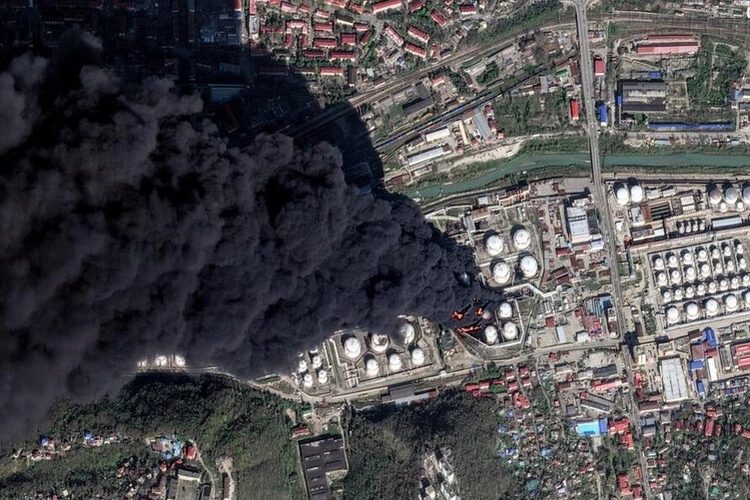
As a result, disruptions to satellite communications do not prevent Ukrainian forces from striking Russian defense industry facilities, airfields, drone bases, and other targets in the operational and deep rear. Oil industry facilities remain among the main targets of Ukraine’s long-range strikes, with drones regularly attacking refineries, oil storage facilities, and pumping stations, causing fires and damaging equipment.
In October and early November, strikes against oil infrastructure were reported in Russia's Ryazan, Volgograd, Samara, and Nizhny Novgorod regions. In late September, successful strikes on refineries forced four facilities to shut down. Such attacks have a direct impact on the Russian economy and were among the main causes of Russia’s summer fuel crisis.
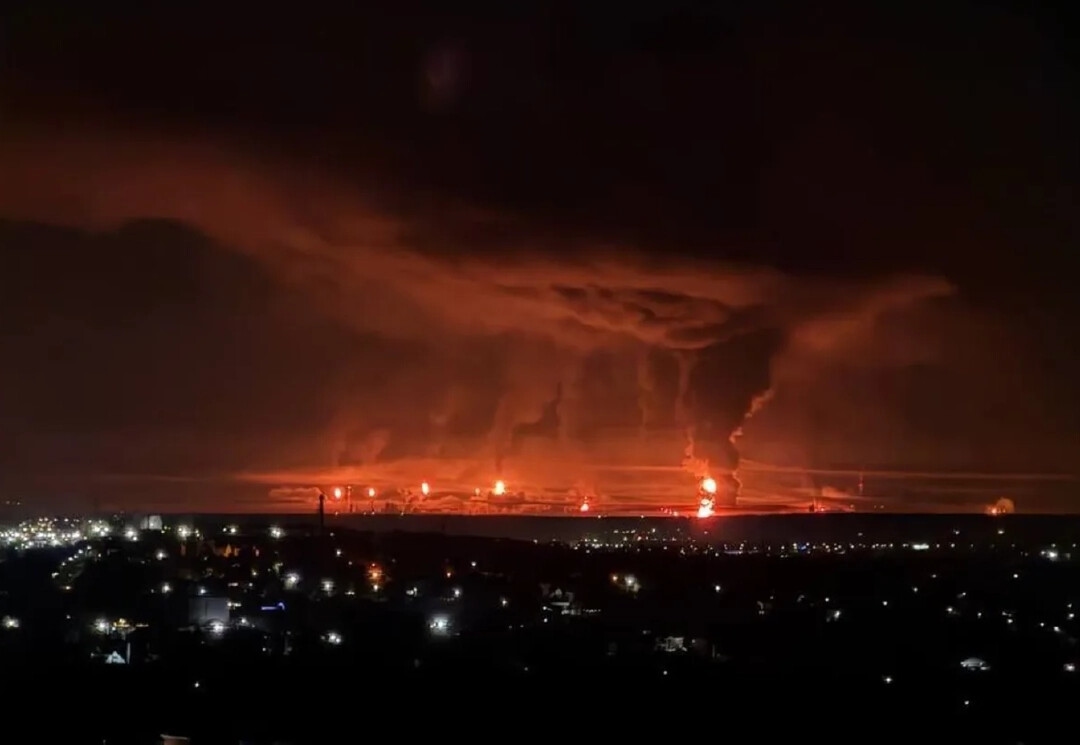
Meanwhile, attacks on oil refineries were halted between Oct. 16 and 30, reportedly under pressure from the Trump administration. Instead, Ukrainian forces shifted their focus to chemical plants. In late October, synthetic rubber plants in Tolyatti, Omsk, and Voronezh came under attack. Their products are used, among other things, to manufacture rocket propellant. The main objective for the Ukrainian Defense Forces is to hit polybutadiene production units at these plants, which are particularly difficult to repair. One such unit was hit at the Voronezhsintezkauchuk plant on Oct. 26.
The campaign against Russia’s defense industry is also expanding. On Sept. 25, drones attacked the Iskra plant in Ulyanovsk, part of the Almaz-Antey conglomerate, which manufactures electronic components for radio equipment and communications systems.
In October, Ukrainian forces also reported strikes on the Energiya plant in Yelets, which produces power supplies for missiles and guided bombs, and the Proton-Elektrotex facility, which manufactures components for Russian cruise and ballistic missiles.
In addition to fixed-wing drones, Ukraine also uses domestically developed cruise missiles — including the Flamingo, upgraded versions of the Neptune, and several types of drone missiles — for these missions. In June, Russia's Titan-Barrikady plant in Volgograd, which manufactures missile launchers, came under attack.
In late September, Ukrainian forces also used several types of long-range weapons to strike the Azov Optical-Mechanical Plant in the Rostov region. The main limitation remains the relatively small number of such weapons and their inconsistent effectiveness.
Military equipment storage facilities have also been targeted. On the night of Oct. 22, Ukrainian drones attacked the 75th Arsenal of Russia's Main Missile and Artillery Directorate (GRAU), now known as the 75 Arsenal facility, in Serpukhov, near Moscow. Reports indicated hits on repair workshops and a storage hangar. According to OSINT analysts, as of 2024 the facility was Russia’s largest known storage facility for ground-based air defense equipment.
A massive missile and drone strike on the headquarters of Russia’s Center Group of Forces in Donetsk on Aug. 26, 2026, killed at least 20 officers, whose identities were established by Mediazona. Among those killed was Colonel Andrey Romanchuk, head of the engineering troops of Russia’s Central Military District. Storm Shadow / SCALP-EG missiles were reportedly used in the attack. According to Mediazona, this was single deadliest known incident for Russian officers over the course of the war.
Since July, Ukrainian long-range strikes have also targeted Russian commercial infrastructure. Between July 18 and Aug. 5, drones attacked at least 21 Wildberries logistics facilities in Russia and Crimea. Experts estimated that 17–22% of the company’s warehouse space had been damaged, with combined losses for the marketplace and its sellers estimated at 600–800 billion rubles ($7.2 billion to $9.7 billion).
Since Aug. 22, Ozon warehouses have also come under drone attack. The company estimated its losses from strikes on 11 logistics centers at 30 billion rubles ($362.2 million). Russian data centers have also come under long-range attack. After a strike on a Yandex data center in Vladimir on Oct. 11, the company reported that the facility had ceased operations, causing disruptions to its cloud services.
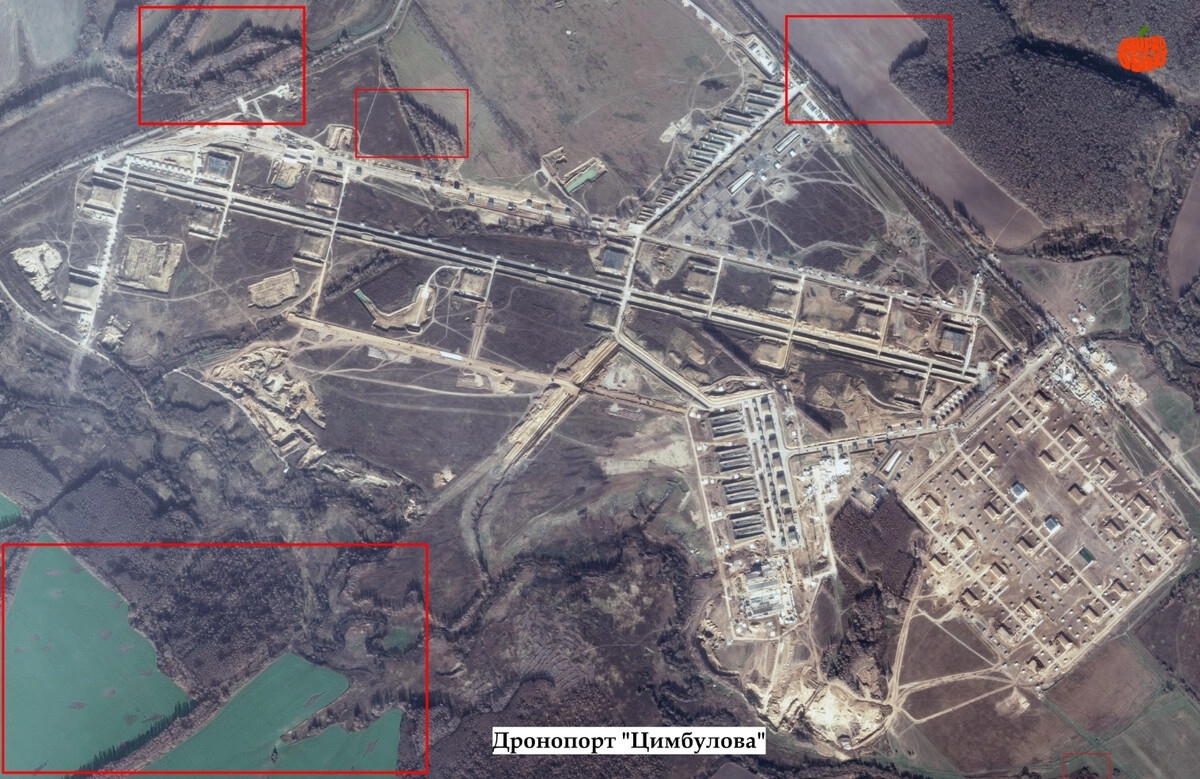
Meanwhile, Ukrainian attacks on the most obvious targets — Russian Shahed launch sites — have achieved relatively little. Despite repeated strikes on drone bases at Donetsk airport (1, 2, 3) and near the village of Tsymbulova in the Oryol region (1, 2, 3, 4), both within range of Ukraine’s mid-strike drones, the facilities remain operational and continue to expand.
Donetsk airport, less than 50 kilometers from the front line, was struck with ATACMS and Storm Shadow missiles in March and April 2026. Some of the drone shelters were destroyed or damaged. By June, however, the airport had seven launch installations and more than 130 shelters, while Russian forces continued building fortified storage facilities.
A similar situation has developed at the drone base near Tsymbulova. According to estimates by Ukrainian OSINT analysts, the site has 23 launch installations, 387 shelters, and 26 underground storage facilities. Ukrainian strikes in late August and September damaged several structures, but most of the infrastructure remained intact. Attacks intensified in October. Following strikes on Oct. 1, Oct. 3 and Oct. 10, satellite imagery revealed further damage to bunkers, a launch installation, and the drone storage area. Nevertheless, there were no reports that the facility had been put out of operation for any extended period. Analysts at the Conflict Intelligence Team (CIT) suggest that the relatively infrequent attacks give Russian forces enough time to repair the infrastructure and replace their losses.
Long-range strikes have had little impact on Russian drone launch sites used to attack Ukraine
The Hvardiiske airfield in Crimea has become one of Russia’s main launch sites for long-range drones. It first appeared in Ukrainian General Staff reports as a launch site for loitering munitions in March 2025. By the fall of 2026, launches from the airfield were taking place almost daily. Almost all manned aircraft previously stationed at Hvardiiske had been withdrawn by the summer of 2024. Nevertheless, Ukrainian sources have periodically reported strikes on helicopters there. The airfield has effectively been repurposed for drone operations, making it difficult to put out of action for any length of time.
The drone infrastructure is dispersed across the airfield: launch sites, maintenance facilities, and storage areas are located in different sections, while individual launch positions can be restored relatively quickly. Notably, drones are launched not from fixed installations but from mobile platforms mounted on vehicles that drive onto the runway. Moreover, Hvardiiske lies deep inside the peninsula, forcing Ukrainian drones to fly upwards of 100 kilometers over land, where they are more vulnerable to interception.
The Ukrainian Defense Forces have repeatedly attempted to strike this hub. On Aug. 7, the General Staff reported an attack on a facility near Hvardiiske that is used to store, prepare, and launch UAVs. Following another strike on the night of Oct. 12, NASA satellites detected a fire near the southeastern end of the runway.
The Conflict Intelligence Team argues that, given Ukraine's shortage of air defense missiles, it would be more effective to follow the principle of “shoot the archer, not the arrows” — prioritizing the destruction of launch installations and related infrastructure. Even facilities protected by air defense systems, mobile fire groups, and electronic warfare equipment can have their defenses overwhelmed by a mass attack.
Analysts question why Wildberries warehouses and similar facilities appear to take priority over drone bases as Ukrainian targets. Meanwhile, the authors of the Ukrainian OSINT project Dnipro Osint ⟨ Harbuz ⟩, note that Ukrainian forces have repeatedly attacked Russia's drone base near Tsymbulova, sometimes successfully hitting warehouses and launch installations. However, in their assessment, most strikes failed to reach their targets because of the site's extensive electronic warfare defenses.
Satellite images published by the project show numerous craters and traces of crashed drones around the facility. The authors suggest that medium-range ballistic missiles, particularly the FP-7, might be more effective against such targets.
Large industrial facilities protected by layered air defenses are even harder to strike. According to Radio Free Europe/Radio Liberty, satellite imagery from Oct. 21 showed 33 air defense positions and installations around the Alabuga Special Economic Zone in Tatarstan, where Russia manufactures Shahed-type drones. In addition to towers and sites housing antiaircraft systems, the area is equipped with machine-gun positions and anti-drone netting. The last recorded Ukrainian drone attack on the facility took place in June 2025.
Ukrainian strikes against airbases inside Russia have been more successful. In October 2026 alone, the Russian Aerospace Forces lost seven Su-34 fighter-bombers: one at Khanskaya airbase in Adygea on Oct. 4, four at Borisoglebsk airbase in the Voronezh region on Oct. 15 and two at Marinovka airbase on Oct. 29.
Thus, even without Starshield, the Ukrainian Defense Forces retain the ability to strike Russian operational and deep rear areas. However, satellite communications restrictions limit their ability to locate and engage moving targets. Maintaining the scale of the mid-strike campaign therefore requires alternative drone control links.
What could replace Starlink, and how long would it take?
The October 2026 restrictions on satellite communications have forced the Ukrainian Defense Forces to look for independent providers. However, existing alternatives are not yet capable of fully replacing Starlink, particularly when it comes to controlling drones tens or hundreds of kilometers away.
Europe's Eutelsat OneWeb satellite system is already available in Ukraine. The Ukrainian Defense Forces use it primarily for communications between headquarters and command posts, as well as to serve as a backup link (including on naval drones). However, there is no confirmation that OneWeb has been used to control UAVs during long-range strikes.
Unlike Starlink, which operates a constellation of more than 11,000 satellites, OneWeb has around 650. Its overall network capacity is considerably lower, while its equipment is more expensive than Starlink's and designed primarily for corporate and government customers.
Back in March 2025, Eutelsat reported that several hundred terminals were operating in Ukraine — far too few to replace the tens of thousands of Starlink terminals in the country. Whether OneWeb can also support the control of fast-moving UAVs remains an open question.
As OSINT researcher Jakub Janovský has explained, SpaceX's advantage lies not only in the number of satellites it has deployed but also in its ability to manufacture its own equipment, launch satellites using its own reusable rockets, and continually expand network capacity. European competitors, by contrast, have to rely on different contractors to manufacture and launch their satellites. In Janovský's assessment, even a substantial increase in government funding would not be enough to allow them to catch up with SpaceX quickly.
Competitors will struggle to catch up with SpaceX, even with a substantial increase in government funding
Another European alternative is the satellite terminals of Swedish company SatCube, which have been supplied to Ukraine since 2023 (thanks to German financial support). They provide satellite internet via geostationary satellites operated by U.S. company Intelsat. However, their high signal latency and relatively bulky equipment make them better suited to stationary and field communications than to drone control.
A potentially promising option for long-range UAVs is the compact terminals developed by Israeli company HiSky. In late October 2026, Russia’s Coordination Center for Aid to Novorossiya reported that it had obtained a SmartLITE SIRIUS 16×16 terminal recovered from a Ukrainian fixed-wing drone for examination. Unlike Starlink, HiSky uses satellite networks operated by third-party providers, potentially allowing communications to be maintained over Russian territory.
HiSky terminals are designed to transmit commands, telemetry, and other data via satellite. Their bandwidth depends on the satellite network used, while their ability to transmit video and support remote drone control has yet to be fully assessed.
Another potential competitor to Starlink is Amazon Leo, the U.S. satellite system formerly known as Project Kuiper. By October 2026, Amazon had launched nearly 400 satellites into orbit and expected to begin providing limited internet access by the end of the year. The constellation is ultimately expected to comprise more than 3,000 satellites. Unlike SpaceX, however, Amazon has no launch vehicles of its own and thus relies on external providers, including SpaceX itself. Its satellite constellation has also yet to reach the necessary scale. Moreover, switching from one American commercial system to another would not resolve Ukraine’s dependence on U.S. government decisions.
In the longer term, Europe plans to develop its own secure satellite communications system, IRIS², which is closer in purpose to the military Starshield service than to commercial Starlink. The project is being developed by the SpaceRISE consortium, comprising Eutelsat, SES, and Hispasat.
IRIS² is more expensive to deploy than Starlink because of its military-grade security and its resistance to electronic warfare, its complex multi-orbit architecture, the drive for technological independence, and the lack of a comparable manufacturing scale. The EU project envisages a constellation of 348 satellites, including those dedicated to military and government communications. Commercial services are also planned.
In August 2026, the European Commission approved an accelerated deployment schedule, with the first launches planned for 2029 and secure services expected to begin in 2030. Even after the system becomes operational, however, expanding the network and deploying compatible equipment will take time. IRIS² could eventually become a strategic alternative to SpaceX, but it will not solve the Ukrainian Defense Forces’ immediate problems.
Europe’s Starshield alternative is scheduled to become operational in 2030
Ukrainian developers are also working to build an independent satellite network. On Oct. 1, Ukrainian company Himera and Denmark’s GomSpace launched the first test satellite, OBRIA NANO, which is intended to form the basis of a future Ukrainian secure communications system.
In addition, conventional radio links, ground-based and airborne relays, and mesh networks could help the Ukrainian Defense Forces reduce their dependence on Starlink. Mesh networks route data through multiple interconnected devices, so the loss of an individual node does not necessarily disrupt communications. For example, the American Silvus StreamCaster and Ukrainian HIMERA systems are designed to maintain communications between military units without a constant satellite internet connection. However, extending such networks over hundreds of kilometers is more difficult and requires relay stations that the enemy can jam or destroy.
Another option is 4G/LTE cellular networks, which are already used in military drones. As early as 2023, modems and SIM cards from mobile operators were found in Russia's Shahed drones. Cellular networks allow data transmission without satellite terminals, but coverage may be unavailable in occupied territories. Network operators and the military can also restrict access for specific devices. Mobile internet can therefore supplement other control links but cannot guarantee a reliable connection throughout a drone’s flight.
Ukraine's dependence on Starlink creates vulnerabilities that are about more than just the whims of Donald Trump's White House — Russian military countermeasures are also playing a role. In 2026, Russian forces began making more extensive use of Volna Kupol Garant systems to jam Starlink signals. Deployed around Donetsk, Mariupol, Berdiansk, and Crimea, they make it harder for Ukrainian forces to strike Russian rear areas. However, their powerful radio emissions also make them easier to detect, and some have already been destroyed by Ukrainian drones.
A fundamentally different approach is to develop autonomous drones that do not require a constant connection to an operator. For example, Hornet drones developed by Eric Schmidt’s Perennial Autonomy use computer vision to identify vehicles and to track targets. If satellite navigation is lost, they can navigate autonomously using images of the terrain. Once a target has been acquired, a drone can complete its attack independently, even if communications are lost. Germany’s HX-2 drones can also perform part of their flight autonomously and use computer vision for terminal guidance.
Autonomous control is also being introduced into unmanned ground vehicles. In October 2026, the Lava Unmanned Systems Regiment of the Ukrainian National Guard’s 2nd Khartiia Corps announced tests of an autonomously controlled UGV in the Kharkiv sector. The vehicle completed 93% of a 20-kilometer route on its own, with an operator taking control only for a 1.4-kilometer stretch.
Before a mission, the terrain is scanned using a lidar to create a three-dimensional map. The UGV then navigates using this map, while cameras and artificial intelligence help it identify obstacles and maneuver independently. The system, developed by Apex AI, reduces the need for continuous communication with an operator, including through Starlink.
However, current autonomous systems cannot yet fully replace human operators in complex missions, particularly in rapidly changing environments. According to Ukrainian military personnel interviewed by Oboronka, the widespread availability of inexpensive, easy-to-use Starlink terminals has slowed the development of domestic communications systems.
Building relay networks and other backup channels requires considerably more time, funding, and specialized personnel. Major Ihor Bohdan, head of the Center for Innovation and Technology of Ukraine's 7th Air Assault Corps, argues that rather than seeking a single replacement for Starlink, the military should focus on integrating different technologies into a decentralized network that can remain operational even when individual nodes are lost.
In the near term, Ukraine can reduce its dependence on SpaceX by combining different communications channels with the development of autonomous guidance systems. Replacing Starshield for high-speed drones, however, remains a much more difficult challenge. Building an independent satellite communications infrastructure would take several years at the very least.