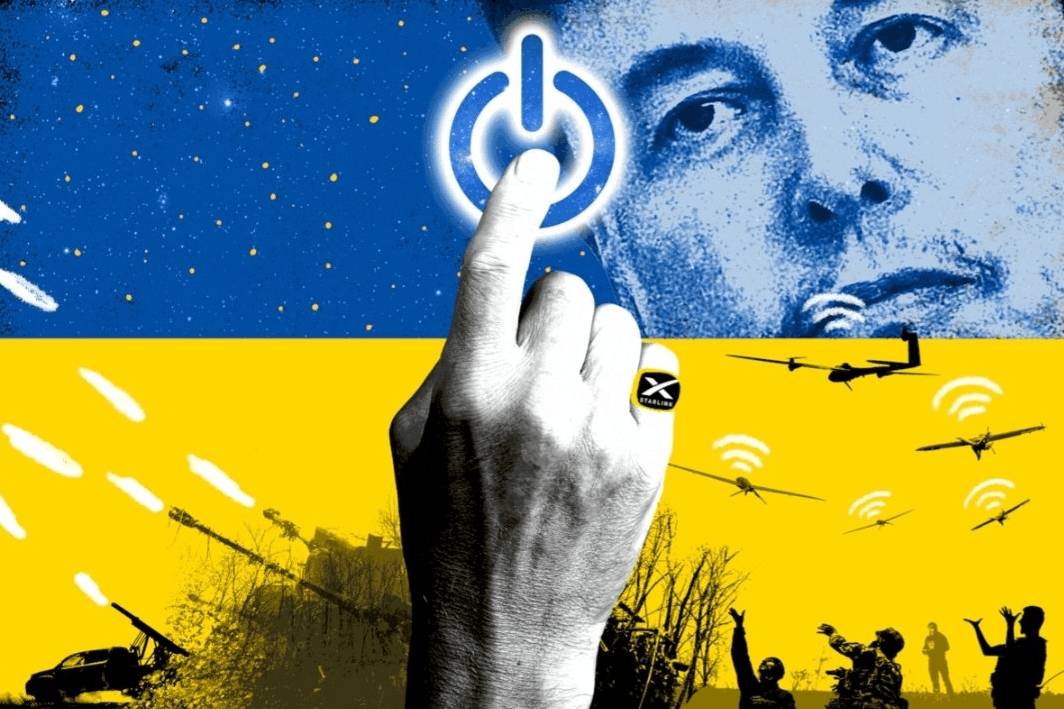
After a significant expansion in the use of Starlink satellite internet by Russian drone operators, Kyiv partnered with Elon Musk’s SpaceX in early February to introduce “whitelists” of verified terminals that can continue to function in Ukraine. The move has caused significant disruption to the operation of the “gray” devices available to the Russian armed forces. Following the restriction, the Armed Forces of Ukraine launched their most successful offensive operation since the summer of 2023, retaking more than 200 square kilometers of territory in the Zaporizhzhia and Dnipropetrovsk regions in less than a week. Although it is still too early to judge the long-term consequences of Russian troops’ access to Starlink being blocked, it is already clear that it will be difficult for Moscow’s forces to quickly find an adequate substitute. It is likely that the Russian military will have to lay cables for broadband access and install old-fashioned telephone lines in order to adapt its combat command system to the new conditions.
What happened
The use of Starlink makes UAVs resistant to electronic warfare systems and allows them to be controlled in real time. On Jan. 27, 2026, a Russian drone reportedly controlled via Starlink struck a passenger train in the Kharkiv Region. Six people were killed and several were wounded. Both military personnel and civilians were on board the train, but only one of those killed was a serviceman.
Videos showing similar Russian UAVs striking Ukrainian targets at a depth of 50 to 250 kilometers from the front line had been regularly appearing on social media channels of the Rubikon center since late 2025. However, the episode involving the passenger train served as the formal pretext for Ukraine to launch a campaign aimed at countering Russia’s use of so-called “Starlink flyers.”
The use of Starlink makes UAVs resistant to electronic warfare systems and allows them to be controlled in real time.
By Jan. 31, Ukraine had introduced emergency measures to counter Russian use of Starlink terminals. The first step was to impose speed-based restrictions, with signals blocked at speeds above 90 kph. On Feb. 2, Defense Minister Mykhailo Fedorov announced a whitelist system, saying that all unregistered devices would be disconnected from the service.
Terminal verification is a fairly simple process. Military personnel submit identifying data through the DELTA battlefield management system, while civilians, companies, and organizations apply through Ukrainian public service centers and the state services portal.
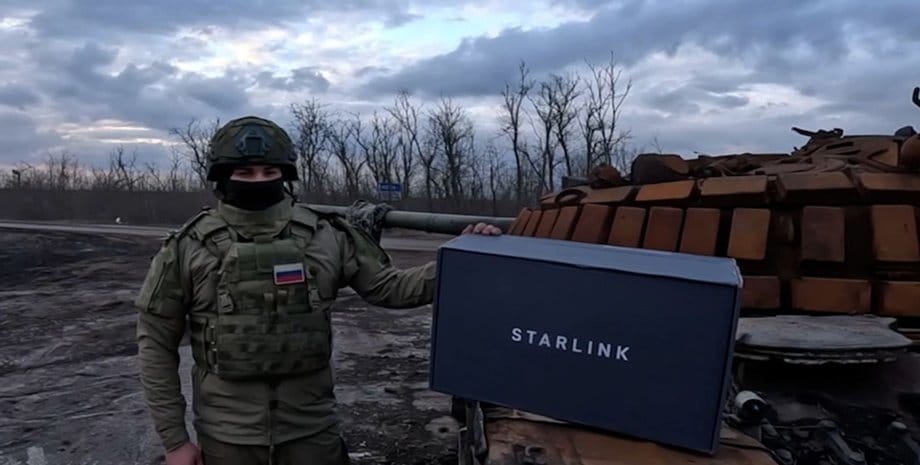
Evidence that Russian forces were illegally using Starlink terminals emerged as early as 2024. The systems were acquired through parallel-import schemes, with accounts activated in the names of front people in third countries. Some illegally imported Starlink units even appeared in Russian government databases as being officially compliant with technical regulations. Over time, Elon Musk’s satellite internet became more deeply embedded in the Russian military and moved beyond basic communications support, paving the way for the use of so-called “Starlink flyers.”
How Starlink is used at the front
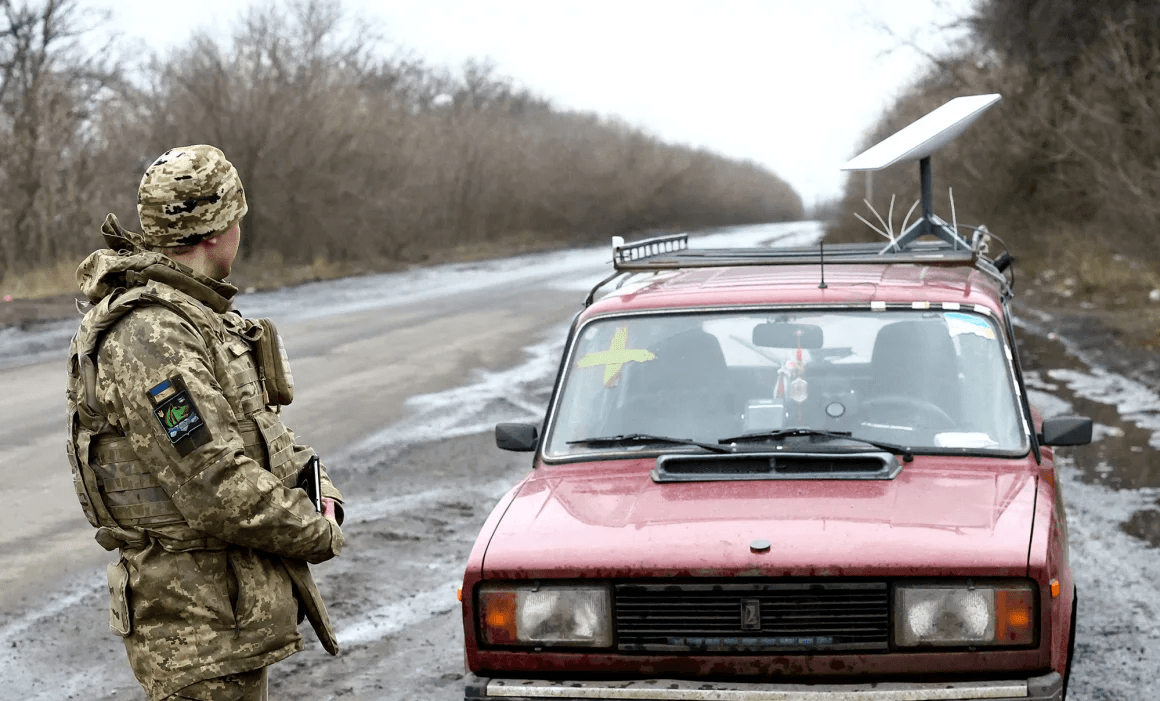
The Starlink system provides access to satellite internet and is therefore especially in demand on the front line, where organizing communications under the conditions of the current war is a serious challenge. It is thanks to Starlink that real-time feeds from reconnaissance drones on the front line are transmitted, allowing soldiers to adjust artillery fire and guide FPV drones. In short, Starlink is a key element in the so-called kill chain, the command sequence that makes it possible to find, identify, and strike enemy targets.
Reliable communications are the main condition necessary for situational awareness, particularly when operating in dispersed battle formations in areas where friendly and enemy positions are often intermingled. In the extended “gray zone,” the tactic of small-group infiltration works only if assault troops can be coordinated, supplied, and supported by fire, with forces literally guided between positions and receiving constant feedback.
This requires a stable internet connection and high data-transfer speeds, which is what SpaceX’s low-Earth-orbit constellation provides. That is why the Russian armed forces tried to install Starlink terminals as close to the front as possible — and even to create mobile access points by mounting transmitters on horses.
Today there are about 200,000 Starlink terminals in Ukraine, making it Europe’s largest market by number of users. However, only half of these were supplied through official channels. In the Ukrainian army, SpaceX satellite communications are integrated much more deeply at both the tactical and operational levels. In essence, it is the main communications and combat command tool across the armed forces as a whole. At the same time, the number of terminals connected to the “military version” of Starlink, the Starshield system with higher requirements for encryption and signal resilience, is only a few thousand.
How the restrictions affect combat
Propagandist Alexander Sladkov wrote that “the level of control over the situation on sectors of the front rolled back to 2022,” adding that “video conferences and support for the actions of every assault trooper disappeared.” According to a report by “war correspondent” Vladimir Romanov, most command posts are “sitting without feeds” and stay in touch with their soldiers via communications stations that are monitored by the enemy. A mobilized Russian soldier who runs the channel “Vault 8. Shelter No. 8” was somewhat more optimistic. In his assessment, troops have returned to “the first half of 2023,” using domestic satellite internet that is “unjustifiably expensive” and “slow.”
The level of control by Russian troops in multiple sectors of the front has “rolled back to 2022.”
The absence of Starlink does not deprive the Russian armed forces of communications as such, but it significantly reduces decision-making speed and coordination, above all in fire operations against mobile targets in the tactical rear. In turn, the absence of satellite internet also affects communications conducted through Telegram. Some pro-Russian sources also note disruptions in supplying the front line using ground drones.
According to reports from the General Staff of the Armed Forces of Ukraine (AFU), the number of Russian assault actions has dropped significantly since the start of February. While 338 combat engagements were recorded on Feb. 1, from Feb. 2-8 that figure did not rise above 200. At the same time, overall Russian activity in January and February averaged around 180 attacks per day.
In the Zaporizhzhia and Dnipropetrovsk regions, Ukrainian forces are engaged in their most successful counteroffensive operation since the summer of 2023. According to calculations based on information from the Institute for the Study of War, Ukrainian forces managed to retake more than 200 square kilometers in less than a week, even if a more conservative estimate puts the Ukrainian advance at 49 square kilometers on sectors south of Zaporizhzhia and north of Huliaipole.
NATO officials directly link the Ukrainian successes to the Starlink shutdown, and independent military analysts say the same. Still, it is possible that the recent shift on the battlefield is the result of a combination of several factors, including the redeployment of large Ukrainian contingents to the south Donetsk and Zaporizhzhia directions.
After blocking access to Starlink for the Russian military, Ukrainian forces began their most successful counteroffensive operation since the summer of 2023.
At one point, dissatisfaction within Russia’s pro-war “Z” community grew to such an extent that a senior MoD representative publicly commented on the Starlink problem. According to Deputy Defense Minister Alexei Krivoruchko, the termination of terminal operations “did not affect the intensity and effectiveness of unmanned systems troops.” Similarly, the head of the Main Communications Directorate of the Russian armed forces, Valery Tishkov, claimed that “the use of enemy communications means at the front was employed only by individual units and primarily to mislead the enemy,” adding that command posts are provided with modern, domestically produced communications services. In “Z” circles, however, those statements were dismissed as “stale crisis PR.”
How the Russian army will fight without Starlink
The Insider’s source in one unit of Ukraine’s defense forces carrying out combat missions in the east of the country reported a significant drop in Russian reconnaissance UAV flights and a related problem with transmitting video feeds from them to command posts. The same source also says that any alternative solutions cannot be used as easily as Starlink because their installation, concealment, and setup are much more labor-intensive.
In a conversation with The Insider, a Ukrainian military communications specialist said Russian servicemen on his sector of the front have switched to radio sets and wired field telephone communications. In other words, they have literally returned to World War II-era technology, when communication on the front line was carried out by cable between telephone handsets.
Russian soldiers are switching to radio sets and wired field telephone communications.
As reported by multiple pro-Russian military bloggers, only “radios” are left on some sections of the front. These are mostly civilian Chinese-made products that require the installation of repeaters if they are to operate beyond a range of 10-15 kilometers. Standard-issue radios such as the Azart are not comparable to civilian solutions either in functionality or availability.
Another alternative involves laying fiber-optic cables. Multiple means of internet connectivity, including cables, routers, and computers are often purchased by the servicemen themselves or by sponsors among volunteers or regional governments. There are also radio bridge repeaters that transmit a signal in a chain from one node to another. On the Pokrovsk axis, Ukrainian drone operators have been striking antennas for Wi-Fi bridges, while radio bridge antennas supplied by the U.S. company Ubiquiti have been identified in verified footage.
As far as is known, the Russian military is trying to bypass restrictions on Starlink use through “drops,” a term describing residents of Ukraine who agree to register terminals in their own names in exchange for money. Ukraine’s Coordination Headquarters for the Treatment of Prisoners of War issued a statement saying that families of Ukrainian POWs are being blackmailed from Russia and pressured to register terminals in their names. One Russian channel focused on drones says it personally knows of 200 successful registrations through “drops.”
Meanwhile, the Ukrainian hacker group “256 Cyber Assault Division” said that it had used fake bots on Telegram to collect information on the location of nearly 2,500 Russian terminals, receiving almost $6,000 in payment for fake registration services and identifying 31 Ukrainian citizens willing to become “drops.” The operation was confirmed by Ukraine’s Defense Ministry, and warnings (1, 2) can be found in Russian pro-war channels about the “theft” of Telegram channels for the purpose of deceiving Russian servicemen seeking to restore a Starlink signal.
After the Starlink shutdown, Russian volunteers began raising money for Gazprom’s Yamal satellite internet system. But those are geostationary satellites, which means they are much higher than the Starlink constellation and therefore operate with a signal delay. In addition, the dishes themselves are bulky and require a complicated setup procedure. One pro-war channel posted the following review of the Gazprom system from troops on the front line:
▪️ “It works on a beam system. To set up the dish you need a beam code. To find out the code you need...internet. Starlink itself, when activated, gives one or two hours of free access for setup, and so on.
▪️ “No stability at all. The wind blows, snow or rain starts, the dish shifts, the beam is lost, and you have to go set it up again.
▪️ “Fees. Very expensive, plus the high cost of the dish itself. The guys complain they bought 50 GB for 6,000 rubles. Imagine how long that package volume will last for the number of people one dish serves.
▪️ “Compactness. There is none. It is a huge dish that heats up and tells everyone, ‘There are people here, shoot here.’”
▪️ “Connection speed. The declared 100 Mbps exists only on paper. In reality it’s [just] enough to send a message.”
The same channel says Yamal is completely unsuitable for organizing live streams or transmitting images between neighboring units, and that it could not even handle a group video call. Users are separately angered that access to Telegram via Gazprom’s satellite internet is possible only through a paid VPN service.
A Ukrainian military expert told The Insider that large satellite dishes used as alternatives to Starlink really have started to be noticed in the combat zone, and that their presence often makes it possible to determine the location of company and battalion command posts. According to him, whereas previously almost “every trench” was connected to a single information-sharing field, now full internet-based communication on the Russian side will be available only to the upper levels of the chain of command, while the rest will have to make do with standard voice messages until something changes.
Overall, Starlink cannot be considered an irreplaceable element of Russian frontline communications. Without it, situational awareness will decline, and time will be needed to rebuild command-and-control chains (by Ukrainian estimates, this will take up to six months), but Moscow’s troops will not be left entirely without the means to send and receive messages.
Starlink cannot be considered an irreplaceable element of Russian frontline communications.
The exception concerns drones controlled via Starlink. Since the start of February, the Rubikon center has not posted a single video showing strikes on targets deep in the rear of the Ukrainian armed forces. Ukrainian military personnel, on their part, have noted the disappearance of Molniya-type drones that had previously struck logistics in the Dnipropetrovsk Region.
It is worth noting that earlier in the war, restrictions on Starlink (or threats to impose them) affected Ukrainian forces as well. In the fall of 2022, Elon Musk personally ordered Starlink to be shut down during the Ukrainian counteroffensive in the Kherson Region. According to sources cited by Reuters, the billionaire feared a Russian nuclear response in the event that the AFU achieved too much success. The same logic guided him when satellite internet was turned off for Ukrainian naval drones near Crimea, which were reportedly intended to stage a “mini Pearl Harbor” against Russia’s Black Sea Fleet. Technical outages also affected Ukrainian combat operations in the summer of 2025. Now, for the first time, the Starlink factor has worked against the Russian armed forces.