More than 80% of white evangelicals consistently support Donald Trump, and most believe his rise to power was ordained by God. Behind these figures lies not merely a loyal voting bloc, but a vast, well-funded network spanning megachurches, televangelists, and exclusive clubs for billionaires. Elections were once won through political strategists and traditional rallies. Today, conservative evangelicals mobilize millions of voters from the pulpit while proclaiming Donald Trump “God’s anointed.” The empire of right-wing preachers is helping consolidate the American leader’s power not only in the United States but also abroad.
The symbiosis between conservative evangelicals and ardent Trump supporters
A year ago, a memorial service for Charlie Kirk was held at a 63,000-seat stadium in Glendale, Arizona, just days after the right-wing American activist had been assassinated. From early morning, tens of thousands of people — many wearing MAGA (Make America Great Again) merchandise — began filling the stands. Christian musicians performed onstage as part of an event that resembled a service at a megachurch: “believers” closed their eyes, raised their hands, and wailed in grief.
At the entrance, Kirk’s political organization, Turning Point, registered supporters, while inside, Christian hymns alternated with speeches by Donald Trump, JD Vance, Marco Rubio, and other government officials. Kirk’s death was portrayed as a martyrdom that could unite and expand the ranks of the movement he had built for Trump.
Reuters described the event as “a religious revival fused with a political MAGA rally.” The Guardian reported that speakers called on the government to “take up the sword against evil,” while attendees pledged to defend the president’s rear.
Charlie Kirk, who was raised in the evangelical church, was one of the clearest examples of the symbiosis between conservative evangelicals and ardent Trump supporters. But he was far from the only one. The phenomenon extends beyond evangelicals to Pentecostals, independent charismatics, and many other religious groups whose members largely support Trump politically.
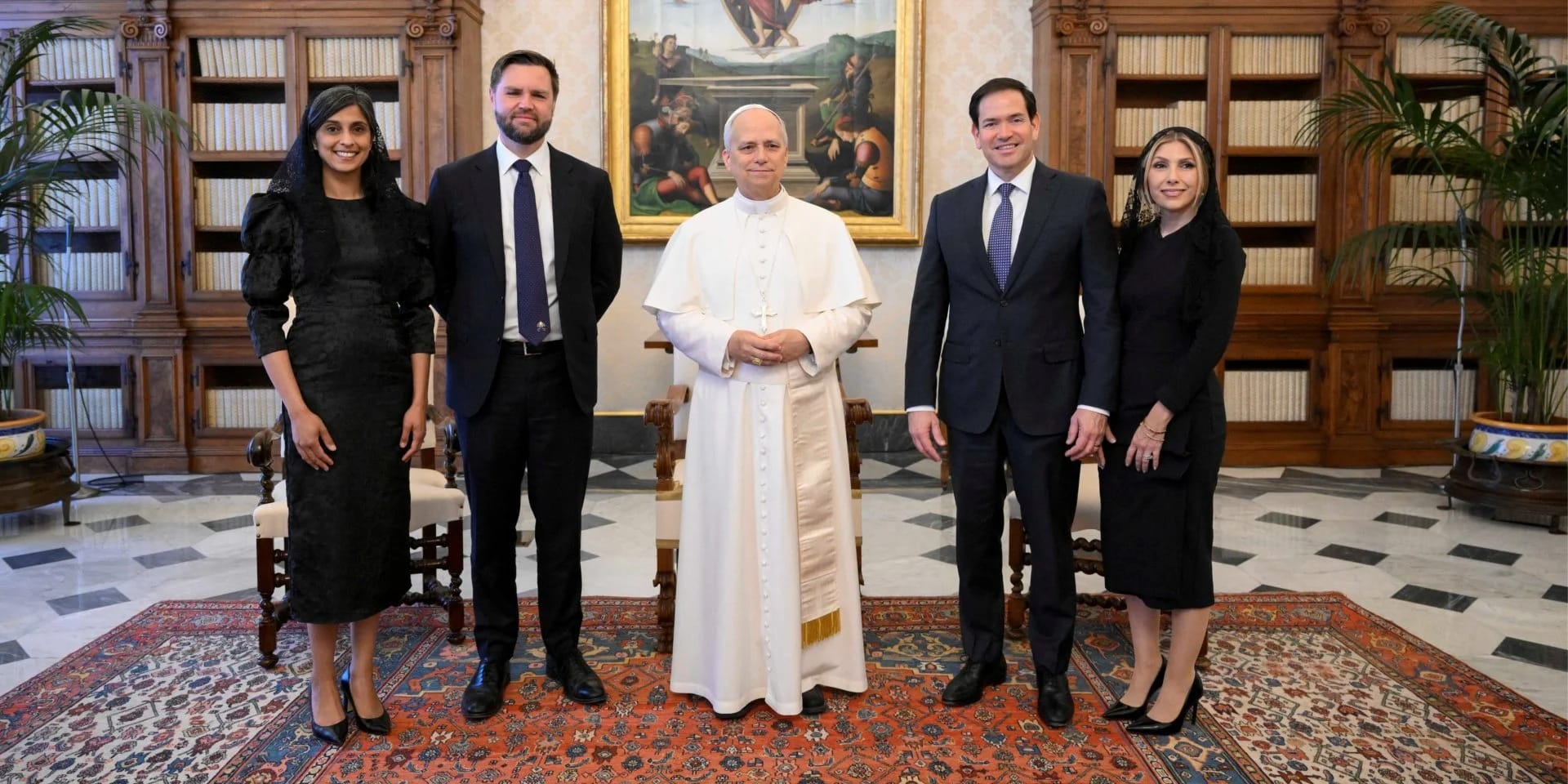
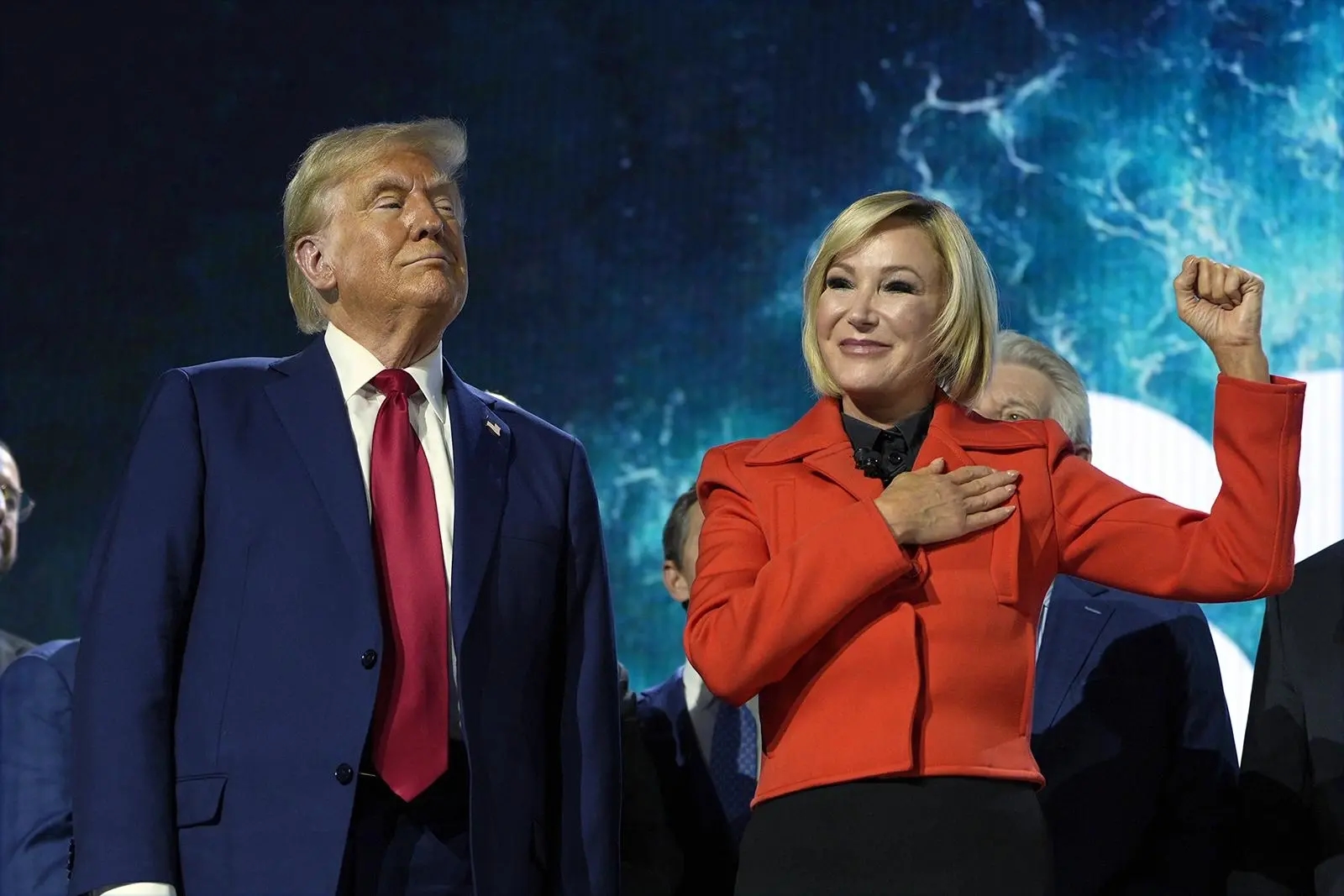
This fusion is evident not only among political activists but also at the highest levels of government. In 2019, for example, Trump appointed televangelist and charismatic movement activist Paula White, whom he had known since the 2000s, as his adviser. In February 2025, the Trump administration announced the creation of a “White House Faith Office,” and after years of working with Trump on the initiative, White was appointed to lead it.
In May 2025, U.S. Defense Secretary Pete Hegseth launched a monthly “Christian Prayer and Worship Service” at the Pentagon. For the first time, regular official religious services were being held at the Defense Department and broadcast on the building’s internal television network. Hegseth’s pastor, who led the inaugural service, prayed for Trump and thanked God for using the president to “restore stability and moral clarity” to the country.
In February 2026, Hegseth invited Doug Wilson, a pastor and Christian nationalist, to speak at a service. Wilson is a co-founder of the Communion of Reformed Evangelical Churches and advocates turning the United States into an exclusively Christian nation. In the church association he leads, women are barred from leadership positions, and Wilson describes his personal political views as “a little to the right” of those of a Confederate general. He has repeatedly expressed controversial views on slavery and called Muslim and Hindu immigrants “parasites."
During the service, Wilson said he wanted to see “the whole world Christian.” Hegseth reposted the video, captioning it with Wilson’s words: “All of Christ for All of Life.” The phrase reflects a popular idea among American evangelicals: that Christ’s authority should extend to every sphere of human life, including politics and government.
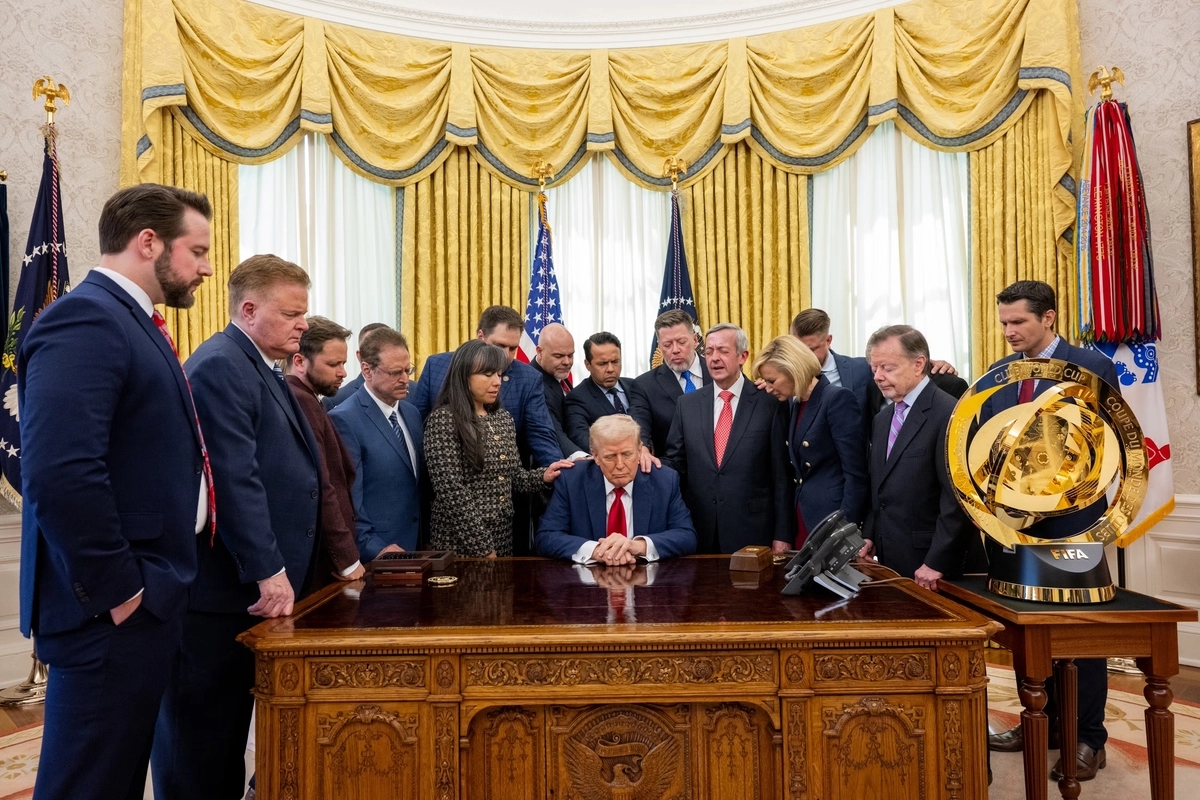
In some respects, this vision appears to be taking shape in the United States. By the spring of 2026, evangelical support was already helping Trump cast his military actions as sacred. On March 5, nearly 20 leaders of the Christian right — including megachurch pastor Robert Jeffress, evangelists Ralph Reed and Gary Bauer, and the aforementioned Paula White — gathered around Trump at his Oval Office desk, laid their hands on him, and prayed for divine protection and a U.S. victory in the war against Iran.
A Texas lawmaker who joined them said churches would be mobilized to bring “Revival and Reformation” to America. Reed thanked Trump for his “courageous decision” to attack Iran and prayed that God grant America victory.
Who are America’s white Christian conservatives?
In the 2024 presidential election, 81% of conservative evangelicals and similar religious groups voted for Donald Trump (in 2020, the figure was 83%). A Pew Research Center study based on validated voter data confirmed that conservative evangelicals remain Trump’s largest and most loyal electoral constituency.
Their attachment is not merely political – it is, in effect, religious. In a post-election survey, 60% of white evangelical Protestants agreed that “God ordained Donald Trump to be the winner of the 2024 presidential election.” According to the Public Religion Research Institute (PRRI), no other major religious group was as likely to view the election outcome as an act of divine providence.
The reason is that Christian nationalists believe America was founded as an exclusively Christian nation and should remain one at both the legislative and institutional levels. In essence, they believe every American should be Christian and embrace the values they associate with Christianity.
While hardcore Christian nationalists believe the country should be run on religious principles, 2025 PRRI data show that only 29% of white evangelical Protestants are adherents of Christian nationalism, while another 38% can be classified as sympathetic to it. In its large-scale survey across all 50 states, PRRI researchers did not ask respondents directly whether they identified with this contested term. Instead, they gauged their views on specific propositions, including whether the federal government should declare the United States a Christian nation, whether being Christian is essential to being a “true American,” and whether God has called Christians to exercise dominion over society.
Christian nationalists believe America should remain a Christian nation
Classifying believers as “white evangelical Protestants” in this study is itself something of an oversimplification. Unlike traditional churches with rigid hierarchies, American conservative Christianity is a decentralized and diverse religious landscape encompassing evangelicals, fundamentalists, Pentecostals, and independent charismatics. Although they may disagree on theological nuances and the legitimacy of modern-day prophets, politically they act as a unified force.
Their strength lies not in doctrine but in a grassroots infrastructure made up of thousands of autonomous congregations and megachurches. Free from the need for approval by higher authorities, this ecosystem can rapidly turn personal religious conviction into a coordinated effort to mobilize millions of voters, bypassing traditional party campaign organizations.
The term “evangelical” is therefore best understood as describing a form of “family resemblance” among religious groups. It derives from a Greek word meaning “good news,” or Gospel. Evangelicals traditionally emphasize four things: the authority of the Bible over the church; Christ’s death as the only path to salvation; the need for personal conversion; and the duty to spread the faith through evangelism. Many religious leaders are also active in a media ecosystem spanning podcasts, streaming platforms, conferences, YouTube channels, and book publishing.
On many issues, however, race matters more than whether a congregant is evangelical or Lutheran. In 2024, while 85% of white evangelical voters identified with or leaned toward the Republican Party, 84% of Black Protestants supported the Democrats. Pew Research Center data on party preferences suggest that the political phenomenon requiring explanation is not evangelical faith itself, but specifically white conservative evangelicalism, the institutions built around it, and these groups’ ties to Christian nationalist ideology.
Demographically, the United States remains predominantly Christian, but as in Europe, society is becoming increasingly secular. According to a Pew Research Center study conducted in 2023–2024, 62% of American adults identify as Christians, down from 78% in 2007. Meanwhile, 29% report having no religious affiliation.
Still, around 40% of Americans identify as Protestant, with Pew classifying 23% of the population as evangelical Protestants, 11% as members of mainline Protestant churches (historical denominations), and 5% as members of historically Black Protestant churches. Catholics account for roughly one-fifth of the population, while Orthodox Christians make up about 1%. Baptists account for 12% of American adults and Pentecostals represent about 4%, while just over 7% belong to other Protestant groups or have no denominational affiliation.
About 40% of Americans identify as Protestants, with 23% classified by Pew as evangelical Protestants
Pew’s research shows why terms such as “evangelical,” “Baptist,” “Pentecostal,” and “nondenominational Protestant” are not mutually exclusive. The same person can be a white evangelical, a Southern Baptist, and a member of an independent local congregation.
Another group is fundamentalists, a narrower category of conservative Protestants who began campaigning against “liberal values” in the early 20th century while insisting on the literal truth of biblical miracles and establishing their own churches, schools, universities, and other institutions in order to isolate themselves from the larger society. After World War II, however, some leaders sought to make fundamentalism more open, adopting the label “evangelical.” It was they who went on to shape today’s much larger mainstream evangelical communities.
Pentecostals form another overlapping group. Pentecostalism is not synonymous with white conservatism: the movement has given rise both to the predominantly white Assemblies of God and to the historically Black Church of God in Christ. In the United States, however, an estimated 65–67% of Pentecostals are white, and white Pentecostals are more likely to support Christian nationalism.
Charismatics believe in the possibility of receiving gifts of the Holy Spirit, including healing, prophecy, and glossolalia (speaking in tongues), but do not necessarily belong to a Pentecostal denomination. Charismatic Christianity is better understood as a descriptive category, rather than as a unified group of churches. Since the 1960s, practices such as speaking in tongues, healing, and prophecy have spread to Catholic, Episcopal, Baptist, and other churches. A Catholic charismatic can remain in the Roman Catholic Church, attend Mass, and recognize the authority of bishops while still participating in healing prayers. An independent charismatic, by contrast, may not belong to any denomination. In short, “charismatic” describes a type of religious experience rather than a specific institution.
The boundaries between these groups are blurred. Paula White, who now heads the White House Faith Office under Trump, can be described as an evangelical, a charismatic influenced by Pentecostalism, a nondenominational Christian, and a televangelist who preaches the prosperity gospel.
The prosperity gospel, too, is a theological movement rather than a denomination. Its preachers teach that faith, positive thinking, and financial donations can bring health, success, and material prosperity. Congregants are often urged to “sow a seed” – make a donation that is expected to yield a divine reward in the future.
Prosperity gospel preachers have built some of America's most influential television ministries and megachurches, even as many Baptists, Reformed evangelicals, and even other Pentecostals openly condemn their teachings as exploitative. Within this theology, wealth and success are seen as signs of divine favor, meaning it should hardly come as a surprise that Trump has found a natural fit in this movement.
Many of these groups and religious movements overlap within megachurches. According to the Hartford Institute for Religion Research, a typical megachurch is characterized by the strong, centralized authority of its senior pastor. It often runs numerous social and political initiatives, commands substantial media resources, and employs a large professional staff. In essence, megachurches function as social worlds for their congregants, making them powerful vehicles for voter mobilization. When a megachurch pastor endorses a candidate, it often amounts to more than a formal expression of support – it mobilizes the resources of the entire congregation. Pastors promote political messages through sermons, podcasts, and group prayer calls while even opening church campuses to campaign events. This does not mean that every congregant blindly follows the pastor, but it does make the megachurch a powerful institution for political mobilization.
Finally, this ecosystem includes independent networks charismatics that researchers often associate with the New Apostolic Reformation (NAR). Their members are connected primarily through horizontal ties: conferences, podcasts, mutual support, and personal relationships among leaders. Some groups in this segment of American evangelicalism recognize certain contemporaries as “apostles” and “prophets” – people who, believers maintain, possess spiritual authority over networks of churches and receive direct messages from God. These “apostles” are not appointed by bishops; instead, their authority rests on recognition by other leaders and followers.
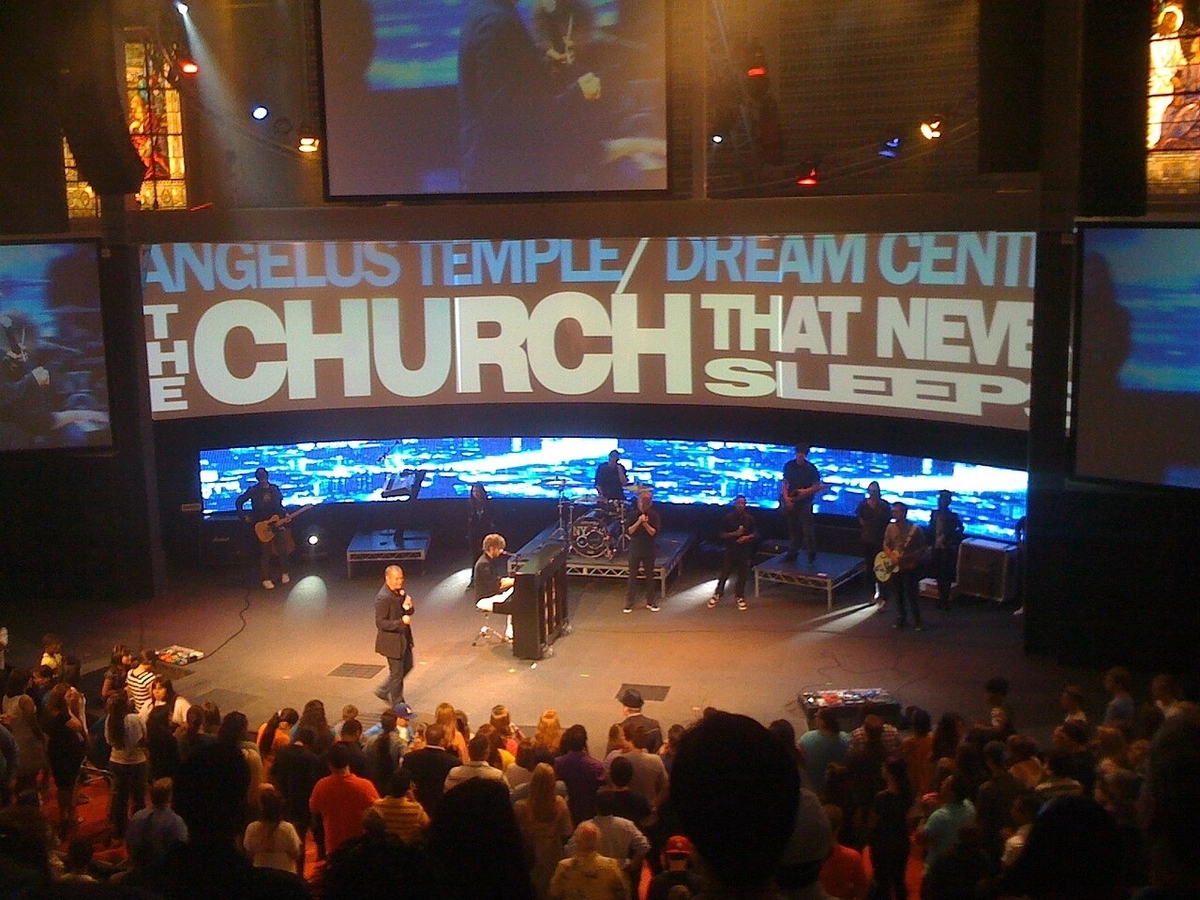
Although this structure may seem inefficient, it allows ideas to spread rapidly. Pastors appear on one another’s livestreams, one leader’s prophecy is aired on another’s Christian TV channel, clips circulate on social media, and activists organize conferences. At the same time, this structure makes the movement difficult to regulate. For example, when a prophecy falsely predicting Trump’s victory spread among believers in 2020, even fellow believers found it impossible to hold the person who made it accountable.
Spiritual warfare and the “Seven Mountains”
Two other concepts shield the religious pronouncements of conservative American evangelicals from factual scrutiny: spiritual warfare and the “Seven Mountains” doctrine.
Spiritual warfare is the belief that events in the visible world reflect a parallel supernatural conflict between angels and demons, a conflict that is thought to extend beyond individual lives to the realm of politics in the form of the struggle for control over cities, governments, the media, universities, and entire countries. Prayer is seen as a “weapon” in this war, one that can be used to bind spiritual forces and reclaim earthly institutions for God. Political opponents are cast as instruments of the demons.
Closely related is the evangelical “Seven Mountains” doctrine, which holds that religious communities are called to transform society actively. Its adherents believe Christians should exert dominant influence over seven key spheres of public life: government, media, education, business, family, religion, and the arts and entertainment.
As early as 2016, Lance Wallnau, an evangelical charismatic preacher who actively promotes the “Seven Mountains” doctrine, was likening Trump to the Persian ruler Cyrus the Great — a pagan king whom The Bible nevertheless describes as God’s anointed, chosen to allow the Jews to return to Jerusalem. This comparison enabled Wallnau to explain to his religious audience why Trump’s moral and behavioral shortcomings — including the sexual assault and harassment allegations pursued in lawsuits against him — could be overlooked on election day. Under such circumstances, the president’s moral character is irrelevant, since he has a special mission to rescue believers from what adherents portray as the captivity imposed by secular liberalism, feminism, LGBTQ rights, immigration, and an allegedly anti-Christian government.
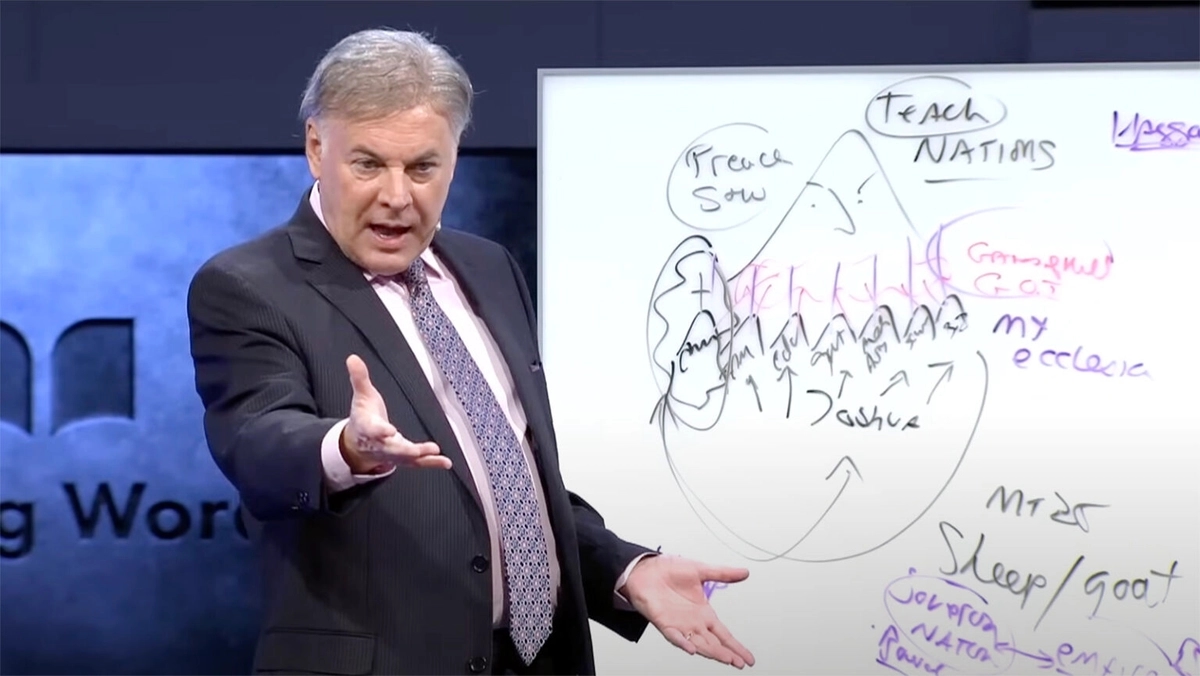
Rituals such as the blessing of Trump for the war against Iran reinforce this idea, and prophecies strengthen the narrative further, allowing Trump's failures to be framed merely as inevitable setbacks in the battle between good and evil. Some televangelists, for example, have portrayed the legal cases against Trump in precisely these terms.
From the Bible to a political weapon
The alliance between conservative Christianity and Trumpism rests not only on organizational structures and money but also on a shared understanding of what has gone wrong with America. For the past decade, vendors at Trump rallies have regularly sold caps bearing slogans such as “God, Guns and Trump” and “Jesus Is My Savior, Trump Is My President.”
One key concept unites the political vocabulary of Trump supporters and evangelicals who embrace Christian nationalism: “family values.” Using this phrase does not mean that a politician must lead an exemplary Christian family life himself (provided that he is “chosen by God”). Rather, he is expected to defend a particular social order: restrictions on abortion, the exclusive recognition of heterosexual marriage, the promotion of traditional gender roles, the rejection of transgender people, and the protection of the nation from “outsiders.”
The concept of “family values” is not a biblical doctrine but a political construct that emerged in the United States in the 1960s and 1970s at a time of sweeping social change that included desegregation, the civil rights movement, the spread of feminism, the legalization of abortion, LGBTQ activism, the sexual revolution, and the ending of mandatory prayer in public institutions such as schools. There is no consensus on what drove the rise of evangelical conservatism during this period, as even abortion, which later became a key mobilizing issue for televangelists, initially failed to unite movement leaders. One theory identifies federal efforts to revoke tax exemptions from Christian schools that practiced racial segregation as a catalyst for mobilization.
Still, different factors likely influenced different congregations. Conflicts over race, gender, sexuality, and education, along with disputes over the limits of federal authority, gradually coalesced into a unified concept of “family protection.” This religious and political language proved highly effective because it translated broad political developments into personal, even intimate, fears. Feminism was portrayed not as a struggle for women’s equality but as a threat to paternal authority. Gay rights was depicted as a threat to children. Abortion was equated with the killing of innocent newborns. And sex education was characterized as state interference in the relationship between parents and children.
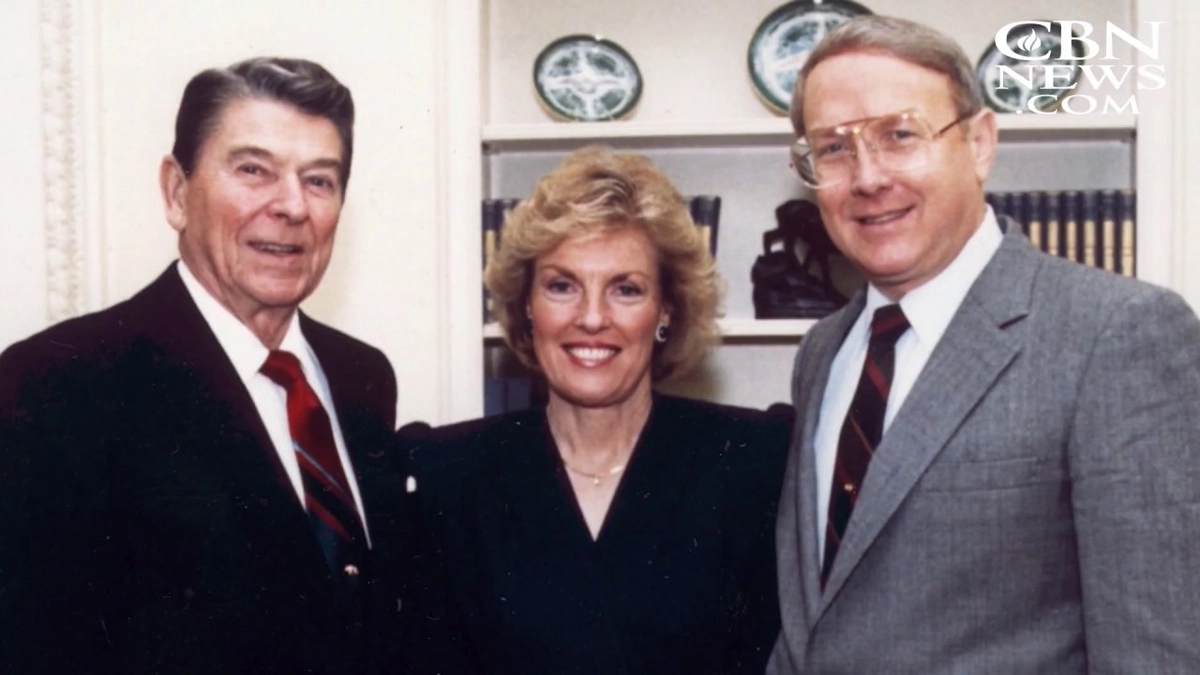
One of the most influential figures in shaping the Christian conservative right was not a pastor but a psychologist — James Dobson, whose television program Focus on the Family blamed the nation’s decline on liberal approaches to child-rearing and changing gender roles. His show was one of the earliest examples of the fusion of Republican politics and Christian conservatism. As The Washington Post noted, Dobson portrayed women working outside the home, contraception, cohabitation, abortion, and same-sex marriage as elements of a single “moral catastrophe.”
This was not just an ideology; it was a commercially successful enterprise. By 2005, Focus on the Family had annual revenues approaching $140 million. In Dobson’s hands, “family values” became a theology, a media product, and an electoral identity for the Republican Party.
Evangelicals’ decision to back Trump as a defender of “family values” paid off during his first term in office. In 2016, Trump pledged to appoint Supreme Court justices who would overturn Roe v. Wade, the ruling that established the legal basis for abortion rights nationwide. Ultimately, the three justices appointed by Trump gave conservatives a majority on the Court that in 2022 voted to end what had been a nationwide constitutional right to abortion. The issue was thereby returned to the states, and authorities in the most conservative jurisdictions acted immediately. When Trump was asked whether he deserved credit, he replied: “God made the decision!”
When Trump was asked whether he deserved credit for ending nationwide abortion rights, he replied: “God made the decision!”
It is hardly surprising that evangelicals backed Trump in subsequent election campaigns as well, and his particular vision of “family values” continues to shape policy in his second term. On his first day back in office, Trump ordered the federal government to recognize only two biological sexes, and he has continued seeking to restrict transgender rights and to cut funding for school sex education programs.
Evangelical financial empires
U.S. law bars tax-exempt churches from officially endorsing political candidates. However, evangelicalism’s decentralized infrastructure of independent nonprofits, committees, and activist groups allows political activities to continue through other channels.
During the 2024 election cycle, for example, Ralph Reed’s Faith and Freedom Coalition (whose leader also prayed for God to grant victory in Trump’s war against Iran) spent tens of millions of dollars mobilizing voters for Trump. The coalition links conservative evangelicals and Catholic voters with the Republican Party. Its leaders later said that, with an operating budget of $60 million, the organization had worked through 13,000 churches, while activists had visited around 10 million households. Ahead of Election Day, the coalition planned to reach 17 million to 18 million voters in key battleground states.
A permanent religious infrastructure can build databases over many years and cultivate close ties with believers. Charlie Kirk’s organization, Turning Point, built a similar bridge between religion and politics through its TPUSA Faith initiative. As The Guardian reported, at a 2024 summit for pastors, Kirk repeatedly urged clergy to act as Trump’s unofficial surrogates and send congregants door-to-door canvassing in battleground states. Through a dedicated online portal, he supplied pastors with ready-made sermon outlines, graphics, and other campaign materials.
There is another dimension to MAGA evangelicalism: behind the churches stands an influential circle of major donors. One example is Ziklag, an exclusive network funded by wealthy Christian families, including the owners of corporate giants such as Hobby Lobby and Uline. Documents obtained by the investigative outlets ProPublica and Documented revealed in 2024 that the network planned to spend about $12 million mobilizing Republican-leaning voters and challenging the voter registrations of more than one million people in battleground states.
That year, Ziklag also allocated $700,000 to fund evangelical preacher Lance Wallnau’s “Courage Tour.” Wallnau is the same preacher who calls Donald Trump “God’s anointed” and actively promotes the “Seven Mountains” doctrine, which Ziklag also supports. At one stop in Pennsylvania, an official campaign event featuring JD Vance was literally sandwiched between religious sessions — the screen behind the stage literally switched back and forth between the tour’s religious logo and the Trump–Vance campaign logo.
Beyond Ziklag, individual billionaires have built entire local networks of their own. The close relationship between evangelicalism and wealth has deep historical roots in the United States, and researchers have studied the ties between evangelical Christianity and the oil industry in the South. In Texas, for example, billionaire oilmen such as Tim Dunn and Farris Wilks are also lay preachers who fund a vast array of political action committees, think tanks, media outlets, and nonprofits in the state, helping mobilize Republican candidates and voters.
According to a ProPublica investigation, Dunn and his wife have donated more than $29 million to Texas candidates since 2000, while Wilks and his wife have contributed another $16 million. Dunn has since expanded his influence nationally, donating $5 million to Trump’s 2024 presidential campaign.
The final stage of this process would be to channel the movement’s resources into staffing the government and shaping public policy. The clearest example is The Heritage Foundation's Project 2025, which saw a coalition of secular conservative and ultrareligious organizations jointly develop an extensive database of potential appointees and a training program to prepare them for government work. Televangelist Paula White, for example, entered government through a similar process.
Beyond the United States
American right-wing conservative evangelicals are part of a broader transnational movement. While ideologically similar movements can differ considerably, their political methods are similar: charismatic leaders and pastors present politics as a holy war; church and media networks spread fake news and political prophecies; and authoritarian leaders promise to defend conservative believers in exchange for votes. The danger to democracy lies not in the spread of evangelicalism itself, but in the capacity of right-wing groups to exploit these communities’ exceptionally dense social networks to portray particular political forces as instruments of God and their electoral defeat as a victory for evil in a spiritual war.
Brazil offers the clearest example of the right using this model outside the United States. According to the country's 2022 census, 47.4 million Brazilians identified as evangelicals – about 26.9% of the population, a proportion comparable to that in the United States. Many belong to Pentecostal and charismatic churches whose congregations often provide social assistance, including support for people with drug addictions, and serve as social institutions in some areas, particularly where the state has a limited presence. Prominent pastors in these communities wield considerable authority that extends well beyond ordinary worship services.
According to the 2022 census, 47.4 million Brazilians identified as evangelicals – about 26.9% of the population.
Former Brazilian President Jair Bolsonaro capitalized on this support. In July and August 2022, religious events accounted for 40% of his public appearances outside the capital, according to Reuters. Opinion polls put his support among evangelicals at over 60%.
Meanwhile, pastors and religious influencers stoked fears, prophesying that Bolsonaro’s opponent, Luiz Inácio Lula da Silva, would close all churches, persecute Christians, and promote satanic forces. The Universal Church of the Kingdom of God (Igreja Universal do Reino de Deus, or IURD), a Brazilian evangelical denomination, even issued a manifesto declaring that it was impossible to be both a Christian and a leftist.
Lula is in fact a Catholic and repeatedly denied claims that he planned to close churches. However, Bolsonaro’s supporters were no longer open to persuasion, and they deemed his defeat illegitimate. On Jan. 8, 2023, thousands of Bolsonaro supporters stormed the buildings housing Congress, the presidential palace, and the Supreme Court. Some sang psalms as they smashed windows and destroyed furniture. Bibles were conspicuously displayed inside the occupied buildings, and some reports said pastors were among the attackers.
The violence echoed the January 6, 2021, attack on the U.S. Capitol, and even the circumstances were similar: a candidate backed by the Christian right had lost, and his supporters declared the election illegitimate. In the United States, too, numerous right-wing evangelicals were among the Trump supporters who participated in the Capitol attack.
A similar blend of Trump-supporting Christian nationalist evangelicals can be found in an unlikely place: South Korea. After President Yoon Suk Yeol declared martial law in December 2024 (and was subsequently impeached), radical Protestant pastors immediately cast the proceedings as a holy war against communists and the “forces of evil.” The religious organization Save Korea drew more than 50,000 people to one such rally, where believers carried signs echoing the Trumpist slogan “Stop the Steal.” Later, Yoon’s supporters stormed a courthouse in Seoul, while a prominent evangelical preacher threatened to “grind the judges to dust” if they removed the president from office.
Reuters documented in detail how prayer rallies, far-right YouTube channels, and ruling-party politicians amplified one another’s rhetoric, despite a complete lack of evidence for their claims of election fraud. Although South Korea’s Constitutional Court ultimately upheld Yoon’s removal from office, the episode showed how quickly American-style political rhetoric and tactics can be adapted to a very different Christian tradition and national context.
Ideas travel alongside tactics and funding. An investigation by the independent media platform OpenDemocracy found that, since 2007, 28 predominantly Christian U.S. organizations had spent more than $280 million abroad, including nearly $90 million in Europe. Legal and religious groups linked to Trump intervened in court cases involving abortion and LGBTQ rights in Austria, Italy, Poland, France, and at the European Court of Human Rights.
Influence, however, flows both ways. Hungary under Viktor Orbán, Brazil under Bolsonaro, and other experiments in building “illiberal democracies” have, in turn, supplied American and European conservatives with ready-made models for controlling courts, the media, education, and civil society while formally preserving electoral processes. These movements threaten democracies worldwide, as they change the very nature of political competition. When politics is framed as a supernatural battle between good and evil, compromise becomes apostasy and violence can easily be justified as “spiritual warfare.” The result is the gradual erosion of democracy from within, as pluralism, government accountability, and the respect for the a peaceful transfer of power are weakened.