The Roman Catholic Church, having absorbed many anti-imperialist ideas, is increasingly taking on the role of a defender of the interests of the Global South. Pope Leo XIV’s open criticism of American militarism illustrates the long-standing dispute between the Holy See and Western capitals. The quarrel between Donald Trump and the pope has already become a factor in U.S. domestic politics, and one of the beneficiaries of the pacifism of the Holy See could be authoritarian regimes such as Iran.
Traditions of pacifism
Pope Leo XIV has creatively developed the tradition of his predecessor: like the Argentine-born Pope Francis who preceded him, Chicago native Leo XIV also speaks out actively on political issues. Moreover, he does so more frequently and more sharply than Pope Francis.
During the Easter prayer vigil for peace, the pontiff called for people to “sit at the table of dialogue and mediation, not at the table where rearmament is planned and deadly actions are decided!”
“Enough of the display of power! Enough of war! True strength,” the pontiff said, “is shown in serving life.” He also condemned the use of religious imagery to justify war, thereby indirectly rebuking Pete Hegseth, the United States Secretary of Defense, who has said that America and Israel’s struggle with Iran is a sacred war of Christians against Islamists.
Leo XIV also did not miss the opportunity to recall that, in 2003, the Holy See under Pope John Paul II condemned the American invasion of Iraq. However, he chose not to remind readers that Pope Francis had also consistently criticized the United States — likely because that fact remains so fresh in the public memory that it does not bear repeating.
Donald Trump predictably saw Leo XIV’s remarks as a reproach directed at him. The president of the United States is a self-absorbed egocentric, prone to lashing out at anyone who fails to please him, and unsurprisingly, he lashed out at the American-born pope, calling him “terrible” on foreign policy and “weak” on fighting crime — apparently a reference to the pontiff’s statements in defense of migrants.
An American pope
The clash between the first American pope and his “own” president has, unsurprisingly, sparked a flood of commentary in the United States. “Only a mad politician would quarrel with the pontiff,” one American acquaintance of mine, a longtime donor to the Republican Party, remarked. “We have millions of Catholic voters. They love the pope simply because he’s from Chicago. Why spit in their faces on the eve of the November midterm elections to the U.S. Congress?”
The question is far from rhetorical. By various estimates, the number of Catholics in America ranges from 57 million to 73 million. This is not only the largest Christian denomination in the country, but the largest religious group in the country.
Since the late 19th century, Catholics have typically voted for the Democratic Party. In recent decades, however, they are increasingly casting their ballots for Republicans. The main reason is that Democrats — especially in the eyes of the more traditional segment of believers — increasingly come off as a party of aggressive secularism, if not atheism, hostile to any religion, and especially to Christianity.
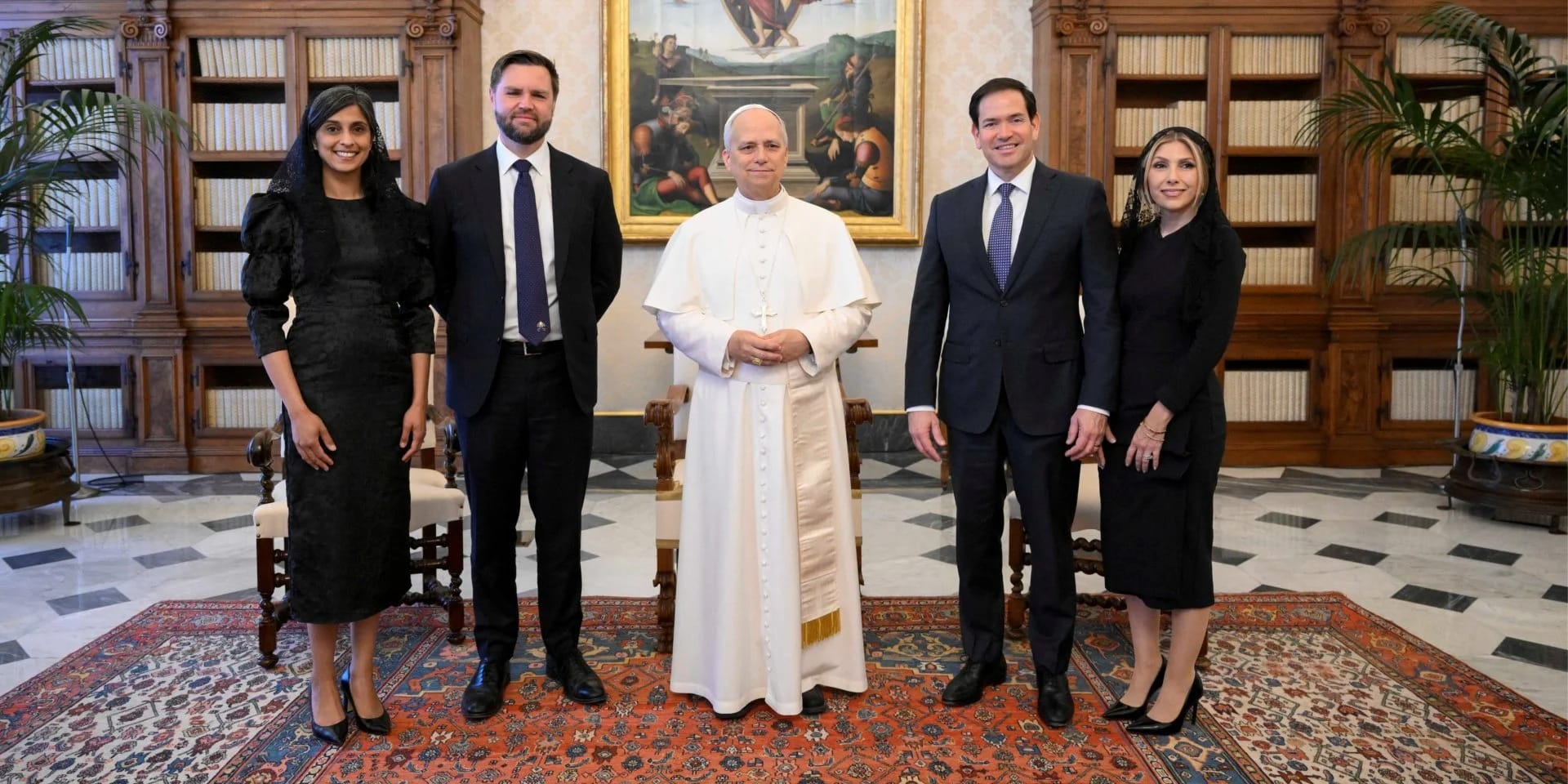
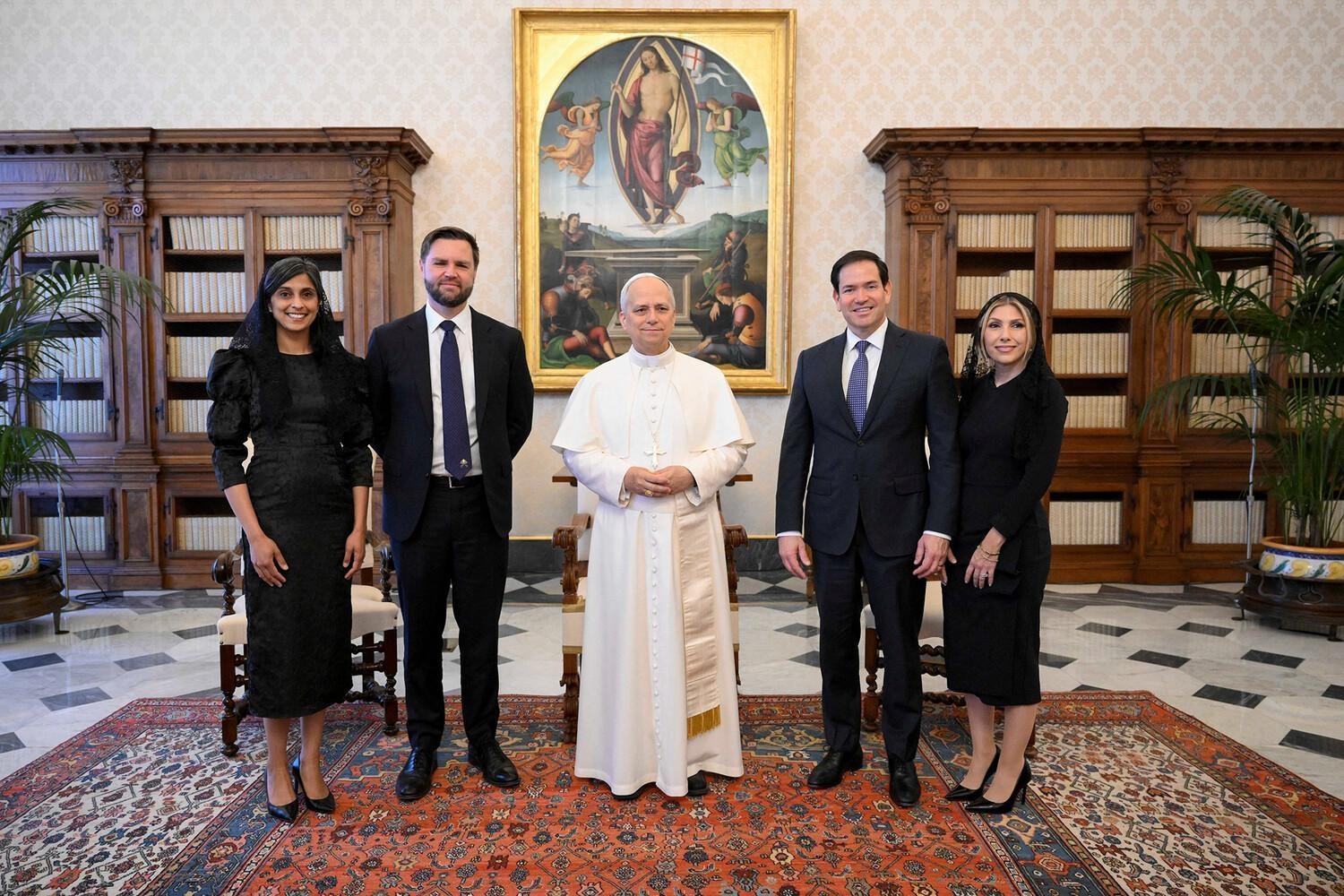
According to polls, this view is particularly common among white Catholics. Among Latino (or “Hispanic”) Catholics, there are more supporters of the Democrats, but even among them Republican influence is growing. In the 2024 election, Catholic voters played a significant role in Donald Trump’s victory. That is precisely why his remarks have alarmed many within the party — including Vice President J. D. Vance, who converted to Catholicism in 2019.
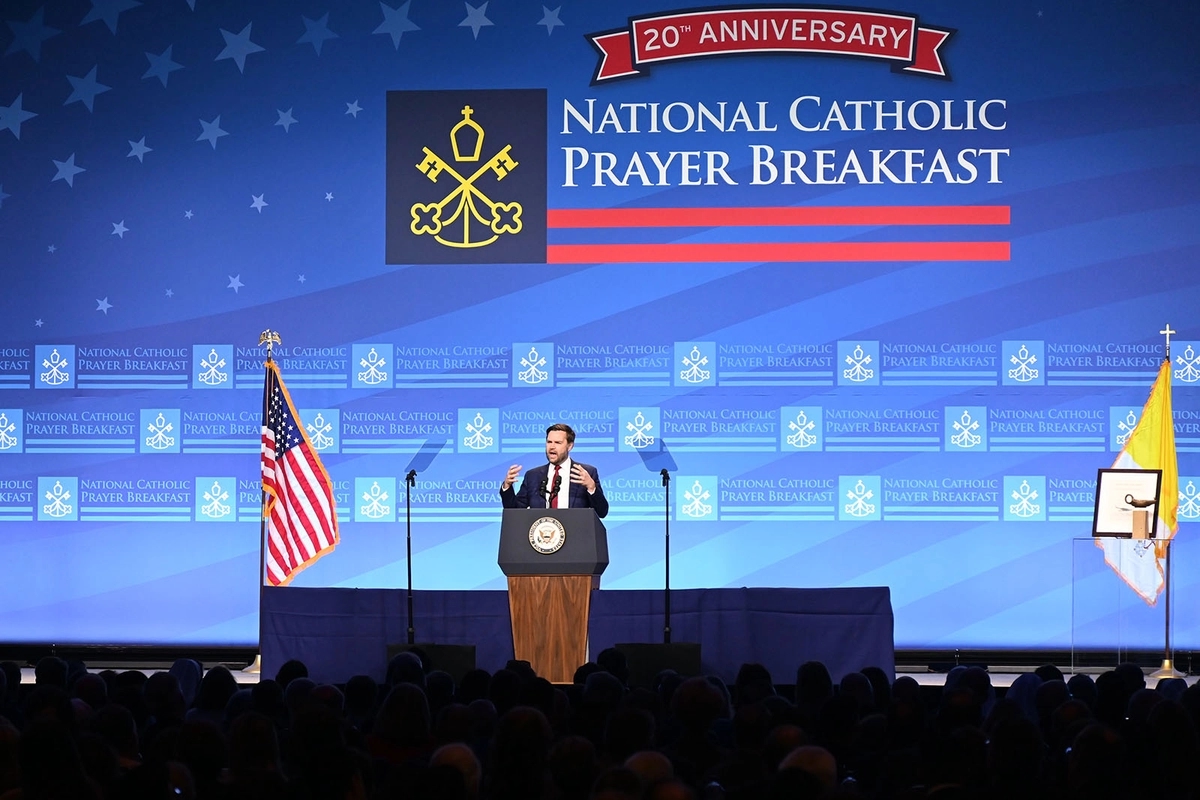
At first, Vance urged the pontiff to focus on moral issues and leave politics to the professionals. However, he soon softened his remarks. Many saw this not only as a form of apology, but even as a public distancing from Donald Trump.
Vance himself, along with many American analysts, considers himself the leading candidate for the Republican presidential nomination in 2028. For him, as a Catholic (and moreover, a convert), the support of his own community is almost an essential condition for a successful presidential campaign — especially since another potential candidate, current Secretary of State Marco Rubio, is also a traditional Catholic.
Interestingly, Pope Leo XIV likewise sought to smooth over the impression left by the spat with Trump, saying that his speech about tyrants had been written two weeks before Trump’s attacks and had no direct connection to them. The explanation is not especially convincing, but the attempt to avoid escalating the conflict is evident.
The sparring between the pontiff and the president is a clear illustration of the long-standing ideological confrontation between the Holy See and the United States. Today, the Roman Catholic Church is, above all, a church of the Global South, rather than the Global West, which has to a significant extent lost the Christian faith.
Church of the Global South
There are now 1.4 billion Catholics worldwide, meaning they make up nearly 18% of the global population. The majority live in South and Central America, but Africa is rapidly catching up: it is now home to one-fifth of all Catholics. Asia, especially India and South Korea, is also a region of growth for the Roman Catholic Church.
Hundreds of thousands of priests and bishops come from these regions, often from poor families. For many of them, the seminary was virtually their only opportunity to receive an education. Those who continue their studies at non-church universities — in departments of sociology, anthropology, and history — often fall under the influence of professors who are adherents of the Frankfurt School, or simply Marxists. For these professors, the world is divided into the oppressed (Muslims, along with the indigenous peoples of the Americas, Asia, and Africa) and the oppressors (the United States and Europe). Christianity, in their view, is the religion of colonizers and slave traders, imposed on Africans or the Maya. In their interpretation, the Catholic Church must now repent and seek to compensate the Global South for past sins.
Liberation theology, which emerged in Latin America in the second half of the 20th century, offered a radical example of a synthesis between Marxism and Christianity, calling for a kind of evangelical mission of social assistance to the poor. Despite repeated criticism — and even bans from the hierarchy of the Roman Catholic Church — liberation theology remains a widespread phenomenon, especially in Spanish-speaking countries.
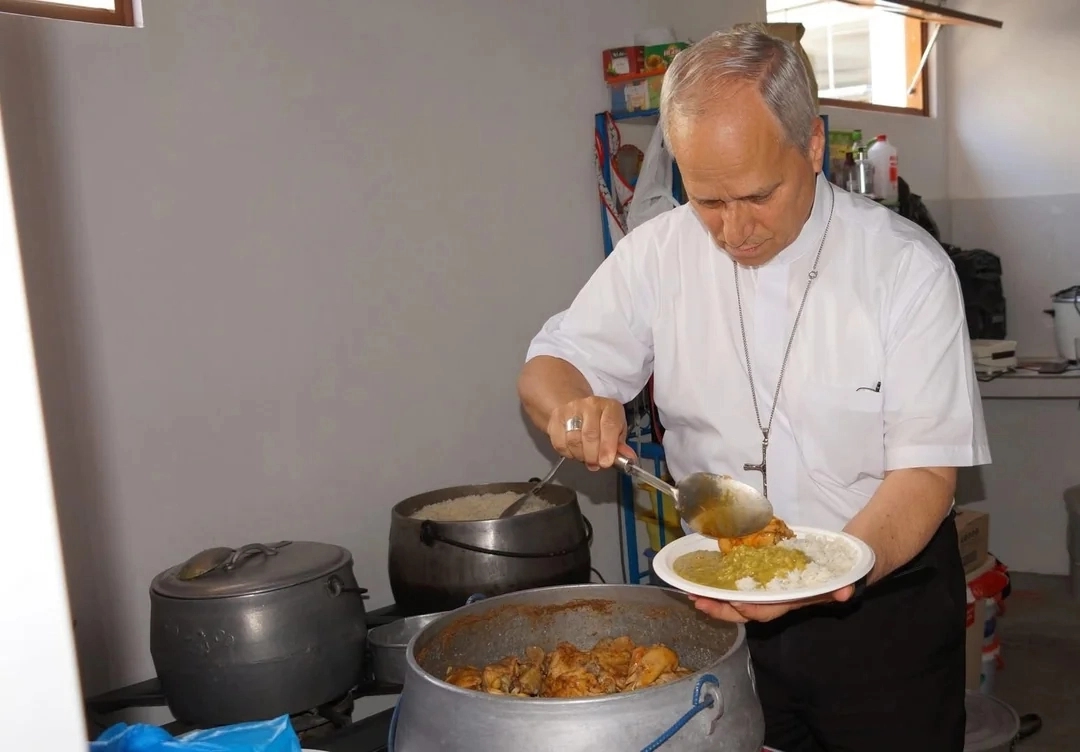
For a significant portion of the rank-and-file Catholic clergy, along with the Church’s upper hierarchy, the United States is an imperial power that dispenses justice and punishment at will against the “undesirable” states of the Global South. Americans and their allies, according to this view, must be constantly checked and restrained through an abstractly understood framework of international law. In this picture of the world, Washington is almost always wrong, while America’s opponents deserve, if not support, then at least an attempt to understand their position.
Pope Leo XIV has undoubtedly been influenced by such ideas. He is a U.S. citizen, yet he spent twenty years serving in the Peruvian province of Lambayeque, where 30% of the population lives below the poverty line. He even obtained a Peruvian passport.
Judging by some of the pontiff’s statements, in his worldview a U.S. strike on Iran is unequivocally wrong, “selfish” Europeans are unwilling to admit migrants, and Islam is something that should either be spoken of positively or not discussed at all.
Pacifism or support for authoritarian regimes?
Here a paradox is evident. Most of America’s conflicts over the past fifty years have been with dictatorial regimes — communist ones (such as North Vietnam or Cuba), Islamist ones (the Taliban and Iran today), and outright dictatorships (Iraq under Saddam Hussein, Venezuela under Nicolás Maduro). Each time, calls from the Holy See for peace and adherence to international law have, in practice, worked in favor of authoritarian regimes, prolonging their existence.
Today, aggression is increasingly not about crossing a state border with armored and infantry units, but about conducting drone warfare, carrying out acts of terrorism, waging cyberattacks, and making use of proxy organizations.
The example of Iran is particularly illustrative. On the one hand, the recent attack by the United States and Israel did indeed formally violate international law. On the other, the effective transformation of Lebanon into an Iranian semi-colony through the Tehran-backed Hezbollah is itself a form of aggression, as is the creation in Yemen of an international base for Islamist terrorism via cooperation with the Houthis.
For some reason, Pope Leo XIV chose Lebanon as an example of a state where Muslims and Christians coexist peacefully. Yet a few short decades ago the country was devastated by the Lebanese Civil War. By various estimates, it claimed between 120,000 and 170,000 lives and led to the emigration of many thousands of Maronite Catholics, who in the 1940s had helped establish Lebanon as an independent state. The Iranian regime played an active role in that war, supporting the Shiite group Hezbollah, just as it backs the Sunni Hamas movement in the Gaza Strip. The Holy See condemns Iran for the public executions of regime opponents (as Pope Francis had done), yet Leo XIV is calling for peace precisely at a moment when the Islamist dictatorship in Tehran is facing the most difficult period in its nearly half-century of existence.
The idea that the pope is, in a sense, a “pacifist by office” is broadly correct. But there are exceptions. In Catholic philosophy, there is a concept of the “just war.” At the same time, the final judgment on whether a given war is just depends on specific circumstances. Unlike Pope Francis, who was unable or unwilling to speak unequivocally about Russia’s aggression against Ukraine, the current pontiff, to his credit, has clearly described the Kremlin’s actions as imperialist.
The idea that the pope is, in a sense, a “pacifist by office” is, on the whole, correct.
However, it seems that when it comes to the situation surrounding Iran, he could have adopted a more nuanced approach, proceeding from the assumption that the Iranian regime cannot be influenced by any means other than military force.
The pontificate of Pope Leo XIV has only just begun. Will the Catholic Church’s approach to the Global West soften under the “Chicago pope”? That cannot be ruled out — he is vigorous, intellectual, and energetic. In 2029, Donald Trump will leave the White House, while Europe and the United States, with all their shortcomings and problems, will remain the planet’s principal defenders of democracy, and thus of peace.