Israel's Oct. 27 Knesset election will feature 38 electoral lists to choose from set against the background of an ongoing war with Iran in a nation on the brink of civil strife. Most of all, however, the vote will be a referendum on Prime Minister Benjamin Netanyahu. As politicians divvy up parliamentary seats that they have yet to win, polls offer neither the right-wing bloc nor the opposition “camp of change” an easy path to victory. In Israel’s convoluted electoral system, the outcome will depend not only on the top parties’ popularity, but also on the willingness of radical, Arab, and ultra-Orthodox groups to compromise when the politicking moves to the coalition-forming stage.
Echoes of the war
Israel's upcoming election will be the first since the series of wars that followed the massacre carried out by the Hamas terrorist group on October 7, 2023. Despite ceasefires in Gaza and Lebanon and the end of active hostilities with Iran, the war is not over for Israel. IDF soldiers remain in Gaza and Lebanon, the military remains on heightened alert over Iran, and tensions remain high in Judea and Samaria (the West Bank). Netanyahu’s promised “total victory” (at least over Hamas and Lebanon’s Hezbollah) has not been achieved, even if both groups have suffered heavy losses.
Against this backdrop, one of the key questions ahead of the election is whether Benjamin Netanyahu can remain in power after the security failure that led to the October 7 tragedy. The campaign has raised questions about the responsibility of the political leadership and security agencies for the Hamas attack, the military’s condition and readiness, the aims and results of the recent wave of wars, and the issue of extending mandatory military service to students at ultra-Orthodox yeshivas.
Netanyahu argues that the army and intelligence chiefs failed to warn him of the impending attack, instead portraying Hamas as a contained force. At the same time, the prime minister says he should be judged by the results of the subsequent wars, which led to the elimination of much of the leadership of Hamas and Hezbollah, the killing of Iran’s top military commanders, and strikes against Iran’s nuclear program.
Netanyahu's main rivals – Gadi Eisenkot, Naftali Bennett, Avigdor Lieberman, and Yair Golan – hold the government politically responsible for the catastrophe and are calling for a state commission of inquiry into the events before, during, and after October 7. They also accuse Netanyahu’s government of damaging Israel’s international standing and weakening its support in the West, including in the United States.
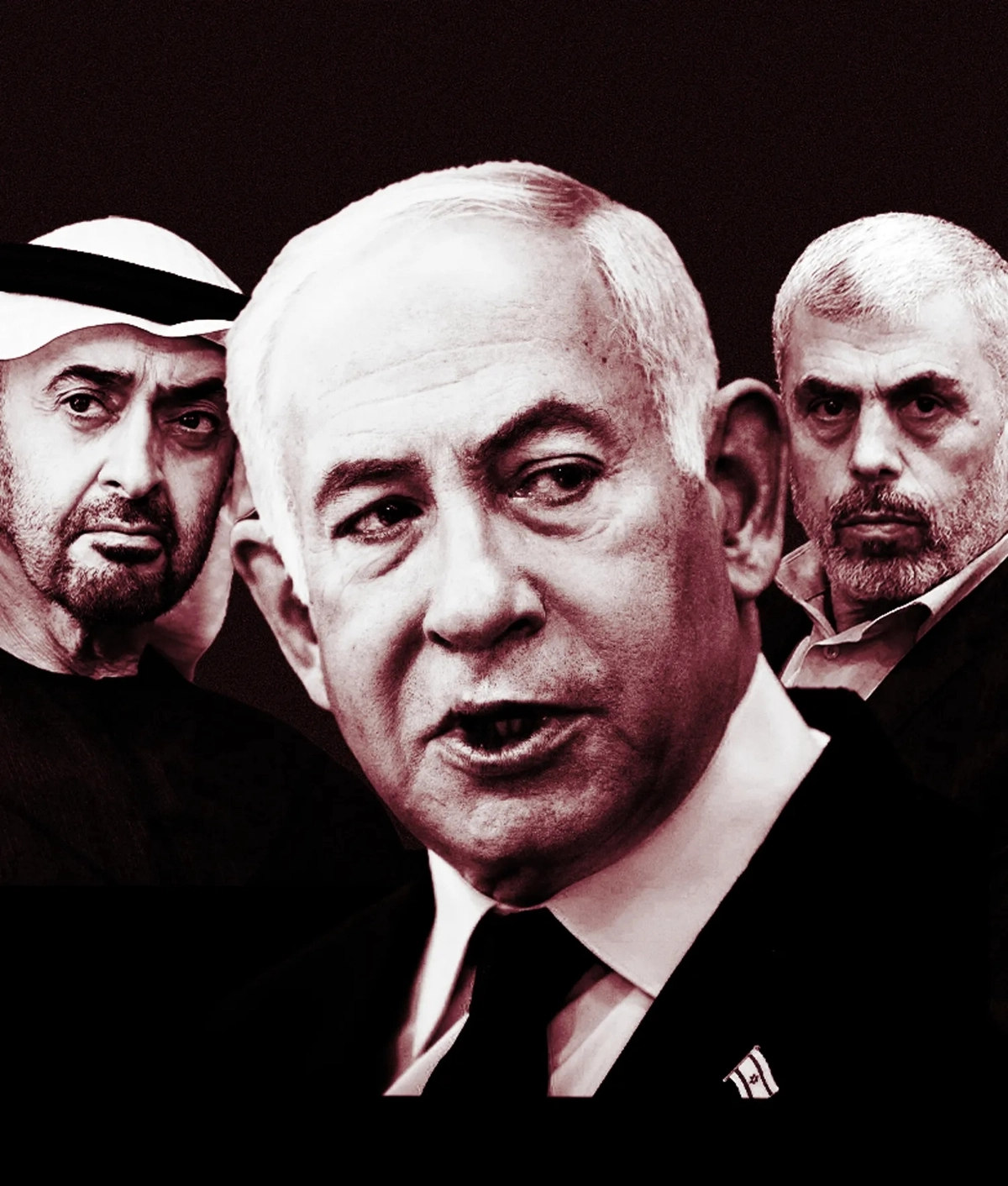
Still, the issue of October 7 stands out. Haaretz recently reported that roughly 10 days before the Hamas attacks, UAE President Mohammed bin Zayed had warned Netanyahu of a major attack being planned by Yahya Sinwar, who was then leading Hamas in Gaza. According to the newspaper, however, the prime minister did not pass the information on to the heads of the security agencies. Netanyahu’s office called the report “an absolute lie,” saying no such conversation ever took place. Eisenkot, Bennett, Lieberman, and Golan issued a joint statement demanding an immediate and comprehensive investigation and promising to establish a state commission under the next government. Bennett himself said that he knew Netanyahu had received the warning. The following day, the prime minister instructed his lawyers to prepare a lawsuit against the newspaper and the authors of the report.
The events of October 7 feature not only in politicians’ statements but have also shaped electoral lists of major parties, virtually all of which include veterans of the recent wars, relatives of those killed or taken hostage, and activists from organizations that emerged after the Hamas attack. Just hours before registration closed, Netanyahu announced that Talik Gvili, the mother of police officer Ran Gvili — who was killed fighting terrorists on the morning of October 7, and whose body was then taken to Gaza — would join the Likud list, taking ninth place. Reservist Elisha Medan, who lost both legs fighting in the Gaza Strip, took 15th place, while attorney Itzik Buncel, the father of soldier Amit Buncel, who was killed in Gaza in December 2023, took 29th.
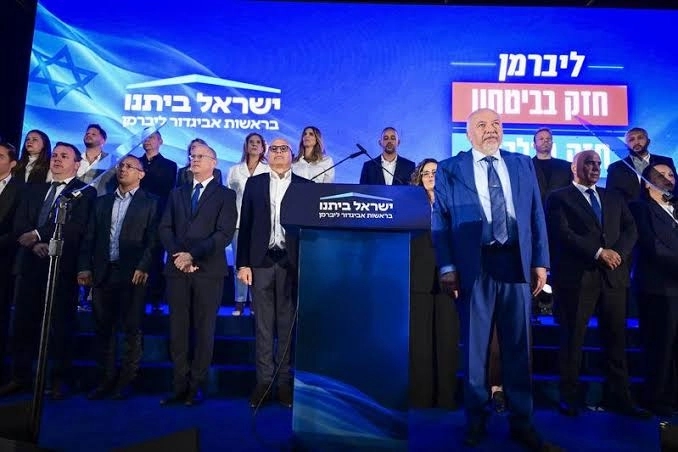
Avigdor Lieberman, leader of the Yisrael Beiteinu (Israel Our Home) party, gave second place on his party's list to Rafi Ben-Shitrit, the former mayor of Beit She’an. His son Elroy was also killed on October 7.
Ben-Shitrit is one of the founders of the October Council, which brings together families of those killed or taken hostage, survivors of the attack, and reservists. The organization is campaigning for a state commission of inquiry into the events of October 7. In August 2026, it published a report on the persistence among the political leadership and security establishment of the belief that Hamas could be contained.
Sharon Sharabi took sixth place on the Yisrael Beiteinu list. His brother Yossi was taken hostage from Kibbutz Be’eri on October 7 and died in captivity, while another brother, Eli, was released after 491 days in Gaza. Sharon Sharabi became one of the most prominent figures in the campaign to free the hostages.
The events of October 7 have also become part of the political biographies of leaders of several parties. On the morning of October 7, Yair Golan, a reserve major general and leader of the left-wing Democrats party, went south on his own initiative, evacuating people from the fighting. Ofer Winter, a reserve brigadier general and leader of the right-wing Amha Israel party, likewise made his own way to the Gaza border, joined soldiers near Kibbutz Be’eri, and took part in the fighting.
The Reservists party, which submitted a joint list with Yaron Zelicha’s Economic Party, is led by reserve Lt. Col. Yoaz Hendel. After the war began, he returned to active duty and fought in the Gaza Strip, later forming and commanding the Be’eri reserve battalion. Reservist Shlomi Demari, who lost his brother on October 7, took seventh place on the joint list.
On the “Together” (Beyahad) joint list of Bennett and Lapid, sixth place went to reserve Major General Noam Tibon, who on the morning of October 7 traveled south from Tel Aviv, helping Nova festival survivors and wounded soldiers along the way. He took part in the fighting before reaching Nahal Oz, where he evacuated his son, daughter-in-law, and two granddaughters from a besieged home.
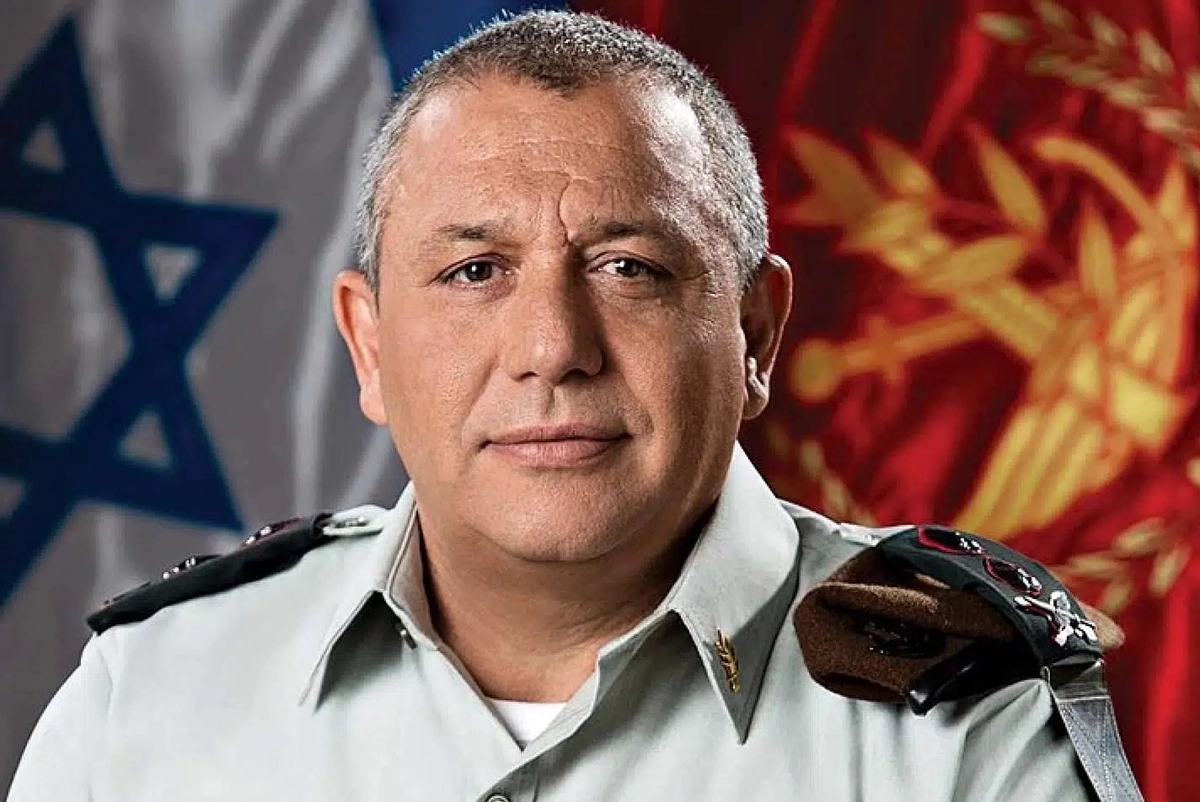
Netanyahu’s main rival in the race for prime minister is Yashar leader Gadi Eisenkot, a reserve lieutenant general and former IDF chief of staff. During the war, he lost his son Gal and nephew Maor Cohen Eisenkot, who were killed in the Gaza Strip.
Netanyahu’s main rival is Yashar leader Gadi Eisenkot, a reserve lieutenant general and former IDF chief of staff
Even the ultra-Orthodox Shas party, which has consistently opposed mandatory military service for yeshiva students, placed reserve officer Dror Amos sixth on its list.
Other major fault lines in the campaign include judicial reform, the future of the Gaza Strip and Judea and Samaria, and the related question of establishing a Palestinian state. Equally contentious is the debate over Israel’s very character: the balance between its Jewish and democratic identities, the relationship between religion and state, and whether the country needs a constitution. These issues divide not only Netanyahu’s supporters and opponents but also the parties within each camp. Reaching compromise will be difficult. First though, the people will have their say.
How Israel’s elections work
The first poll conducted after the party lists closed and published by the Walla news portal on Sept. 9 shows how heavily the outcome depends on parties that are currently hovering around the electoral threshold of 3.5%. According to the poll, Eisenkot’s Yashar would win 25 seats, Likud 21, the joint Bennett-Lapid list 14, and Lieberman’s Yisrael Beiteinu and Golan’s Democrats nine each. Winter’s Amha Israel, with exactly 3.5% of the vote, would clear the threshold and win four seats, while the joint Hendel-Zelicha list, at 2.8%, would fall short. The parties in the current coalition, together with Winter, would have 51 seats, the Zionist opposition parties 57, and the Arab parties 12. Neither camp would have the 61 seats needed for a majority, although the figures could still shift in either direction as the campaign progresses.
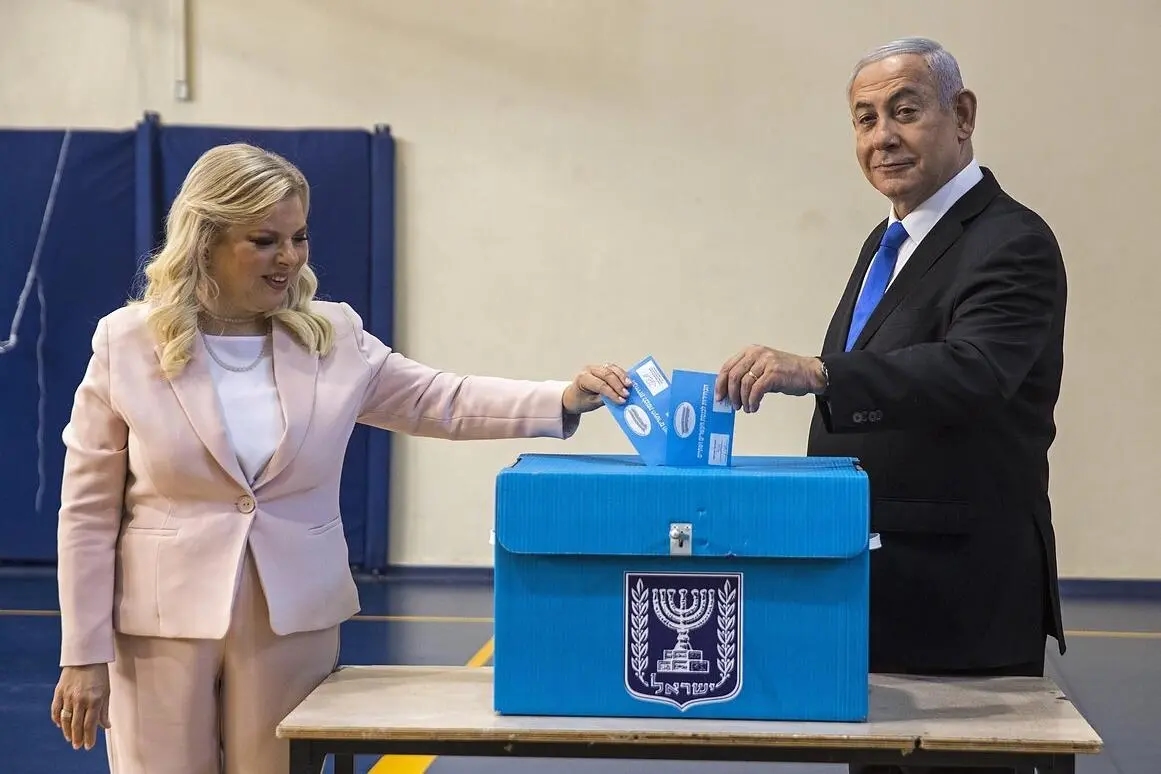
Israel is a single nationwide constituency, with all 120 Knesset seats allocated proportionally among party lists according to the number of votes they receive. Votes cast for lists that do not clear 3.5% are not transferred to any other party but are excluded from the calculations. As a result, the share of seats won by parties that clear the threshold increases, meaning the number of small parties falling just short of the threshold can change the balance of power between the camps.
Israeli voters do not vote for a prime minister but for a party list. After the results are announced, the president consults with all factions that have entered the Knesset, each of which says whom it recommends be tasked with forming a government. The president then gives the mandate to the Knesset member whom he or she believes has the best chance of forming a government capable of winning the body's confidence.
The first candidate is given 28 days, after which the president can extend the period by another 14 days. If the attempt fails, the mandate can be given to another member of Knesset. If all the subsequent options provided by law are exhausted, the Knesset is dissolved and new elections are held – as has happened more than once under Netanyahu. To take office, the incoming prime minister must present the cabinet and its main policy priorities to the Knesset and win a vote of confidence.
The leader of the largest party does not automatically become prime minister. After the 2009 election, for example, Tzipi Livni’s Kadima won 28 seats, while Netanyahu’s Likud won 27. However, most right-wing and religious factions backed Netanyahu, and President Shimon Peres asked him to form the government. Netanyahu assembled a coalition, while Livni, who led the largest faction, remained in the opposition.
Another precedent was set in 2021. After Netanyahu failed to form a government, the mandate was given to Yair Lapid, leader of Yesh Atid. Lapid assembled a coalition of eight parties, ranging from the right-wing Yamina to the left-wing Labor and Meretz and even including the Islamist Ra’am, and he agreed with Yamina leader Naftali Bennett on a rotation arrangement. Bennett became prime minister first, even though his party was one of the smallest in the coalition, with just six seats. The new government won the confidence vote 60 to 59, with one abstention.
The law does not require 61 members to vote in favor of a government for it to be approved. It is enough to receive more votes in favor than against. This makes it possible to form a minority government – a cabinet formed by parties with fewer than 61 seats that relies on the support or abstention of other factions during confidence votes.
Under the numbers recorded in the Walla poll, Netanyahu’s Zionist opponents could theoretically try to form a minority government with the external support or neutrality of the Arab parties. But such a scenario would require the agreement not only of the Arab factions but also of potential coalition partners, and some of those parties refuse to rely on Arab votes. Another possible route would be to redraw the boundaries of the current camps and bring in some parties that had belonged to the opposing bloc before the election.
Netanyahu’s opponents could try to form a minority government with the support or neutrality of Arab parties
Failure to reach an agreement could lead to another election. After the April 2019 vote, Netanyahu was five seats short of a coalition majority. Yisrael Beiteinu party leader Avigdor Lieberman controlled five seats but was unwilling to join a government that planned to concede to the demands of religious parties by amending the law on ultra-Orthodox military service. No compromise was reached, and the Knesset voted to dissolve itself.
After the September 2019 election, neither Netanyahu nor Benny Gantz managed to form a government. A third election was held in March 2020, after which they formed a rotation-based national unity government. It collapsed after the state budget failed to pass, and in March 2021, Israelis went to the polls for a fourth time in less than two years. That cycle ended with the formation of the Bennett-Lapid government.
The threat of another election after the October vote remains, but it is only one possible scenario. The polls are still volatile, and the balance of power could shift in response to both external events and domestic political crises. At the very least, some parties hovering around the electoral threshold may withdraw before election day to prevent votes for their party from being lost to the larger political camp they associate with.
Israel’s political camps
The division of Israeli politics into right and left predates the state itself, emerging within the Yishuv – the Jewish population of Mandatory Palestine and its self-governing institutions. On one side was the socialist Labor Zionist movement, which dominated the leadership of the Yishuv and the of Israel for decades.
Its main political heir was the Labor Party, which later merged with Meretz to form today’s Democrats. On the other was Vladimir Jabotinsky’s Revisionist movement, which advocated a tougher struggle for a Jewish state and laid claim to the entire historic Land of Israel. It gave rise to Menachem Begin’s Herut party, which became the foundation of Likud, established in 1973.
After the 1967 Six-Day War, one of the central issues in Israeli politics became the future of the territories captured during the fighting – the Sinai Peninsula, Gaza Strip, West Bank, East Jerusalem, and Golan Heights. The UN and most countries consider them occupied territories (Sinai was returned to Egypt under a peace treaty).
Broadly speaking, the right favored maintaining Israeli control over the territories and expanding Jewish settlements, while the left supported territorial compromise in exchange for peace. But the divide was never absolute. It was right-wing Prime Minister Menachem Begin who agreed to return the entire Sinai to Egypt under the 1979 peace treaty, while Ariel Sharon’s government carried out a unilateral disengagement in 2005, withdrawing Israeli forces and dismantling all Jewish settlements in the Gaza Strip and four settlements in the northern West Bank.
After Israel and the Palestine Liberation Organization signed the Oslo Accords in the 1990s, the Palestinian Authority was established and granted limited self-government in the Gaza Strip and parts of the West Bank. The political divide increasingly focused on whether to establish or prevent a Palestinian state, its possible borders, the status of Jerusalem, the fate of the settlements, and the risks of transferring territory to Palestinian control.
Religion and state became another major political divide. In Israel, “liberal” does not neatly correspond either to the right-left divide over the Palestinian issue or to economic liberalism. The left-wing Democrats, centrist parties, and some secular right-wing politicians describe themselves as liberal, and they are united by support for individual and civil liberties, civil marriage, the operation of public transportation and businesses on Saturdays, and equal obligations to the state. Thus Avigdor Lieberman’s Yisrael Beiteinu, which is right-wing on security and the Palestinian issue, can be closer on religion-state questions to the Democrats and the secular center than to the ultra-Orthodox and religious Zionist parties in the right-wing bloc.
Parties that describe themselves as centrist occupy a space between the traditional camps. They generally seek to combine a tough approach to security with a willingness to compromise politically, and a secular, liberal agenda with a rejection of a left-wing identity. But Israel’s center is not a single ideological movement. At different times, the label has been applied to parties with substantially different platforms, often built around a particular leader or a demand to replace the existing political elite.
Since 2019, another divide has become firmly entrenched in Israeli politics – one between Netanyahu’s supporters and the parties seeking to remove him from power. It overlaps with the traditional right-left divide but does not coincide with it: right-wing politicians Naftali Bennett and Avigdor Lieberman have been among Netanyahu’s opponents, while ultra-Orthodox parties and representatives of the religious Zionist right have remained his staunch allies.
The split emerged alongside Netanyahu’s criminal prosecution. In November 2019, he was indicted on charges of fraud, bribery, and breach of trust. Netanyahu denies the charges and has called the investigations politically motivated.
Israeli law does not require a prime minister to resign automatically after being indicted, and he can remain in office while on trial. By contrast, under Supreme Court rulings, a minister or deputy minister who is not prime minister must step down after being charged with a serious offense. An ordinary Knesset member, however, is likewise not automatically required to give up their seat.
Netanyahu’s opponents have argued that the criminal cases gave him an additional personal incentive to remain prime minister — and to use his power to pursue changes to the judicial and law-enforcement systems. Netanyahu denies this.
His trial began in May 2020. He gave evidence from December 2024 through June 2026. After 98 hearings, his testimony was completed. The defense must now present its other witnesses, after which the sides will move to closing arguments. No verdict has been issued, and Netanyahu retains the presumption of innocence. In June 2026, the judges again recommended that prosecutors drop the bribery charge. The prosecution did not withdraw it, however, and proceedings on the remaining charges continue.
The series of elections from 2019 to 2021 showed that attitudes toward Netanyahu can override the importance of ideological proximity between parties. In 2021, right-wing, centrist, and left-wing parties joined with the Islamist Ra’am to form a coalition whose main common goal was to replace the prime minister.
Attitudes toward Netanyahu can outweigh ideological proximity between parties
Bennett assumed the role first. A former director general of the Yesha Council, he opposed a Palestinian state and supported extending Israeli sovereignty to parts of the occupied territories. Before the election, he pledged neither to make Yair Lapid prime minister under a rotation deal nor to form a government dependent on Ra’am. But he later broke both promises before subsequently insisting that his views on security and the Palestinian issue had not changed and that his decision was driven by the need to end the political crisis.
The judicial overhaul pursued by Netanyahu’s government since 2023 has deepened the divide. Supporters argued that the changes were needed in order to limit the Supreme Court’s influence over decisions by elected authorities. Opponents saw them as an attempt to weaken independent judicial review and the system of checks and balances. The dispute over Netanyahu and his criminal cases was thus joined by a fundamental disagreement over the powers of the government, the Knesset, and the Supreme Court.
In election polls, parties are generally grouped into the Netanyahu bloc, the Zionist parties seeking to replace the government, and the Arab lists, which are counted separately. These are not unified ideological camps but potential coalition groupings. Within each, disagreements persist over the Palestinian issue, the judiciary, the relationship between religion and state, and obligations of military service.
Polls place Netanyahu’s Likud, the ultra-Orthodox Shas and United Torah Judaism parties, Itamar Ben-Gvir's far-right Otzma Yehudit, and the joint Religious Zionism-Zehut list of Bezalel Smotrich and Moshe Feiglin in the Netanyahu bloc. Ofer Winter’s right-wing Amha Israel is also counted as a member, and its leader has said he belongs to the right-wing camp and will recommend only Netanyahu for prime minister. At the same time, Winter has refused to join forces with politicians he holds responsible for the October 7 security failure.
However, this bloc cannot be treated as a ready-made future coalition. The ultra-Orthodox parties have made their participation in government conditional on the passage of a law regulating the status of yeshiva students and allowing many of them to avoid military service. The dispute over the legislation has already triggered a crisis in their relations with Likud. Winter, by contrast, is demanding that before the government is formed a law be passed that, in his words, will “put an end to draft evasion” and require all young Israelis to serve in the military or otherwise contribute to the state. In short, their mutual support for Netanyahu is not enough to resolve the fundamental conflict between the incumbent prime minister's potential post-election coalition partners.
Ahead of the 2022 vote, Netanyahu succeeded in uniting three competing right-wing lists – Religious Zionism, Otzma Yehudit, and Avi Maoz’s Noam – so they could clear the electoral threshold together. This time, it proved impossible to create a single list of Likud’s potential right-wing partners, although Smotrich did reach an agreement with Feiglin. Depending on the poll, the Smotrich-Feiglin and Winter lists either clear the threshold by a narrow margin or fall just short. Maoz’s separate list fails to clear the threshold and therefore also acts to siphon votes from other right-wing parties.
New alliances are no longer possible now that the lists have closed, but individual parties can still withdraw from the race. Netanyahu is therefore likely to continue pressuring parties and candidates hovering around the threshold.
Polls place Eisenkot’s Yashar, the joint Naftali Bennett-Yair Lapid list, Avigdor Lieberman’s Yisrael Beiteinu, and Yair Golan’s Democrats among the Zionist parties opposed to the current government. Eisenkot refers to these four parties as the “camp of change,” but their commitments vary. Bennett and Lieberman have explicitly said they will not join a Netanyahu government. Golan has consistently called for Netanyahu’s removal. And Eisenkot is demanding a change of government and is himself seeking the prime minister’s post, even if he has not made an equally categorical commitment never to join a coalition with Netanyahu.
There are also significant differences within the camp opposed to Netanyahu. Bennett and Lieberman remain unmistakably right-wing on security and the Palestinian issue, while the Democrats represent the left. Yisrael Beiteinu calls for mandatory military or civilian service for all citizens and rules out a government dependent on ultra-Orthodox or Arab parties. Some center-right politicians are unwilling to work with the Democrats. As a result, there is still no agreement on what kind of government Netanyahu’s opponents should form should they be given the opportunity.
Separate from these four parties is Benny Gantz’s Blue and White. After the 2023 Hamas attack, Gantz’s State Camp bloc reached as many as 35 seats in some polls, putting it in contention to become the country’s largest political force. But Eisenkot and other partners subsequently left the bloc, and what remained of Gantz’s party fell well below the electoral threshold. The “camp of change” is therefore urging Gantz to withdraw, fearing that votes cast for him will be wasted. He has so far said he will continue his campaign.
Pollsters usually count the Arab lists – the Hadash-Ta’al-Balad United List and Mansour Abbas’s Ra’am – separately. They could join a coalition, support a government from outside, abstain in the confidence vote, or remain in opposition. Each option depends not only on the Arab parties themselves but also on whether the Zionist factions are willing to accept their support. Ra’am was already part of the Bennett-Lapid coalition in 2021–22, but since October 7, some right-wing parties have ruled out any government dependent on Arab lawmakers.
Outside the two main camps is the joint Reservists-Economic Party list of Yoaz Hendel and Yaron Zelicha – provided it clears the electoral threshold. Hendel says he will not give Netanyahu the votes he needs to form a narrow coalition, but at the same time, he is open to joining a broad government with Netanyahu provided that it is backed by 70–80 members of Zionist parties. He also rules out joining a cabinet dependent on Arab or ultra-Orthodox factions.
Both Netanyahu and his opponents are now calling for a “broad Zionist government,” but there is no agreement on what it should look like. Such a coalition would clearly exclude the Arab and ultra-Orthodox parties, but questions remain. Some are open to serving in a government with Netanyahu, while others would work with Likud only after a change of the party's leader. Some would also refuse to sit in the same government with the Democrats, Otzma Yehudit, and Religious Zionism.
The main contenders
Coalition arithmetic does not answer the campaign’s central question: who will head the next government? In one of the latest polls asking voters who is best suited to serve as prime minister (conducted by the Kantar Institute for the public broadcaster Kan and published on September 6), 38% of respondents chose Eisenkot over Netanyahu, while 35% chose the incumbent. When asked to choose between Netanyahu and Bennett, the incumbent led 37% to 32%, while in a head-to-head matchup between Eisenkot and Bennett, the former IDF chief of staff led 36% to 17%. The results vary depending on the pair presented, but at the time of the poll, Eisenkot was the only candidate ahead of Netanyahu in a head-to-head comparison.
Benjamin Netanyahu: Likud’s indispensable leader
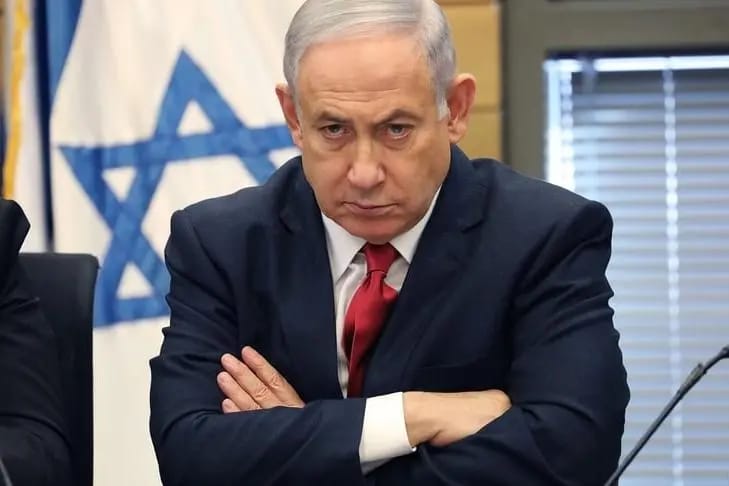
Benjamin Netanyahu is 76. He first became prime minister in 1996, later serving as foreign and finance minister before returning to the premiership in 2009 and remaining in office until 2021. At the end of 2022, Netanyahu formed another government. He has served as Israel’s prime minister longer than anyone else.
Likud has entered the current election once again as a party built around a single undisputed leader. Netanyahu is seeking only to retain the premiership. And the party is fielding no alternative candidate.
The allocation of other cabinet posts will depend on the coalition’s makeup. Netanyahu will have to negotiate both with his current partners, who want to retain influence over security, finance, and religious affairs, and with centrist parties if he opts to form a broader government.
Gadi Eisenkot: the general who became Netanyahu’s main challenger
Gadi Eisenkot is 66. He served in the military for 41 years, commanding the Judea and Samaria Division and Northern Command, heading the Operations Directorate, serving as deputy chief of staff, and serving as chief of staff from 2015 to 2019.
Eisenkot entered politics ahead of the 2022 election as part of Benny Gantz’s State Camp. After October 7, he became a minister without portfolio and joined the narrow war cabinet formed at the time. In June 2024, he left the government with Gantz. In 2025, he left the State Camp, resigned his Knesset seat, and later founded the Yashar party.
Eisenkot is running for prime minister. His party is also seeking the education portfolio and the post of minister for the reconstruction and development of the north and south.
Naftali Bennett and Yair Lapid: together again
Naftali Bennett is 54. An entrepreneur and former special forces officer, he began his political career in Netanyahu’s circle. He later served as director general of the Yesha Council and led the religious Zionist Jewish Home party. Bennett went on to serve as economy, education, and defense minister before becoming prime minister in 2021 with just six Knesset seats, leading a coalition of right-wing, centrist, and left-wing parties that included Ra’am.
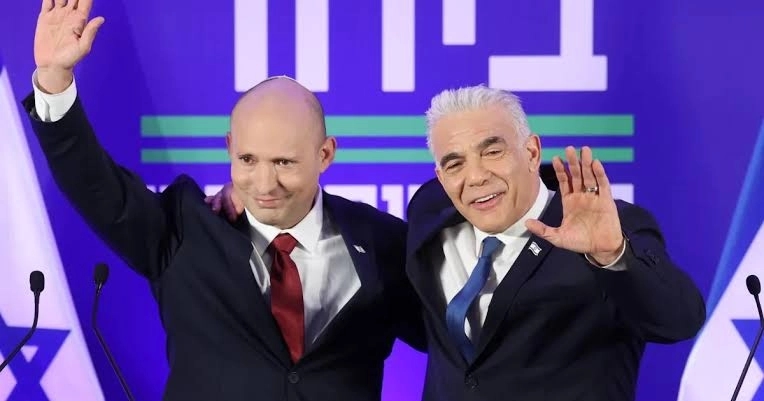
Yair Lapid is 62. A former television host, he founded the centrist Yesh Atid party in 2012 and later served as finance and foreign minister. Under the 2021 coalition agreement, Bennett and Lapid agreed to rotate the premiership: Bennett would serve first, and after the Knesset was dissolved early in summer 2022, Lapid briefly became prime minister.
They are running together in this election on the Beyahad joint list, which Bennett leads. He is also its candidate for prime minister.
Avigdor Lieberman: “Now it’s my turn”
Avigdor Lieberman is 68. Born in Chisinau, he began his political career in Likud and served as director general of the Prime Minister’s Office under Netanyahu. In 1999, he founded Yisrael Beiteinu (Israel Our Home), initially as a party aimed at new immigrants. Today, only four of the top 10 candidates on his list are Russian speakers, including Lieberman himself.
Lieberman has served as foreign, defense, and finance minister, as well as chair of the Knesset Foreign Affairs and Defense Committee.
Although Yisrael Beiteinu is polling at around nine seats, Lieberman has not abandoned his ambition to become prime minister. At the same time, the party has already named its candidate for one of the key security posts. Lieberman has designated lawmaker Hamad Amar, a member of the Druze community, reserve officer, and former minister in the Finance Ministry, as its choice for national security minister. Yisrael Beiteinu is thus seeking the ministry currently headed by Ben-Gvir, which oversees the police and the fight against crime.
Yair Golan: the general leading the left
Yair Golan is 64. A reserve major general, he commanded the Northern Command and Home Front Command and served as deputy chief of staff from 2014 to 2017. He entered politics in 2019 alongside former Prime Minister Ehud Barak and formally joined the far-left Meretz party in December 2020. Under the Bennett-Lapid government, he served as deputy economy minister. In 2024, Golan was elected leader of the Labor Party and subsequently merged it with Meretz to form today’s Democrats.
Golan is not seeking the premiership, but the Democrats have already identified several ministries they plan to seek. Golan said the party would demand the Education and Justice portfolios: Education to strengthen public education and tie school funding to the teaching of core subjects, and Justice to repeal provisions of the judicial overhaul enacted by the current government and restore the powers of legal advisers.
Golan has also named the Defense, National Security, and Communications ministries among the portfolios the party wants. The Democrats’ demands overlap with those of other potential coalition partners: Yisrael Beiteinu and Ra’am have already put forward their own candidates for national security minister, while Eisenkot has promised the education portfolio to a member of his party.
Benny Gantz: from frontrunner to fighting for survival
Benny Gantz is 67. He served as chief of staff from 2011 to 2015 and founded the Israel Resilience Party (Hosen LeYisrael) ahead of the 2019 election, which became the foundation of the Blue and White alliance. Gantz has served as speaker of the Knesset and defense minister. In 2020, he agreed to join Netanyahu’s government under a rotation deal for the premiership. However, the government collapsed before the premiership was due to pass to him. After October 7, Gantz again joined Netanyahu’s government, leaving it in June 2024.
In January 2024, Gantz’s State Camp, which then included Eisenkot and Gideon Sa’ar’s New Hope party, was polling at as many as 35 seats. Sa’ar and Eisenkot later left the alliance. In the current election, Gantz is running his own Blue and White list, which is unlikely to clear the electoral threshold.
Ofer Winter: a new challenger on the right
Ofer Winter is 55. A reserve brigadier general, he commanded the Duvdevan special forces unit, the Givati Brigade, and the 98th Division, and served as military secretary to the defense minister and chief of staff of the Central Command. He left active duty in 2024. In August 2026, Winter announced the formation of Amha Israel, a party targeting right-wing voters dissatisfied with both the government and the army’s previous leadership.
Second on the list is Arab Christian Yousef Haddad, a former Golani Brigade soldier and commander who was seriously wounded during the Second Lebanon War and later became one of Israel’s best-known international advocates. He hopes to become the first Arab to serve in Israel’s political-security cabinet and is seeking the public diplomacy portfolio.
Winter has pledged to recommend only Netanyahu for prime minister, but has set a condition for joining the government: before it is formed, a law must be passed requiring all young citizens to serve in the military or otherwise contribute to the state. Winter has not publicly demanded the Defense Ministry or another security portfolio for himself. Haddad, for his part, said the party would not join a government led by Eisenkot.
Partners with strings attached
Beyond the candidates for prime minister, the makeup of the next government will be determined by the parties controlling the final handful of seats needed to form a majority. The collection of potential kingmakers includes far-right parties, ultra-Orthodox factions, and Arab lists alike.
Ben-Gvir and Smotrich: rivals on the far right
Itamar Ben-Gvir is 50. He leads the far-right Otzma Yehudit party and has served as national security minister, with authority over the police, since late 2022. Before entering the Knesset, Ben-Gvir was an activist in Kach, a movement banned in Israel, and a lawyer for people accused of nationalist offenses. In 2007, a court convicted him of incitement to racism and supporting a terrorist organization. He later sought to distance himself from some of his earlier views but retained a platform calling for the annexation of Judea and Samaria, the expansion of settlements, harsher conditions for Palestinian prisoners, and the widespread arming of civilians.
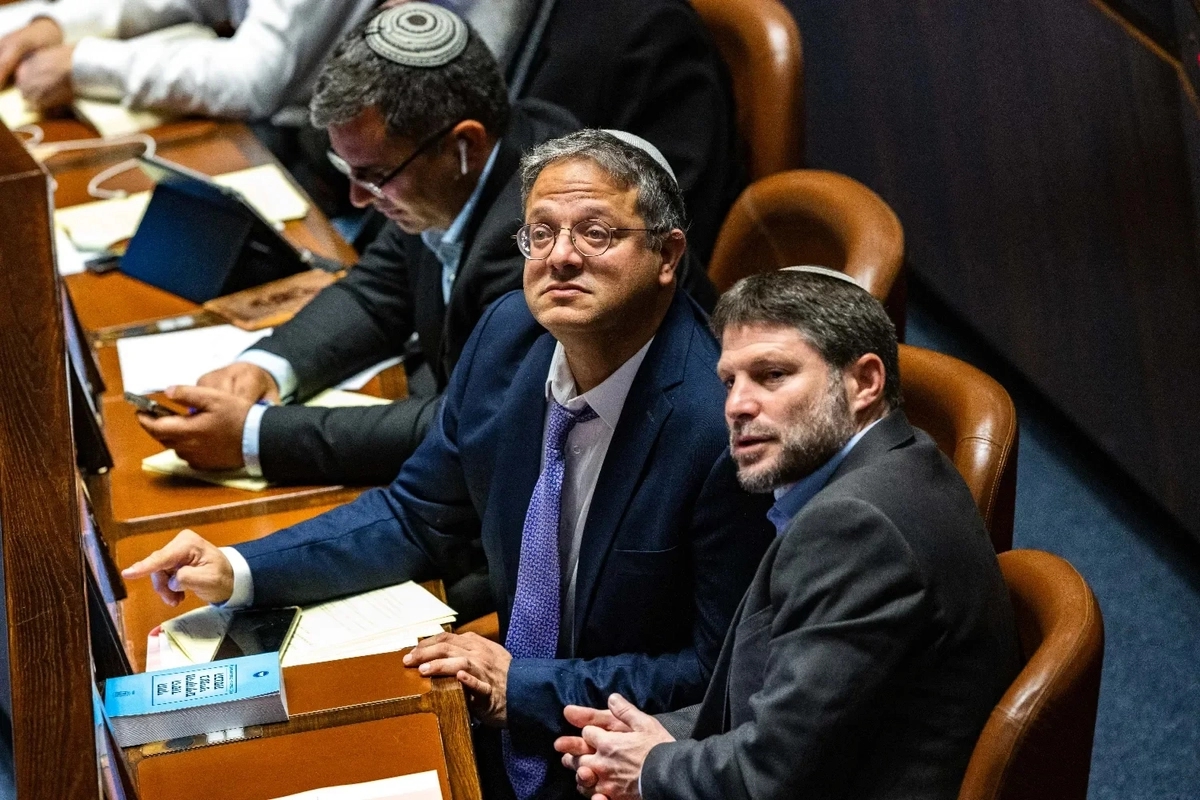
In the run-up to this election, Ben-Gvir has added another coalition demand, unveiling a seven-year plan for the “voluntary emigration” of Gaza residents and saying that in the next government, Otzma Yehudit will demand the creation of a separate Ministry of Emigration.
On Sept. 9, the party also petitioned the Central Elections Committee to bar Ra’am and its leader, Mansour Abbas, from running, arguing that the party rejects Israel’s character as a Jewish state and supports armed struggle against it. The committee has yet to consider the claims, and its decision can in any case be appealed to the Supreme Court.
Bezalel Smotrich is 46. The leader of Religious Zionism serves as finance minister and also as a minister in the Defense Ministry, where he oversees matters related to the Civil Administration and settlement development in Judea and Samaria. Smotrich opposes a Palestinian state and supports extending Israeli sovereignty over the West Bank. His supporters see settlement expansion as the party’s main promise fulfilled, while opponents accuse him of effectively annexing the territories without a formal government decision.
Smotrich is running jointly with the Zehut party of 64-year-old Moshe Feiglin, who holds second place on the list. Feiglin is a former Likud lawmaker and the founder of a movement opposed to the Oslo Accords. His platform combines territorial annexation and an expanded Jewish presence on the Temple Mount with liberal economic policies, less government regulation, and cannabis legalization.
The ultra-Orthodox: allies who can no longer be taken at their word
Shas is an ultra-Orthodox party whose full name translates as “World Sephardi Union – Guardians of the Torah.” It was established primarily to represent religious Jews from the Middle East and North Africa. Aryeh Deri remains Shas’s political leader, but the party makes key decisions after consulting the Council of Torah Sages, a group of the most influential Sephardi rabbis.
United Torah Judaism represents the Ashkenazi ultra-Orthodox community. For the first time since 1992, it is running under that name as an alliance of three, rather than two, formally independent parties: Degel HaTorah (representing the Lithuanian stream), the Hasidic Agudat Yisrael, and the new Homat Torat Yisrael (“Bulwark of Israel’s Torah”). Degel HaTorah’s Yaakov Asher heads the list, and Agudat Yisrael representative Yitzhak Goldknopf is second. Here too, lawmakers answer to rabbinical councils and the leaders of the largest Hasidic communities.
The emergence of a third party within United Torah Judaism stems from an internal dispute in Agudat Yisrael. Representatives of several Hasidic groups accused the Gur community, the alliance’s largest, of wielding too much influence over the allocation of seats and budgets. The creation of Homat Torat Yisrael gives the dissenters their own party funding and the option of eventually breaking away from the joint list. For now though, they describe the move as technical and remain within United Torah Judaism.
The main grievance Shas and United Torah Judaism share with Netanyahu is that his government has failed to pass the promised law regulating yeshiva students’ exemption from military service. Following a Supreme Court ruling, the state must draft them under the existing law and halt funding to institutions whose students evade the draft. The Haredi parties want to preserve the special status of Torah study and limit penalties against yeshiva students who choose not to serve.
The decision to join a future coalition will be made not only by Deri, Asher, or Goldknopf, but above all by the parties’ rabbinical leadership. Shas representatives have floated the idea of refusing to join Netanyahu’s next government until an agreed law is passed, but Deri has made no final commitment. United Torah Judaism has put it more bluntly: it will not join a coalition that fails to resolve the status of yeshiva students. Their traditional alliance with Likud therefore does not guarantee unconditional support for Netanyahu after the election.
The traditional Haredi parties also face a new challenger in this election: the Ha-Tzibur Ha-Haredi (“Haredi Public”) list, led by Beit Shemesh Deputy Mayor Moti Leitner, which is aimed primarily at working Haredim and others who feel unrepresented by Shas and United Torah Judaism. American-born Haredim are seen as a potential source of support, as they are more likely to combine a religious lifestyle with solid jobs and secular education. The party advocates teaching math and English, expanding employment, and drafting those who are not actually engaged in Torah study: “Those who do not study must serve.”
Two women are among the list’s top six candidates. This sharply distinguishes the new party from Shas and United Torah Judaism, which do not include women on their lists. Leitner presents the party as an alternative to the existing Haredi leadership, accusing it of perpetuating poverty, opposing secular education, and protecting draft exemptions even for those who do not study at yeshivas. At the same time, Ha-Tzibur Ha-Haredi retains its ultra-Orthodox identity and says it is committed to protecting the right to full-time Torah study. The party may nevertheless fail to clear the electoral threshold.
Two Arab paths
Two major Arab lists are running in the election. The first is a joint list of three parties – Hadash, Ta’al, and Balad. It is headed by Hadash’s Yousef Jabareen, followed by Ta’al leader Ahmad Tibi in second place and Balad leader Sami Abu Shehadeh in third.
Hadash is an Arab-Jewish left-wing bloc centered on the Communist Party of Israel. Ta’al is a secular Arab party built around Tibi. Balad represents the Palestinian national movement and calls for transforming Israel from a Jewish state into a “state of all its citizens.” In the 2022 election, Hadash and Ta’al won five seats, while Balad, which ran separately, failed to clear the threshold.
The second list is Mansour Abbas’s Ra’am, an Islamist Arab party and the parliamentary arm of the Islamic Movement’s southern branch in Israel. The movement split in 1996 over participation in elections, with the northern branch rejecting Israel’s state institutions (it was banned in 2015) while the southern branch chose parliamentary politics and remained legal. In 2021, Ra’am became the first independent Arab party to join a governing coalition, entering the Bennett-Lapid government. Its leader, Mansour Abbas, focused negotiations on funding for Arab municipalities, fighting crime, improving infrastructure, and gaining recognition for Bedouin villages.
In August 2026, Abbas said that Arab parties had been forced to accept the state’s Jewish character as a reality in order to participate in elections. Avi Maoz, followed by Ben-Gvir, then called for Ra’am to be barred from the vote. Otzma Yehudit also cites alleged ties between the Islamic Movement-affiliated Aid 48 foundation and organizations linked to Hamas, but Ben-Gvir’s main concern is that Ra’am could provide the seats needed to form a governing coalition made up of Netanyahu’s opponents.
A notable feature of the current Ra’am list is the second-place candidacy of former Deputy Minister for Internal Security Yoav Segalovich, a retired police major general and the first Jewish candidate in Ra’am’s history. Under the Bennett-Lapid government, he coordinated the fight against crime in the Arab sector.
Ra’am is seeking to return to pragmatic cooperation with Zionist parties. The United List includes both supporters of backing a government from outside to replace Netanyahu and opponents of any coalition that continues military operations and the occupation of Palestinian territories. That is why pollsters count Arab seats separately: it is impossible to know in advance whether Arab lawmakers will join the government, support it from outside, abstain in the confidence vote, or remain in opposition.
Either way, the sheer diversity of party lists and campaign platforms shows how deeply divided Israeli society has become. Yet whoever wins the election and whatever government emerges, there is little reason to expect the country’s internal crisis to end. According to a study published in June 2026 by the Jewish People Policy Institute (JPPI), 55% of Israelis consider internal polarization and divisions the country’s greatest existential threat – more serious than Iran’s nuclear program or the Palestinian conflict. Six in 10 respondents see a real danger of bloodshed and physical violence within Israel, potentially escalating into civil war.
55% of Israelis consider internal polarization and divisions the country’s greatest existential threat
The next government will therefore have to do more than decide how to wage the war and shape the country’s postwar future. It will also have to govern a deeply divided society in which a significant share of citizens no longer see their political opponents as rivals but as a threat to the country’s future.