Israeli politicians are already preparing for parliamentary elections that could close the country’s most difficult period in recent decades. For now, however, it looks more like a war of all against all, especially within the ruling coalition. The votes of new immigrants from Russia and Ukraine could prove decisive — both for Israel as a whole and for incumbent Prime Minister Benjamin Netanyahu.
The role of the “Putin aliyah”
Given the peculiarities of Israel’s electoral system, just a few seats could decide the outcome of the country’s upcoming Knesset elections, scheduled for Oct. 27. The “seat value” varies from election to election depending on turnout and votes cast. In the last Knesset elections in 2022, one seat was worth approximately 35,000–39,000 votes. The electoral threshold is 3.25% (approximately four seats).
In this setup, the votes of Russian-speaking voters could once again prove decisive. This refers primarily to the so-called “Putin aliyah” — the wave of immigrants who came to Israel from Russia following the annexation of Crimea in 2014 and the start of the war in Ukraine in 2022. But it also includes immigrants from Ukraine and other former Soviet republics.
According to estimates by Israeli media, this amounts to roughly 250,000 people. Even after taking into account the fact that some new immigrants left Israel after obtaining citizenship, and that others are not of voting age, the figure may still translate into roughly three to four Knesset seats. The competition for those votes has already begun.
“People form norms and habits, and it is very hard to change their minds. Even when reality changes, they adjust their internal priorities to maintain the same voting patterns. For example: ‘Likud is terrible on religion and state issues, but I vote for them out of security considerations.’ That is why the new immigrant community is worth its weight in gold. The vote of this audience in the upcoming elections could set a trend for decades,” political psychologist Dr. Hagay Elkayam-Shalem told Haaretz.
The votes of recent immigrants are worth their weight in gold, as they could set a trend for decades
According to Haaretz, most new immigrants favor political positions ranging between the center and the far-left bloc — that is, between the Bennett-Lapid Together alliance and the Democratic bloc led by Yair Golan, which has the left-wing parties Meretz and Avoda at its core.
This trend is also visible in social media activism and beyond. Over the past year, many NGOs have been working to strengthen immigrants’ ties with the liberal-democratic camp (which in Israel is represented by the center and center-left). Instead of direct campaigning for specific parties, this took the form of explaining Israeli realities — judicial reform, security issues — through the lens of various perspectives.
Elkayam-Shalem’s study of more than 600 Russian-speaking Israeli residents who arrived after 2012 found that 73% described their political views as “moderate” — 25% center-right, 30% centrist, and 18% center-left. Among those who arrived after 2022, more than a quarter identified as left-wing (27%).
Upwards of 39% of new immigrants did not vote in 2022. Of those who did, 45% supported today’s opposition (split roughly evenly between Lapid’s Yesh Atid and Lieberman’s Yisrael Beiteinu), and only 13% chose parties represented in the ruling coalition. A significant shift is now expected: 9% of coalition supporters have expressed intent to back the opposition, while 40% remain undecided.
In late April, Israel’s Channel 14 announced the acquisition of the Russian-language news site Mignews — one of the oldest Russian-language resources in Israel, which in recent years has been surviving with virtually no editorial staff. Channel 14 is often called Israel’s equivalent of Fox News and is considered a mouthpiece for the Netanyahu camp and far-right views.
Democratic leader Yair Golan called the channel a “propaganda mouthpiece” and promised to shut it down after winning the elections. The channel is owned by Israeli businessman Yitzchak Mirilashvili, the son of Russian-Israeli billionaire Mikhail Mirilashvili (formerly the first major investor in the social network VKontakte and president of the St. Petersburg TV company Russkoye Video).
How effective Channel 14’s outreach on the “Russian street” will be, and whether it will influence new immigrants whose political worldview is already formed — including strong disdain for this outlet — is hard to say. At the same time, it would be a mistake to suggest that the immigrant community, including the “Putin aliyah,” is monolithic in its views.
The wave of immigration after 2014 — and especially after 2022 — brought hundreds of thousands of new citizens to Israel, with many of them carrying liberal views, different cultural backgrounds, and stronger ties to Europe and the West. However, the Hamas terrorist attacks of October 7 and the resulting war shifted the attitudes of some new immigrants. Security has once again become the central issue, and many Russian-speaking Israelis have moved to the right.
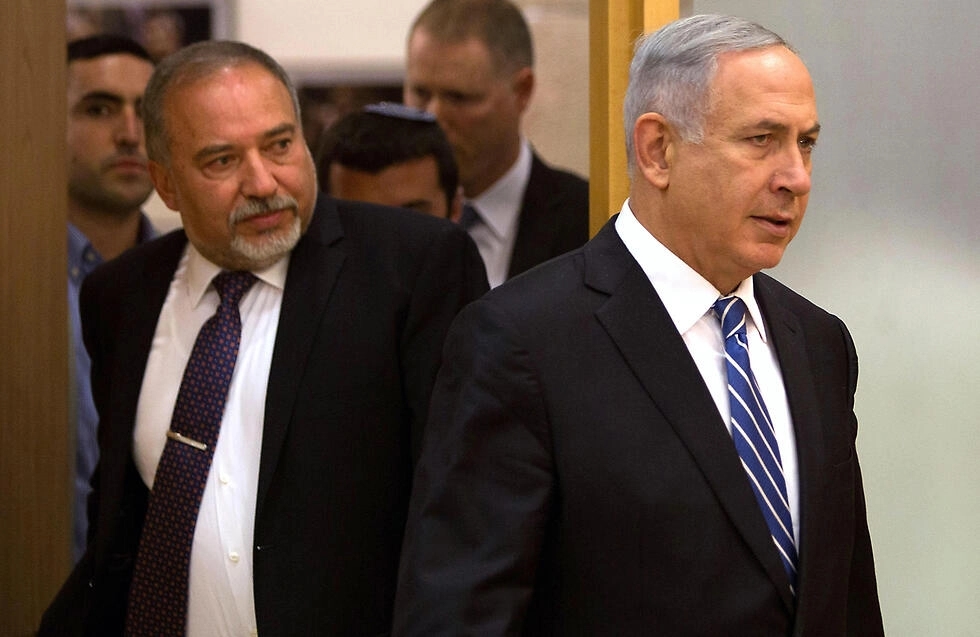
Still, there is no direct correlation between the security agenda and support for Netanyahu and the ruling coalition parties. Moreover, right and left in Israeli politics have become increasingly blurred and no longer depend on whether a party is in opposition or in government. Yisrael Beiteinu is a traditionally right-wing party, but Avigdor Lieberman has vowed never to sit at the same table as Netanyahu (after leaving his government in 2018). Like Netanyahu, Lieberman also lays claim to the “Mr. Security” title — and does so convincingly enough to win the support of some Russian-speaking immigrants who came to Israel as children. This applies to traditionally right-wing voters who are not ready to forgive Netanyahu and his coalition for October 7.
There is still time before the elections. Military operations continue, and the situation in Lebanon, Gaza — and, potentially, Iran — is constantly changing. Israeli public sentiment could be overturned in a day. Many of those who saw their preferences as set in stone are now wavering. Much depends on the outcome of U.S.-Iran negotiations, which also affect the Lebanon situation. Netanyahu could either gain a significant advantage or suffer a major setback as a result of these developments.
The dissolution of the Knesset
On June 1, 106 out of 120 Knesset members voted in the first reading for a bill to dissolve the legislature. No one voted against — a rare display of unity between the ruling coalition and the opposition. The 25th Knesset was ultimately dissolved on July 17, and new elections are scheduled for Oct. 27.
It was previously believed that holding elections around October 7 would be unacceptable for Israeli Prime Minister Benjamin Netanyahu. Everything would serve as a reminder of his government’s greatest failure — the day when Hamas terrorists infiltrated Israeli territory, killed more than 1,200 people, and took around 250 hostages. Netanyahu has yet to take direct responsibility for this.
At the same time, reports citing prime ministerial advisors suggested that elections in October are not necessarily a bad option for Netanyahu. He can play on the narrative of “recovery after the catastrophe” and highlight what he considers his security achievements. While contentious, this topic is far less sensitive for him than polarizing social issues — ultra-Orthodox conscription, judicial reform, the rising cost of living, education, juvenile crime, rising violence in the Arab sector, and much more.
There was a chance the coalition would hold on until the end of its full term. But that prospect nearly evaporated after ultra-Orthodox factions told the prime minister on May 24 that they were not interested in advancing the conscription bill in its current form.
Voter doubts
For years, political battles in Israel have revolved around the slogans “only Bibi' and “anyone but Bibi” (Bibi being the popular nickname for Netanyahu). The autumn Knesset elections will be no exception, but the competition is expected to be one of the fiercest in decades.
The year 2026 marks three decades since Netanyahu first took the prime minister’s seat. Aside from interruptions — from 1999 to 2009 and from June 2021 to December 2022 — Netanyahu has demonstrated remarkable political resilience, holding onto power against all odds.
Will Netanyahu’s art of political intrigue be enough for Israelis to overlook everything that has happened over the past four years — the October 7 massacre and the wars in Gaza, Lebanon, and Iran that followed? Israel’s military operations were undoubtedly impressive, particularly the series of eliminations targeting the leadership of Hamas, Hezbollah, and Iran. But what comes next? Where is the “absolute victory” Netanyahu has been constantly promising?
A majority of Israelis (57%) believe that Israel has not won any of the wars launched after October 7, according to a poll conducted for the Kan news website in late April. Some 28% agreed that Israel won at least one of the wars, while 15% hesitated to answer. To the question of whether the risk of a new mass atrocity by the Palestinian group Hamas or Lebanese Hezbollah remained, 73% of respondents gave an affirmative answer, 10% said no, and 17% said they did not know.
57% of Israelis believe Israel has not won any of the wars launched after October 7
Another key issue is political accountability for October 7. An investigative commission has yet to be established against a backdrop of total mutual distrust. More than half (54%) of respondents support establishing a state investigative commission, as demanded by the opposition (in which case its members would be appointed by the Supreme Court chief justice, with whom the current government is effectively at war). Only 23% support a government-appointed commission, while 7% oppose the idea and 16% are hesitant to provide a response.
How this will affect the vote depends on several factors. Voters must consider not only the party or a list of parties they support but also its potential coalition partners — and most importantly, the likely candidate for prime minister. According to a poll conducted for Channel 12 in April, 45% of respondents intended to vote for a party that would definitely refuse to back Netanyahu, 31% for one that would most certainly support him, and 24% were undecided.
Israeli voters’ priorities:
- Better management of the economy and cost of living — 32%
- Better security — 28%
- Unity of the people — 17%
- Democracy — 16%
The October 7 massacre will influence the vote of 71% of respondents. The war with Lebanon and Iran gives pause to more than 60% of respondents. Another key fault line is the attempted judicial reform, which its opponents describe as a judicial coup, a violation of the separation of powers, and a threat to democracy. 65% cited this issue.

Some have not forgiven the government for the reform; others cannot forgive how it was handled and ultimately failed. In 2023, the reform brought the country to the brink of civil unrest, with mass opposition protests accompanied by calls to ignore reserve military service and threats from the tech sector to withdraw capital.
After Oct. 7, 2023, and the subsequent wars in Gaza, Lebanon, and Iran, the judicial reform bill was shelved — to the relief of some and the despair of others. But this issue, like security, will remain central in the election campaign for both the right-wing coalition and the opposition, where figures like Gadi Eisenkot, leader of the Yashar party and a prime ministerial contender, consider reform necessary.
“I will do everything so that the next government knows how to establish a state investigative commission, to advance the conscription law, and implement a shift in Israel’s priorities by adopting judicial reform and a constitution for Israel,” Eisenkot said.
The conscription law and the threat of impeachment
Over the years, Israel has seen many attempts to pass a conscription law — or, as some call it, a “non-conscription law.” Formally, conscription in Israel is universal, including for ultra-Orthodox Jews. However, in practice a significant number of yeshiva students do not serve in the military — and neither do most Arab citizens of Israel (whom no one is particularly eager to draft).
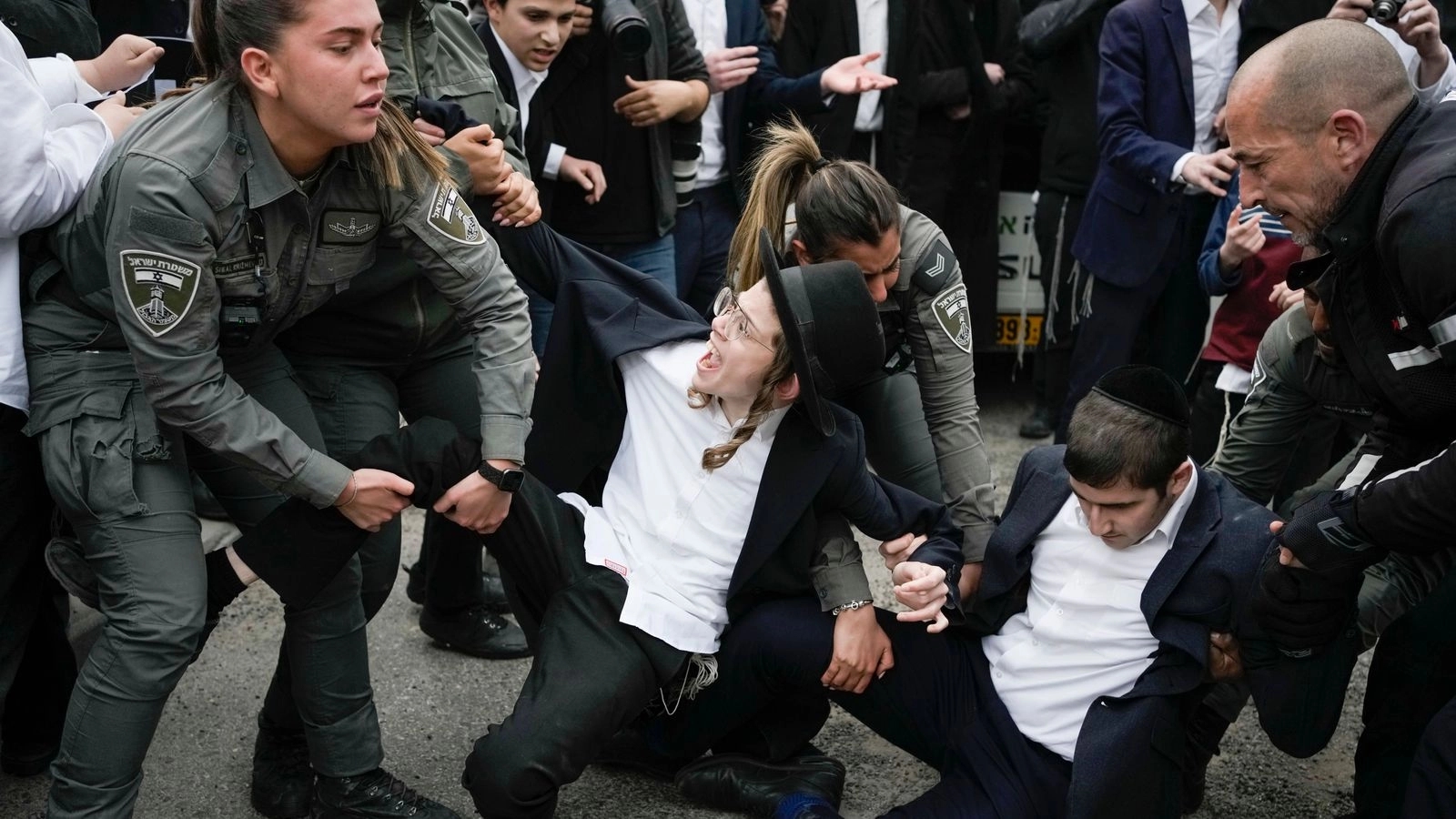
The last temporary law granting yeshiva students deferments and exemptions from service in the Israeli Defense Forces (IDF) expired in the summer of 2023. A year later, the Supreme Court ruled that there was no longer any legal basis for the mass exemption of ultra-Orthodox men from conscription. Funding for yeshivas whose students evade the draft was also prohibited. The IDF began issuing draft notices.
Religious parties are demanding that yeshiva students continue to be exempt from service. But a significant portion of society, especially since the Oct. 7 attack and the unending military campaigns, insists on an equal distribution of the conscription burden and strict penalties for draft evaders. IDF Chief of Staff Eyal Zamir has warned of a serious personnel shortage — at least 12,000 soldiers — and a new bill is intended to define the scale of ultra-Orthodox conscription, the system of sanctions against draft evaders, and the prospects of deferment and yeshiva funding.
Religious parties demand exemption for yeshiva students from military service, while the public demands equal military service for all
This past spring, Netanyahu told ultra-Orthodox Knesset members that the coalition did not have the votes to pass the bill and reportedly asked them to postpone it until after the elections. They refused and decided to join forces with the opposition to push for the dissolution of the Knesset. In response, Netanyahu’s Likud pre-emptively introduced its own dissolution bill in order to maintain control over the course of events. The conscription bill was also advanced, even though the opposition demanded that all contentious legislation be frozen until after the elections.
In any case, Netanyahu’s plan appears to have failed. Rabbi Dov Lando, spiritual leader of the ultra-Orthodox Degel HaTorah party, issued instructions not to advance the bill. According to The Times of Israel, Rabbi Lando does not believe the service exemption law will actually be passed and sees the latest attempts to push it through the Knesset as part of a broader pre-election maneuver by Netanyahu.
The ultra-Orthodox are dissatisfied that the proposed bill increases conscription within their community, even though it preserves exemptions for full-time yeshiva students. The bill also drew resistance from within Netanyahu’s coalition due to its numerous legal loopholes.
They will not give up, however. Moshe Gafni, a faction leader within Degel HaTorah, demanded that the coalition pass the Torah Study Law as a key piece of legislation before elections. This bill, as an alternative to the conscription law, enshrines the legal status of yeshiva students. It features a number of contentious clauses, including the provision that “those who have committed to the permanent and prolonged study of Torah shall be regarded as having performed an important and essential service for the benefit of the State of Israel and the Jewish people.”
Why does the ruling coalition need all this, given that the conscription law is unpopular even among its own voters? A year ago, polls showed that a third of Likud and religious Zionist voters would have preferred the government’s dissolution over ultra-Orthodox exemption from military service, and the situation is unlikely to have changed drastically since then. Most likely, Netanyahu feared that the ultra-Orthodox would not forgive him for betraying their expectations and would refuse to ally with Likud after the elections, reducing his chances of forming a government — a risk that remains real even with all the maneuvering around the conscription law.
After Degel HaTorah’s refusal to advance the conscription bill, reports emerged that opposition members of the Knesset (MKs) approached ultra-Orthodox leaders with a proposal to support a constructive vote of no confidence to replace Netanyahu with a different head of government.
...And other contentious legislation
In parallel with the conscription law, the government is attempting to advance other contentious bills before elections.
On the day before the vote on dissolving the Knesset, the parliamentary Legislation Committee approved a bill to split the powers of the government’s legal adviser. In Israel, this official simultaneously serves as attorney general and chief legal adviser to the cabinet, also representing the government in court.
This bill was one of the central elements of the judicial reform, with its supporters arguing for the need to limit the influence of unelected bureaucracy and resolve the conflict of interest whereby the person advising the government and its ministers is also empowered to investigate their conduct and bring criminal charges against them. According to opponents of the reform, this bill poses a threat to the independence of the judiciary and democratic institutions.
Notably, the proposed bill contains not only clauses on dividing the legal adviser’s powers but also provisions stipulating that a criminal investigation against a sitting or former prime minister may only be initiated with the consent of the attorney general and approval of a district court. Furthermore, the Jerusalem District Court would determine whether any offense constitutes a “disgrace” — which bars the individual from politics for seven years. Currently, all of this falls within the purview of the government’s legal adviser.
These provisions are significant in the context of the ongoing proceedings against Netanyahu himself, whose proceedings on charges of corruption, fraud, and breach of trust have been underway for several years. Netanyahu denies all of the accusations and calls the trial politically motivated. The judges have indicated it will be difficult to prove the central allegation — a corrupt agreement in one of the cases. There are also many questions surrounding the conduct of the investigation.
Against the backdrop of the war and approaching elections, discussion has intensified about a possible plea deal or pardon. Some of Netanyahu’s supporters argue the drawn-out trial is hampering governance, while the opposition sees talk of a pardon as an attempt to shield the prime minister from accountability.
The opposition sees talk of a pardon for Netanyahu as an attempt to shield the prime minister from accountability
The position of Donald Trump, who called on Israeli President Isaac Herzog to pardon Netanyahu, added further fuel to the fire. The pardon process was initiated, but on May 25 it emerged that Herzog had frozen the proceedings.
Reportedly, the reason was Netanyahu’s refusal to participate in defense-prosecution negotiations initiated by the president. In any case, the pardon request itself — submitted on the grounds that appearing for questioning distracts Netanyahu from managing security during wartime — is set to lose its justification once the prime minister’s testimony concludes.
That leaves the option of a pre-trial deal, which would most likely imply Netanyahu’s exit from politics. For now, he has no such intention. “It’s hard to say where he’s headed. Even if he chooses to retire by striking a deal with the prosecution or reaching some compromise, it will happen suddenly and without warning. It will be an earthquake, and it will just happen,” Ynet writes.
Blocs and coalitions
For now, Netanyahu remains in politics and intends to fight for an election victory. According to polls, neither the opposition parties nor the ruling coalition has an absolute majority.
In light of the conscription law impasse, the future alignment of the ultra-Orthodox parties remains uncertain, though their options are limited. Some opposition representatives, including right-wing Russian-speaking Avigdor Lieberman’s Yisrael Beiteinu, have stated that they will not sit in government with the ultra-Orthodox. However, the latest news about impeachment could change the situation.
The Arab parties also remain in a class of their own. Only once in Israel’s history has an Arab party joined a technical coalition with Zionist parties: United Arab List, or Ra'am, under the Bennett-Lapid government in 2021, but Lapid now states that any government he is part of cannot depend on Arab parties. According to the latest polls, without the Arab parties, today’s opposition and coalition parties receive roughly equal votes, with constant oscillation in favor of one side or the other.
A narrow gap can always fall within the margin of error. In Israel, the right to form a government goes to the politician with the most recommendations from elected MKs, or whoever the president believes has the best chance of forming a coalition based on at least 61 seats — not necessarily the leader of the party with the most votes.
In 2021, Naftali Bennett became prime minister by winning just six seats. Election results are thus not the end, but the beginning of bargaining, and coalition negotiations do not always succeed: in 2019, the Knesset dissolved twice without ever beginning work, sending the country to repeat elections.
The ruling coalition currently has a single prime ministerial candidate: Benjamin Netanyahu. The opposition has three: Naftali Bennett, Gadi Eisenkot, and Avigdor Lieberman. They have not yet reached an agreement, and experts believe this gives Netanyahu a chance to form a government. However, if the opposition leaders unite, the picture could change.
Everything would be simpler if Netanyahu stepped away from politics. In that event, some of today’s opposition parties would be willing to cooperate with Likud and form a stable government without the Arab parties, the ultra-Orthodox, or the far right.