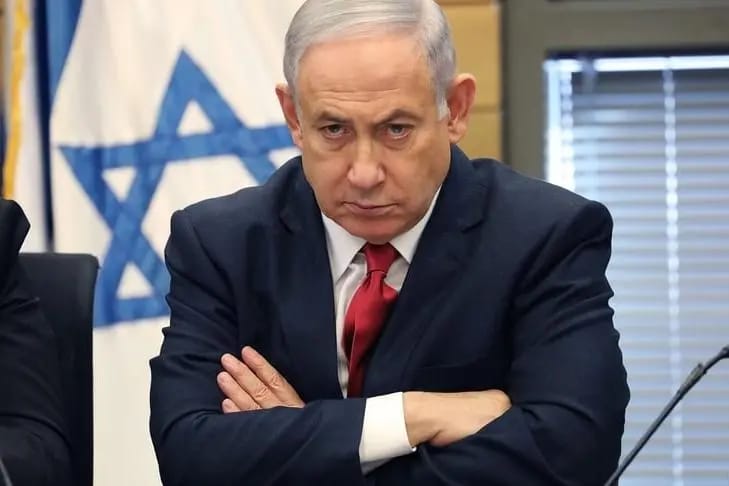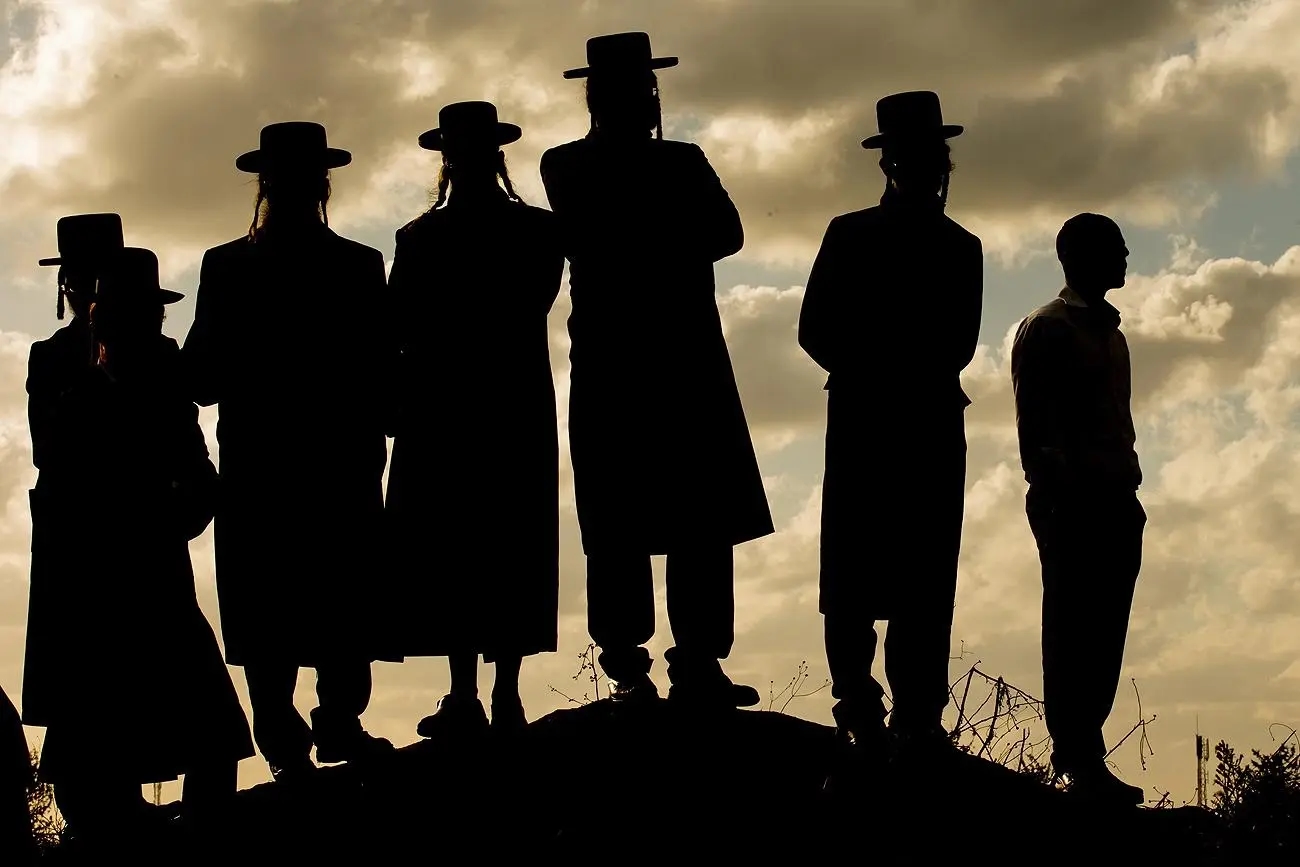

Amid the unresolved situation in Gaza and the continued presence of Israeli troops in Lebanon and Syria, Israel’s Oct. 27 parliamentary election campaign is already in full swing. Most polls give neither the current coalition nor the opposition the 61 seats needed for a majority, meaning various smaller parties could once again determine the fate of the government — as they have many times in Israel’s history. For Prime Minister Benjamin Netanyahu, the key players are the ultra-Orthodox Shas and United Torah Judaism parties, without which he has little chance of forming a majority. But the ultra-Orthodox are frustrated by the government’s failure to pass the promised law exempting most yeshiva students from military service, and as a result, their support can no longer be taken for granted. This time, the “kingmakers,” as Israel’s ultra-Orthodox parties are known, risk finding themselves on the losing side.
Knesset arithmetic
On the night of July 17, the 25th Knesset passed a self-dissolution law that officially ended its term — one of the most contentious in the country’s history, as it encompassed both the October 7 Hamas terrorist attack of 2023 and the wars in Gaza, Lebanon, and Iran that followed in the three years since. The period was also characterized by deep internal divisions in Israeli society over Benjamin Netanyahu’s attempts at judicial reform and disputes regarding ultra-Orthodox military service. The current campaign to elect a new Knesset to grapple with these problems promises to be no less contentious.
Polls so far offer neither the parties in the governing coalition nor the opposition a clear path to a majority, though as of late July some polls gave the Zionist opposition parties — excluding the two Arab lists — a projected 60–61 seats. The governing coalition’s Zionist parties were averaging 34 seats without the ultra-Orthodox and 50–52 with them. However, the picture was somewhat better for the coalition in polls published by Channel 14, which supports Netanyahu: 45 seats without the ultra-Orthodox and 62 with them.
According to some polls, the opposition could win more than 60 seats; according to others, Netanyahu and the ultra-Orthodox could secure that many
The distinction between Arab and ultra-Orthodox parties is important, as both are considered part of the anti-Zionist bloc. Arab parties, naturally, do not consider themselves part of the Jewish national movement. Most ultra-Orthodox Jews, meanwhile, have rejected secular Zionism (the idea that Jews should achieve national self-determination through their own state). As the election campaign heats up, the most serious question concern cooperation between the potential winners and the non-Zionist parties of various stripes — namely, who is willing to sit with them in the same government and who is not?
Another debate revolves around who considers it permissible to form a government with Likud, led by Netanyahu, and who categorically refuses to sit at the same table as the current prime minister. There is also the reverse question: how stable is the opposition bloc, given diversity that ranges from the far-left Democrats to Avigdor Lieberman’s right-wing Yisrael Beiteinu?
In any case, public opinion polls are constantly shifting, and not all parties have even entered the race yet. As usual, new alliances emerge before elections, and unexpected coalitions may form. Some parties may fail to clear the electoral threshold, leading to a redistribution of seats. And after the election, politicians’ promises never to sit in a government with a particular party may be broken yet again. For example, Naftali Bennett, one of the leaders of the current BeYachad electoral list and a former prime minister, promised in 2021 never to join a coalition with Arab parties, but he later went back on his word, citing the interests of the state and society as his justification for doing so.
A parliamentary majority consists of 61 seats. After the election, the president consults with all the parliamentary factions and asks the lawmaker he believes has the best chance of securing the Knesset’s support to form a government and become prime minister. This is not necessarily the leader of the largest party. In 2021, for example, Bennett became prime minister even though his party held just seven seats — and even then, not all of its members supported the new government.
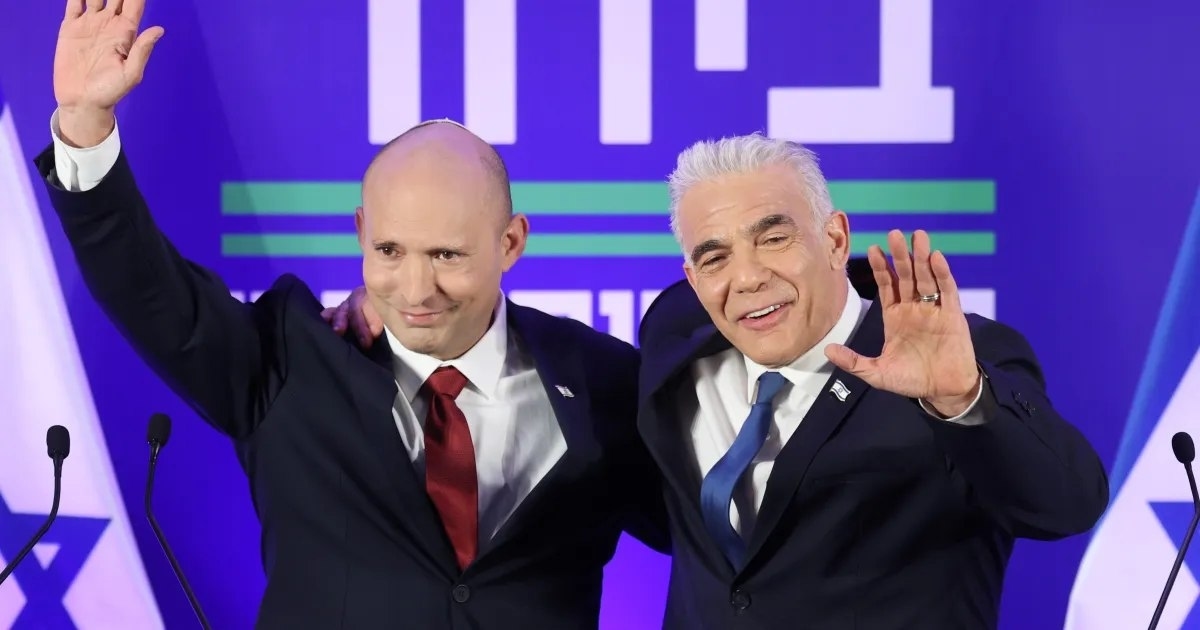
Moreover, a formal confidence vote can pass without 61 votes in favor. For example, the government formed by Naftali Bennett and Yair Lapid was approved by a vote of 60–59, with one abstention coming from a lawmaker of the Islamist Ra’am party. The party itself, meanwhile, made history by becoming the first Arab political movement in Israel to sign a coalition agreement with the Zionist camp by supporting the Bennett–Lapid government.
A party can also remain outside the coalition and receive no ministerial posts while supporting the government in confidence and budget votes. In the 1990s, for example, Arab factions helped keep Yitzhak Rabin’s minority government in power without joining it. But for a cabinet to function stably, it generally needs either its own stable coalition or guaranteed outside support. The Bennett–Lapid government, which lacked these requisites, lasted just over a year before announcing its dissolution.
Under the current political configuration, Netanyahu needs the ultra-Orthodox vote to have any hope of maintaining a majority. He may still find allies among smaller parties, but some of these categorically rule out supporting a government led by him or involving his Likud party — at least for now. However, they might agree to compromise in the event that Netanyahu agree to give up the premiership in the name of national unity.
“Kingmakers” – what the ultra-Orthodox want
The ultra-Orthodox are primarily interested in their own agenda, which involves state funding for their communities (including religious education), the sustained authority of rabbinical courts, and exemptions for yeshiva students from military service. They are willing to join forces with any party that best promises to satisfy their demands.
Attempts to reach an agreement on these issues began even before Israel declared its independence. In 1947, David Ben-Gurion, the country’s future first prime minister, promised to preserve the status quo: Saturday would be the official day of rest, state institutions would observe kosher dietary laws, marriages and divorces would remain under the jurisdiction of religious courts, and religious schools would retain their autonomy. In return, Ben-Gurion sought to secure the ultra-Orthodox’s support for the establishment of a Jewish state.
The situation changed dramatically in the late 1970s and early 1980s. In 1977, the left-wing camp, previously led by Mapai and later by the Labor Party, lost power for the first time. In 1981, Likud and the left-wing bloc won almost identical numbers of seats — 48 and 47, respectively. Neither the right nor the left could count on forming governments exclusively with ideologically like-minded partners, and horse-trading with smaller parties began. The ultra-Orthodox proved particularly useful because, in Israeli political terms, they did not identify with either the right or the left, particularly when it came to the Arab-Israeli conflict and, above all, the Palestinian issue.
Today, the ultra-Orthodox camp is represented by two electoral lists but in fact consists of three parties: Shas, Degel HaTorah, and Agudat Yisrael. Since 1992, the latter two parties have run together under the United Torah Judaism list, which primarily represents Ashkenazi Haredim — descendants of Jews from Central and Eastern Europe. But the list contains two separate party structures, each subordinate to a different rabbinical council.
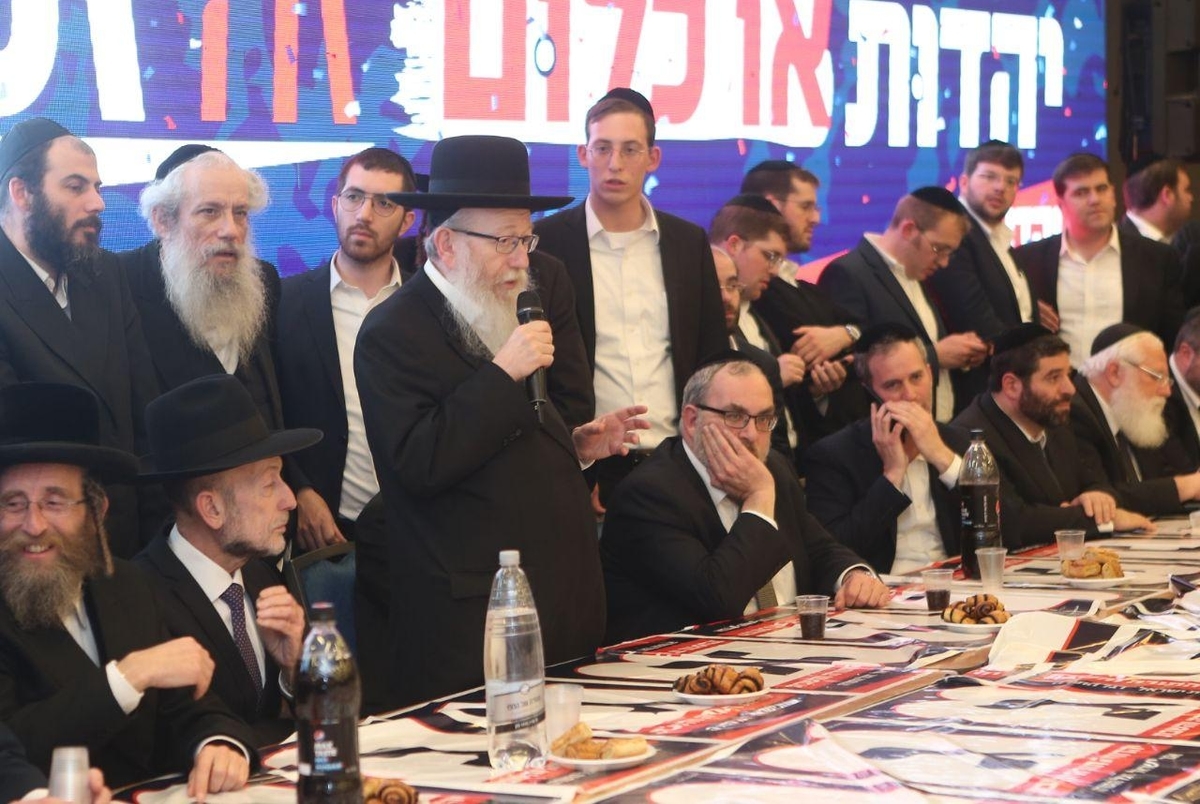
Agudat Yisrael (“Union of Israel”) consists primarily of Hasidic communities. The party was founded in Poland in 1912 as a movement of Orthodox Jews opposed to secularization and political Zionism. In Israel, the party’s influence is divided among several Hasidic courts, the largest of which have their own rabbis, educational institutions, and political representatives. Final decisions are made by the Council of Torah Sages, which includes leaders of influential Hasidic communities.
Degel HaTorah (“Banner of the Torah”) represents the Lithuanian, or Litvak, tradition. The party was founded in 1988 by Rabbi Elazar Shach after a conflict with the Hasidic leadership of Agudat Yisrael. Its leading religious authorities today are Rabbis Dov Landau and Moshe Hillel Hirsch. Their directives determine how Degel HaTorah lawmakers vote on key issues and which coalition they can join.
The two parties run together in elections because competing separately would put both at risk of failing to clear the 3.25% electoral threshold. Still, within United Torah Judaism, disputes over the allocation of seats, positions, and budgets are constant.
Shas (Sephardim – Torah Guardians) represents another segment of ultra-Orthodox society: Jews whose families originated mainly in the Middle East and North Africa. It was founded in 1984 by Rabbi Ovadia Yosef with the support of Rabbi Shach. One of the reasons for its creation was discrimination against Sephardim within the Ashkenazi system of religious schools, yeshivas, and political organizations. The party’s highest religious body is the Council of Torah Sages.
One of the clearest examples of the rabbis’ influence over the choice of prime minister can be found in the 1990 political crisis known as the “dirty trick.” Labor leader Shimon Peres secured a no-confidence vote against Yitzhak Shamir’s national unity government and attempted to form an alternative coalition with the ultra-Orthodox parties, but the deal fell apart after religious authorities intervened. Rabbi Shach opposed an alliance with the left, and two Agudat Yisrael lawmakers failed to show up for the decisive vote. Peres was unable to form a government, after which Shamir formed a new right-wing coalition.
For many years, however, the Haredim’s alliance with the right was not unconditional. In 1992, Shas joined Yitzhak Rabin’s government alongside Labor and the left-wing Meretz bloc. Labor had 44 seats, Meretz 12, and Shas six, giving the government a 62-seat majority. However, after Shas left the coalition, Rabin’s cabinet became a minority government and depended on outside support from Arab factions.
In 1999, Shas joined Ehud Barak’s center-left government, having by then won a record 17 seats. United Torah Judaism, with five lawmakers, also joined the coalition.
There have also been governments without the ultra-Orthodox. In 2003, Ariel Sharon opted for an alliance with the anti-clerical Shinui party, and in 2013, Netanyahu left Shas and United Torah Judaism in opposition, reaching an agreement with Yair Lapid and Naftali Bennett instead. The most recent government without the ultra-Orthodox was the short-lived coalition that formed in 2021.
In the 25th Knesset, Shas and United Torah Judaism had a combined 18 lawmakers, and both remained key partners for the ruling coalition for most of the term. July polls projected the ultra-Orthodox to take between 15 and 17 seats in the October vote, but there is still no guarantee that they will support Netanyahu, who failed to keep too many promises over the past four years.
The ultra-Orthodox’s main grievance
The main complaint Shas and United Torah Judaism have against Netanyahu and their other coalition partners is the failure to pass a law that would guarantee exemptions from military service for yeshiva students (the bill never reached a final vote), who since 1948 have been granted deferments under the principle of “Torah is their vocation.” Initially the provision applied to only about 400 students, but since 1977 there has been no limit on their number. The provision had been enshrined in law several times, but those laws were struck down by the Supreme Court starting in July 2023, though the government subsequently issued a temporary order that yeshiva students not be drafted, hoping to pass a new law.
In June 2024, the Supreme Court ruled that the government could not grant such an exemption on its own and ordered the state to apply the general Military Service Law to the ultra-Orthodox. The army then began sending out draft notices — and later issuing arrest warrants — for conscripts who failed to report. By July 2026, some 72,000 Haredim aged 18 to 24 who were subject to the draft had not enlisted. The resulting arrests triggered mass protests within the community.
By July 2026, some 72,000 Haredim aged 18 to 24 were subject to the draft but had not enlisted
After nearly three years of war — in Gaza, Lebanon, and Iran, along with continued tensions in Judea and Samaria (the West Bank) — the Israeli military is facing a manpower shortage that has placed an enormous burden on reservists. From October 2023 to the present, 27% of reserve soldiers have served a total of 150 to 300 days, while 20% have served more than 300 days. Against this backdrop, the idea that part of society is ignoring their obligation to service has sparked strong negative feelings.
The issue is not simply a demand to send all yeshiva students into the army immediately. Most Arab citizens of Israel are also exempt from the draft, while the IDF already has units adapted to the needs of the ultra-Orthodox, where special kosher requirements and gender segregation are observed. Supporters of the draft see this as proof that integration is possible, while most ultra-Orthodox Jews fear that mass military service would undermine their religious way of life. At the same time, there are concerns that adapting the army to accommodate ultra-Orthodox service could limit opportunities for female soldiers.
The issue, therefore, is much broader. Should the army adapt to the demands of the ultra-Orthodox community, or should the community adapt to the army’s general rules? Can military service be replaced with civilian service, and can that contribution to the nation truly be considered equivalent? And should a particular community be allowed to maintain near-total autonomy if the burden of its protection and funding falls on everyone else? Ultimately, the dispute over military service has become a debate over what the State of Israel should be and what obligations its citizens should have toward it.
In any case, as the election approaches, one element of this complex problem stands out: Netanyahu has alienated the ultra-Orthodox community. Moshe Gafni, the leader of Degel HaTorah, says the previous coalition arrangement will not be repeated after the election, promising: “Before forming any government, we will first pass a military draft law.” Technically, this is possible. The new Knesset can begin legislative work while the outgoing government remains in office, and the ultra-Orthodox parties could delay signing a coalition agreement until after the law they want has been finally passed.
Shas uses less forceful language and has not ruled out siding with the right-wing bloc, but the party’s fundamental demand is the same. Back in May, Shas leader Aryeh Deri said: “We will not join a coalition or government until we resolve the status of those who study Torah.”
The legislative blitz
Once it became clear that fulfilling the ultra-Orthodox’s main demand before the election was impossible, the Knesset entered what Israeli journalists called a “legislative blitz.” In the final days, lawmakers passed a series of laws demanded by the Haredim, who in return agreed to keep parliament working until a date that suited the prime minister by helping Netanyahu pass initiatives he and other coalition members needed. These included weakening the powers of the government’s legal adviser and reforming the media market.
The ultra-Orthodox secured a Basic Law on Torah study, albeit in a heavily watered-down version of the original proposal. Israel does not have a single written constitution — Basic Laws partly serve that role, so even a short declaration formally has constitutional status. The original version equated sustained Torah study with “meaningful service” to the state (that is, military service) and would have allowed it to be taken into account when allocating rights and benefits. This triggered a wave of criticism, including from within the coalition.
The ultra-Orthodox secured a Basic Law on Torah study, albeit in a heavily watered-down version of the original proposal
As a result, the substantive provisions were removed from the text. All that remained was a single provision: “Torah study is a fundamental value of the heritage of the Jewish people and the State of Israel.” For the Haredim, this amounted to historic recognition. Aryeh Deri called the vote “a victory for the Torah world,” while Gafni described it as the creation of “the state’s value compass.” But even within the Haredi community, questions arose as to whether the law had become a consolation prize.
A more effective measure was supposed to be a law suspending the arrest of Haredim who failed to report for military service after receiving draft notices. It barred the military police from detaining yeshiva students, initiating new criminal proceedings against them, or continuing cases already underway. The protection also covered those who reached draft age after the law took effect. Formally, the restrictions were set to remain in place until November 30, but given the election and the transition period, they could have remained in force until the end of January 2027. However, the Haredim did not have time to make use of the law. Less than 24 hours later, the Supreme Court suspended it.
Still, the Haredim did manage to secure some gains. The Knesset repealed the kosher certification reform adopted by the previous government and expanded the possibility of separate education for men and women at universities. Previously, special programs for Haredim existed primarily at the undergraduate level. Now the Council for Higher Education can authorize separate master’s and doctoral programs. At mixed-gender institutions, segregation is permitted in classrooms, and participation must be voluntary. Such programs will be available not only to Haredim but also to other students who cite religious beliefs. To secular Israelis, however, the law amounts to segregation and has further deepened the divide between the opposition and the coalition. For Netanyahu, though, this only works to his advantage, as it increases the chances that the Haredim will remain with him.
Against the backdrop of the heated public debate, the ultra-Orthodox do not have many options, as their agenda does not align with that of many other opposition parties. Asher Medina of Shas, for example, warned against an alliance with the left-wing camp, saying that its “only common denominator is hatred of the Haredim.”
But Israeli politics is known for its unexpected alliances and sudden twists. There are almost three months to go before the election, and the balance of power could change many times before then.