A Turkish court has imposed changes to the leadership of the Republican People’s Party, the country’s largest opposition force. But despite a police raid on its headquarters and attempts to overturn the results of internal party elections, the popularity of the Turkish opposition has only continued to grow. In response, a new wave of repression is being explained by Recep Tayyip Erdoğan’s fear of future elections.
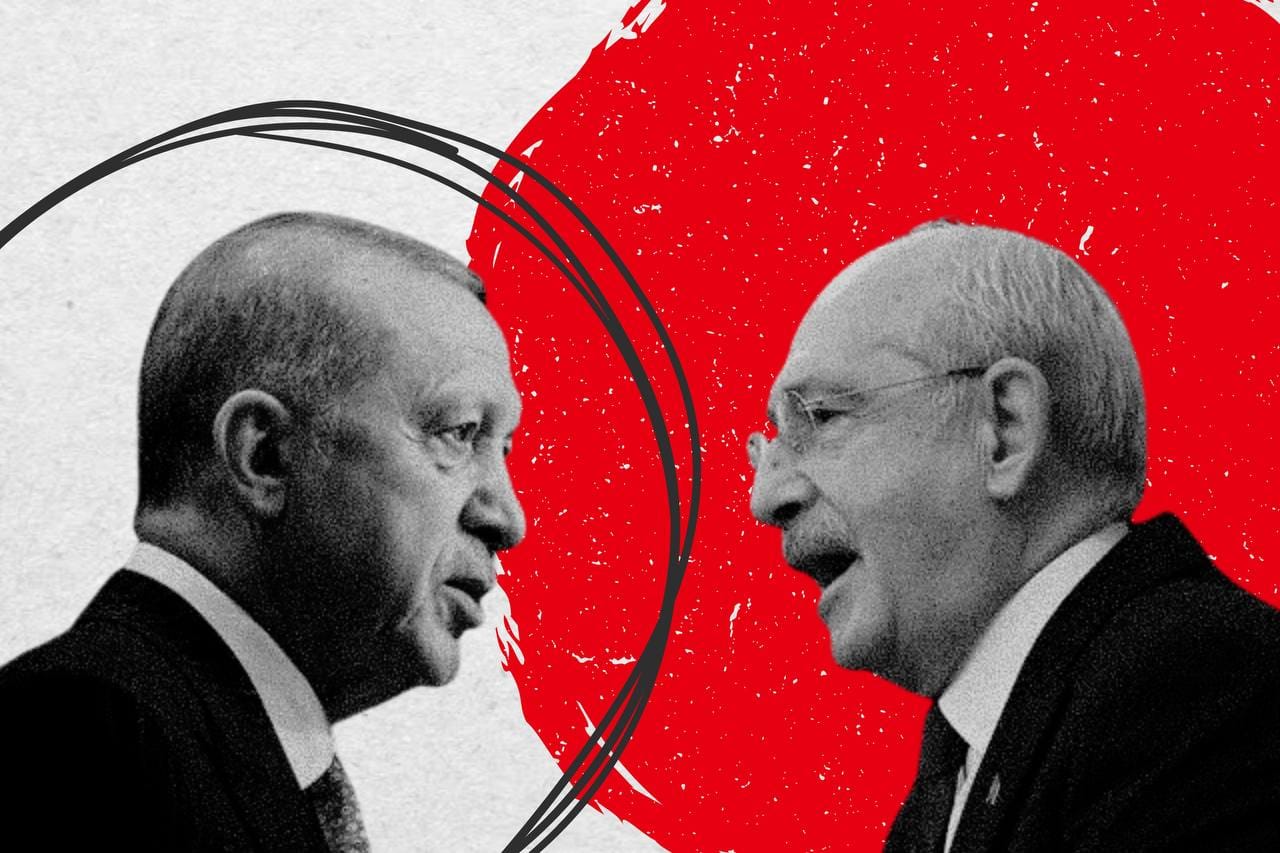
On May 21, an appeals court in Ankara declared the results of the congress of the Republican People’s Party (CHP), held all the way back in November of 2023, to be invalid. At that congress, the party’s current chairman, Özgür Özel, replaced Kemal Kılıçdaroğlu as leader of Turkey’s largest opposition movement.
The court ordered the temporary removal of the “new” leadership and returned control of the party to Kılıçdaroğlu and his team pending a final ruling by Turkey’s Supreme Court. All party decisions and congresses held after November 2023 were also automatically declared invalid, effectively paralyzing the CHP’s operations.
The following day, May 22, the court rejected an appeal filed by Özel’s team against the temporary removal of the party leadership. Ankara’s appellate chamber ruled that the earlier verdict was final in nature and could not be separately appealed.
In response, Özel stated that there were now effectively two CHPs in Turkey: the “elected” one and the “appointed” one. After the rejection of his appeal, Özel and his supporters refused to leave the party’s central headquarters in Ankara, and a standoff between Özel’s team and the court-appointed leadership continued inside the building for several days.
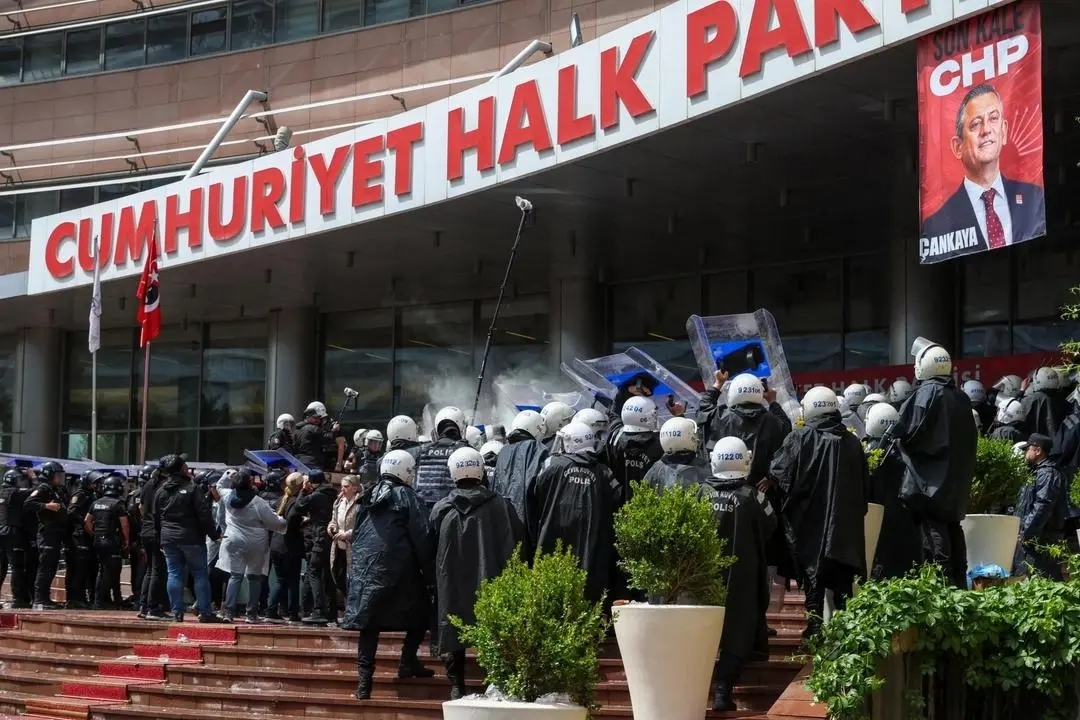
The situation escalated sharply after representatives of Kılıçdaroğlu appealed to the police to enforce the court ruling. On May 24, special forces stormed the party’s central office in Ankara, using tear gas and rubber bullets during the operation.
Even within the CHP leadership “appointed” by the authorities, Kılıçdaroğlu’s actions triggered a strong backlash. Several lawmakers who had previously supported him publicly refused to join the new leadership after police were brought in to establish control over the headquarters.
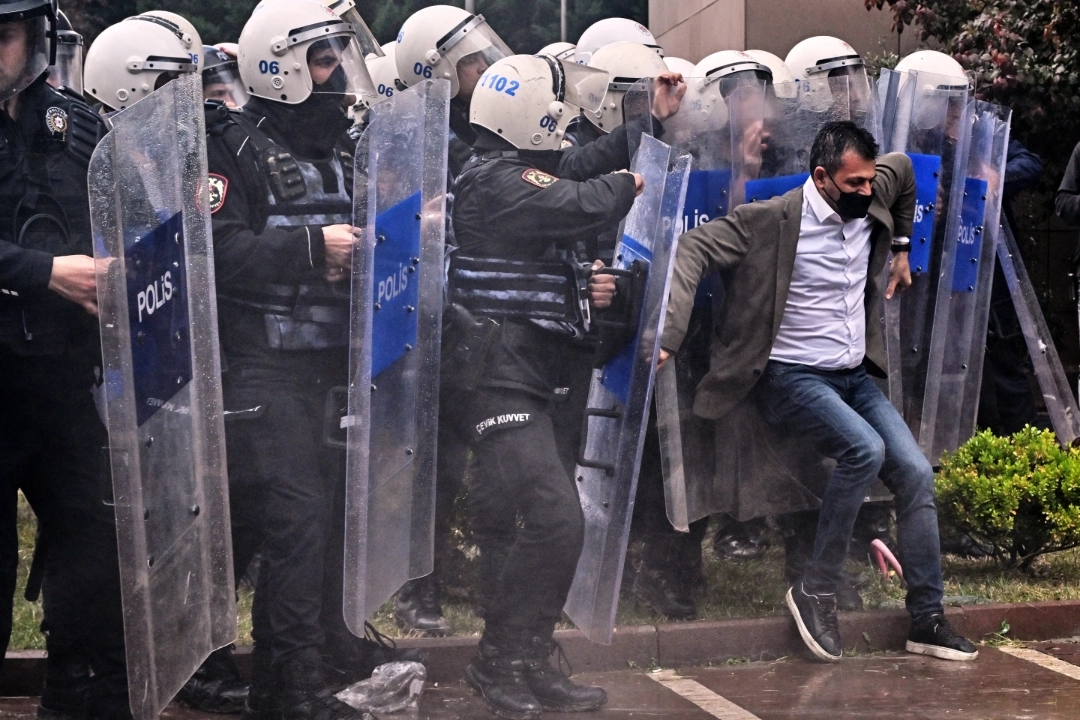
Part of the genuinely opposition-minded CHP base reacted even more harshly. During protests outside the party’s central office and in other cities across the country, demonstrators were heard shouting “traitor Kemal.” Videos also spread on social media showing protesters tearing up portraits of the reappointed party leader.
For the first time since the military coup of September 1980, the CHP’s central headquarters was taken over by security forces. Moreover, the new CHP leadership headed by Kemal Kılıçdaroğlu used the police against members of its own party. For the Turkish opposition.
From “managed” opposition to a political threat
It is clear that what is happening with the CHP goes far beyond an ordinary intra-party conflict. For a significant part of the Turkish opposition, the current crisis has signaled that President Recep Tayyip Erdoğan and the ruling Justice and Development Party (AKP) he heads are no longer confident that they can retain power in the next elections.
The CHP had long been Turkey’s largest opposition party, but the authorities still did not view it as a genuine competitor. The party regularly criticized Erdoğan and maintained a strong presence in parliament and in the country’s largest cities, yet it consistently lost the key elections. During his 13 years as the head of the CHP, Kılıçdaroğlu failed to defeat Erdoğan in a single nationwide campaign.
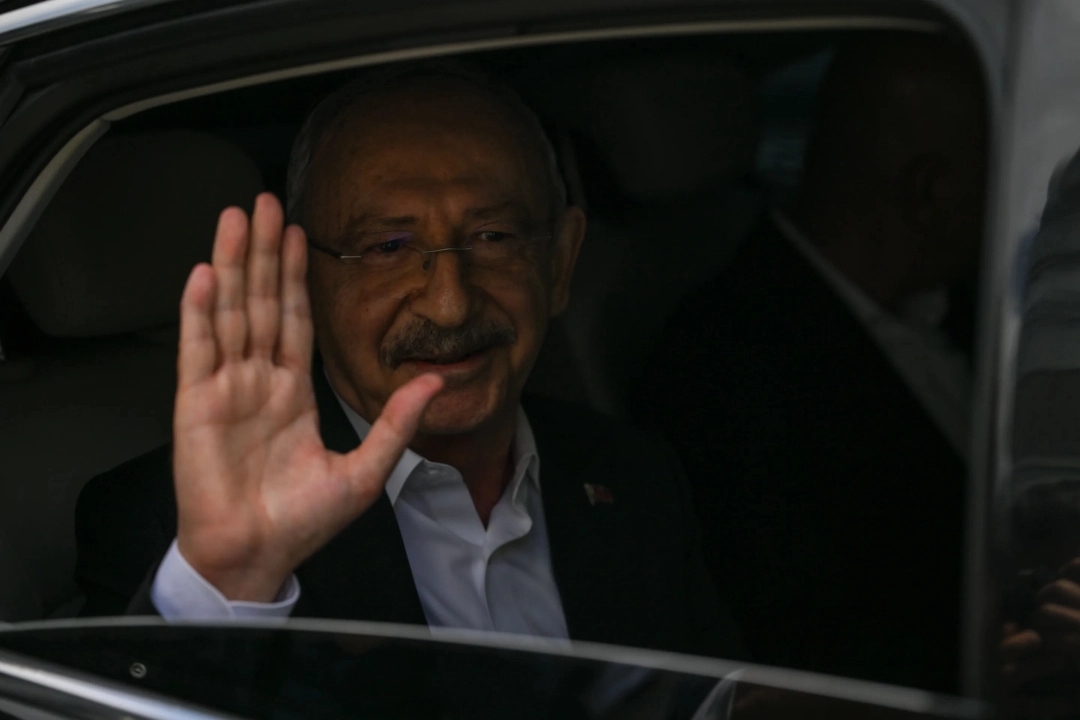
For Erdoğan and the AKP, this model was quite convenient. Turkey retained formal political competition, with the opposition taking part in elections and remaining a visible political force even as the authorities remained confident that they would ultimately maintain control over the system.
The situation began to change after the 2019 municipal elections, when the CHP won the vote not only in Ankara but also in Istanbul. For Erdoğan, the defeat was especially painful: he had begun his own political career as mayor of Istanbul and repeatedly said that “whoever wins Istanbul wins Turkey.”
Particularly painful for the authorities was the nature of CHP candidate Ekrem İmamoğlu’s victory. Initially, İmamoğlu narrowly defeated the ruling party’s candidate, former Prime Minister Binali Yıldırım, after which the AKP secured the annulment of the election results. However, the repeat vote turned into an even heavier defeat for Erdoğan, as İmamoğlu won by an even larger margin.
From that moment on, İmamoğlu began transforming from a popular mayor into a politician of national stature. Unlike many CHP representatives, he managed to attract not only the party’s traditional secular electorate but also part of the country’s more religious and conservative voting base. His political style differed noticeably from that of the conventional secular opposition: less ideological, more flexible, and focused on building a broad anti-government coalition.
Nevertheless, after the 2023 elections Erdoğan’s position still appeared stable. In the second round, he received 52.18% of the vote, while Kemal Kılıçdaroğlu, backed by an alliance of six opposition parties, won 47.82%.
In the second round of the 2023 presidential election, Recep Tayyip Erdoğan won 52.18% of the vote, while Kemal Kılıçdaroğlu received 47.82%
The defeat was a heavy blow for the CHP, and it intensified the internal criticism of longtime leader Kılıçdaroğlu. Despite the popularity of the mayors of Istanbul and Ankara — Ekrem İmamoğlu and Mansur Yavaş — both chose not to compete for control of the party and instead backed Özgür Özel for the role after the 2023 defeat.
The change in the CHP leadership was one of the key consequences of the lost presidential election. After Özel took over, the party gradually moved away from the cautious opposition model associated with the Kılıçdaroğlu era, opting instead for a more aggressive electoral strategy.
The 2024 municipal elections provided a troubling signal for the ruling party. For the first time in decades, the CHP outpolled the AKP nationwide in local elections. The opposition retained control over the country’s largest cities and even succeeded in winning in parts of central Anatolia, long regarded as one of Erdoğan’s main strongholds.
The victory demonstrated that the opposition’s success was no longer confined to a few major cities or to protest voting. The CHP began to be seen as a force capable not only of serving as the main opposition party, but of taking power itself.
How government pressure strengthened opposition sentiment
After the CHP’s success in the 2024 municipal elections, pressure on the party intensified sharply. The main target was Istanbul mayor İmamoğlu, whom many in Turkey already viewed as Erdoğan’s most dangerous potential rival in future presidential elections. Unlike many traditional CHP figures, he proved capable of competing with Erdoğan for part of the conservative and religious electorate — the very constituency on which the AKP’s dominance had rested for many years.
As a result, a series of criminal investigations was launched against İmamoğlu. He was accused of corruption, abuse of office, and ties to people whom the Turkish authorities describe as being involved in terrorism. İmamoğlu and his supporters called the cases politically motivated and linked them to his growing popularity.
In the spring of 2025, the pressure on İmamoğlu escalated dramatically. First, the authorities revoked his university diploma, potentially depriving him of the opportunity to run in the presidential election, since under Turkish law a presidential candidate must possess a degree. Shortly afterward, İmamoğlu was arrested on charges of corruption and abuse of office.
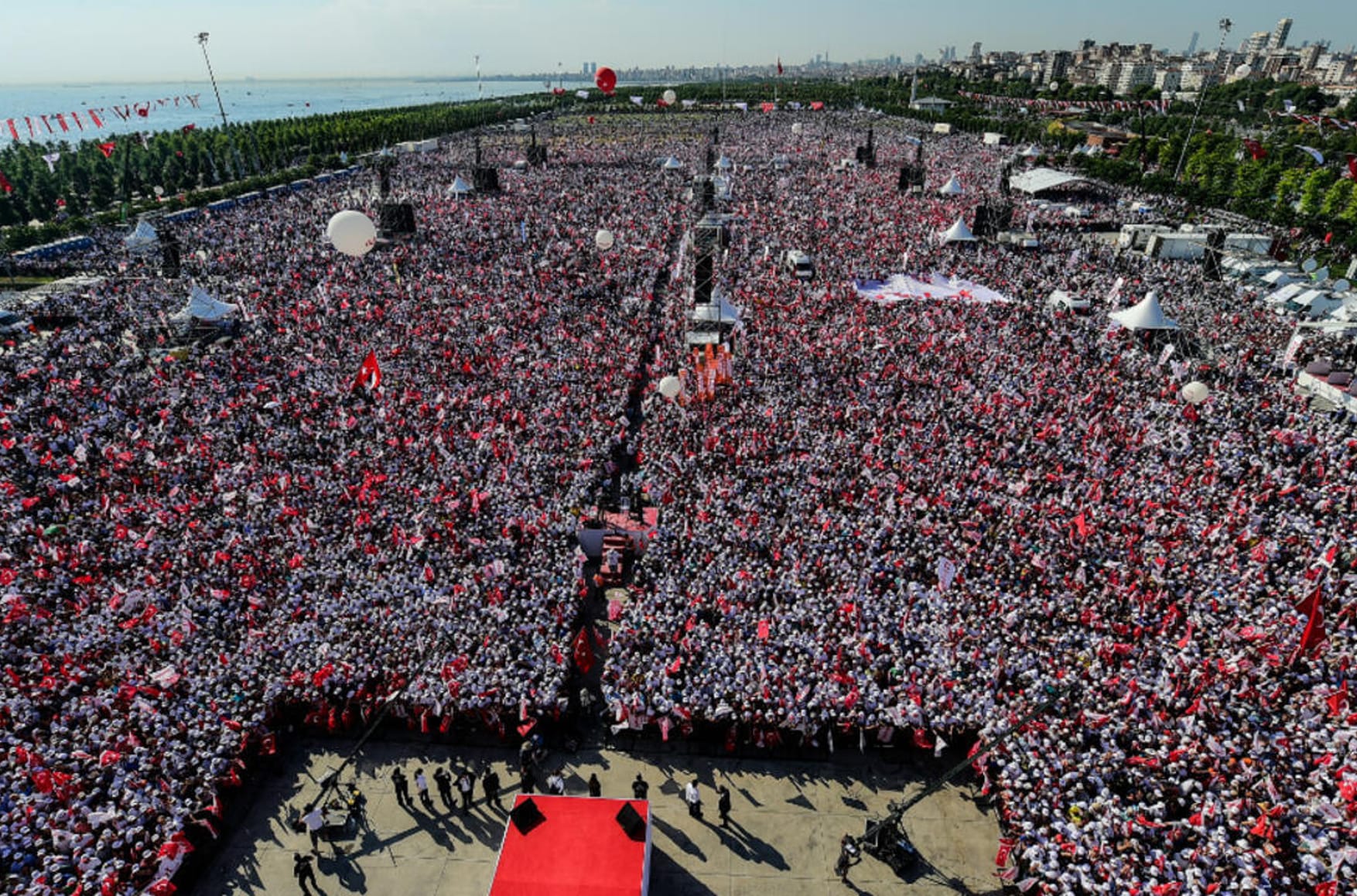
İmamoğlu’s arrest triggered the largest protests Turkey had seen in years. However, the CHP’s response was not limited to street demonstrations. The party launched a large-scale nationwide campaign against Erdoğan, arguing that the pressure on the mayor of Istanbul was politically motivated and posed a threat to civil liberties nationwide.
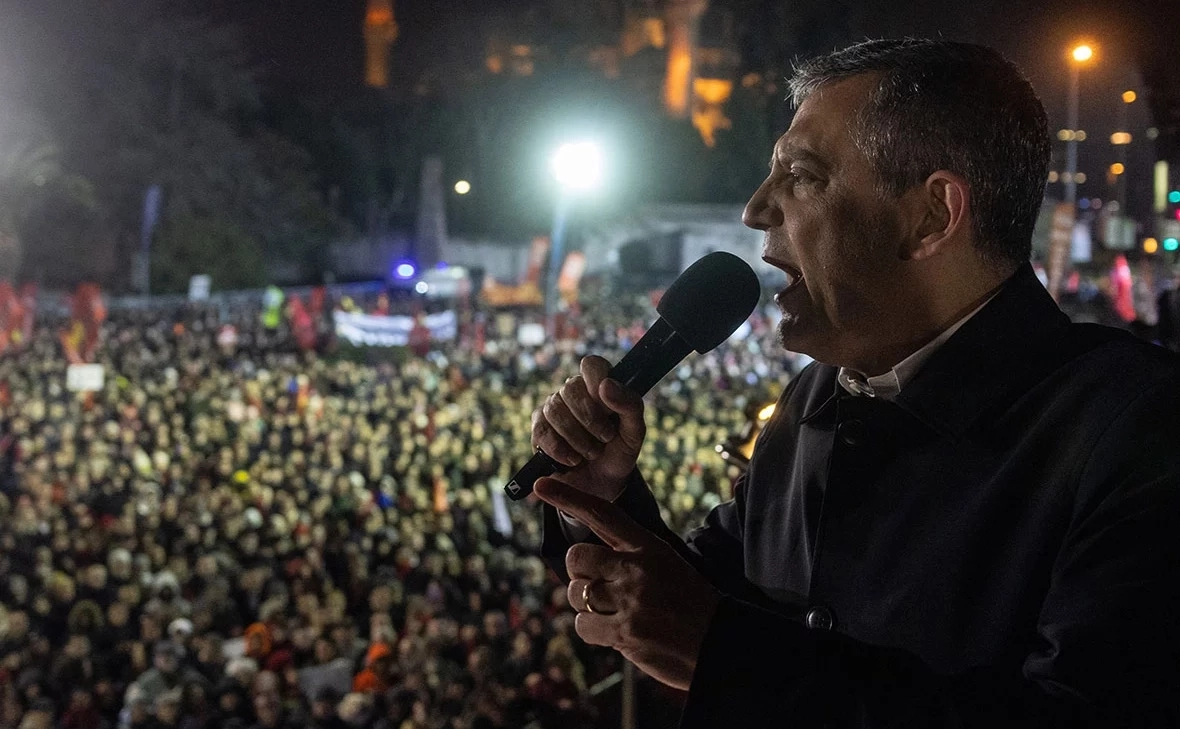
Initially, many viewed Özgür Özel primarily as a compromise figure, but after İmamoğlu’s arrest he unexpectedly found himself at the center of the largest opposition mobilization in years. Özel began speaking regularly at rallies — twice a week and in virtually every city across the country — sharply escalating his anti-Erdoğan rhetoric and effectively turning himself into one of the opposition’s main public leaders.
There were also rumors in Turkish political circles that representatives of the state had tried to persuade Özel to adopt a more cautious line after İmamoğlu’s arrest. Instead, Özel moved in the opposite direction, launching a much harsher campaign against Erdoğan and the AKP. In response, new criminal cases were opened against opposition mayors, while the government increasingly accused the CHP of corruption and abuse of municipal resources.
At the same time, the economic situation was deepening the problems faced by Erdoğan’s party. High inflation, declining purchasing power, and the rising cost of living remained the main concerns for most Turkish voters. Even official statistics recorded inflation above 35%, while the independent ENAG group estimated it at more than 70%.
The pressure on İmamoğlu and the CHP produced the opposite of the authorities’ intended effect. Instead of weakening the opposition, the CHP managed to consolidate a significant share of the protest electorate around itself at the same time the AKP’s ratings began to decline.
By the spring of 2026, a number of Turkish polling organizations were already showing the CHP holding a steady lead over the ruling party. According to a survey by PİAR Araştırma published on May 21 — the same day as the court ruling on the CHP — the party enjoyed 35.4% support, compared with 31.7% for the AKP.
On the day of the court ruling on the CHP, the party was polling at 35.4%, compared with 31.7% for the ruling AKP
In short, the pressure on İmamoğlu failed to split the new opposition. Instead, the CHP managed to turn the arrest of its most popular politician into a tool of political mobilization, and Özel gradually evolved from a compromise intra-party figure into one of Erdoğan’s harshest public critics, capable of rallying other opposition forces around the CHP.
The logic behind these developments also largely explains the attempt to return Kemal Kılıçdaroğlu to the leadership of the party. After all, under his guidance the CHP had remained a largely non-threatening opponent. In the eyes of a significant part of Turkish society, the judicial intervention was seen as part of a broader government pressure campaign against an opposition that was steadily growing in strength.
Under Özel, the longtime strategy of Turkey’s largest opposition party had begun to change. The CHP became more active beyond its traditional electorate, intensifying street mobilization and, for the first time in many years, campaigning as if it were a political force capable not merely of criticizing Erdoğan, but of genuinely competing to replace his government.
Another source of concern for Erdoğan and the AKP was Özel’s constant calls for early presidential elections — the paradox being that early elections remained one of the few ways Erdoğan could legally run for president again after the end of his current term.
However, unlike in previous electoral cycles, an early vote no longer guaranteed Erdoğan victory. Under Kılıçdaroğlu, the CHP had for years maintained a relatively stable result (within the range of 24–28% of the vote), but after Özel took over, the party’s ratings began to rise, exceeding 30–35% in a number of polls.
Against this backdrop, the Turkish opposition increasingly discussed a scenario in which a CHP candidate could realistically defeat Erdoğan in a presidential election even if Ekrem İmamoğlu were barred from participating. Ankara Mayor Mansur Yavaş, who remains one of the country’s most popular opposition politicians, was regularly mentioned as a possible alternative.
Crisis in the opposition party — a problem for the entire political system
The struggle for control over the CHP is still far from over, and Turkish political circles are already discussing possible new steps aimed at increasing pressure on Özel’s team. In particular, media outlets and opposition figures are saying that the authorities may try to strip Özel of parliamentary immunity in order to open new criminal cases against him.
A significant portion of Özel’s supporters view Kemal Kılıçdaroğlu with distrust, fearing that the party leadership imposed through the courts will not obstruct further legal pressure on the current CHP team. Following Kılıçdaroğlu’s imposed return as the head of the CHP, pressure on Özel’s supporters will likely intensify from two directions at onceP through the judicial system and through Kılıçdaroğlu himself.
Perhaps even more importantly, if the Supreme Court upholds the decision to invalidate the CHP’s 2023 congress and the party’s subsequent decisions, it could create a dangerous precedent for Turkey’s entire political system. The issue is no longer merely a conflict within the CHP — in effect, the courts would gain the ability to intervene in the internal electoral processes of any organization and change its leadership after voting has already taken place.
In that case, not only intra-party elections but the very stability of all electoral mechanisms could come under threat — from political parties to professional associations, foundations, and other civic and business organizations whose leadership is chosen through voting. For Turkish society, which has long viewed elections as one of the last remaining pillars of civil liberties, this would be an extremely alarming development.
What is happening around the CHP is already being described as a political earthquake. Just a few years ago, direct judicial intervention in the internal leadership of Turkey’s largest opposition party would have seemed almost unimaginable. Now, however, the courts are effectively annulling the results of intra-party elections, police are storming the CHP’s central headquarters, and the struggle for control over the country’s largest and oldest opposition party has turned into one of the most severe political crises in recent years.
Virtually all opposition politicians have openly backed Özel, and the current situation is being perceived as a threat to all political parties. The court ruling also coincided with the important religious holiday of Eid al-Adha, during which political confrontation is traditionally considered unacceptable.
Against this backdrop, the traditional holiday contacts between Turkey’s various political parties was especially revealing. The pro-Kurdish Peoples’ Equality and Democracy Party (DEM Party), along with two other opposition forces (the Good Party and the Victory Party) did not include the CHP in their holiday programs. A DEM Party representative, responding to a journalist’s question about a visit by Kılıçdaroğlu to the party headquarters, openly stated that the “appointed leader of the CHP” would not be received.
At the same time, for the first time in three years the ruling AKP will hold a holiday meeting with the CHP — right after Kemal Kılıçdaroğlu’s return to the opposition party’s leadership. In short, the less predictable future elections become for Erdoğan, the more aggressively the authorities will seek to reshape the political field before the campaigning even begins.