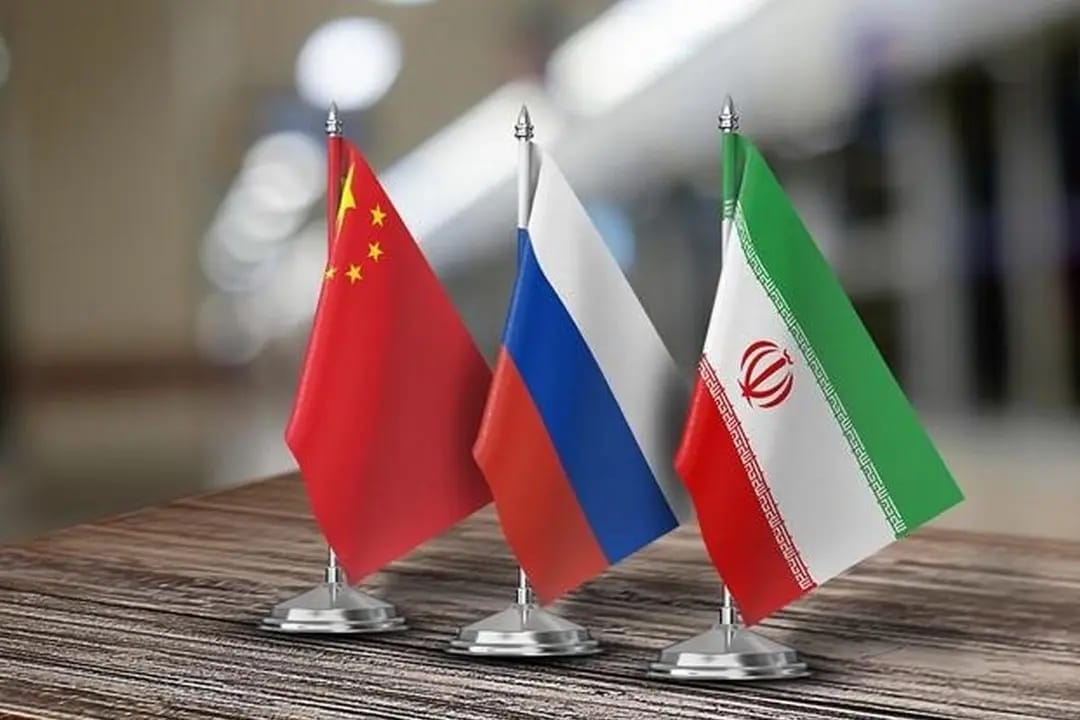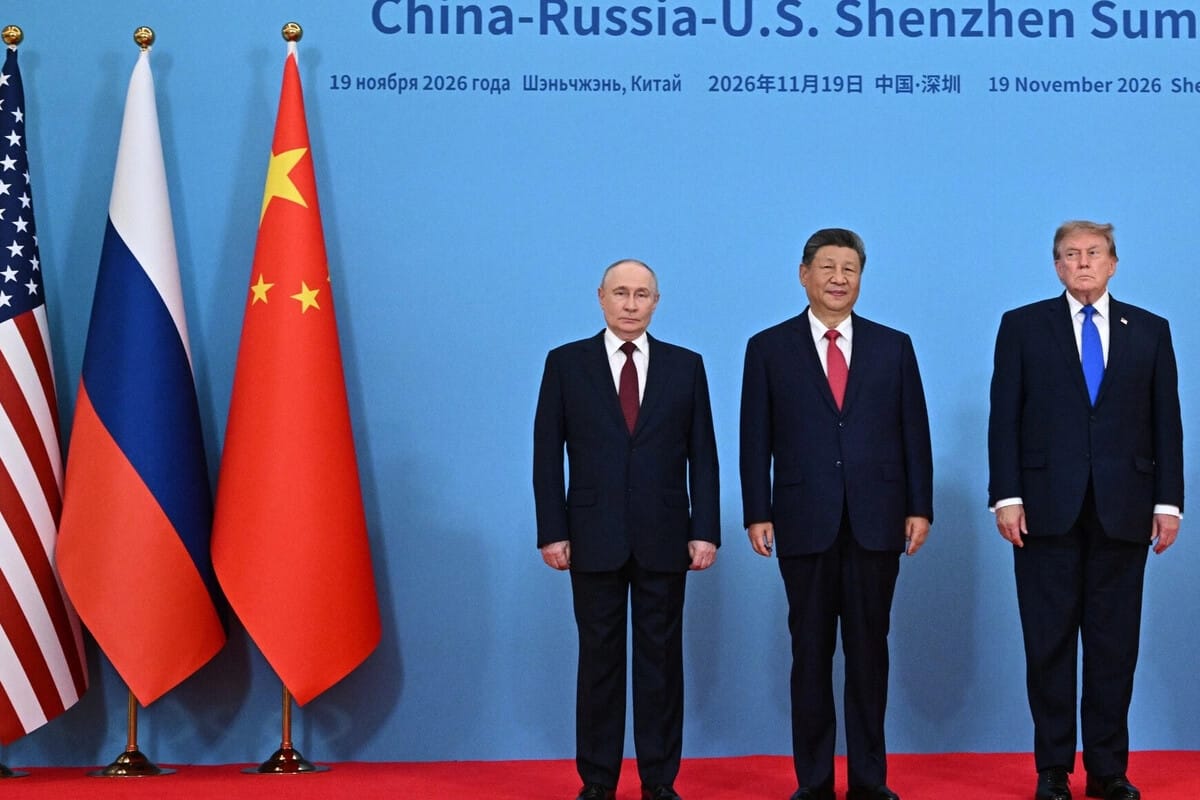
It wasn’t “Yalta 2.0” – a meeting of great powers to portion out the world while lesser powers await their allocated fate. It wasn’t much, in fact, but what there was wasn’t good. The Nov. 19 meeting between the U.S., Chinese, and Russian leaders in Shenzhen, China generated much advance speculation, provided more bad optics of the U.S. president courting authoritarian adversaries, and resulted in a thin joint statement (that reflected more Russian than U.S. interests). In the end, the Shenzhen trilateral was not a strategic disaster, and certainly not a cynical great power deal about others, but it was a missed opportunity for a U.S. president to advance a U.S. and free world agenda, and it put the U.S. with the authoritarians and aggressors, at least optically.
Overall, it reflects a deeper loss of U.S. strategic wisdom. Chinese President Xi Jinping came out ahead because he appeared as host and choreographer of a major meeting, a stable figure in comparison to the truculent and unsuccessful Vladimir Putin and the erratic Trump, now weakened post-midterms. Xi has held that the U.S. is in decline, and his steady presence seemed to echo that confidence, however misplaced.
Putin also came out ahead simply by being treated, sort of, as the head of a Great Power equal to Chinese President Xi and U.S. President Donald Trump. Russia really is a co-equal to the U.S. and is superior to China in numbers of nuclear weapons, but it is not in the U.S. or Chinese league in economic or technological terms. It is a country with disastrous long-term demographic indicators, shedding many of its most talented. And Putin is not winning his war against Ukraine. In recent days, the Ukrainians have, after much careful planning, taken down at least one part of the Kerch Strait Bridge, a critical link between Russia and Russian-occupied Crimea. Ukraine is not, despite years of Russian pronouncements and efforts by Kremlin apologists, on its last legs.
Russia’s Vladimir Putin also came out ahead simply by being treated, sort of, as a Great Power equal
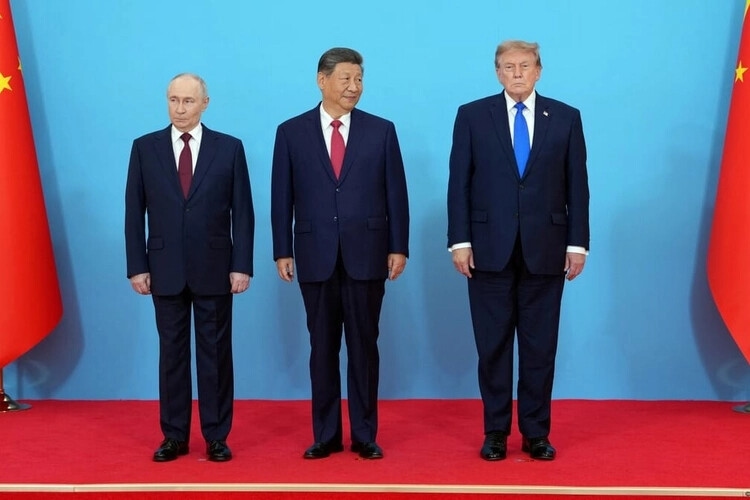
Xi may have had Putin’s relative weakness in mind when he did not meet Putin planeside (as he did for Trump), and when he kept Putin from standing next to him and Trump in a group photo taken before the trilateral. If Xi intended to show Putin who’s the boss, he did a good job of it.
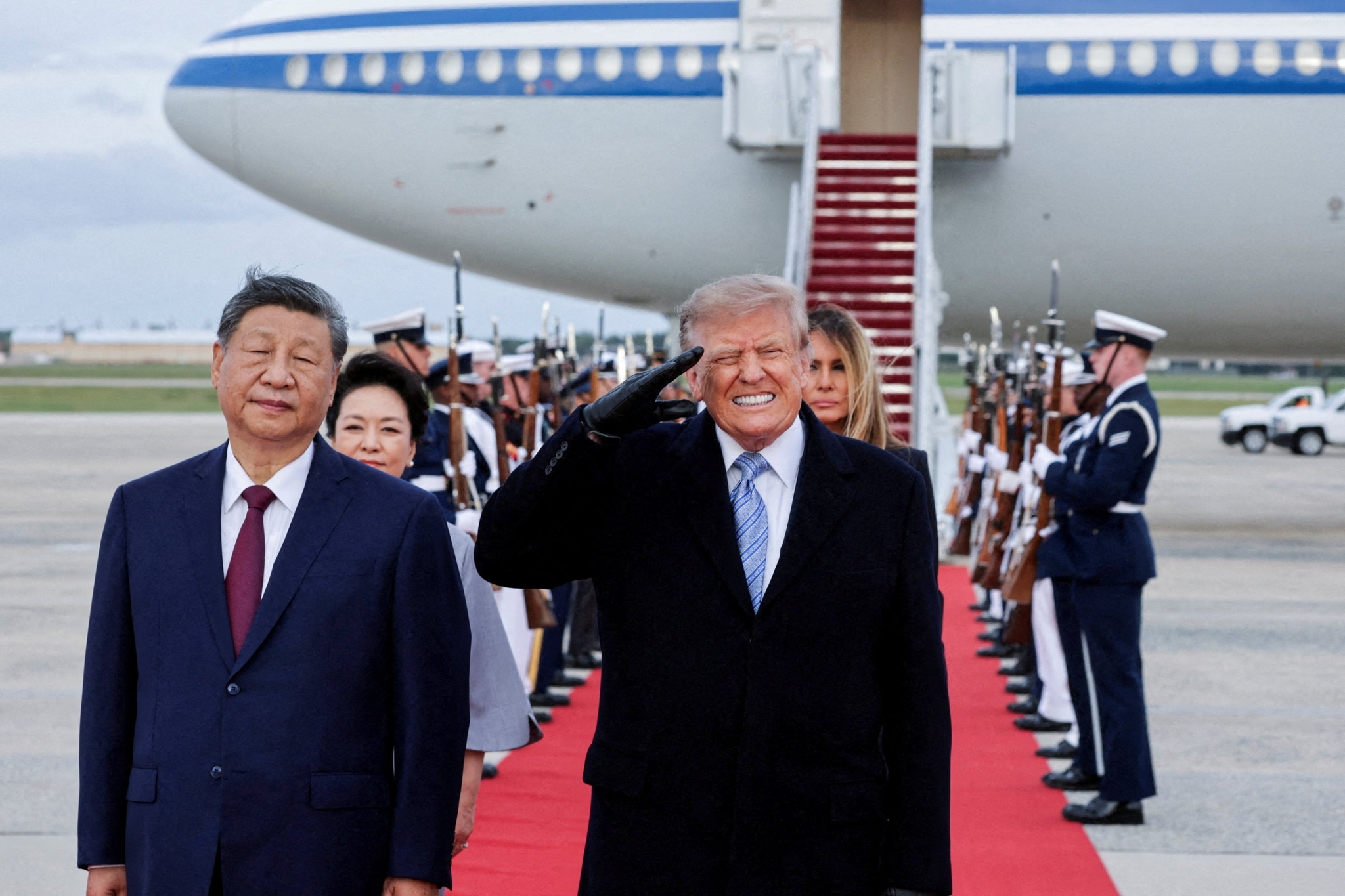
Still, two of the four substantive elements of the joint statement benefit Russia. The document included a loose agreement to increase production of petroleum products “for the benefit of all nations,” which implies that the U.S. will work to undermine its own and European sanctions and other restrictions on Russian oil sales in a potential repeat of the Trump administration-proposed “diesel deal” — an ill-fated initiative that appears to violate U.S. law and, partly for that reason, has gone nowhere. But now Trump has signed on to continuing such efforts.
The joint statement also expressed support for immunity of state officials from jurisdiction by the International Criminal Court (and also featured criticism of the ICC as “globalist”). That language benefits Putin, who has been charged by the ICC for war crimes in Ukraine, and it puts the U.S. in the curious position of defending Putin from accountability even as Putin adds to his long list of attacks against Ukrainian civilians.
The best part of the joint statement is its reaffirmation of U.S.-Russian language dating from the first Reagan-Gorbachev Summit in 1985 — namely, that a “nuclear war cannot be won and must never be fought” — and an agreement to conduct a trilateral “dialogue” on reducing nuclear risk and preventing nuclear weapons proliferation. That counts as a modest step toward bringing China into nuclear arms issues and could be something to build on. For some time, Trump has expressed interest in nuclear arms control, meaning he can take this part of the joint statement as a plus, especially if it results in actual dialogue on the issue.
Nevertheless, with the exception of the nuclear language, the overall optics and much of the substance of the trilateral meeting did nothing to advance U.S. interests or values. Rather, it put the U.S. President in the company of (and, going by the optics, on the side of) authoritarian adversaries of the U.S. and the rest of the free world.
The meeting put the U.S. President in the company of (and, going by the optics, on the side of) authoritarian adversaries of the U.S. and the rest of the free world
The visual of Trump greeting Putin by calling him a friend may be the quick summary of the meeting. It landed poorly among those not part of the small Trump base and may age even worse. Trump is right when he says that the U.S. needs to talk with its adversaries, but talking with them does not mean siding with them. Flattery of that kind can generate contempt.
By baleful contrast, on the day of the Shenzhen trilateral, the “Coalition of the Willing” — the UK-French led initiative of mostly European countries willing to back post-war Ukrainian security, including with forces on the ground — was meeting in Berlin. The Coalition could be a critical piece of post-war security for Ukraine. It would give teeth to the Trump administration’s own negotiating framework for a Russo-Ukraine peace that includes security for Ukraine short of NATO membership.
The Kremlin knows that and therefore hates the Coalition of the Willing. It has threatened that foreign troops in Ukraine could be targeted by Russia, but that has not deterred the Europeans. The Coalition is a sign that Europe could take the lead on a critical and risky security operation, just the sort of thing the U.S. — and especially Trump — have been urging the Europeans to do for many years. The U.S. President should be backing that meeting, not scrambling for photo ops and flattering the aggressive tyrant Putin, who is no friend.
Nevertheless, when Trump phoned into the Coalition meeting, instead of offering his support for the initiative, he reportedly bemoaned the fact that Europe is continuing to support Ukraine, complaining that its funds for that country were being wasted. Trump also reportedly expressed confidence (in the absence of any evidence) that Putin is sincere about seeking an end to the conflict. This suggests that the U.S. will continue its tactic of trying to negotiate an end to the Russo-Ukraine war through pressure on Kyiv and blandishments and offers to Moscow. The fact that such tactics have generated no Russian forthcomingness, but instead only the reiteration of absolutist positions has not yet convinced the U.S. administration to change tactics (positive hints from U.S. negotiators notwithstanding). Jared Kushner has claimed that the Kremlin has expressed “willingness to discuss” security guarantees for Ukraine that resemble NATO’s collective defense commitment (Article 5 of the North Atlantic Treaty), but Russia has denied it and there are no signs of the U.S. being ready to back Ukraine’s security or push Russia to accept such arrangements.
The U.S.-Russia-China trilateral was not the strategic disaster that had been feared, but it was a misuse of U.S. power, and its relatively small net impact was to elevate and attempt to rehabilitate Putin and to cede center stage to Xi, all while putting the U.S. in sympathetic company with authoritarian powers. The split screen of Trump calling Putin his friend while speaking with scorn to those free world powers preparing to stand front and center in taking risks for Ukraine’s security and their own, was another example of the strategic wavering of the United States during the second Trump administration from the American grand strategy of the 20th and early 21st centuries. That strategy was rooted in the deep wisdom that U.S. interests and values could in fact advance together, that the free world was not “idealism” but suited U.S. security and economic interests by attracting major powers — including former U.S. rivals and even enemies — to join with the United States.
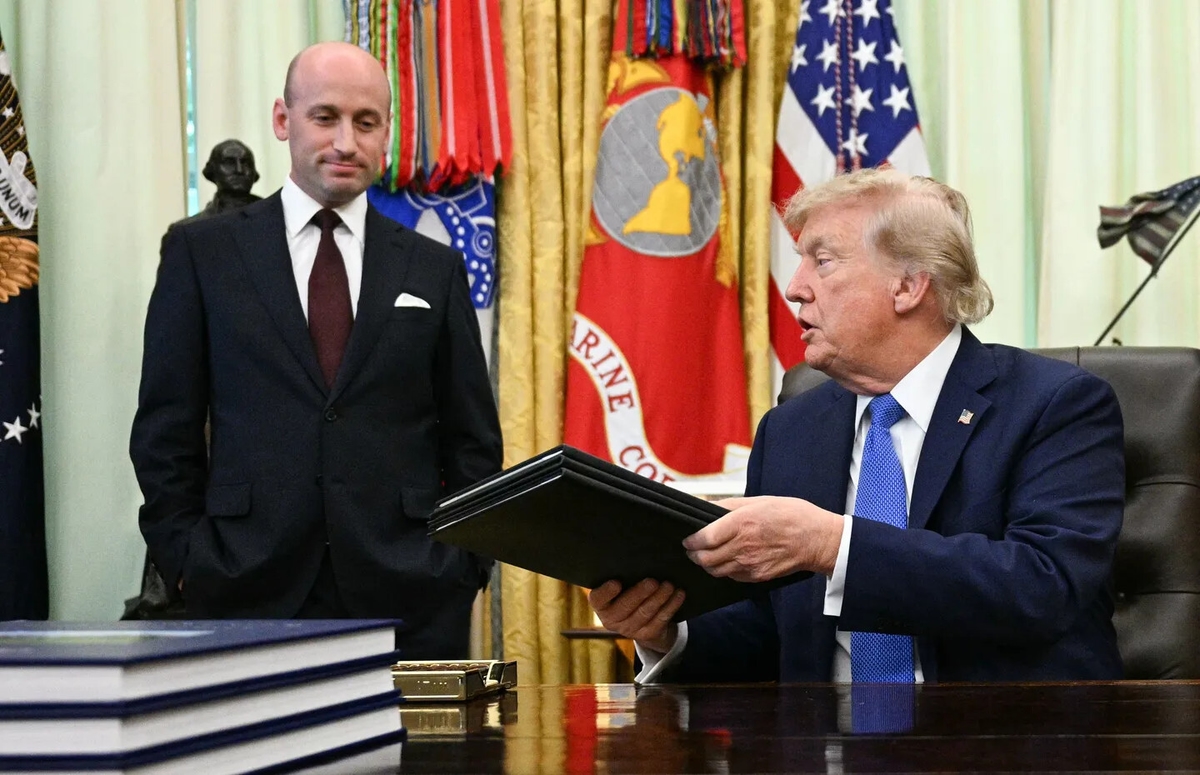
The alternative strategy that Trump and many on his team seem tempted by is a view of the world in which great powers sit on top, above the rules, and dispose of others. As Trump’s new chief of staff Stephen Miller put it, since the beginning of time the world has been “governed by strength, governed by force, governed by power.”
That sort of thinking fits neatly with a strongman’s summit in China. It fits less well with Europe’s efforts to defend what used to be called the free world — one based on rules and obligations that sovereign countries are bound to respect. That’s what the Coalition of the Willing was about: the underpinnings in extremis of the free world under assault from the authoritarian Putin who might well subscribe to Miller’s view of the world.
The Coalition of the Willing has its flaws, it has yet to be tested, and its resolve is not yet clear. Still, it represents an attempt, without enough help from the U.S., to make good on the promise of a world based on more than raw power.
The summer blockbuster movie The Odyssey featured a haunting sub-theme about the deterioration of a moral order — in that case, “Zeus’s Law” — based on the basic obligations that humans have to one another, starting with the importance of showing kindness to the stranger (who may in fact be a God in disguise). That concept was widespread across the ancient world, appearing in the book of Genesis as well.
In short, the Jewish and Christian moral order was built from this beginning, and a rules-based world comes from this. The U.S. championed the free world — the rules-based world — when it assumed a leadership role after the ruinous Second World War. However hypocritical and inconsistent its policy in the decades after, U.S. policy was at least usually, and sometimes decisively, informed by it.
The two meetings of November 19 — the great power troika with its uncertain attachment to a rules-based foundation on the one hand and the Coalition of the Willing meeting trying to give muscle to a rules-based foundation on the other — provide bookends to the strategic choices before the U.S., Europe, and the world.