Following the resignation of UK prime minister Keir Starmer amid collapsing public support, ambitious pragmatist Andy Burnham is poised to take over as Britain's leader. During his tenure as mayor of Manchester, the new Labour leader earned a reputation as an "effective manager," yet even his fellow party members remain unsure of his true plans for once he arrives in Downing Street. Burnham has skillfully balanced left-wing ideals with the interests of business, at times offering ingenious solutions to long-standing problems. Critics fault him for having virtually no foreign policy expertise, but Britain's position on Ukraine is unlikely to change.
Under Andy Burnham’s leadership, Manchester reorganized its public transportation system and improved municipal and childcare services, while the greater region's economic growth was nearly double the national average. But the question remains: how much of that success can truly be credited to Burnham himself?
According to some detractors, most of the real administrative work in the city was carried out by the mayor’s talented and diligent deputies. Critics also argue that Burnham simply benefited from the region's already favorable business climate and the industriousness of its residents — that he mainly chaired meetings, cut ceremonial ribbons, and made high-profile statements to score political points as part of a larger plan to boost his candidacy for the highest office in the country. In any event, Burnham is on his way to 10 Downing Street, the office of the British prime minister.
In Manchester, Burnham mostly chaired meetings, cut ribbons, and made headline-grabbing statements, critics say
He has never made much effort to conceal his ambitions or his desire for power. After graduating from the University of Cambridge with a degree in English literature, he moved almost immediately into politics, editing trade union publications before becoming an aide to Labour MP Tessa Jowell. Burnham quickly rose through the party ranks, winning election to Parliament in 2001 and serving in the governments of Tony Blair and Gordon Brown, though never in a senior position.
In short, Burnham is the sort of politician whom critics tend to dismiss as a consummate political operator — someone who has never experienced what it means to hold an ordinary job and earn a regular paycheck. They argue that spending an entire career inside the artificial bubble of politics inevitably distorts one's perception of the real world.
That said, there is no doubt that Burnham — telegenic, charismatic, and quick-witted — is a highly gifted politician. An excellent public speaker, he always seems to know exactly what each audience wants to hear. In this respect, he stands in stark contrast to the reserved, overly serious Keir Starmer, whose poor communication skills alienated both colleagues and the wider public, many of whom regarded him as a dull, almost dim-witted bore.
In reality, the outgoing prime minister was anything but unintelligent. His success in purging the Labour Party of the toxic legacy left by the hard-left zealot Jeremy Corbyn and his allies was no small achievement. But his legacy will indeed be rather dull, matching his tenure.
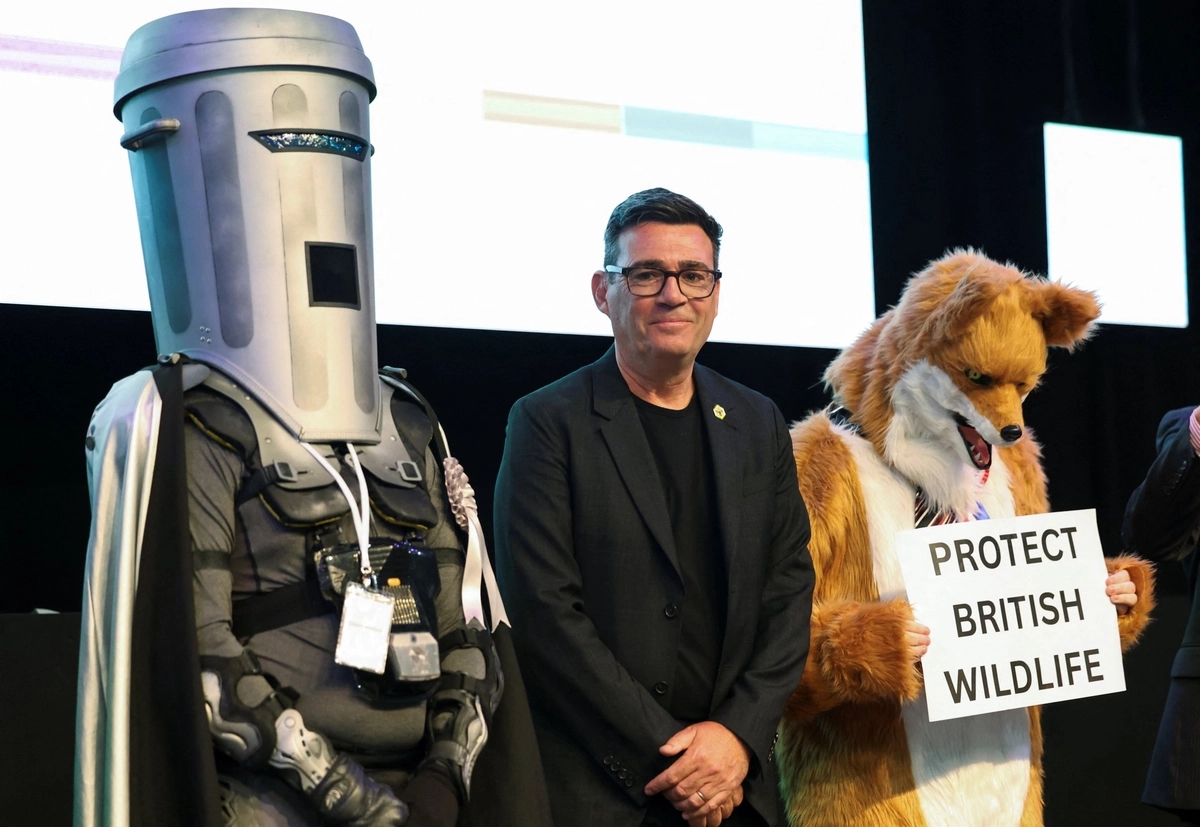
Once Starmer became prime minister, he failed to win the backing of his own party and committed a series of political missteps. The most consequential came even before he took office, when Labour's election manifesto categorically pledged not to raise income taxes, VAT, or employees' National Insurance contributions. The promise was intended to help secure Labour’s victory at the polls, but in reality, the party almost certainly would have won anyway, as voters were primarily eager to end the Conservatives' fourteen years in power. By making that ill-considered pledge, Starmer and his cabinet set a trap for themselves: the government still needed to find revenue, and so the burden was simply shifted onto businesses. The result dealt a painful blow not only to small and medium-sized enterprises but to the economy as a whole.
Other mistakes were less significant, but they revealed a lack of political instinct and damaged both the government's reputation and Starmer's personal standing. One particularly ill-judged move was an attempt to strip 10 million pensioners of their winter fuel payments. The savings to the state budget would have been negligible, but the political cost proved enormous. Faced with a furious public backlash, the government hastily reversed the decision. By then, however, Starmer had already acquired the image of an almost heartless leader, while the opposition mocked him for his weakness. His own parliamentary party increasingly began to undermine him, blocking Starmer’s efforts to curb soaring welfare spending.
Then came the scandal involving senior Labour figure Peter Mandelson, whom Starmer had unwisely appointed to serve as ambassador to the United States. Documents published in America revealed that Mandelson had maintained close, friendly ties with Jeffrey Epstein, the notorious sex trafficker who catered to the rich and powerful. It had already seemed that Starmer was simply surviving from setback to setback, and the Manelson affair proved to be the final straw.
But not all mistakes are created equal. Liz Truss, for example, who occupied 10 Downing street for less than two months in the fall of 2022, nearly bankrupted the country through reckless and economically illiterate policies. Boris Johnson, who held the job from 2019-2022, made a series of disastrous blunders during the COVID-19 lockdowns, not to mention his role in determining the clearly unfavorable terms of Britain’s withdrawal from the European Union. And Brexit itself was the result of David Cameron's grave political miscalculations. Compared with those failures, it is difficult to understand how Starmer, of all people, ended up becoming the most unpopular prime minister in British history.
For Britons, however, the more pressing question is what Andy Burnham's arrival in Downing Street will mean for the country's future. Labour's backbench MPs greeted Burnham’s appearance in the House of Commons with unmistakable enthusiasm, and it is clear they expect him to steer the party sharply to the left. Burnham himself once argued that both Labour and Britain had taken the wrong path beginning in the 1980s, a position that many interpreted as a promise to return the country to the pre-Thatcher era of powerful trade unions, nationalization, and extensive state regulation and control.
Such a course of action, however, is difficult to imagine in practice. Burnham comes across as a rational and calculating politician — one who is in no hurry to disappoint his supporters within the party. He is so popular within Labour (which itself enjoys an overwhelming majority in Parliament) that he really could fundamentally reshape the country. Yet almost nothing is known about his plans or his program, and he remains enigmatically silent.
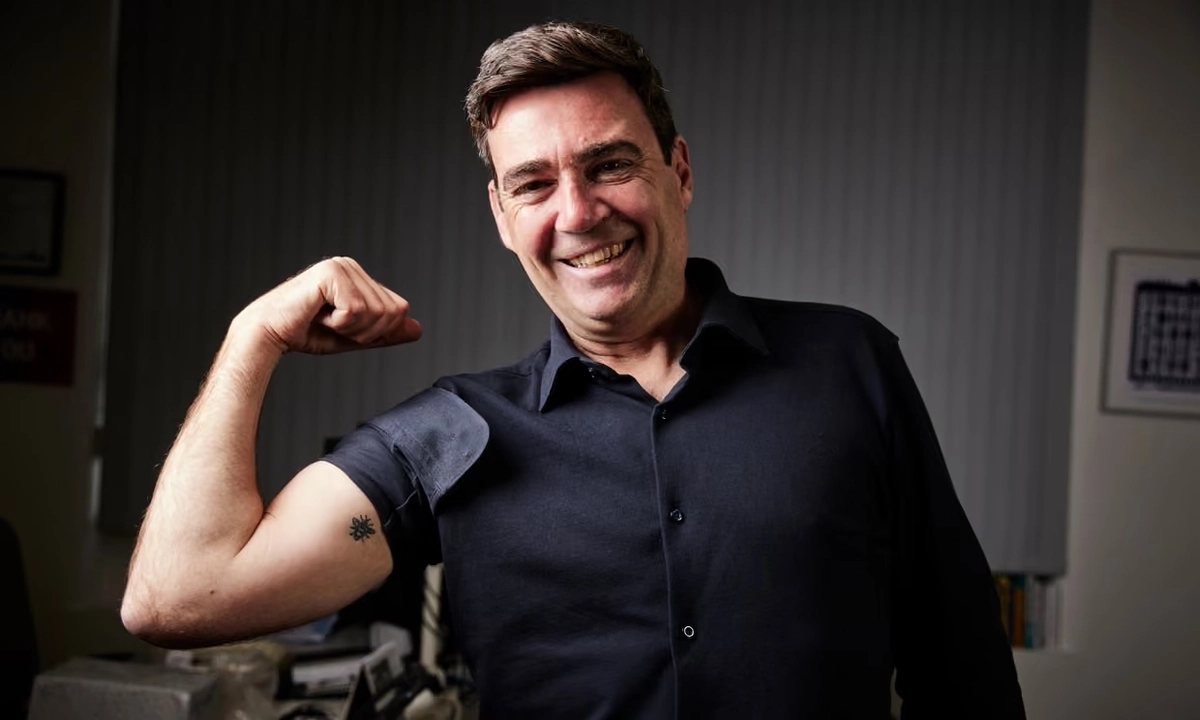
The bee tattoo on Burnham's arm, which he likes to casually display to journalists, is meant to symbolize not only his ties to the north of England (he was born in Liverpool) but also his commitment to the North's austere work ethic. The bee, after all, is portrayed as fearless and willing to sacrifice itself for the common good. But what does that symbolism mean in practice? Does it herald a genuine turn toward socialism — a transformation that would amount to a political earthquake? Or should it simply be dismissed as yet another public relations flourish by a gifted political communicator?
Burnham has virtually no foreign policy experience, while commentators point out that if his predecessor excelled in any area, it was international affairs. Starmer significantly improved Britain's relations with the European Union and played an important role in coordinating Europe's support for Ukraine. It would be unfortunate if those gains were lost under the new prime minister.
Burnham was once a staunch opponent of Brexit and hinted that Britain should eventually seek to rejoin the European Union. Still, when he decided to contest the parliamentary by-election in Makerfield, a constituency with strong pro-Brexit sentiment, he swiftly changed his position, declaring that reopening the issue would be a mistake that would only deepen the country's divisions. In the vote, even opponents of the Labour government — including nationalists backing the Reform UK party of Nigel Farage — rallied behind Burnham, delivering him nearly 55% at the polls. After all, the real objective behind Burnham’s run was hardly concealed: to get rid of Starmer and his government by entering parliament, then standing for the leadership of the governing party.
During the campaign, Burnham did not utter a word about foreign policy. Before that, however, he had made a number of noteworthy statements on some of the world's most contentious issues. On the Middle East, Burnham disappointed left-wing supporters by refusing to describe Israel's actions in the Gaza Strip as genocide but was among the first in the Labour Party to publicly call for a ceasefire, contradicting the government's official position at the time. Starmer argued that it was inappropriate to demand that Israel cease its operations while Hamas continued to hold hostages, remained in control of Gaza, and was preparing further terrorist attacks.
On another occasion, Burnham sharply condemned the construction of what he called "illegal settlements" in the West Bank, while in the same breath strongly criticizing the terrorist organization Hamas. He belonged to the Labour Friends of Israel group, yet also visited the West Bank as part of a delegation organized by the Council for Arab-British Understanding. As in so many other areas, he sought to project the image of a balanced and impartial politician.
Burnham has also spoken unflatteringly about Donald Trump, expressing hope that the "toxic style of American politics" would not take hold in Britain. At the same time, however, he supported Starmer's decision to adopt an openly deferential tone toward the White House, even as that approach drew fierce criticism at home.
There is one issue, however, on which Burnham has taken an unequivocal stance: Russia's war against Ukraine. As early as 2023, he described the conflict as "an illegal Russian invasion…that has turned millions of people into refugees." Then, in February 2024, he declared, "We must not forget Ukraine," and this past spring Burnham warmly welcomed the mayors of Lviv and Bucha to Manchester. Together with other northern English mayors, he played an active role in establishing the Unity for Ukraine initiative, which helps Ukrainian refugees find employment, learn English, and organize activities for their children. "We will support you for as long as it takes," the mayor of Manchester told his Ukrainian guests.
By all indications, Ukraine will not be forgotten under the new prime minister. If nothing else, the politically astute populist Burnham understands that British public opinion remains firmly committed to supporting Ukraine and resisting Russian aggression. In that regard, the course set by Boris Johnson and continued by Keir Starmer looks set to remain unchanged. Moscow is unlikely to have any illusions on that score.
The politically astute populist Burnham knows that British public opinion remains firmly committed to supporting Ukraine
The Labour left had expected Burnham to embrace their calls for cuts in defense spending, a cause championed so vigorously by Jeremy Corbyn. Instead, the prime minister-in-waiting surprised everyone once again, suggesting that he might kill two birds with one stone by reducing spending on unemployment benefits while creating additional jobs in the defense industry. Whether such a plan is actually feasible remains unclear, but to voters it sounded both unexpected and ingenious.
The new leader may yet surprise the country with other unorthodox ideas. Britain, it seems, is prepared to give him that chance — even if 65% of those surveyed say they know almost nothing about him.